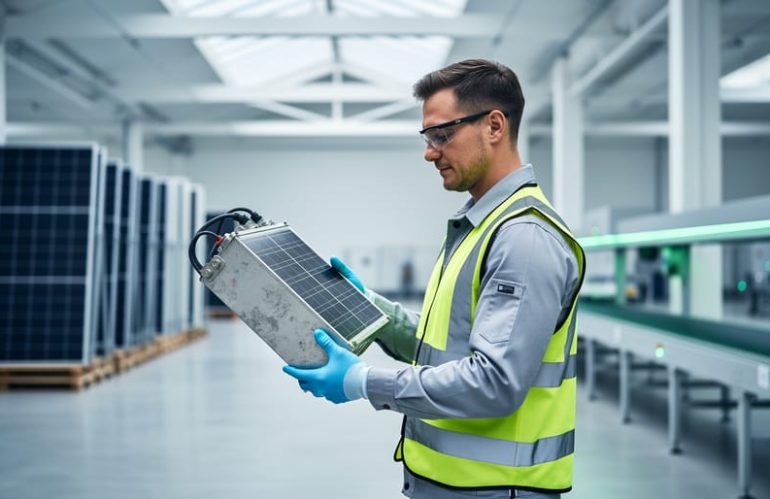
Yes, batteries are technically classified as e-waste, but that doesn’t mean they’re an environmental villain lurking in your home. This classification simply means they require specialized recycling rather than tossing them in your regular trash—a straightforward process that’s become increasingly accessible and effective.
If you’re considering solar batteries or already have them installed, here’s the reality that often gets lost in alarming headlines: modern battery technology has transformed what e-waste actually means. Today’s solar batteries, particularly lithium-ion models, contain valuable materials that recyclers actively want to recover. Companies now recycle up to 95% of battery components, turning old batteries into raw materials for new ones. This isn’t just good environmental stewardship—it’s profitable business, which means the infrastructure for proper disposal continues to expand.
The concern about contributing to environmental problems is valid, but outdated. Unlike the e-waste of decades past that ended up in landfills, current regulations and industry practices have created clear pathways for responsible battery disposal. Most solar battery manufacturers now offer take-back programs, and many installers handle end-of-life recycling as part of their service.
Understanding batteries as e-waste shouldn’t discourage you from embracing solar energy storage. Instead, it should reassure you that your investment comes with established, environmentally sound disposal options. The key is knowing what e-waste classification actually means, how recycling works, and what steps you can take today to ensure your batteries have a sustainable lifecycle from installation to retirement.
What Actually Makes Something E-Waste?
E-waste, or electronic waste, is simply any discarded device or product that runs on electricity or batteries. Your old smartphone, laptop, and yes, batteries all fall into this category. But here’s what many people don’t realize: e-waste doesn’t mean “bad waste” or “toxic nightmare.” It’s just a classification that tells us something contains materials worth recovering rather than tossing in a landfill.
Think of e-waste as more of an opportunity than a problem. These items contain valuable materials like lithium, cobalt, and copper that can be extracted and reused. When we label batteries as e-waste, we’re actually recognizing their recycling potential, not condemning them as environmental hazards.
The confusion often comes from mixing up two different concepts. Hazardous waste refers to materials that pose immediate danger if mishandled. Recyclable e-waste, on the other hand, contains components that should be processed properly to recover valuable resources. Most batteries, including solar batteries, fall into the recyclable category. They’re designed with recovery in mind.
Here’s the good news: battery technology has advanced significantly. Modern solar batteries are built with recycling as part of their lifecycle plan. Manufacturers now design batteries that can be disassembled more easily, and recycling facilities have developed efficient processes to recover up to 95% of battery materials. This means your solar battery isn’t destined to sit in a landfill forever. Instead, its materials will likely power future batteries and electronics.
The e-waste label simply means you need to follow proper disposal channels rather than throwing batteries in your regular trash. It’s a helpful classification that ensures valuable materials get a second life while keeping potentially harmful substances out of landfills.
The Truth About Solar Battery Materials
Why Lithium-Ion Batteries Are Different
Lithium-ion batteries have become the go-to choice for home battery energy storage, and there’s good reason they’re gaining popularity—they’re surprisingly eco-friendly. Unlike older battery types that contained toxic heavy metals like lead or cadmium, lithium-ion batteries are made from materials that hold significant value for recycling. Inside these batteries, you’ll find lithium, cobalt, nickel, and manganese—all materials that manufacturers actively want back because they’re expensive and reusable.
Here’s the exciting part: up to 95% of a lithium-ion battery can be recycled and turned into new products. The metals inside can be extracted and reused in new batteries, reducing the need to mine fresh materials. This means your solar battery isn’t destined for a landfill—it’s actually a future resource. The recycling process has advanced dramatically in recent years, making it both economically viable and environmentally beneficial. This recyclability is one reason why lithium-ion technology dominates the market. When you invest in a home solar system with lithium-ion batteries, you’re choosing a solution designed with its entire lifecycle in mind, from installation to responsible end-of-life management.
The Valuable Materials Inside Your Battery
Your old batteries contain surprisingly valuable materials that companies are eager to recover and reuse. Lithium, cobalt, and nickel—the key components in most home energy storage systems—are increasingly expensive and difficult to mine from the earth. That’s why battery recycling has become a profitable business rather than just an environmental obligation.
When batteries reach the end of their primary life in your home, recyclers can extract up to 95% of these precious materials. Lithium can be refined and returned to battery manufacturing. Cobalt, one of the most valuable materials in modern batteries, fetches premium prices on the recycling market. Nickel, copper, and even aluminum casings all have second lives in new products.
This creates what experts call a circular economy—materials cycle through multiple uses rather than ending up in landfills. Some batteries even enjoy second-life batteries applications, where they power less demanding uses before being recycled. The bottom line? Your battery’s valuable contents mean companies have financial incentives to handle them responsibly, turning potential waste into tomorrow’s resources.
How Modern Battery Recycling Actually Works
Collection and Safe Transport
Getting your old batteries to recycling facilities is easier than you might think, and safety measures are built into every step of the process. Most battery retailers, including major home improvement stores and electronics shops, offer free drop-off bins where you can safely deposit household batteries. Many manufacturers now run take-back programs—simply contact them or check their websites for prepaid shipping labels to mail back your batteries at no cost.
For solar batteries, your installation company typically handles removal and proper recycling when you upgrade or replace your system. They’re trained in safe handling procedures and know exactly where these batteries should go.
Never toss batteries in regular trash or recycling bins, as damaged batteries can pose fire risks during transport. Instead, place each battery in a separate plastic bag or tape over the terminals with clear tape before dropping them off. This simple step prevents short-circuits during collection.
The good news? This infrastructure continues to expand. More collection points open each year, and shipping options make proper disposal accessible even in remote areas. You’re not responsible for figuring out complex recycling processes—you just need to get batteries to the right starting point, and the established system takes over from there.
Breaking Down and Recovery
Once batteries reach recycling facilities, the process is remarkably straightforward and effective. Think of it like sorting and repurposing materials from an old house—nothing gets thrown away unnecessarily.
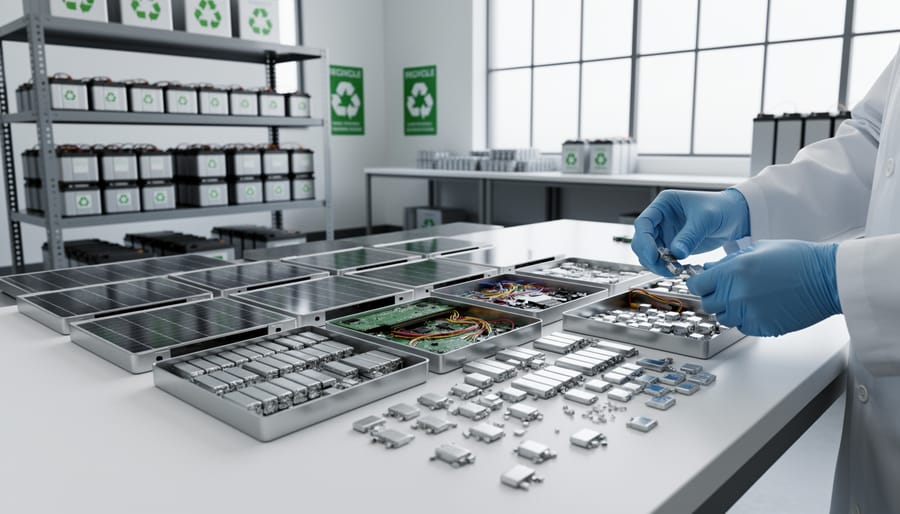
The journey begins with sorting. Batteries are categorized by type and chemistry, since lithium-ion batteries require different handling than lead-acid ones. Workers remove the outer casings and begin separating components manually or with specialized equipment.
Next comes the breakdown phase. Batteries are shredded or dismantled in controlled environments to access the valuable materials inside. The key here is safety—modern battery recycling facilities use advanced methods to prevent fires or chemical reactions during this stage.
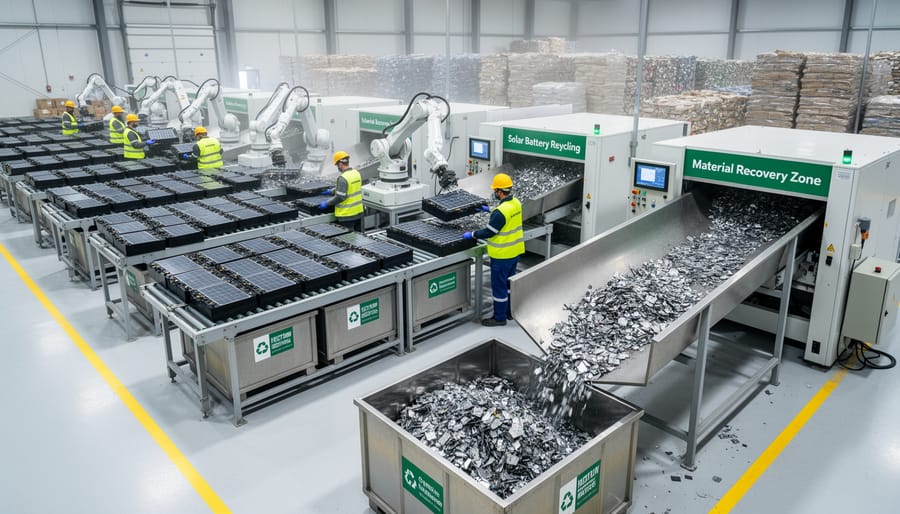
The magic happens during material recovery. Through various techniques including chemical treatments, heating, and filtration, recyclers extract pure materials. Lithium, cobalt, nickel, and graphite can be recovered at impressive rates—some facilities achieve over 95% recovery of certain metals. These reclaimed materials are then cleaned, refined, and sent to manufacturers to create new batteries or other products.
What’s encouraging is that this process keeps getting better. New technologies are making recovery more efficient and cost-effective, meaning more materials stay in circulation rather than requiring fresh mining. For homeowners, this means your old solar battery doesn’t just disappear—its components literally power future clean energy solutions.
Recent Breakthroughs Making Battery Disposal Safer and Easier
The good news is that battery disposal has become significantly safer and more convenient in recent years, thanks to remarkable technological advances and strengthened regulations. If you’re concerned about what happens to your batteries at the end of their life, these developments should put your mind at ease.
On the technology front, recycling facilities have achieved impressive recovery rates that were unthinkable just a decade ago. Modern processes can now recover up to 95% of valuable materials from lithium-ion batteries, including lithium, cobalt, nickel, and manganese. Companies like Redwood Materials and Li-Cycle have developed innovative closed-loop recycling systems that transform old batteries into materials for new ones, creating a circular economy that dramatically reduces waste and mining demands.
Even more encouraging, researchers have recently developed a “direct recycling” method that preserves the battery’s cathode structure, making the recycling process more energy-efficient and cost-effective than traditional methods. This breakthrough means recycling batteries actually uses less energy than mining new materials, turning disposal into an environmental win rather than just damage control.
Regulatory improvements have also made a big difference. The EPA’s updated Universal Waste Rule has simplified collection and transport requirements, making it easier for retailers and collection centers to accept your old batteries. Many states now require battery manufacturers to fund take-back programs, which means you’ll increasingly find free drop-off locations at electronics stores, hardware retailers, and municipal recycling centers.
For homeowners specifically, several battery manufacturers now offer prepaid shipping labels or pickup services when your solar battery reaches end-of-life. Some companies even provide trade-in credits toward replacement batteries, turning disposal into a financial benefit rather than a hassle.
The bottom line? Battery disposal has transformed from a challenging problem into a manageable process with environmental benefits. The systems are in place, the technology works, and accessibility continues to improve each year.
What This Means for Your Home Solar System
If you’re considering solar battery storage or already have a system installed, here’s the good news: the e-waste classification shouldn’t concern you. Modern solar batteries are designed to last 10-15 years with proper use, and manufacturers have built responsible end-of-life management right into their business models.
Most reputable battery manufacturers offer take-back programs as part of their service. When your battery reaches the end of its useful life, the company will often arrange pickup and ensure proper recycling. This isn’t just good corporate citizenship—it’s smart business, since recovered materials like lithium, cobalt, and nickel are valuable and can be reused in new batteries.
The solar industry has learned from past e-waste mistakes. Unlike old electronics that ended up in landfills, today’s battery recycling infrastructure is robust and growing. Companies are legally required to handle these products responsibly, and many states have specific regulations ensuring batteries don’t end up as traditional waste.
When shopping for a solar battery system, simply ask your installer about the manufacturer’s recycling program. Most established brands will have clear documentation about what happens when your battery needs replacement. This information should be readily available and straightforward.
The bottom line? Your solar battery won’t become someone else’s problem. The combination of long lifespans, manufacturer responsibility, and improving recycling technology means you can invest in energy storage with confidence. The environmental benefits of reducing your reliance on fossil-fuel electricity far outweigh any concerns about eventual recycling. Plus, by the time your battery needs replacement, recycling processes will likely be even more efficient than they are today.
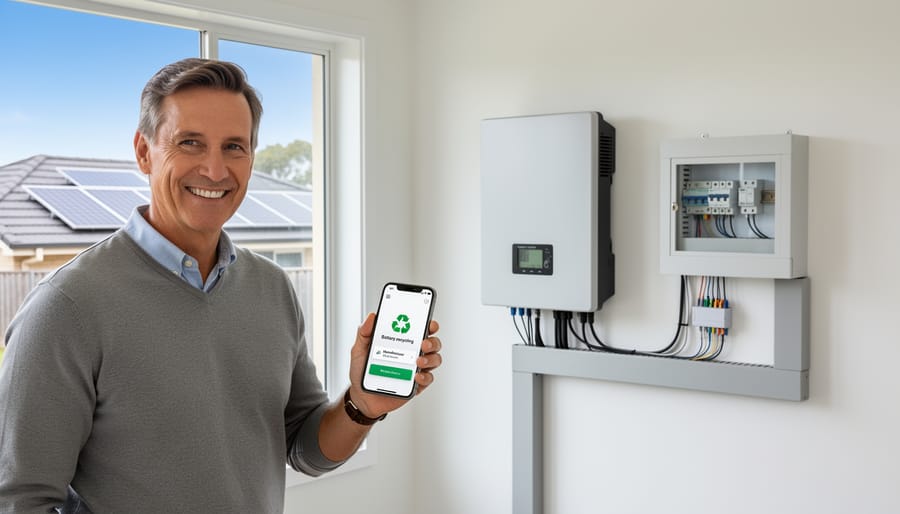
How to Responsibly Handle Your Solar Batteries
Good news: handling solar batteries at end-of-life is simpler than most homeowners expect. The solar industry has built convenient systems to keep these materials out of landfills.
Start by contacting your battery manufacturer. Most major brands like Tesla, LG, and Enphase offer take-back programs or can direct you to certified recycling partners in your area. Some installers will even handle removal and recycling as part of their service package when you upgrade.
If you’re replacing batteries yourself, store them in a cool, dry location away from flammable materials until you arrange pickup. Don’t attempt to disassemble them or dispose of them with regular trash.
To find certified recyclers near you, check Call2Recycle’s locator tool or contact your local waste management facility. Many accept residential battery drop-offs at no charge. Some recycling centers even offer pickup services for larger battery systems, making proper battery disposal as easy as scheduling an appointment.
The bottom line? You won’t be stuck with an unusable battery gathering dust in your garage. Between manufacturer programs, local recyclers, and installer support, you have multiple convenient pathways to responsibly handle your solar batteries when the time comes. The infrastructure exists specifically to make this process straightforward for homeowners like you, protecting both your investment and the environment.
Yes, solar batteries technically fall under the e-waste category, but here’s the good news: that classification doesn’t mean they’re environmental villains. Thanks to modern recycling innovations, today’s batteries are incredibly valuable resources rather than hazardous burdens. Up to 95% of materials in lithium-ion batteries can be recovered and repurposed, turning what once seemed like waste into a circular economy success story.
The bigger picture matters even more. When you choose solar-plus-storage systems, you’re dramatically reducing your carbon footprint and dependence on fossil fuels. The environmental benefits of clean energy far outweigh the manageable recycling considerations at the end of your battery’s 10-15 year lifespan. As recycling infrastructure continues improving and manufacturers embrace sustainable design, the process becomes even more streamlined.
Responsible disposal is simply part of your commitment to sustainable living. By working with certified recyclers and staying informed about local programs, you’re closing the loop on your clean energy investment. The truth is straightforward: solar batteries represent progress, not pollution. With proper end-of-life management, they’re proof that environmental responsibility and modern convenience can work hand in hand.