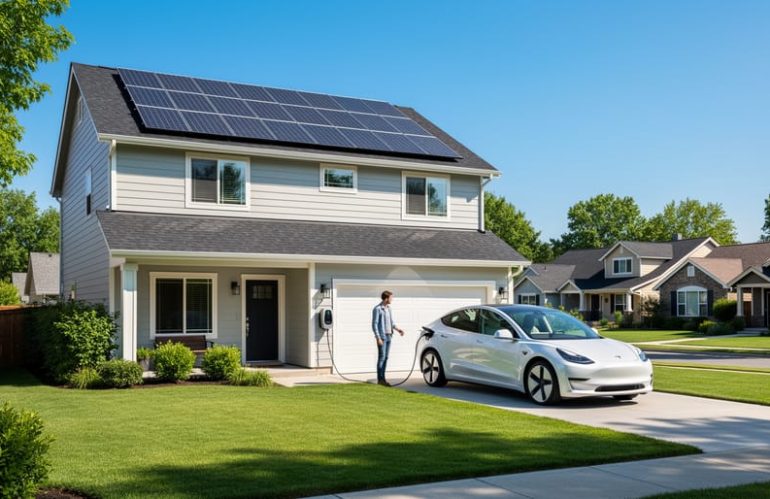
Your solar panels are already generating clean energy, but without proper optimization, you’re likely leaving 15-30% of potential savings on the table. Most homeowners don’t realize their system’s full potential simply because they’re not tracking the right data or adjusting their energy habits accordingly.
Monitor your system’s production patterns during different times of day to identify your peak generation windows—typically 10 AM to 3 PM—then shift high-energy activities like running dishwashers, washing machines, and electric vehicle charging to these hours. This simple timing adjustment means you’re consuming the energy you generate rather than selling it back to the grid at lower rates and buying it back at premium prices during evening hours.
Check your monitoring app weekly for unexpected production dips that signal panel soiling, shading issues, or equipment problems. A sudden 10-15% decrease in output often indicates something as simple as accumulated dust or leaves that you can address immediately, restoring full capacity within minutes.
Set up consumption alerts to catch energy-wasting appliances or habits before they compound over months. Many homeowners discover phantom loads—devices drawing power while “off”—that collectively drain 5-10% of their daily generation, negating the financial benefits they worked hard to achieve.
The difference between a good solar investment and a great one isn’t the equipment you install—it’s how strategically you manage what you already have. Small, consistent optimizations compound into substantial savings that accelerate your payback period and maximize long-term returns.
Why Your Solar Panels Need a Partner
Installing solar panels is an exciting first step toward energy independence, but here’s something many homeowners discover after installation: those gleaming panels on your roof don’t automatically translate to lower electricity bills. Why? Because there’s often a significant mismatch between when your panels produce energy and when your household actually uses it.
Think about your typical day. Your solar panels work hardest between 10 a.m. and 3 p.m. when the sun is strongest. But what’s happening in your home during those peak production hours? If you’re at work and the kids are at school, your house is probably sitting empty, humming along with just the refrigerator and maybe a few standby electronics. Meanwhile, your panels are generating plenty of power with nowhere for it to go.
Then evening arrives. You come home, crank up the air conditioning, start the dishwasher, throw in a load of laundry, fire up the oven, and flip on the TV. Your energy consumption spikes right when your solar production drops to zero. Without realizing it, you’re pulling expensive electricity from the grid during peak hours while your solar investment sits idle in the dark.
This is where smart monitoring systems become essential partners to your solar panels. These systems track both your energy production and consumption in real time, revealing the patterns you can’t see with the naked eye. They show you exactly when you’re generating surplus power and when you’re drawing from the grid, giving you the insights needed to shift your energy-hungry activities to sunnier hours.
Without monitoring, you’re essentially flying blind, unable to capture the full financial and environmental benefits your solar system offers. Understanding this production-consumption dance is the foundation of true renewable energy optimization.
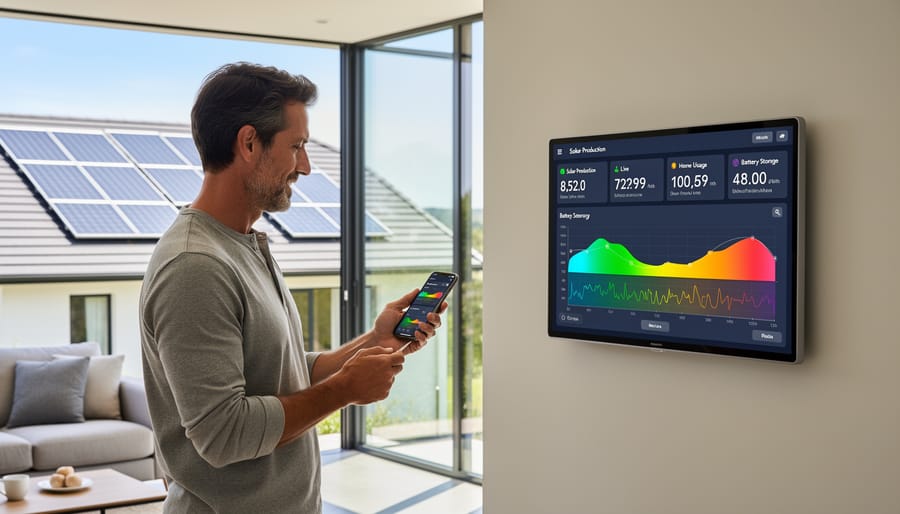
The Three Numbers Every Solar Homeowner Should Track
Peak Production Hours
Your solar panels work hardest between 10 AM and 2 PM when the sun is highest in the sky. During these peak hours, your system generates 60-80% of its total daily energy output. Understanding this window is like knowing when your garden gets the most sunshine—it helps you plan accordingly.
This timing matters because it creates a golden opportunity to slash your electricity costs. When your panels are producing maximum energy, that’s the ideal time to run your dishwasher, do laundry, charge electric vehicles, or run your pool pump. By shifting these energy-hungry tasks to peak production hours, you’re using free solar power instead of buying electricity from the grid.
Think of it as a daily energy harvest. Morning and late afternoon production drops significantly as the sun sits lower on the horizon. Cloud cover, seasonal changes, and your roof’s orientation also affect these peak hours. Most home energy monitors show you real-time production, making it easy to spot your personal peak window.
The financial benefit is straightforward: every kilowatt-hour you use during peak production is money saved. Many homeowners report cutting their grid purchases by 40-60% simply by timing their major energy use with their solar production schedule.
Energy Consumption Patterns
Understanding when and how your household uses energy is the foundation of effective renewable energy optimization. Most homeowners are surprised to discover that their energy consumption follows predictable patterns throughout the day, with distinct peaks during morning routines and evening hours. By tracking these rhythms through your home energy monitoring system, you’ll quickly identify opportunities to shift energy-intensive activities to times when your solar panels are producing the most power.
Common energy-wasting habits often hide in plain sight. That second refrigerator in the garage, running around the clock? It could be consuming more electricity than you’d guess. Pool pumps running during cloudy afternoons, water heaters operating at full capacity during low-production hours, and phantom loads from devices in standby mode all drain power unnecessarily. Monitoring reveals these hidden culprits, giving you the concrete data needed to make smarter decisions.
The good news is that small adjustments create meaningful savings. Running your dishwasher and washing machine during midday hours when solar production peaks means you’re using free, clean energy instead of drawing from the grid. These simple timing shifts help you maximize your solar panels and reduce monthly bills without sacrificing comfort or convenience. Think of energy monitoring as your personal energy coach, showing you exactly where improvements matter most.
Grid Dependency Rate
If you’re still drawing power from the grid after installing solar panels, you’re in good company—and it’s actually completely normal. Most homeowners with solar systems maintain a grid dependency rate between 20-40%, meaning the grid supplies about one-quarter to one-third of their energy needs. Rather than viewing this as a shortcoming, think of it as a smart backup system that keeps your lights on when the sun isn’t shining.
Your grid dependency rate fluctuates based on several factors: seasonal sunlight variations, your household’s energy consumption patterns, and the size of your solar array. Winter months naturally show higher grid usage, while summer typically sees more solar production. Evening hours also increase grid dependency since solar panels don’t generate electricity after sunset.
Understanding your specific rate helps you make informed decisions about optimization. If your rate sits above 50%, there’s likely room for improvement through better energy timing—running dishwashers and washing machines during peak solar hours, for example. However, a 30% grid dependency doesn’t mean your system is underperforming; it means you’re using the grid exactly as intended: as a reliable supplement.
The real win comes from dramatically reducing what you would have pulled from the grid without solar. Even with moderate grid dependency, most homeowners cut their electricity bills by 60-80%. That’s the metric that matters for your wallet and the environment, not achieving an unrealistic zero-grid goal.
Simple Ways to Match Your Energy Use With Your Solar Production
Shift Your Heavy-Use Appliances
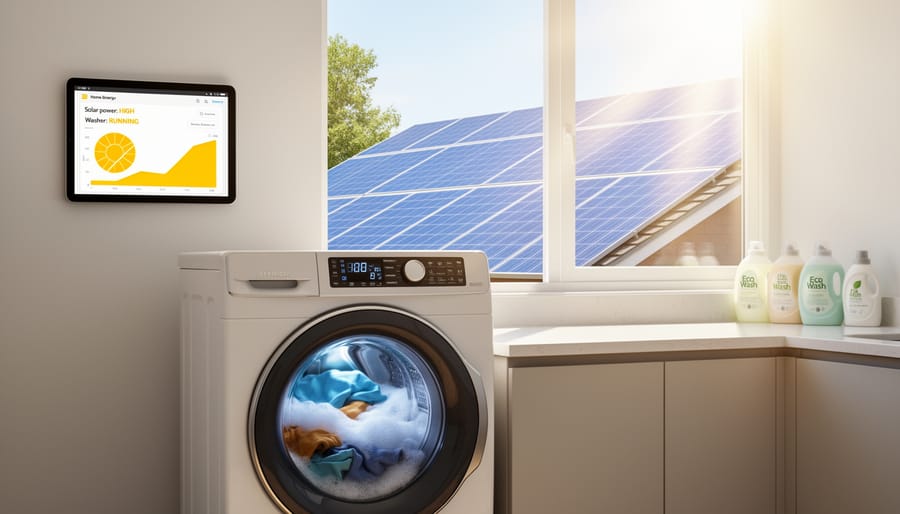
One of the simplest ways to boost your solar savings is timing your energy-hungry appliances to run when the sun is shining brightest. Instead of running your dishwasher after dinner or doing laundry on weekend mornings, shift these tasks to midday when your panels are producing peak power.
Start with the big energy users. Run your washing machine and dryer between 10 AM and 3 PM when solar production is strongest. A typical dryer uses about 3,000 watts per cycle, so running it on solar instead of grid power during evening hours can save you $50-100 annually. If you have a pool pump, program it to run during those same peak hours rather than overnight. Pool pumps are surprisingly energy-intensive, often accounting for 20-30% of a home’s electricity use during summer months.
Electric vehicle owners have the biggest opportunity here. Charging your EV during the day, even if that means plugging in when you’re home for lunch or working remotely, captures free solar energy instead of expensive evening grid power. Depending on your driving habits and utility rates, this simple switch can reduce your charging costs by 60-80%, translating to hundreds of dollars in annual savings.
The beauty of this strategy is its simplicity. You’re not sacrificing comfort or convenience, just adjusting when you press start. Most modern appliances have delay timers that make scheduling effortless, and the savings add up quickly without requiring any additional investment.
Smart Automation That Actually Pays Off
You don’t need an expensive whole-home automation system to start saving money today. Simple smart plugs and programmable timers can transform how your home uses energy, often paying for themselves within months.
Start with the basics: smart plugs for high-energy devices like water heaters, dehumidifiers, and pool pumps. These $15-30 gadgets let you schedule when devices run, automatically shifting energy use to when your solar panels are producing peak power. For most homeowners, this simple switch can reduce grid electricity consumption by 20-30% without changing daily routines.
Programmable thermostats offer even bigger returns. By adjusting temperatures based on your schedule and solar production patterns, you can cut heating and cooling costs by up to $180 annually. Many utility companies offer rebates that cover half the purchase price, making the payback period surprisingly quick.
The beauty of these devices is their simplicity. Most connect through standard smartphone apps with straightforward scheduling options. Set them once, and they work automatically in the background. No programming knowledge required, no complex integrations needed. You’re simply ensuring your home uses the energy you’re already producing rather than letting it go to waste or selling it back to the grid at lower rates.
When Energy Storage Makes Financial Sense
Battery storage isn’t always necessary to optimize your solar system, and that’s good news for your wallet. Think of storage as an advanced tool that makes sense in specific situations rather than a must-have for everyone.
Storage pays off when you have high time-of-use electricity rates with significant peak pricing differences. If your utility charges three times more during evening hours than midday, storing your daytime solar production becomes financially attractive. The system pays for itself by helping you avoid those expensive peak rates.
Homes in areas with frequent power outages also benefit from battery backup, adding resilience alongside savings. However, if your main goal is maximizing solar value and you already have net metering, storage might not offer enough financial return to justify the investment, even when financing your solar investment.
For most homeowners, starting with simple monitoring alone delivers impressive optimization results. Track your production and consumption patterns for several months first. This data reveals whether storage would actually benefit your specific situation or if behavioral adjustments and smart device scheduling already capture most available savings. Storage can always be added later once you understand your energy profile completely.
Monitoring Tools That Don’t Require an Engineering Degree
Good news: you don’t need to be a tech wizard to track your solar system’s performance. Today’s monitoring tools are designed with regular homeowners in mind, making it simple to keep tabs on your energy production and consumption without decoding complex data or wrestling with confusing interfaces.
Most solar installations now come with basic monitoring apps already included in your package. These built-in systems connect directly to your inverter and display real-time information about how much energy your panels are generating, how much you’re using, and what’s being sent back to the grid. Many homeowners find these apps perfectly adequate for everyday monitoring, offering clear visuals like simple graphs and daily summaries that make sense at a glance.
If you want more detailed insights, standalone energy monitors offer additional features without requiring technical expertise. Devices like Sense, Emporia Vue, or Curb connect to your electrical panel and break down your energy use by individual appliance. You’ll quickly spot which devices are energy hogs and when they’re running, helping you make smarter decisions about your usage patterns. These monitors typically cost between $200 and $400 and install relatively easily, though you might want an electrician’s help for the setup.
The beauty of modern monitoring tools is their focus on information that actually matters to you. Instead of drowning you in technical specifications, they highlight practical details: how much money you’re saving today, whether your panels are performing as expected, and when you’re using the most energy. Many integrate seamlessly with smart home systems and send helpful alerts if something seems off with your system’s performance.
As latest solar technologies continue improving efficiency, having user-friendly monitoring becomes even more valuable for maximizing your investment and reducing your monthly bills.
The Myth That Solar Optimization Is Too Complicated
Many homeowners believe that optimizing their solar panels requires an engineering degree or expensive consultants. The truth? Simple changes can dramatically boost your returns without any technical expertise.
Take Jennifer from Arizona, who thought her solar system was performing fine until she started checking her monitoring app weekly. She noticed her panels were producing 30% less energy in the afternoons than expected. A quick inspection revealed tree branches casting shadows that hadn’t been there when she installed her system two years earlier. After a simple trim, her monthly savings jumped from $85 to $115—an extra $360 annually with just one hour of attention.
Similarly, Mark in California discovered his family’s energy habits were working against his solar investment. By shifting his dishwasher and laundry loads to midday when his panels produced peak power, he reduced grid purchases by 40%. His annual savings increased by $480, and he didn’t change what he did—just when he did it.
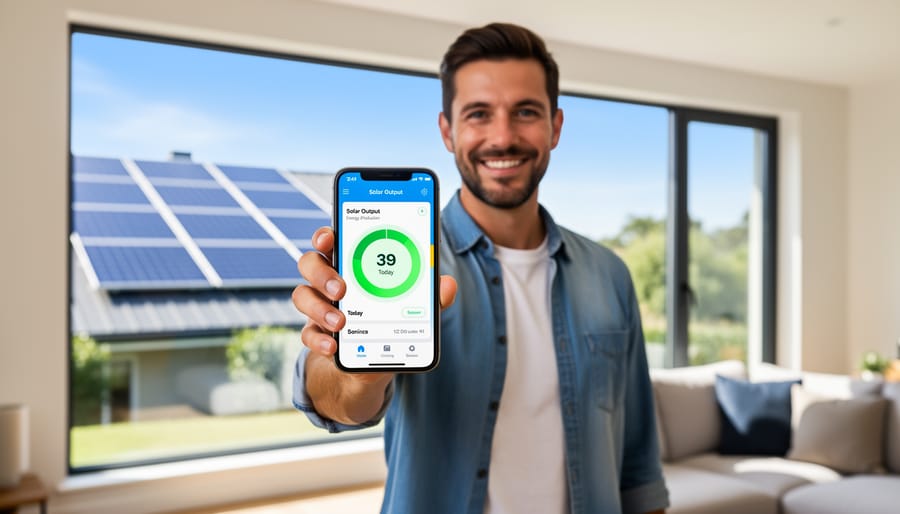
The key is understanding that optimization isn’t about complex calculations or technical adjustments. Most modern solar systems come with user-friendly apps that display production in simple graphs and send alerts when something looks off. These tools translate data into plain language: “Your system produced 15% less than expected this week.”
You don’t need to understand voltage or inverters. You just need to check your app occasionally, keep panels clean, and time your energy use smartly. When questions arise, community support and advice from other solar owners can guide you through simple fixes. The barrier to optimization isn’t complexity—it’s simply getting started.
Monitoring and optimizing your solar energy usage isn’t just smart—it’s one of the best decisions you can make for both your wallet and the planet. By taking control of when and how you use electricity, you’re squeezing every possible dollar of savings from your solar investment while reducing your environmental footprint. The beauty of optimization is that it doesn’t require a complete lifestyle overhaul. Small, strategic adjustments to your daily routine can translate into hundreds of dollars in annual savings and a significantly lighter carbon footprint.
The best part? You’ve already got everything you need to start. This week, commit to taking just one simple action. Open your solar monitoring app and spend five minutes reviewing when your system produces the most energy. Then identify one energy-intensive appliance—your dishwasher, washing machine, or pool pump—and shift its operating schedule to align with your peak production hours. That’s it. This single change sets you on a path toward maximizing the return on your solar investment.
Remember, every kilowatt-hour you generate and use yourself is money that stays in your pocket instead of going to the utility company. As you become more comfortable with your monitoring tools and energy patterns, you’ll discover even more opportunities to optimize. You’re not just managing electricity—you’re actively participating in the clean energy transition while enjoying real financial benefits. Your solar panels are working for you; now it’s time to make them work even harder.