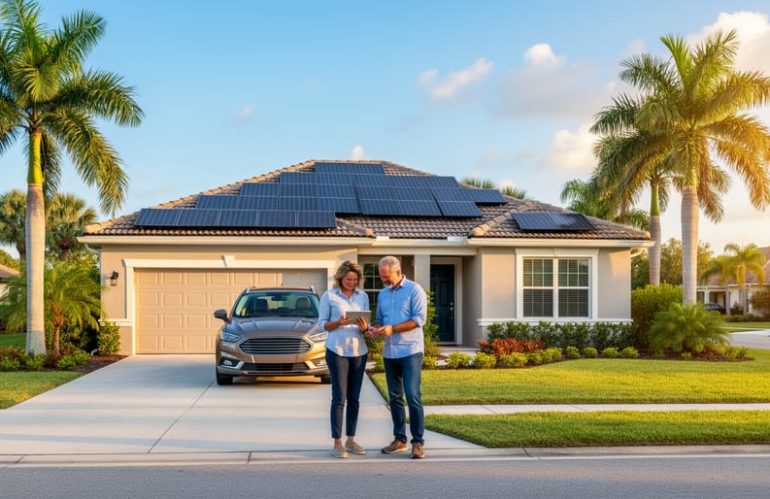
Explore zero-down payment options through solar loans that let you start saving on electricity bills immediately while spreading installation costs over 10-25 years at competitive interest rates. Lock in Florida’s generous net metering program, which credits your account for excess energy your panels produce, effectively turning your electric meter backward during peak sunlight hours. Take advantage of the federal Solar Investment Tax Credit (ITC), which returns 30% of your total installation costs as a direct tax credit—meaning a $20,000 system costs you just $14,000 after your tax refund.
Compare solar leases and Power Purchase Agreements (PPAs) that require zero upfront investment, where a third-party company owns the panels and you simply pay a fixed monthly rate or per-kilowatt-hour price lower than traditional utility rates. Investigate Property Assessed Clean Energy (PACE) financing, available in select Florida counties, which attaches solar payments to your property tax bill and transfers to new owners if you sell. Review the essential facts about going solar before choosing your financing method, ensuring you select the option that maximizes both immediate savings and long-term financial benefits while matching your budget and homeownership timeline.
Why Florida Homeowners Have a Financial Advantage
Florida homeowners enjoy distinct advantages that make solar investment particularly attractive. The Sunshine State lives up to its nickname with over 230 sunny days annually, meaning your solar panels will consistently generate electricity year-round. This abundant sunshine translates directly into faster payback periods and higher long-term savings compared to cloudier regions.
Rising electricity costs create additional urgency. Florida’s utility rates have climbed steadily, with some areas seeing increases of 20-30% over the past decade. As traditional electricity becomes more expensive, solar panels lock in your energy costs and protect you from future rate hikes. Many homeowners see their solar systems pay for themselves in 7-10 years, then enjoy decades of virtually free electricity.
Florida offers specific financial incentives that sweeten the deal. While the state doesn’t have a solar tax credit, homeowners benefit from property tax exemptions on solar installations and sales tax exemptions on equipment purchases. Combined with the federal solar tax credit, these benefits significantly reduce your upfront costs. Additionally, net metering programs allow you to sell excess energy back to the grid, effectively spinning your meter backward and crediting your account.
This combination of natural advantages and financial incentives makes the question of solar worth it especially compelling for Floridians. Your investment works harder here, generating more power and saving more money than in most other states, making financing options even more accessible and affordable.
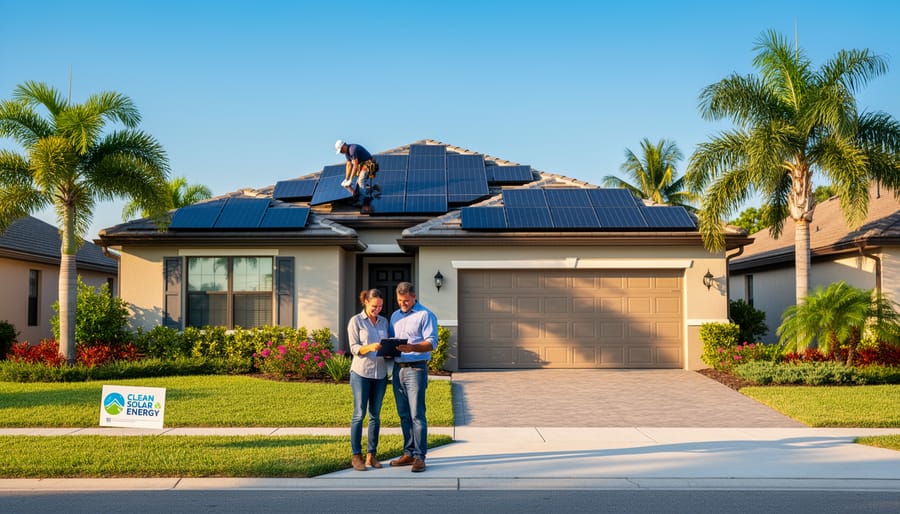
Understanding Your Solar Financing Options
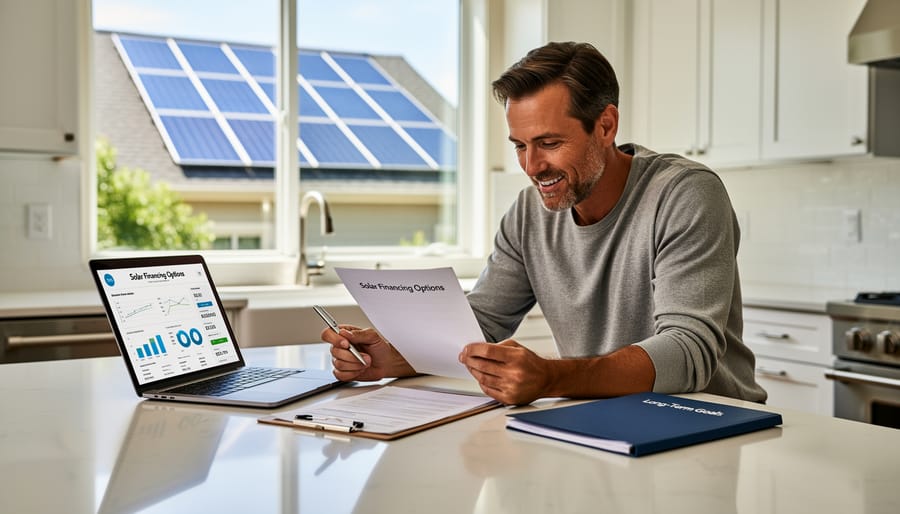
Cash Purchase: When Paying Upfront Makes Sense
Paying cash upfront for your solar panels delivers the biggest bang for your buck. When you own your system outright from day one, you keep every dollar of savings your panels generate—no interest payments, no monthly fees eating into your returns. You’ll typically recoup your investment in 6-8 years through electric bill reductions, and with Florida’s abundant sunshine and panels lasting 25-30 years, that means decades of free electricity.
Cash buyers also claim the full 30% federal tax credit directly, putting thousands back in your pocket at tax time. You’ll avoid the complexity of loan agreements or lease contracts, and if you decide to sell your home, owned systems add more value than financed ones and transfer cleanly to new owners.
This option works best for homeowners with available savings who want maximum financial returns and complete control. If you have the funds set aside and plan to stay in your home long-term, cash purchase offers unbeatable ROI. You’re essentially prepaying decades of electric bills at today’s rates while locking in protection against Florida’s rising utility costs.
Solar Loans: Own Your System While Paying Over Time
Solar loans let you own your system from day one while spreading payments over time—typically between 5 to 25 years. Unlike leases, you immediately enjoy all ownership benefits including the 30% federal tax credit, Florida sales tax exemption, and increased home value.
Here’s how it works: most solar loans come in two forms. Secured loans use your home as collateral (similar to a home equity loan) and typically offer lower interest rates, usually between 3-7%. Unsecured loans don’t require collateral, making approval faster, though rates may be slightly higher. Some lenders even offer interest-free solar loans for promotional periods, helping you maximize savings.
The monthly payment comparison often surprises homeowners. A typical Florida solar system might cost $200-250 monthly over 15 years, while your current electric bill likely runs $150-200. The key difference? Your loan payment eventually ends, but electric bills never do—and they keep rising. Once your loan is paid off, you’re generating free electricity for decades.
Many Florida homeowners choose loan terms matching their expected time in the home. Planning to stay 10+ years? Shorter terms mean you’ll reach zero-cost electricity faster. Moving sooner? Longer terms keep payments lower while the system’s value transfers with your home sale.
Zero down payment options are common, meaning you can start saving immediately without upfront costs.
Solar Leases and Power Purchase Agreements (PPAs)
Solar leases and Power Purchase Agreements (PPAs) let you enjoy solar energy without buying the panels outright. Here’s the key difference: with a solar lease, you pay a fixed monthly fee to use the system, while with a PPA, you pay only for the actual electricity the panels produce at a set rate per kilowatt-hour.
Both options work similarly in practice. A solar company installs panels on your roof at no upfront cost, maintains the system throughout the contract (typically 20-25 years), and you immediately start saving on your electric bill. The solar company owns the equipment and receives any tax credits or incentives.
The main advantage is zero money down and predictable energy costs. You’ll likely pay less than your current utility bill from day one, and you’re protected from Florida’s rising electricity rates. Plus, you don’t worry about maintenance or repairs—that’s the company’s responsibility.
The downside? You won’t own the system, so you miss out on tax credits and the full long-term savings that ownership provides. If you decide to sell your home, the new owner must agree to take over the lease or PPA, which can occasionally complicate sales.
These options make sense if you want immediate savings without upfront investment, don’t have enough tax liability to benefit from credits, or prefer hassle-free maintenance. However, if you qualify for loans or have cash available, purchasing typically delivers better financial returns over time.
Home Equity Loans and HELOCs
If you’ve built up equity in your home, tapping into it can be a smart way to finance solar panels. Home equity loans and Home Equity Lines of Credit (HELOCs) let you borrow against your home’s value, often at lower interest rates than personal loans or credit cards.
The key advantage? Interest on home equity borrowing may be tax-deductible if the funds are used for substantial home improvements, which includes solar installation. This potential tax benefit, combined with typically lower rates, can make home equity financing cost-effective over the long term.
HELOCs offer flexibility—you draw funds as needed and only pay interest on what you use. Traditional home equity loans provide a lump sum with fixed monthly payments, making budgeting easier.
This option works best if you have significant equity available, qualify for favorable rates, and prefer keeping your solar purchase separate from specialized solar loans. However, remember you’re using your home as collateral. If you’re already planning other home improvements or want to consolidate the financing, home equity solutions provide versatility that solar-specific loans don’t offer. Compare the rates and terms carefully against solar loan options to determine which saves you more money overall.
Florida Solar Incentives That Lower Your Cost
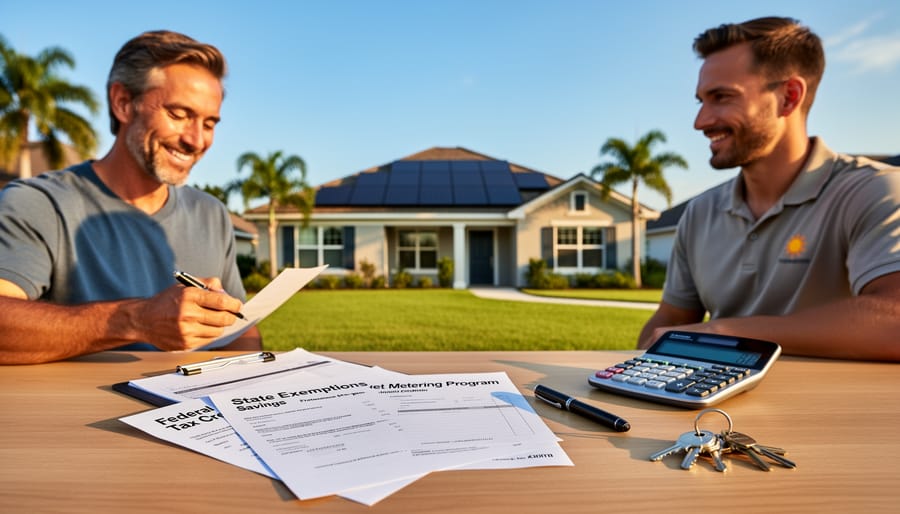
Federal Solar Tax Credit (ITC): Your Biggest Savings
The Federal Solar Investment Tax Credit (ITC) stands as the single most valuable incentive available to Florida homeowners going solar. This program allows you to claim 30% of your total solar installation costs as a credit against your federal income taxes—not just a deduction, but a dollar-for-dollar reduction in what you owe the IRS.
Here’s how it works in practice: If you install a solar system costing $25,000, you’ll receive a $7,500 tax credit. For a $30,000 system, that’s $9,000 back. These credits apply to the complete system cost, including panels, inverters, batteries, installation labor, and even permit fees.
Eligibility is straightforward. You must own your solar system (leases don’t qualify), have sufficient tax liability to claim the credit, and install the system at your primary or secondary U.S. residence. The credit covers systems placed in service through 2032, though the percentage decreases to 26% in 2033 and 22% in 2034.
One common misconception: you’re not limited to using the credit in one year. If your tax liability is lower than the credit amount, you can roll the remaining credit forward to future tax years, ensuring you capture the full benefit.
Combined with other government solar incentives available in Florida, the ITC dramatically reduces your upfront investment, making solar more accessible than ever and significantly shortening your payback period.
Florida Property Tax Exemption for Solar
Here’s a financial perk that many Florida homeowners don’t know about: when you install solar panels, the added value to your home won’t increase your property taxes. Florida’s property tax exemption for solar energy systems means that even though solar panels can boost your home’s market value by thousands of dollars, your property tax assessment stays the same.
Think of it this way: if your solar installation adds $30,000 to your home’s value, you’d typically expect your annual property taxes to increase accordingly. In Florida, that doesn’t happen. You get all the benefits of increased home value without the tax burden that normally comes with home improvements.
This exemption applies to both residential and commercial solar installations and covers the entire solar energy system, including panels, inverters, and batteries. Over the 25-year lifespan of your solar system, this translates to significant savings on top of your reduced electricity bills. It’s one of those rare situations where you genuinely get something for nothing, making solar investment in Florida even more attractive than in many other states.
Net Metering in Florida
Florida’s net metering policy is one of the most homeowner-friendly aspects of going solar in the state. Here’s the straightforward benefit: when your solar panels produce more electricity than your home uses during the day, that excess energy flows back to the grid, and your utility company credits your account. Think of it like your electric meter running backward.
These credits accumulate on your electric bill and offset the energy you draw from the grid at night or on cloudy days. Essentially, the utility company becomes your battery, storing your excess solar production as credits rather than requiring you to purchase expensive physical battery storage upfront.
Florida’s net metering rules require utilities to credit you at the full retail rate for the electricity you generate, not a reduced wholesale rate. This makes your solar investment significantly more valuable and accelerates your payback period. Combined with the financing options available to Florida homeowners, net metering ensures your monthly solar payment is often lower than what you previously paid for electricity alone, creating immediate savings while you build equity in your system.
Local Utility Rebates and Programs
Many Florida power companies want to help you go solar and offer their own cash rebates or special programs. These utility-specific incentives can put hundreds or even thousands of dollars back in your pocket, making your solar investment even more affordable.
For example, some utilities provide upfront rebates when you install solar panels, while others offer bill credits or streamlined interconnection processes. The catch? These programs vary dramatically depending on which power company serves your home. Tampa Electric, Duke Energy Florida, Florida Power & Light, and municipal utilities each have different offerings, and some may have limited funding that runs out quickly.
To find what’s available in your area, start by checking your electric bill to identify your utility provider, then visit their website’s renewable energy section. You can also ask your solar installer directly—they typically know which programs are currently active and can help you apply. Acting quickly matters since many utility rebates operate on a first-come, first-served basis.
Choosing the Right Financing Path for Your Situation
Choosing the best financing path for your solar installation doesn’t have to feel overwhelming. Start by taking an honest look at your current financial situation and what you want to achieve. Here’s a simple framework to guide your decision.
If you have cash available and want maximum long-term savings, purchasing outright delivers the best return on investment. You’ll own the system from day one, claim all available tax credits and incentives, and see the highest lifetime savings. This option makes particular sense if you’re planning to stay in your home for many years.
Don’t have $15,000-$30,000 sitting around? That’s perfectly normal. Solar loans offer an excellent middle ground, allowing you to own your system while spreading payments over time. Look for loans with low interest rates and terms matching your comfort level. The monthly payment often equals or falls below your current electricity bill, meaning you start saving immediately.
For those who want solar benefits without upfront costs or maintenance responsibilities, leases and PPAs provide a straightforward entry point. While you won’t own the system or claim tax credits, you’ll still reduce your energy bills with zero down payment.
Consider your timeline too. Planning to move within five years? Leasing might suit you better. Settling down for the long haul? Ownership through purchase or loan maximizes your investment.
Before making your final decision, review important questions to ask your solar installer about financing terms, warranties, and what happens if you sell your home. The right financing option aligns with both your budget today and your energy goals for tomorrow.
Common Myths About Solar Financing (Debunked)
Let’s clear up some common misunderstandings that might be holding you back from going solar.
First, solar isn’t just for the wealthy anymore. Thanks to financing options like loans, leases, and PPAs, you can start saving on your electricity bills from day one without paying thousands upfront. Many Florida homeowners switch to solar with zero down payment and immediately see lower monthly costs than their previous utility bills.
Second, financing doesn’t eliminate your savings—it actually makes them possible sooner. When you finance solar panels, you’re essentially replacing your electric bill with a predictable monthly payment that’s often lower. Plus, you’re building equity in a system that will eventually be paid off, while utility bills never stop coming. Between Florida’s net metering program and federal tax credits, financed solar still delivers substantial long-term savings.
Third, the process is simpler than you think. Solar companies in Florida have streamlined financing to be straightforward and user-friendly. Most handle the paperwork, pre-qualify you quickly, and explain everything in plain language. You don’t need perfect credit or financial expertise to navigate your options.
The truth is, solar financing was designed specifically to remove barriers and make clean energy accessible to everyday homeowners. If you’ve been waiting because you thought solar wasn’t for you, it’s time to reconsider. The numbers might surprise you in the best way possible.
Making the switch to solar in Florida has never been more achievable. With multiple financing options available—from zero-down loans and flexible payment plans to leases and power purchase agreements—you can start saving on your energy bills without depleting your savings account. The variety of choices means there’s truly a path forward for every budget and financial situation.
Beyond the immediate accessibility, going solar is a decision that pays dividends for years to come. You’ll enjoy lower monthly electricity costs, protection against rising utility rates, and increased home value. Florida’s abundant sunshine makes your investment even more worthwhile, generating significant energy savings year-round. Plus, you’re contributing to a cleaner environment and helping build a more sustainable future for your community.
The myths about solar being unaffordable or complicated are simply outdated. Today’s financing landscape has been designed with homeowners like you in mind—straightforward, flexible, and financially smart. Whether you choose to own your system outright, finance through a loan, or opt for a no-money-down lease, you’re making a positive change that benefits both your wallet and the planet.
Ready to discover which financing option works best for your situation? The next step is simple: get a personalized financing assessment tailored to your home, energy needs, and financial goals. Contact a qualified solar installer today to explore your options and start your journey toward energy independence and lasting savings.