Your air conditioner’s SEER rating directly determines how much you’ll spend on cooling every summer, yet most homeowners don’t understand what those numbers actually mean for their wallets. The Seasonal Energy Efficiency Ratio measures how efficiently your HVAC system converts electricity into cooling power across an entire season, not just one perfect day in a lab. A system rated at 16 SEER uses roughly 38% less energy than an older 10 SEER unit, translating to hundreds of dollars in annual savings depending on your climate and usage patterns.
Understanding SEER becomes especially valuable when you’re comparing new air conditioners or heat pumps, as higher ratings mean lower operating costs that compound year after year. The formula itself divides total cooling output by total energy input during a typical cooling season, accounting for temperature fluctuations and varying humidity levels you actually experience at home. This seasonal approach gives you a realistic picture of performance, unlike older metrics that only measured efficiency at a single temperature.
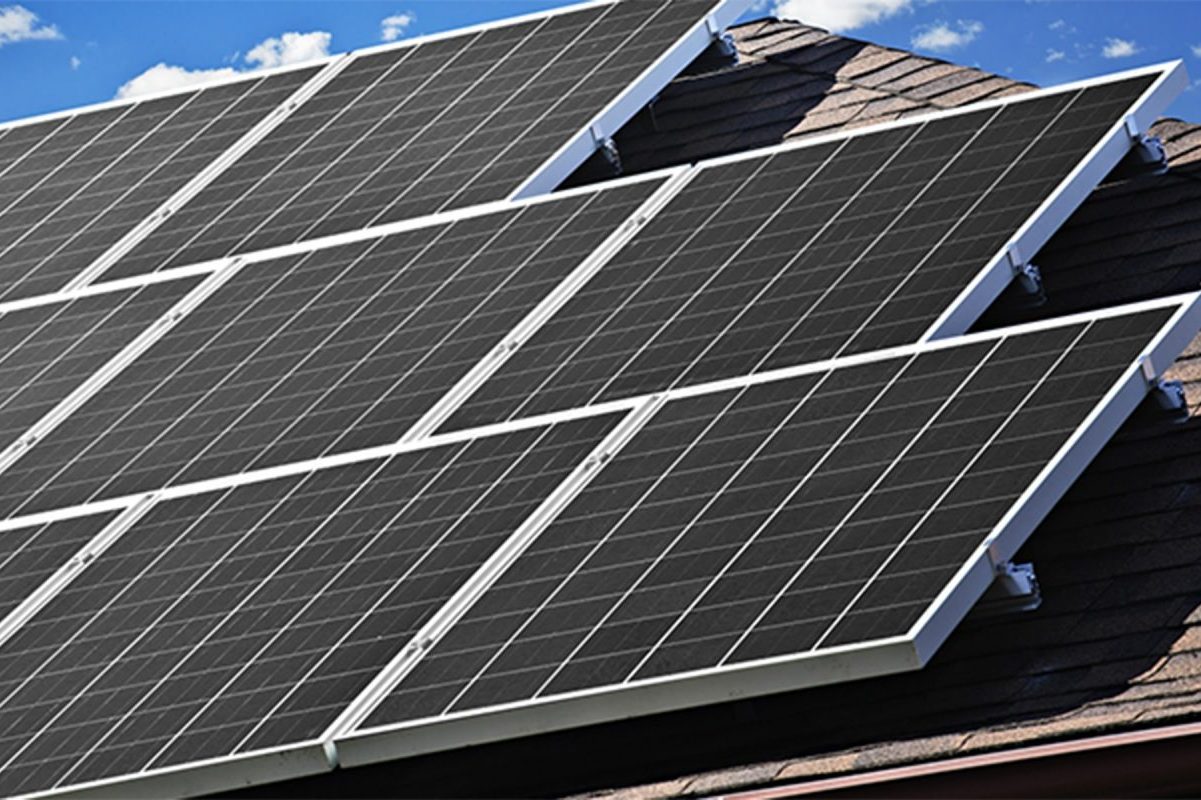
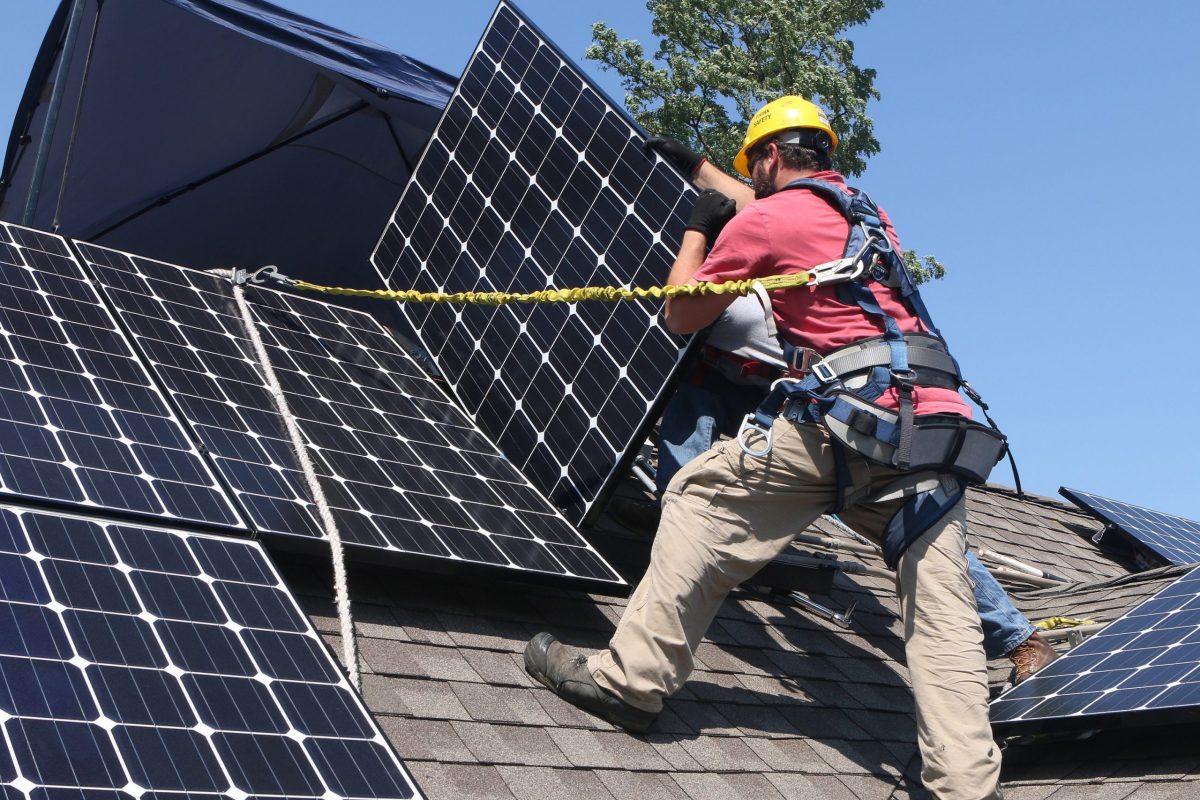
When you combine a high-efficiency HVAC system with solar panels, you maximize savings by reducing both how much energy you need and what you pay for it, creating a powerful one-two punch against high utility bills.
What SEER Actually Measures (In Plain English)
SEER stands for Seasonal Energy Efficiency Ratio, and it’s essentially your air conditioner’s miles-per-gallon rating. Just like you want a car that goes further on less gas, you want an AC unit that delivers more cooling while using less electricity.
Here’s the straightforward version: SEER measures how much cooling your air conditioner produces for every dollar you spend on electricity. A higher SEER number means more bang for your buck. If you see a unit with a SEER rating of 16, it’s more efficient than one rated at 13, plain and simple.
The word “seasonal” is important. Your AC doesn’t work the same way in mild spring weather as it does during a brutal July heatwave. SEER takes this into account by averaging performance across different outdoor temperatures throughout an entire cooling season. This makes it more realistic than a single test performed under perfect conditions.
The basic formula divides the total cooling output (measured in British Thermal Units, or BTUs) by the total electricity used (measured in watt-hours). Don’t worry about memorizing this calculation—manufacturers have already done the math and printed the SEER rating on that yellow EnergyGuide label.
What matters most for your wallet: Every point increase in SEER can reduce your cooling costs by approximately 5 to 10 percent. So upgrading from a 10 SEER unit to a 16 SEER unit could cut your summer electricity bills nearly in half. When you combine an efficient AC system with solar panels to power it, those savings compound beautifully, giving you comfortable temperatures year-round while keeping money in your pocket and reducing your environmental impact.
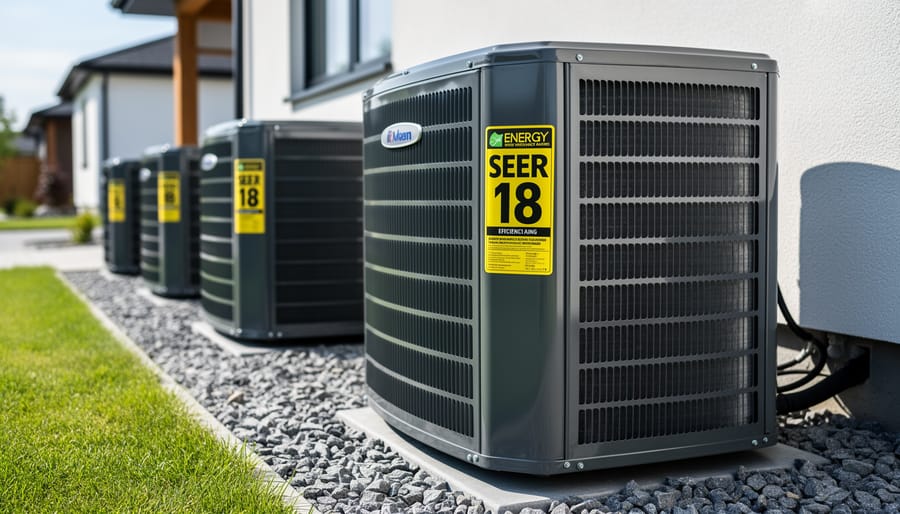
The SEER Formula: Breaking It Down Without the Headache
Think of SEER like your car’s miles-per-gallon rating, but for your air conditioner. Instead of measuring how far you can drive on a gallon of gas, SEER measures how much cooling you get from each unit of electricity.
The basic formula is surprisingly straightforward: take the total cooling output your AC provides over an entire cooling season (measured in BTUs) and divide it by the total energy it uses during that time (measured in watt-hours). The result is your SEER number.
Here’s the key insight: a higher SEER number means better efficiency and lower energy bills. An air conditioner with a SEER rating of 16 uses about 30% less electricity than one rated at 13 to deliver the same cooling comfort. That difference shows up directly on your monthly electric bill.
Why does this matter to you? Let’s say your current AC has a SEER of 10, and you’re considering upgrading to a unit with a SEER of 16. You’re essentially getting 60% more cooling per dollar spent on electricity. Over a typical cooling season, that translates to hundreds of dollars in savings, making it one of the smartest investments you can make in your home.
The beauty of SEER is that it accounts for real-world conditions throughout spring, summer, and fall, not just peak performance on the hottest day. This seasonal approach gives you a realistic picture of what to expect from your energy bills all season long.
Why Your SEER Rating Changes With the Seasons
Summer Performance: When Your System Works Hardest
Summer is when your air conditioner earns its keep, running long hours to keep your home comfortable during scorching days. This is precisely when your system’s SEER rating translates directly into dollars on your monthly bill. A higher-rated unit doesn’t just work harder during peak season; it works smarter, using less electricity to deliver the same cooling power.
Here’s the real-world impact: During July and August, when temperatures soar and your AC runs nearly nonstop, a 16 SEER system can save you 20-30% compared to an older 12 SEER model. That’s not just an annual savings spread thin across twelve months; it’s concentrated relief exactly when your bills tend to spike highest.
The good news? You can maximize these savings further by pairing efficient equipment with smart summer cooling strategies like optimal thermostat settings and proper maintenance. When combined with solar panels, your high-SEER system essentially runs on sunshine during peak cooling hours, turning your biggest energy expense into an opportunity for independence from the grid.
Spring and Fall: The Sweet Spot for Efficiency
Spring and fall are your HVAC system’s favorite seasons, and your wallet will love them too. When outdoor temperatures hover between 60-75°F, your air conditioner or heat pump doesn’t have to work nearly as hard to maintain comfortable indoor conditions. This means your system operates much closer to its rated SEER number, delivering the efficiency you paid for.
Think of it like driving a car on flat terrain versus climbing steep hills. During extreme summer heat or winter cold, your system is essentially climbing mountains all day long, burning through energy faster than its rating suggests. But in moderate weather, it’s cruising on level ground, sipping electricity instead of guzzling it.
Here’s how to maximize savings during these golden months. First, take advantage of free cooling and heating by opening windows during pleasant weather instead of running your HVAC system at all. Second, schedule your annual maintenance during shoulder seasons when technicians are less busy and can ensure your system is ready for the demanding months ahead. Finally, these moderate months are perfect for observing your actual energy consumption patterns, giving you realistic data about your system’s performance that you can use to make informed decisions about upgrades or solar integration down the road.
What SEER Rating Should You Actually Care About?
Here’s the truth that HVAC salespeople won’t tell you: you probably don’t need the highest SEER rating available. While a SEER 20+ unit sounds impressive, it’s often overkill for the average household and won’t pay for itself before the system needs replacing.
For most homeowners, the sweet spot sits between SEER 14 and SEER 16. If you live in a moderate climate where your air conditioner runs only a few months yearly, even a SEER 14 unit can deliver excellent value. The price jump to ultra-high-efficiency models simply won’t translate into enough savings to justify the extra cost.
Climate matters enormously in this decision. Southern homeowners who run their AC nearly year-round should lean toward SEER 16-18 ratings, where the investment pays off through substantial energy savings. Meanwhile, folks in cooler northern regions can comfortably choose lower ratings without seeing their bills skyrocket.
Home size plays a role too, but not how you’d expect. A larger home doesn’t automatically need a higher SEER rating. Instead, focus on proper sizing for your square footage. An appropriately sized SEER 15 unit will outperform an oversized SEER 18 system every time.
The real money-saving move? Combine a moderately efficient AC unit with solar panels. This strategy gives you the efficiency benefits you actually need while slashing your overall energy costs. You’ll enjoy comfortable temperatures and lower bills without overpaying for efficiency ratings that sound good but don’t deliver proportional returns.
Making SEER Work Harder for You: Seasonal Adjustment Strategies
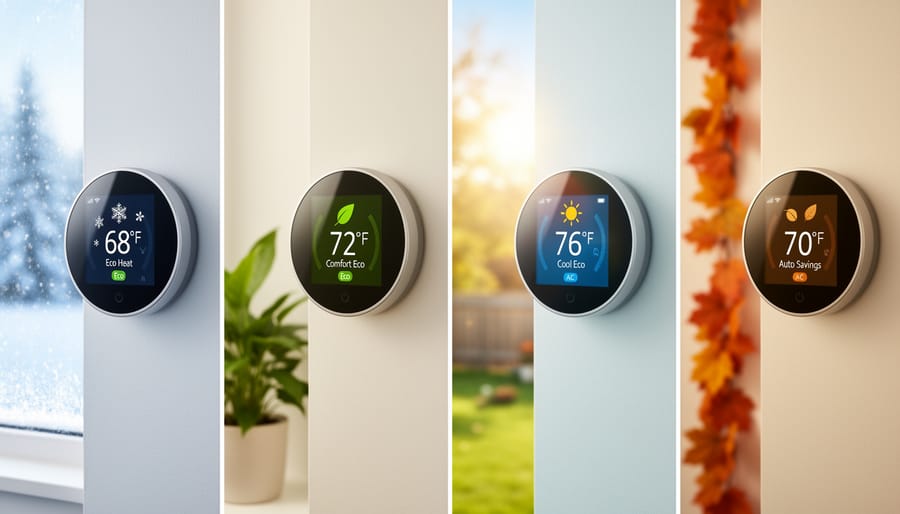
Thermostat Tricks That Actually Save Money
Your thermostat settings play a bigger role in energy savings than you might think. In summer, set your thermostat to 78°F when you’re home and bump it up a few degrees when you’re away. Each degree above 72°F can save you up to 3% on cooling costs. For winter, aim for 68°F during waking hours and lower it while sleeping or away from home.
Modern smart home energy control systems make this effortless by learning your schedule and adjusting automatically. You’ll save around 10% annually just by dialing back temperatures 7-10 degrees for eight hours daily. The myth that cranking your thermostat heats or cools faster? Completely false. Your system works at the same speed regardless, so you’re just wasting energy by overshooting your target temperature. These simple adjustments maximize your SEER-rated system’s efficiency year-round.
Maintenance Moves That Protect Your Investment
Your HVAC system performs best when it’s well-maintained, protecting both your wallet and your SEER rating. Start with the easiest task: change your air filters every one to three months. Dirty filters force your system to work harder, driving up energy use by up to 15%. Next, keep your outdoor unit clear of leaves, grass clippings, and debris that block airflow. Schedule professional tune-ups twice yearly, ideally before summer and winter peak seasons. A technician will check refrigerant levels, clean coils, and ensure all components run smoothly. These simple steps cost far less than premature equipment replacement and keep your system operating at its rated efficiency year after year, maximizing the energy savings you counted on when you chose a high-SEER unit.
When to Call in the Professionals
If your energy bills keep climbing despite normal use, or certain rooms never feel quite comfortable, your HVAC system might be underperforming. Strange noises, frequent cycling on and off, or visible ice buildup on outdoor units are clear red flags worth investigating.
A professional HVAC technician can measure your system’s actual SEER performance and identify issues like refrigerant leaks, blocked airflow, or failing components that silently drain your wallet. Annual tune-ups typically cost between $80-150 but can improve efficiency by 15-20 percent, paying for themselves within months through lower bills.
If your system is over 10 years old with a SEER below 14, getting a professional assessment helps you decide whether repairs make sense or if upgrading to a modern high-SEER unit offers better long-term savings. Think of expert help as an investment in comfort and efficiency, not just an expense.
How Solar Panels Supercharge Your SEER Savings
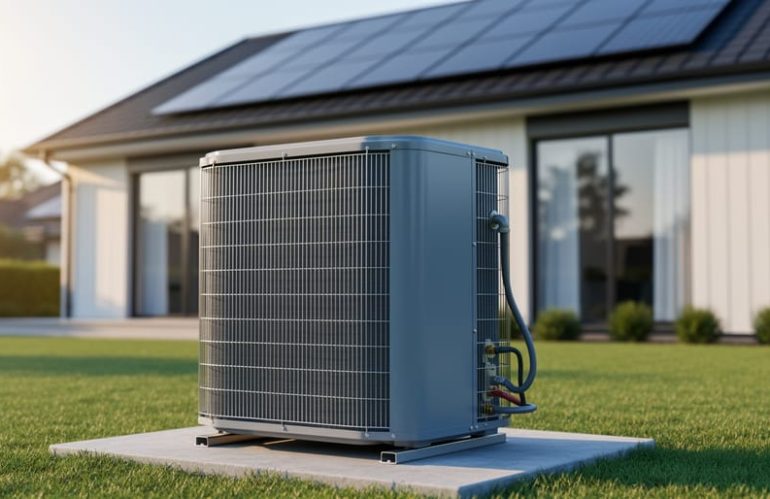
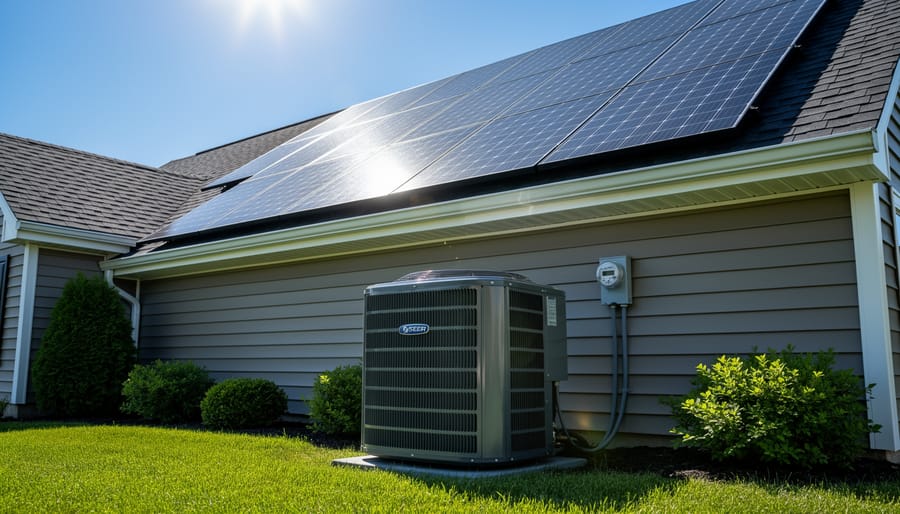
Here’s the perfect match: a high-SEER air conditioner powered by solar panels. When you pair an energy-efficient cooling system with solar power, you’re not just saving money—you’re multiplying those savings.
Think about it this way. Your efficient 18-SEER air conditioner already uses less electricity than older models. Now imagine running that system on free energy from the sun. During summer months when your AC works hardest, your solar panels are also producing their maximum output. It’s a timing match made in energy-saving heaven.
The math is compelling. Let’s say your high-SEER system reduces your cooling costs by 30% compared to an older unit. Add solar panels that cover 80% of your home’s electricity needs, and you’re looking at massive reductions in your monthly bills. Many homeowners find their summer electricity costs drop to nearly zero.
The benefits go beyond simple addition. High-SEER systems draw less power, which means you can potentially install a smaller solar array to cover your needs. That translates to lower upfront costs for your solar investment. Plus, during peak electricity hours when utility rates spike, your panels are generating the most power right when cooling demand is highest.
This combination also protects you from rising energy costs. As electricity rates increase over time, your solar-powered efficient AC keeps humming along without the financial sting. You’ve essentially locked in lower cooling costs for decades.
The environmental impact deserves mention too. Running an efficient system on clean solar energy dramatically reduces your carbon footprint during the hottest months when power grids are most strained.
Understanding your SEER rating is just the beginning of your energy-saving journey. By choosing high-efficiency HVAC systems and maintaining them properly, you’re already taking meaningful steps toward lower energy bills and a smaller environmental footprint. Remember that energy efficiency works best as part of a bigger picture. Consider how your cooling costs interact with your overall home energy consumption throughout all seasons.
Here’s an empowering thought: when you combine an efficient HVAC system with renewable energy, you multiply your savings potential. Solar panels can offset the electricity your air conditioner uses during those hot summer months when your system works hardest. Many homeowners discover that pairing these technologies creates year-round energy independence they never thought possible. Plus, government energy incentives make this combination more affordable than ever before.
Take time to explore how solar energy might complement your efficient cooling system. You’ve already learned how seasonal efficiency matters. Now imagine powering that efficiency with sunshine, turning your biggest energy expense into an opportunity for true energy freedom.