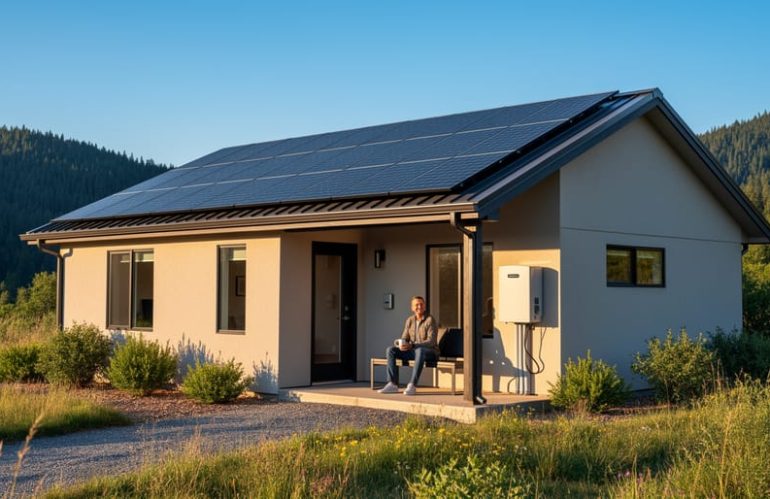
Imagine cutting your electricity bill to zero while gaining complete energy independence—without needing an engineering degree to understand how. Off-grid solar power has shed its reputation as complicated, expensive technology reserved for survivalists and tech experts. Today’s systems are surprisingly straightforward, with plug-and-play components that homeowners can understand in an afternoon rather than months of research.
The confusion surrounding off-grid solar typically stems from outdated information and industry professionals who overcomplicate simple concepts. You don’t need to memorize complex formulas or understand electrical engineering. What you actually need is a clear roadmap that explains four essential components: solar panels that capture sunlight, batteries that store energy, inverters that convert power for your home, and charge controllers that protect your investment. That’s it.
This guide strips away the technical noise and focuses on what matters to you: how much it costs, how long it takes to install, and whether it genuinely saves money. You’ll discover that transitioning to solar doesn’t require abandoning the grid overnight. Many homeowners start with backup systems that provide security during outages while reducing monthly bills, then expand as their confidence grows.
Whether you’re motivated by rising energy costs, environmental concerns, or simply wanting independence from utility companies, understanding off-grid solar shouldn’t feel like learning a foreign language. The technology works for you, not the other way around.
What Off-Grid Solar Actually Means (And What It Doesn’t)
Let’s clear up the confusion. Off-grid solar simply means your home generates its own electricity without relying on the traditional power company. That’s it. You’re producing and storing your own energy instead of buying it from the utility grid.
Here’s what off-grid solar doesn’t mean: You won’t be living like a pioneer, rationing electricity, or giving up modern conveniences. You don’t need to move to a remote cabin or dramatically alter your lifestyle. With properly sized independent solar systems, you can power everything from air conditioning to kitchen appliances just as you do now.
The key difference between off-grid and grid-tied systems comes down to dependence. Grid-tied systems connect to your utility company, allowing you to pull power when needed and sometimes sell excess energy back. Off-grid systems operate independently, using battery storage to supply power during nighttime and cloudy days. You’re completely self-sufficient.
Many people believe going off-grid requires extreme sacrifices or technical expertise. The truth is modern solar technology has evolved dramatically. Today’s systems are user-friendly, reliable, and designed for everyday homeowners, not just engineers or survivalists.
The biggest myth? That off-grid living is all or nothing. You can start with a solar backup system for essential appliances and gradually expand. You control the pace and scope of your energy independence.
Think of off-grid solar as taking ownership of your power supply, much like having your own well instead of city water. It’s about freedom from utility bills, protection from power outages, and investing in your property’s long-term value.
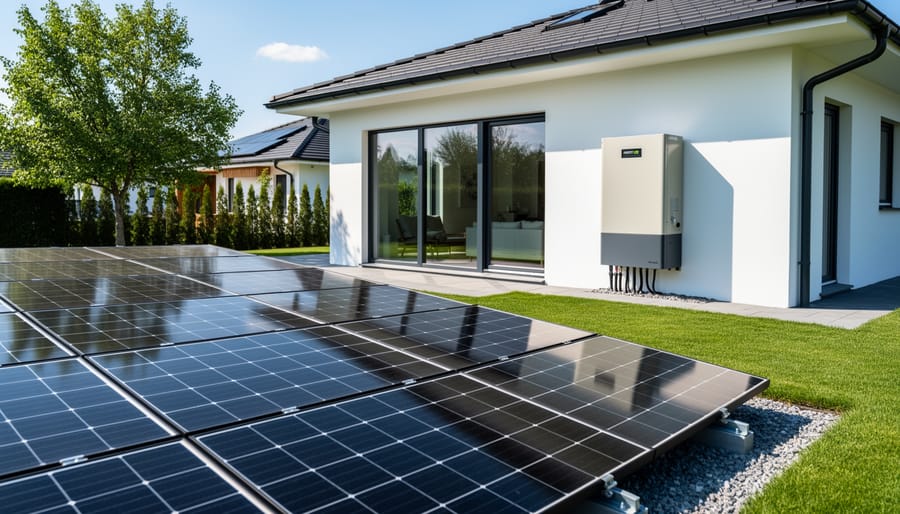
The Three Core Components That Make Off-Grid Solar Work
Solar Panels: Your Power Generators
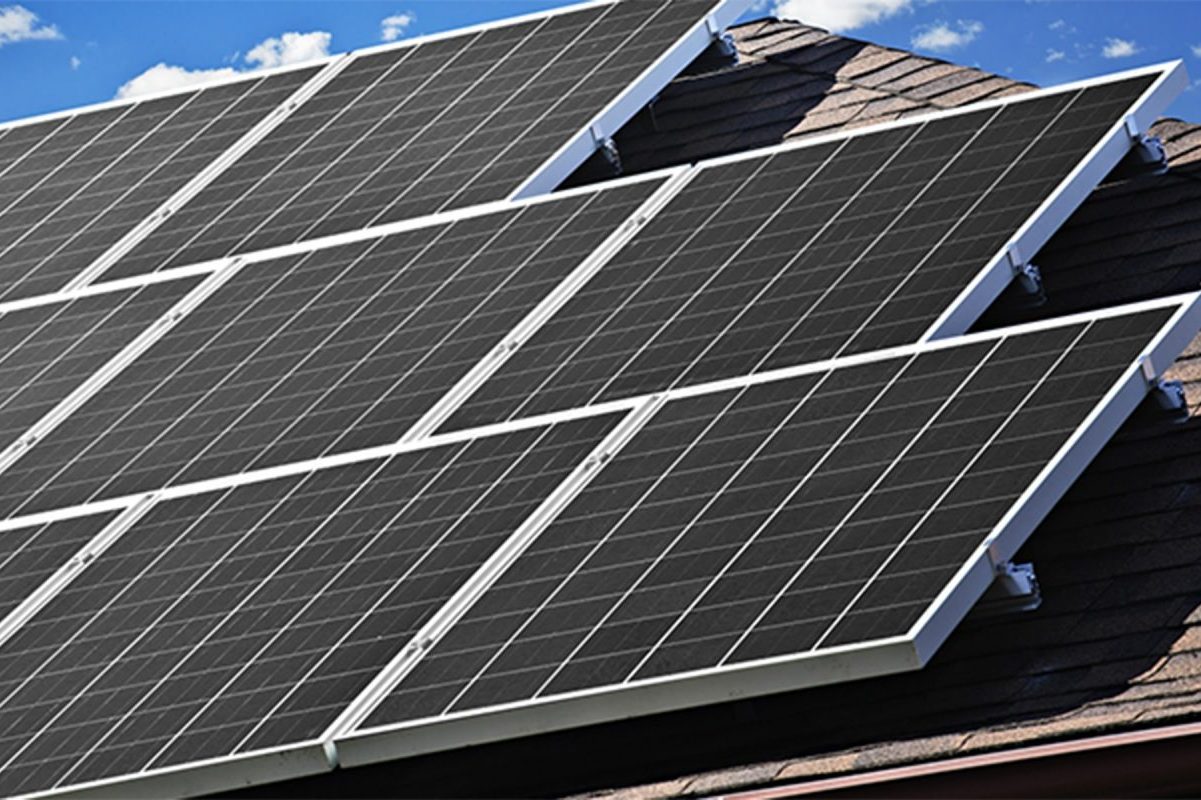
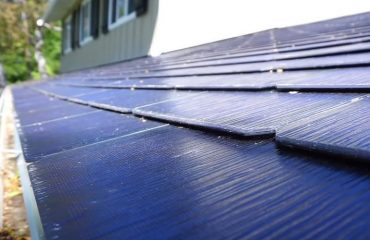
Solar panels are essentially energy catchers that work like nature’s own power plants. When sunlight hits the panel’s surface, it activates special cells made of silicon that create an electrical current. Think of it like how a solar calculator powers on when exposed to light, but on a much larger scale. These panels don’t need moving parts or fuel, they simply convert free sunshine into electricity you can use right away.
Here’s the good news: modern solar panels work even on cloudy days, though they produce more power in direct sunlight. They’re surprisingly durable too, typically lasting 25-30 years with minimal maintenance. The electricity they generate starts as DC power, the same type that charges your phone, which then gets converted to standard household AC power through an inverter. This means you can power everything from your refrigerator to your laptop using nothing but captured sunlight, reducing or even eliminating your monthly electric bills while taking a meaningful step toward energy independence.
Battery Storage: Your Energy Bank Account
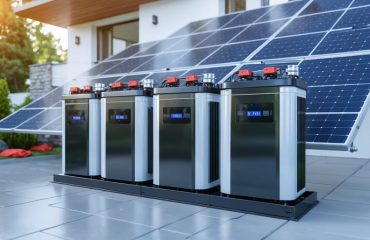
Think of solar battery storage as your personal energy savings account. During sunny days, your panels generate more electricity than you need, and instead of losing that excess power, your batteries save it for later. When the sun sets or clouds roll in, you simply withdraw from your stored energy reserves.
Modern battery systems have come a long way from the old, high-maintenance versions you might remember. Today’s lithium batteries are reliable, compact, and designed to last 10-15 years with minimal upkeep. They automatically manage charging and discharging, so you don’t have to think about it.
The size of your battery bank determines how many days you can run without sunshine. Most homeowners choose 2-3 days of backup capacity, providing peace of mind without breaking the bank. This smart approach means you’re never left in the dark.
Inverters: Your Power Translator
Think of your inverter as a translator between your batteries and your home. Your solar panels and batteries speak in “DC” (direct current), but your appliances, lights, and electronics need “AC” (alternating current) – the same type of electricity that comes from the grid.
The inverter performs this essential conversion automatically and instantly. When you flip a light switch or turn on your refrigerator, it draws power from your batteries through the inverter, which transforms it into usable household electricity in milliseconds.
Modern inverters are surprisingly efficient, converting 90-95% of your stored energy with minimal loss. They also include built-in safety features that protect your appliances from power surges and automatically shut down if something goes wrong.
Here’s the good news: you don’t need to understand the complex electronics inside. Quality inverters work reliably in the background, requiring little maintenance. The key is choosing the right size for your energy needs – typically measured in watts – which your solar installer will help you determine based on your household consumption.
Sizing Your System: How Much Solar Do You Really Need?
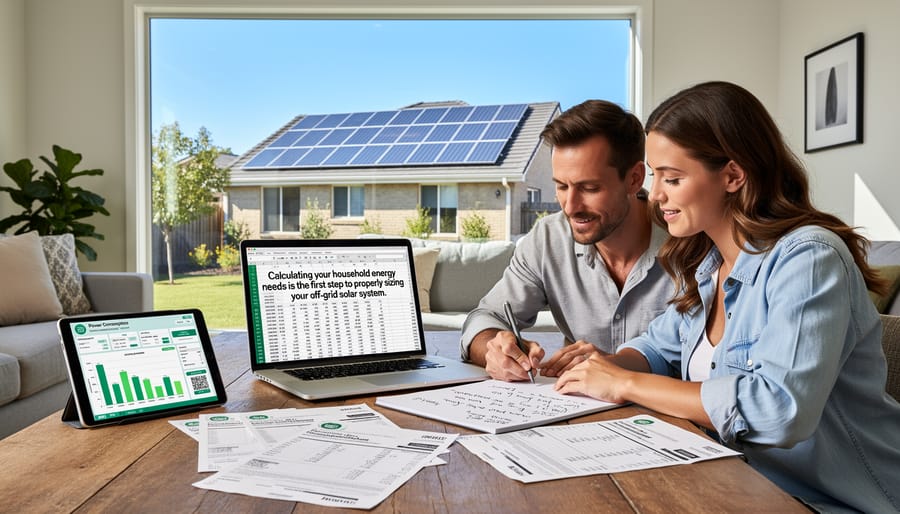
Figuring out how much solar power you need doesn’t require an engineering degree. Think of it like planning a grocery budget: you simply need to know what you’re consuming. Start by grabbing your last three electricity bills and finding your average daily kilowatt-hour (kWh) usage. Most bills show this clearly, or you can divide your monthly total by 30.
Here’s a simple real-world example: If your home uses 30 kWh per day, you’ll need a solar system that can generate that amount, plus about 25% extra to account for cloudy days and inefficiencies. That means targeting around 37-40 kWh of daily production.
To translate this into solar panels, use this straightforward formula: divide your daily needs by your area’s average sun hours. Most regions get between 4-6 peak sun hours daily. Using our example, if you need 40 kWh and receive 5 sun hours, you’ll need an 8-kilowatt system (40 divided by 5). Since most residential panels produce 300-400 watts, that’s roughly 20-27 panels.
But here’s the good news: you don’t have to power everything at once. Many homeowners reduce their needs by 30-40% through simple efficiency upgrades like LED lighting and energy-efficient appliances. This dramatically cuts system costs while maintaining comfort.
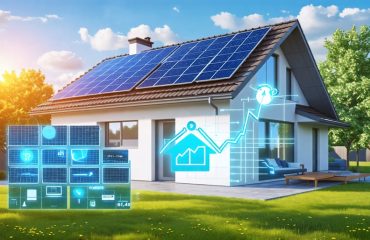
Modern solar energy management systems also help by prioritizing essential loads during low-production periods, meaning you can start smaller and expand later. Consider tracking your usage for a week to identify your true essentials versus nice-to-haves. This practical approach prevents over-building your system and wasting money on unused capacity, while ensuring you have enough power for what truly matters to your household.
The Financial Reality: What You’ll Actually Spend (And Save)
Let’s talk real numbers, because understanding what you’ll actually spend is key to making this decision with confidence.
A basic off-grid solar system typically costs between $15,000 and $30,000 for an average home, depending on your energy needs. Yes, that’s a significant upfront investment, but here’s what makes it worthwhile: you’re essentially prepaying for decades of electricity at today’s rates. While your neighbors watch their utility bills climb 3-5% annually, your energy costs stay locked in.
The good news gets better when you factor in incentives. The federal solar tax credit currently covers 30% of your installation costs, immediately bringing that $20,000 system down to $14,000. Many states offer additional rebates, and some rural areas provide specific grants for off-grid installations. These incentives can reduce your actual out-of-pocket expense by 40-50%.
Most homeowners see payback periods between 7-12 years, but this varies based on your current electricity rates and energy consumption. If you’re currently paying $200 monthly for electricity, that’s $2,400 annually, or $24,000 over ten years sent to the utility company with nothing to show for it. Your solar system, meanwhile, is an asset that increases property value while generating free power.
The long-term savings are where off-grid solar truly shines. Over a 25-year lifespan (most panels are warrantied for this long), you’re looking at $60,000-$100,000 in avoided utility costs. Factor in rising electricity rates, and that number climbs even higher.
Perhaps most valuable is the predictability. No more surprise rate hikes, no seasonal spikes, just consistent, reliable power you control. For many families, this financial certainty is worth as much as the actual savings.
Solar Backup Systems: Your Safety Net for Grid Independence
Not quite ready to cut ties with the power grid entirely? You’re not alone. Most homeowners who dream of energy independence still value the security of staying connected to traditional electricity—at least as a backup plan. That’s where solar backup systems shine as the perfect middle ground.
Think of a backup system as your energy insurance policy. Your solar panels and battery storage handle your daily power needs, but you maintain a connection to the grid for those rare occasions when you need extra support. Maybe it’s an unusually cloudy week, or perhaps your energy usage spikes during a special event. Either way, you’re covered.
This hybrid approach offers significant advantages. You’ll immediately slash your electric bills while building confidence in your solar setup. There’s no pressure to perfectly size your system from day one because the grid acts as your safety net. You can start smaller and expand over time as you learn your actual energy patterns.
The financial benefits are compelling too. Many utility companies offer net metering programs, meaning excess solar energy you generate gets credited to your account. During sunny months, you might actually earn credits that offset winter usage or cloudy periods.
For families transitioning toward sustainable living, backup systems remove the fear factor. You’re not gambling with your family’s comfort or risking power outages during critical moments. Instead, you’re taking a measured, practical step toward energy independence while maintaining peace of mind. It’s energy freedom without the commitment anxiety.
Installation Made Simple: What to Expect From Start to Finish
The good news? Installing an off-grid solar system is far less complicated than you might imagine. Understanding what happens from consultation to activation helps take the mystery out of the process.
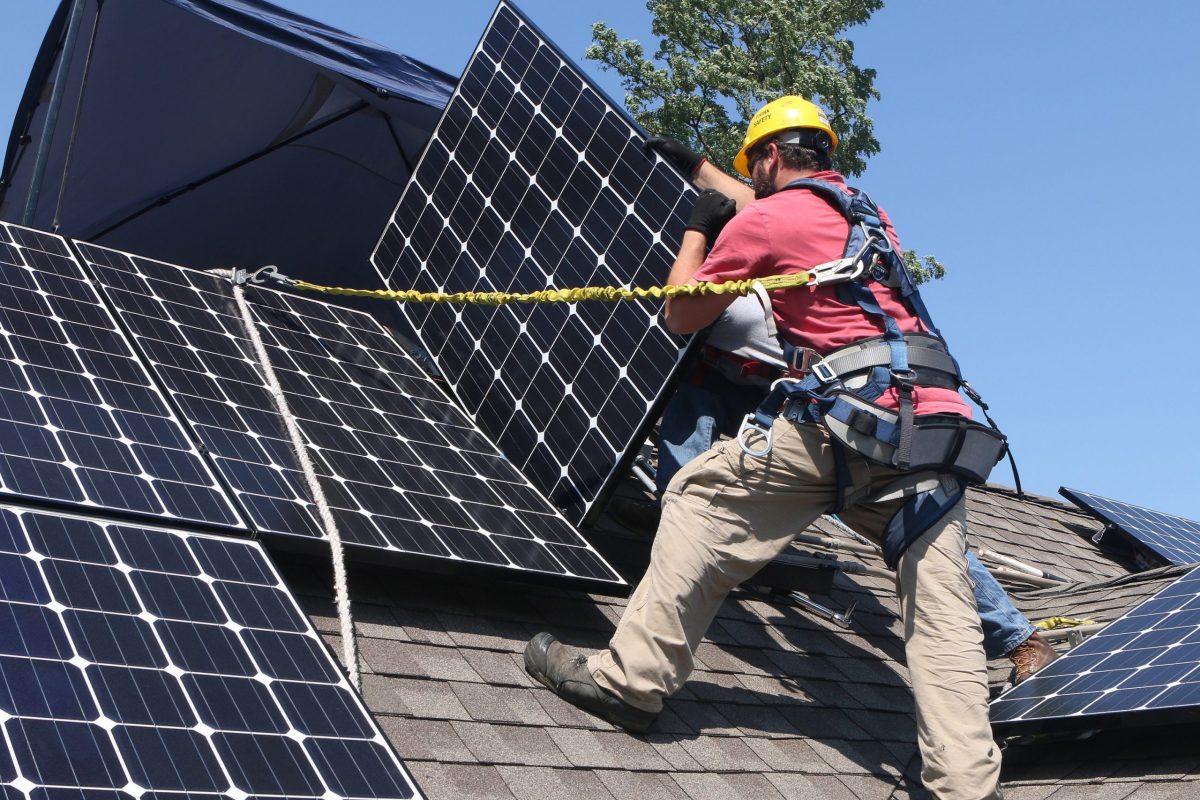
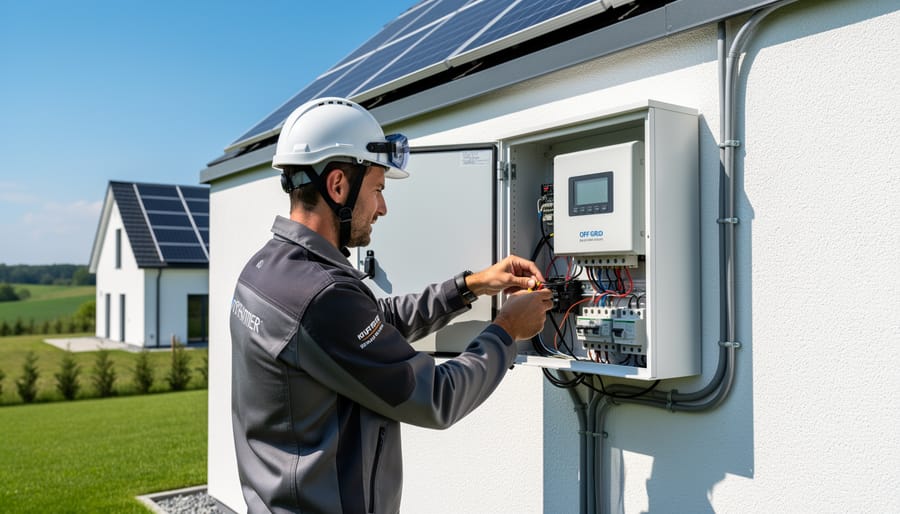
Most installations follow a straightforward timeline. After your initial consultation and system design, permitting typically takes two to four weeks, depending on your local municipality. The actual installation usually happens over two to five days, though larger systems may require a full week. Your installer handles the heavy lifting: mounting panels, wiring components, connecting batteries, and setting up your inverter and charge controller.
Many homeowners wonder about tackling installation themselves. While smaller systems for cabins or RVs are DIY-friendly, whole-home off-grid installations benefit greatly from professional expertise. Professionals ensure proper electrical connections, optimize panel placement for maximum sun exposure, and handle permit requirements. They also guarantee warranty protection, which DIY installations often void.
Choosing the right installer makes all the difference. Look for certified professionals with specific off-grid experience, not just traditional solar installers. Request references from previous off-grid customers and ask to see completed installations. Verify they’re licensed, insured, and familiar with your local building codes. The best installers provide detailed proposals, explain system monitoring, and offer ongoing maintenance support.
During installation, you’ll have minimal disruption to your daily routine. Most work happens outside, and professionals schedule any necessary power shutdowns in advance. After installation, your installer conducts thorough testing, walks you through system operation, and ensures you’re comfortable monitoring your new solar setup. Many provide written guides or video tutorials tailored to your specific system, giving you confidence in managing your energy independence from day one.
Maintenance That Won’t Eat Your Time (Or Budget)
Here’s a surprising truth: solar panels are actually one of the lowest-maintenance home improvements you can make. Forget the myths about constant tinkering and expensive upkeep—modern off-grid systems are designed to run with minimal intervention.
Your main task? Keep panels reasonably clean. Rain handles most of this naturally, but a simple rinse with a garden hose twice a year removes stubborn dust and pollen. In snowy climates, heavy snow might need brushing off, though panels often self-clear as they warm up.
The real longevity champion here is your solar panels themselves. Quality panels typically come with 25-year performance warranties and often produce power for 30-40 years. They have no moving parts, which means there’s simply less that can break. Most homeowners report zero panel failures during decades of use.
Your battery bank requires slightly more attention, but we’re still talking minimal effort. Basic battery storage system maintenance involves occasional terminal cleaning and monitoring charge levels—tasks that take minutes, not hours. Modern lithium batteries need even less care than traditional lead-acid options.
Budget-wise, expect to spend less annually on solar maintenance than you currently spend on utility connection fees. Most systems need only occasional inverter replacements every 10-15 years, which is a planned expense, not a surprise cost. The payoff? Decades of reliable, hands-off power generation that actually saves you money while requiring less attention than your lawn.
Making the switch to off-grid solar power isn’t as complicated as you might think. Throughout this guide, we’ve broken down the essentials into manageable steps that any homeowner can understand and implement. The truth is, going off-grid doesn’t require an engineering degree or a massive upfront investment that breaks the bank.
The benefits speak for themselves. You’ll dramatically reduce or eliminate your monthly electricity bills, protect yourself from rising energy costs, and gain true independence from utility companies. At the same time, you’re making a meaningful contribution to environmental sustainability by reducing your carbon footprint and relying on clean, renewable energy.
Whether you start small with a solar backup system or commit to full energy independence, every step forward counts. The technology has matured, costs have decreased significantly, and more resources than ever are available to support your journey. You don’t have to figure it all out overnight.
The path to energy independence begins with a single decision. Armed with the knowledge from this guide, you’re ready to take that first step. Calculate your energy needs, explore your options, and connect with reputable solar professionals who can help bring your vision to life. Your energy-independent future is closer and more achievable than you imagined. The only question left is: when will you begin?