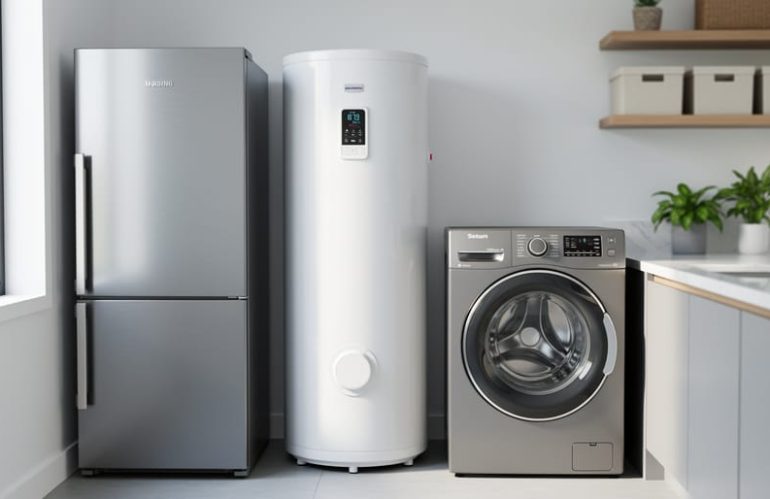
Replace your outdated refrigerator with an ENERGY STAR certified model to cut cooling costs by up to 15% annually—these appliances use advanced insulation and compressors that maintain optimal temperatures while drawing significantly less power. Upgrade to a heat pump water heater instead of conventional electric models to reduce water heating expenses by approximately 60%, as these units extract warmth from surrounding air rather than generating heat from scratch. Switch to front-loading washing machines that consume 40% less water and 50% less energy compared to top-loaders, saving hundreds of dollars over the appliance’s lifetime while delivering superior cleaning performance.
Your home’s appliances account for nearly 30% of your total electricity consumption, making them prime targets for meaningful savings. The good news? Modern energy-efficient appliances have evolved far beyond their clunky, expensive predecessors. Today’s options deliver better performance, lower utility bills, and substantial environmental benefits without requiring you to sacrifice convenience or comfort.
Understanding which appliances offer the biggest return on investment transforms how you approach home upgrades. Rather than replacing everything at once, you can prioritize the energy hogs draining your budget and tackle improvements strategically. Combined with smart energy habits, upgrading to efficient appliances creates a powerful one-two punch that shrinks your carbon footprint while keeping more money in your pocket month after month.
This guide breaks down the top energy-efficient appliances worth considering, realistic savings you can expect, and practical tips for making smart purchasing decisions that align with your budget and sustainability goals.
What Makes an Appliance Energy-Efficient?
Energy efficiency simply means getting the same job done while using less electricity. An energy-efficient refrigerator keeps your food just as cold, but uses fewer kilowatts to do it, which translates directly to lower monthly bills and a smaller environmental footprint.
Here’s a common misconception worth clearing up: not all modern appliances are created equal when it comes to energy efficiency. While manufacturing standards have improved overall, there’s still a huge gap between the most efficient models and average ones. Two brand-new refrigerators sitting side-by-side in a showroom might have energy consumption differences of 30% or more.
The Energy Star label is your best friend when shopping for efficient appliances. This government-backed certification means the appliance meets strict energy performance standards set by the EPA. When you see that blue Energy Star logo, you know the product uses significantly less energy than standard models, typically 10-50% less depending on the appliance type.
But don’t stop at just spotting the label. Take a moment to check the yellow EnergyGuide tag that’s required on most appliances. This sticker shows the estimated yearly energy cost in dollars and where the model ranks compared to similar products. Look for models on the lower end of that cost range.
The most important number to compare is the annual energy consumption, measured in kilowatt-hours (kWh). Lower kWh means lower bills, plain and simple. Some appliances also show a CEE tier rating, where higher tiers indicate superior efficiency.
Remember, the upfront price tag doesn’t tell the whole story. A slightly more expensive energy-efficient model often pays for itself within a few years through energy savings, then continues saving you money for its entire lifespan.
Kitchen Appliances That Slash Your Electric Bill
Refrigerators: Your Biggest Kitchen Energy User
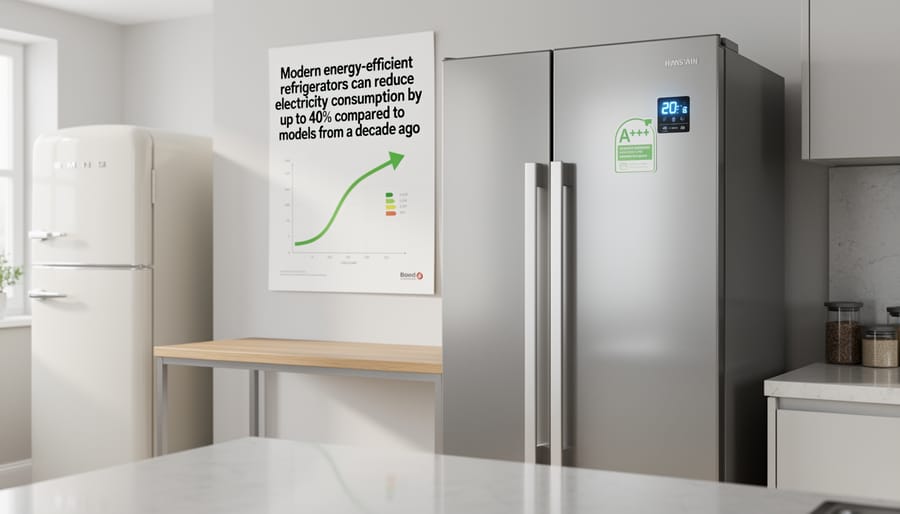
Your refrigerator runs 24/7, making it responsible for about 15-20% of your home’s total electricity use. The good news? Modern energy-efficient models can cut that consumption by up to 40% compared to refrigerators from 15 years ago, translating to $100-200 in annual savings.
When shopping for a new refrigerator, look for the ENERGY STAR label as your starting point. Today’s efficient models use better insulation, smarter compressors, and improved door seals to keep food cold while using less power. Top-freezer configurations tend to be the most efficient, while side-by-side models typically consume more energy.
Key features that boost efficiency include LED lighting, automatic defrost systems, and temperature controls that adapt to usage patterns. Skip the ice makers and through-the-door dispensers if maximum efficiency is your goal—they increase energy consumption by 14-20%.
Here’s a practical tip: A refrigerator that’s too large for your needs wastes energy keeping empty space cold. Choose a size that fits your household without excess capacity. Most families do well with 19-22 cubic feet, which balances space with efficiency while delivering real savings on every electric bill.
Dishwashers That Use Less Water Than Handwashing
Here’s a surprising fact: running your dishwasher typically uses less water than washing dishes by hand. Modern energy-efficient dishwashers use as little as 3-4 gallons per cycle, while handwashing the same load can consume up to 27 gallons. This efficiency comes from smart engineering that recirculates and filters water throughout the cleaning process.
Look for dishwashers with the ENERGY STAR label, which use about 12% less energy and 30% less water than standard models. Key water-saving features include soil sensors that adjust cycle length based on how dirty your dishes are, efficient spray arms that target every surface, and eco-modes for lighter loads.
The environmental benefits extend beyond your water bill. Using less hot water means your water heater works less, reducing energy consumption and lowering your utility costs. Over a dishwasher’s lifetime, you could save thousands of gallons of water and hundreds of dollars compared to handwashing.
One myth worth debunking: you don’t need to pre-rinse your dishes. Simply scrape off food scraps and let your efficient dishwasher do its job. This saves even more water and time, making dishwashers one of the smartest investments for sustainable living.
Induction Cooktops and Energy-Smart Ovens
Your kitchen appliances are energy hogs, but modern cooking technology can dramatically slash those costs. Let’s look at your smartest options.
Induction cooktops are game-changers for energy efficiency. Unlike traditional electric or gas stoves that heat the air around your pot, induction technology transfers energy directly to your cookware through magnetic fields. This means 85-90% of the energy goes straight into cooking your food, compared to just 65-70% for conventional electric stoves. You’ll boil water nearly twice as fast while using less electricity. The catch? You’ll need magnetic cookware, but most stainless steel and cast iron pots work perfectly.
Convection ovens are another smart upgrade. They circulate hot air throughout the oven cavity, cooking food 25% faster at temperatures 25 degrees lower than standard ovens. That translates to real savings on your electric bill, especially if you bake or roast frequently.
Many homeowners worry these efficient appliances sacrifice performance, but the opposite is true. Professional chefs prefer induction for its precision temperature control, and convection ovens deliver more even cooking results. You’re getting better performance while spending less on energy each month.
Laundry Appliances That Work Smarter, Not Harder
Your laundry routine offers one of the biggest opportunities to cut energy costs without changing your lifestyle. Modern washing machines and dryers have evolved dramatically, and choosing the right ones can shrink your utility bills by hundreds of dollars annually.
Front-loading washing machines are the clear winners for energy efficiency. They use about 50% less water and 30% less energy than traditional top-loaders. How? They tumble clothes through a small amount of water rather than filling an entire tub. This means less water to heat and less energy spent overall. The bonus: they’re also gentler on your clothes, helping them last longer.
Here’s a myth worth busting: cold water doesn’t clean as well as hot water. That’s simply not true anymore. Modern detergents are specifically formulated to work effectively in cold water, and washing in cold instead of hot can cut your laundry energy use by up to 90% per load. Your clothes will still come out fresh and clean, and you’ll preserve colors better too.
When it comes to dryers, heat pump models are changing the game. Unlike conventional dryers that vent hot, moist air outside, heat pump dryers recycle heat and use it again. They consume about 50% less energy than standard electric dryers. Yes, they take a bit longer to dry clothes, but that gentler process also reduces wear and tear on fabrics.
The financial math is straightforward: an Energy Star certified washer saves the average household about $370 over its lifetime compared to a standard model. A heat pump dryer can save you $210 on energy costs over ten years. Combined with simple habits like washing full loads and using cold water settings, these appliances work smarter from day one.
The key takeaway? Upgrading your laundry appliances isn’t just about going green. It’s about putting money back in your pocket month after month while getting the same clean results you expect.
Heating and Cooling: Where You’ll Save the Most
Smart Thermostats and High-Efficiency HVAC Systems
Your heating and cooling system accounts for nearly half of your home’s energy use, making it one of the most impactful areas for efficiency improvements. The good news? Today’s technology makes it easier than ever to stay comfortable while cutting costs.
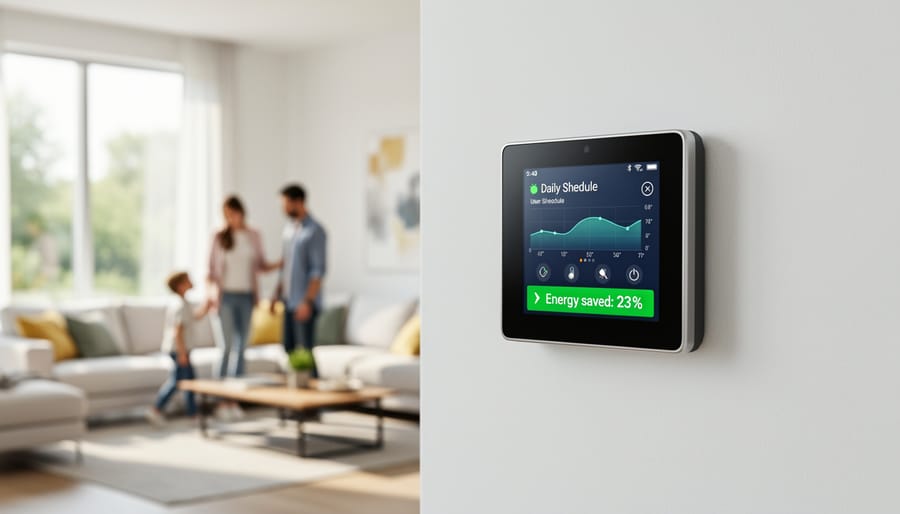
Smart thermostats are genuine game-changers. These devices learn your schedule and preferences, automatically adjusting temperatures when you’re away or asleep. You’ll save 10-23% on heating and cooling costs annually—typically $130 to $145 per year. Many models connect to your smartphone, letting you adjust settings from anywhere. Plus, they provide detailed energy reports showing exactly where your money goes each month.
When paired with modern HVAC systems, the savings multiply. Look for units with high SEER ratings (Seasonal Energy Efficiency Ratio) of 16 or above for air conditioners, and AFUE ratings (Annual Fuel Utilization Efficiency) of 90% or higher for furnaces. These efficiency standards mean more of your energy actually heats or cools your home rather than being wasted.
The best part about smart thermostats is their compatibility with smart home automation systems. They can coordinate with other devices to optimize your entire home’s energy use throughout the day.
Many utility companies offer rebates on both smart thermostats and high-efficiency HVAC systems, sometimes covering 20-30% of installation costs. Combined with lower monthly bills, most homeowners see payback within just a few years.
Water Heaters: Tankless vs. Heat Pump Options
When it comes to heating water efficiently, two technologies stand out: tankless water heaters and heat pump water heaters. Both can dramatically reduce your energy bills compared to traditional tank models, but they work differently and suit different homes.
Tankless water heaters, also called on-demand systems, heat water only when you need it. They eliminate the energy waste of keeping 40-50 gallons hot around the clock. You’ll save about 24-34% on water heating costs in homes using less than 41 gallons daily, and 8-14% in homes with higher usage. The trade-off? Higher upfront costs, typically $1,000-3,000 for the unit plus installation.
Heat pump water heaters work like a refrigerator in reverse, pulling warmth from the air to heat your water. They’re incredibly efficient, using up to 63% less energy than conventional electric water heaters. This translates to roughly $330 in annual electricity savings for a typical family. While they cost $1,200-2,500 installed, federal tax credits can offset much of this expense.
Which makes sense for you? Choose tankless if you have limited space and moderate hot water needs. Opt for a heat pump model if you have a basement or garage with consistent temperatures between 40-90 degrees. Both options pay for themselves within a few years through energy savings, and when paired with solar panels, you’ll maximize your efficiency gains while minimizing operating costs.
How Energy-Efficient Appliances Work with Your Solar Panels
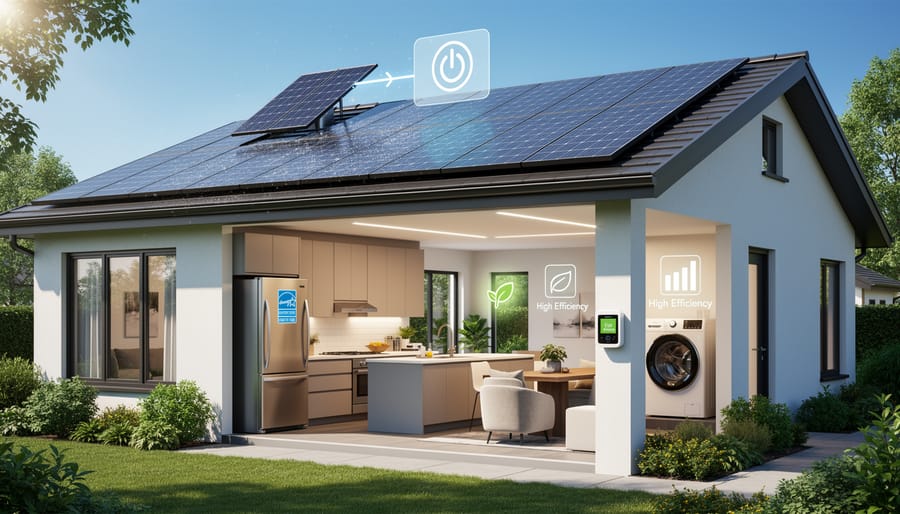
Here’s a money-saving truth many homeowners miss: energy-efficient appliances and solar panels are a powerful combination that multiplies your savings. When you pair them together, you’re not just cutting costs—you’re creating a home that practically pays for itself.
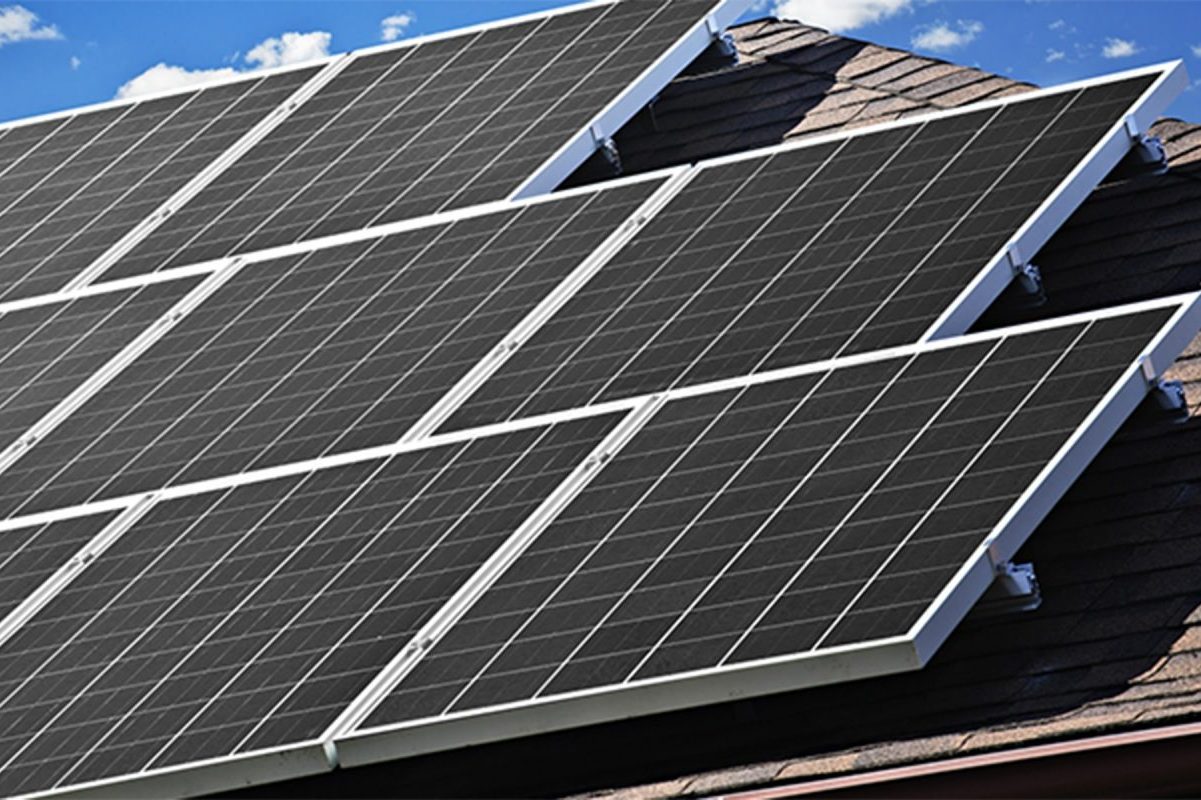
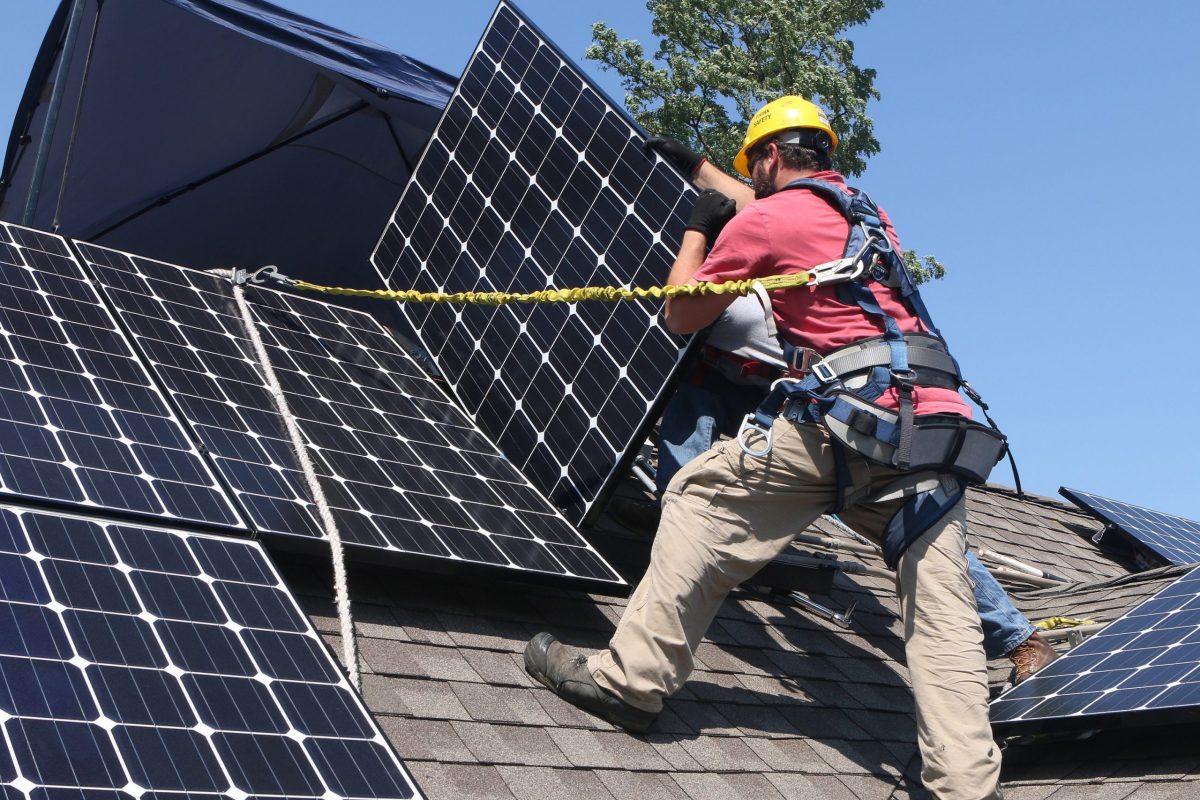
Think of it this way. Solar panels generate a fixed amount of electricity based on your roof size and sunlight exposure. When your appliances use less energy, that same solar system covers more of your needs. A household that swaps out old, energy-hungry appliances for efficient models can often meet their entire energy needs with a smaller, less expensive solar installation.
The numbers tell an encouraging story. If your efficient appliances reduce your daily consumption by 30%, you might need 30% fewer solar panels to achieve energy independence. That translates to thousands of dollars in upfront savings on your solar investment. You’re essentially getting the same result for less money.
Here’s another benefit: during peak sunlight hours, your solar panels may generate more electricity than your efficient appliances consume. This excess energy either feeds back to the grid (earning you credits) or charges a battery system for evening use. The lower your appliance consumption, the more surplus energy you create.
For homeowners considering solar, starting with energy-efficient appliances makes perfect sense. You’ll accurately size your solar system to match your actual needs rather than overcompensating for wasteful appliances. This approach ensures you invest wisely in both technologies, maximizing your return while minimizing your environmental footprint.
The bottom line? Efficient appliances make your solar panels work smarter, not harder, delivering faster payback periods and greater long-term savings.
The Real Numbers: What You’ll Actually Save
Let’s break down what upgrading to energy-efficient appliances actually means for your wallet. The good news? The savings are real, and they start adding up faster than you might think.
A typical Energy Star certified refrigerator costs about $50-75 more upfront than a standard model, but saves approximately $300 over its lifetime. That’s a payback period of roughly 2-3 years, meaning you’ll enjoy 10+ years of pure savings afterward. For washing machines, the math is even better. An Energy Star washer might cost $100-200 more initially but saves around $45 annually on energy and $55 on water bills. You’re breaking even in just 2 years.
Here’s a real-world example: A family replacing five major appliances (refrigerator, dishwasher, washer, dryer, and water heater) with Energy Star models typically spends an extra $600-800 upfront. However, they save approximately $400-500 annually on utility bills. The entire investment pays for itself in less than two years.
Don’t overlook available incentives that sweeten the deal even more. Federal tax credits currently offer up to $2,000 for qualifying heat pump water heaters and clothes dryers. Many utility companies provide rebates ranging from $25-100 per appliance, and state programs often add additional savings. Check the Database of State Incentives for Renewables and Efficiency to find what’s available in your area.
Want to maximize your savings? Start by identifying your biggest energy users. You can track your energy usage to see which appliances are costing you the most. Then prioritize replacements based on both age and consumption. The oldest, least efficient appliances deliver the fastest returns when upgraded, putting money back in your pocket while reducing your environmental footprint.
Investing in energy-efficient appliances is one of the smartest decisions you can make for your home and wallet. The financial benefits add up quickly—most homeowners see noticeable reductions in their monthly utility bills within the first year, and these savings continue for the entire lifespan of the appliance. Beyond your personal finances, you’re also making a meaningful contribution to reducing your environmental footprint and helping create a more sustainable future.
The best approach is to start with the appliances that use the most energy in your home. Replacing an old refrigerator, water heater, or HVAC system typically delivers the biggest impact right away. From there, you can gradually upgrade other appliances as they reach the end of their useful life.
Remember that energy-efficient appliances work even better as part of a comprehensive energy strategy. When you combine efficient appliances with renewable energy sources like solar panels, you maximize both your savings and your environmental benefits. Each upgrade you make is a step toward a more sustainable, cost-effective home. The initial investment pays for itself over time, and you’ll enjoy lower bills and peace of mind knowing you’re making responsible choices for your family and the planet.