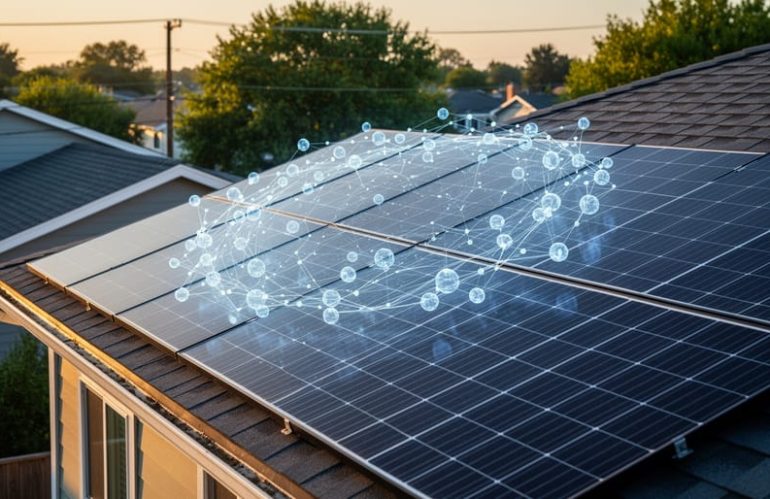
Your solar panels generate clean energy and savings every day, but without proper tracking, you could be losing money to billing errors, system inefficiencies, or even energy theft. Blockchain technology creates an unchangeable digital record of every kilowatt your system produces, acting like a financial shield that protects your solar investment from discrepancies and ensures you receive full credit for the power you generate.
Think of blockchain as a digital notary that timestamp-stamps your energy data every few minutes, making it virtually impossible for anyone to alter your production records or dispute your solar credits. This matters because utility companies, solar monitoring systems, and energy markets all rely on accurate data to calculate your bills, rebates, and renewable energy credits. When that data lives on a blockchain, you gain transparent proof of your system’s performance that no single party can manipulate.
The practical benefit extends beyond security. Blockchain-enabled solar systems allow you to participate in peer-to-peer energy trading, automatically verify system warranties, and instantly prove your renewable energy generation when selling renewable energy certificates. For homeowners, this translates to maximized returns on your solar investment without requiring any technical expertise or additional effort on your part.
What Blockchain Actually Means for Your Solar Panels
Think of blockchain as a digital notebook that can never be erased or altered—a permanent record of everything your solar panels produce. Every kilowatt-hour of electricity generated gets logged automatically, creating an unbreakable chain of information that shows exactly how much energy you’ve made and where it went.
Here’s why this matters for your wallet: when you sell excess power back to the grid or to neighbors, blockchain proves without doubt that the energy came from your panels. No one can dispute your contribution or shortchange you on payments. It’s like having a notary public verify every single energy transaction, except it happens instantly and costs virtually nothing.
Traditional energy tracking relies on utility companies to keep accurate records, which leaves room for errors or disputes. With blockchain, you get an independent, transparent system that works for you. The technology removes the middleman uncertainty, ensuring you receive proper credit for every bit of sunshine your panels convert to electricity.
The real beauty? You don’t need to understand the technical mechanics to enjoy the blockchain security benefits. It runs quietly in the background, protecting your investment and maximizing your returns. Your solar system becomes more than just panels on a roof—it transforms into a verified, trustworthy energy source with a permanent, tamper-proof production history that increases its long-term value.
The Hidden Vulnerabilities in Traditional Solar Energy Systems
If you’ve invested in solar panels for your home, you might assume that tracking your energy production and financial credits is straightforward. Unfortunately, the reality isn’t quite so simple. Many homeowners discover frustrating vulnerabilities in how their clean energy contributions are measured and compensated.
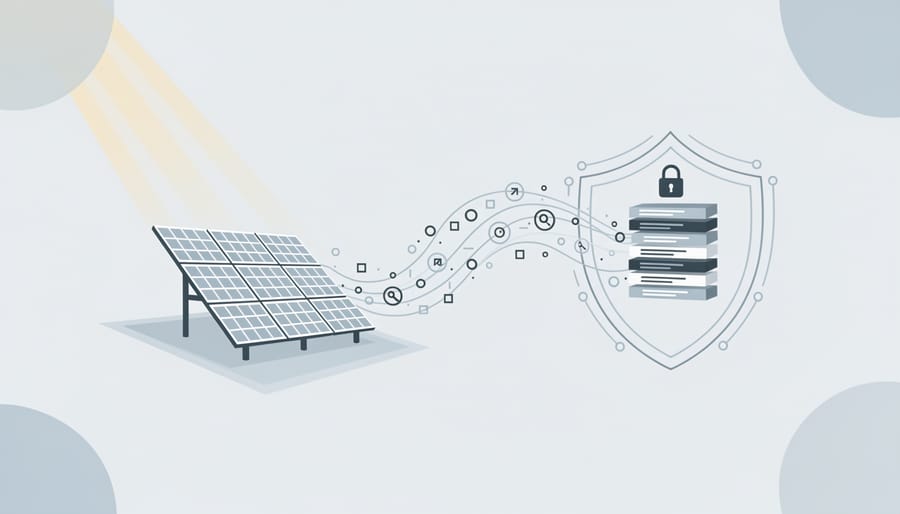
Meter reading errors represent one of the most common issues. Your utility company relies on meters to track both the electricity you consume and the excess solar power you send back to the grid. However, traditional meters can malfunction, provide inconsistent readings, or be read incorrectly by technicians. Even small discrepancies add up over time, potentially costing you hundreds of dollars in lost energy credits.
Disputes over net metering credits create additional headaches. When your solar system produces more energy than you use, you should receive fair compensation. Yet proving exactly how much clean energy you’ve contributed can become surprisingly difficult. Without transparent, tamper-proof records, resolving billing disputes with utility companies often turns into a frustrating he-said-she-said situation that favors the larger entity.
The potential for meter tampering, whether accidental or intentional, adds another layer of concern. While solar monitoring systems help track your production, traditional utility infrastructure wasn’t designed with the security features needed for today’s two-way energy flow. This creates gaps where data can be altered or lost.
These vulnerabilities don’t just represent technical inconveniences. They directly impact your return on investment and the financial benefits you expected when going solar. Understanding these challenges helps explain why innovative solutions are becoming increasingly important for protecting your solar investment.
Three Ways Blockchain Secures Your Solar Investment
Tamper-Proof Energy Production Records
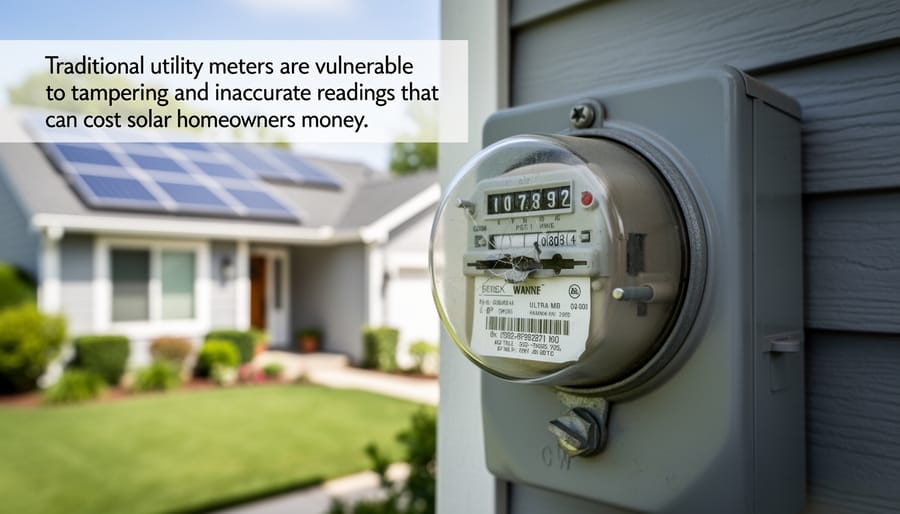
Think of blockchain as a digital notary that creates a permanent, tamper-proof diary of your solar system’s energy production. Every kilowatt-hour your panels generate gets recorded in a secure digital ledger that no one can alter or erase, not even utility companies or system administrators.
This permanent record matters more than you might think. Utility billing errors happen, and disputes over how much energy you actually produced can cost you money. With blockchain verification, you have undeniable proof of your system’s output. If your utility company questions your production numbers or claims your system generated less than it actually did, you have ironclad evidence to back up your position.
The technology works automatically in the background, recording your production data in real-time without requiring any action on your part. Each entry links to the previous one, creating an unbreakable chain of records that would immediately reveal any attempt at manipulation.
For homeowners selling excess energy back to the grid, this transparent record-keeping ensures you receive proper credit for every watt you contribute. No more wondering if billing discrepancies are costing you money or accepting utility estimates without verification. Your production data becomes an immutable truth that protects your investment.
Transparent Energy Credit Tracking
Think of blockchain as your personal digital ledger that tracks every kilowatt-hour your solar panels produce and every renewable energy credit you earn. Unlike traditional paper certificates that can get lost or tampered with, blockchain creates an unchangeable record of your green energy contributions in real-time.
Here’s what makes this exciting for you: every time your solar system generates clean energy, the blockchain automatically records it and converts it into renewable energy certificates. You can check your growing balance anytime, from anywhere, using a simple app on your phone. No waiting weeks for paperwork or wondering if your credits were properly recorded.
This transparency means you’ll never miss out on money you’ve earned. If you’re eligible to sell renewable energy credits back to the grid or receive incentives from your utility company, you’ll have undeniable proof of exactly how much clean energy you’ve produced. The system updates instantly as your panels generate power, so you’re always working with current, accurate information.
The best part? This happens automatically behind the scenes. You don’t need to understand complex technology to benefit from it. The blockchain simply ensures your environmental contributions and financial rewards are tracked accurately and can’t be disputed or lost in bureaucratic systems.
Peer-to-Peer Energy Trading Security
Imagine generating more solar energy than your home needs on a sunny afternoon. With blockchain-powered peer-to-peer energy trading, you can sell that excess power directly to your neighbors or back to the grid with complete confidence. Here’s the game-changer: every transaction is automatically recorded, verified, and secured without requiring a middleman.
Think of blockchain as a digital receipt book that everyone can see but nobody can tamper with. When you sell your surplus solar energy, the system instantly creates a permanent record showing exactly how much energy you provided and the payment you’re owed. This eliminates billing disputes, prevents payment delays, and ensures you receive every dollar you’ve earned from your solar investment.
Traditional energy sales often involve complicated paperwork and delayed payments. Blockchain streamlines this entirely. The technology works seamlessly with smart grid technology to handle transactions in real-time, meaning you get paid faster and can track your energy sales through a simple smartphone app.
The security benefits are substantial. Because blockchain transactions can’t be altered or deleted, you have ironclad proof of every kilowatt-hour sold. This protection means no one can dispute your contributions to the grid or shortchange you on payments, maximizing your solar system’s financial returns.
Real-World Benefits You’ll Actually Notice
Beyond the technical advantages, blockchain integration with your solar system delivers benefits you’ll experience in your daily life. Here’s what that actually means for you.
When billing disputes arise—and they do—blockchain provides instant proof of your energy production and consumption. Instead of waiting weeks for your utility company to investigate discrepancies, you have an unchangeable record that resolves issues in days, not months. Homeowners report saving hundreds of dollars annually by catching and correcting billing errors that might otherwise go unnoticed.
Your energy data becomes visible in real-time through simple dashboards, showing exactly how much power you’re producing, using, and selling back to the grid. This transparency helps you adjust your energy habits to maximize savings. You’ll know immediately if your system underperforms, allowing for quick maintenance rather than discovering problems months later on your utility bill.
Perhaps the most overlooked advantage is property value protection. When selling your home, buyers increasingly want verified solar performance data. Blockchain provides an immutable history of your system’s production, making your solar investment a documented asset rather than just another home feature. Real estate agents note that homes with verified solar histories command premium prices because buyers trust the data.
The technology also shields you from utility company calculation errors. With traditional systems, you’re trusting their numbers. With blockchain verification, you have independent confirmation of every kilowatt-hour produced and sold. This protection becomes especially valuable as net metering policies change and energy prices fluctuate.
These aren’t futuristic possibilities—they’re advantages available today, making your solar investment more profitable and less stressful to manage.
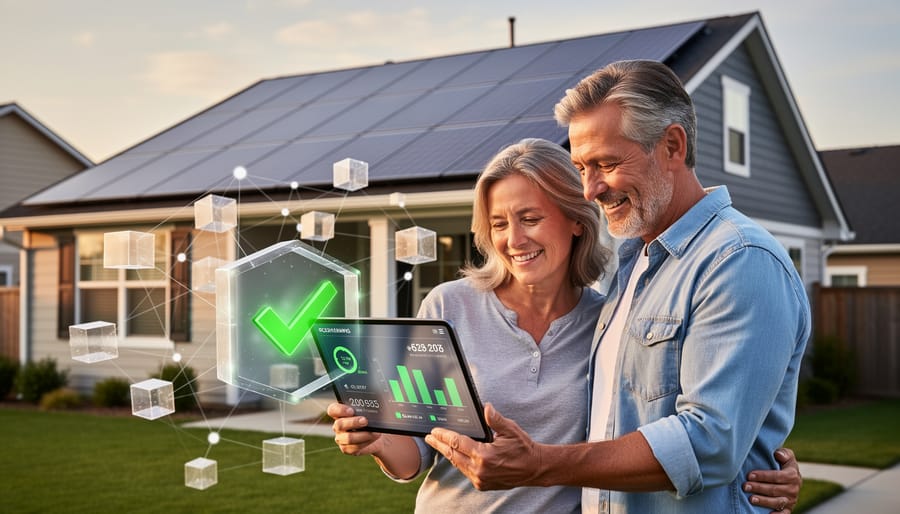
Is Blockchain-Enabled Solar Right for Your Home?
Right now, blockchain-enabled solar systems are still emerging in the residential market, but that doesn’t mean you should ignore this technology. If you’re considering a residential solar installation, understanding blockchain’s potential helps you make a future-proof decision.
Currently, blockchain integration is most beneficial if you’re planning to participate in peer-to-peer energy trading or live in areas where this option exists. Some forward-thinking solar installers are beginning to offer blockchain-ready systems, particularly in states with progressive energy policies and established solar markets.
When evaluating solar installers, ask about their experience with smart technology integration and whether their systems can accommodate blockchain features down the road. Even if blockchain capabilities aren’t available in your area today, choosing equipment and installers who understand this technology ensures you won’t be locked out of future opportunities.
The good news? Most modern solar systems can be upgraded to include blockchain features through software updates and additional hardware, so you don’t necessarily need everything in place from day one. As blockchain technology becomes more mainstream and energy regulations evolve, adoption costs will decrease and availability will increase.
For most homeowners, the smart move is focusing on getting a quality solar installation now while staying informed about blockchain developments. This positions you to take advantage of new features as they become available in your region, maximizing both your energy independence and financial returns.
Blockchain isn’t just another tech buzzword—it’s a practical tool that protects your solar investment and ensures you get full credit for every kilowatt-hour you generate. By creating a tamper-proof record of your energy production and consumption, blockchain technology gives you transparency, security, and peace of mind that your clean energy contributions are accurately tracked and fairly compensated. When you’re comparing solar installers, ask whether they offer blockchain-enabled monitoring systems. This simple question shows you’re an informed buyer who values long-term protection and maximized returns on your solar investment.