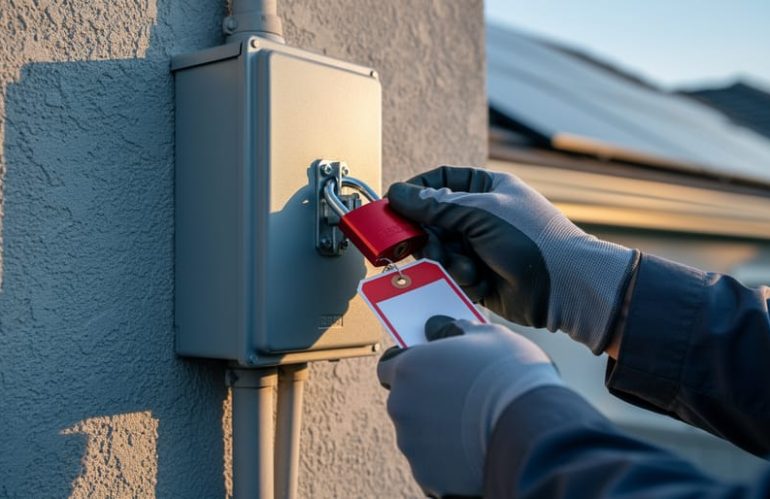
Your solar panels represent a significant investment in your home’s future, but like any electrical system, they require maintenance and occasional repairs. When technicians work on your solar installation, they follow a critical safety protocol called lockout/tagout—a procedure that quite literally could save lives while protecting your equipment.
Lockout/tagout means completely de-energizing your solar system before any maintenance work begins. Technicians physically lock electrical disconnects in the “off” position and attach warning tags, ensuring no one can accidentally restore power while someone is working on live components. This prevents electrical shocks, arc flashes, and equipment damage that could cost thousands to repair.
For homeowners, understanding this procedure matters because it separates professional solar companies from corner-cutting installers. Reputable technicians always follow lockout/tagout protocols, treating your roof-mounted power plant with the same respect as utility companies treat their infrastructure. When you see a technician taking these precautions, you’re witnessing a commitment to both worker safety and the longevity of your system.
The process typically takes just minutes but provides complete peace of mind. Your solar array generates electricity whenever sunlight hits the panels—even on cloudy days—making it impossible to simply “turn off” without proper procedures. This constant energy production is wonderful for your electric bill but requires serious safety measures during service calls. Understanding lockout/tagout helps you recognize quality service and ensures your solar investment remains safe, efficient, and productive for decades to come.
What Is Lockout-Tagout for Solar Panels?
Think of lockout-tagout as flipping the breaker before you change a light fixture—but for your solar panel system. Just like you wouldn’t want electricity flowing through wires while working on your home’s electrical system, your solar panels need to be completely powered down before anyone performs maintenance or repairs.
Here’s what makes lockout-tagout special: solar panels generate electricity whenever sunlight hits them. Unlike your home’s regular electrical system where you can simply flip a switch, solar systems require a specific safety protocol to ensure they’re truly off and stay off during service work.
The lockout-tagout procedure involves physically disconnecting and locking the solar system’s power sources, then attaching clear warning tags that tell everyone the system is being serviced. It’s like putting a “Do Not Enter” sign on a room while you’re painting inside—except these tags warn technicians that the equipment is shut down and shouldn’t be turned back on until work is complete.
This isn’t just industry red tape. When a qualified professional performs lockout-tagout on your solar installation, they’re protecting both themselves and your valuable investment. The procedure prevents accidental system activation that could cause electrical shocks, equipment damage, or even fires.
The good news? As a homeowner, you don’t need to perform lockout-tagout yourself. This is why working with certified solar professionals matters. They’re trained in these safety protocols and follow strict procedures to ensure every maintenance visit or repair happens safely. When you schedule service for your solar system, your technician will handle all lockout-tagout steps as a standard part of protecting you, your home, and your solar investment.
Why Solar Systems Require Special Safety Procedures
Solar panels have a unique characteristic that sets them apart from most other electrical equipment: they generate electricity automatically whenever light hits them. Unlike your home’s electrical system that you can simply switch off, solar panels don’t have an “off” button. Even on cloudy days, they’re producing power. This constant energy production is wonderful for reducing your electricity bills, but it creates specific safety considerations during maintenance or repairs.
Think of it this way—while traditional electrical systems are like a faucet you can turn on and off, solar panels are more like a natural spring that flows continuously as long as the sun is up. This means technicians working on your system face live electrical components that can’t simply be disconnected with a switch.
This isn’t about creating worry—it’s about understanding why proper safety procedures matter. Just as you’d want a licensed electrician to work on your home’s wiring rather than attempting complex electrical work yourself, solar systems require trained professionals who understand how to work safely around constantly-energized equipment.
The good news is that lockout/tagout procedures provide a proven framework for managing these unique challenges. These protocols protect both the workers servicing your system and your valuable solar investment. When properly followed, they ensure maintenance happens safely and efficiently, giving you peace of mind that your system receives expert care without unnecessary risks. Understanding these procedures helps you recognize quality service and professional expertise when you see it.
How Lockout-Tagout Protects Your Solar Investment
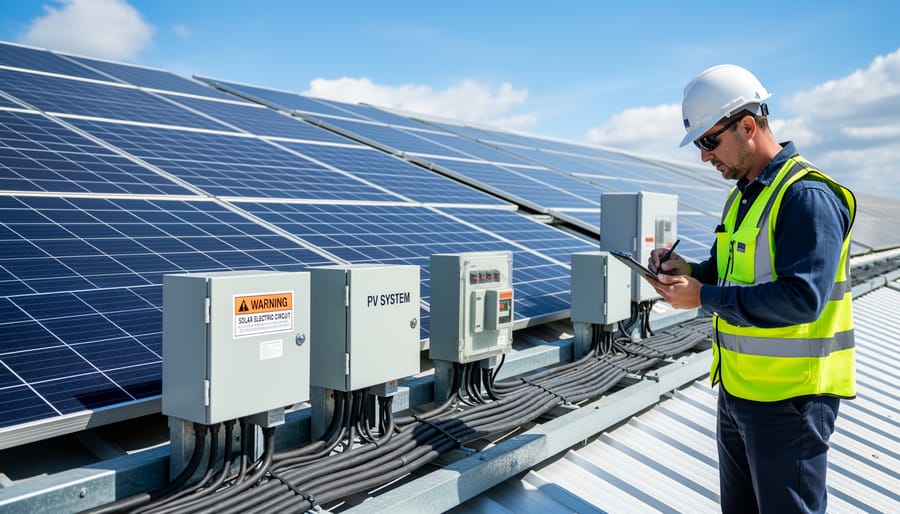
Your solar panels represent a significant financial commitment, and proper lockout-tagout procedures play a crucial role in protecting your solar investment for years to come.
When technicians perform maintenance or repairs on your system, lockout-tagout prevents accidental re-energization that could damage sensitive components like inverters, charge controllers, or the panels themselves. This equipment damage can be costly to replace and may set your system’s performance back significantly. By following proper safety protocols, qualified installers ensure your equipment stays in optimal condition.
Another often-overlooked benefit is warranty protection. Most solar equipment manufacturers require professional installation and maintenance that follows industry safety standards. If an accident occurs during improper servicing, you could void your warranty coverage, leaving you responsible for expensive replacements out of pocket. Documented lockout-tagout procedures demonstrate that work was performed to professional standards, keeping your warranty intact.
Beyond equipment protection, these safety measures reduce your liability as a homeowner. If a worker is injured on your property due to inadequate safety protocols, you could face legal and financial consequences. Professional companies that implement lockout-tagout procedures carry appropriate insurance and protect both their workers and you from potential liability issues.
Finally, proper maintenance practices maintain your system’s efficiency over its 25-plus year lifespan. When technicians can safely work on your system without rushing or taking shortcuts, they perform more thorough inspections and higher-quality repairs. This attention to detail translates directly into consistent energy production and maximum savings on your electricity bills, helping you achieve the return on investment you expected when you went solar.
The Basic Steps of Solar Lockout-Tagout
Shutting Down the System Safely
Before any maintenance work begins on your solar system, technicians follow a careful shutdown sequence to eliminate electrical hazards. This process protects both workers and your valuable equipment.
The first step involves shutting down the inverter, which is the device that converts your solar panels’ DC electricity into usable AC power for your home. Modern systems include rapid shutdown devices that quickly reduce voltage levels when activated, adding an extra layer of safety.
Next, technicians open the disconnect switches. These are physical switches that break the electrical connection between different parts of your system. You’ll typically have one near the inverter and another where your solar system connects to your home’s electrical panel.
Finally, the system is isolated from the grid. This ensures no electricity can flow in either direction, creating a completely safe work environment. Think of it like turning off the water main before plumbing repairs—it’s a straightforward safety measure that prevents accidents and protects your investment throughout the maintenance process.
Locking and Tagging Equipment
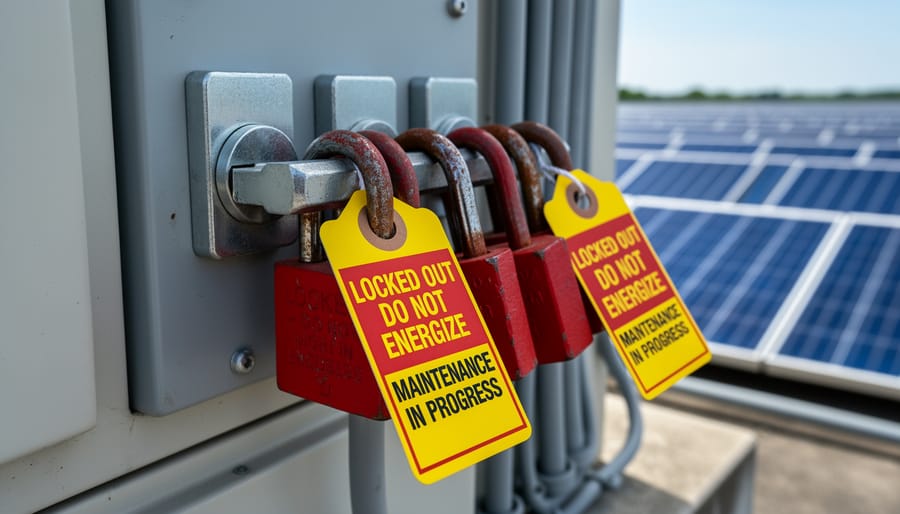
The physical tools used in lockout/tagout are surprisingly simple but incredibly effective. When a solar technician works on your system, they’ll use specialized safety locks—typically bright red or yellow padlocks—to physically secure electrical disconnects in the “off” position. These aren’t your everyday locks; they’re designed so that only the person who installed them has the key, preventing anyone else from accidentally flipping the switch back on while work is in progress.
Alongside these locks, technicians attach durable warning tags that clearly state “Do Not Operate” or similar messages. These tags serve as a visible reminder to everyone on your property that maintenance is underway. Think of them as a safety conversation starter—they communicate critical information even if the technician steps away momentarily.
What’s reassuring for homeowners is that reputable solar professionals carry these tools as standard equipment. You don’t need to purchase anything yourself. The locks and tags are part of the professional service you’re paying for, and their use demonstrates that your installer takes safety seriously. This simple equipment protects both the workers servicing your system and your valuable solar investment from electrical accidents that could cause costly damage.
Testing and Verification
After your solar system is locked and tagged, the technician takes a critical step that protects everyone involved: verification testing. Think of this as a safety double-check that confirms the power is truly off before any hands touch your equipment.
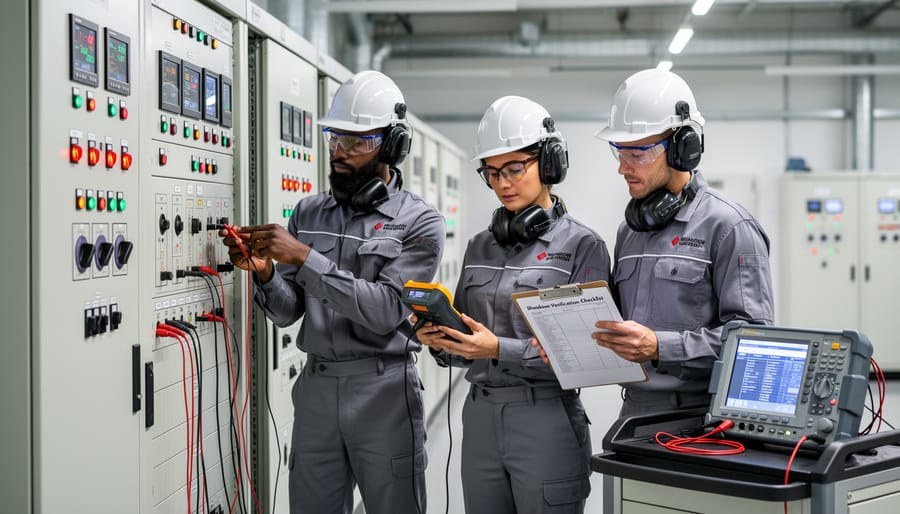
The verification process is straightforward but essential. Technicians use specialized meters to test that zero electrical current flows through the system. They’ll check multiple points, similar to how you might flip a light switch several times to make sure it’s really off. This isn’t about distrust in the lockout procedure—it’s simply best practice that prevents dangerous surprises.
Here’s the good news for you as a homeowner: this verification step means you can have complete confidence in the safety of any maintenance work. Your solar technician won’t proceed until they have concrete proof that the system is de-energized. Some professionals even perform a “try test,” attempting to start equipment that should be locked out, confirming it won’t activate.
This thorough approach protects both the service team and your valuable solar investment. A properly verified system means maintenance happens safely and efficiently, getting your clean energy production back online faster.
What to Expect When Professionals Service Your Solar System
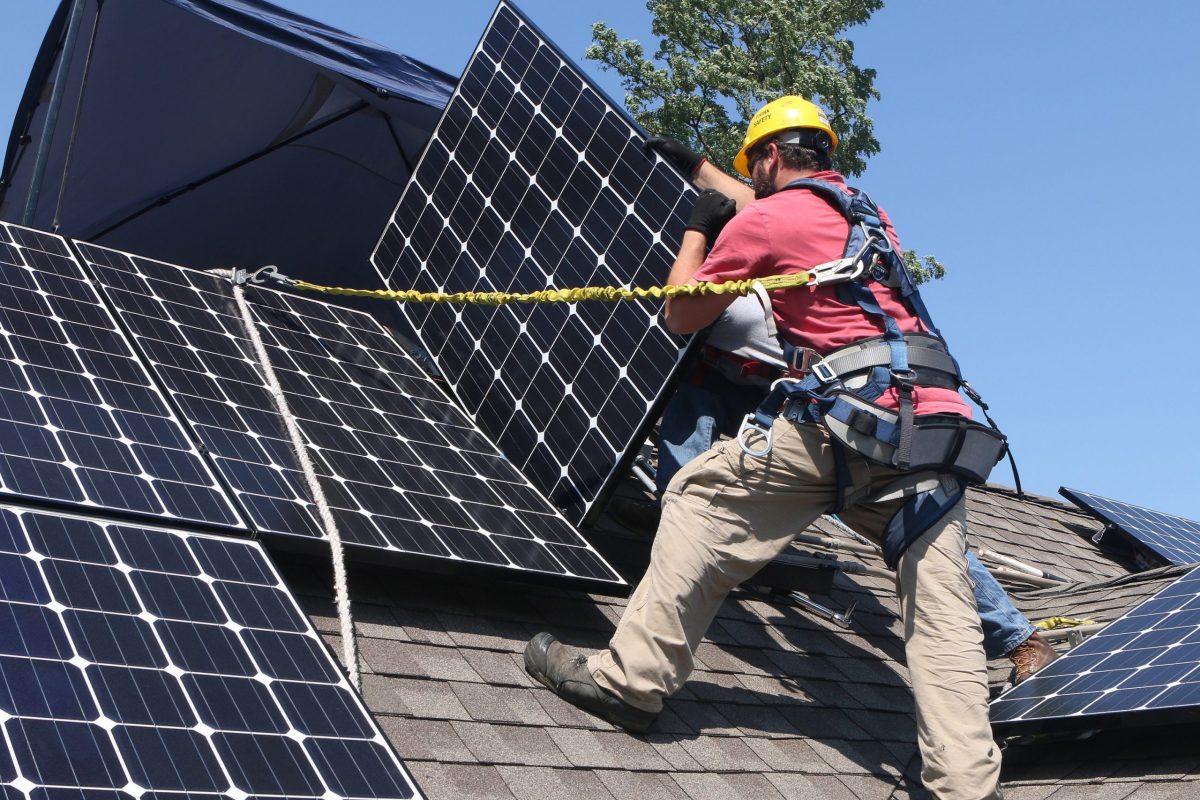
When a qualified solar technician arrives for maintenance or repairs, you should see a methodical safety process unfold before any actual work begins. A proper lockout-tagout procedure typically adds 15-30 minutes to the service visit, and this time investment protects both the technician and your solar system.
Here’s what a professional service visit should look like: The technician will first identify all power sources connected to your system, including the inverter, circuit breakers, and battery storage if you have it. They’ll systematically shut down and disconnect these components in the correct sequence, then physically attach locks and clearly labeled tags to prevent accidental reactivation. You might see bright red or yellow tags explaining why the equipment is locked out and who’s performing the work.
Quality technicians will also test the system with specialized meters to verify it’s truly de-energized before touching anything. This verification step is non-negotiable and aligns with solar panel safety standards that protect your investment.
Red flags to watch for include technicians who skip the testing phase, rush through disconnection steps, or start work immediately without visible lockout devices. A professional will gladly explain each step and should never make you feel like safety procedures are unnecessary delays. Remember, thoroughness here means your system receives careful, protected service that extends its lifespan and maintains your warranty coverage.
Questions to Ask Your Solar Maintenance Provider
Before hiring a solar maintenance professional, you deserve to know they’ll protect your investment and your family’s safety. Here are the key questions to ask:
Are your technicians trained and certified in lockout/tagout procedures? Look for specific certifications and ask how often they complete safety refresher courses.
Can you walk me through your safety protocol for servicing my system? A qualified professional should clearly explain how they’ll shut down your system, verify it’s de-energized, and prevent accidental reactivation.
Do your procedures comply with OSHA safety standards? This ensures they follow nationally recognized safety practices.
What insurance coverage do you carry? Proper coverage protects you if something goes wrong.
Will you provide documentation after each service visit? This creates a safety record for your home and proves the work was completed properly.
How do you handle emergency repairs? Understanding their safety approach during urgent situations gives you peace of mind.
Remember, hesitation or vague answers about safety procedures are red flags. Reputable professionals will happily discuss their safety protocols because they know proper lockout/tagout procedures protect everyone involved.
When you choose a solar company that follows proper lockout-tagout procedures, you’re choosing more than just panels on your roof—you’re partnering with professionals who value safety as much as performance. These protocols aren’t bureaucratic red tape; they’re a clear sign that your installer puts people first and takes your investment seriously.
A company committed to lockout-tagout safety demonstrates the kind of attention to detail that translates into quality workmanship throughout your entire solar system. This same careful approach protects your family, your home, and the technicians working on your property, while ensuring your system delivers clean, reliable energy for decades to come.
As you evaluate solar companies, don’t hesitate to ask about their safety procedures. The best installers will be proud to explain how they protect everyone involved in bringing sustainable energy to your home. Your solar investment deserves nothing less than a partner who’s dedicated to doing things right—safely, professionally, and with your long-term satisfaction in mind.