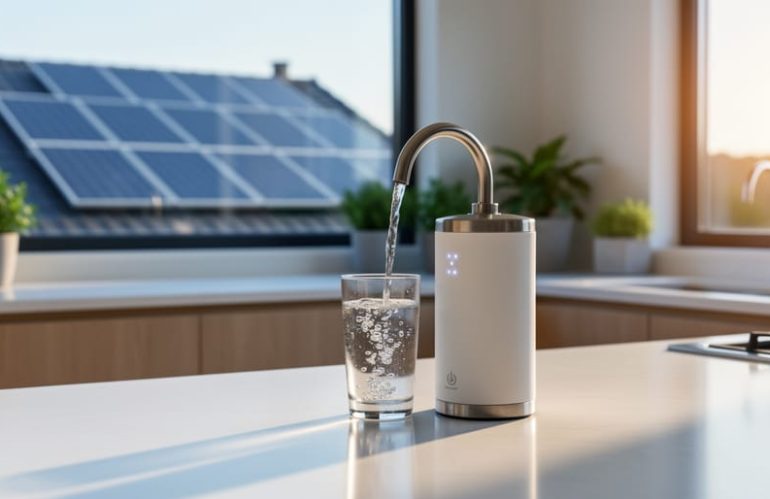
Access to clean drinking water doesn’t require expensive filtration systems or ongoing filter replacements when you harness the sun’s energy. Solar-powered water purification uses the same reliable technology that powers homes to make contaminated water safe to drink, offering homeowners an independent, cost-effective solution that works even during grid outages.
The concept is remarkably simple: solar panels generate electricity that powers purification systems using UV light, reverse osmosis, or distillation processes. Unlike traditional methods that drain your utility bill month after month, these systems operate entirely on free sunlight. If you already have rooftop solar panels or are considering an installation, adding water purification capability integrates seamlessly with your existing setup.
For homeowners concerned about water quality, rising utility costs, or emergency preparedness, solar-powered purification addresses all three simultaneously. These systems remove bacteria, viruses, heavy metals, and chemical contaminants without generating ongoing expenses for replacement filters or electricity consumption. The technology has matured significantly, moving from large-scale humanitarian applications to practical residential units that fit various household sizes and budgets.
The environmental benefit extends beyond eliminating plastic bottle waste. By producing clean water on-site using renewable energy, you’re reducing the carbon footprint associated with bottled water transportation and municipal water treatment processes. Most importantly, you’re gaining water security that doesn’t depend on infrastructure that may fail during emergencies.
Understanding how these systems work, what they cost, and whether they’re right for your home starts with separating facts from misconceptions about solar water purification technology.
What Is Solar-Powered Water Purification?
Solar-powered water purification harnesses energy from the sun to clean and disinfect drinking water, making it safe for household use. Instead of relying on electricity from the grid, these systems tap into free, renewable solar power to remove harmful bacteria, viruses, chemicals, and other contaminants from your water supply. Think of it as combining two essential resources—sunlight and water—to create a self-sustaining solution for your home.
These systems work through several proven methods, each suited to different water quality challenges. UV treatment uses solar-generated electricity to power ultraviolet lamps that destroy microorganisms without adding chemicals to your water. Solar distillation mimics nature’s rain cycle by heating water until it evaporates, then collecting the pure condensed vapor while leaving contaminants behind. For homes dealing with saltwater or highly contaminated sources, solar-powered reverse osmosis uses photovoltaic panels to run pumps that force water through specialized filters, removing even the smallest impurities. Solar-powered desalination represents a specialized application of these technologies for coastal homeowners.
The beauty of solar-powered purification lies in its accessibility. You don’t need a degree in engineering to benefit from these systems. Modern units are designed with homeowners in mind, featuring straightforward installation and minimal maintenance requirements. Whether you’re dealing with well water that needs treatment, municipal water you’d like to improve, or preparing for emergency situations, solar purification offers a practical pathway to cleaner water.
Best of all, once installed, your ongoing costs drop dramatically. The sun provides free fuel, meaning you’re purifying water without monthly electricity bills eating into your budget. For households already using solar panels or considering them, adding water purification creates another layer of energy independence while protecting your family’s health.
Why Homeowners Are Making the Switch

Slash Your Water Treatment Costs
The numbers tell a compelling story. The average American household spends between $300 and $600 annually on bottled water, while conventional electric water filtration systems add roughly $50 to $150 to your yearly energy bills. Solar-powered water purification eliminates both expenses.
When your purification system runs entirely on solar energy, you’re drawing clean water without touching the grid. That means zero ongoing electricity costs for filtration. Compare this to traditional reverse osmosis systems that can consume 50 to 80 watts continuously, and the savings add up quickly over the system’s 20 to 25-year lifespan.
The upfront investment typically ranges from $2,000 to $5,000 for residential systems, depending on capacity and features. Most homeowners recover these costs within three to seven years through eliminated bottled water purchases and reduced energy bills. After that break-even point, you’re essentially getting purified water for free.
Even better, these systems require minimal maintenance beyond occasional filter replacements, which cost significantly less than continuously buying bottled water or repairing grid-dependent filtration equipment. You’re protecting your budget while securing a reliable source of clean water for decades to come.
Clean Water When You Need It Most
When the unexpected happens—whether it’s a natural disaster, power grid failure, or emergency situation—access to clean drinking water becomes critical. Solar-powered water purification systems shine brightest during these challenging moments, operating independently of the electrical grid when you need them most.
Unlike conventional water filtration systems that stop working the moment the power goes out, solar purification systems continue functioning as long as there’s daylight. This makes them an invaluable backup solution for homeowners who’ve invested in residential solar panels and battery storage systems. When integrated with your home’s existing solar setup, these purification systems draw from the same renewable energy source that powers your home, creating a comprehensive approach to energy independence.
Many homeowners discover that pairing water purification with their solar installation provides unexpected peace of mind. You’re not just reducing your carbon footprint—you’re building resilience into your home’s essential systems. During extended outages, while neighbors scramble for bottled water, your family maintains access to clean, safe drinking water. It’s practical preparedness that doesn’t require gasoline-powered generators or complicated maintenance, just the reliable power of the sun working for your household’s most basic need.
Your Environmental Impact Matters
Switching to solar-powered water purification can make a real difference for our planet. Consider this: Americans purchase about 50 billion plastic water bottles annually, with the majority ending up in landfills or oceans. By purifying your own water at home using solar energy, you eliminate the need for bottled water while producing zero emissions in the process. Traditional water purification methods often rely on electricity from fossil fuels, but solar systems tap into clean, renewable energy from the sun. This means every glass of water you purify reduces your carbon footprint. Even better, you’re not just helping the environment—you’re also saving money by cutting out ongoing bottled water purchases and reducing your monthly energy costs. It’s a simple change that creates lasting positive impact for both your wallet and the world around you.
How Solar Water Purification Fits with Your Home Solar System
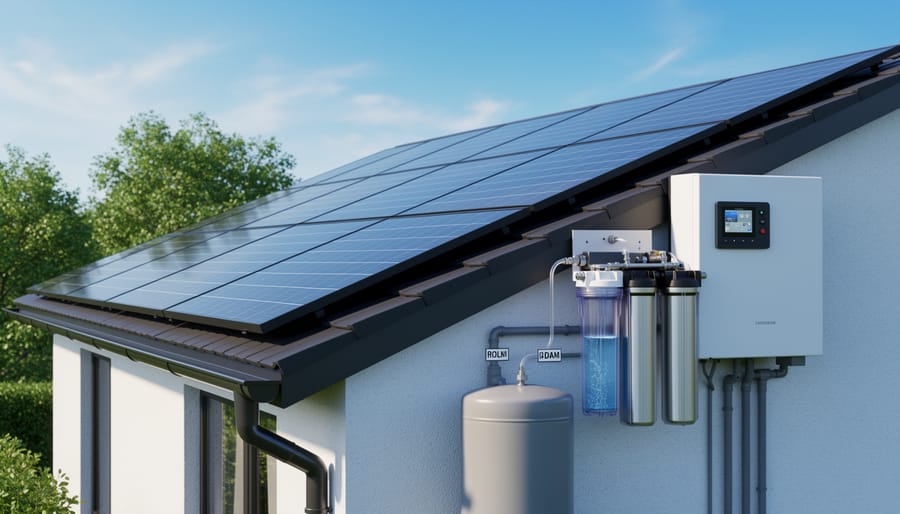
If you already have solar panels on your roof, you’re perfectly positioned to add water purification to your clean energy setup. The good news? Most residential solar systems generate more than enough power to run water purification equipment without requiring costly upgrades.
Here’s what makes this combination work so well: modern water purification systems are surprisingly energy-efficient. A typical under-sink reverse osmosis system uses about the same electricity as a coffee maker, while whole-house UV purification systems consume roughly what a laptop does during operation. When you consider that a standard home solar system produces thousands of watts throughout the day, adding water purification barely registers as additional demand.
The integration is straightforward. Your water purification system simply plugs into your home’s electrical panel, just like any other appliance. Because it draws power from your home’s electrical system, it automatically uses solar energy during daylight hours when your panels are producing. No special wiring or dedicated circuits are typically needed.
Where things get even better is with battery storage. If you’ve invested in home batteries alongside your solar panels, your water purification continues running on stored solar energy after sunset and during cloudy weather. This means truly independent, clean water around the clock. Even during grid outages, your water stays safe and drinkable as long as your batteries have charge.
Many homeowners worry that adding water purification will diminish the financial returns from their solar investment. The reality is quite different. Because these systems draw minimal power and you’re generating it yourself, the operating costs are nearly zero. Compare this to buying bottled water at roughly $500 annually for an average family, and the economics become compelling.
The beauty of solar panel integration with water purification lies in maximizing your existing investment. You’ve already done the heavy lifting by installing solar panels. Adding water purification simply extends the benefits of that decision, turning sunlight into both electricity and clean water. Most homeowners find their current solar array handles this additional load without any modifications whatsoever.
Common Myths About Solar Water Purification (Debunked)
Myth: It Only Works in Sunny Climates
One of the biggest misconceptions about solar-powered water purification is that it only functions in perpetually sunny locations. The truth is, modern systems are designed to work reliably even when clouds roll in. These systems incorporate battery storage that charges during sunny periods and stores excess energy for later use. This means your water purification continues operating during overcast days, at night, or whenever direct sunlight isn’t available. Think of it like your smartphone—you charge it when possible, then use that stored power throughout the day. Additionally, solar panels still generate electricity on cloudy days, just at reduced capacity, typically producing 10-25% of their full output. For homeowners in regions with variable weather, this built-in resilience means you’re not dependent on constant sunshine. The battery backup ensures consistent access to clean water regardless of weather patterns, making solar-powered purification a practical choice across diverse climates and geographical locations.
Myth: The Systems Are Too Expensive
Let’s talk real numbers. While solar-powered water purification systems require an upfront investment—typically ranging from $200 for basic portable units to $3,000 for comprehensive whole-home systems—the long-term savings tell a different story. Consider this: a family spending $15 weekly on bottled water pays about $780 annually. Over ten years, that’s $7,800, far exceeding most system costs.
The comparison becomes even more favorable when you factor in maintenance. Solar purification systems have minimal operating costs since sunlight is free, and most components last 15-25 years with basic care. Traditional filtration methods require expensive replacement cartridges every few months, quickly adding up.
If you already have residential solar panels, integration is straightforward and cost-effective. The system draws power you’re already generating, maximizing your existing investment. Even without solar panels, standalone units pay for themselves within 2-4 years through eliminated bottled water purchases and reduced reliance on municipal treatment chemicals.
The bottom line? What seems expensive initially becomes one of the smartest financial decisions for your household budget and the environment.
Myth: Maintenance Is Complicated
Many people assume that adding solar-powered purification to their water system means complicated upkeep, but the reality is refreshingly simple. These systems actually require less maintenance than traditional filtration setups.
Here’s what basic maintenance looks like: cleaning solar panels a few times per year (usually just hosing them down), replacing filters on the same schedule as conventional systems, and occasional visual checks to ensure everything’s running smoothly. That’s it. No specialized tools needed, no expert knowledge required.
Compare this to traditional water treatment systems that often need regular chemical additions, frequent filter replacements, and sometimes professional servicing. Solar purification systems have fewer moving parts and no chemical treatments to monitor, which means fewer things that can go wrong.
The solar component is particularly low-maintenance since panels typically come with 25-year warranties and require minimal intervention. Most homeowners spend less than an hour per year on upkeep. Think of it like maintaining your gutters—a simple seasonal task that keeps everything flowing smoothly. The peace of mind and cost savings far outweigh the minimal effort required.
What to Consider Before Installing
Before investing in a solar-powered water purification system, there are several practical factors to evaluate to ensure it’s the right fit for your home and lifestyle.
Start by testing your water quality. Understanding what contaminants you’re dealing with helps you choose the appropriate purification technology. Municipal water typically requires less intensive treatment than well water, which may contain bacteria, sediments, or minerals. Home water testing kits are inexpensive and readily available, or you can hire a professional water testing service for comprehensive results. This step prevents overspending on unnecessary features while ensuring you get adequate protection.
Next, calculate your household’s daily water needs. The average person uses about 80-100 gallons daily, but your purification system only needs to handle drinking and cooking water unless you’re going off-grid. Most families need between 2-5 gallons of purified water per day. This calculation directly impacts the system size you’ll need and helps you avoid purchasing an oversized unit that costs more upfront without added benefit.
Space requirements matter too. Evaluate where you’ll install both the purification unit and solar panels if they’re not already part of your existing solar setup. Many compact systems fit under kitchen sinks, while larger household systems need basement or garage space. Solar panels can often integrate with your current rooftop array, maximizing your existing investment.
Consider your climate and sun exposure. Solar-powered systems work year-round, but locations with consistent sunlight may need smaller battery backup compared to cloudier regions. Most modern systems include battery storage to maintain operation during nighttime and overcast days, but sizing these components correctly ensures reliable access to clean water.
Finally, think about your long-term goals. If you’re planning to expand your household or already have a solar installation, adding water purification creates synergy that increases your home’s self-sufficiency. The initial investment pays dividends through reduced bottled water purchases and lower utility bills, typically offering payback within a few years while providing peace of mind about water quality.
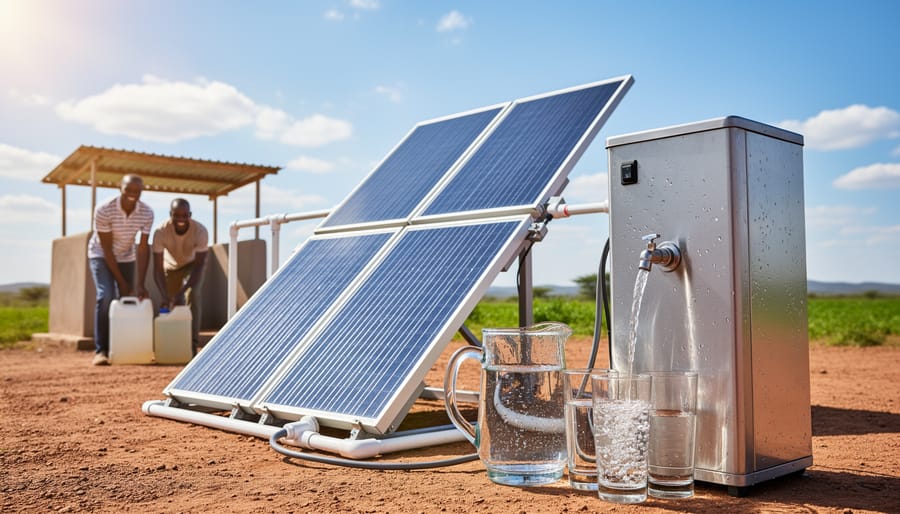
Solar-powered water purification represents more than just another application of renewable energy—it’s a powerful example of how going solar extends far beyond reducing your electric bill. By harnessing the sun to provide both clean energy and safe drinking water, you’re building genuine independence from unpredictable utility costs while contributing to a healthier planet.
The beauty of this technology lies in its versatility. Whether you’re looking to purify well water, reduce reliance on bottled water, or simply ensure your family has access to safe drinking water during emergencies, solar makes it possible without adding to your monthly expenses. As you consider your sustainability journey, think about water purification as part of a connected ecosystem of solar energy solutions that can transform your home.
The same roof that powers your lights and appliances can also deliver clean, safe water to your family. Take time to explore how solar energy might power not just one aspect of your home, but multiple systems working together to create a truly sustainable, cost-effective living space that benefits both your wallet and the environment.