Solar financing programs give government agencies, municipalities, and public institutions access to federal grants, low-interest loans, power purchase agreements, and revolving loan funds that cover 50-100% of installation costs for public solar projects. The application process typically takes 60-180 days from initial submission to approval, with the strongest applications demonstrating clear energy savings projections, community impact, and alignment with state or federal renewable energy mandates.
If you’re a facilities manager, city planner, or procurement officer tasked with reducing public energy costs, understanding these programs isn’t optional anymore. Federal allocations for solar infrastructure reached record levels in recent years, yet many eligible projects never get funded simply because applicants don’t know which programs match their project type or how to structure their applications correctly.
The good news? The core principles behind government solar financing mirror what homeowners use to fund residential installations: third-party ownership models, performance-based incentives, and credit-enhancement tools. The difference lies in scale, documentation requirements, and the need to navigate public procurement rules.
This guide walks you through every stage of securing funding for public solar installations. You’ll learn which programs exist at federal, state, and utility levels, what documentation reviewers actually want to see, and how to structure your timeline so approvals don’t stall your project. We’ll also cover the preliminary energy audits and stakeholder buy-in you need before submitting any application, because programs with the best rates go to the most prepared applicants.
Whether you’re planning a 50-kilowatt rooftop array for a library or a multi-megawatt ground-mount system for a wastewater treatment plant, the path to funding follows the same strategic sequence.
What You’ll Need to Apply for Solar Financing Programs
Before you submit an application for solar financing, you need to compile a comprehensive package of materials that demonstrates your project’s viability and your organization’s readiness. Government entities typically face more documentation requirements than residential applicants, but the core preparation steps mirror what homeowners encounter when seeking solar loans or leases.
Start with an energy audit or assessment of your facility. This professional evaluation identifies current energy consumption patterns, waste areas, and the potential impact of solar installation. Most financing programs require this baseline data to calculate projected savings and determine project feasibility. For smaller government offices or municipal buildings, a basic utility bill analysis covering 12-24 months may suffice, similar to what residential applicants provide.
You’ll need a preliminary site assessment from a qualified solar contractor. This involves a physical inspection of your property to evaluate roof condition, shading, structural integrity, available space, and optimal panel placement. The contractor’s report should include preliminary system sizing recommendations and cost estimates. Homeowners go through an identical process, though government projects often require licensed professionals with specific certifications or bonding requirements.
Budget documentation forms the financial backbone of your application. Prepare detailed current budget allocations, projected capital availability, and fiscal year planning documents that show how you’ll cover any required matching funds or ongoing costs. Include authorization letters from budget committees or financial officers demonstrating that funds have been allocated or approved.
- Energy audit report showing 12-24 months of consumption data
- Site assessment from licensed solar contractor with system sizing and cost estimates
- Budget documentation and proof of matching funds or capital availability
- Stakeholder approval letters from decision-makers, boards, or committees
- Facility ownership documentation or lease agreements with landlord consent
- Tax identification numbers and eligibility certifications for your entity type
- Completed eligibility questionnaires specific to each financing program
Stakeholder approval represents a critical prerequisite often overlooked in initial planning. Secure written authorization from your governing board, city council, school board, or relevant oversight body before applying. Many programs require formal resolutions or meeting minutes documenting official approval to proceed.
Finally, gather eligibility documentation proving your entity qualifies for the specific program. This includes tax-exempt status certificates, municipality designations, or institutional classifications. Homeowners face simpler requirements here, typically just proof of homeownership and creditworthiness, but the principle of demonstrating eligibility remains constant across both sectors.
Important Considerations and Stop Conditions Before You Begin

Before you commit to a solar financing program, take time to evaluate your organization’s capacity and constraints. Rushing into an application without addressing key factors can lead to wasted effort, denied funding, or projects that stall mid-installation.
Start by conducting an honest assessment of your budget limitations. Some financing programs require upfront matching funds or cost-share contributions that may strain your fiscal year allocations. If your organization can’t cover these initial expenses, you’ll need to secure additional local funding first or seek programs with zero-down options. Don’t assume approval guarantees immediate cash flow, many grants reimburse costs after project milestones, meaning you may need bridge financing.
Review compliance requirements thoroughly. Federal and state programs often mandate prevailing wage laws, buy-American provisions, environmental reviews, or specific contractor certifications. Missing a single compliance checkbox can disqualify your entire application or trigger clawback provisions later. If your procurement office hasn’t handled similar projects, bring them into the conversation early.
Timeline mismatches are a common trap. If a program closes applications in 60 days but your internal approval process takes 90, you’re setting yourself up for failure. Similarly, construction timelines that extend beyond a program’s spending deadline can forfeit funds you’ve already secured.
Watch for automatic disqualifiers in program guidelines. Some exclude entities with outstanding tax liens, prior grant violations, or projects on leased property. Others prohibit financing for buildings slated for demolition or significant renovation within five years. Read eligibility sections carefully, if anything raises a red flag about your situation, contact the program administrator before investing hours in paperwork. They can clarify whether exceptions exist or suggest alternative pathways that better fit your circumstances.
Step-by-Step: How to Navigate Solar Financing Programs
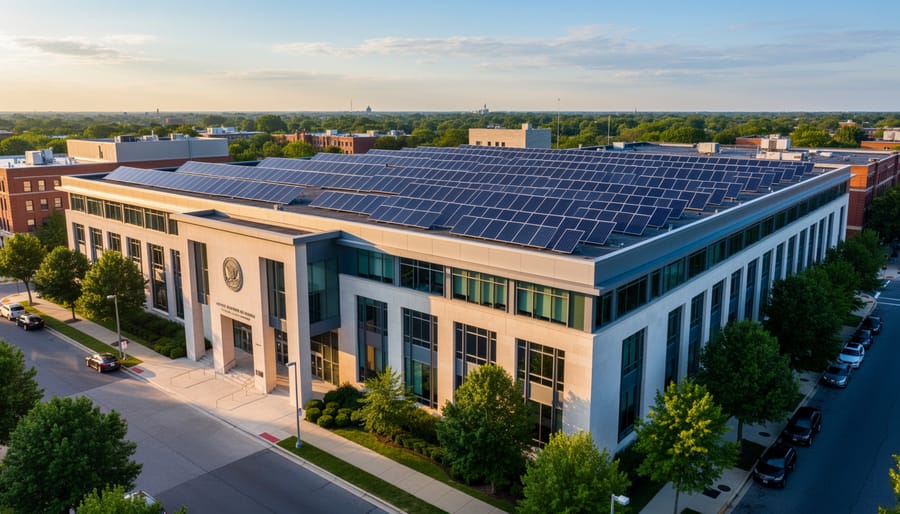
Step 1: Research and Identify Eligible Financing Programs
Start by cataloging available financing options at every government level. Visit the Database of State Incentives for Renewables & Efficiency (DSIRE) to search federal programs like the Rural Energy for America Program (REAP) and state-specific offerings. Check your municipal utility’s website for local rebates and low-interest loan programs designed specifically for public institutions.
Understanding the difference between grant vs loan structures is critical. Solar panel grants provide upfront capital you don’t repay, ideal for budget-constrained municipalities, but they’re competitive and require detailed applications. Loans offer larger funding amounts with repayment from energy savings. Power purchase agreements (PPAs) require zero upfront cost, a third party owns the system and you buy the electricity at a fixed rate, perfect for entities without capital budgets but with consistent energy needs.
Match programs to your project scope by comparing eligibility requirements: Does your facility meet the minimum energy consumption threshold? Do you need 100% grant funding or can you leverage partial financing? Create a shortlist of three to five programs that align with your timeline, budget capacity, and institutional constraints before moving forward.
Step 2: Conduct a Solar Feasibility Assessment
Once you’ve identified potential programs, partner with qualified solar contractors to evaluate whether your facility is a good fit for solar. This feasibility study provides the data you’ll need to complete financing applications and justify the investment to stakeholders.
Start by requesting site assessments from at least three licensed contractors. They’ll measure roof condition and orientation, analyze shade patterns, review your current energy consumption, and calculate system size requirements. Ask for detailed reports that include projected energy production, estimated installation costs, and anticipated savings over 20-25 years.
Most contractors offer free preliminary assessments for government projects. Request proposals that break down equipment costs, labor, permits, and maintenance separately, this transparency helps when comparing financing options and negotiating terms.
Document everything. Your feasibility report becomes a cornerstone of your financing application, proving to lenders or grant reviewers that you’ve done due diligence and that the project makes financial sense.
Step 3: Prepare and Submit Your Application
With your feasibility assessment complete and a program selected, you’re ready to compile your application package. Start by creating a master checklist of all required documents, most programs need a completed application form, feasibility study results, energy audit reports, project timeline, detailed budget breakdown, proof of property ownership or site control, and letters of support from key stakeholders.
Assign responsibility for each document to specific team members with firm internal deadlines at least two weeks before the program’s submission date. This buffer lets you catch missing signatures, outdated cost estimates, or incomplete sections without scrambling at the last minute.
Complete the application form carefully, answering every question even if it seems redundant. Review committees often disqualify applications with blank fields. Use clear, specific language when describing your project scope and expected outcomes, quantify energy savings in kilowatt-hours, not vague percentages.
Before submitting, have someone outside your core team review the entire package for clarity and completeness. Submit through the specified method (online portal, email, or mail) and keep confirmation receipts. File copies of everything you send for reference during the review process.
Step 4: Navigate the Review and Approval Process
After submitting your application, expect a review period of 30 to 90 days for most federal and state solar financing programs, though timelines vary by program size and funding availability. Larger grant applications or those requiring legislative approval can stretch to six months.
During review, program administrators verify your documentation, assess project feasibility, and score applications against eligibility criteria. You’ll typically receive acknowledgment of receipt within one to two weeks. Don’t assume silence means rejection, reviewers often process applications in batches.
Be prepared to respond quickly to requests for additional information. Common requests include clarification on energy usage data, updated budget line items, or proof of stakeholder authorization. Aim to reply within the stated deadline, usually five to ten business days.
If you haven’t heard back by the program’s posted decision date, a polite follow-up email is appropriate. Meanwhile, continue refining your project plan and cultivating contractor relationships so you’re ready to move swiftly once approval arrives.
Step 5: Finalize Contracts and Begin Installation
Once approval arrives, shift your focus to contract review. Read every financing agreement carefully, payment schedules, interest rates, repayment terms, and performance guarantees all matter. Have your legal and finance teams scrutinize the fine print before anyone signs. Clarify who owns the system, who handles maintenance, and what happens if energy production falls short of projections.
After signing, coordinate directly with your selected solar contractor. Confirm installation timelines, site access requirements, and any permits still pending. Schedule a pre-construction meeting with all stakeholders, facilities managers, finance officers, and the installer, to align expectations. Establish clear communication channels and designate a project manager to oversee the build.
Track milestones closely. Most installations take weeks to months depending on system size. Stay responsive to contractor requests and monitor progress to keep everything on schedule.
Types of Solar Financing Programs Available for Public Entities
Public entities have five primary financing mechanisms to fund solar installations, each with distinct advantages depending on project size, budget constraints, and institutional capacity.
Federal grants and incentives remain the most sought-after option because they require no repayment. The Department of Energy’s State Energy Program and USDA’s Rural Energy for America Program provide direct funding for qualifying projects, typically covering 25% to 50% of total costs. These work best for medium to large installations where the application effort justifies the reward. Smaller municipalities may find the documentation burden disproportionate to their project size.
State and municipal programs offer more flexibility and faster turnaround times. Many states have established revolving loan funds specifically for public sector renewable energy projects, often featuring 0% interest loans or below-market rates. Programs like Minnesota rebates demonstrate how regional initiatives can dramatically reduce upfront costs. These programs suit projects of any size and typically have streamlined applications compared to federal options.
Green bonds allow larger municipalities and counties to raise capital specifically for sustainability projects. Investors purchase these bonds at competitive interest rates, and the entity repays them over 15 to 30 years using energy savings. This mechanism works for installations exceeding $500,000 where long-term budget certainty exists.
Energy service agreement (ESA) definition structures let public entities partner with private developers who finance, install, and maintain the system. The municipality pays only for the energy produced at a fixed rate below utility prices. ESAs eliminate upfront costs entirely and shift performance risk to the developer, making them ideal for entities with limited capital budgets or technical expertise.
Power purchase agreements (PPAs) function similarly to ESAs but involve a third-party system owner selling electricity to the public entity under a long-term contract. The entity avoids ownership responsibilities while locking in predictable energy costs for 20 to 25 years. PPAs suit organizations that prefer operational flexibility over asset ownership.
Combining multiple mechanisms often yields the best results. A county might secure a federal grant covering 40% of costs, finance the remainder through a state revolving loan, and use anticipated savings to repay the loan within ten years.
How to Verify Success and What Comes Next

Once your application is approved, you’ll receive an award letter or funding commitment document that outlines the approved amount, disbursement schedule, and any conditions attached to the financing. This letter serves as your official confirmation, file it immediately with your project documentation and share copies with your finance department, project manager, and solar contractor. The document should specify exactly when funds will be released, whether in a lump sum or tied to project milestones like permit approval, installation completion, and final inspection.
Before breaking ground, schedule a kickoff meeting with all stakeholders, your solar installer, financing agency representative, facilities manager, and compliance officer. Use this meeting to establish clear timelines, assign responsibility for required reports, and confirm inspection schedules. Most programs require quarterly or annual reporting on energy production, cost savings, and environmental impact, so set up your monitoring system now rather than scrambling later. Install energy metering equipment that can track real-time solar production and compare it against baseline utility consumption.
Your ongoing obligations typically include submitting performance reports, maintaining insurance coverage, and keeping the system in good working order. Create a calendar reminder for each reporting deadline and designate a staff member as the program liaison. Track your actual savings monthly, compare utility bills before and after solar installation, document kilowatt-hours generated, and calculate your return on investment. This data proves invaluable for future funding applications and helps you refine energy strategies across other facilities. Homeowners exploring similar financing options benefit from the same verification approach: confirm terms in writing, monitor performance closely, and document savings to validate your investment decision.
Common Questions About Solar Financing for Government Projects
Can smaller municipalities with limited budgets qualify for solar financing programs?
Yes, many programs specifically target small and mid-sized municipalities. Federal grants like the USDA REAP program and state-level initiatives often prioritize communities with fewer resources, offering grants rather than loans to reduce financial burden.
Is it possible to combine multiple financing sources for one solar project?
Absolutely. Most government entities layer federal tax incentives, state grants, and local financing to maximize coverage. Just ensure each program permits stacking and that you disclose all funding sources during application to avoid compliance issues.
How long does the typical approval process take?
Expect three to six months for most federal and state programs, though some competitive grants can take up to a year. Local financing through municipal bonds or ESAs often moves faster, sometimes within 60 to 90 days.
What happens if my application gets denied?
A denial isn’t the end. Review the feedback, address gaps in your proposal, and reapply in the next cycle. Many agencies offer technical assistance to help strengthen future submissions, and you can pivot to alternative programs in the meantime.
These questions reflect the most common hesitations project managers face when exploring solar financing. The good news is that programs are designed to be accessible, especially as governments push toward renewable energy targets.
Homeowners wondering how this applies to them should know that residential solar financing operates on similar principles. Federal tax credits, state rebates, and third-party financing like solar loans or leases mirror the government model. The application process is simpler and faster for homes, often requiring just a credit check and a site assessment. If your municipality is exploring solar, chances are your state offers parallel programs for residents. The same feasibility assessments, documentation practices, and verification steps apply whether you’re outfitting a city building or your own roof.
Accessing solar financing programs for government projects has become increasingly straightforward in 2026, with numerous federal, state, and local options available to municipalities and public institutions of all sizes. These programs offer compelling financial benefits, reduced energy costs, predictable budgets, and long-term savings, while advancing environmental goals and setting an example for your community.
The step-by-step process outlined here demonstrates that securing funding is achievable with proper preparation, documentation, and persistence. Whether you’re pursuing grants, green bonds, or power purchase agreements, the path forward is clear and well-supported by program administrators eager to fund viable solar projects.
For government entities ready to move forward, begin by researching eligible programs that match your project scope and budget. Conduct your feasibility assessment early to avoid delays and strengthen your application.
Homeowners watching their local government embrace solar should take note: many of the same financing mechanisms, from zero-down loans to power purchase agreements, are available for residential installations. If your municipality can access affordable solar financing, so can you. Explore residential solar financing options to reduce your energy bills and contribute to the same environmental benefits driving public sector adoption. The programs exist, the benefits are proven, and the process is more accessible than ever.