Solar panels transform sunlight into electricity through layers of silicon cells, metal conductors, and protective glass—a surprisingly straightforward construction that’s revolutionizing how American homes generate power. Whether you’re considering a rooftop installation, exploring do-it-yourself options, or evaluating solar-integrated building materials for new construction, understanding how these systems are built demystifies the technology and empowers smarter investment decisions.
Modern solar panel construction has evolved far beyond clunky, inefficient designs. Today’s photovoltaic modules are engineered for durability, with weatherproof frames designed to withstand decades of rain, snow, and temperature fluctuations. The assembly process—combining photovoltaic cells, encapsulation materials, and junction boxes—determines both energy output and longevity, which directly impacts your return on investment.
The construction method you choose matters significantly. Traditional rooftop panels offer proven performance and straightforward installation, while building-integrated photovoltaics blend seamlessly into roof tiles or facades. DIY solar panel construction appeals to hands-on homeowners seeking cost savings, though professional installation typically ensures optimal performance and warranty protection.
Understanding construction fundamentals helps you evaluate quality, compare pricing accurately, and make confident decisions about going solar. The initial investment concerns many homeowners, but well-constructed solar systems typically pay for themselves within 7-10 years while adding property value. This knowledge transforms solar from an intimidating technology into an accessible home improvement that reduces energy bills, increases energy independence, and contributes to environmental sustainability—benefits that extend far beyond the panels themselves.
What Are Solar-Powered Building Materials?
Solar-powered building materials are exactly what they sound like: the actual parts of your home that generate electricity from sunlight. Instead of mounting traditional solar panels on top of your existing roof, these materials replace conventional building components like roof tiles, windows, or siding with versions that produce power while still doing their original job.
Think of it this way: a standard solar setup means adding equipment to your house, but solar building materials mean your house itself becomes the power generator. Your roof tiles capture sunlight. Your windows convert rays into energy. Your exterior walls contribute to your electricity supply. These aren’t add-ons; they’re fundamental parts of your home’s structure.
The technical term for this approach is building-integrated photovoltaics, but you can simply think of it as construction materials with built-in electricity generation. These advanced solar technologies represent a shift in how we think about home energy. Rather than treating solar as an afterthought or upgrade, it becomes part of the original design.
This approach offers some compelling advantages for homeowners. Solar building materials often look more streamlined than traditional panels since they blend seamlessly with your home’s architecture. They can also reduce overall construction costs when you’re building new or doing major renovations, since you’re essentially getting two products in one—both the building material and the power generator.
The bottom line is simple: solar-powered building materials turn your home’s surfaces into energy producers without sacrificing appearance or functionality. It’s construction that works smarter, not harder, helping you reduce energy bills while maintaining the aesthetic you want.
The Main Types of Solar Building Materials
Solar Roofing Shingles and Tiles
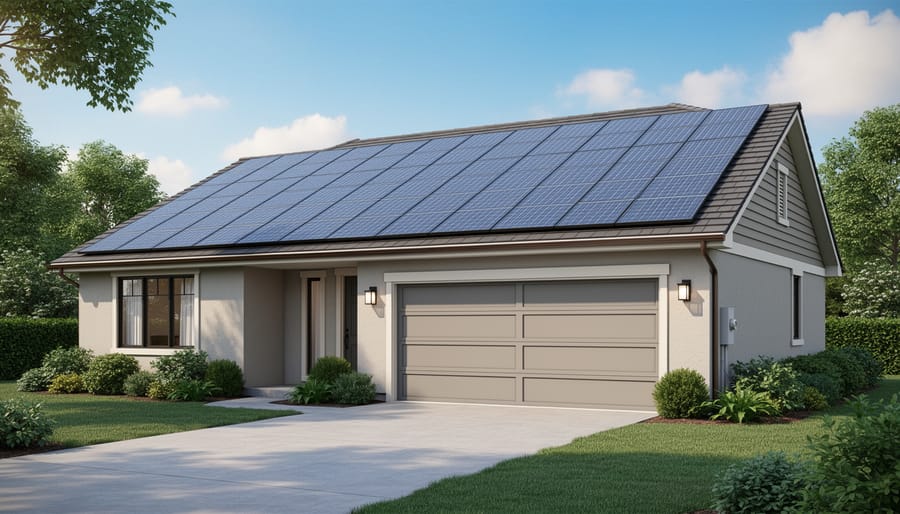
Solar roofing shingles and tiles represent one of the most exciting innovations in home energy. Unlike traditional solar panels that sit on top of your existing roof, these products actually replace your regular shingles or tiles, serving double duty as both protective roofing material and electricity generator.
These solar shingles look remarkably similar to conventional roofing materials. They’re designed to blend seamlessly with your home’s architecture, making them perfect if you’re concerned about curb appeal. Most neighbors won’t even notice you’ve gone solar unless you point it out.
Installation happens just like regular roofing work. Contractors nail the solar shingles directly onto your roof deck, then connect them to your home’s electrical system. This makes them ideal during new construction or when you’re already planning a roof replacement, since you’re essentially killing two birds with one stone.
The benefits go beyond aesthetics. Solar shingles typically come with strong warranties covering both weather protection and energy production. They’re also more wind-resistant than traditional panels since they lie flush against your roof. While the upfront cost runs higher than conventional roofing, you’re investing in a roof that actually pays you back through energy savings, potentially covering its own cost over time.
Solar Windows and Glass
Imagine if every window in your home could generate electricity while still letting light through. That’s exactly what solar window technology does. These transparent solar panels use special materials that capture invisible ultraviolet and infrared light, allowing visible light to pass through while producing power.
The technology works by coating glass with ultra-thin layers of organic materials or specialized particles. When sunlight hits the window, these coatings absorb certain light wavelengths and convert them into electricity, similar to traditional panels but without blocking your view.
Currently, transparent solar panels generate less power than rooftop systems, producing about 2-5% of what standard panels offer. However, they’re perfect for high-rise buildings with limited roof space and homes where traditional panels aren’t practical. Several office buildings and residential projects already use them in windows and glass facades, turning previously unused surfaces into energy producers. As the technology improves, solar windows could become a standard feature in new home construction, adding power generation without changing your home’s appearance.
Solar Siding and Wall Panels
Solar panels aren’t just for rooftops anymore. Today’s solar siding and wall panels turn your home’s vertical surfaces into energy generators, maximizing your property’s power potential. These building-integrated systems replace traditional exterior materials while quietly producing electricity throughout the day.
Vertical solar installations work particularly well in winter months when the sun sits lower in the sky, and they’re ideal for homes with limited roof space or unfavorable roof orientations. Modern options include flexible solar panels that conform to various architectural styles and rigid panels designed to look like conventional siding.
The beauty of solar walls lies in their dual purpose: they protect your home from the elements while cutting your energy bills. Installation typically happens during new construction or major renovations, though retrofit options exist. While vertical panels generate slightly less power than angled roof panels, they still deliver meaningful savings and make productive use of otherwise wasted space. This approach represents smart thinking for homeowners seeking comprehensive renewable energy solutions.
Solar Carports and Awnings
Solar carports and awnings represent some of the smartest dual-purpose investments you can make for your property. These structures do double duty by creating comfortable covered spaces while simultaneously generating clean electricity. A solar carport transforms your driveway or parking area into a power-generating asset, protecting your vehicles from weather while offsetting your energy costs. Similarly, solar awnings over patios, walkways, or windows provide valuable shade that reduces cooling costs in summer, all while producing electricity year-round. The construction process mirrors standard solar installations but includes engineered support structures designed to bear both panel weight and local weather loads. Many homeowners find these options particularly appealing because they generate solar power without modifying their roof, making them ideal if your roof faces the wrong direction, needs replacement soon, or simply isn’t suitable for panels. The financial benefits stack up quickly since you’re getting functional outdoor improvements plus energy savings in one project. These installations typically qualify for the same tax incentives as rooftop systems, making them surprisingly affordable when you factor in the value of the covered space you’re creating.
How Solar Building Materials Are Actually Constructed
The Technology Inside
Think of solar panels like a sandwich that captures sunshine. At the heart of every solar panel are photovoltaic cells—thin wafers made from silicon, the same material used in computer chips. When sunlight hits these cells, it knocks electrons loose, creating an electrical current. It’s similar to how a water wheel generates power from flowing water, except solar cells use light instead.
In modern construction, these cells are being integrated directly into building materials rather than just mounted on top. Manufacturers bond the photovoltaic cells between protective layers of glass or durable plastic, creating panels that can withstand rain, snow, and decades of weather exposure. The magic happens when multiple cells are connected together—each one contributing a small amount of electricity that adds up to power your home.
Understanding how photovoltaic cells work helps you appreciate why proper installation matters. The cells need direct sunlight and proper angling to perform at their best. Today’s building-integrated options make it easier than ever to incorporate this technology seamlessly into your home’s design, whether you’re building new or renovating existing structures.
Installation: What Homeowners Should Expect
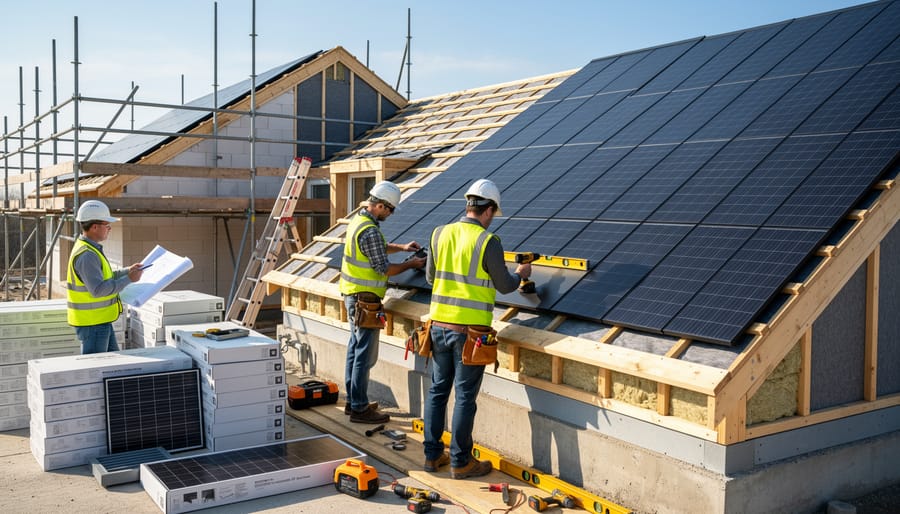
The good news? Installing solar panels on your home is much more straightforward than most people imagine. A typical residential installation takes just one to three days from start to finish, though the complete process from signing your contract to powering up your system usually spans six to twelve weeks when you factor in permits, inspections, and utility approvals.
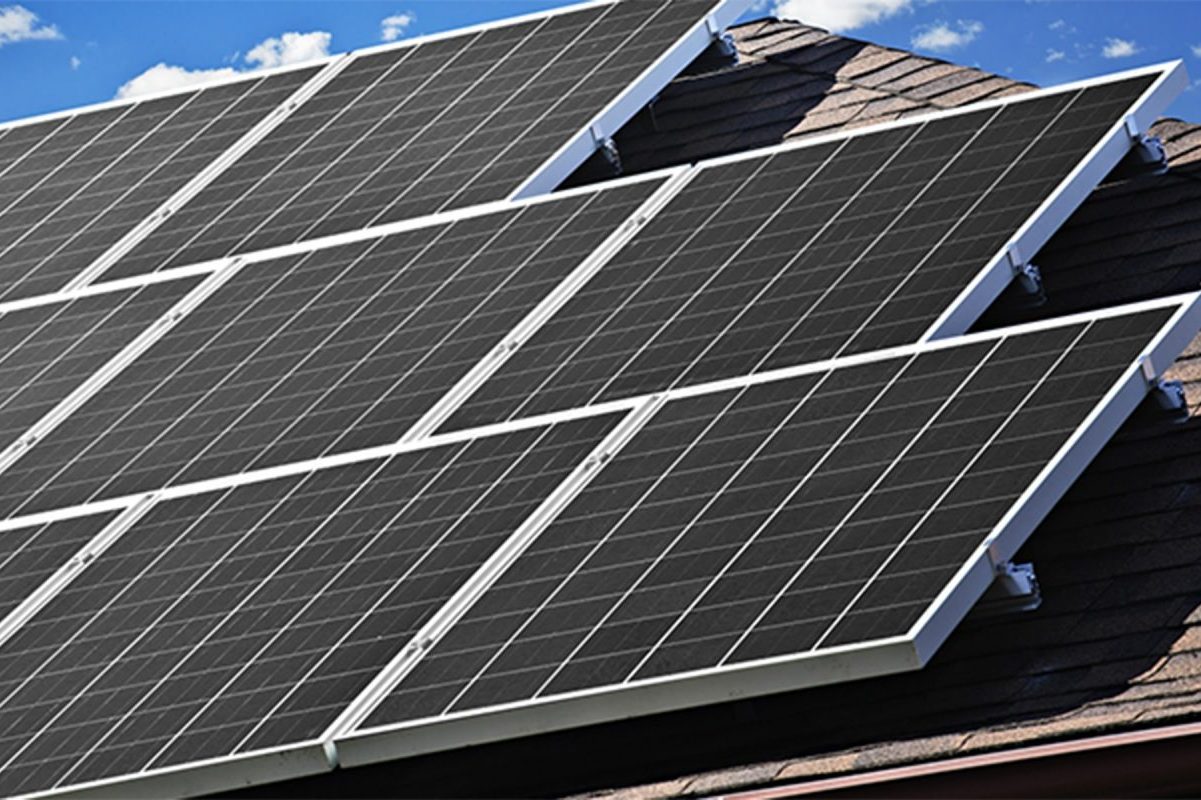
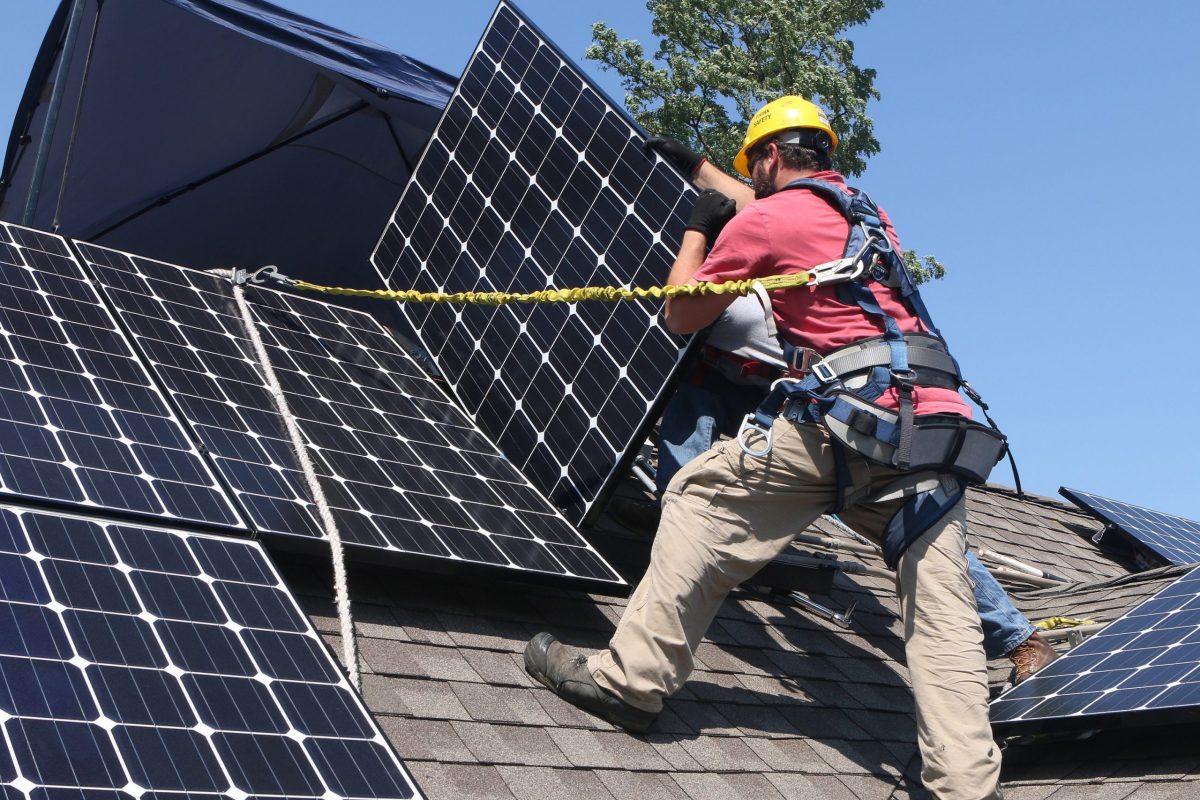
Here’s what actually happens: Professional installers arrive with your panels and mounting equipment, secure the racking system to your roof, attach the panels, connect the electrical components, and set up your inverter and monitoring system. Most homeowners are surprised by how quickly the physical work goes. You won’t need to leave your home, and you can go about your daily routine while the crew works outside.
Modern installation has become remarkably efficient compared to earlier solar systems. Today’s standardized mounting systems and pre-wired components mean fewer complications and faster completion. The most time-consuming part isn’t the construction itself but rather the paperwork: obtaining building permits, scheduling inspections, and coordinating with your utility company for final approval and grid connection.
One myth worth dispelling: you won’t experience major disruption to your daily life. Your electricity stays on during installation, and most homeowners report minimal inconvenience. The crew typically arrives early, works through the day, and cleans up thoroughly before leaving. Once your system passes inspection and receives permission to operate, you’re immediately generating your own clean energy and watching those electricity bills shrink.
The Real Benefits for Your Home and Wallet
Long-Term Cost Savings
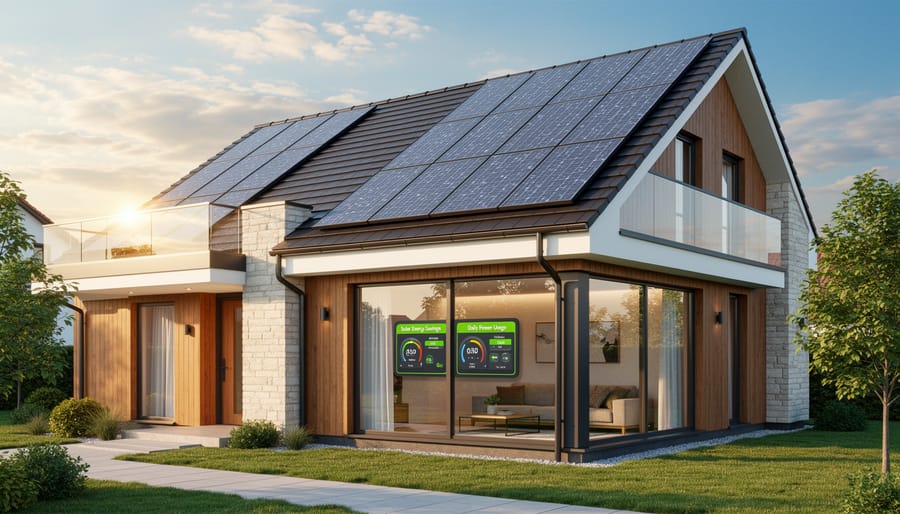
Solar panels deliver substantial financial benefits beyond their upfront costs. Most homeowners see a 50-70% reduction in monthly electricity expenses, with complete payback periods typically ranging from 7-12 years depending on local energy rates and sunlight availability. After this point, you’re essentially generating free electricity for the remaining 15-25 years of the panel’s lifespan.
The financial advantages extend beyond just reducing energy bills. Studies consistently show that homes with solar installations sell for 3-4% more than comparable properties without them. In real terms, that means a $300,000 home could gain approximately $9,000-12,000 in resale value.
Keep your expectations realistic though. Energy savings vary based on your location, roof orientation, and household consumption patterns. Homes in sunnier regions naturally see faster returns, while northern climates may take longer to break even. Additionally, local utility policies regarding net metering can significantly impact your savings. The good news? Federal tax credits currently cover 30% of installation costs, accelerating your return on investment considerably. Think of solar construction as a long-term wealth-building strategy rather than a get-rich-quick scheme.
Aesthetic and Functional Advantages
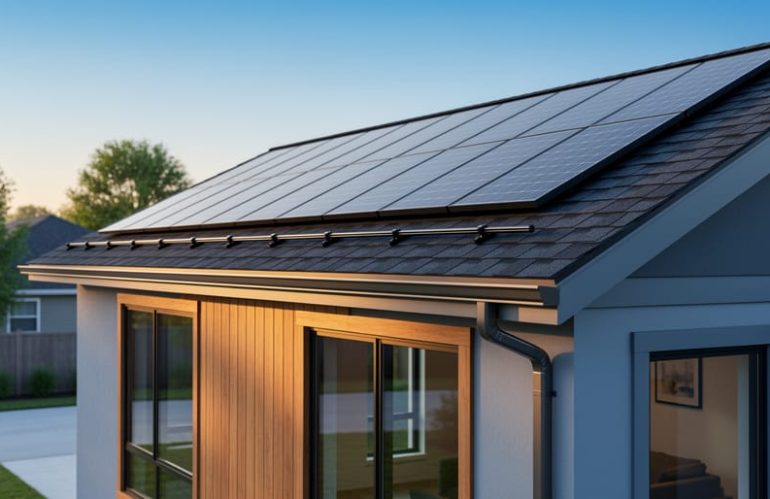
Modern solar integration offers remarkable improvements over the bulky panels you might picture from years past. Today’s solar materials blend seamlessly with your home’s design, often looking identical to standard roofing materials or windows from street level. This means you can generate clean energy without compromising your home’s curb appeal or potentially affecting property values.
What makes these materials especially smart is their dual functionality. Solar shingles, for example, protect your home from the elements just like traditional roofing while simultaneously converting sunlight into electricity. You’re essentially getting two products in one, which helps offset the initial investment. Similarly, solar windows provide insulation, UV protection, and natural light while generating power throughout the day. This multitasking approach means you’re not adding extra equipment to your home but rather upgrading existing components to work harder for you, creating a cleaner look and better overall value.
Durability and Maintenance
Good news: properly constructed solar panels are incredibly durable. Most panels come with 25-30 year warranties, but they often continue producing electricity well beyond that timeframe. Modern solar installations are designed to withstand harsh weather, including hail, heavy snow, and high winds. The protective glass covering is typically stronger than your car windshield.
Maintenance requirements are refreshingly minimal. Rain naturally cleans most panels, and in drier climates, an occasional rinse with a garden hose once or twice yearly keeps them performing optimally. There are no moving parts to wear out or replace. Your main task is simply monitoring your system’s output through a smartphone app to ensure everything runs smoothly.
Contrary to popular myth, solar panels don’t become useless after a decade. They experience gradual efficiency decline of roughly 0.5% annually, meaning a 20-year-old panel still operates at about 90% capacity. This longevity makes solar one of the most reliable home improvements you can make, requiring far less upkeep than traditional roofing while actively reducing your energy costs.
Busting Common Myths About Solar Construction Materials
Myth: They’re Only for New Construction
Good news: solar panels work beautifully on existing homes, not just new construction. Retrofitting solar is actually the most common installation scenario. Your current roof can likely accommodate solar panels without major renovations, as long as the structure is sound and receives adequate sunlight. Installation typically takes just a few days, with minimal disruption to your daily life. Many homeowners add solar panels during routine roof replacements, making it a cost-effective two-for-one upgrade. Even older homes can benefit from modern mounting systems designed to work with various roof types and angles. The process is straightforward: a professional assessment determines your roof’s suitability, panels are securely mounted, and you’re generating clean energy. Retrofit installations often qualify for the same tax incentives and rebates as new construction projects, making sustainable energy accessible regardless of your home’s age.
Myth: They’re Too Expensive for Average Homeowners
While solar panels require an upfront investment, they’re more affordable than ever for everyday homeowners. Federal tax credits currently cover 30% of installation costs, and many states offer additional rebates that can reduce your total expense by thousands of dollars. Financing options like solar loans and leases mean you can start saving on energy bills immediately without paying the full cost upfront. Most homeowners see a complete return on investment within 7-12 years, while solar panels typically last 25-30 years. That means decades of essentially free electricity after breaking even. When you factor in rising utility rates, the average homeowner saves between $20,000 to $40,000 over the system’s lifetime. The numbers show that solar is increasingly a smart financial move, not a luxury reserved for the wealthy.
Myth: They Don’t Generate Enough Power
Here’s the truth: modern DIY solar panels can absolutely meet your energy needs when built correctly. While a single homemade panel won’t power your entire house, a properly designed array typically generates 80-90% of what comparable commercial panels produce. The difference comes down to craftsmanship and quality materials, not the concept itself.
The key is managing your expectations realistically. A standard DIY panel measuring 3×5 feet will generate between 100-200 watts under optimal conditions, which is enough to power several LED lights, charge devices, or run small appliances. String together multiple panels, and you’re looking at serious energy production that measurably reduces your electricity bills.
What surprises most homeowners is that DIY panels often perform better than expected because you control every aspect of construction. You choose high-efficiency cells, optimize placement without installer compromises, and maintain them personally. Many DIY builders report their panels matching or exceeding manufacturer specifications, especially when positioned for maximum sun exposure throughout the day.
Is Solar-Integrated Construction Right for Your Home?
Solar-integrated construction offers exciting possibilities, but it’s not a one-size-fits-all solution. Let’s walk through some key questions to help you decide if it makes sense for your home.
First, consider your timeline. If you’re planning a new build or major renovation, solar-integrated materials are definitely worth exploring. The construction phase is the ideal time to incorporate these technologies since installation costs merge with your overall project budget. However, if you’re living in an established home with no renovation plans, traditional rooftop panels might be more practical and cost-effective.
Your location matters significantly. Solar-integrated materials work best in areas with consistent sunlight exposure and favorable net metering policies. Check your local building codes too, as some municipalities have specific requirements or incentives for integrated solar construction.
Budget is another crucial factor. While solar-integrated materials can cost more upfront than conventional building materials, they often eliminate the need for separate solar panel installation later. Think of it as a two-for-one investment: you’re getting both your building envelope and your power generation system in one package.
Your home’s design also plays a role. South-facing roofs, minimal shade from trees or neighboring structures, and adequate roof space all improve the effectiveness of solar-integrated construction.
Ready to move forward? Start by consulting with a solar-experienced architect or builder who can assess your specific situation. Request multiple quotes, explore available tax credits and local incentives, and don’t hesitate to ask questions. Many homeowners find that the combination of energy savings, increased property value, and environmental benefits makes solar-integrated construction a worthwhile investment in their home’s future.
The future of sustainable living isn’t just on the horizon—it’s already being built into homes across the country. Solar panels integrated into roofs, walls, and windows represent more than just energy savings; they’re the foundation of a truly habitable future for generations to come. The good news? You don’t need to wait years to benefit from these innovations. Whether you’re building new, renovating, or simply curious about adding solar to your existing home, today’s technology makes it easier and more affordable than ever before.
The myths that once held homeowners back—prohibitive costs, complicated installation, aesthetic concerns—are rapidly being replaced by real-world success stories and proven savings. Solar-integrated building materials now offer sleek designs that enhance your home’s value while cutting energy bills from day one. By exploring your options now, you’re not just making a smart financial decision; you’re actively participating in building a sustainable future. Start by researching local incentives, connecting with trusted installers, and envisioning what solar construction could mean for your home and your wallet.