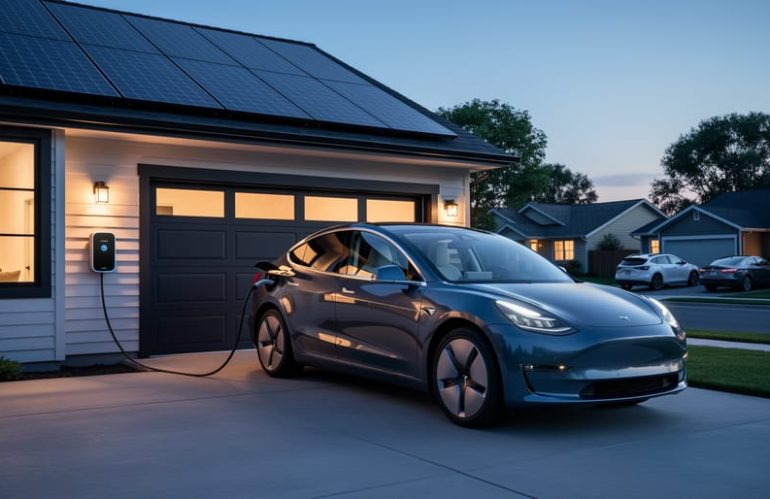
Your electric vehicle can do far more than transport you from place to place—it can become a powerful energy storage system for your entire home. By integrating your EV with your household electrical system, you unlock the ability to draw power from your car’s battery during peak electricity rates, store excess energy from residential solar systems, and keep essential appliances running during outages without investing in expensive standalone battery systems.
Connect your EV to a bidirectional charger that enables two-way power flow between your vehicle and home. This transforms your car’s battery—typically ranging from 60 to 100 kilowatt-hours—into a massive energy reserve that can power an average home for several days during emergencies.
Time your vehicle charging to coincide with off-peak electricity rates or peak solar production hours, then discharge that stored energy back to your home when grid rates spike. This simple cycle can slash hundreds of dollars from your annual electricity bills without changing your lifestyle.
Evaluate your home’s electrical panel capacity and existing energy infrastructure before installation. Most homes need a 200-amp service panel and may require professional upgrades to safely handle bidirectional power flow.
V2H technology represents a fundamental shift in how we think about home energy management. Rather than viewing your EV as simply another appliance that consumes electricity, system integration repositions it as a central hub in your home’s energy ecosystem—one that works harmoniously with solar panels, grid power, and your daily routines to maximize savings while minimizing your environmental footprint. The technology exists today, costs are decreasing rapidly, and the financial benefits compound year after year.
What Is Electric Vehicle System Integration?
Think of electric vehicle system integration as turning your car into a two-way energy partner with your home, rather than just a one-way consumer of electricity. When most people charge their EV, electricity flows in one direction: from the power grid, through their home’s electrical system, and into the car’s battery. It’s similar to how you’d charge your phone—simple and straightforward.
However, EV system integration takes this relationship to the next level by enabling your vehicle to communicate and share power with your home. This is where the concept of Vehicle-to-Home, or V2H, comes into play. With V2H technology, your electric vehicle becomes more than just transportation. It transforms into a mobile power station that can feed electricity back into your house when needed.
Here’s a relatable way to understand it: imagine your EV battery as a massive portable phone charger, except instead of keeping your smartphone running, it can power your refrigerator, lights, heating system, or other household essentials. During a power outage, while your neighbors sit in the dark, your EV could keep your home running for hours or even days, depending on your battery’s charge level.
The key difference between regular EV charging and true system integration lies in the technology required. Standard EV charging uses a one-way charger that simply fills up your battery. Full system integration requires specialized bidirectional equipment that allows electricity to flow both ways, along with smart controls that manage when to charge your car and when to draw power from it.
This bidirectional capability opens up exciting possibilities beyond emergency backup power. You can potentially use cheaper nighttime electricity to charge your car, then power your home with that stored energy during expensive peak hours, effectively cutting your energy bills while supporting a more sustainable grid.
How V2H Technology Actually Works in Your Home
The Equipment You’ll Need
Setting up vehicle-to-home integration doesn’t require an overwhelming amount of equipment, but you’ll need a few key components to make it work safely and effectively.
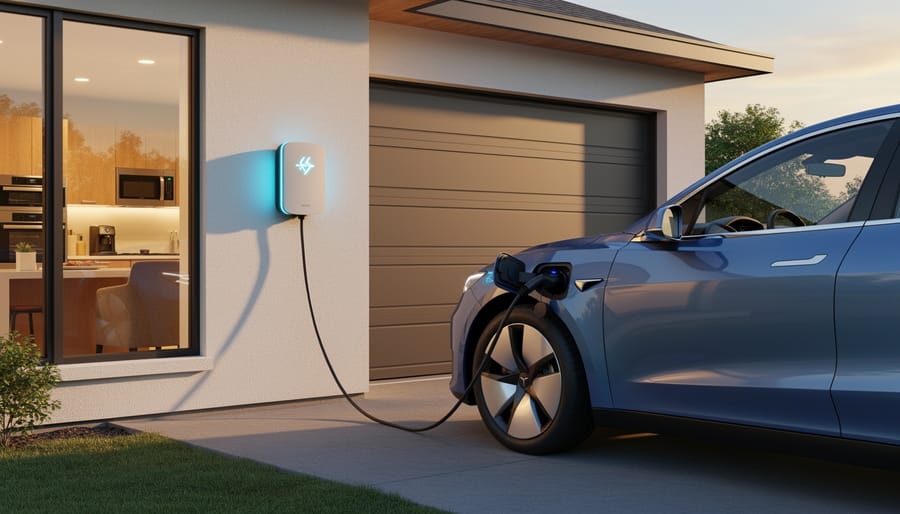
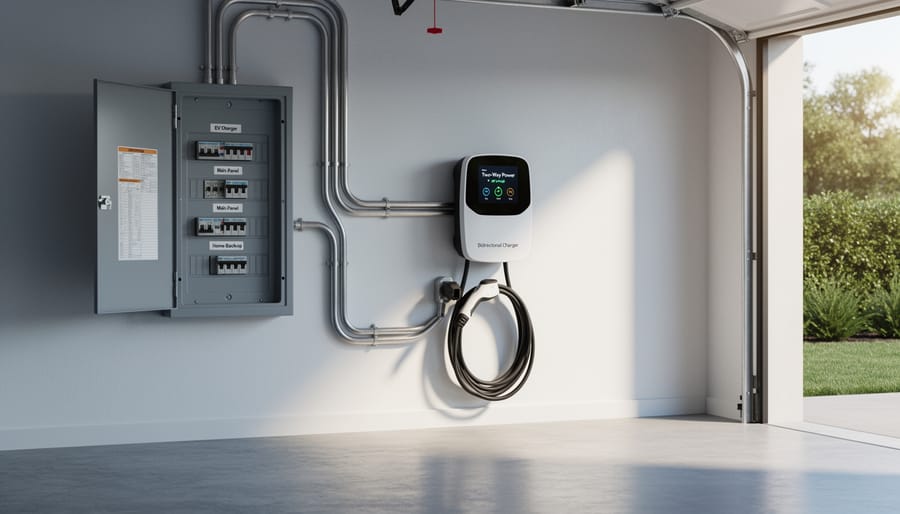
The centerpiece is a bidirectional charger, also called a V2H inverter. Unlike the standard charger that came with your EV, this specialized unit allows electricity to flow both ways—into your car’s battery and back out to your home when needed. Think of it as a smart traffic controller for your energy. These typically range from $3,000 to $10,000 depending on capacity and features.
Your EV itself must be compatible with bidirectional charging. While not all electric vehicles currently support this feature, the list is growing rapidly. Popular models like the Ford F-150 Lightning, Nissan Leaf, and several Hyundai and Kia EVs are already V2H-ready. Check your vehicle’s specifications or contact the manufacturer to confirm compatibility.
Most homes will need electrical panel upgrades to handle the additional load and ensure safe operation. Your existing panel might already be sufficient if it’s relatively new, but older homes often require a subpanel or complete panel replacement. A licensed electrician can assess your specific situation during a home energy evaluation.
Finally, you’ll need proper connection systems including appropriate wiring, transfer switches, and safety disconnects. These ensure your home can seamlessly switch between grid power, your EV battery, and any solar panels you have installed. While this might sound complex, qualified installers handle these details, making the process straightforward for homeowners.
Power Flow Made Simple
Think of your electric vehicle as a smart battery on wheels. With the right setup, electricity flows where you need it most—seamlessly and automatically.
When you plug in your EV at night, electricity flows from the grid to your car’s battery, charging it while rates are typically lower. But here’s where it gets interesting: with vehicle-to-home (V2H) technology, that flow can reverse. During peak hours or power outages, your car can send electricity back to power your home’s lights, appliances, and heating or cooling systems.
If you have solar panels, the equation becomes even better. During sunny days, your panels generate electricity that can charge your EV directly, power your home, or both. Any excess can go back to the grid for credits. At night or during cloudy weather, your charged EV acts as backup power.
Modern smart grid technology coordinates all these flows automatically. Your system learns your patterns—when you drive, when you’re home, when electricity costs least—and optimizes accordingly. You’re essentially creating your own mini power plant that reduces both your electric bills and your carbon footprint, while ensuring you always have power when you need it.
Connecting Your EV to Your Solar Panel System
Charging Your EV With Solar Power
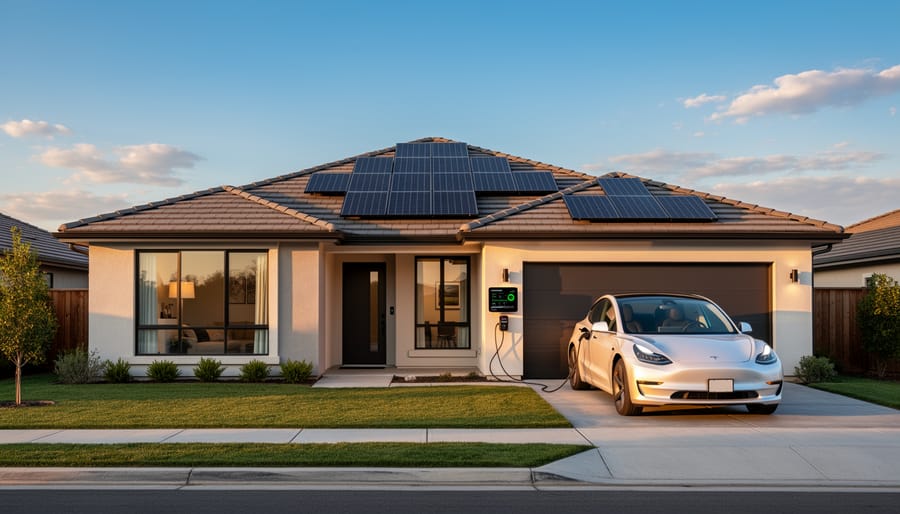
Charging your EV with solar power is simpler than you might think, and it’s one of the smartest ways to maximize both your environmental impact and financial savings. The best strategy is daytime charging when your solar panels are producing electricity. If you work from home or have flexible charging times, plugging in your EV during peak sunlight hours means you’re directly powering your car with clean energy you’ve generated yourself, avoiding the need to pull from the grid.
However, most people work during the day when their panels produce the most energy. This is where battery storage becomes valuable. A home battery system captures excess solar energy produced during the day and stores it for later use, including overnight EV charging. While adding battery storage increases your upfront investment, it dramatically improves your energy independence and ensures you’re truly charging with solar power around the clock.
To maximize efficiency, consider sizing your solar system to account for your EV’s energy needs. The average EV uses about 30 kilowatt-hours per 100 miles driven. A typical rooftop solar installation can easily generate enough power for both your home and vehicle when properly sized.
The good news? You don’t need perfect conditions to benefit. Even partial solar charging reduces your grid dependence and lowers costs. Many homeowners find that combining solar panels with smart charging schedules creates the perfect balance between convenience and sustainability, letting you drive on sunshine without completely restructuring your daily routine.
Creating Your Home Energy Loop
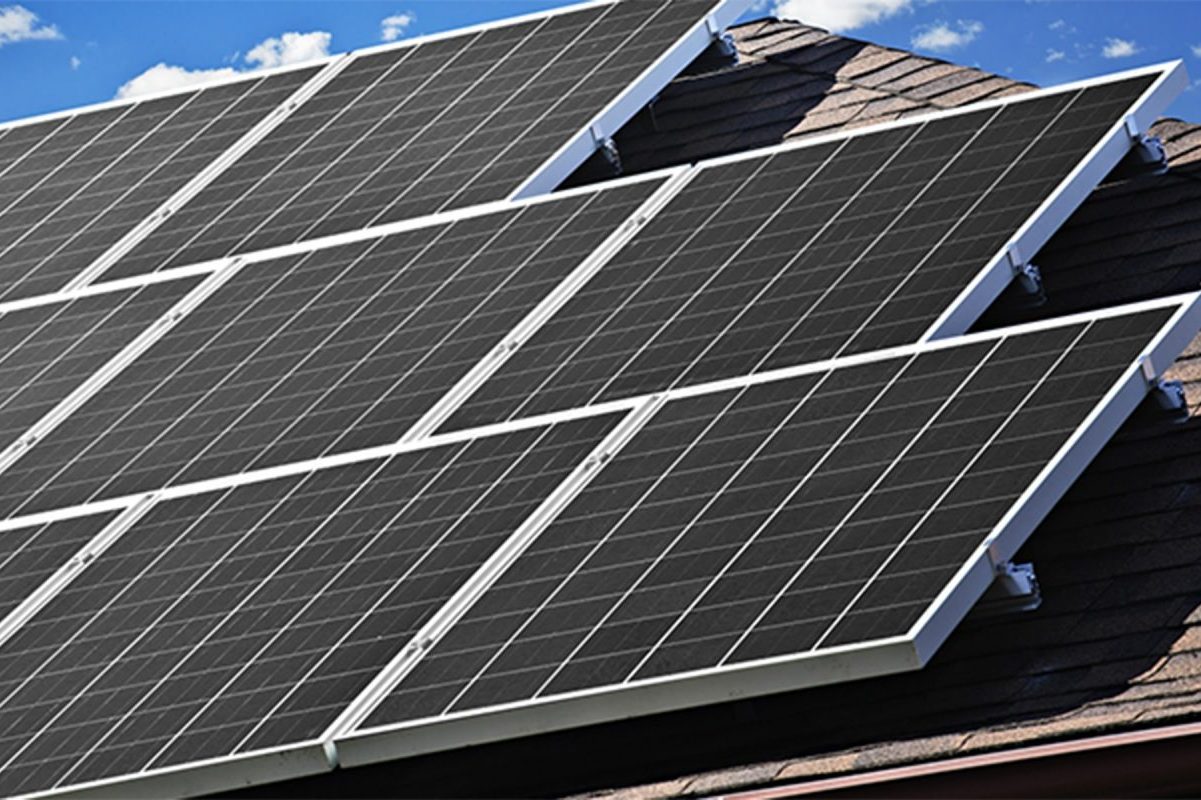
Imagine a home energy system that works like a circle, constantly moving power where it’s needed most. Here’s how it works: Your rooftop solar panels capture sunlight during the day and convert it into electricity. When your panels produce more energy than your home currently needs, that excess power flows into your electric vehicle’s battery for storage. Then, when the sun goes down or on cloudy days, your EV becomes a mobile power bank, feeding stored electricity back into your home.
This self-sustaining loop transforms your relationship with the power grid. Instead of buying expensive electricity during peak evening hours when rates are highest, you’re using the free energy you captured earlier. Your morning commute becomes part of your home’s energy strategy, with connecting clean energy sources creating a seamless flow of power.
The financial benefits add up quickly. Homeowners with complete energy loops often see their electricity bills drop by 70-90%, depending on their energy usage and solar system size. You’re essentially eliminating the middleman, keeping the value of your solar investment circulating within your own property rather than selling it back to the utility at reduced rates.
Beyond savings, there’s genuine energy independence. During grid outages, your system keeps running. You’re protected from rising electricity costs and have predictable monthly energy expenses, giving you control over one of your home’s biggest ongoing costs.
Real Money Savings From EV-Home Integration
Let’s talk real dollars and cents. When you integrate your electric vehicle with your home, the savings add up faster than you might think.
The most immediate benefit comes from strategic charging. Instead of paying peak electricity rates of $0.35 to $0.45 per kilowatt-hour during evening hours, you charge overnight when rates drop to $0.12 to $0.18 per kWh. For a typical EV driver covering 12,000 miles annually, that’s roughly 3,600 kWh of electricity. Charging during off-peak hours saves approximately $750 to $1,000 every year compared to peak-rate charging.
If you have solar panels, the numbers get even better. Charging your EV directly from your rooftop solar during the day means you’re essentially fueling your car for free. A homeowner with a 7-kilowatt solar system can easily generate enough excess electricity during sunny days to cover their vehicle’s charging needs, eliminating that $750 annual charging cost entirely.
The backup power capability offers hidden savings too. During a grid outage, your integrated EV can power essential home systems without needing a traditional backup battery or generator. That’s $10,000 to $15,000 in equipment you may not need to purchase. Even occasional outages that would spoil refrigerated food or disrupt work-from-home schedules represent real financial losses that vehicle-to-home integration prevents.
Many utilities and local governments sweeten the deal with incentives. Time-of-use rate programs often provide special EV charging rates, sometimes as low as $0.08 per kWh during super off-peak hours. Some utilities offer rebates ranging from $500 to $2,500 for installing smart charging equipment or participating in grid service programs. In certain states, you can even earn money by allowing your EV to sell stored energy back to the grid during high-demand periods.
Here’s a realistic first-year calculation for a homeowner with solar: $900 saved on charging costs, $200 earned from utility incentives, and $150 saved by avoiding one extended power outage. That’s $1,250 in tangible benefits, and these savings continue year after year. Over a typical seven-year vehicle ownership period, you’re looking at over $7,000 in accumulated savings, making the integration equipment essentially pay for itself while providing invaluable peace of mind.
When Your EV Becomes Your Home Battery
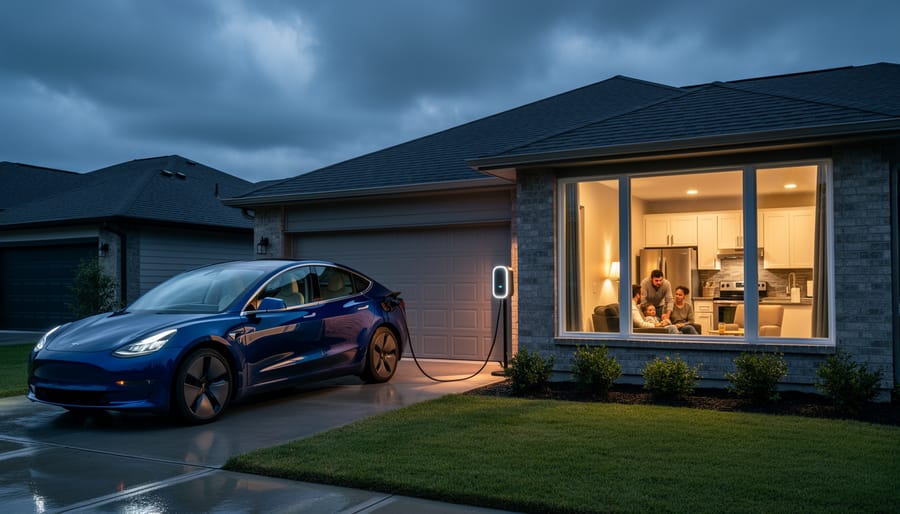
When the power goes out, your EV can keep your home running. Most electric vehicles today carry batteries between 60 to 100 kilowatt-hours—enough to power an average home for two to three days. During an outage, this means your refrigerator stays cold, your lights stay on, and your internet keeps working so you can stay connected.
The amount of power available depends on your vehicle’s battery size and how much charge remains. A typical home uses about 30 kilowatt-hours per day, though you can stretch this further by prioritizing essential systems. Your EV can easily handle critical needs like refrigeration, lighting, heating or cooling, medical equipment, and communication devices. Many homeowners report running their entire household, including washing machines and electric stoves, without issues.
One common worry is whether using your EV for backup power will damage the battery. The good news is that modern EV batteries are designed for thousands of charge cycles, and occasional home backup use has minimal impact on battery life. In fact, using your vehicle this way is far gentler than the daily stress of rapid charging or extreme temperatures. Most manufacturers design their batteries to maintain 70-80% capacity even after eight to ten years of regular use.
Think of your EV as flexible battery storage that serves double duty. Unlike stationary home batteries, your vehicle battery is already paid for as part of your car purchase. When paired with solar panels, you can recharge your EV during the day using free sunshine, then use that stored energy at night or during emergencies—creating a resilient, self-sufficient power system.
The key is having the right equipment installed. A bidirectional charger and transfer switch enable safe, automatic switching between grid power and your EV during outages, giving you peace of mind without lifting a finger.
Debunking Common V2H Myths
As V2H technology gains attention, several misconceptions have emerged that might make homeowners hesitant to embrace this innovative solution. Let’s set the record straight on the most common concerns.
One of the biggest worries homeowners express is whether using their EV as a backup power source will damage the battery or shorten its lifespan. The good news is that modern EV batteries are designed to handle thousands of charge cycles. Most V2H systems include smart management technology that prevents deep discharges and monitors battery health automatically. In fact, using your battery regularly within recommended parameters can actually be beneficial compared to letting it sit unused for extended periods.
Another common myth is that V2H systems are too complicated for the average homeowner to operate. Today’s systems are designed with user-friendliness in mind, featuring intuitive smartphone apps and automated settings that require minimal daily interaction. Once installed and configured by professionals, your V2H system works quietly in the background, making intelligent decisions about when to store, use, or return power to your home.
Some people worry that V2H technology only works with specific vehicle brands or requires extensive home modifications. While compatibility does vary, the range of compatible vehicles is expanding rapidly, and many systems work with existing electrical panels with relatively straightforward upgrades. A qualified installer can assess your specific situation and recommend appropriate solutions.
Finally, concerns about upfront costs are understandable, but it’s important to view V2H as a long-term investment. Between energy bill savings, backup power capabilities during outages, and potential incentives or rebates, many homeowners find the system pays for itself over time while providing valuable peace of mind and energy independence.
Is Your Home Ready for EV Integration?
Before you start shopping for an EV or planning your vehicle-to-home setup, it’s smart to take stock of what you’re working with. The good news? Most modern homes need only minor adjustments to accommodate EV integration, and the process is more straightforward than many homeowners expect.
Start with your electrical panel. Check the total amperage of your main service panel, which you’ll find labeled on the panel door. Most homes built after 1980 have 200-amp service, which is typically sufficient for EV charging and integration. If your home has 100-amp service or less, you may need an upgrade, but this doesn’t mean your home isn’t ready—it just means planning for one additional step.
Next, consider your current energy usage. Look at your electricity bills from the past year to understand your consumption patterns. Are you consistently close to your capacity during peak hours? This information helps determine whether your existing system can handle the additional load from an EV charger.
If you already have solar panels, you’re ahead of the game. Solar systems pair beautifully with EVs, allowing you to charge your vehicle with clean energy you generate yourself. Check your solar system’s capacity and whether it produces excess energy during the day. This surplus power can charge your EV, maximizing your return on investment.
Location matters too. Identify where you’ll install the charging equipment. Ideally, this should be within 25 feet of your electrical panel to minimize installation costs. Your garage or carport is usually the most practical spot.
Finally, verify your home’s wiring age and condition. Homes with outdated wiring may need updates to safely handle EV charging equipment. A licensed electrician can assess this during a pre-installation consultation, which most installers offer at no charge. This assessment takes about an hour and gives you a clear roadmap for any necessary upgrades.
Integrating your electric vehicle with your home energy system through Vehicle-to-Home technology represents more than just a smart investment—it’s a meaningful step toward energy independence and environmental stewardship. By turning your EV into a mobile power source, you’re creating a resilient home energy ecosystem that protects you during outages, reduces your reliance on the grid, and maximizes the value of every kilowatt-hour you generate or store.
The financial benefits are compelling. Between lower electricity bills, protection from peak utility rates, and the ability to keep essential appliances running during blackouts, V2H integration delivers tangible returns that grow over time. When paired with solar panels, the advantages multiply—you’re essentially creating a closed-loop energy system that generates, stores, and distributes clean power entirely within your property.
Beyond the dollars and cents, there’s something empowering about taking control of your energy future. You’re reducing your carbon footprint with every mile driven and every kilowatt-hour stored. You’re contributing to a more stable electrical grid. You’re demonstrating that sustainable living and modern convenience aren’t mutually exclusive.
As this technology continues to evolve and become more accessible, now is an excellent time to explore how V2H integration could work with your existing solar installation—or inspire you to finally make the leap into renewable energy. The future of home energy is here, and it’s parked in your driveway.