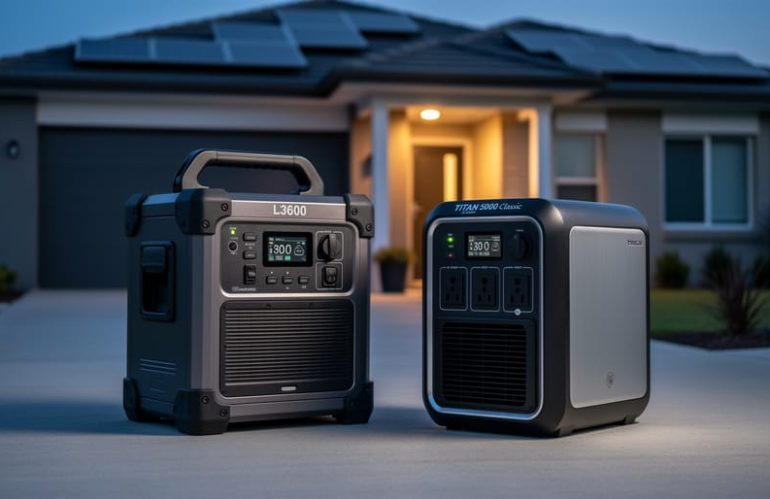
The Nature’s Generator L3600 is the best solar generator for home backup, because it pairs a big starting battery with room to grow, so one unit can carry your essentials through an outage and expand as your needs do. It’s our pick for homeowners who want real backup power without jumping straight to a full rooftop system. If quiet, whole-home-scale backup matters more to you, the EcoFlow TITAN 5000 Classic is the one to beat.
In the interest of transparency, we earn a commission on some purchases made through links on this site. As an Amazon Associate I earn from qualifying purchases.
Here’s the myth worth busting first: a solar generator for home use isn’t a bigger camping battery. The good ones are built to run your fridge, lights, internet, and well pump for hours or days, then refill from the sun for free. That’s where the savings come from. Every outage you ride out on stored sunshine is one less trip for gas, and every recharge is power you didn’t buy.
We went through seven models with a homeowner’s eye, looking at starting capacity, how far an expandable solar generator can grow, and how well each fits into essential circuits instead of a tangle of extension cords. Newer options are even pointing toward clean hydrogen as a longer-term way to store energy, but battery-based units are the practical answer today. Let’s find the right one for your home.
Our Top Picks at a Glance
Short on time? Here’s the quick-scan version of our shortlist, so you can jump straight to the home solar generator that fits your household.
- Nature’s Generator L3600 Expandable Solar Generator: best overall for home backup, with room to grow as your needs do.
- EcoFlow TITAN 5000 Classic: best for quiet, whole-home-scale backup, with a large starting capacity and plenty of expansion headroom.
Each pick earns its spot for a different reason. The L3600 takes the top spot because an expandable solar generator lets you start with a practical amount of storage and add more later, rather than overbuying on day one. The TITAN 5000 Classic suits households that want serious capacity and very quiet operation, which matters when your battery sits close to the living space. Both fall at the higher end of the value spectrum, so think of them as long-term investments in energy independence. Keep reading for the details behind each recommendation.
How We Tested and Evaluated Each Home Solar Generator
When we evaluate a home solar generator, we start with a plain question: what will this actually do for a household when the grid goes down? We go through each unit’s published details and judge how well it fits real home backup, not camping weekends. Here is what we look at:
- Capacity: how much stored energy the battery holds to start.
- Expandability: how far an expandable solar generator can grow with added batteries.
- Output and surge: the continuous power it delivers, plus the short burst it can handle when a fridge or pump kicks on.
- Solar input and recharge time: how much panel power it accepts, which sets how fast it refills.
- Switchover speed: how quickly it takes over when the power cuts out.
- Noise: whether it stays quiet enough to live alongside.
- Battery chemistry: the type of cells inside and what that means for longevity.
- Home-wiring friendliness: how easily it connects to essential circuits instead of relying on extension leads.
Why these criteria? Capacity tells you how long the lights, fridge, and internet stay on, but the ceiling matters just as much. A battery stack that can grow lets you start small and add more later, which is a big part of why expandable units rank so well for homes.
Output and surge numbers matter because appliances don’t all draw power the same way. Solar input matters because a huge battery is only helpful if the sun can refill it in a reasonable time.
One honest note on sourcing. Our specs come from manufacturer listings and retailer data, and we only use details we can verify. If a number isn’t confirmed, we leave it out rather than guess. We also don’t state prices, so you’ll see value described in simple terms like budget, mid-range, or premium instead.
Why Trust Our Solar Generator Recommendations
We keep this simple: we focus on residential solar, so every pick here is judged by what it does for a real home, not how loud the marketing is. That means asking practical questions. Can a home solar generator keep the fridge, lights, and internet running when the grid drops? Can an expandable solar generator grow with your needs? Is it built from quality materials designed to last?
Our approach comes from the same mission that drives everything we do: helping homeowners save money, live more sustainably, and feel confident about clean energy. We also like clearing up myths. You don’t need a perfect cloudless day for solar to work, and you don’t need a huge system to get meaningful backup.
When we say a unit earns its spot, we stick to verified specs and what we observed about how it fits everyday household needs. No hype, no filler, just straight answers.
Solar Generator Comparison Table: Capacity, Output, and Expandability
Here’s how the picks stack up on the specs we could verify. Capacity and output tell you how much you can run, while expansion tells you how far the system can grow with your household.
| Solar generator | Battery capacity | AC output | Maximum expansion | Notes | Value tier |
|---|---|---|---|---|---|
| Nature’s Generator L3600 Expandable Solar Generator | Starts in the roughly 3.5kWh range | Whole-home-friendly output | Grows with added battery capacity | Best overall for home backup | Mid-range to premium |
| EcoFlow TITAN 5000 Classic | 5,017Wh | 4,000W | 5 to 30kWh | Under 30 dB; under 20 ms switchover with SHP10 | Premium |
A few things stand out. The TITAN 5000 Classic offers the biggest verified expansion range here, which makes it a strong fit if you expect your needs to grow. The L3600 is built around the same idea: start with a practical amount of storage, then add battery capacity later instead of buying more than you need on day one.
We’ve left out any spec we couldn’t confirm, so you won’t see guesses in the table. When you compare any expandable solar generator, look at the AC output first, since it decides which appliances can run at once, then check how far the battery stack can grow.
1. Nature’s Generator L3600 Expandable Solar Generator, Best Overall for Home Backup
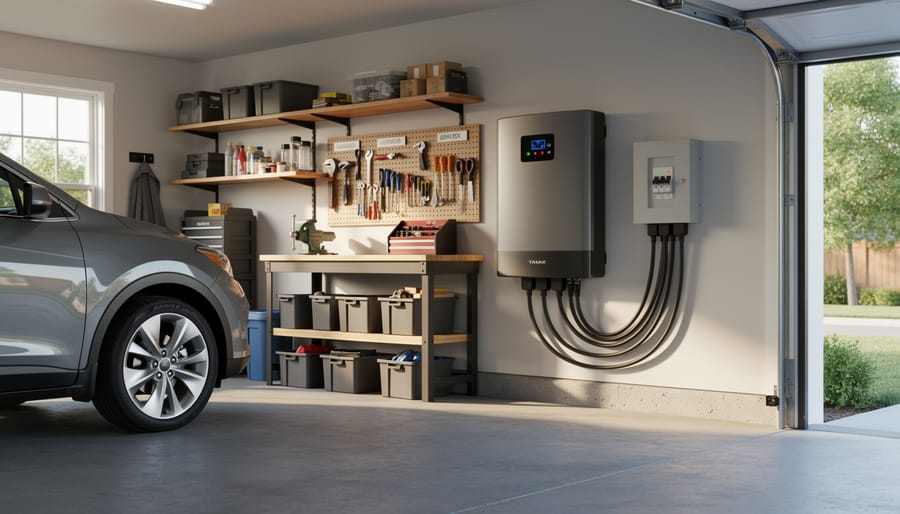
The Nature’s Generator L3600 Expandable Solar Generator takes our top spot because it matches how most homeowners actually shop for backup power: start with a practical amount of storage, then grow it as your needs and budget allow. In our evaluation, that flexibility mattered more than chasing the biggest number on a spec sheet.
As an expandable solar generator, the L3600 is built around a base unit you can add battery capacity to over time. That means a household that only wants to keep the fridge, lights, internet, and phones running through a storm can begin there, then add more storage later if a well pump or other heavier loads come into the picture. We like that this removes the pressure to guess your future needs on day one.
It also pairs naturally with solar panels, which is where a home solar generator really shines. Panels refill the battery during the day, so you are not dependent on fuel runs or noisy engines. Keep in mind that the more storage you stack, the more panel capacity you will want to refill it in a reasonable window.
For the best experience, ask a licensed electrician to tie it into your essential circuits through a transfer switch or home panel. That approach powers the outlets and appliances you care about without a tangle of extension cords.
Pros
- Starts at a practical capacity and grows as you add battery capacity.
- Pairs with solar panels for quiet, fuel-free recharging.
- Can feed essential circuits through proper wiring instead of extension leads.
- Suits homeowners who want to begin small and expand later.
Cons
- Larger battery stacks need more solar panel capacity to refill quickly.
- Wiring into your home panel calls for a licensed electrician.
- Adding capacity over time means planning for the extra storage and panels.
This pick suits homeowners who want dependable outage coverage with room to grow, especially families building toward a bigger solar-and-storage setup. The main trade-off is planning: to get the most from it, you will want to think through panel capacity and professional wiring up front. If you can do that, the L3600 gives you the friendliest path from basic backup to a more complete home energy system.
2. EcoFlow TITAN 5000 Classic, Best for Quiet, Whole-Home-Scale Backup
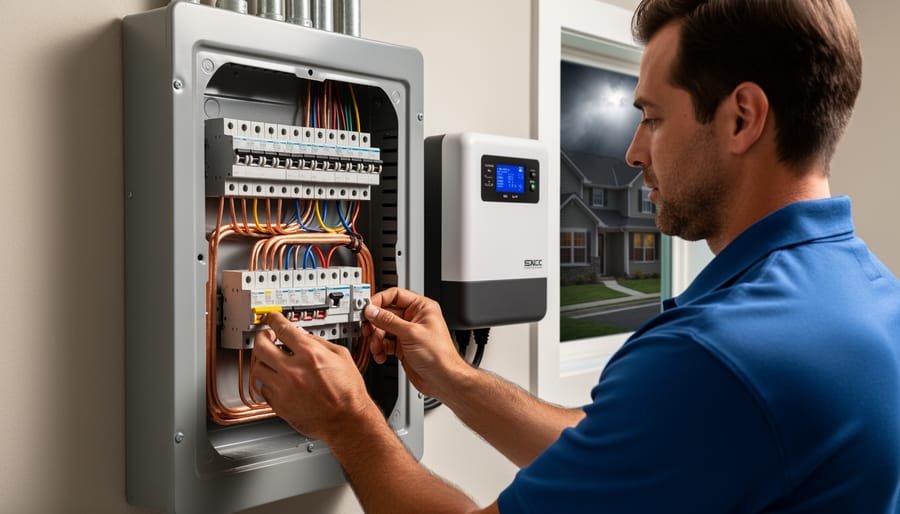
The EcoFlow TITAN 5000 Classic is the one we reach for when a household wants serious backup that stays out of the way. It packs 5017Wh of capacity and 4000W of AC output into a single unit, which is enough headroom for a fridge, lights, internet, and a few bigger loads running together. Because it’s an expandable solar generator, you can start at 5kWh and grow the stack up to 30kWh as your needs change.
What stood out most was how quietly it behaves. It runs at under 30 dB, so you can keep it in a garage, utility room, or close to the house without it turning into a droning background nuisance during a long outage. Anyone who has lived next to a gas generator will know why that matters. Pair it with the compatible home panel and switchover happens in under 20 ms, which means many devices keep running through the handoff instead of rebooting. For a modern home full of electronics, that smooth transition is a real comfort.
If you’re curious how it fits into a bigger energy plan, it’s worth reading how solar and wind can work together alongside a battery system like this.
Pros
- 5017Wh of capacity and 4000W of AC output cover a wide range of household loads.
- Expandable from 5kWh up to 30kWh, so you can start practical and grow later.
- Under 30 dB operation makes it comfortable to use indoors or near the home.
- Under 20 ms switchover with the compatible home panel keeps sensitive electronics steady.
Cons
- It sits in the premium tier, so it’s more than many starter households need.
- Getting the fastest switchover depends on adding the compatible home panel.
- A bigger stack calls for more solar panel capacity to recharge in a reasonable time.
Overall, it’s a strong match for homeowners who value calm, dependable backup and want room to expand later.
How Much Power Does Your Home Actually Need? What 3.6kWh vs 6kWh Carries Through an Outage

Think of watts as how hard your home is pulling power at one moment, and watt-hours as how much energy the battery holds in total. A fridge might draw a few hundred watts while its compressor runs, and the battery’s watt-hours decide how long it can keep that up. Once you see it that way, sizing a solar generator for home use gets much easier.
- Watt (W)
- A measure of how much power something uses right now, like a lightbulb or a microwave.
- Watt-hour (Wh)
- A measure of stored energy. A 1,000Wh battery can supply 1,000 watts for roughly an hour, or 100 watts for about ten.
- Surge output
- The brief burst of extra power a generator can deliver to start motors, like a fridge compressor or well pump.
- Expandable battery
- A system where you can add more battery capacity later, so you start small and grow.
- Switchover time
- How quickly the system takes over when the grid drops. Faster means your lights and devices barely notice.
Here’s how that plays out in an outage. A bank in the roughly 3.6kWh range can reasonably cover the essentials for a good stretch: the fridge, some LED lighting, your internet router, and phone and laptop charging. A bank closer to 6kWh gives you more breathing room, so you can run those same basics longer or add a few more devices without watching the battery nervously.
Heavier loads are where things change. A well pump, a window AC, or central HVAC pulls much more power, especially at startup, so they eat through stored energy quickly. Either size can handle some of them in short bursts if the output and surge ratings allow it, but running them all day takes a bigger stack. Exact runtimes depend on your appliances and the weather, so treat any estimate as a ballpark.
That’s why expandable units are such a smart fit. A model like the Nature’s Generator L3600 Expandable Solar Generator lets you start at a practical capacity and add batteries as your needs and budget grow. The EcoFlow TITAN 5000 Classic takes the same approach, scaling from 5kWh up to 30kWh.
Solar Panels, Recharge Time, and Wiring Into Essential Circuits
Your solar panels set the pace for recharging, and every solar generator has a ceiling on how much panel power it will accept at once. Think of it like a funnel: you can hold up a huge bucket of rain, but the neck only lets so much through. That’s why a battery’s size and its refill speed are two separate things.
This matters most with an expandable solar generator. A home solar generator that starts at a practical capacity and grows toward the high end of its range gives you lots of storage, but a bigger stack takes more sunshine to fill. If you add battery capacity and keep the same small panel array, you’ll still be topping up for many days. Pairing a larger stack with more panel capacity keeps your backup ready when you need it. Keeping an eye on your system with a bit of solar monitoring and battery monitoring makes it easy to see how quickly you’re recharging and how much cushion you have.
Here’s a myth worth retiring: solar generators only work on perfectly sunny days. They don’t. Panels still produce power under cloud cover, just less of it, so recharging slows down rather than stopping. Plan for a slower refill on gray days and you’ll never be caught off guard.
When it’s time to connect everything, wiring into your essential circuits beats running extension leads across the house. A transfer switch or a compatible home panel lets your fridge, lights, and internet stay on through an outage without a tangle of cords, and it’s far tidier and safer.
Once the wiring is done right, your backup quietly runs in the background and recharges from the sun, with no fuel runs and no fuss.
Home Solar Generator FAQs
Can a solar generator power a whole house?
Large expandable units like the EcoFlow TITAN 5000 Classic, with 4000W AC output and 5kWh to 30kWh of expandability, are built for whole-home-scale backup when wired into your panel. Smaller units are better for essentials like the fridge, lights, and internet.
Can I add batteries later?
Yes, that’s the beauty of an expandable solar generator. The Nature’s Generator L3600 starts at a practical capacity and grows with added battery capacity, so you can start small and build up.
Can it run indoors?
Unlike a gas generator, a battery-based unit makes no exhaust fumes, and the TITAN 5000 Classic runs at under 30 dB. Even so, give any unit good airflow and follow the manufacturer’s placement guidance.
Runtime depends on what you plug in. A fridge, lights, and Wi-Fi can stretch a bank much further than a heater or well pump, so list your must-haves first. That list also answers the panel question: the more battery you have, the more solar input you’ll want to refill it, and your panel input limit sets how quickly that happens.
Is it better than a gas generator? For many homeowners, yes. You skip the fuel runs, the noise, and the fumes, and the sun recharges the system for free. A gas unit can still make sense for very long, heavy-load outages, which is why a mix of solar and a few smart habits often works best. If you want to stretch your stored power even further, good energy management helps you decide what runs and when. And if you’re weighing home backup options beyond batteries alone, it’s worth seeing how solar can pair with other sources.
The Bottom Line on Choosing Your Home Solar Generator
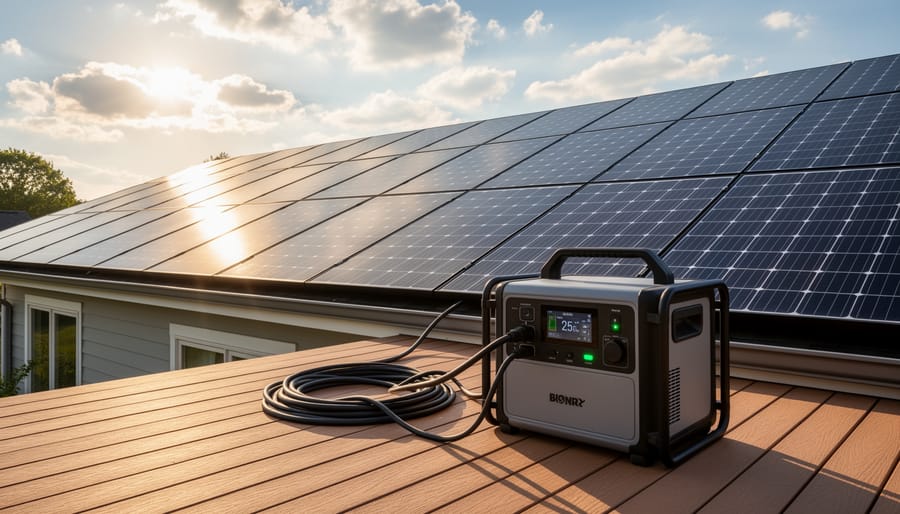
Choosing a solar generator for home backup gets much easier once you know what you want it to carry. If you want the strongest all-around starting point, the Nature’s Generator L3600 Expandable Solar Generator is our pick, since an expandable solar generator lets you begin with what you need and add battery capacity as your household grows. If quiet, fast switchover, and a path to big capacity matter most, the EcoFlow TITAN 5000 Classic is the one to look at, thanks to its under 30 dB operation and wide 5 to 30kWh expansion range.
Don’t let the sizing math scare you. Start with the fridge, lights, internet, and a few devices, and build up from there. It also helps to think beyond the battery itself. Ideas like panels behind windows and smarter solar integration show how much room your home has to harvest sunshine. For energy storage, backup planning, and installation help, head over to Residential Solar Panels and take the next step with confidence.
Final Verdict
Our top choice is the Nature’s Generator L3600 Expandable Solar Generator. It starts at a practical capacity, grows with added battery capacity, and pairs with solar panels, so you can begin with the essentials and build up as your needs change. It suits homeowners who want dependable outage coverage, fuel-free and quiet, with plenty of room to grow.