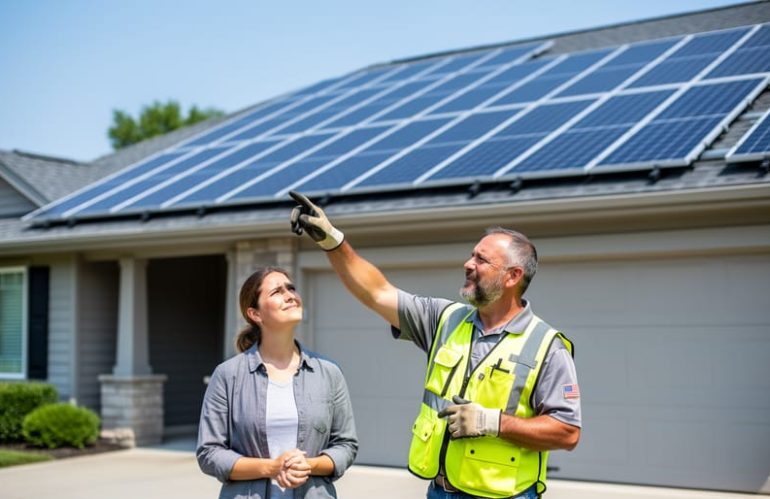
The best way to vet a solar installer is to check three things before you ever compare quotes: their license and insurance, their track record with homes like yours, and the warranty they’ll actually stand behind. Do that, and you’ll cross off most of the risk in about a week of casual homework, no engineering degree required.
Here’s the good news. Solar is one of the few home upgrades where a little diligence pays you back for decades. A well-chosen installer means a system that performs as promised, lower electric bills, and a team that picks up the phone years after the panels go up. A rushed choice can mean slow repairs or a warranty that’s only as good as a company that may not be around.
You don’t need to be an expert to tell the difference. You need a repeatable checklist, a few smart questions, and the confidence to compare bids side by side. We’ll walk through the factors that matter most, how different contractor types stack up, and a simple step-by-step process you can use on every bid. Along the way, we’ll clear up a few common myths, like the idea that the cheapest quote or the biggest name is automatically the safest bet.
Why Contractor Vetting Matters More Than the Panels Themselves
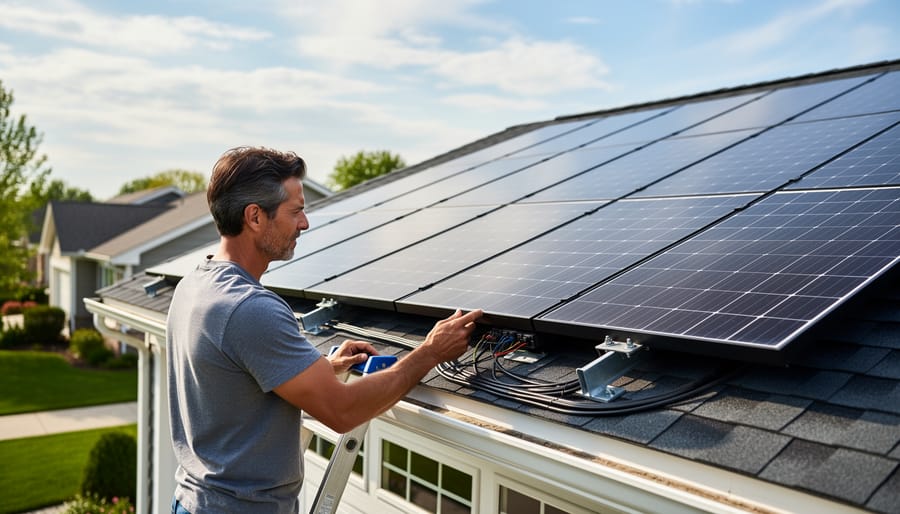
Here’s a surprise that many homeowners discover along the way: two identical sets of panels can perform very differently, and the difference usually comes down to the person who installed them. Panels are only one piece of the puzzle. Roof placement, wiring quality, proper mounting, and smart system design all decide how much clean energy you actually collect and how long your system keeps humming along.
An experienced installer will angle and position your array for the best sun exposure, seal roof penetrations so they stay watertight, and size the system to match your real energy use. Even small details, like leaving enough airflow to keep panels cool can quietly add up to more power over the years. That’s the kind of care that turns good equipment into steady savings.
Now, let’s bust a popular myth. It’s easy to assume that all installers are basically the same and that the lowest quote must be the smartest deal. In reality, a bargain price can reflect cut corners, basic materials, or thin support after the job is done. A slightly higher quote from a skilled, reliable team often pays you back through better performance, fewer repairs, and a warranty you can count on.
The good news is that you’re in control. A little homework up front, like checking credentials and comparing quotes carefully, sets you up for decades of dependable, bill-lowering energy.
Key Buying Factors: The Contractor Selection Criteria That Count
Licenses, Insurance, and Certifications
Before you sign anything, confirm that your installer is legally allowed to do the work and protected if something goes wrong. It takes a few minutes and gives you real peace of mind.
A proper license means the contractor has met your state’s requirements to install electrical or solar systems. Liability insurance covers damage to your home, while workers’ compensation covers injuries to the crew, so you’re never on the hook for either. Industry certifications, such as NABCEP (the North American Board of Certified Energy Practitioners), show that the team has gone the extra mile to prove their skills.
Ask every contractor on your shortlist for these items:
- A current contractor license number, ideally one that covers electrical or solar work.
- A certificate of general liability insurance showing active dates.
- Proof of workers’ compensation coverage for their installation crew.
- Any industry certifications, such as NABCEP credentials.
Verifying is simple. Look up the license number on your state’s contractor licensing board website, or call your local licensing office to confirm it’s active and in good standing. For insurance, ask the contractor to have their provider send the certificate directly to you. A reputable installer will be happy to help.
Experience and Local Reputation
A solar installer’s track record tells you a lot about what your own project will look like. Start with years in business, since a company that has been around for a decade has weathered plenty of permits, inspections, and utility hookups. Then ask how many installs they’ve completed in your area. Local experience means they already know your city’s permit process and your utility’s quirks.
Reviews help, but read for patterns rather than a star rating. Look for comments about on-time installs, tidy workmanship, and how the team handled small hiccups.
Best of all, ask for references and past projects nearby. A confident installer will happily point you to a few recent customers. Give them a call, and ask whether the system performs as promised and whether the crew was easy to work with. If a neighbor has panels you like, ask them who installed them.
Quotes, Materials, and Warranties
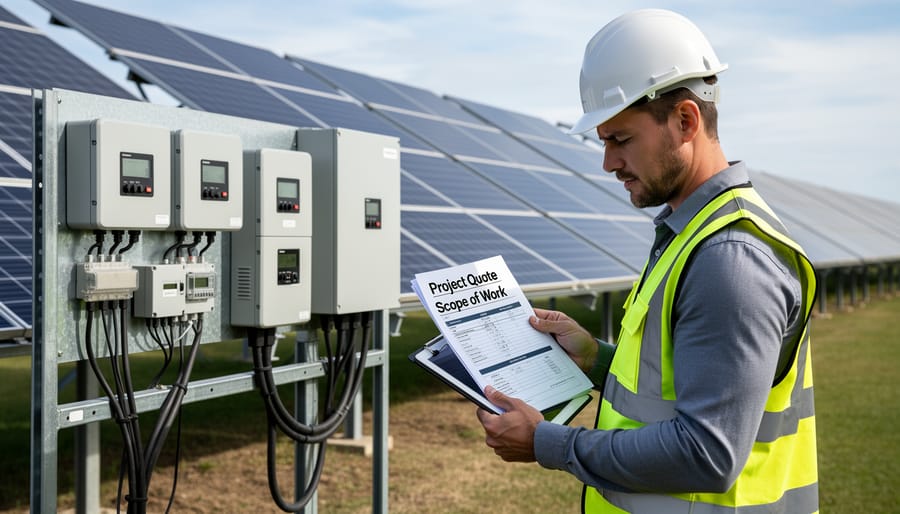
A good quote reads like a receipt you can understand. Look for an itemized breakdown: panel brand and wattage, inverter type, mounting hardware, labor, permitting fees, and any monitoring equipment. If a line says only “solar system, one price,” ask for the details. Clear itemization makes it easy to compare offers fairly and shows the installer has nothing to hide.
Equipment matters too. Established panel and inverter brands usually come with strong manufacturer warranties, often 25 years on panels. Even small parts count, so a roof clamp guide can help you ask smart questions about mounting hardware.
Then check the workmanship warranty, which covers the installer’s labor, typically 10 years or more from a confident company. Finally, look for plain financing terms: the rate, the length, and the total cost. Transparent numbers are a sign of a partner who wants you to feel good about the deal.
Communication and Support After Installation
A great installer is easy to reach before the sale, and that should stay true after it. Pay attention to how quickly they return calls and emails during your quotes, because that habit usually continues once the panels are up. Ask for a clear timeline that covers permitting, inspection, and the day your system gets switched on. A good team handles the permit paperwork for you and keeps you posted along the way. Also ask what happens afterward: do they offer smart monitoring and who do you call if production dips? Knowing there’s a real person standing behind your system brings real peace of mind.
Types of Solar Contractors Compared: Which Fits Your Home?
Solar contractors come in a few different shapes, and each can be a great fit depending on what you value most. Knowing the differences helps you ask smarter questions and compare quotes fairly.
| Contractor type | Typical strengths | What to ask about | Best fit for |
|---|---|---|---|
| Local installer | Personal service, neighborhood reputation, quick follow-up | Crew size, years in business, and who handles repairs | Homeowners who want a familiar face and hands-on attention |
| Regional company | Broader experience with area permits and utilities, steady scheduling | Whether crews are in-house and how service calls are handled | Those wanting local know-how with a bit more capacity |
| National company | Scale, standardized processes, financing options | Who your day-to-day contact will be and how local support works | Buyers who value brand recognition and streamlined paperwork |
| Sales-and-subcontract model | Competitive pricing and quick sales follow-through | Who actually installs, and who honors the warranty | Shoppers comfortable confirming who does each part of the job |
Local installers often shine on responsiveness, since their reputation depends on happy neighbors. National companies can bring polished systems and financing choices. Sales-and-subcontract models split the selling and the installing between different teams, which can work well when everyone is clearly accountable.
Whichever type you lean toward, the key is clarity. Ask who will design the system, who will be on your roof, and who you will call if you have a question five years from now. A good answer comes quickly and in plain language.
Do not be shy about doing your own research, either. Browsing a thoughtful DIY solar forum can show you which questions other homeowners wish they had asked, and how different installer types have performed in real neighborhoods like yours. Use that insight to build a short list, then let the credentials and written quotes do the talking.
How to Vet Your Shortlist Step by Step
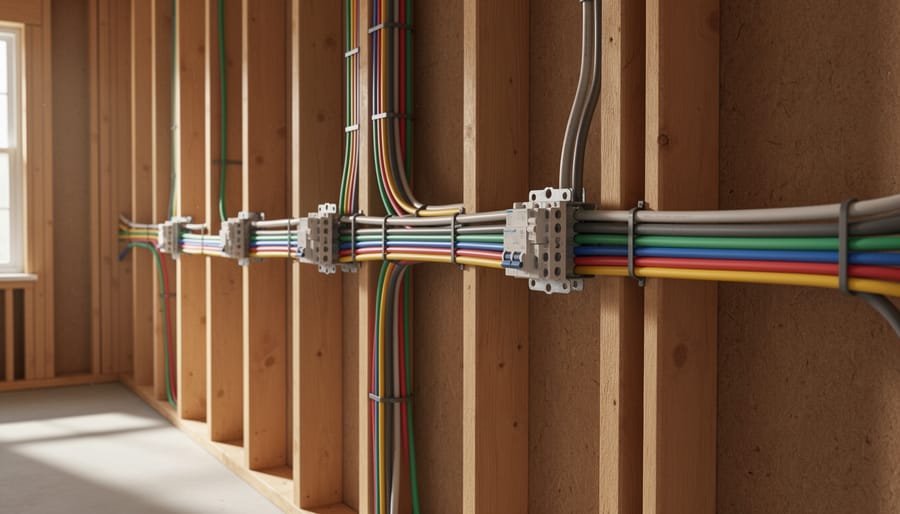
Vetting a shortlist doesn’t have to take long. Work through these steps in order and you’ll have a confident answer in a week or two.
1. Gather three quotes. Three is enough to see a real range without getting overwhelmed. Ask each company to quote the same system size and equipment so you’re comparing like with like.
2. Verify credentials. Look up each contractor’s license and insurance directly with your state or local licensing office, and ask for a certificate of insurance. Ten minutes here can save you years of hassle.
3. Check reviews and references. Read recent reviews on more than one site, then ask for two or three customers who installed in the past year. Ask them how the crew handled the work and whether the system is producing what was promised.
4. Compare quotes line by line. Look past the bottom-line price. Check panel and inverter brands, system size, warranty terms, and what’s included for permits and hookup. A slightly higher quote that covers more is often the better value.
5. Confirm warranty and service details. Get the workmanship warranty, equipment warranty, and monitoring or service plan in writing. Ask who you call if something needs attention in year seven.
During each consultation, a handful of questions reveals a lot:
– Who will actually install my system, your employees or subcontractors?
– How long does the process take from signing to switching on, and what could cause solar timeline delays?
– Who handles permits and utility paperwork?
– What happens if production falls short of the estimate?
Pay attention to how clearly they answer. A good installer explains things in plain language and is happy to put the details on paper.
Our Recommendations for Choosing With Confidence
After comparing quotes, credentials, and references, here is what we recommend.
Start with verified credentials. A current license, proper insurance, and a solid local track record should be non-negotiable. Everything else builds on that foundation.
Next, choose the best overall value instead of the lowest price. A fair quote that includes quality materials, careful installation, and reliable support tends to save you far more over the life of your system than a rock-bottom number. This is why Residential Solar Panels focuses on durable equipment and honest guidance: your savings should keep adding up for decades.
Insist on written warranties. Ask for both the equipment warranty and the workmanship warranty in plain print, with clear terms and who handles service if something needs attention. If it isn’t written down, treat it as if it doesn’t exist.
Finally, pick the team that explains things in plain language. You should come away understanding your system size, expected savings, and financing options without needing a dictionary. A contractor who makes the numbers clear is usually one who has nothing to hide.
When one installer checks every box, you can move forward feeling confident that your investment is in good hands.
Common Mistakes to Avoid When Hiring a Solar Installer
Hiring a solar installer is a big decision, and a few common missteps are easy to sidestep once you know what they look like. Most come down to moving too fast or leaning on one factor, and each has a simple fix.
- Choosing on price alone: compare value instead, weighing equipment quality, workmanship, and warranty alongside the total cost.
- Skipping reference checks: call two or three recent local customers and ask how the install and follow-up went.
- Not reading the contract: set aside an evening to read every line, and ask the installer to explain anything unclear before you sign.
- Overlooking warranty details: get the equipment warranty and the workmanship warranty in writing, with clear lengths and what each one covers.
- Rushing the decision: take a few days with your quotes, since a good installer will happily give you the time.
Here’s the encouraging part: none of these take special expertise to avoid. They just take a little patience. When you slow down enough to compare quotes side by side, talk to a few past customers, and read the paperwork, you’re already ahead of most buyers.
If a salesperson pushes a “today only” deal, treat that as a cue to pause rather than a reason to hurry. A confident, reputable contractor expects questions and welcomes them. Choosing the team that answers plainly and gives you room to decide is one of the best ways to protect your investment and keep your energy savings on track for years.
Contractor Vetting FAQs
How many quotes should I get?
Three is a sweet spot. It gives you enough to spot a price that’s too high or suspiciously low without turning the search into a second job.
Is a local or national installer better?
Neither wins automatically. Local installers often shine on responsiveness and neighborhood track record, while larger companies may offer broader financing options, so judge each on credentials, references, and warranty terms.
How do I verify a contractor’s license?
Ask for the license number, then look it up through your state or local contractor licensing office. It’s usually a quick online search, and it also lets you confirm the license is active and in good standing.
What does a fair warranty look like?
Look for a written workmanship warranty from the installer, separate from the equipment warranties from the manufacturers. Ask how long each lasts, what it covers, and who you call if something needs attention.
A common myth is that the lowest quote means the smartest savings. Often it just means something got left out, such as permitting help, quality components, or solid after-install support. Comparing quotes line by line shows you what each price actually includes, and the best value is usually the team that explains everything clearly and puts it in writing.
If a question isn’t covered here, ask it during your consultation. A great installer will welcome it and answer in plain language, and that kind of openness is a good sign you’re talking to the right people.
Choosing a solar installer doesn’t have to feel overwhelming. When you check licenses and insurance, look at a company’s local track record, compare itemized quotes, and get warranties in writing, you’ve already done most of the work. These few steps are what separate a smooth installation from a stressful one, and they’re what help your system keep lowering your bills for decades.
The best part is that careful vetting costs you very little: a few phone calls, a bit of reading, and the confidence to ask good questions. In return, you get a system built with quality materials, backed by a team that picks up the phone when you need them.
If you’d like a straightforward conversation with no pressure and no confusing jargon, reach out to Residential Solar Panels. We’ll walk you through your options in plain language, answer your questions honestly, and help you see exactly how solar can work for your home and your budget.