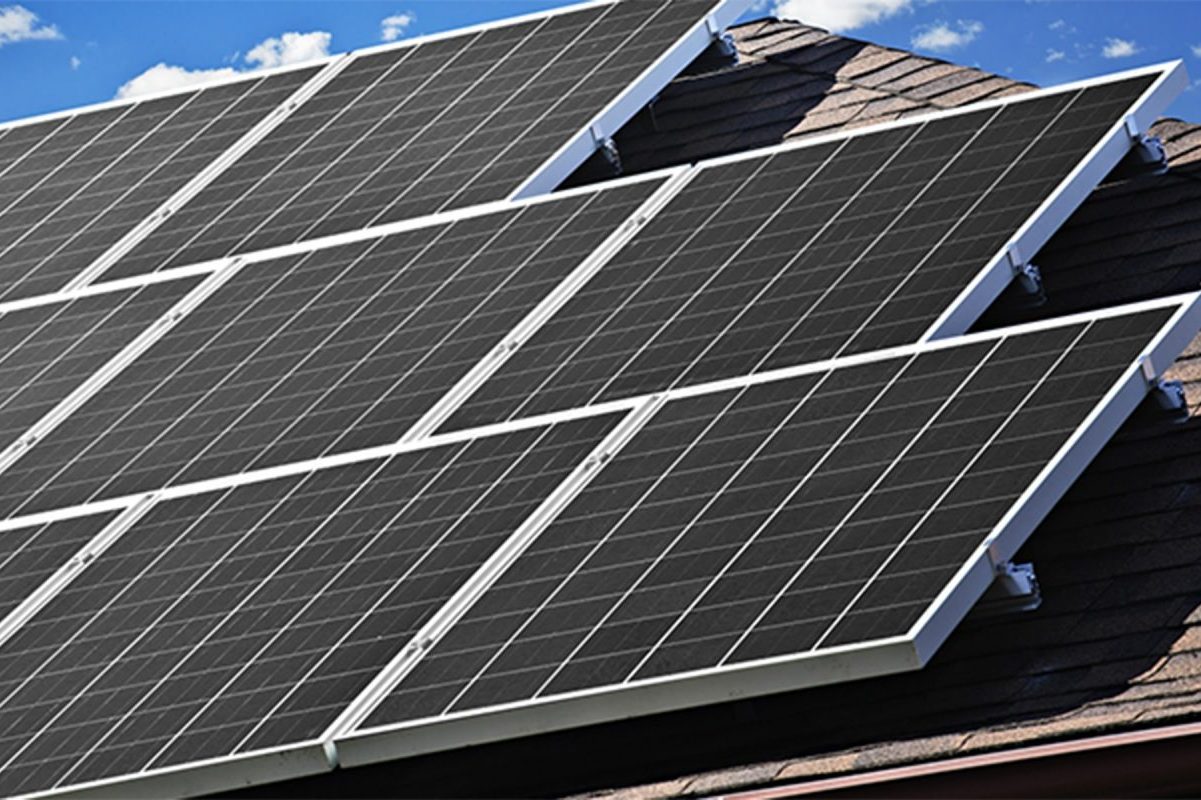

Moving to a new home doesn’t mean abandoning your solar investment. Review your solar contract immediately to understand whether you have a lease, loan, or own the system outright—this determines your available options. Contact your solar provider at least 60-90 days before listing your property, as most companies offer dedicated transfer departments to facilitate the process smoothly. Request a solar assessment report documenting your system’s performance history, which becomes a valuable selling point that can increase your home’s market value by an average of 4%.
Three primary pathways exist for homeowners with solar panels: transferring the system and agreement to your home’s buyer, physically relocating the panels to your new property, or buying out any remaining contract obligations. The transfer option proves most common and straightforward, particularly when your solar installation journey included a lease or power purchase agreement. Prospective buyers increasingly view solar panels as desirable features rather than complications, especially when presented with clear savings data and simple assumption processes.
Understanding these options early eliminates last-minute stress and protects your investment. Many homeowners mistakenly believe solar panels complicate sales or trap them in unmanageable contracts, but the reality is far more flexible. With proper planning and knowledge of your specific agreement terms, you’ll navigate this transition confidently while maximizing both your current system’s value and your future energy goals at your new residence.
What Happens to Your Solar Panels When You Move?
Moving doesn’t mean saying goodbye to your solar investment. You actually have three straightforward options when relocating, and the good news is that solar panels are increasingly viewed as a valuable home feature rather than a complication.
Your first option is transferring the solar panel system to your home’s new owner. This is the most common choice and often the simplest path forward. If you own your panels outright, they typically stay with the house and can boost your property’s value. Studies show that homes with solar panels sell faster and often command higher prices than comparable homes without them. Buyers appreciate the prospect of lower electricity bills from day one, making your home more attractive in competitive markets.
If you’re leasing your panels or have a power purchase agreement, you can transfer the contract to the buyer. This process usually requires the buyer to qualify with the solar company, similar to assuming a mortgage. Most solar companies have streamlined transfer procedures since this situation is quite common.
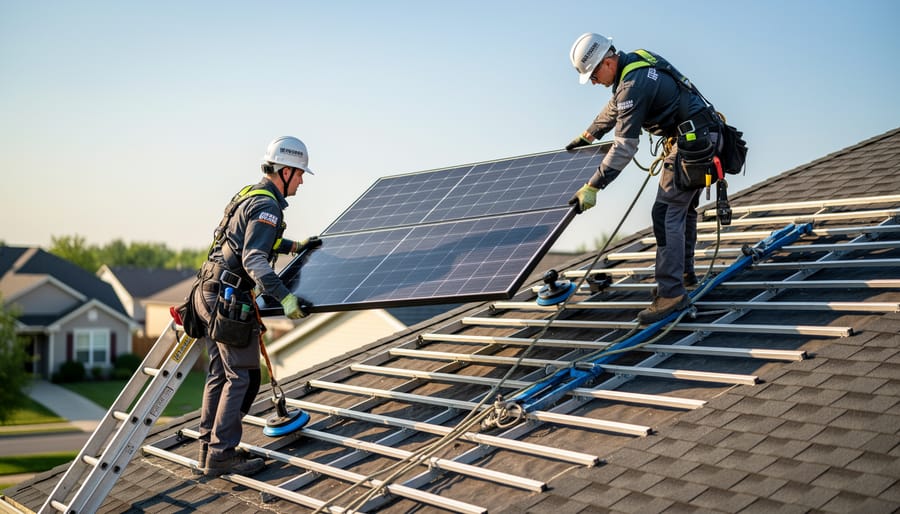
Your second option is taking the panels with you to your new home. This makes sense if you’re moving to a property where solar would work well and your current system is relatively new. However, you’ll need to factor in removal costs, potential roof repairs at your current home, and reinstallation expenses at your new place. This option works best when you own the panels outright.
The third choice is buying out your lease or loan early. Some homeowners prefer this clean break, especially if the new buyer isn’t interested in taking over payments. Many solar companies offer buyout options, though early termination fees may apply.
The key is understanding that having solar panels doesn’t limit your options when selling. With proper planning and clear communication with potential buyers, your solar investment can actually be a selling point that sets your home apart.

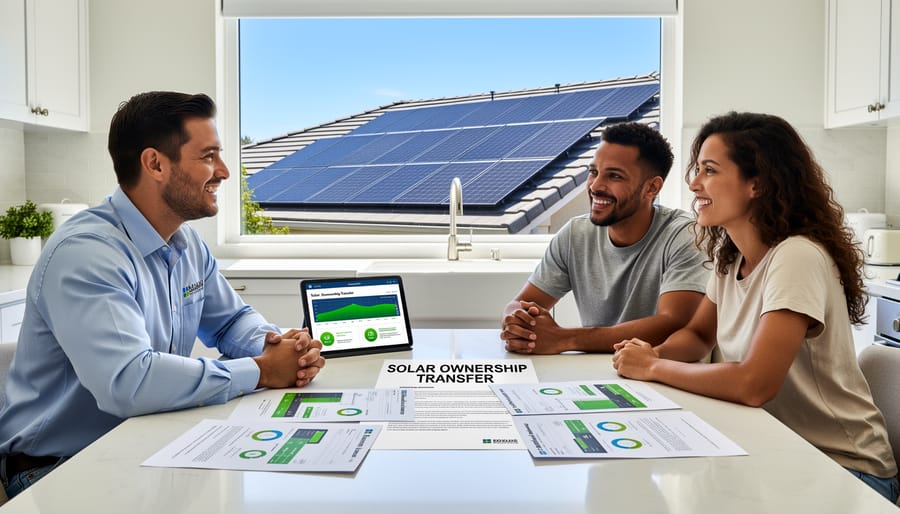
Transferring Your Solar System to the New Owner
When You Own Your System Outright
When your solar panels are completely paid off, transferring them to your new homeowner is refreshingly simple. This is the smoothest scenario for any solar transfer, and here’s the good news: fully owned solar systems typically increase your home’s value by an average of 4% according to recent studies.
The process is straightforward because there are no lease agreements or loan transfers to navigate. Your solar panels simply become part of the home sale, much like your dishwasher or HVAC system. You’ll need to provide the buyer with essential documentation including your original purchase agreement, installation permits, warranty information, and any maintenance records. If your system includes solar system monitoring, be sure to include login credentials and instructions for accessing performance data.
Most buyers view owned solar panels as a valuable asset rather than a complication. They’re inheriting a system that immediately reduces their electricity bills without monthly lease payments or loan obligations. To make the transition seamless, schedule a walkthrough to explain how the system operates, where the inverter and electrical panel are located, and how to read production data.
Your real estate agent should highlight the solar system’s benefits in the listing, emphasizing the long-term savings and environmental advantages. Remember to transfer any remaining warranties to the new homeowner, as these can extend 20-25 years and add significant peace of mind to the purchase.
When You Have a Solar Loan
If you currently have a solar loan, you have two straightforward options when selling your home. The most common approach is to pay off the remaining loan balance at closing, just like you would with any other home improvement financing. The loan payoff amount simply gets deducted from your home sale proceeds, and the new buyers receive the solar system debt-free. This option works well if you’ve built enough equity in your home to cover the remaining balance.
Some solar lenders also offer loan assumption programs, where qualified buyers can take over your solar loan payments. However, this option is less common and requires the buyer to meet the lender’s credit requirements and agree to assume the debt. If you’re considering this route, contact your solar lender at least 60 days before listing your home to understand their specific requirements and timeline.
Here’s what you need to do: First, request a payoff quote from your lender showing the exact amount needed to satisfy the loan. Next, share this information with your real estate agent so they can factor it into your listing price and closing calculations. Finally, coordinate with your title company to ensure the loan payoff happens smoothly at closing. Most homeowners find this process remarkably simple, with the loan disappearing as seamlessly as it appeared.
When You Have a Solar Lease or PPA
If you’re leasing your solar panels or have a Power Purchase Agreement (PPA), transferring the agreement to your home’s buyer is typically straightforward. The solar company will conduct a credit check on the potential buyer, similar to how they screened you initially. Most buyers with decent credit pass this review without issues.
Here’s what to expect during the transfer process: Once you have a buyer interested in your home, you’ll contact your solar company to initiate a transfer application. The buyer submits financial information, and the solar company reviews their creditworthiness within about 7-10 business days. If approved, the buyer simply assumes your remaining lease or PPA payments, and the panels stay with the house.
The good news? Many homebuyers actually appreciate inheriting a solar agreement because they’ll immediately enjoy lower electricity bills without the upfront installation costs. This can make your home more attractive to budget-conscious, environmentally-minded buyers.
What if the buyer doesn’t qualify? You have options. You might buy out the remaining lease term yourself, find a different qualified buyer, or negotiate with the solar company for alternative solutions. Some companies offer temporary payment arrangements while you search for a qualified purchaser. The key is communicating early with your solar provider about your moving timeline, giving you maximum flexibility to explore all pathways forward.
Taking Your Solar Panels to Your New Home
Is Moving Your Panels Worth It?
Before deciding to physically move your solar panels, let’s talk numbers. The process typically costs between $3,000 and $10,000, depending on your system size and complexity. This includes removal fees (usually $1,500-$3,000), transportation, potential roof repairs at your old home, and reinstallation at your new property.
Here’s what many homeowners don’t initially consider: your new roof might need reinforcement or repairs before installation, adding $500-$2,000 to the total. You’ll also need new permits and inspections, which can run $400-$1,000. If your new home’s roof orientation differs from your current setup, you might need additional equipment or wiring modifications.
The good news? Moving your panels makes financial sense in several situations. If your system is relatively new (less than 5 years old), you’ll preserve most of your investment’s value. When your new home has excellent sun exposure and high electricity rates, the continued savings justify the relocation cost. Additionally, if selling your current home without panels would significantly increase its marketability or you’re moving to an area where installing new panels costs substantially more, relocation becomes worthwhile.
However, if your panels are older than 15 years, the math usually favors leaving them behind and potentially installing a newer, more efficient system at your new location. Similarly, when your buyer highly values the existing system, transferring ownership often proves more economical than the hassle and expense of moving equipment.
The Relocation Process Step-by-Step
Moving your solar panels to a new home involves several distinct phases, but with proper planning, the process runs smoothly. Here’s what to expect when relocating your system.
The journey begins with a professional assessment of your current installation. A certified solar technician will inspect your panels, inverters, and mounting hardware to determine their condition and ensure they’re suitable for relocation. This typically takes a few hours and helps establish whether all components can be reused or if replacements are needed.
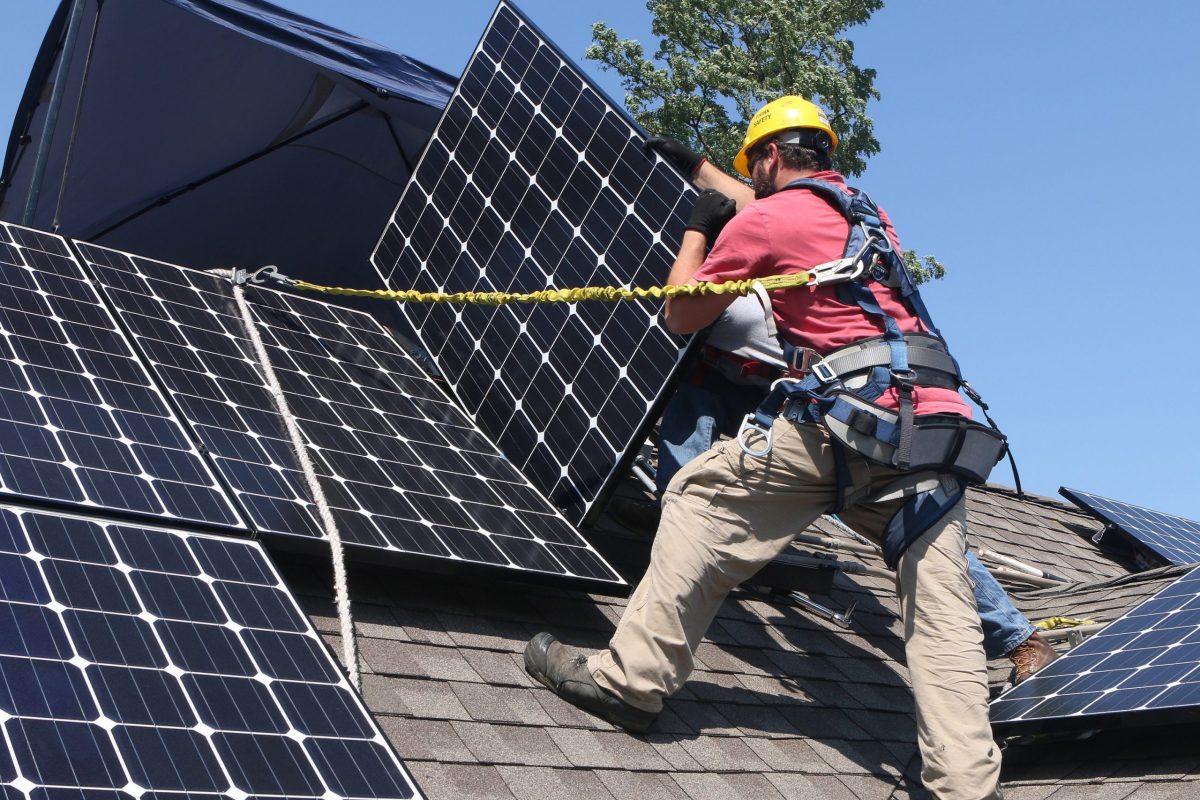
Next comes the removal phase. Licensed installers will safely disconnect your system from the grid, dismantle the panels, and carefully package everything for transport. This process usually takes one to two days depending on system size. Your installer will coordinate with your utility company to handle the disconnection properly.
While your panels are in transit, your new property needs evaluation. A site assessment determines the best location for reinstallation, considering roof orientation, shading, and structural integrity. This step is crucial because your new home’s characteristics may differ significantly from your previous property.
Permitting follows the site assessment. Your installer will handle applications for local permits and utility interconnection agreements at your new address. This administrative phase typically takes two to six weeks, varying by location.
Finally, installation begins. The timeline mirrors a new installation, generally requiring two to four days for mounting, wiring, and connection. After passing final inspections, your system goes live.
The entire relocation process typically spans six to twelve weeks from initial assessment to power generation. While this might seem lengthy, professional coordination ensures your valuable solar investment continues delivering clean energy and savings at your new home. Most homeowners find the benefits of keeping their panels far outweigh the temporary inconvenience.
Making Your Solar-Equipped Home More Attractive to Buyers
When selling a solar-equipped home, proper presentation can transform your panels from a question mark into a major selling point. The key is addressing buyer concerns head-on while showcasing the real-world benefits they’ll enjoy.
Start by quantifying the financial advantages. Gather your recent electricity bills and compare them to similar homes in your area without solar. Most buyers respond enthusiastically when they see concrete numbers showing monthly savings of $100, $150, or more. Your energy savings documentation becomes powerful marketing material that proves the system’s value beyond theoretical estimates.
Create a comprehensive solar information packet for potential buyers. Include the original installation contract, warranty details, current lease or loan terms if applicable, and maintenance records. This transparency eliminates uncertainty and demonstrates that transferring the system will be straightforward. Include your installer’s contact information so buyers can ask questions directly from the experts.
Address the transfer process proactively in your listing description. If you own the system outright, emphasize this advantage. If you’re leasing, contact your provider early to understand their transfer requirements and timeline. Many companies have streamlined their processes specifically because homeowners were concerned about complications during sales.
Debunk common myths during showings. Many buyers worry about roof damage or maintenance headaches, but solar panels actually protect your roof from weather exposure and require minimal upkeep beyond occasional cleaning. Others fear equipment failure, so highlight your warranty coverage that transfers to them.
Consider timing your sale during summer months when the panels are producing peak energy. Buyers can witness firsthand how little they’d pay for electricity, making the benefits immediately tangible rather than abstract. This real-time demonstration often converts skeptical buyers into enthusiastic ones who view solar as a valuable asset rather than a complication.
Common Myths About Moving With Solar Panels
When you’re planning a move with solar panels, it’s easy to feel overwhelmed by conflicting information. Let’s clear up some of the most common misconceptions that might be causing unnecessary stress.
Myth: Solar Panels Hurt Resale Value
This couldn’t be further from the truth. Studies consistently show that homes with owned solar systems sell for more than comparable homes without them. Buyers appreciate the promise of lower energy bills and are often willing to pay a premium for this feature. In fact, solar panels typically add significant value to your property, making your home more attractive in competitive markets. The key is ensuring potential buyers understand the financial benefits they’ll inherit.
Myth: You’re Stuck If You Have a Lease
While solar leases do require some coordination when moving, you’re definitely not trapped. Most solar companies offer multiple solutions including lease transfers to the new homeowner, buyout options, or in some cases, early termination agreements. Many buyers are happy to take over a solar lease because it means immediate energy savings without upfront costs. The process simply requires communication with your solar provider and incorporating the transfer into your home sale negotiations.
Myth: Moving Panels Is Impossible
Relocating your solar panels to a new home is absolutely possible and happens more often than you might think. While it does involve professional removal, transportation, and reinstallation, many homeowners successfully move their systems. The feasibility depends on factors like your new roof’s condition, orientation, and local regulations, but experienced solar installers handle these projects regularly. Whether relocation makes financial sense compared to leaving them for the new owner is a separate consideration, but the option exists.
Moving doesn’t have to mean parting ways with your solar investment or dealing with unnecessary complications. Whether you choose to transfer your panels to the new homeowner, relocate them to your next property, or explore a buyout option, you have flexibility and support throughout the process.
The key to a smooth transition is planning ahead. As soon as you know you’re moving, contact your solar provider to discuss your specific situation. They can walk you through your options, explain any lease or loan transfer requirements, and help you understand how your solar system can actually enhance your home’s marketability. Many buyers today actively seek homes with solar panels because of the immediate energy savings and environmental benefits.
Remember, your solar panels are an asset, not a burden. With the right guidance and early communication with your provider, you’ll navigate your move confidently while maximizing the value of your sustainable energy investment. Your solar journey doesn’t end when you relocate—it simply evolves with you.