Residential battery storage isn’t just for single-family homes anymore. If you live in or manage a multi-family building, you have more options than you might think to capture clean energy, slash electricity costs, and gain independence from the grid during outages.
The perception that battery systems only work for detached houses with rooftop solar panels is outdated. Today’s technology adapts to apartments, condominiums, and multi-unit properties through shared systems that benefit entire buildings or individual units that give residents personal control over their energy use. Property managers are discovering that installing centralized battery storage can reduce common-area electricity expenses by 20-40% while increasing property values. Individual apartment dwellers, meanwhile, can deploy compact battery units that store off-peak electricity or integrate with community solar programs.
The financial case is straightforward: batteries let you buy electricity when it’s cheapest and use it when rates spike. During peak demand hours when utilities charge premium prices, your stored energy kicks in automatically. Add backup power during outages, and you’ve created a hedge against both rising energy costs and grid instability.
Whether you’re a building owner evaluating a whole-property solution or a renter wondering if battery storage makes sense for your situation, the technology has matured beyond early-adopter status. The question isn’t whether residential battery storage works for multi-family buildings, but which approach fits your specific needs and budget. Let’s clear up the confusion and explore what’s actually possible.
Why Multi-Family Buildings Need Different Battery Solutions
If you live in an apartment or condo building, you might wonder whether battery storage is even an option for you. The truth is, multi-family buildings face very different challenges than single-family homes, and recognizing these differences is the first step toward finding solutions that actually work.
The biggest difference lies in shared electrical infrastructure. Unlike a standalone house where one family controls the entire electrical system, apartment buildings have multiple units drawing power from common electrical panels and systems. This means any battery solution needs to work harmoniously with equipment that serves dozens or even hundreds of residents simultaneously. Installing a battery designed for a single home simply won’t cut it when you’re dealing with this level of complexity.
Space presents another significant hurdle. Single-family homeowners typically have garages, basements, or yards where they can install battery systems. Multi-family buildings, however, must find creative solutions for equipment that serves multiple units. Whether it’s a shared mechanical room, rooftop installation, or basement utility area, the location needs to be accessible for maintenance while remaining safe and unobtrusive for residents.
Perhaps the most challenging aspect is addressing the varied energy needs of different residents. In a single-family home, everyone shares the same energy goals and usage patterns. But in an apartment building, you might have early risers in one unit, night shift workers in another, families with high electricity use, and singles with minimal consumption. A battery system for multi-family buildings needs to balance these diverse needs fairly and efficiently.
Then there’s the question of ownership and decision-making. While homeowners can independently choose their energy solutions, apartment residents typically need buy-in from property management or a homeowners association. This adds layers of complexity around cost-sharing, benefit distribution, and installation logistics that single-family solutions never have to address.
The good news? Understanding these unique challenges means we can design better, more effective solutions specifically for multi-family living situations.
How Battery Storage Works in Apartment Settings
Shared Community Battery Systems
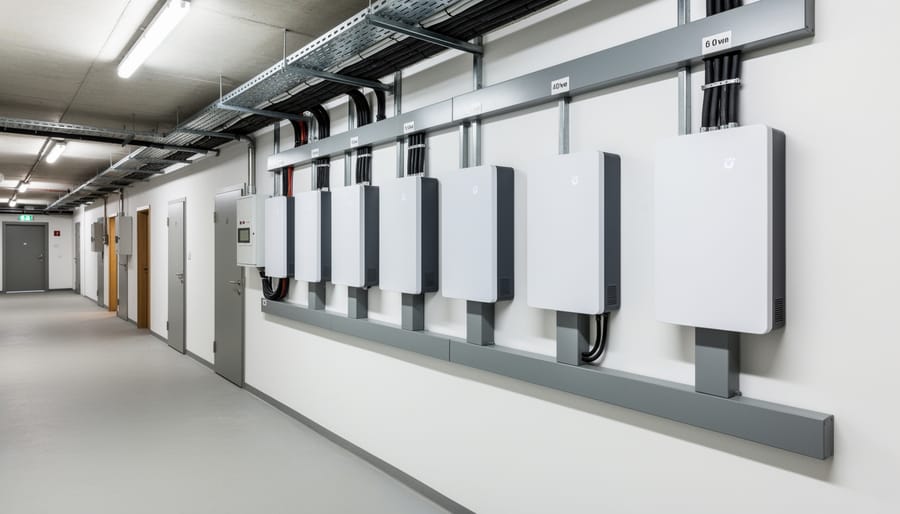
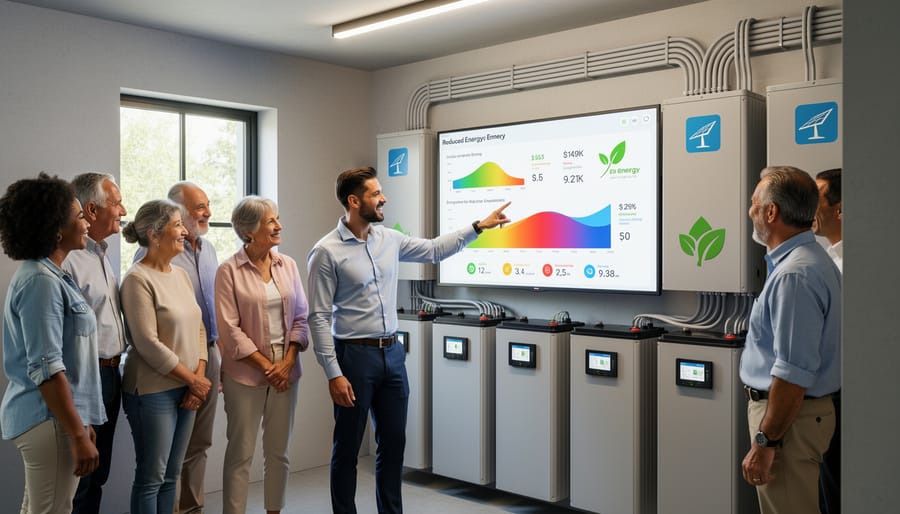
Think of a shared community battery system as a power bank for your entire apartment building or condo complex. Instead of each unit installing individual batteries, one central system serves everyone, similar to how a shared rooftop solar array works.
Here’s how it benefits you: The upfront costs are split among all residents, making battery storage accessible even if you couldn’t afford a standalone system. Your monthly fees or ownership share are typically lower than purchasing your own battery, and you still enjoy backup power during outages and reduced electricity bills when the system stores cheap off-peak energy for use during expensive peak hours.
For building owners, these systems offer an attractive selling point for environmentally-conscious buyers and renters while potentially reducing common area electricity expenses. The installation is simpler too, requiring just one permit process rather than coordinating multiple individual installations.
Cost distribution varies by building. Some properties include battery access in HOA fees, while others use a subscription model where you pay monthly based on your usage tier. Co-op buildings might integrate costs into maintenance fees with proportional savings appearing on utility bills.
The key advantage? Everyone wins. You get financial savings and energy resilience without the hassle of managing your own equipment, while the building gains value and sustainability credentials.
Individual Unit Battery Options
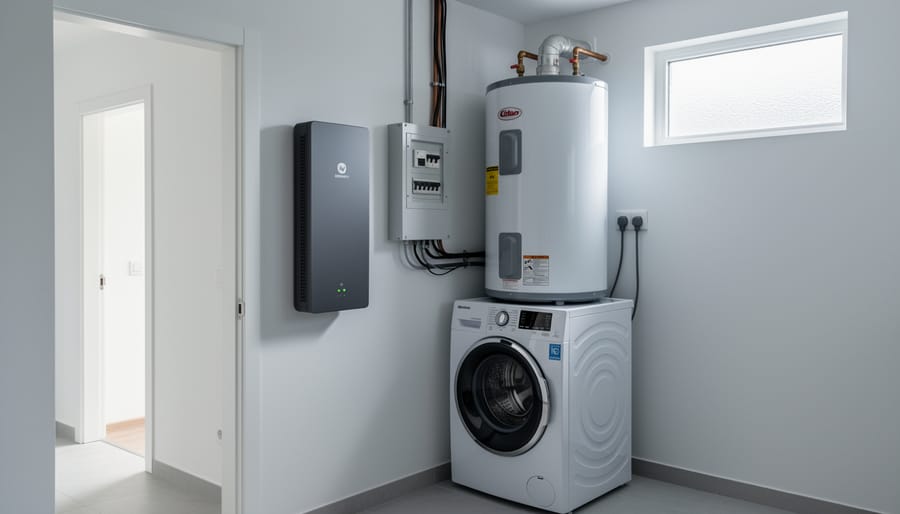
For apartment dwellers who want energy independence without waiting for building-wide solutions, individual unit batteries offer a practical entry point. These compact systems, typically ranging from 5-10 kWh, can fit in a closet or utility space and power essential appliances during outages or peak pricing periods.
The primary benefit is complete personal control. You decide when to store energy, which devices to back up, and how to maximize your savings without needing landlord approval or coordinating with neighbors. Many residents use these smaller batteries to shift electricity use away from expensive evening hours, potentially saving $20-50 monthly depending on local rate structures.
However, limitations exist. Individual batteries won’t power your entire apartment like whole-home systems do for houses. You’ll need to prioritize critical loads like refrigerators, internet routers, medical devices, and a few lights. Installation also requires landlord permission for any electrical modifications, and you may need to remove the system if you move, though many modern units are designed for portability.
The upfront cost ranges from $3,000-7,000 installed, making the return on investment longer than shared building systems. Still, for renters in areas with frequent outages or extreme time-of-use rates, personal batteries provide peace of mind and measurable savings while supporting your sustainability goals.
The Real Financial Benefits for Residents and Property Owners
Lower Energy Bills for Everyone
One of the most attractive advantages of residential battery storage is its ability to slash electricity costs for everyone in a multi-family building. Here’s how it works: utility companies typically charge the highest rates during peak demand hours, usually evenings when everyone returns home. A battery system charges up during off-peak hours when electricity is cheapest, then automatically supplies stored power during those expensive peak periods. This strategy, called load shifting, can reduce monthly electricity bills by 20-40% depending on your utility’s rate structure.
For apartment residents, the financial benefits of batteries appear directly in lower monthly utility charges. Building owners and property managers see even broader savings. Many utilities impose demand charges on multi-family properties, essentially penalizing buildings for using large amounts of electricity at once. Battery storage smooths out these demand spikes, dramatically cutting these fees that often represent a substantial portion of building-wide energy expenses.
The savings don’t stop there. Some utility companies offer incentive programs that actually pay building owners for participating in grid services, where batteries discharge during critical peak events. These payments can offset installation costs within just a few years. Whether you’re a renter benefiting from reduced common area charges or a building owner managing operational costs, battery storage creates a win-win situation that makes sustainable living more affordable for everyone.
What Property Owners Gain
Installing battery storage in multi-family properties creates compelling advantages that extend well beyond just energy savings. Property owners who embrace this technology position themselves ahead of the curve in an increasingly competitive rental market.
One of the most significant benefits is increased property value. Buildings equipped with battery systems are more attractive to prospective buyers and investors who recognize the long-term financial advantages and sustainability credentials these systems provide. In many markets, energy-efficient features directly translate to higher appraisal values.
Tenant attraction and retention also improve dramatically. Today’s renters, especially younger demographics, actively seek out properties with green amenities. Offering lower utility costs through battery storage gives your property a distinct edge over competitors. Happy tenants who save money on their energy bills are more likely to renew their leases, reducing costly turnover.
The financial picture becomes even brighter when you factor in available incentives and rebates. Federal tax credits, state programs, and utility company rebates can significantly offset battery system costs, sometimes covering 30% or more of the initial investment. Many programs specifically target multi-family installations, making now an ideal time to explore these options.
These combined benefits create a win-win scenario where property owners see improved returns while tenants enjoy reduced costs and enhanced reliability. The investment pays dividends through multiple channels simultaneously.
Debunking Common Myths About Batteries in Apartments
Let’s clear up some common misunderstandings that might be holding you back from exploring battery storage for your apartment.
First, safety concerns often top the list of worries. The truth is, modern residential batteries are incredibly safe. They undergo rigorous testing and certification processes before reaching the market. Today’s lithium-iron-phosphate batteries, commonly used in apartments, are designed with multiple safety features including thermal management systems and automatic shut-offs. They’re no more dangerous than the appliances you already use daily, like your refrigerator or washing machine. Millions of apartment dwellers worldwide already live safely with battery systems installed in their buildings.
Space is another frequent concern, but battery units have become remarkably compact. Many modern systems are about the size of a small bookshelf and can be wall-mounted in utility closets, storage rooms, or even installed in shared basement areas. You don’t need a sprawling garage or dedicated room. Property managers often find creative solutions like utilizing existing mechanical rooms or designated common areas that don’t impact living space.
The perception that battery systems are overly complex creates unnecessary hesitation. While the technology inside is sophisticated, using battery storage is actually straightforward. Most systems operate automatically in the background, requiring no daily interaction from residents. They charge when electricity is cheapest and discharge when rates peak, all without you lifting a finger. Installation is handled by certified professionals, and many providers offer ongoing monitoring and support.
Cost concerns are understandable but often outdated. Battery prices have dropped dramatically over the past decade, and numerous incentive programs, rebates, and financing options make these systems more accessible than ever. When you factor in the energy bill savings over time, along with increased property value for owners, the investment makes financial sense. Some apartment buildings implement shared systems where costs are distributed across multiple units, making individual contributions quite manageable.
The bottom line? Battery storage in apartments is safe, space-efficient, user-friendly, and increasingly affordable. Don’t let outdated misconceptions prevent you from enjoying the benefits of clean, reliable, cost-saving energy storage.
What to Look for in a Multi-Family Battery System
Choosing the right battery system for your multi-family building doesn’t have to be complicated. Focus on these essential features to ensure you get a solution that works for everyone in your community.
Start with scalability. The best systems grow with your needs. Look for modular designs that allow you to add more storage capacity as energy demands increase or as more residents opt into the program. This flexibility means you won’t overspend upfront but can expand when it makes financial sense.
Safety certifications are non-negotiable. Verify that any system you consider has been tested and approved by recognized organizations like UL (Underwriters Laboratories) or meets industry standards. These certifications ensure the battery won’t pose fire risks and has been rigorously evaluated for multi-unit residential use. Don’t hesitate to ask installers about safety features like thermal management systems that prevent overheating.
Warranty coverage protects your investment. Quality systems typically offer 10-year warranties at minimum, with some extending to 15 years or more. Check what the warranty actually covers—both the equipment itself and the storage capacity. Most batteries gradually lose some capacity over time, so warranties often guarantee at least 70% capacity retention by the end of the coverage period.
The monitoring capabilities make a huge difference in maximizing your savings. Modern systems include apps or web dashboards showing real-time energy usage, charge levels, and cost savings. For multi-family buildings, this transparency helps residents see exactly how the system benefits them financially.
Finally, confirm compatibility with your existing or planned solar installation. Not all batteries work seamlessly with every solar setup. Your installer should verify that components will communicate properly and optimize energy storage automatically. This integration ensures you’re capturing and using solar power efficiently without any technical headaches.
Making It Happen: The Installation Process Simplified
Getting started with residential battery storage is simpler than most people think. The process typically unfolds in three straightforward stages, each designed to minimize disruption to your daily life while ensuring everything is installed safely and correctly.
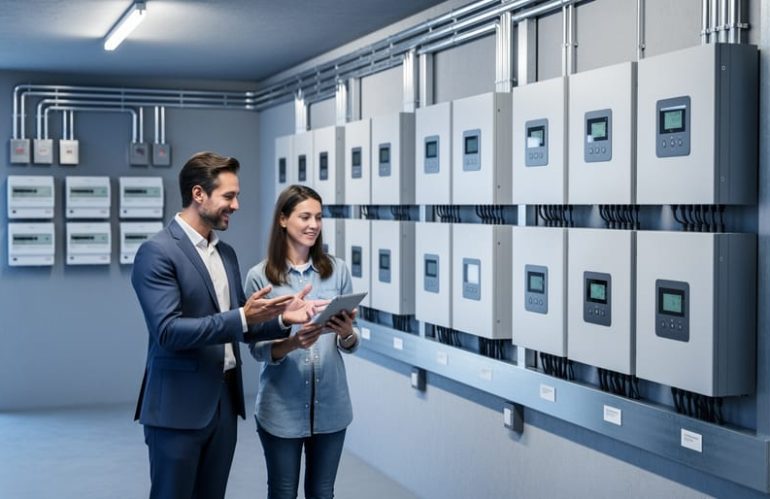
First comes the assessment phase. A qualified installer will visit your property to evaluate your electrical system, energy usage patterns, and identify the best location for your battery. This usually takes just an hour or two. They’ll discuss your energy goals, answer questions, and recommend a system size that matches your needs. For apartment buildings, property managers can often coordinate assessments for multiple units simultaneously, making the process even more efficient.
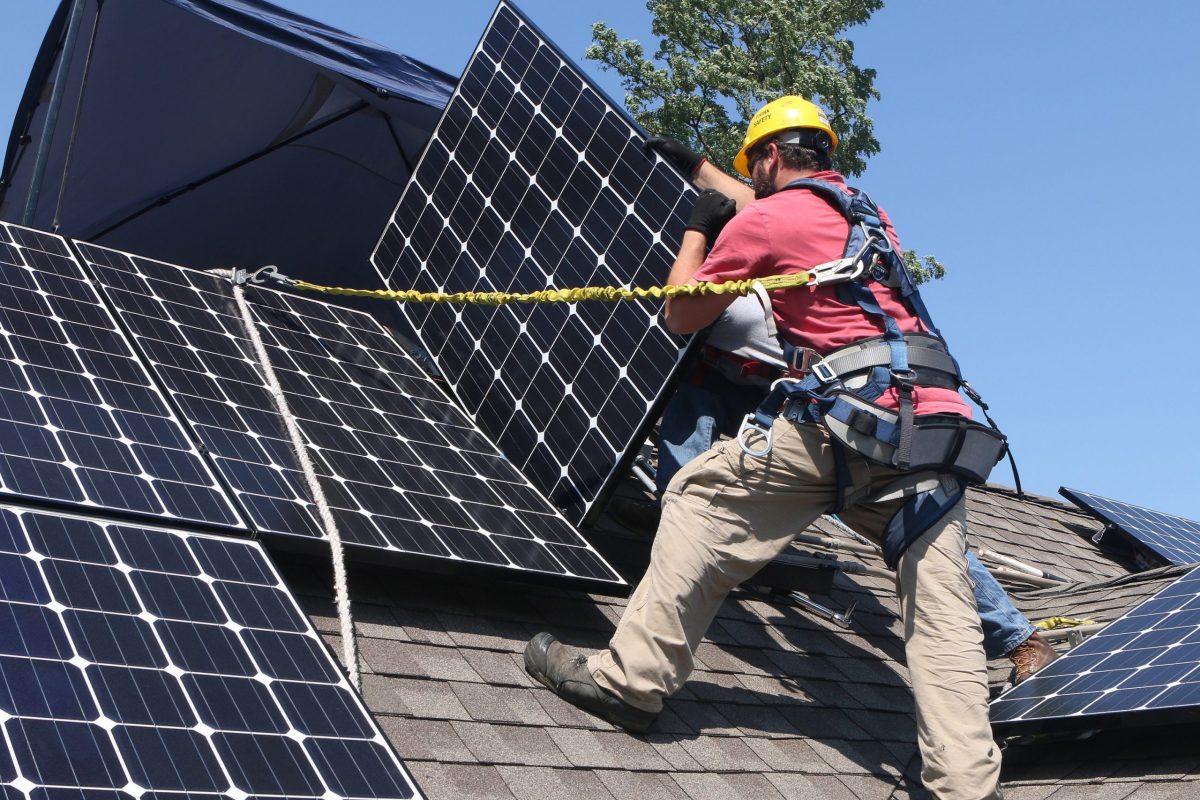
Installation day is where the magic happens, but don’t worry about major upheaval. Most residential battery installations are completed within four to eight hours. Professional installers handle all the electrical work, connecting your battery to your home’s power system and solar panels if you have them. You might experience a brief power interruption during final connections, but installers typically schedule this at convenient times and give you advance notice.
The final step is activation and testing. Your installer will power up the system, verify everything works correctly, and walk you through the monitoring app that lets you track your energy savings in real time. They’ll explain how to read the display, understand charging cycles, and make the most of your new system.
Throughout this entire process, reputable installers carry appropriate licenses and insurance, handle all necessary permits, and ensure your installation meets local building codes. Most importantly, professional teams respect your home, clean up thoroughly, and leave you with a fully functioning system backed by manufacturer warranties and ongoing support.
Battery storage is no longer reserved for single-family homes with sprawling rooftops. Multi-family residents and building owners now have genuine opportunities to benefit from this proven technology, whether through shared community systems or individual apartment installations. The environmental impact is significant—reducing reliance on fossil fuels during peak demand hours while supporting grid stability. The financial advantages are equally compelling, with lower electricity bills, protection from rate increases, and potential property value improvements.
If you live in an apartment or condo, don’t assume battery storage isn’t for you. Many buildings are already implementing these systems successfully, and the barriers that once existed are rapidly disappearing. Start by asking your property manager about existing plans or expressing interest in exploring options together. For building owners, the combination of resident demand, falling technology costs, and available incentives makes this an ideal time to investigate.
Battery storage represents a practical path toward cleaner, more affordable energy for everyone—not just homeowners. Take the first step today by researching what’s possible for your specific situation. The future of residential energy is here, and it’s accessible to more people than ever before.