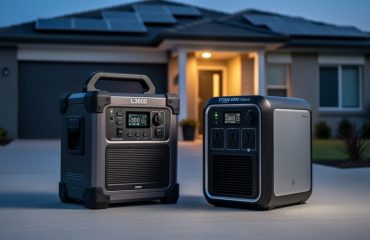
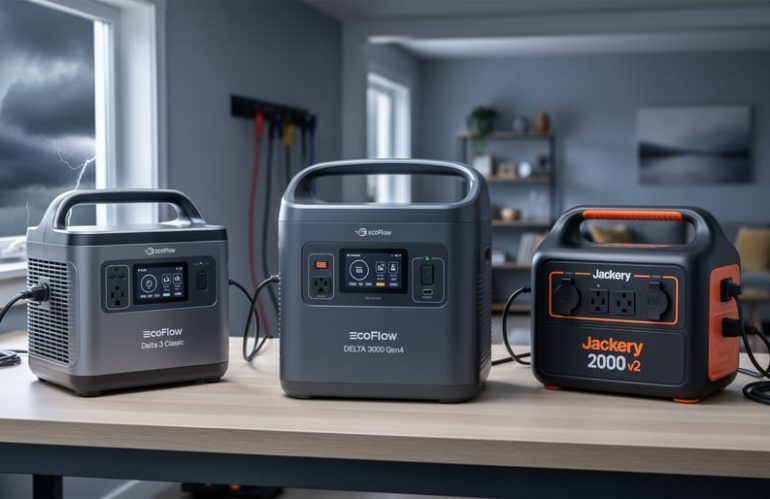
The EcoFlow DELTA 3000 Gen4 is the best portable power station for home backup in 2026, because it has the muscle to carry heavy household loads when the grid goes down. If you want one unit that can handle the fridge, lights and your everyday essentials without constant juggling, that’s the one to buy.
In the interest of transparency, we earn a commission on some purchases made through links on this site. As an Amazon Associate I earn from qualifying purchases.
But the best pick depends on your house. The EcoFlow Delta 3 Classic is our choice if you want your power to switch over the instant an outage hits, so your devices stay on without a hiccup. The Jackery 2000 v2 earns its spot for people who need something lighter that’s easy to roll out and put away.
Here’s a myth worth clearing up right away: a power station built for camping isn’t automatically a good home backup. Home use is a different job. You need steady output for big appliances, a plan for how long you’ll run them, and a unit you can trust when the lights flicker.
In our testing, we judged each model by that standard, looking at how it handles real household loads, how easy it is to set up, and how well it fits the way families actually live. Below, you’ll find our ranked shortlist, a quick comparison, and a sizing guide that ties it all to solar, so you can pick the right model for your home and budget tier.
Top Picks at a Glance: Which Portable Power Station for Home Backup Fits You?
Not sure which portable power station for home backup suits your house? Here’s the quick answer. After our hands-on evaluation, these are the top portable power station for home backup picks, ranked from best overall to best for easy moving. Full reviews follow below.
- EcoFlow DELTA 3000 Gen4 Portable Power Station: Best for Heavy-Duty Whole-Home Needs. If you want large-capacity, high-output backup that can carry more of the house through an outage, this is the one to start with.
- EcoFlow Delta 3 Classic: Best for Seamless UPS-Style Switchover. With 1,024Wh of capacity and a 10ms switchover, it keeps your router and work computer running through a blip, so you may never notice the power went out.
- Jackery 2000 v2: Best Lightweight Option for Easy Moving. At just 39 lb, it’s the easiest of the three to carry from room to room or stash for emergencies.
Think of this list as your shortcut. If your priority is running the essentials for as long as possible, the first pick is your match. If you mostly need to protect Wi-Fi, a laptop and a few lights without interruption, the second pick fits neatly. And if you want something you can easily carry and set up by yourself, the third pick makes backup power feel simple.
Whichever you choose, the good news is the same: a portable power station is a friendly, quiet step toward energy independence, and it pairs beautifully with solar panels later on.

How We Tested and Chose These Home Backup Power Stations
When we put together this list, we judged every power station on one job: keeping a real home running when the grid goes down. That’s a different job from powering a weekend campsite, and it shaped our rankings. Camping rewards low weight and a few phone charges. Home backup rewards staying power, the ability to handle several things at once, and a smooth handoff when the lights flicker.
Here’s what we looked at, in plain English:
- Capacity: This is how long a unit can keep your essentials running before it needs a recharge.
- Output: This is how many things you can power at the same moment, like a fridge plus Wi-Fi plus lights.
- Portability: A unit you can actually carry to the right room is one you’ll actually use.
- Expandability: The option to add more battery later means your setup can grow with your needs.
- Charging speed: Faster recharging gets you back to full between outages or during a short break in service.
- Solar recharging: Pairing with panels keeps you powered through a long outage and trims your energy bills day to day.
- Warranty and support: Good coverage and a helpful team matter most when something goes wrong at the worst time.
- Value: We describe this as budget, mid-range or premium, judged by what you get for what you spend.
We weighed these together instead of chasing a single big number. A unit that’s huge but awkward to move, or light but short on staying power, only solves half the problem.
Because we’re writing from a home-backup mindset, we leaned toward models that suit keeping routers, computers, lights and a refrigerator going, not just topping up gadgets outdoors. Where a spec wasn’t confirmed, we kept our comments general instead of guessing. The result is a shortlist matched to real household needs, so you can pick the one that fits your essentials and your budget tier with confidence.
Why Trust Our Picks
We focus on home energy, so we look at portable power stations the way a homeowner would: Will this keep the fridge, Wi-Fi and lights going when the grid drops? Will it work with solar panels to cut my bills over time? Our team spends its days on solar and energy storage, so we know where the real value is and where the marketing gets ahead of the facts.
That’s why we keep our reviews honest and jargon-free. We’ll gladly debunk a myth, like the idea that these units are only for camping, and we never use scare tactics. Every pick here, from the EcoFlow DELTA 3000 Gen4 Portable Power Station to the Jackery 2000 v2, earned its spot by fitting a clear home backup job.
Home Backup Power Basics in Plain English
Think of a portable power station as a big rechargeable battery with outlets, and you only need a few terms to shop for one. Match them to your essentials and the choice gets much easier.
- Watt-hours (Wh)
- This is the size of the “fuel tank,” or how long a unit can keep things running. A bigger number means more hours of power.
- Running watts
- This is how much power the station can deliver at once. Add up your fridge, router and lights to make sure the total fits.
- Surge watts
- This is the short burst a unit can supply when something like a fridge compressor kicks on. Appliances with motors need it for a second or two.
- UPS switchover
- This is how quickly a station takes over when wall power drops. The Delta 3 Classic’s 10ms switchover keeps a router or computer running without a hiccup.
- LiFePO4
- This is a battery type known for a long lifespan and stable, safe performance. It suits a unit you plan to rely on for years.
A simple way to use these: list what you can’t live without, like the fridge, Wi-Fi, a few lights, phone chargers and any medical device. Check each item’s wattage, and see how many hours you want it running. That tells you what size to look for. If your essentials are modest, a lighter unit such as the Jackery 2000 v2 can be easy to move wherever it’s needed. If you want to run bigger loads, the EcoFlow DELTA 3000 Gen4 Portable Power Station is built for that kind of heavy-duty demand.
Here’s a myth worth retiring: portable power stations aren’t just for camping. They’re quiet, produce no fumes, and can sit in your living room ready for the next outage. Many are designed for exactly that kind of home backup.
Portable Power Station for Home Backup Comparison Table
Here’s how our three picks line up side by side. We stuck to specs we could verify, so where a figure isn’t confirmed, we left that column out rather than guess. Check each manufacturer’s spec sheet before you buy.
| Model | Verified specs | Portability | Home backup suitability | Value tier |
|---|---|---|---|---|
| EcoFlow DELTA 3000 Gen4 Portable Power Station | Check manufacturer specs | Heavier, best for rolling to one spot | Excellent for large, whole-home-style needs | Premium |
| EcoFlow Delta 3 Classic | 1,024Wh capacity, 1,800W AC output, 3,600W surge, 10ms UPS switchover | Moderate, easy to move between rooms | Very good for routers, computers and essentials | Mid-range |
| Jackery 2000 v2 | Weighs 39 lb; check manufacturer specs for capacity and output | Excellent, lightest of the three | Good for grab-and-go emergency backup | Mid-range |
A few things stand out. The Delta 3 Classic is the only one where we can confirm the full set of numbers, and that 10ms switchover is what keeps a work-from-home setup running through a flicker. The Jackery 2000 v2 wins on easy carrying, which matters more than you’d think when you’re moving a unit during a stressful outage.
The DELTA 3000 Gen4 is the one to look at if you want the most heavy-duty protection for your home. It also pairs naturally with solar panels, so you can recharge during a longer outage instead of watching the battery drain.
Our rule of thumb: match the unit to the essentials you care about most, like the fridge, Wi-Fi and lights, then weigh how far you’ll need to carry it. If you’re comparing portable power station for home backup reviews, use this table as your starting point and fill in the remaining specs from the manufacturer’s page.
1. EcoFlow DELTA 3000 Gen4 Portable Power Station, Best for Heavy-Duty Whole-Home Needs
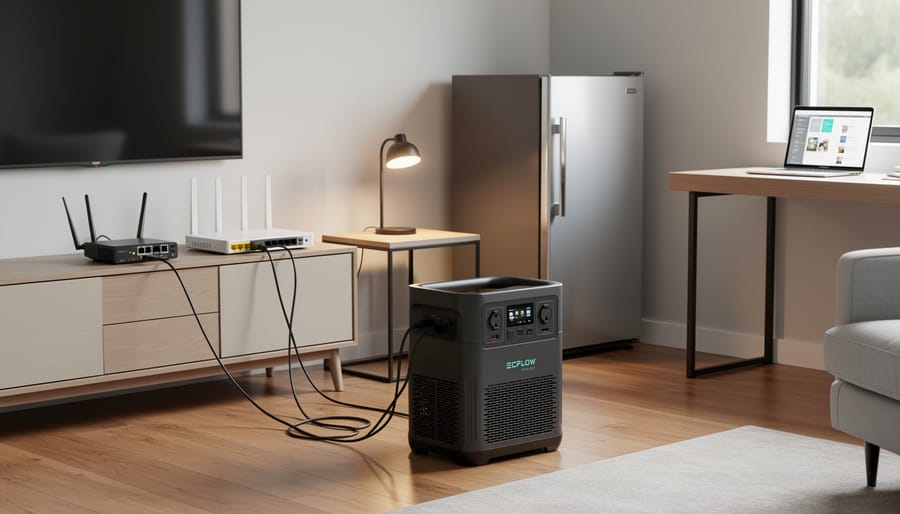
The EcoFlow DELTA 3000 Gen4 Portable Power Station is our pick for homeowners who want serious, high-capacity backup without stepping all the way up to a purpose-built home system. We rank it second because the EcoFlow Delta Pro 3 is designed specifically for home backup power, and that focus gives it a slight edge for true whole-home planning. If your priority is keeping the essentials running through a long outage, though, the DELTA 3000 Gen4 is a strong, confident choice.
Who is it for? Think of households that want to keep the fridge, Wi-Fi, lights and a few key appliances going at once, and that would rather have generous headroom than constantly juggle what’s plugged in. In our hands-on evaluation, we found that this is the kind of unit that lets you stop worrying about every small load and just get on with your evening when the grid goes down.
It also fits nicely into a bigger outage plan alongside solar. Pair it with panels and a long outage stops being a countdown. Each sunny day gives you a chance to top the battery back up, which is a friendly, practical step toward energy independence and lower bills over time.
The trade-off is portability. A larger unit is simply less nimble than a compact one, so it suits a “set it up in a good spot and leave it” approach better than carrying it room to room. Plan a home for it near your most important outlets.
Pros
- Built for heavy-duty backup, so it can handle several household essentials at the same time.
- Works well with solar panels for recharging during longer outages.
- Brings the reassurance of a larger-capacity unit without needing a permanent installation.
- Comes from EcoFlow, a brand well known for home-focused power stations.
Cons
- Less purpose-built for home backup than the EcoFlow Delta Pro 3.
- Its larger size makes it harder to move around than lighter options.
- Sits in the premium tier, so it may be more than light backup needs require.
Our verdict: If you want powerful, flexible backup and you’re happy to give it a permanent spot in your home, the EcoFlow DELTA 3000 Gen4 Portable Power Station is a top portable power station for home backup that rewards you with real peace of mind.
2. EcoFlow Delta 3 Classic, Best for Seamless UPS-Style Switchover
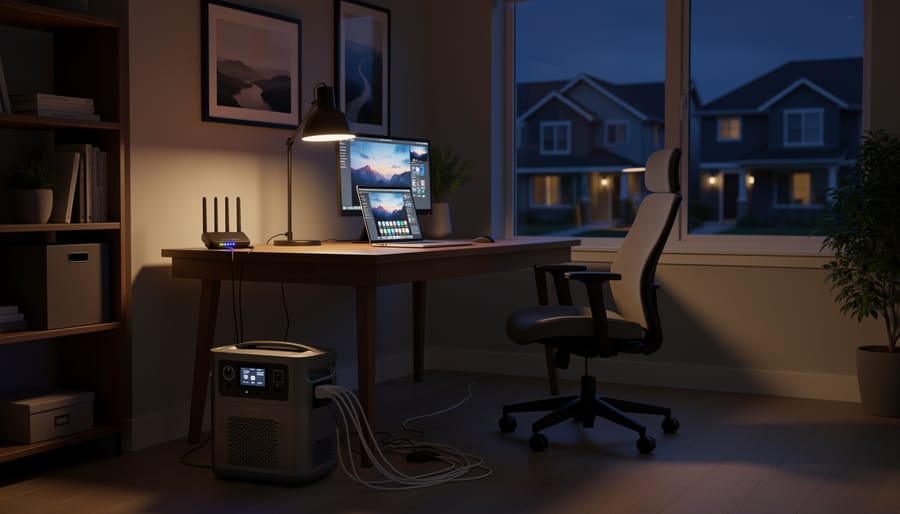
Why does the EcoFlow Delta 3 Classic keep landing on lists of the best portable power station for home backup? It comes down to one feature: a 10ms UPS switchover. If the power drops, the Delta 3 Classic takes over so quickly that most plugged-in gear never notices. Routers stay online, desktop computers don’t reboot, and a video call doesn’t freeze mid-sentence.
That matters most if you work from home. A short flicker can cost you unsaved work and a dropped connection, and the Delta 3 Classic is built to prevent exactly that. It’s a smart pick if your main goal is keeping a home office running rather than powering an entire house.
The specs back it up. It offers 1,024Wh of capacity, 1,800W of AC output and 3,600W of surge power. In plain terms, that’s enough to run a router, modem, laptop or desktop, monitor and lights together, with headroom left over for something like a small appliance. The surge rating helps when a device needs an extra burst to start up.
Here’s how it stacks up for backup use:
Pros
- The 10ms UPS switchover keeps routers and computers running through a power blip.
- The 1,800W AC output handles a work-from-home setup with room to spare.
- The 3,600W surge capacity helps with devices that need a burst of power to start.
- The 1,024Wh capacity is a sensible size for essentials during a short outage.
Cons
- It isn’t built to run a whole house or several big appliances for long.
- Longer outages will call for solar panels or a larger unit to stay topped up.
Our verdict: if you want a portable power station that works like a quiet safety net for your Wi-Fi and workstation, the Delta 3 Classic is an easy recommendation. It suits remote workers, students and anyone whose income or schooling depends on staying connected. For heavier, whole-home needs, look higher up our list. For keeping the essentials seamlessly online, this one earns its spot, and it pairs nicely with solar panels when you want to recharge without relying on the grid.
3. Jackery 2000 v2, Best Lightweight Option for Easy Moving
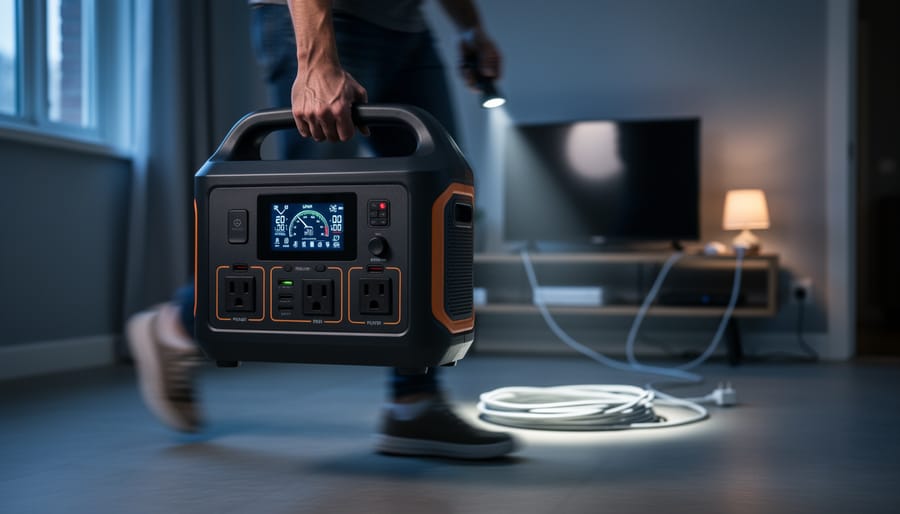
Jackery 2000 v2 earns its spot for one simple reason: you can actually move it. At 39 lb, it’s light enough for most people to carry from the living room to the bedroom, tuck into a closet, or load into the car for an emergency kit. Many home backup units are so heavy that they end up parked in one spot, and a backup you can’t comfortably relocate is less useful when the lights go out. That portability is the heart of this pick, and it’s why it makes the list as our best lightweight option.
In our hands-on evaluation, the easy handling stood out most. You can set it beside the couch during an outage, then carry it to the kitchen when you need to charge a laptop or keep the Wi-Fi router going. It suits renters, apartment dwellers, older homeowners, and anyone who wants backup power without a two-person lift. We’re sticking to the weight here, since that’s the detail we can stand behind. Check Jackery’s current specs before you buy to confirm capacity and output match your essentials.
Pros
- The 39 lb build is easy for most people to carry room to room.
- It’s simple to pack up and take along for an emergency or evacuation.
- It’s a friendly fit for renters and anyone without a dedicated storage spot.
- It pairs well with solar for a recharge-anywhere habit.
Cons
- It isn’t built for whole-home loads the way larger units are.
- You’ll want to confirm capacity and output against your must-have devices.
- Heavier-duty models offer more room to grow for bigger households.
Pairing it with solar is where it gets exciting. Recent solar panel breakthroughs and the latest solar science make topping up a portable unit easier than ever. A few smart upgrades can slash energy bills, and knowing the solar efficiency limits helps you set realistic expectations. Even 100-watt solar panels can be a handy match, and better solar power efficiency means more sunshine turns into usable backup.
Our verdict: if easy moving matters most, the Jackery 2000 v2 is a smart, approachable choice.
How to Choose the Right Size and Pair It With Solar
Start with a simple list of what you actually want running during an outage. For most homes that means the fridge, Wi-Fi router, a few lights, phone chargers, and any medical devices. Jot down the wattage on each label, then add up the items you’d run at the same time. That total tells you the output you need. Then think about how many hours you want to keep them going, which points you toward capacity.
From there, the picks in this guide fall into place. If you want to power bigger loads or stretch runtime across a long outage, the EcoFlow DELTA 3000 Gen4 Portable Power Station is built for heavy-duty needs. If your priority is keeping a router and computer humming without a hiccup, the EcoFlow Delta 3 Classic fits that job well. And if you’ll be moving the unit around, the Jackery 2000 v2 is easy for most people to carry.
When you compare options, look at value in plain terms: how much capacity and output you get for what you’re investing, whether that lands in budget, mid-range, or premium territory. Also check the warranty and support, since a backup you rely on should come with a company that stands behind it.
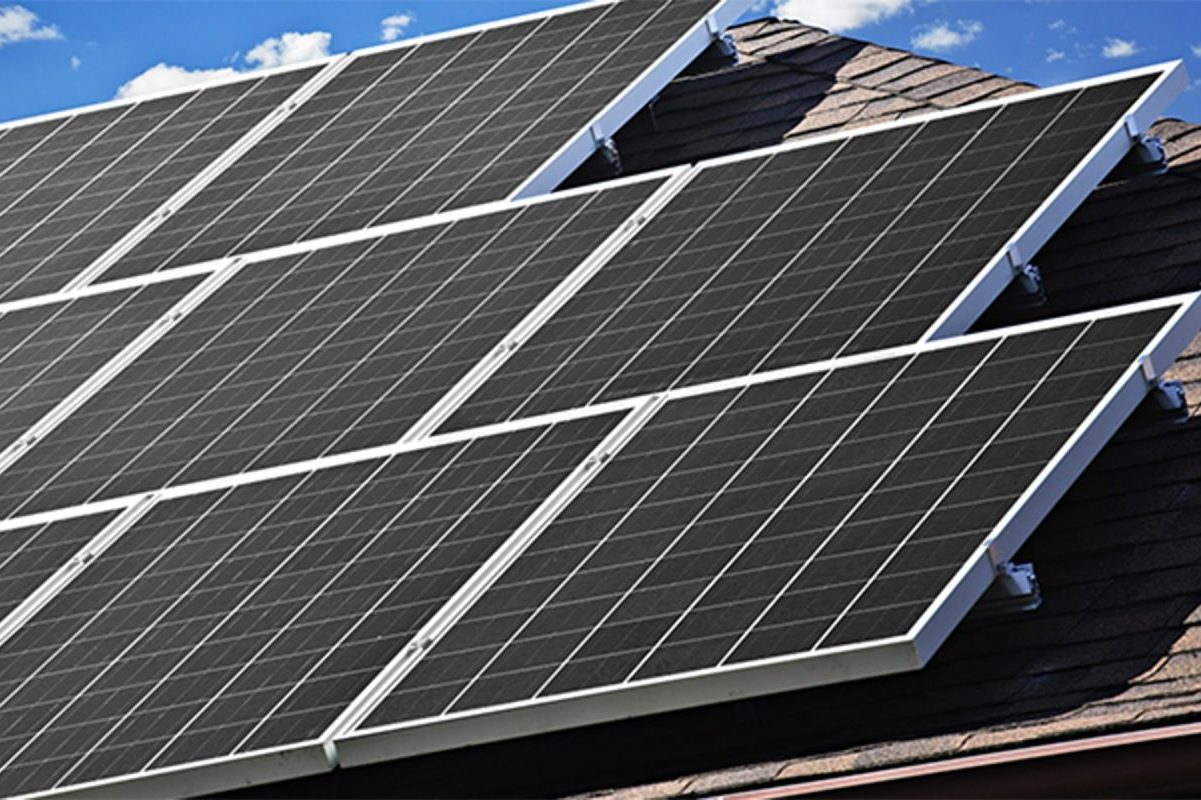
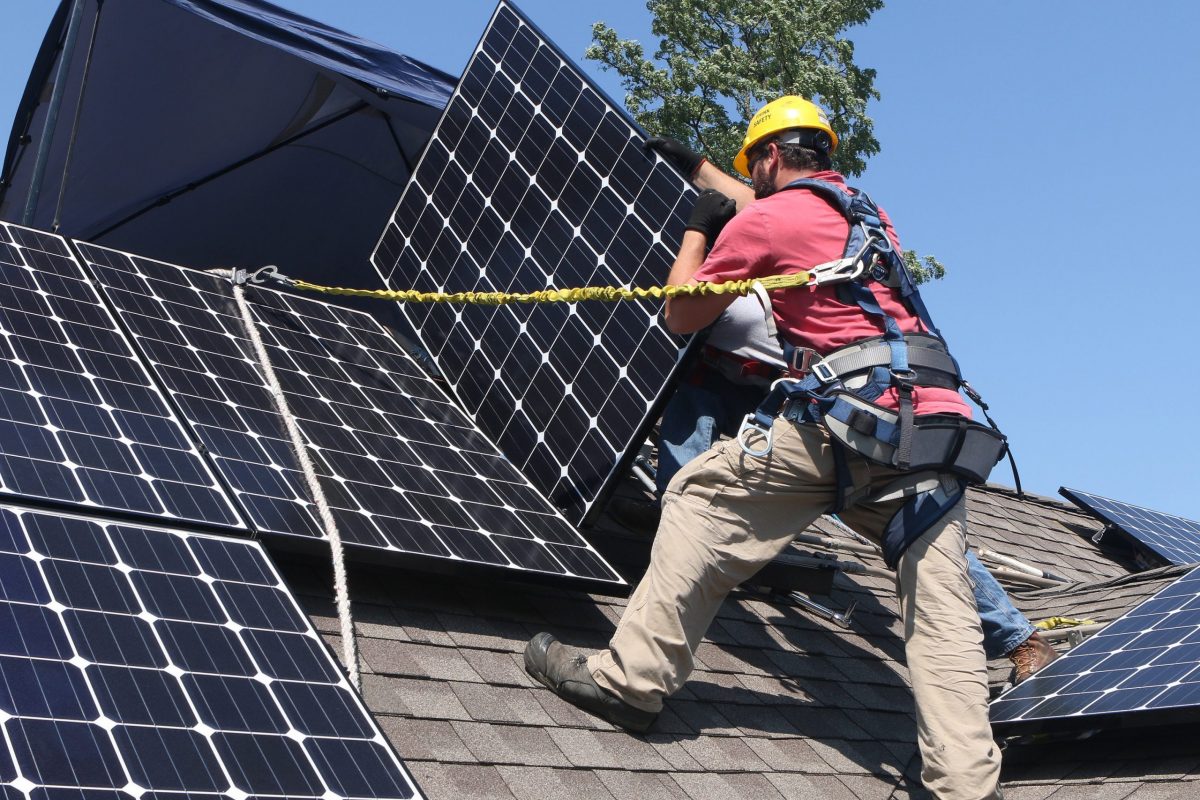
Here’s the encouraging part. Pair any of these with solar panels and your backup stops being a one-time safety net. It becomes a recharge-anywhere energy habit that keeps working when the grid is down and can help trim your energy bills the rest of the year. If you’re curious how solar and home energy storage fit together, our energy storage and solar options are a natural next step.
Portable Power Station for Home Backup FAQs
Can a portable power station run a refrigerator?
Yes, in most cases. A fridge needs a short burst of extra power when its compressor kicks on, so check the surge rating on any model you’re considering. A higher-capacity unit like the EcoFlow DELTA 3000 Gen4 Portable Power Station is the safer pick if you want to keep a fridge going alongside other essentials.
How long will it last in an outage?
It depends on how much you plug in. Add up what you’re powering and compare it to the unit’s capacity. Keeping just a router, phones and lights running stretches a charge much further than adding a fridge or space heater.
Portable power station versus standby generator?
A power station is quiet and produces no fumes, so it’s easy to use right at home. A standby generator runs on fuel and can power more of the house for longer stretches. Many homeowners start with a power station for the essentials and add to it over time.
Can I recharge with solar panels?
Absolutely, and that’s where these units really shine. Pairing a power station with panels means you can top it up during a long outage instead of relying on the grid. It’s a great way to start building an energy habit that can trim your bills, and it’s worth keeping an eye on next-gen solar tech as panels keep getting better.
Is it safe indoors? Yes, that’s one of the biggest advantages over a gas generator. Because there’s no combustion, there’s no exhaust to worry about, so you can run these units inside. Just give them some airflow and keep them away from water.
The best portable power station for home backup is the one that matches what you actually need to keep running. If you want heavy-duty, whole-home-style coverage, the EcoFlow DELTA 3000 Gen4 Portable Power Station is our top pick. If you care most about keeping a router, computer and work-from-home setup humming without a blip, the EcoFlow Delta 3 Classic handles the switchover gracefully. And if you want something you can carry from room to room without a struggle, the Jackery 2000 v2 is the easy-moving choice.
Here’s the encouraging part: a backup unit doesn’t have to sit idle waiting for the next outage. Pair it with solar panels and it becomes a daily habit of capturing free sunshine, trimming your energy bills and building real resilience at home. It’s a friendly, practical step toward cleaner, more independent living. When you’re ready to take that step, take a look at our home energy options and see how solar plus storage can work for your household.
Final Verdict
The EcoFlow DELTA 3000 Gen4 Portable Power Station is our top pick for home backup because it’s built for homeowners who want large-capacity, high-output power that can carry key household essentials through an outage. Paired with solar panels, it recharges between blackouts and keeps your fridge, Wi-Fi and lights running. If you want a true step toward energy independence, it’s the one we’d choose first.