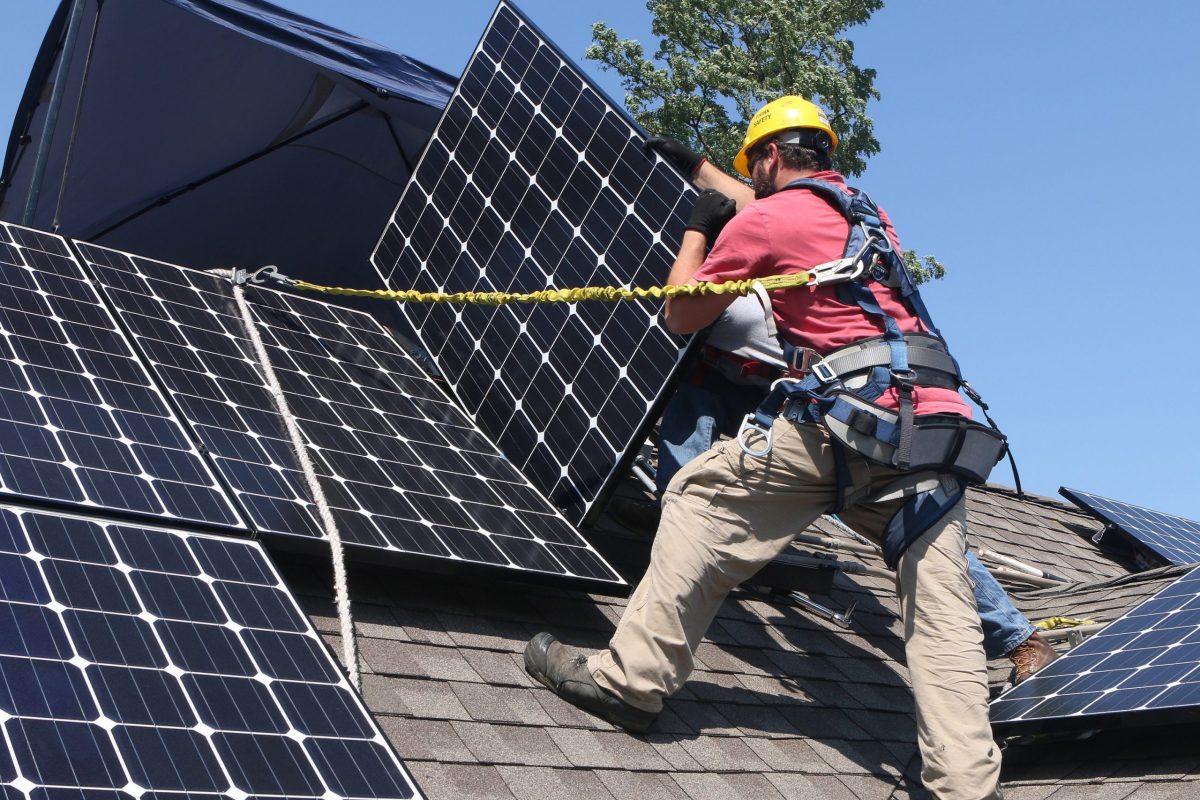
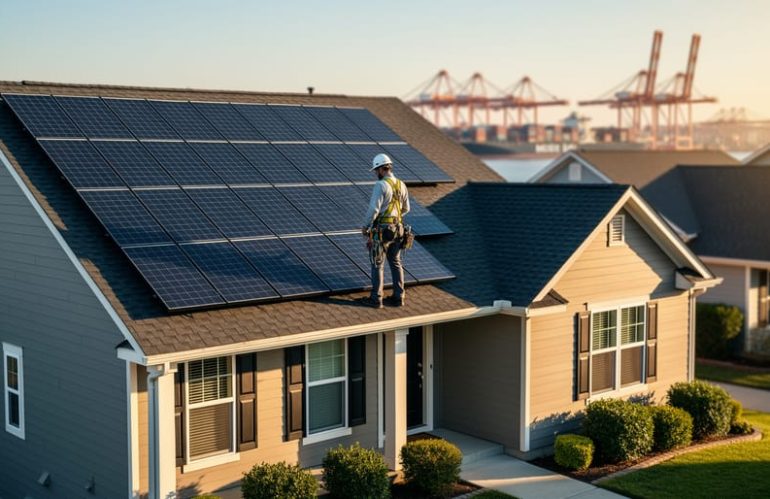
Wondering if buying solar panels made overseas will cost you tax credits or inflate your installation costs? Cross-border electricity commerce directly affects your wallet, but not in the ways you might think. International trade shapes solar panel prices through tariffs and supply chains, yet federal incentives like the 30% Investment Tax Credit remain fully available regardless of where your equipment originates. Here’s what actually matters for your solar investment.
Check your equipment’s country of origin before purchase. While most solar panels come from international manufacturers, recent trade agreements have reduced many tariffs that previously added 15-20% to system costs. You’ll still qualify for federal tax credits and most state rebates with foreign-made panels, though a handful of local incentive programs offer small bonuses for domestically-manufactured components.
Compare total system costs rather than fixating on panel origin. Installation labor, permitting, and inverters often represent 40-50% of your final price tag—costs unaffected by international trade regulations. Your installer can help you calculate whether premium domestic panels justify their higher upfront cost versus proven international options that deliver identical long-term savings on your energy bills.
Cross-border electricity commerce has actually made solar more affordable for American homeowners. Increased global manufacturing capacity drove panel prices down 90% over the past decade, accelerating your payback period and making clean energy accessible to millions more households. Focus on finding quality equipment and experienced installers rather than worrying about trade complexities that have minimal impact on your bottom-line savings.
What Cross-Border Electricity Commerce Actually Means for Your Home
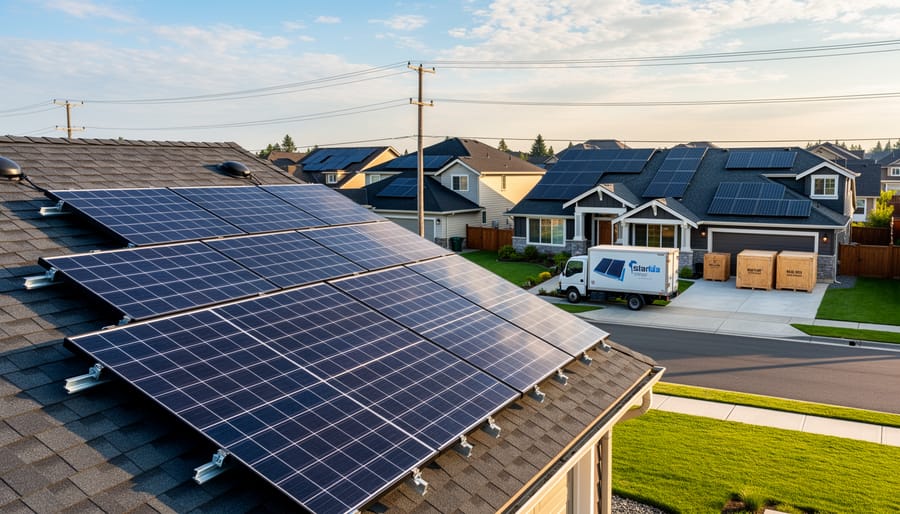
The Basics: Where Your Solar Panels Really Come From
Here’s a surprising fact: about 80% of the world’s solar panels come from just a handful of countries, with China leading global production. Understanding this matters because it directly impacts what you’ll pay for your home solar system.
Think of solar panel manufacturing like any global product—from smartphones to cars. Raw materials like silicon are mined in one country, processed into solar cells in another, then assembled into finished panels elsewhere. This worldwide network keeps costs competitive, which is great news for your wallet.
Major manufacturing hubs include China, Malaysia, South Korea, and Vietnam, with some production happening in the United States too. When trade policies change between countries, it can affect panel prices at your local installer. For example, tariffs on imported panels might temporarily increase costs, while free trade agreements can lower them.
The good news? This global marketplace creates healthy competition that has driven solar panel prices down by over 90% in the past decade. That means more savings potential for you, regardless of where your panels originate. Most federal and state incentives apply to your system regardless of manufacturing origin, so you can focus on quality and value rather than worrying about where components were made.
How Electricity Crosses Borders (And Why It Matters)
Think of electricity grids like a neighborhood where friends share resources. Cross-border electricity commerce works the same way, but between countries or states. When one region produces extra power from renewable sources like solar or wind, it can sell that surplus to neighboring areas that need it. This sharing happens through interconnected power lines that cross borders, creating a more reliable and efficient energy system for everyone.
For homeowners, this matters because it directly affects your electricity bills and the value of your solar investment. When your local utility can purchase cheaper renewable energy from across the border, those savings often get passed down to you. Even better, if you have solar panels, cross-border agreements mean the clean energy you generate contributes to a larger network, making the entire grid greener.
This system is common in regions like the US-Canada border, the European Union, and parts of the southwestern United States where multiple states share power resources. The good news? These agreements typically don’t change your eligibility for solar incentives or tax credits, regardless of where your equipment was manufactured.
The Trade Regulations That Affect Your Solar Panel Costs
Tariffs and Import Duties: What They Add to Your Bill
When you’re shopping for solar panels, you might notice significant price differences between systems—and import tariffs play a bigger role than most homeowners realize. These tariffs are essentially taxes placed on solar equipment manufactured overseas, and they get passed directly to you in the form of higher installation costs.
Here’s a relatable example: A typical residential solar panel system might include panels manufactured in Asia. With current tariffs, those panels could cost 15-25% more than they would without these import duties. For a standard 6-kilowatt system, this translates to roughly $1,500 to $3,000 added to your total installation bill. That’s real money that affects your payback period and overall savings.
The good news? Understanding these costs helps you make smarter decisions. Some installers work with domestic manufacturers or source components from countries with lower tariff rates, which can significantly reduce your upfront costs. When comparing quotes, ask your installer about the origin of their equipment and whether tariff-inclusive pricing is reflected in their estimates.
Don’t let tariff concerns discourage you from going solar. Even with these added costs, federal tax credits typically cover 30% of your total system cost, and most homeowners still see their solar investment pay for itself within 7-10 years through energy bill savings. The key is getting transparent quotes that clearly break down all costs, including any tariff-related expenses, so you can accurately calculate your long-term financial benefits.
Country-of-Origin Rules You Should Know About
When shopping for solar panels, you might wonder whether buying American-made or imported equipment affects your eligibility for tax credits and rebates. Here’s the good news: the federal Investment Tax Credit (ITC) doesn’t discriminate based on where your panels were manufactured. You can claim the full 30% tax credit whether your equipment comes from China, Germany, or the United States.
However, certain state and local incentive programs do care about origin. Some states offer bonus rebates for domestically manufactured solar components to support local economies and jobs. For example, you might find additional cash rebates or enhanced financing rates if your panels meet specific “Buy American” requirements.
The key is understanding which certifications matter for your location. Look for products certified under programs like the Domestic Content Bonus, which can add 10% to certain federal tax credits for qualifying projects. Your solar installer should know which equipment qualifies for these extra benefits in your area.
The bottom line? Foreign-made panels won’t disqualify you from major incentives, but choosing domestic options might unlock additional savings. Ask your installer about origin-based incentives available in your state before making your final equipment decision.
Recent Changes That Could Lower Your Costs
Great news for homeowners considering solar: recent trade agreements are making equipment more affordable than ever. New international partnerships have reduced tariffs on solar components, which means lower prices at your local installer. The U.S. recently expanded clean energy trade corridors with key manufacturing countries, streamlining the import process and cutting unnecessary costs that previously inflated panel prices. Additionally, upcoming bilateral agreements focus specifically on renewable technology, creating a more competitive marketplace that benefits you directly. These changes are already showing results, with industry experts reporting equipment cost reductions of 10-15% in many regions. Combined with existing federal tax credits and local rebates, the financial case for going solar has never been stronger. The timing couldn’t be better to explore your solar options and lock in these savings before market conditions shift.
Cross-Border Incentives That Put Money Back in Your Pocket
Federal Tax Credits and International Trade Agreements
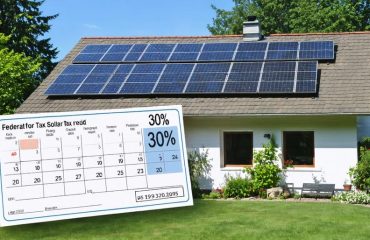
Good news: international trade agreements generally don’t restrict your ability to claim federal solar tax credits, regardless of where your panels were manufactured. The Investment Tax Credit (ITC) allows you to deduct 30% of your solar installation costs from your federal taxes, and this applies whether your equipment comes from domestic or international suppliers.
What matters most for eligibility is that your system meets basic requirements: it must be installed at your primary or secondary U.S. residence, you must own the system (not lease it), and it needs to be new or used for the first time. The equipment’s country of origin doesn’t affect your credit amount.
However, trade agreements do impact your upfront costs. Tariffs on imported solar components can increase equipment prices, which actually means a higher tax credit since it’s calculated as a percentage of total costs. While this might seem like a silver lining, paying less upfront is still preferable.
To verify your eligibility, confirm with your installer that all equipment meets U.S. safety and performance standards, regardless of manufacturing location. Keep all receipts and documentation showing the total system cost, as you’ll need these when filing IRS Form 5695 to claim your credit.
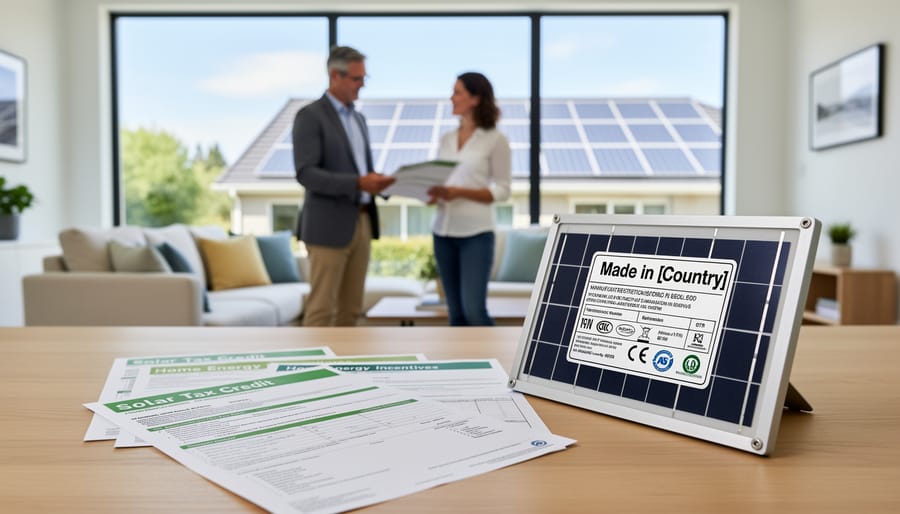
Net Metering Across State and National Lines
If you live near state or national borders, you might benefit from special cross-border utility agreements that can boost your solar savings. Net metering allows you to sell excess electricity your solar panels generate back to the grid for credits on your bill. When utilities have cross-border agreements, these credits can flow seamlessly across state lines, meaning your solar power benefits aren’t limited by geography.
Here’s the good news: border regions often have cooperative utility arrangements that make net metering work just like it would within a single state. For example, if you live in one state but your utility serves customers across the border, you typically receive the same net metering rates and credits as other customers in that utility’s service area. This means you’re not penalized for living near a border.
The financial benefits are straightforward. You earn credits for every kilowatt-hour you export to the grid, which directly reduces your electricity costs. These arrangements also protect you from losing value when utilities operate across jurisdictions. Combined with state-specific solar incentives, cross-border net metering ensures your solar investment pays off regardless of political boundaries.
Renewable Energy Certificates (RECs) and Cross-Border Trading
Renewable Energy Certificates, or RECs, represent the environmental benefits of generating clean energy. When your solar panels produce electricity, you create both power and a corresponding certificate proving you’ve contributed to the grid’s green energy supply. Here’s the catch: cross-border REC trading is extremely limited for residential homeowners. Most REC markets operate within national boundaries due to different certification standards and regulatory frameworks between countries.
While large-scale renewable energy projects sometimes trade RECs internationally through specialized programs, homeowners typically sell their certificates within their own country’s market. The good news? You can still benefit financially from your RECs domestically. Many states and utilities purchase these certificates as part of their renewable energy requirements, creating an additional income stream beyond your electricity savings.
Some homeowners mistakenly believe international REC sales could dramatically increase their returns, but domestic opportunities already provide solid benefits. Focus on maximizing local solar energy grants, net metering programs, and regional REC markets first. These accessible options deliver real financial advantages without navigating complex international trade regulations.
Common Myths About International Solar Trade (Debunked)
Myth: Foreign-Made Panels Are Lower Quality
Here’s a fact that might surprise you: many of the world’s highest-quality solar panels come from international manufacturers. The belief that foreign-made panels are inferior is outdated and simply doesn’t match today’s reality.
Modern solar panels, regardless of where they’re manufactured, must meet rigorous international safety standards and certifications before they can be sold in the United States. These include IEC certification and UL testing, which ensure durability, efficiency, and safety. In fact, some of the longest-lasting, most efficient panels on the market today are manufactured overseas by companies that have been perfecting their craft for decades.
The quality of your solar panels depends on the manufacturer’s reputation and testing standards, not their location. When choosing panels, look for established brands with strong warranties and proven track records. This approach ensures you get reliable equipment that maximizes your savings, regardless of where it was made.
Myth: Trade Regulations Make Solar Too Expensive
Here’s the good news: solar panels have never been more affordable, despite what you might hear about trade regulations. In fact, solar prices have dropped by more than 70% over the past decade, even with various tariffs in place. The market has adapted remarkably well, with manufacturers expanding domestic production and creating competitive pricing structures that benefit you directly.
Today’s financing landscape offers more options than ever before. Most homeowners can access zero-down payment plans, flexible loan terms, and leasing arrangements that eliminate upfront costs entirely. When you combine these financing solutions with federal tax credits covering 30% of your system cost, the impact of trade policies becomes minimal compared to your overall savings. Many installers have also negotiated volume pricing with suppliers, passing those savings directly to customers. The bottom line? Trade regulations haven’t stopped solar from becoming one of the smartest financial investments for your home, with typical payback periods of just six to ten years.
Myth: You Can’t Get Incentives on Imported Equipment
Good news: the federal Investment Tax Credit (ITC) doesn’t discriminate based on where your solar panels were manufactured. Whether your equipment comes from overseas or domestic sources, you can still claim up to 30% back on your solar investment through this valuable tax credit. The same applies to most state-level rebates and local utility incentives—they focus on the clean energy you’re generating, not the passport of your panels.
However, there’s a bonus worth knowing about. Recent legislation introduced additional incentives specifically for domestically produced solar components. If you choose American-made equipment, you might qualify for extra credits on top of the standard ITC. Think of it as earning regular rewards plus a loyalty bonus. Your installer can help you weigh whether the premium cost of domestic panels makes financial sense when factored against these enhanced incentives. The bottom line? You’re eligible for substantial savings either way, giving you flexibility to choose what works best for your budget and values.
How to Maximize Your Savings Despite Trade Complexities

Questions to Ask Your Solar Installer
When meeting with solar installers, asking the right questions helps you understand how international trade affects your investment. Start by asking where their solar panels and equipment are manufactured—this information matters for both pricing and incentive eligibility. Request details about any recent tariff changes and how they’ve impacted current pricing versus what you might pay in the coming months.
Don’t hesitate to ask directly whether using imported equipment affects your eligibility for federal tax credits or local rebates. The good news is that most incentive programs don’t discriminate based on where equipment is made, but it’s worth confirming for your specific situation.
Ask your installer how they handle potential supply chain disruptions from trade policy changes. A reputable company should have backup suppliers and transparent pricing policies that protect you from unexpected cost increases.
Finally, request a detailed breakdown showing how much you’ll save on energy bills, which incentives you qualify for, and the total project cost. This transparency helps you compare quotes fairly and understand your real return on investment, regardless of where your equipment originates.
Timing Your Installation for Maximum Benefit
Timing matters when investing in solar energy. Current federal tax credits offer 30% savings through 2032, so you have a comfortable window to make your decision. However, equipment prices can fluctuate based on international trade agreements and tariffs that affect imported solar panels and components.
Here’s your strategic approach: Monitor announcements from trade officials about tariff changes on solar equipment, typically from China and Southeast Asian manufacturers. These policy shifts can temporarily increase or decrease panel costs by 10-20%. Consider installing before any announced tariff increases take effect.
The good news? Equipment prices have steadily declined over the past decade despite trade fluctuations, making solar more affordable than ever. Combine your installation timing with local solar incentives, which often have separate deadlines and funding caps that can expire when budgets run out.
Spring and fall typically offer the best installation conditions and may feature seasonal promotions from installers. Request quotes from multiple providers and ask specifically about upcoming price changes related to trade policies. This proactive approach ensures you capture maximum savings while avoiding rushed decisions based on artificial urgency.
The good news is that despite the complexities surrounding international trade and cross-border electricity commerce, solar energy remains an exceptionally smart investment for your home. While trade policies and tariffs may influence upfront equipment costs, the long-term financial benefits—from reduced monthly bills to federal tax credits and local incentives—far outweigh these temporary market fluctuations. More importantly, the environmental benefits of clean energy production continue regardless of where your panels were manufactured.
You don’t need to become an expert in international trade law or electricity markets to make solar work for you. That’s where working with knowledgeable, experienced solar installers becomes invaluable. A reputable installer will help you navigate any regulatory considerations, ensure your system qualifies for all available incentives, and select equipment that offers the best value for your specific situation. They stay current on policy changes so you don’t have to, making the entire process straightforward and stress-free.
Looking ahead, the future of solar energy is genuinely bright. As technology advances and production scales up globally, costs continue to decline while efficiency improves. Trade relationships evolve, and policies increasingly favor renewable energy adoption. What remains constant is the personal benefit you’ll enjoy from generating your own clean electricity—lower bills, increased home value, and the satisfaction of reducing your environmental footprint. Making the switch to solar today positions you to reap these rewards for decades to come, regardless of how international commerce evolves.