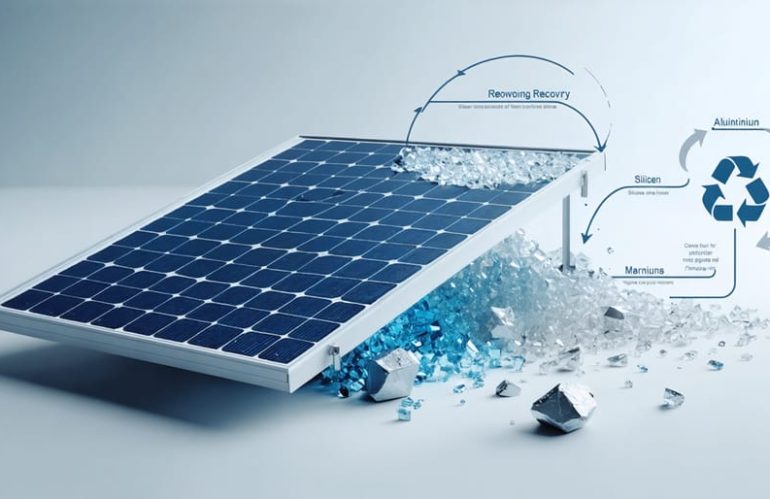
Recycling solar panels typically costs between $15-45 per panel for standard residential units, though prices vary significantly based on location and panel type. As solar installations surge nationwide, understanding these disposal and recycling challenges becomes crucial for homeowners planning their long-term solar investment. While specialized recycling facilities can recover up to 95% of panel materials, including valuable silver and silicon, the current infrastructure limitations often impact costs. Several factors influence the final recycling expense: panel condition, transportation distance to recycling facilities, and whether the panels qualify for manufacturer take-back programs. Forward-thinking homeowners can minimize these costs by researching local recycling options early, participating in manufacturer recycling programs, or coordinating bulk recycling with neighboring solar owners. With solar panel lifespans averaging 25-30 years, planning for end-of-life recycling represents a small but important component of solar ownership costs.
Breaking Down Solar Panel Recycling Costs
Understanding the financial implications of solar panel disposal and recycling is essential for homeowners planning for the eventual end of their system’s life. The cost varies significantly based on several factors, including whether you’re recycling panels yourself or working through a manufacturer take-back program.
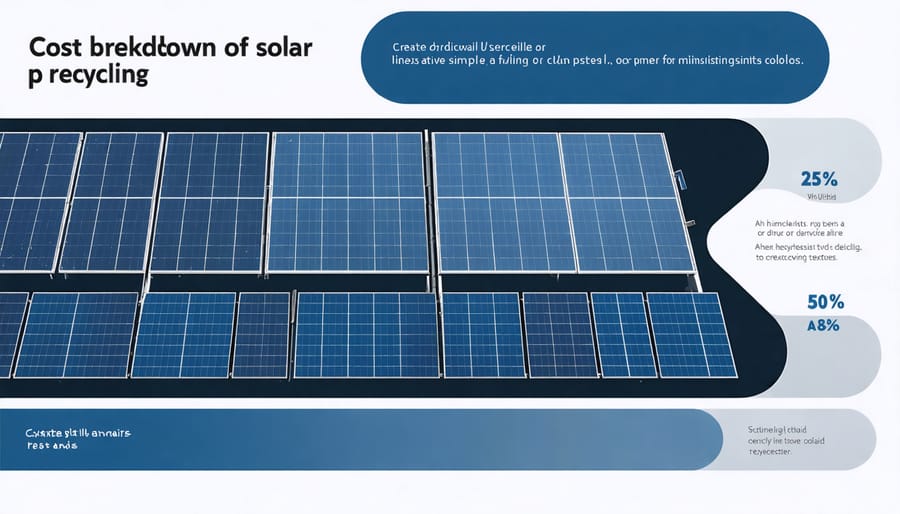
Per-panel recycling costs typically range from $15 to $45 for silicon photovoltaic modules. However, this figure represents just the processing expense. Transportation and collection fees can add substantially to the total, bringing the complete cost to between $12 and $25 per panel after accounting for material recovery credits in some cases.
| Cost Component | Typical Range | Factors Affecting Price |
|---|---|---|
| Transportation/Collection | $100, $400 per pickup | Distance, quantity, regional service availability |
| Processing/Material Recovery | $10, $45 per panel | Panel technology, recycling method, facility location |
| Net Cost After Material Recovery | $0, $25 per panel | Recovered material value, volume discounts, program participation |
For residential installations with 20 to 30 panels, solar panel disposal cost can quickly accumulate. A complete system removal and recycling might run anywhere from $500 to over $1,200 when factoring in both transportation and processing fees.
Some manufacturers offer take-back programs that significantly reduce or eliminate these expenses. First Solar, for instance, provides Recycling Service Agreements with no up-front fees in all regions where they operate. These programs handle logistics and processing, removing the financial burden from homeowners.
State-level initiatives are also emerging. The EAGLE Preserve program became the first stewardship program approved by the Washington State Department of Ecology, offering pickup services for end-of-life modules registered with the program at commercial and utility sites throughout the state.
When evaluating how much does it cost to dispose of solar panels, it’s worth checking whether your manufacturer or installer offers a recycling program. Many newer installations include end-of-life planning as part of the warranty or service agreement, potentially saving you hundreds of dollars decades down the road.
For more information on disposal challenges and environmental considerations, see our guide on navigating disposal and recycling challenges and learn about how recycling is powering a greener future.
Transportation and Collection Fees
Transportation and collection fees typically range from $100 to $400 per pickup, depending on your location and the number of panels being collected. Most recycling companies offer scheduled pickup services directly from your home or business, with some providing bulk collection discounts for multiple panels.
Rural locations may incur additional transportation costs, sometimes adding $50-$100 to the base fee. However, many homeowners can reduce these costs by coordinating with neighbors for group collections or taking advantage of seasonal community recycling events that often include solar panel collection.
Some solar installation companies include future recycling transportation in their initial service package, which can save you money in the long run. It’s worth checking if your original installer offers this service before arranging independent transportation.
To minimize costs, consider:
– Scheduling pickup during regular collection routes
– Bundling with other home recycling services
– Looking for local recycling facilities that offer their own pickup services
– Participating in manufacturer take-back programs that may include transportation
Remember to get quotes from multiple service providers, as prices can vary significantly between companies.
Processing and Material Recovery Costs
The solar panel recycling process involves several distinct stages, each contributing to the overall solar panel recycling cost. Understanding these individual cost components helps homeowners and installers make informed decisions about end-of-life panel management.
The initial processing stage involves dismantling and separating materials. According to MIT, recycling costs about $20 per panel on average, though this can range from $12 to $25 depending on the facility and panel type. This stage requires careful disassembly to preserve valuable materials. Crystalline silicon panels are generally less expensive to process than thin-film panels due to their simpler composition and higher material recovery rates.
The thermal processing stage separates the glass from the silicon cells and metallic components. This heating process accounts for a significant portion of operating expenses, including energy costs and equipment maintenance. Chemical treatment follows, using acids or other solutions to extract pure materials like silver, copper, and silicon. These chemical processes require specialized handling and safety protocols, adding $3 to $8 per panel to the total cost.
Material recovery provides the silver lining that can substantially offset solar panels recycling cost. Each crystalline silicon panel contains approximately $15 to $20 worth of recoverable materials. Aluminum frames alone account for $8 to $12 of this value, while silver contacts, though small in quantity, contribute another $2 to $5. Copper wiring and high-purity silicon add additional value. As material prices fluctuate, these recovery values can shift, sometimes covering 60 to 80 percent of the recycling expenses.
Automated processing systems have changed the economics significantly. Facilities using robotic disassembly and optical sorting can reduce labor costs by 40 percent compared to manual operations. These advanced systems also achieve higher material purity, increasing the market value of recovered materials. Several large recycling operations in the U.S. and Europe now process panels at costs approaching $10 to $15 per unit at scale.
Transportation to recycling facilities represents another cost layer, usually ranging from $1 to $4 per panel when done in bulk. Many recycling companies offer pickup services, though costs can be reduced by coordinating with other homeowners in your area for bulk collection. Some regional programs have established collection points that further lower transportation expenses.
To minimize expenses, consider working with certified recyclers who have optimized their processes and can provide transparent pricing. Some manufacturers also offer take-back programs that can reduce or eliminate recycling costs for their specific panels.
Solar panel recycling facility showing disassembly process
Cost-Saving Options for Homeowners
Manufacturer Take-Back Programs
Many solar panel manufacturers offer take-back programs that can significantly reduce or eliminate recycling costs for homeowners. Companies like First Solar, SunPower, and Jinko Solar have established recycling initiatives as part of their environmental commitment. These programs typically include free collection, transportation, and processing of end-of-life panels for their customers.
To participate, you’ll need to contact your panel manufacturer directly and provide proof of purchase or panel serial numbers. Some companies extend this service even to panels that are no longer under warranty. The programs often include convenient pickup services, making the process hassle-free for homeowners.
While not all manufacturers offer these programs, the number of companies providing this service is growing. It’s worth checking with your manufacturer before exploring other recycling options, as these programs can save you hundreds of dollars in recycling fees. When purchasing new solar panels, consider choosing a manufacturer with an established take-back program – it’s a smart way to plan for future disposal needs while being environmentally responsible.
Local Recycling Initiatives
Many communities now offer local recycling programs that can significantly reduce the cost of solar panel recycling. Check with your city’s waste management department, as some municipalities have dedicated e-waste collection events where you can drop off solar panels for free or at a minimal cost. Some local utilities and solar installers also participate in take-back programs, offering discounted or complimentary recycling services to their customers.
Community solar cooperatives often maintain relationships with recycling facilities and can help coordinate bulk recycling efforts, which typically lower per-panel costs. Additionally, some areas have solar-specific collection points where multiple panels can be gathered before transport to recycling facilities, reducing individual transportation expenses.
Consider reaching out to nearby solar installation companies, as they may offer recycling services at reduced rates for local residents. Some even include end-of-life recycling in their initial installation packages. Local environmental organizations and sustainability groups can also provide valuable information about available programs and potential cost-sharing initiatives in your area.
Future Cost Trends
The trajectory of solar panel recycling costs has already begun its predicted decline. As the industry has matured and recycling technologies continue to advance, we’re seeing the early stages of significant cost reductions that experts expect will accelerate through 2028-2030. This downward trend is driven by several key factors that are reshaping the recycling landscape.
Automation and improved recycling processes are leading the way in cost reduction. New technologies are making it possible to recover more valuable materials like silver and high-grade silicon more efficiently, offsetting the overall recycling expenses. Since 2024, some facilities have reported 15-20% improvements in recovery rates, and industry analysts expect total recycling costs to drop by an additional 20-35% by 2030 as these processes become more standardized.
The growing volume of panels reaching end-of-life is also playing a crucial role. The wave of first-generation installations from the early 2000s is now entering the recycling stream in meaningful numbers, allowing recycling facilities to achieve better economies of scale and bring down per-panel processing costs. This increased volume has encouraged more companies to enter the recycling market, fostering healthy competition that further drives down prices.
Policy changes and extended producer responsibility programs are now actively distributing recycling costs more evenly across the supply chain. Several manufacturers have already incorporated recycling costs into their initial pricing, making end-of-life disposal more affordable for consumers. States like California and Washington have implemented producer responsibility frameworks that shift financial burden away from individual panel owners.
Innovation in panel design is another promising development. Panels manufactured in recent years are being created with recycling in mind, featuring easily separable components and more recoverable materials. This “design for recycling” approach is expected to reduce future recycling costs while increasing the value of recovered materials.
For homeowners planning ahead, these trends suggest that recycling costs will become more manageable over the next few years, making sustainable disposal increasingly accessible and affordable.
Collection of recovered materials from recycled solar panels
Planning Ahead: Smart Recycling Strategies
Planning for solar panel recycling doesn’t have to be complicated or expensive when you take a proactive approach. Understanding the solar panel life cycle helps you make informed decisions about future recycling needs.
Start by keeping detailed records of your installation, including the manufacturer, model numbers, and warranty information. Many manufacturers now offer take-back programs, which can significantly reduce future recycling costs. Consider setting aside a small portion of your energy savings each year – around $10-15 monthly – in a dedicated fund for eventual recycling expenses.
Research local recycling facilities and certified solar waste processors in your area now, even if you won’t need their services for years. This knowledge helps you budget accurately and avoid rushed decisions later. Some localities offer periodic recycling events or group collection programs, which can reduce individual costs through economies of scale.
Consider joining local solar communities or homeowner groups that might organize collective recycling initiatives. These groups often negotiate better rates for bulk recycling and share valuable information about cost-effective disposal options.
Remember to factor in potential transportation costs and investigate whether your installer or local solar companies offer pickup services. Some may even provide discounts on recycling when you upgrade to newer panels, making it worth asking about these programs during your initial installation.
Recycling solar panels is a crucial responsibility that comes with solar energy adoption, and understanding the associated costs helps you plan effectively. While recycling fees typically range from $15 to $45 per panel, these costs can vary based on your location, panel condition, and chosen recycling method. Planning ahead by researching local recycling facilities, participating in manufacturer take-back programs, and considering certified recyclers can help minimize expenses while ensuring environmentally responsible disposal.
Remember that proper solar panel recycling not only prevents hazardous materials from entering landfills but also recovers valuable materials like silver, silicon, and aluminum for reuse. Many regions now offer incentives or subsidized recycling programs, making environmentally conscious disposal more affordable than ever.
As solar technology continues to advance and recycling processes become more efficient, we can expect recycling costs to decrease further. By planning for end-of-life disposal when installing new panels and setting aside a small fund for future recycling needs, you can ensure both environmental sustainability and financial preparedness. Take the first step today by contacting local recycling facilities or your panel manufacturer to discuss your options.