Thinking solar panels might cost you more than you bargained for? The good news: protecting your solar investment isn’t complicated when you know which safeguards actually matter.
Most homeowners worry about equipment failures, surprise repair bills, or choosing the wrong installer—understandable concerns that keep thousands from making the switch each year. But here’s what the solar industry doesn’t always advertise upfront: comprehensive risk management strategies exist that transform solar from a leap of faith into a predictable, protected investment.
Your solar system will sit on your roof for 25-30 years, generating savings month after month. That’s only reassuring, though, when you’ve eliminated the financial wildcards that could erode those benefits. Equipment warranties, installer certifications, performance guarantees, proper insurance coverage, and realistic financial projections aren’t just nice-to-haves—they’re your essential toolkit for removing uncertainty from the equation.
The reality? Solar technology has matured dramatically. The risks that plagued early adopters have been identified, studied, and solved. Today’s solar investors have access to protective measures that simply didn’t exist a decade ago. What remains is a knowledge gap: most homeowners don’t know which protections to demand or how to structure their solar investment defensively.
These five strategies eliminate guesswork and put control back in your hands. They address the real concerns that matter—not hypothetical scenarios, but the actual failure points where uninformed buyers lose money. Each strategy is straightforward, immediately actionable, and designed specifically for homeowners who want solar’s benefits without unnecessary exposure.
Why Risk Management Matters for Your Solar Investment
Making the switch to solar panels represents a significant financial commitment for most homeowners—typically ranging from $15,000 to $30,000 before incentives. Like any major home improvement, this investment deserves careful planning and protection. That’s where risk management comes in, though it’s really just a fancy term for smart preparation.
Think of risk management as your roadmap to a worry-free solar experience. Rather than diving in blindly and hoping for the best, you’re taking deliberate steps to identify potential challenges before they happen and putting safeguards in place. This isn’t about being pessimistic or assuming things will go wrong. It’s about being practical and proactive so you can enjoy all the benefits of solar energy with complete peace of mind.
For the average homeowner, risk management means asking the right questions upfront: What happens if a panel stops working? How do I choose a reliable installer? What if my energy needs change? What financial protections are available? By addressing these concerns from the start, you’re not just protecting your solar investment—you’re maximizing your returns and ensuring those monthly energy savings materialize exactly as planned.
The good news is that solar technology has matured tremendously. Modern panels are incredibly reliable, warranties have never been better, and financing options give homeowners more flexibility than ever before. With the right strategies in place, your solar system can deliver decades of clean, affordable energy while increasing your home’s value and reducing your carbon footprint. The key is simply knowing which protective measures to implement from day one.
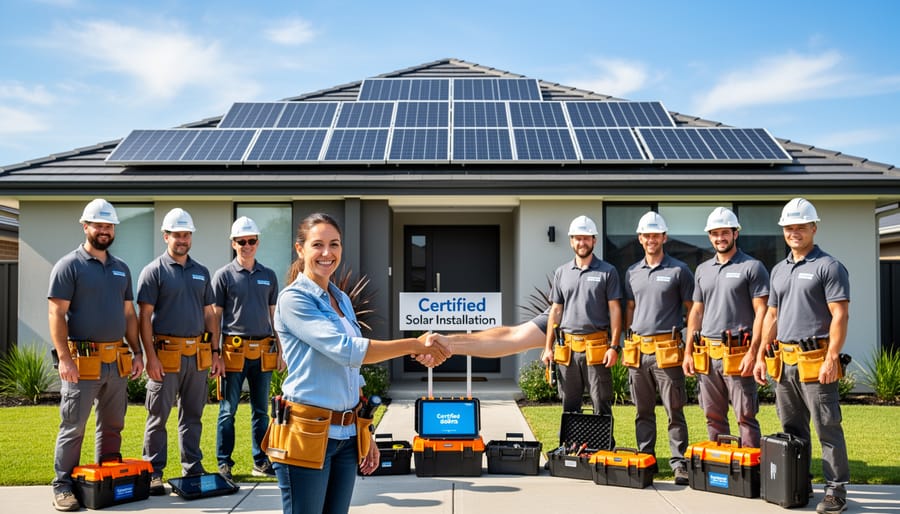
Strategy 1: Choose Quality Equipment and Installation Partners
What to Look for in Equipment Quality
When you’re comparing solar panels, think of it like buying a car—you want protection that matches the product’s lifespan. Start with warranties, which typically come in two types: product warranties covering manufacturing defects (usually 10-25 years) and performance warranties guaranteeing energy output (often 25-30 years). Longer warranties generally indicate manufacturer confidence in their equipment.
Look for certifications that matter. The most important is IEC certification, which means panels have passed international safety and performance standards. UL certification confirms electrical safety for the U.S. market. These aren’t just paperwork—they’re proof your panels can handle real-world conditions like wind, hail, and temperature swings.
Performance guarantees deserve attention too. Quality panels should guarantee at least 80-85% of their original output after 25 years. This matters for your long-term savings, so ask your installer to explain the degradation rate in plain English.
Don’t hesitate to request warranty documents before signing anything. Reputable installers will gladly share this information and explain what’s covered. If a company seems evasive about warranties or pushes “proprietary” panels without standard certifications, that’s your cue to keep shopping. Quality equipment comes with transparent, verifiable guarantees that protect your investment for decades.
Vetting Your Installation Company
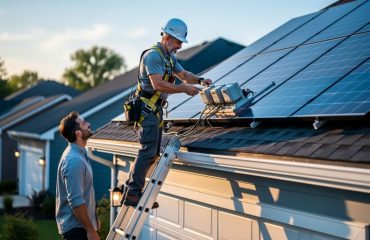
Your installation company serves as your first line of defense against equipment failures, warranty issues, and subpar performance. Choosing certified installers significantly reduces these risks.
Look for these green flags: NABCEP certification demonstrates technical expertise and industry knowledge. A solid local reputation with verifiable references shows consistent quality. Comprehensive workmanship warranties covering at least 10 years protect you beyond manufacturer guarantees. Transparent quotes with detailed line items eliminate surprise costs. Multiple years in business indicate stability and accountability.
Red flags to avoid include pressure tactics to sign immediately, unusually low bids that seem too good to be true, vague contract terms, lack of proper licensing or insurance, and reluctance to provide references. Companies that downplay permit requirements or suggest cutting corners create future headaches.
Request proof of liability insurance and workers’ compensation coverage to protect yourself from potential accidents. Ask about their experience with your specific roof type and local building codes. A quality installer should welcome these questions and provide clear, confident answers. Remember, you’re entering a 25-plus year relationship with your solar system, so invest time upfront to verify your installer’s credibility and commitment to your long-term success.
Strategy 2: Understand and Leverage Warranty Protection
The Three Types of Solar Warranties That Protect You
Understanding your solar warranties is like having three safety nets protecting your investment. Here’s what each one covers:
Product warranties protect the solar panels and equipment themselves against manufacturing defects and premature failure. Most solar panels come with 25-year product warranties, while inverters typically offer 10-15 years. This means if your panels crack, your inverter stops working, or any component fails due to a manufacturing issue, the manufacturer replaces it at no cost to you.
Performance guarantees ensure your panels produce the energy they promised. Standard performance warranties guarantee that your panels will still operate at 80-85% of their original capacity after 25 years. If they underperform, the manufacturer compensates you or replaces the panels. Think of this as your insurance against your system not delivering the energy savings you planned for.
Installation warranties (also called workmanship warranties) cover the actual installation work, including roof penetrations, mounting systems, and electrical connections. Quality installers typically provide 10-25 year workmanship warranties. This protects you if water leaks develop around panel mounts or if wiring issues arise from the installation itself.
Together, these three warranties create comprehensive protection that addresses the most common concerns homeowners have about solar investments, giving you decades of peace of mind.
Making Sure Your Warranties Actually Work When You Need Them
The best warranty in the world won’t help if you can’t prove you’ve met its requirements. Start by creating a dedicated folder for all solar-related documents: warranties, installation certificates, maintenance records, and product specifications. Take photos of your system before and after installation, and keep digital backups of everything.
Most solar warranties are transferable to new homeowners, which can increase your property value, but this isn’t automatic. Check your warranty terms for transfer procedures and any associated fees, typically between $100-300. If you’re selling your home, having organized warranty documentation ready demonstrates to buyers that your system is a valuable, protected asset.
Keep your warranties valid by following manufacturer maintenance requirements. This usually means annual inspections and keeping panels clear of debris. Document every cleaning, inspection, and repair with dated photos and receipts. Many warranty claims are denied simply because homeowners can’t prove they maintained their systems properly. Setting calendar reminders for routine maintenance ensures you never accidentally void coverage, giving you true peace of mind for decades.
Strategy 3: Plan for Maintenance and System Monitoring
Simple Maintenance That Prevents Expensive Problems
The good news? Solar panels require remarkably little upkeep to protect your investment. Most homeowners can handle basic maintenance themselves with minimal effort and expense.
Expect to perform simple seasonal inspections twice yearly, checking for visible debris, shading from new tree growth, and ensuring panels remain clean. In most climates, rain naturally rinses away dust and pollen. If you live in particularly dusty areas or notice reduced output, a gentle rinse with your garden hose is usually sufficient. The actual maintenance costs for solar systems average just $150-$300 annually, far less than most household systems.
Professional installers typically cover technical maintenance through your warranty or service agreement. This includes monitoring system performance, checking electrical connections, and verifying inverter function. Many modern systems include remote monitoring, alerting professionals to issues before you even notice them.
Your main responsibility is keeping panels accessible and noting any unusual changes in energy production. This proactive approach catches small issues early, preventing them from becoming expensive repairs. Think of it like changing your air filter regularly rather than waiting for your HVAC system to fail completely.
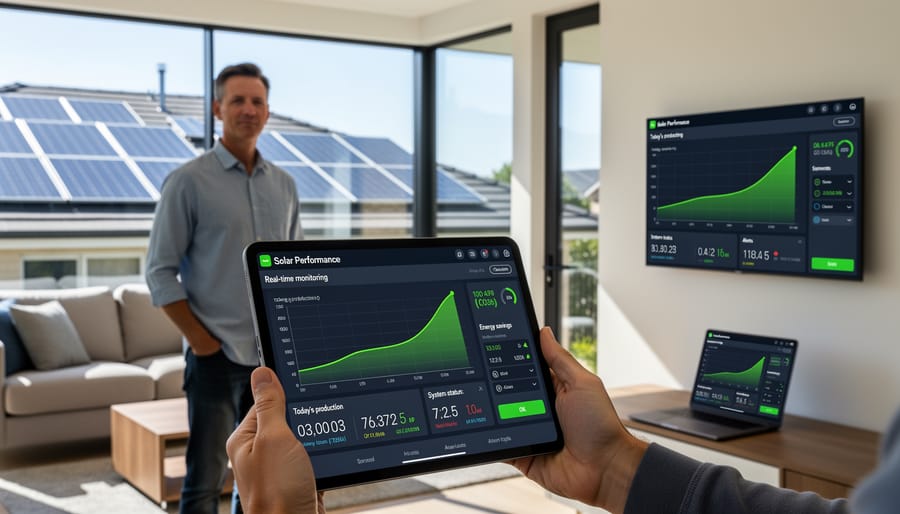
How Monitoring Systems Catch Issues Before They Cost You Money
Think of monitoring systems as your solar panel’s health tracker – they keep a constant watch so you don’t have to. These smart apps send real-time alerts to your phone whenever your panels aren’t performing as expected, whether it’s due to shading issues, dirty panels, or equipment malfunctions. The beauty of catching problems early is that a small issue today doesn’t become an expensive repair tomorrow.
Most modern monitoring systems show you exactly how much energy each panel produces, making it easy to spot underperformance at a glance. If one panel suddenly drops 20% in output, you’ll know immediately rather than discovering it months later on an unexpectedly high electric bill. Many homeowners report that monitoring systems paid for themselves within the first year by identifying fixable issues that would have otherwise gone unnoticed.
The peace of mind factor matters too. Instead of wondering if your investment is working properly, you have concrete data showing your system is protecting your wallet every single day. When problems do arise, you can address them quickly under warranty rather than paying out-of-pocket later.
Strategy 4: Secure Proper Insurance Coverage
What Your Current Homeowners Insurance Already Covers
Good news: your existing homeowners insurance likely already provides protection for your solar panels without requiring a separate policy. Most insurance companies treat solar installations as permanent improvements to your home’s structure, similar to a new roof or addition. This means your panels are typically covered under your dwelling coverage for common risks like fire, hail, wind damage, and vandalism.
Before your installation, contact your insurance provider to confirm your coverage and ask a few key questions. Verify that your policy limits are sufficient to cover both your home and the added value of your solar system. Also clarify whether your coverage extends to all types of damage, including theft and lightning strikes. Some insurers may require documentation of your system’s value and installation details.
The financial impact on your premiums is usually minimal. Many homeowners see increases of just $50 to $100 annually, and some experience no change at all. The slight premium adjustment reflects the increased replacement value of your property, not an assessment that solar panels are risky. In fact, because solar systems have no moving parts and require minimal maintenance, they’re generally considered low-risk additions. This straightforward coverage approach means one less thing to worry about as you transition to clean energy.
When Additional Coverage Makes Sense
Most homeowners find their standard homeowners insurance adequately covers their solar panels, but certain situations warrant a closer look at specialized coverage. If you live in an area prone to severe weather events like hailstorms or hurricanes, additional protection can provide valuable peace of mind. Homeowners with premium, high-efficiency panel systems may want coverage that reflects the full replacement cost of advanced technology rather than standard equipment values.
Consider specialized solar insurance if your roof is older and might need replacement during your panels’ lifespan, as coordinating these repairs can get complex. Similarly, if you’ve financed your system through a loan or lease, your lender may require specific coverage levels. Ground-mounted systems, which face different risks than rooftop installations, often benefit from tailored policies. The good news is that these endorsements typically cost less than you’d expect, often adding just a small amount to your annual premium while protecting an investment that pays dividends for decades.
Strategy 5: Structure Your Financing to Minimize Risk
Understanding Your Payment Options
Choosing how you’ll pay for your solar system significantly impacts your financial risk profile. Each payment method offers different protections and trade-offs worth understanding.
Purchasing your system outright provides the strongest risk management position. You own the equipment immediately, qualify for all available tax credits and incentives, and eliminate interest costs. The main downside is the upfront capital requirement, though you gain complete control over warranties and insurance claims. If something goes wrong, you deal directly with manufacturers rather than through a third party.
Solar loans spread costs over time while maintaining ownership benefits. You’ll still receive tax incentives and eventually own the system, but interest increases your total investment. The risk here involves long-term debt obligations, though fixed-rate loans protect against payment fluctuations. Choose lenders who don’t place liens on your home for added security.
Leasing or power purchase agreements minimize upfront costs and often include maintenance coverage, reducing your responsibility for repairs. However, you won’t receive tax benefits, may face complications when selling your home, and have less control over equipment decisions. The solar company assumes equipment risk but retains ownership throughout the agreement term.
Consider exploring various financing options that align with your risk tolerance and financial situation to make the most informed decision.
Locking in Savings and Avoiding Payment Surprises
One of the biggest advantages of going solar is protecting yourself from unpredictable utility rate increases. While electricity prices typically rise 2-3% annually, your solar investment creates a fixed energy cost for decades. If you purchase your system outright or through a loan, you’ll know exactly what you’re paying each month with no surprises.
Different financing options offer varying levels of payment predictability. Cash purchases eliminate all future payments after installation, giving you complete cost certainty. Solar loans provide fixed monthly payments that won’t change over the loan term, unlike your utility bill. Even solar leases and power purchase agreements lock in predictable rates, though these may include small annual escalators that are still typically lower than utility rate increases.
Interest rate considerations matter for financed systems. Securing a low fixed-rate loan now protects you from future rate fluctuations. Many solar-specific loan products offer competitive rates and terms designed specifically for renewable energy projects.
The key takeaway? Solar transforms your electricity from an unpredictable expense into a manageable, fixed cost. This budget certainty makes financial planning easier and protects your household from the volatility of traditional energy markets. You’re essentially creating your own stable energy future.
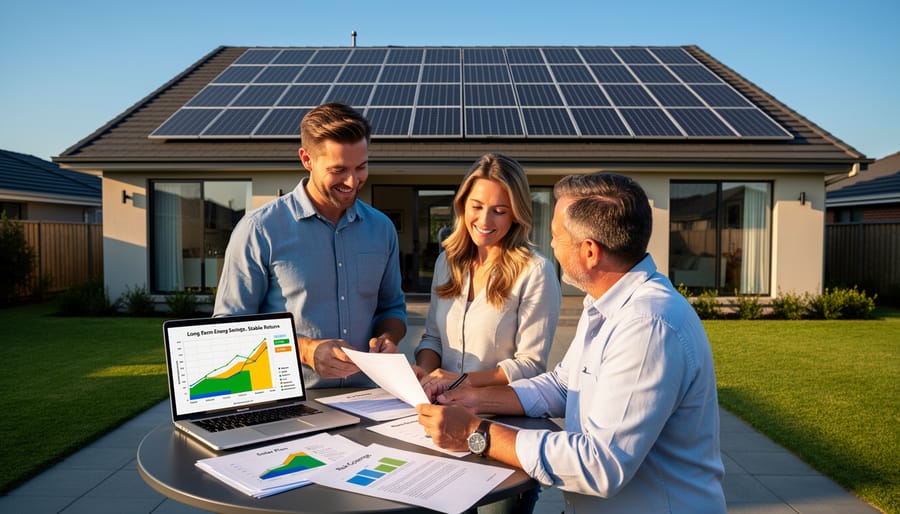
When these five risk management strategies work together—comprehensive warranties, quality equipment selection, working with certified installers, appropriate insurance coverage, and regular maintenance—solar investment becomes far less risky than many homeowners initially assume. Rather than a leap of faith, going solar is a calculated decision supported by decades of proven technology, robust consumer protections, and straightforward financial planning.
The truth is that solar panels are one of the most reliable home improvements you can make. With proper planning, your system will quietly generate savings for 25 to 30 years or more, requiring minimal intervention while significantly reducing your energy bills. The protective measures available today mean you’re not gambling on uncertain technology—you’re investing in a mature industry with well-established safeguards designed specifically to protect homeowners like you.
Smart planning truly does yield decades of reliable savings. By taking the time now to understand warranties, select quality components, and partner with experienced professionals, you’re setting yourself up for long-term financial benefits and energy independence. You can calculate your investment returns to see exactly how these protective strategies translate into real dollars saved over time.
If you’re ready to move forward, consider consulting with quality solar providers who prioritize these risk management principles. The right partner will walk you through each strategy, answer your specific concerns, and create a customized plan that protects both your home and your investment for years to come.