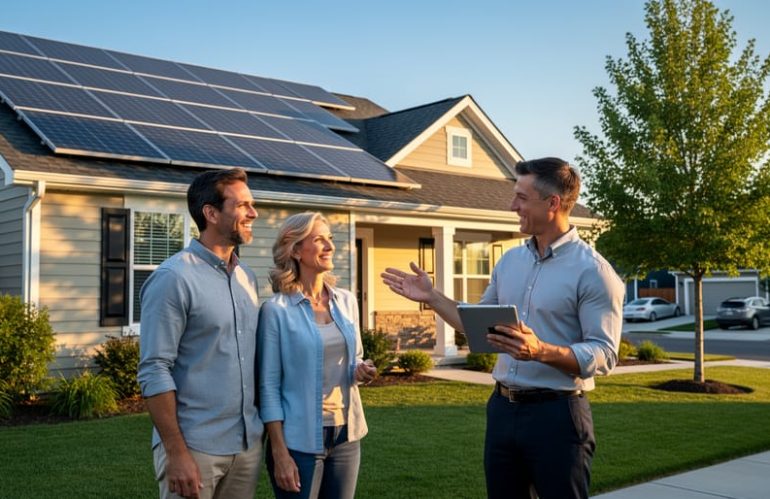
Solar panels don’t require a $20,000 upfront payment anymore. Today’s financing landscape has transformed solar energy from a luxury investment into an accessible home upgrade with multiple payment paths designed for different budgets and financial goals.
Understanding your options means knowing the fundamental difference between owning and renting your system. Solar loans allow you to own the panels and claim all tax credits and incentives while building equity in your home. Solar leases and power purchase agreements eliminate upfront costs entirely—you simply pay a monthly fee or reduced rate for the electricity generated, though the installation company retains ownership and associated benefits.
The right choice depends on three factors: your available capital, your tax liability, and how long you plan to stay in your home. Homeowners with good credit and tax appetite typically benefit most from ownership through loans or cash purchases, capturing the full 30% federal tax credit and long-term energy savings. Those seeking immediate bill reduction without maintenance responsibility often prefer leases or PPAs.
Most homeowners discover solar costs less monthly than their current electric bill, regardless of which financing route they choose. The key is matching the payment structure to your financial situation rather than dismissing solar as unaffordable.
Why Solar Financing Makes Sense (Even If You Have Cash)
Many homeowners assume that paying cash for solar panels is always the smartest financial move. After all, avoiding interest charges sounds appealing. But here’s the surprising truth: financing often makes better financial sense, even when you have cash readily available.
The key concept here is opportunity cost. When you tie up $20,000 or more in a solar installation, that money can’t work for you elsewhere. If your investments typically earn 7-10% annually, but your solar loan costs 4-5% interest, you’re actually coming out ahead by financing. Your money continues growing in your retirement accounts or other investments while you pay down a lower-interest solar loan.
Even more compelling is the immediate cash flow benefit. From day one, your solar system starts generating electricity and reducing your utility bills. With financing, those monthly savings often equal or exceed your loan payment. This means your actual out-of-pocket cost can be zero or even negative while you’re still paying off the system. With a cash purchase, you’d need to wait years to recoup that large upfront expense through gradual energy savings.
Solar financing also preserves your emergency fund and financial flexibility. Life is unpredictable, and keeping liquid cash available for unexpected expenses provides valuable peace of mind. Why drain your savings when you can spread payments over time and maintain your financial cushion?
Additionally, many solar loans offer attractive terms like zero-down options and competitive interest rates. Some even match the length of your warranty, ensuring your system is protected throughout the payment period. When you factor in federal tax credits and local incentives that provide immediate cash back, financing becomes even more attractive, giving you funds to reinvest while still capturing all available solar benefits.

Cash Purchase: The Simplest Path to Solar Ownership
Paying cash for your solar panel system is the most straightforward way to go solar, and it delivers the greatest financial rewards over time. When you buy your system outright, you avoid all interest charges, own your panels from day one, and maximize your return on investment. Every kilowatt-hour your panels produce translates directly into savings on your electricity bill, with no loan or lease payments cutting into those benefits.
The financial advantages are compelling. Beyond eliminating your monthly electric bill, you’ll qualify for the federal solar tax credit, which currently covers 30% of your system cost. Many states and utilities offer additional rebates and incentives that further reduce your out-of-pocket expense. Over the typical 25-year lifespan of solar panels, cash buyers save the most money compared to any other financing option.
This path works best for homeowners with sufficient savings who want to avoid monthly payments and debt. While realistic cost expectations for a residential system typically range from $15,000 to $25,000 after incentives, the payback period usually falls between 6 to 10 years depending on your location and energy usage.
If you have the funds available and prioritize long-term savings over preserving liquidity, cash purchase offers the simplest, most profitable route to solar ownership. You’ll face no credit checks, application processes, or ongoing financial obligations—just pure, clean energy and maximum savings from day one.
Solar Loans: Own Your System and Start Saving Immediately
Secured vs. Unsecured Solar Loans
When exploring solar loans, you’ll encounter two main types: secured and unsecured. Understanding the difference helps you choose what works best for your situation.
Secured loans use your home as collateral, typically through a home equity loan or home equity line of credit (HELOC). Think of it like your mortgage—the lender has a claim on your property if you can’t repay. The good news? Because lenders face less risk, you’ll usually enjoy lower interest rates and can borrow larger amounts. These loans often come with longer repayment terms, making monthly payments more manageable. The potential downside is that you’re putting your home on the line, and there may be closing costs similar to a mortgage.
Unsecured loans don’t require collateral, so your home isn’t at risk if circumstances change. The approval process is typically faster with less paperwork, and you can get funded in days rather than weeks. However, since lenders take on more risk, interest rates are generally higher. You might also face lower borrowing limits and shorter repayment periods, which could mean higher monthly payments.
Which is right for you? If you have significant home equity and want the lowest rates, secured loans make financial sense. If you prefer keeping your home separate from your solar investment or need quick funding, unsecured loans offer peace of mind and convenience. Both paths lead to the same destination: clean energy and lower electricity bills.
What to Look for in Solar Loan Terms
When comparing solar loan offers, focus on a few key factors that directly impact your wallet. The interest rate is your starting point—rates typically range from 3% to 8%, though 0% interest solar loans are available through certain programs and manufacturers. Even a 1% difference can mean thousands over the loan’s lifetime.
Loan terms generally span 10 to 25 years. Shorter terms mean higher monthly payments but less interest paid overall, while longer terms reduce your monthly burden but increase total interest. For a $20,000 system at 5% interest, a 15-year loan costs roughly $160 monthly, while a 20-year term drops payments to about $132 monthly.
Watch for hidden fees like origination charges or prepayment penalties. The best loans allow you to pay extra or pay off early without penalties, giving you flexibility as your financial situation improves.
Compare your projected monthly payment against your current electric bill. If your loan payment is less than what you’re paying the utility company, you’re saving money from day one. Many homeowners find their solar payments replace their electric bills rather than adding new expenses.
Finally, check if the lender requires a lien on your home and understand how this affects future refinancing or home sales. Choose lenders experienced with solar projects who understand the unique aspects of renewable energy financing.
How Tax Credits Work with Solar Loans
Here’s a common concern: “If I finance my solar panels with a loan, can I still claim the tax credits?” The answer is yes—and it’s simpler than you might think.
When you finance solar panels with a loan, you own the system. This ownership is the key that unlocks access to federal and state tax credits. The federal Investment Tax Credit currently allows you to claim 30% of your total system cost, regardless of whether you paid cash or took out a loan.
Here’s how it works: You’ll claim the credit on your tax return for the year your system is installed and operational. If your credit exceeds what you owe in taxes that year, the remaining amount rolls over to future years. This means you won’t lose any of the benefit.
Many homeowners use a smart strategy: they make regular loan payments throughout the year, then apply their tax credit refund as a lump sum payment toward the loan principal. This approach can significantly reduce your loan balance, lower the total interest you’ll pay, and potentially shorten your loan term by years.
Some lenders even structure loans with this strategy in mind, offering 18-month payment holidays or reduced payments initially, giving you time to receive and apply your tax credit. Just remember to adjust your withholdings or save accordingly—the credit reduces your tax liability rather than increasing your paycheck throughout the year.
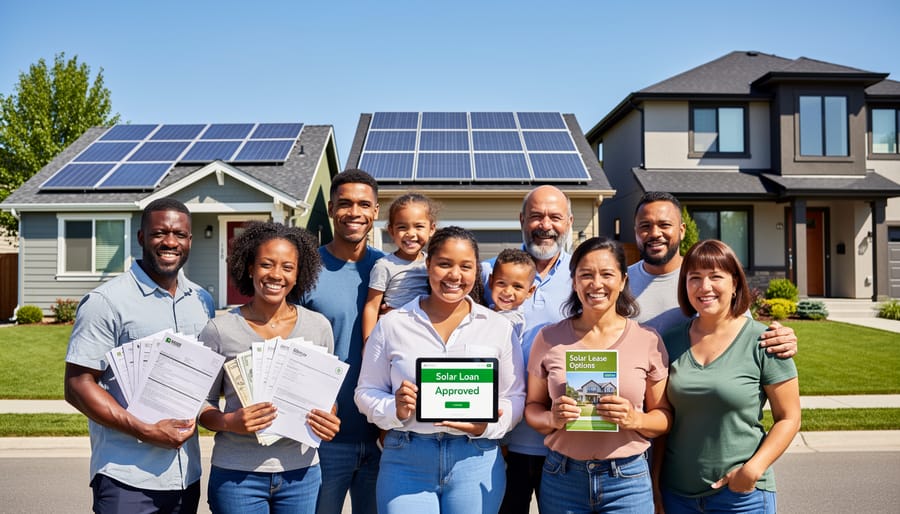
Solar Leases: A Low-Commitment Way to Go Solar
If you’d like to enjoy solar energy without the responsibility of ownership, a solar lease might be the perfect fit. Think of it like renting: you get all the benefits of solar panels on your roof, but you don’t own the equipment.
With a solar lease, a solar company installs panels on your home at little to no upfront cost. In return, you pay a fixed monthly fee to use the system—typically lower than your previous electric bill. It’s straightforward and predictable, making budgeting easier from day one.
One of the biggest advantages? You’re not responsible for maintenance or repairs. The company that owns the system handles everything, from routine upkeep to any unexpected issues. This hands-off approach appeals to homeowners who want simplicity and peace of mind without worrying about equipment performance.
The catch is that you won’t own the system, which means you miss out on certain financial perks. You can’t claim federal tax credits or state incentives since those go to the actual owner. Additionally, any increase in your home’s value from having solar won’t be as significant as it would be with ownership.
Solar leases work best for homeowners who prioritize convenience over long-term savings. If you’re not interested in taking out a loan, don’t have the cash for an outright purchase, or simply prefer a maintenance-free solution, leasing offers an accessible entry point into solar energy.
Keep in mind that lease agreements typically last 20 to 25 years. If you plan to sell your home, you’ll need to either transfer the lease to the new owner or buy out the remaining contract. It’s worth considering your long-term plans before signing on the dotted line.
Power Purchase Agreements (PPAs): Pay Only for the Energy You Use
Power purchase agreements offer a unique approach to solar financing that eliminates upfront costs while giving you immediate access to clean energy. With a PPA, a solar company installs panels on your roof at no cost to you, maintains the system, and you simply pay for the electricity the panels generate at a predetermined rate per kilowatt-hour.
Think of it like this: instead of buying or leasing the equipment, you’re buying the solar energy itself. The rate you pay is typically lower than your current utility rate, so you start saving from day one. Even better, that rate is locked in for the contract term, protecting you from future utility rate increases that average 2-3% annually.
The key difference between PPAs and leases is simple. With a lease, you pay a fixed monthly amount regardless of how much energy your panels produce. With a PPA, you only pay for the actual energy generated. If it’s a cloudy month and your panels produce less electricity, your bill reflects that.
PPAs make the most sense if you want solar benefits without any financial responsibility for the system. They’re ideal for homeowners who prefer predictable energy costs, don’t want to worry about maintenance or repairs, and aren’t focused on maximizing tax incentives. Since the solar company owns the equipment, they claim the federal tax credits and handle all upkeep.
The contracts typically last 20-25 years, with options to renew, purchase the system at market value, or have it removed. While you won’t own the panels, you’ll enjoy lower energy bills and a smaller carbon footprint immediately.
Home Equity Options: Leverage Your Home’s Value
If you’ve built up equity in your home, tapping into that value could be one of the smartest ways to finance your solar installation. Home equity loans and Home Equity Lines of Credit (HELOCs) typically offer significantly lower interest rates than personal loans or credit cards, often ranging from 6-9% depending on your credit profile.
Here’s what makes these options attractive: the interest you pay may be tax-deductible if you use the funds to substantially improve your home, which solar panels generally qualify as. Combined with federal solar tax credits, this can create meaningful savings. You’ll also maintain ownership of your system from day one, maximizing your long-term financial benefits.
A home equity loan provides a lump sum with fixed monthly payments, making budgeting straightforward. HELOCs work more like credit cards, giving you a credit line to draw from as needed, which can be helpful if you’re phasing your solar installation or making other home improvements simultaneously.
The main consideration? You’re using your home as collateral, so it’s important to ensure you’re comfortable with the monthly payments. Calculate your expected energy savings to see how they’ll offset your loan payments. Many homeowners find their reduced electric bills cover a significant portion of their equity loan payment, sometimes entirely.
Before deciding, compare the total interest you’ll pay against other financing options and consider how long you plan to stay in your home to maximize your return on investment.
Debunking the Myth: ‘Solar Financing Is Too Complicated’
Let’s clear the air: solar financing isn’t the maze many people imagine it to be. In fact, the industry has worked hard to make the process straightforward and homeowner-friendly. Today’s solar financing options follow familiar models you’ve probably already used for cars, home improvements, or mortgages.
Most solar companies offer simple comparisons between their financing products, breaking down monthly payments, total costs, and potential savings in easy-to-understand terms. You’re not expected to be a financial expert or understand complex energy markets. The basic choice comes down to whether you want to own your system (through cash purchase or loans) or have someone else own it while you benefit from lower energy costs (through leases or power purchase agreements).
Consumer protections have also improved significantly. Reputable solar installers are transparent about terms, provide clear contracts, and many states have implemented regulations to protect homeowners. Plus, you’re never locked into a decision immediately. Taking time to compare quotes, ask questions, and review terms is not just acceptable but encouraged. The bottom line? Solar financing has become as accessible as any other home improvement investment, with professionals ready to guide you through each step.

Which Financing Option Is Right for You?
Choosing the best financing option depends on your unique circumstances. Here’s a simple framework to guide your decision.
If you want full ownership and maximum long-term savings, cash purchases deliver the best return on investment. You’ll capture all incentives, increase your home’s value, and enjoy decades of free electricity. However, this requires significant upfront capital.
Solar loans work well if you want ownership benefits without depleting your savings. You’ll still qualify for tax credits and rebates while spreading costs over time. Monthly payments often match or beat your current electricity bills, meaning you start saving from day one. This option suits homeowners planning to stay put for several years.
Leases and PPAs make sense if you prefer zero upfront costs and hassle-free maintenance. While you won’t own the system or claim tax credits, you’ll immediately reduce your energy bills with no maintenance responsibilities. These work best for homeowners with limited capital or shorter-term housing plans.
Consider your financial situation honestly. Do you have savings available? What’s your credit score? How long do you plan to stay in your home? The leasing vs buying decision often comes down to balancing immediate affordability against long-term value.
The good news? There’s truly no wrong choice. Every financing option puts you ahead of rising utility costs while reducing your environmental footprint. Match the option to your priorities, and you’ll enjoy the benefits of clean energy regardless of which path you choose.
Going solar is more financially accessible than ever before, regardless of how much you have in savings right now. Whether you choose a loan, lease, PPA, or cash purchase, there’s a financing option designed to fit your budget and goals. The best part? You don’t need to wait years to save up—many financing options let you start saving on electricity bills from day one while building equity in your home.
The key is taking that first step. Reach out to reputable solar installers in your area and request multiple quotes to compare financing terms, system costs, and potential savings. Ask questions about incentives available in your state, and don’t be shy about negotiating terms that work for your situation. Remember, solar panels typically pay for themselves over time through energy savings, and many financing options are structured so your monthly payment is less than what you currently spend on electricity.
Solar energy isn’t just an environmental choice—it’s a smart financial decision that puts you in control of your energy costs. With the right financing approach, you can start enjoying lower bills, increased home value, and energy independence sooner than you think.