Check your location’s solar potential before making any investment decisions—understanding the sunlight your roof receives throughout the year determines whether solar panels will deliver strong returns or disappointing results. Solar insolation measures the amount of solar radiation reaching a specific area over time, and this single factor explains why your neighbor three states away might see their solar investment pay off in seven years while yours could take twelve.
The good news? Solar insolation data removes the guesswork from your decision. When you know how many peak sun hours your region receives daily, you can calculate exactly how much electricity your panels will generate and how much money you’ll save each month. This data reveals why regional cost differences exist and helps you set realistic expectations for your specific situation.
Understanding solar insolation transforms an intimidating technical concept into a practical financial planning tool. Areas receiving 5-7 peak sun hours daily see faster payback periods and higher lifetime savings, while regions with 3-4 hours can still benefit significantly with proper system sizing and realistic projections. The key isn’t whether your area has perfect sunshine—it’s knowing your numbers so you can make an informed choice that aligns with your financial goals. Armed with accurate insolation data for your location, you can confidently evaluate whether solar makes sense for your home and budget.
What Solar Insolation Actually Means (And Why It Matters to Your Wallet)
Think of solar insolation as the fuel gauge for your solar panels. Just as your car needs gasoline to run, your solar panels need sunlight to generate electricity. Solar insolation measures exactly how much of that sunlight fuel your roof receives over a specific period, typically expressed in kilowatt-hours per square meter per day.
Here’s the simple truth: more sunlight fuel means more electricity production, which translates directly into bigger savings on your energy bills. When solar experts analyze insolation data for your location, they’re essentially calculating how much free electricity your roof can harvest from the sun throughout the year.
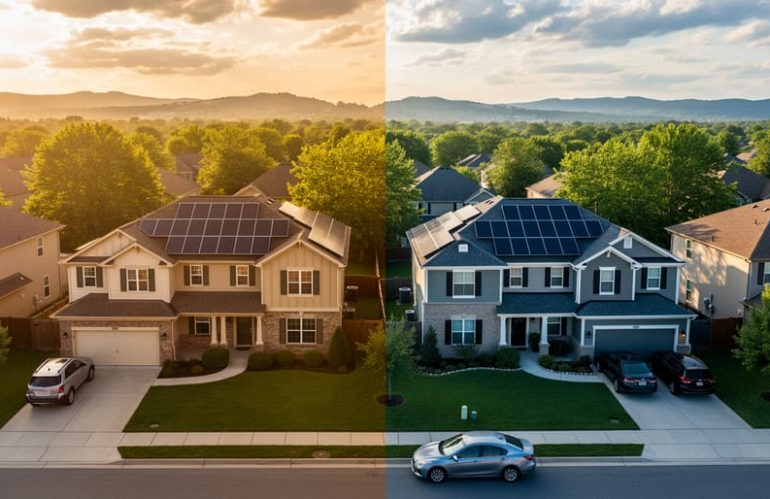
Let’s break down why this matters to your wallet. Imagine two identical homes with identical solar panel systems, one in Arizona and one in Washington. The Arizona home receives about 6.5 hours of peak sunlight daily, while the Washington home gets around 3.5 hours. That difference means the Arizona system produces nearly twice as much electricity, cutting energy bills proportionally faster.
But here’s the good news that often gets overlooked: even areas with moderate sunlight can deliver impressive returns. You don’t need desert-level sunshine to benefit from solar. Many homeowners in cloudier regions still see their electric bills drop by 50% or more because modern panels work efficiently even on overcast days.
The key is understanding your specific insolation data. This measurement helps determine how many panels you’ll need, how quickly you’ll recoup your investment, and what your monthly savings will look like. Think of it as your personalized solar budget, showing you exactly how much sunlight currency you have to spend on electricity generation.
When companies analyze your roof’s solar insolation, they’re creating a financial roadmap based on real data, not guesswork. This ensures you get an accurate picture of your potential savings from day one.
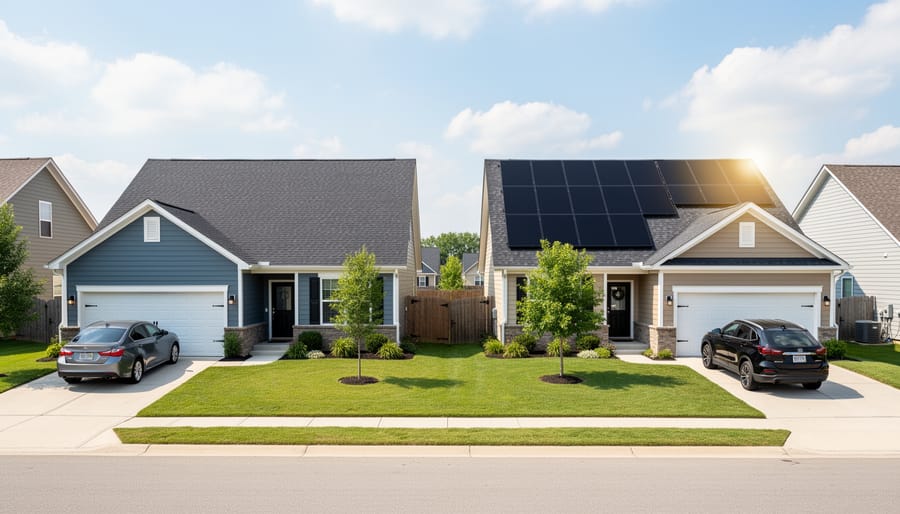
The Geography of Sunlight: How Location Changes Everything
Sun-Soaked vs. Cloud-Covered: Regional Patterns Across America
When it comes to solar energy potential, not all locations are created equal, but that doesn’t mean solar isn’t viable in your area. Understanding regional patterns helps you set realistic expectations and make informed decisions about your investment.
The Southwest reigns supreme in solar potential. Cities like Phoenix, Arizona, and Albuquerque, New Mexico receive between 6 to 7 peak sun hours daily on average. If you’re a homeowner in these sun-drenched regions, your solar panels will generate electricity at near-optimal capacity throughout the year. This translates to faster payback periods and higher lifetime savings, often reaching $30,000 or more over a system’s lifespan.
The Pacific Northwest presents a different picture, but here’s the good news: it’s still a great solar opportunity. Seattle and Portland receive roughly 3 to 4 peak sun hours daily. While that’s about half of what Phoenix enjoys, modern solar technology and favorable local incentives make solar financially attractive. Homeowners in these areas still see meaningful electricity bill reductions and typically achieve payback within 8 to 12 years.
The Northeast falls somewhere in the middle. Cities like Boston and New York average 4 to 5 peak sun hours daily. Despite cloudier winters, these regions benefit from strong state incentives and high electricity rates, which actually accelerate your return on investment. Many Northeast homeowners find that solar pays for itself faster than expected because they’re offsetting expensive grid electricity.
The takeaway? While Southwest residents enjoy premium solar conditions, homeowners across America can benefit financially from solar energy. Your local solar insolation data helps determine system sizing and expected output, ensuring your investment aligns with your location’s actual potential rather than idealized scenarios.

How Seasons Affect Your Solar Production
Here’s a common misconception: solar panels only work when it’s sunny and warm. The reality is much more encouraging. Solar panels actually generate electricity whenever daylight is present, even on cloudy or cold days. In fact, panels can perform more efficiently in cooler temperatures, which means winter isn’t the energy desert many people imagine.
That said, seasonal variations do affect your solar production. During summer months, longer days and higher sun angles mean your panels capture more energy. Winter brings shorter days and lower sun angles, reducing daily production. The difference varies significantly by region. For example, a home in Arizona might see only a 20-30% winter production drop, while a homeowner in Seattle could experience closer to 50-60% reduction during darker months.
The good news? Solar systems are designed with these seasonal swings in mind. When your installer analyzes your location’s solar insolation data, they account for year-round patterns to size your system appropriately. Your spring and summer overproduction typically offsets winter underproduction through net metering credits, balancing your annual energy needs.
Even in cloudier, northern regions, solar remains financially viable. Germany, which receives less sunlight than most U.S. states, leads Europe in solar adoption. The key is understanding your local seasonal patterns and setting realistic expectations. Solar won’t eliminate every winter electricity bill, but it will substantially reduce your annual energy costs regardless of where you live.
Reading Your Region’s Solar Report Card
Peak Sun Hours: The Number That Predicts Your Savings
If you’re researching solar panels, you’ve probably encountered confusing technical terms. Let’s cut through the complexity and focus on the one number that matters most for your wallet: peak sun hours.
Peak sun hours aren’t the total hours of daylight in your area. Instead, they represent the equivalent hours per day when sunlight reaches 1,000 watts per square meter, which is the standard intensity used to rate solar panels. Think of it as translating varying sunlight strength throughout the day into a simple, standardized number you can actually use.
Here’s why this matters for your savings. A location with 4 peak sun hours means your solar panels operate at full capacity for the equivalent of 4 hours daily. If you install a 6-kilowatt system, you’ll generate approximately 24 kilowatt-hours of electricity per day (6 kW × 4 hours). Over a year, that’s about 8,760 kilowatt-hours.
Now compare that to a sunnier location with 6 peak sun hours. That same 6-kilowatt system produces 36 kilowatt-hours daily, totaling roughly 13,140 kilowatt-hours annually. That’s 50% more electricity from identical equipment, simply because of better sunlight conditions.
What does this mean in dollars? If your electricity costs 15 cents per kilowatt-hour, the difference between 4 and 6 peak sun hours translates to roughly $657 in additional annual savings. Over 25 years, that’s more than $16,000 in extra value from the same investment.
Understanding your area’s peak sun hours helps you set realistic expectations about system performance and payback periods. It’s the foundation for making an informed decision about whether solar makes financial sense for your specific home.
Finding Your Home’s Solar Potential
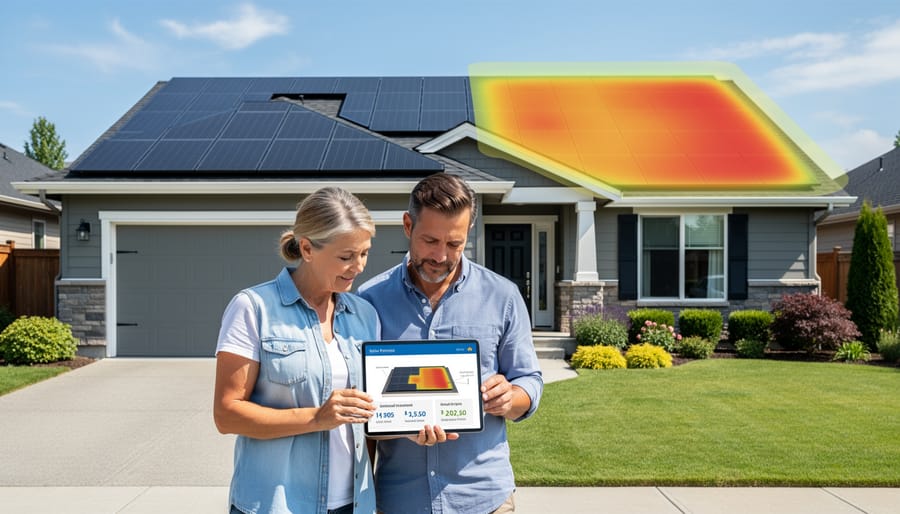
Discovering how much sunlight your property receives is easier than you might think. You don’t need expensive equipment or a degree in meteorology to access accurate insolation data for your specific address. Several free and user-friendly online tools put this valuable information right at your fingertips.
The National Renewable Energy Laboratory (NREL) offers PVWatts Calculator, a powerful yet simple tool that estimates your home’s solar energy production based on your location’s sunlight patterns. Google’s Project Sunroof is another excellent resource, using aerial imagery and weather data to create personalized solar assessments for millions of homes across the country.
These solar calculators and mapping tools translate complex insolation data into straightforward projections showing how many panels you’d need, your potential energy savings, and estimated payback periods. Many solar installers also provide free assessments using professional-grade analysis software during consultations.
The good news? Most homeowners discover their location receives more than enough sunlight to make solar financially worthwhile. Even areas with moderate sunlight levels can generate significant savings thanks to improving panel efficiency and decreasing installation costs.
How Regional Differences Impact Your Solar Investment
System Sizing: Why One Size Doesn’t Fit All
Here’s a common misconception: solar panels work the same everywhere, so everyone needs the same size system. The reality is much more interesting. If you live in a region with lower solar insolation, you’ll typically need a larger solar array to generate the same amount of electricity as someone in a sunnier climate. Think of it like watering your garden – if it rains less where you live, you need a bigger watering system to grow the same tomatoes.
This doesn’t mean solar isn’t worth it in cloudier regions. It simply means your installation needs to be tailored to your location’s specific sunlight patterns. A home in Seattle might need a 8-kilowatt system to produce what a 6-kilowatt system generates in Phoenix. The good news? Modern solar technology has become so efficient and affordable that even areas with moderate sunlight levels can see excellent returns on investment.
The key is optimization. Professional installers use your region’s historical insolation data to design a system that balances upfront costs with long-term energy production. Sometimes a slightly larger system makes sense financially. Other times, pairing a moderately-sized array with energy efficiency improvements delivers better value. There’s no cookie-cutter approach, and that’s actually a positive thing. It means your system gets customized for maximum savings based on where you actually live, ensuring you get the best possible return on your solar investment.
Payback Periods: When Your Investment Pays Off
Here’s a perspective that might surprise you: solar panels can deliver excellent returns even if you don’t live in the sunniest part of the country. While payback timelines do vary by region, the story isn’t as simple as “more sun equals faster savings.”
In sun-drenched areas like Arizona and Southern California, homeowners typically see payback periods of 5-7 years. But here’s what’s interesting: areas with moderate sunlight, like the Pacific Northwest or even parts of New England, often achieve payback periods of just 7-10 years. That’s still an impressive return on investment.
Why? Because solar insolation is just one piece of the puzzle. Your local electricity rates play an equally important role in determining how quickly your investment pays off. States like Massachusetts and New York, despite receiving less annual sunlight, have higher electricity costs that accelerate savings. When you’re offsetting expensive grid power, each kilowatt-hour your panels produce has greater value.
Additionally, state incentives and net metering policies can dramatically improve payback periods regardless of your sunshine levels. Many moderate-sun states offer generous rebates and tax credits that help systems pay for themselves faster.
The bottom line? Don’t let concerns about your region’s sunlight hold you back from exploring solar. Even in cloudier climates, modern panels efficiently convert available light into electricity. Combined with rising utility rates and available incentives, solar makes financial sense in far more locations than most people realize. Your specific payback period will depend on your unique combination of sunlight, electricity costs, and local programs.
Beyond Sunlight: Other Regional Factors That Affect Your Costs
While sunlight availability is crucial, it’s only part of the financial picture when considering solar panels. Your overall return on investment depends on several regional factors working together with your local solar insolation levels.
Electricity rates play a major role in determining how quickly solar pays for itself. If you live in an area with high electricity costs, even moderate sunlight can deliver significant savings. For example, a homeowner in Massachusetts with average solar resources but expensive utility rates might see better financial returns than someone in a sunnier state with cheaper electricity. This is because you’re offsetting more expensive power with every kilowatt-hour your panels produce.
Local and state incentives can dramatically improve your bottom line regardless of sunlight levels. Tax credits, rebates, and performance payments often make solar attractive even in regions with lower insolation. Some states with modest sunshine offer generous programs that effectively reduce your upfront costs by 40% or more.
Installation costs vary significantly by region too. Labor rates, permitting fees, and local competition among installers all affect your initial investment. Areas with established solar markets typically have lower installation costs due to experienced installers and streamlined processes.
The key takeaway? Don’t dismiss solar based on sunlight data alone. A comprehensive analysis should weigh your electricity rates, available incentives, and local installation costs alongside solar insolation. Many homeowners in moderate-sun regions enjoy excellent returns thanks to favorable rates and incentive programs. The best way forward is getting personalized quotes that factor in all these regional variables specific to your location.
Understanding your region’s solar insolation data is the key to unlocking the true potential of solar energy for your home. Armed with this knowledge, you can move beyond common myths and make confident, financially sound decisions about whether solar makes sense for you. The good news? Solar energy isn’t just for sunny desert climates. Homes across diverse weather patterns successfully harness solar power when systems are properly designed for local conditions.
The bottom line is simple: knowing your area’s sunlight availability helps you set realistic expectations about energy production, costs, and savings timelines. Rather than relying on generic estimates, seek out personalized assessments that factor in your specific location, roof characteristics, and energy needs. Professional solar installers use detailed insolation data to design systems optimized for your circumstances, ensuring you get the maximum return on investment. Whether you live in a high-insolation region with quick payback periods or a moderate climate requiring a bit more patience, solar energy remains a viable path toward lower energy bills and sustainable living.