Your solar inverter works harder than you might think. Every second, it converts DC power from your panels into usable AC electricity for your home, and this conversion process generates significant heat. When that heat isn’t managed properly, your inverter’s lifespan shrinks, efficiency drops, and you lose money on energy production you’ve already paid for.
Think of thermal management as your inverter’s cooling system. Just like your car engine needs proper cooling to avoid overheating, your solar equipment needs a way to dissipate heat effectively. Without it, internal components degrade faster, warranty claims increase, and your system may fail years before it should. The difference between a solar inverter that lasts 10 years versus 15 years often comes down to how well heat is controlled.
Most homeowners don’t realize that temperature directly impacts their solar investment returns. For every 10-degree Celsius increase above optimal operating temperature, electronic components can lose up to 50% of their expected lifespan. This isn’t just a technical concern—it’s about protecting the thousands of dollars you’ve invested and ensuring your system delivers the savings you expected.
The good news? Understanding the basics of thermal management empowers you to make smarter decisions during installation, recognize warning signs early, and maximize your system’s performance. Proper heat control starts with high-performance solar system design, strategic equipment placement, and adequate ventilation—factors you can influence from day one.
What Is Thermal Management and Why It Matters for Your Solar System
Think of thermal management as your solar system’s built-in cooling strategy—essentially, it’s how your equipment handles the heat it naturally creates during operation. Just like your smartphone gets warm when you’re using multiple apps, the power electronics in your solar system, particularly the inverter, generate heat as they convert sunlight into usable electricity for your home.
Here’s what’s happening: your inverter is working hard every sunny day, transforming the direct current (DC) electricity from your solar panels into alternating current (AC) electricity that powers your appliances. This conversion process isn’t perfect—some energy escapes as heat. While a little warmth is normal, excessive heat becomes a serious problem.
When your inverter runs too hot, three costly issues emerge. First, efficiency drops—meaning you’re generating less electricity from the same amount of sunshine, which directly impacts your energy bill savings. Second, components age faster in high temperatures, similar to how extreme heat shortens your car battery’s life. This means you might face expensive repairs or replacements sooner than expected. Third, overheating can trigger safety shutdowns or even permanent system failures, leaving you without solar power when you need it most.
The good news? Modern solar systems include smart thermal management features designed to prevent these problems. Proper cooling extends your equipment’s lifespan from 10-15 years to 20-25 years in many cases, protecting your investment and maximizing your return. Understanding how heat affects your system empowers you to make informed decisions about installation location, maintenance schedules, and equipment choices—all factors that directly influence how much money you’ll save over your system’s lifetime. Rather than something to worry about, thermal management is simply another way today’s solar technology works quietly in the background to deliver reliable, cost-effective clean energy to your home.
The Real Cost of Poor Heat Control in Your Inverter
When your inverter runs too hot, the consequences extend far beyond a warm equipment box—they show up directly in your wallet and your home’s energy independence. Let’s break down what poor heat control actually means for you as a homeowner.
First, there’s the immediate hit to your energy production. An overheating inverter doesn’t work at full capacity. Think of it like running a marathon in a heavy winter coat—you’ll slow down to avoid overheating. Your inverter does the same thing, automatically reducing its output to protect itself. This means you’re generating less solar power than your system was designed to produce, which translates to smaller reductions in your electricity bills each month.
Then there’s the equipment lifespan issue. Most quality inverters come with warranties ranging from 10 to 25 years, but these warranties often include fine print about operating temperatures. Consistently running hot can void warranty coverage or lead to premature failures that leave you responsible for replacement costs. A new inverter typically ranges from $1,000 to $3,000, depending on your system size—an unexpected expense that can wipe out years of energy savings.
The hidden cost many homeowners overlook is the compounding effect on your return on investment. When you calculate solar payback periods, you’re assuming optimal performance. But if heat issues reduce your production by even 10-15 percent over the system’s lifetime, you’re looking at thousands of dollars in unrealized savings. Your solar investment was meant to pay for itself within 6-10 years, but thermal problems can stretch that timeline significantly.
The good news? Understanding these risks means you can take simple preventive steps to protect your investment and maximize your clean energy benefits.
How Modern Inverters Keep Their Cool
Passive Cooling: The Silent Workhorse
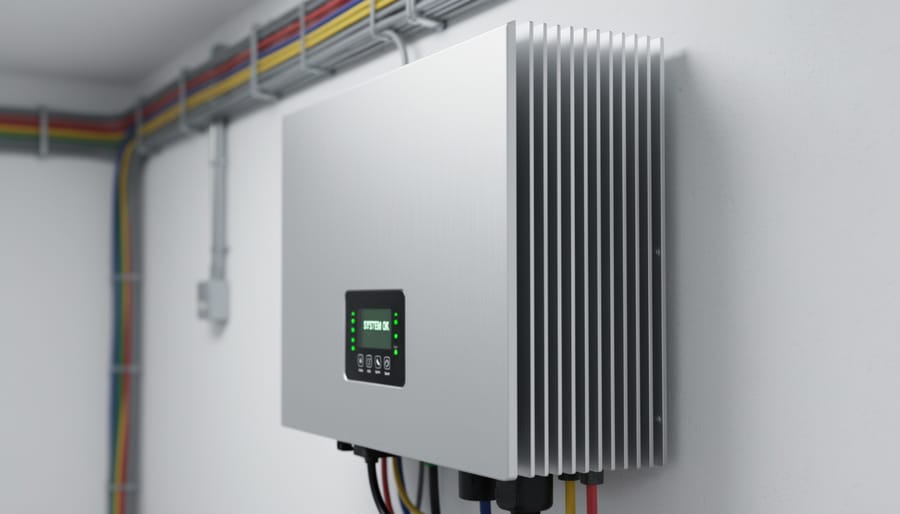
Think of passive cooling as the set-it-and-forget-it approach to keeping your solar equipment running smoothly. Unlike active cooling systems that rely on fans or pumps, passive cooling uses simple, clever design choices to manage heat without any moving parts.
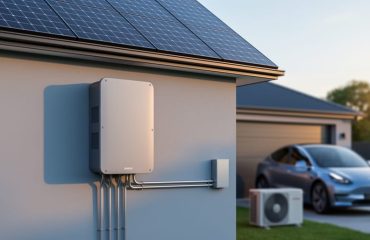
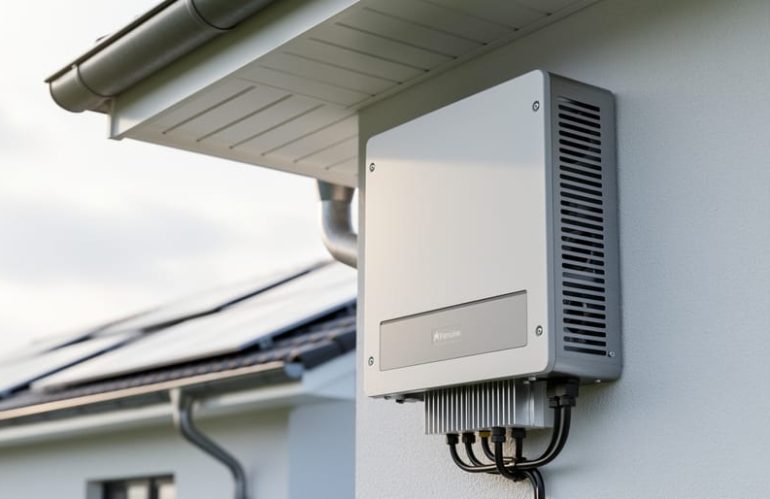
The most common passive cooling method in solar inverters is the heat sink—those ribbed metal fins you might notice on the equipment. These work like radiators, spreading heat across a larger surface area so it can dissipate naturally into the surrounding air. Combined with smart placement that allows natural air circulation, these components quietly do their job 24/7.
The beauty of passive cooling lies in its simplicity. Without motors, fans, or pumps, there’s essentially nothing to break down or wear out. This translates directly to fewer maintenance headaches and lower long-term costs for you. You won’t need to replace burnt-out fans or clean clogged filters—the system just works.
Many homeowners worry that passive cooling might not be powerful enough, but modern inverters are specifically engineered with thermal management in mind. Manufacturers carefully calculate heat sink sizes and ventilation requirements to handle typical operating conditions without assistance.
For your home solar system, passive cooling means one less thing to think about. The metal components silently channel heat away while you enjoy the financial benefits of solar energy. This reliability is particularly valuable in residential applications, where equipment often sits unattended on rooftops or garage walls for decades, quietly converting sunshine into savings on your energy bills.
Active Cooling: When Your System Needs Extra Help
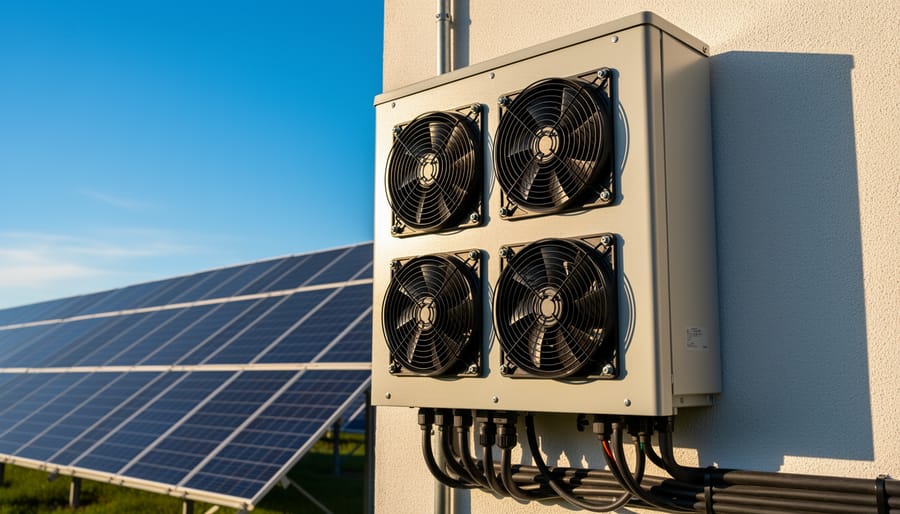
When your solar inverter handles high power loads during peak sunshine hours or hot summer days, passive cooling alone might not cut it. That’s where active cooling steps in—typically in the form of built-in fans that kick on when temperatures rise beyond safe levels.
Think of active cooling like the fan in your laptop. It stays quiet most of the time, but when you’re running demanding programs, it activates to prevent overheating. Solar inverters with active cooling work the same way, using temperature sensors to turn fans on only when needed. This smart approach helps your system handle those scorching afternoons when your panels are producing maximum power and your inverter is working hardest.
The good news? Modern inverter fans are remarkably quiet—usually quieter than your refrigerator. Most homeowners never notice them, especially since inverters are typically installed in garages or outside. If noise is a concern, discuss placement options with your installer during the planning phase.
Active cooling becomes particularly important if you live in hot climates, have a high-capacity system, or your inverter location receives direct sunlight. These fans prevent thermal throttling, which means your system maintains full power output instead of reducing performance to cool down. This translates directly to better energy production and faster returns on your solar investment.
The bottom line: active cooling is a feature, not a flaw. It’s your inverter’s insurance policy against heat-related performance loss, helping protect your investment for decades to come.
Smart Temperature Monitoring
Today’s smart inverters are like having a built-in safety supervisor for your solar system. They continuously monitor their internal temperature using sensors and automatically adjust their performance when things heat up. Think of it as your inverter knowing when to slow down before problems occur.
When an inverter detects rising temperatures, it reduces its power output slightly to cool down, a process called derating. This happens seamlessly in the background without you noticing any disruption. The benefit? Your inverter protects itself from damage while continuing to produce energy, just at a temporarily reduced rate. This is far better than older systems that would simply shut down completely when overheating.
This intelligent temperature management extends your inverter’s lifespan significantly, protecting your investment and reducing the likelihood of costly repairs or replacements. Most homeowners never even know this protective feature is working because modern systems handle it so smoothly. By preventing heat-related stress and component degradation, these temperature controls help ensure your solar system delivers reliable savings for decades to come.
Building Resilience Into Your Solar Investment
Your solar panels might be designed to last 25-30 years, but their ability to deliver on that promise depends heavily on how well the inverter manages heat. Think of thermal management as your system’s insurance policy against the unpredictable.
Solar inverters face a constant challenge: they need to perform flawlessly whether it’s a scorching summer afternoon or a freezing winter morning. Without proper heat control, inverters struggle during extreme weather conditions, potentially reducing output when you need it most. Quality thermal management systems act as shock absorbers for temperature swings, keeping internal components within safe operating ranges regardless of what’s happening outside.
Here’s what this resilience means for your wallet: inverters with robust cooling systems maintain consistent efficiency year-round, translating to predictable energy production and savings. During heat waves, poorly cooled inverters may throttle back power output or shut down entirely to protect themselves. Well-designed thermal management prevents these production losses, ensuring you capture every available ray of sunshine.
The seasonal impact matters too. Summer heat stress can accelerate component aging, while winter temperature fluctuations create expansion and contraction that weakens connections over time. Advanced cooling technology buffers against both extremes, extending your inverter’s operational life and delaying expensive replacement costs.
Consider this a foundation for true energy independence. When your inverter can handle whatever weather comes its way, you’re not just buying solar panels; you’re investing in a reliable power source that performs consistently through decades of climate variability. That reliability protects both your initial investment and your long-term energy savings, making thermal management one of the smartest features to prioritize when choosing your solar system.
What Homeowners Can Do to Protect Their Inverters
Choose the Right Installation Location
Where you install your solar inverter plays a surprisingly big role in how well it manages heat. Think of it like parking your car—you wouldn’t leave it baking in direct sunlight all day if you had a shaded spot available.
Your inverter works best when it’s kept cool and comfortable. Direct sunlight can raise temperatures significantly, forcing your equipment to work harder and potentially reducing its lifespan. Whenever possible, choose a shaded location on a north-facing wall or under an overhang. If you live in an area with intense heat, consider installing your inverter in a garage or utility room where temperatures stay more moderate.
Airflow is equally important. Inverters need breathing room to release heat, so avoid tucking them into tight corners or enclosed spaces without ventilation. Leave at least several inches of clearance on all sides, and make sure nothing blocks the vents.
These simple location decisions can add years to your inverter’s life and help maintain peak efficiency, which translates directly to better energy production and more money saved on your electricity bills. Your installer should help identify the ideal spot during your site assessment.
Keep It Clean and Clear
Good news: keeping your solar inverter’s cooling system happy doesn’t require special skills or equipment. Think of it like maintaining your dryer—a little attention goes a long way.
Start by checking around your inverter every few months. Remove any leaves, grass clippings, or cobwebs that have accumulated near vents or air intakes. These seemingly harmless bits can block airflow and force your system to work harder than necessary.
Make sure nothing is stored against or directly in front of your inverter. That box of gardening supplies or stack of firewood might seem fine, but it can restrict the airflow your system needs to stay cool. Leave at least two feet of clearance on all ventilated sides.
During your seasonal home maintenance routine, give your inverter a quick visual once-over. Look for dust buildup on vents and gently brush it away with a soft cloth. If you notice anything unusual—strange sounds, error messages, or excessive dirt—contact your installer for a professional checkup. These simple habits protect your investment and keep your energy savings flowing.
Work With Qualified Installers
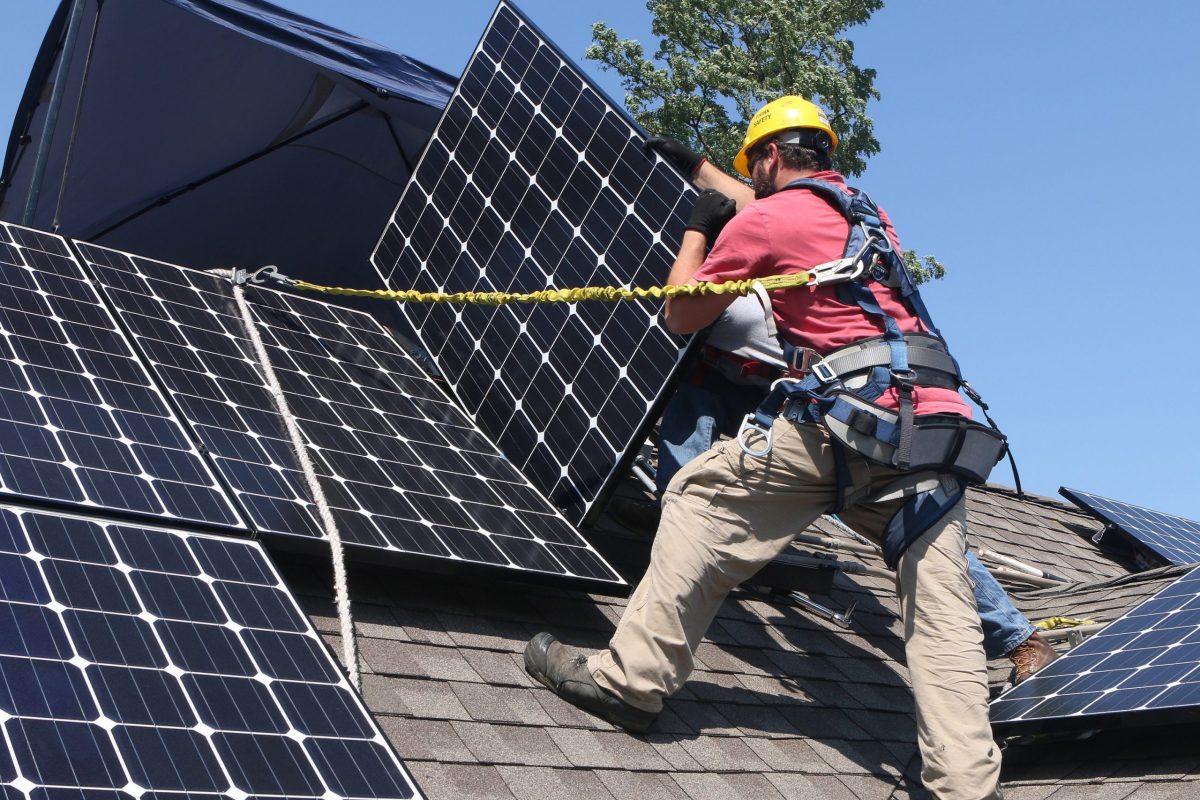
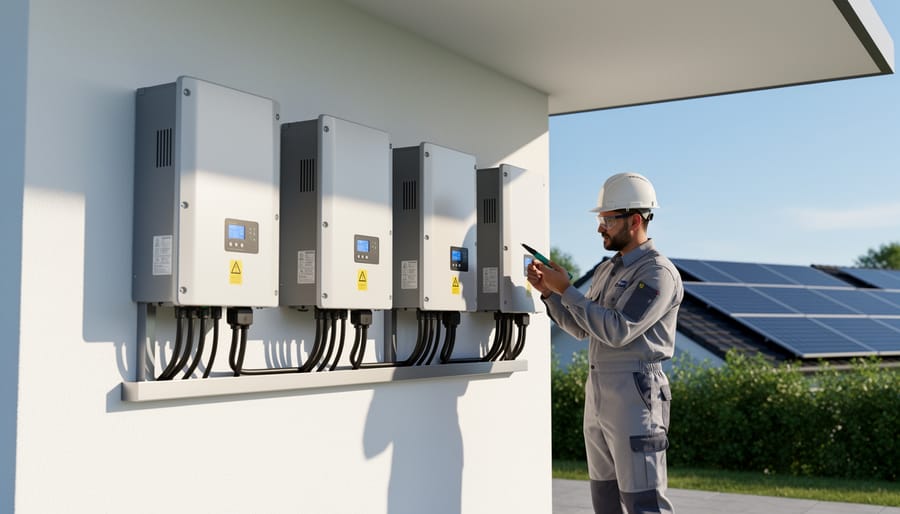
Getting your solar system installed correctly the first time makes all the difference for long-term performance. A qualified installer doesn’t just mount panels on your roof—they carefully plan your system’s layout to prevent heat buildup and ensure proper airflow around your inverter and power electronics.
Professional installers understand that location matters tremendously. They’ll position your inverter in shaded areas when possible, maintain adequate clearance for ventilation, and avoid placing equipment in confined spaces like garages without proper cooling. They also size your system correctly, preventing the kind of overwork that leads to excessive heat and shortened equipment life.
Think of it like having a skilled contractor renovate your kitchen—cutting corners during installation creates headaches down the road. When interviewing solar companies, ask specifically about their thermal management practices. How do they determine inverter placement? What clearances do they maintain? These questions help you identify installers who prioritize system longevity, not just quick installations. This upfront attention to thermal design protects your investment and maximizes the years of clean energy production ahead.
Debunking Common Myths About Inverter Heat and Performance
You’ve probably heard some surprising claims about solar inverters and heat management. Let’s clear up the confusion with facts that can save you money and protect your investment.
One popular misconception is that inverters don’t need cooling in moderate climates. The reality? Even on a pleasant 70-degree day, your inverter’s internal temperature can soar to 120 degrees or higher while converting DC power from your panels. Every inverter generates heat as a natural byproduct of the conversion process, regardless of outside temperature. Without proper ventilation or cooling, this heat buildup reduces efficiency and shortens your equipment’s lifespan, costing you hundreds or thousands in premature replacements.
Another myth suggests that smaller residential systems don’t overheat. Size doesn’t exempt your inverter from thermal stress. In fact, compact inverters often pack components more densely, which can intensify heat concentration. Whether you have a modest rooftop array or a larger system, thermal management matters equally for performance and longevity.
Perhaps the most costly assumption is that all inverters handle heat the same way. Different manufacturers use vastly different cooling approaches, from basic passive cooling to advanced active fan systems and heat sink designs. Some inverters automatically reduce output when overheating, a process called derating, which directly cuts your energy production and savings. Others maintain performance better under thermal stress. Understanding these differences before purchasing helps you choose equipment suited to your climate and installation location.
The good news? Recognizing these myths empowers you to ask the right questions, select appropriate equipment, and ensure proper installation. Simple steps like ensuring adequate airflow around your inverter and choosing models with robust thermal management can maximize your solar investment’s returns for decades to come.
When you’re investing in solar, you’re not just buying panels—you’re making a decades-long commitment to energy independence and environmental responsibility. Proper thermal management might not be the flashiest feature, but it’s absolutely essential to protecting that investment. Systems with effective cooling strategies deliver more consistent electricity production, require fewer repairs, and continue performing efficiently well beyond their warranty periods.
The good news? You don’t need to become a thermal engineer to make smart choices. Simply ask your solar installer about the thermal management features in their proposed equipment. How do the inverters handle heat? Are they rated for your local climate conditions? What cooling technologies do they employ? A knowledgeable installer should confidently explain these strategies in plain language.
Choosing quality equipment designed for resilience means selecting components built to withstand real-world temperature challenges. While premium systems may cost slightly more upfront, they deliver superior reliability and performance over time—making them the smarter financial choice. Your solar investment deserves protection from day one, and proper thermal management provides exactly that security.