Your solar panels connect to the internet, which means they need the same protection as your laptop or smartphone. As homeowners embrace smart solar technology to slash energy bills and reduce their carbon footprint, these systems create new entry points that require safeguarding—but the good news is that protecting your investment takes just a few straightforward steps.
Modern solar installations use Wi-Fi-enabled inverters and monitoring apps that let you track energy production from anywhere. While this connectivity delivers incredible convenience and insights into your system’s performance, it also means your solar setup can theoretically be accessed by unauthorized users if left unsecured. The reality, however, is far less alarming than sensational headlines suggest. Solar manufacturers build multiple security layers into their products, and simple precautions put you firmly in control.
Think of your solar system’s cybersecurity like locking your front door—it’s essential, but it doesn’t require advanced technical knowledge. Changing default passwords, keeping monitoring software updated, and using your home’s secure Wi-Fi network provide robust protection against the vast majority of threats. The solar industry has learned from decades of cybersecurity development in other sectors, implementing proven safeguards that work quietly in the background.
Understanding these protections empowers you to confidently embrace solar technology’s full potential. Your sustainable energy investment deserves both physical and digital security, and achieving both is simpler than you might think.
Why Your Home Solar System Needs Digital Protection
How Smart Solar Systems Actually Work
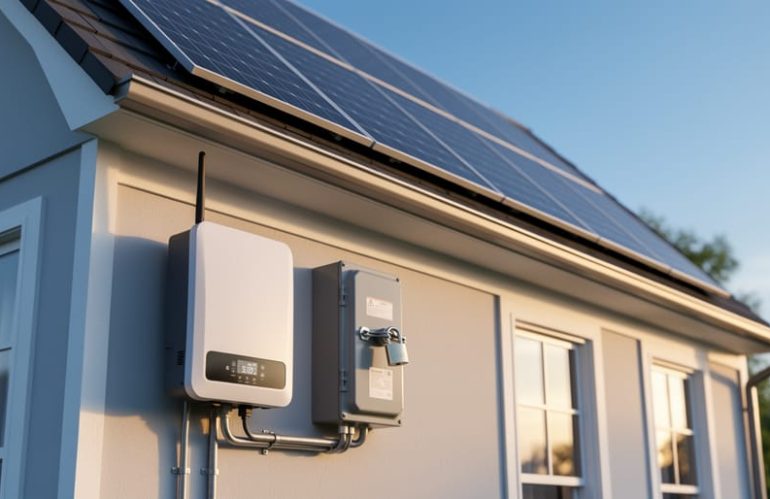
Think of your solar system as a smart home device—much like a thermostat or security camera, but for energy production. At its heart sits the inverter, which acts as the translator between your panels and home. Solar panels generate direct current (DC) electricity, like what’s in a battery, but your home needs alternating current (AC). The inverter handles this conversion while also serving as your system’s brain, monitoring performance and sending data to your smartphone.
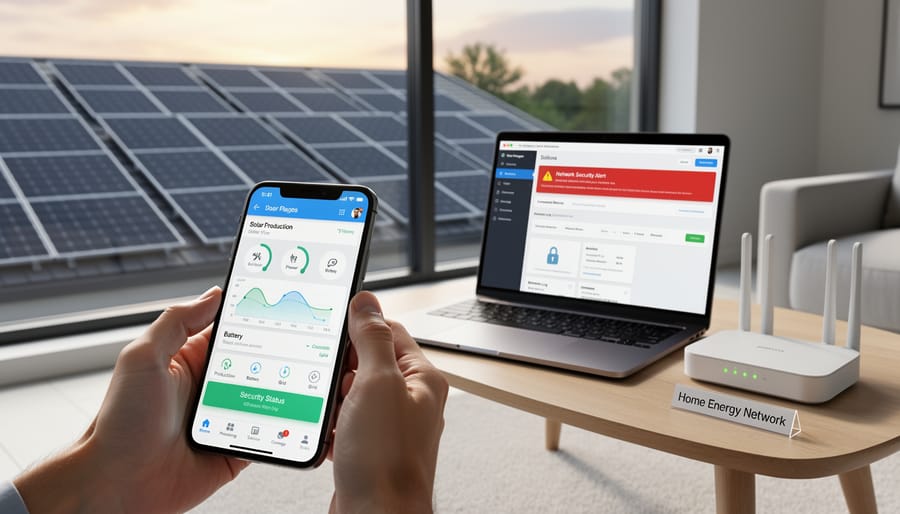
Modern solar systems connect to the internet through your home Wi-Fi, allowing you to track energy production in real time through dedicated apps. These monitoring platforms show you how much electricity you’re generating, how much you’re using, and how much flows back to the grid. Think of it as a fitness tracker for your home’s energy.
Your smart meter completes the digital ecosystem by measuring the two-way flow of electricity. When your panels produce more power than you need, excess energy travels through this meter to the utility grid, earning you credits. When the sun sets, that same meter tracks electricity flowing back from the grid to your home.
This entire network communicates through standard internet protocols, creating a seamless energy management system that requires minimal effort from you while maximizing your savings and environmental impact.
What Hackers Want With Your Solar Panels
Let’s clear up what’s actually at stake here. While headlines about hacking can sound alarming, the reality for most homeowners is far less dramatic than you might think.
The main targets hackers pursue with solar systems fall into three categories. First, there’s data theft. Your solar system collects information about your energy usage patterns, which could reveal when you’re home or away. However, this data is typically less valuable than what’s already available through your smartphone or smart home devices. Second, hackers might attempt system manipulation to reduce your solar production or interfere with your energy storage. While technically possible, this requires significant effort for minimal payoff, making individual homes unlikely targets. Third, and most relevant to utility-scale concerns, are grid disruptions through coordinated attacks on multiple systems with grid connections.
Here’s the reassuring truth: you’re probably not the target. Cybercriminals typically focus on high-value targets like businesses, utilities, or wealthy individuals where the potential payoff justifies their time and resources. Your residential solar system simply doesn’t offer enough incentive for most hackers.
That said, vulnerabilities do exist, particularly in older systems or those with weak default passwords. The good news is that these risks are manageable with basic precautions. Modern solar equipment manufacturers have responded to security concerns by implementing stronger protections, regular software updates, and better encryption.
The takeaway? Yes, smart solar systems have potential vulnerabilities, just like your laptop or smartphone. But with reasonable security measures, which we’ll cover next, you can enjoy the benefits of solar technology without losing sleep over unlikely cyber threats.
Simple Steps to Secure Your Solar Investment
Start With Your Home Network
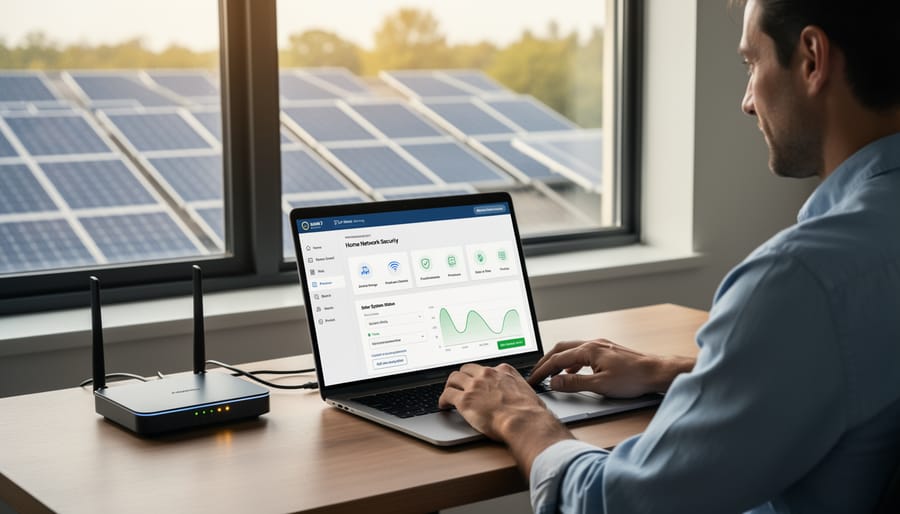
Your home network is the gateway to your solar system, so securing it is your first and most important line of defense. Think of it like locking your front door—it’s a simple step that makes a big difference.
Start with your Wi-Fi password. If you’re still using the default password that came with your router, change it today. Create a strong, unique password with at least 12 characters, mixing letters, numbers, and symbols. This keeps unauthorized users from accessing your network and, by extension, your solar monitoring system.
Consider setting up a separate network specifically for your smart home devices, including your solar equipment. Most modern routers let you create a “guest network” that operates independently from your main network. This means if someone were to compromise one of your smart devices, they wouldn’t automatically gain access to your computers, phones, and personal data.
Router firmware updates might sound technical, but they’re surprisingly easy. Your router manufacturer regularly releases security patches to fix vulnerabilities. Check your router settings every few months for available updates, or enable automatic updates if the option exists. Many newer routers will notify you when updates are ready.
These basic steps take less than an hour to complete but provide lasting protection for your solar investment. You’re not just protecting equipment—you’re safeguarding the money-saving benefits your solar system provides every day.
Choose Solar Companies That Prioritize Security
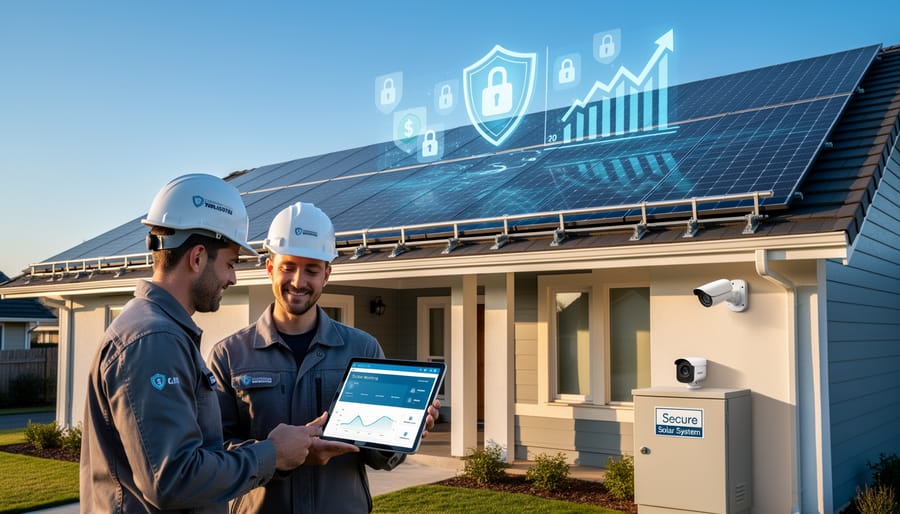
When shopping for solar installation, cybersecurity should be on your checklist alongside panel efficiency and warranty terms. The good news? Leading installers now treat digital security as a core part of quality service, and asking the right questions helps you identify companies that take protection seriously.
Start by asking potential installers how they secure customer data throughout the installation process and beyond. Reputable solar companies will clearly explain their data encryption methods, how they store your information, and their policies for system access after installation. They should also describe how they secure the monitoring systems and apps you’ll use daily.
Look for installers who work with equipment manufacturers that follow recognized security standards. While certifications like ISO 27001 or SOC 2 might sound technical, they simply mean the company follows proven methods to protect information. Don’t hesitate to ask if their monitoring platforms receive regular security updates and how quickly they respond to potential vulnerabilities.
A quality installer will welcome these questions rather than dismiss them. They should offer clear documentation about default password policies, explain how to enable two-factor authentication on your monitoring app, and provide guidance on maintaining security over time. Companies that view cybersecurity as integral to customer satisfaction will make these conversations straightforward and pressure-free, giving you confidence that your solar investment includes protection for both your energy production and your personal information.
Keep Your Solar Software Updated
Keeping your solar system’s software current is one of the simplest ways to maintain strong security. Just like your smartphone, solar monitoring apps and equipment firmware receive regular updates that patch vulnerabilities and improve performance. These updates often happen quietly in the background, fixing security gaps before they become problems.
Most modern systems come with automatic updates enabled, but it’s worth checking your app settings to confirm this feature is turned on. You’ll typically find this option under “Settings” or “System Preferences” in your monitoring app. If automatic updates aren’t available, set a quarterly reminder to manually check for new versions.
Notice your system seems sluggish or you’re running a version that’s more than a year old? Contact your installer or the manufacturer’s customer support. They can walk you through the update process or schedule a service visit if needed. Remember, these updates aren’t just about security—they often include improvements that help your system run more efficiently, potentially boosting your energy savings. Staying current protects both your investment and your peace of mind.
What the Solar Industry Is Doing to Stay Secure
New Security Standards for Solar Equipment
The solar industry is taking cybersecurity seriously, and new safety standards are emerging to protect homeowners like you. Leading organizations have developed certifications that manufacturers must meet before their products reach your roof. These requirements ensure that solar equipment includes built-in protections against hacking attempts and unauthorized access.
Think of these certifications like safety ratings for cars. Just as vehicles must pass crash tests, solar equipment now undergoes rigorous security testing before approval. Manufacturers are required to include features like encrypted communications, secure default passwords, and regular software updates that fix any discovered vulnerabilities.
Major industry groups have established guidelines that cover everything from how your solar panels communicate with your inverter to how your system connects with your utility company. These standards also require manufacturers to provide clear security documentation and support for homeowners.
The good news? You don’t need to become a cybersecurity expert to benefit from these protections. When you purchase certified equipment from reputable installers, these safeguards come built-in. Many newer systems automatically update their security features, similar to how your smartphone receives protection updates. This proactive approach means the industry is staying ahead of potential threats, giving you peace of mind along with clean energy savings.
Advanced Protection Built Into Modern Systems
The good news for homeowners considering smart solar systems is that today’s technology comes with robust security features already built in. Think of it like modern cars that now include airbags and anti-lock brakes as standard equipment—these protections are simply part of the package.
Your solar system uses encryption to scramble data as it travels between your panels, inverters, and monitoring apps. This means even if someone tried to intercept that information, they’d see nothing but gibberish. It’s similar to how your banking app protects your financial transactions, creating a secure tunnel for your energy data.
Modern solar systems also communicate using secure protocols—essentially a secret handshake between devices that verifies they’re talking to authorized equipment only. This prevents unauthorized access to your system’s controls.
Perhaps most impressive are the advanced protection technologies that work behind the scenes. Many quality installations now include AI-powered monitoring that learns your system’s normal behavior patterns. If something unusual happens—like an unexpected login attempt or strange data activity—the system can flag it immediately and take protective action.
These security layers work continuously without requiring any action from you. Leading manufacturers recognize that homeowners shouldn’t need cybersecurity expertise to enjoy the benefits of clean energy, so they’ve made protection automatic and hassle-free. It’s all part of ensuring your investment remains safe and productive for decades to come.
The Financial Benefits of Secure Solar Systems
When you install solar panels, you’re making a significant financial commitment—one that typically pays for itself over time through energy savings. Strong cybersecurity protections help ensure you actually realize those expected returns.
Energy theft is a real concern with connected solar systems. Hackers who gain access to your system could potentially redirect your generated power or manipulate data to make it appear you’re consuming more grid electricity than you actually are. This directly impacts your monthly savings and extends your payback period. Proper security measures prevent unauthorized access that could drain away the financial benefits you’re counting on.
Your equipment warranty likely has fine print about system modifications and security protocols. If a cyber breach occurs because you didn’t follow manufacturer-recommended security practices, you might void your warranty coverage. Considering solar panels and inverters represent thousands of dollars in equipment, maintaining proper digital protections helps preserve this valuable safety net.
Accurate billing depends on reliable data from your solar monitoring system. Cyberattacks or malware can corrupt this information, leading to billing disputes with your utility company or incorrect net metering credits. These administrative headaches take time to resolve and may result in lost savings during the correction period.
As smart home technology becomes standard, home buyers increasingly evaluate digital infrastructure during purchases. A compromised solar system—or one with outdated, vulnerable technology—can become a negotiating point that reduces your property value. Conversely, demonstrating that you’ve taken steps to protect your solar investment through strong cybersecurity practices adds to your home’s appeal.
Think of cybersecurity as insurance for your solar savings. The minimal effort required to implement basic protections safeguards the substantial financial benefits that motivated your solar purchase in the first place.
Common Myths About Solar Cybersecurity
Let’s clear up some common misunderstandings that might be holding you back from enjoying the benefits of solar energy. Many homeowners worry unnecessarily about cybersecurity risks, but the reality is far more reassuring than you might think.
One prevalent myth is that solar systems are easy targets for hackers. The truth? Your home solar setup is actually a pretty unappealing target. Hackers typically go after large-scale operations where they can cause widespread disruption or steal valuable data. Your residential system simply doesn’t offer enough payoff to attract their attention. Think of it this way: your solar panels are about as interesting to cybercriminals as your dishwasher.
Another misconception is that protecting your solar system requires expensive security upgrades or technical expertise. In reality, basic cybersecurity practices you probably already use for your home Wi-Fi work perfectly well for solar systems too. Changing default passwords, keeping your monitoring app updated, and using your home’s secure network are simple, free steps that provide solid protection.
Some people believe that going solar means opening their home to constant internet vulnerability. Here’s the good news: many solar systems can operate independently of the internet. While online monitoring offers convenient tracking of your energy production, your panels will keep generating power even if you disconnect from the web entirely. You’re in control of how connected you want to be.
There’s also worry that solar technology changes so fast that security measures become outdated quickly. Actually, reputable solar manufacturers build long-term security into their products from the start, with regular updates that happen automatically in the background, much like your smartphone updates.
The bottom line? The cybersecurity risks associated with home solar systems are manageable and shouldn’t prevent you from enjoying lower energy bills and a smaller carbon footprint. With straightforward precautions, you can confidently embrace clean energy without losing sleep over digital threats.
The good news is that digital solar systems are inherently safe when you take a few straightforward precautions. While it’s smart to be aware of cybersecurity in our increasingly connected world, protecting your solar investment doesn’t require technical expertise or complicated measures. Simple steps like changing default passwords, keeping your system updated, and choosing reputable equipment make all the difference.
The reality is that the security measures needed for smart solar systems are no more complex than those you already use for your smartphone or home Wi-Fi network. Most modern solar equipment comes with built-in security features, and manufacturers continually improve their protections as technology evolves. The risks are real but manageable, and they shouldn’t overshadow the tremendous benefits of going solar.
When you consider the financial savings, energy independence, and environmental impact of solar power, the minimal effort required to secure your system becomes a small price to pay. Your solar panels will continue generating clean energy and reducing your electricity bills for decades, protected by security measures you can set up in minutes.
Before making your solar investment, don’t hesitate to ask your provider specific questions about cybersecurity features. Inquire about encryption standards, update processes, and monitoring capabilities. A trustworthy installer will welcome these questions and demonstrate their commitment to protecting your system. With proper security in place, you can enjoy all the rewards of solar energy with complete peace of mind, knowing your investment is both financially sound and environmentally responsible.