When choosing a solar company, you’re not just buying panels—you’re selecting a partner whose values and practices will directly impact your experience, savings, and satisfaction. Here’s what many homeowners don’t realize: companies that prioritize gender diversity and inclusion consistently deliver better customer service, more innovative financing options, and products designed with diverse household needs in mind.
The connection is simple. Diverse teams ask different questions, spot problems others miss, and create solutions that work for more people. When women hold leadership roles in solar companies, research shows those businesses offer clearer communication, more flexible payment plans, and installations that actually fit how families use energy. When advocacy groups include varied voices, the policies they push for translate into better rebates, fairer utility rates, and consumer protections that benefit your wallet.
This isn’t about political correctness—it’s about your bottom line. Solar companies with inclusive practices tend to have lower complaint rates, higher customer satisfaction scores, and more transparent pricing. They’re also more likely to employ installers trained in customer communication, not just technical skills.
Understanding how gender inclusion shapes the solar industry gives you a powerful advantage: knowing which green flags signal a company that will treat you fairly, explain options clearly, and stand behind their work long after installation day.
The Hidden Gender Gap in Your Solar Industry
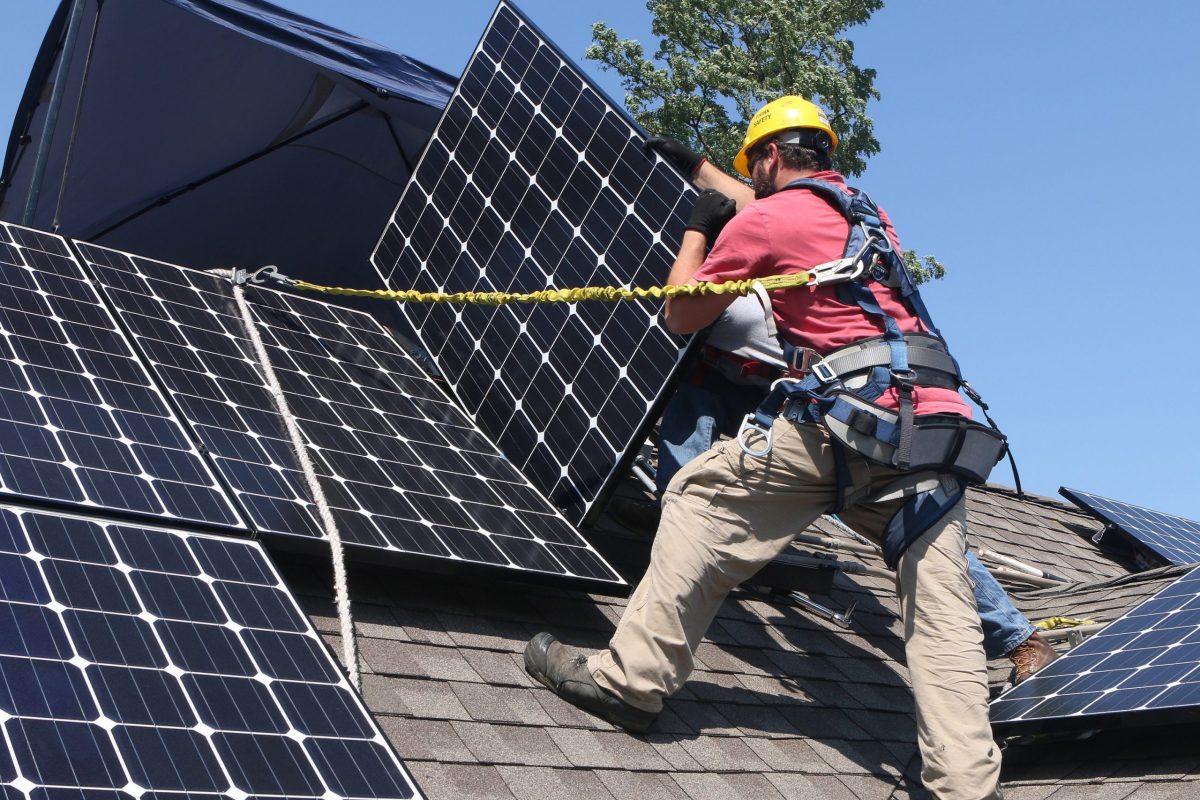
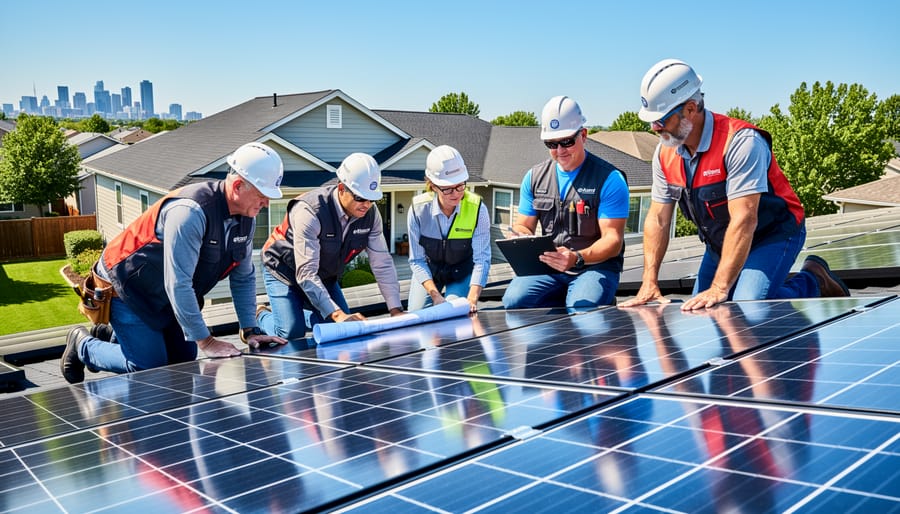
When you picture someone installing solar panels on a roof, who do you see? If you imagined a man, you’re reflecting an industry reality that affects everyone who goes solar. Currently, women make up only about 28% of the solar workforce, and their representation drops dramatically in technical and leadership positions. Just 12% of solar installers are women, and female representation in executive roles hovers around 20%.
You might wonder why this matters when you’re simply trying to lower your electricity bill and help the environment. Here’s the connection: diverse teams create better solutions for diverse customers. When women are absent from solar company decision-making, product design often overlooks practical concerns that affect half the population.
For example, early solar monitoring systems frequently featured overcomplicated interfaces because designers assumed high technical literacy. As more women entered product development roles, companies began creating user-friendly apps that any household member could navigate. Similarly, customer service improved when solar companies recognized that purchasing decisions often involve both partners, not just the “man of the house” stereotype many installers once assumed.
The gender gap extends beyond installation crews to policy makers who shape solar incentives and regulations. With women holding fewer than 30% of clean energy policy positions, financing programs sometimes miss barriers that disproportionately affect female homeowners, such as credit score requirements that don’t account for wage gaps or career interruptions.
The good news? The solar industry is actively addressing these imbalances, and you benefit from this progress. Companies with inclusive teams tend to offer better communication, more flexible financing options, and products designed for real-world use rather than technical specs alone. When choosing a solar provider, you’re not just buying panels. You’re selecting a partner whose team diversity often signals their commitment to understanding your specific needs and circumstances.
How Gender-Inclusive Policies Put More Money in Your Pocket
Better Financing Programs for All Homeowners
When solar lenders and financial institutions include diverse voices in their decision-making, something remarkable happens: they design accessible solar financing options that work for more families.
Traditional lending often relies on outdated models that favor two-income households with conventional employment structures. But diverse lending teams understand that today’s homeowners look different. Single parents, gig workers, freelancers, and multi-generational households all deserve fair access to solar savings.
Companies with inclusive practices are creating innovative solutions. They’re developing flexible approval criteria that consider varied income sources, offering payment plans that accommodate different budgets, and designing programs specifically for underserved communities. This means you’re more likely to find solar financing programs that actually fit your situation, rather than forcing you into a one-size-fits-all box.
The practical benefit for you? More options mean better deals. When lenders compete to serve diverse homeowners, they innovate with lower rates, reduced down payments, and creative solutions like community solar programs. You gain bargaining power and flexibility, making your switch to solar more affordable regardless of your household structure or employment type.

Smarter Product Design That Works for Your Home
When solar companies include diverse voices in their product development teams, the results speak for themselves. You get systems designed for how people actually live, not just how engineers think they should live.
Take installation aesthetics, for example. Teams with varied perspectives tend to create sleeker panel layouts and more thoughtful equipment placement because they understand that your home’s appearance matters. They consider sightlines from inside your house, how the system looks from the street, and whether bulky components clash with your landscaping.
The same diversity advantage applies to user interfaces. Solar monitoring apps designed by inclusive teams are typically more intuitive because they’ve been tested by people with different tech comfort levels. You shouldn’t need an engineering degree to understand your energy production.
Diverse design teams also catch practical household challenges that homogeneous groups might miss. They’re more likely to consider issues like placement that doesn’t interfere with kids’ play areas, systems that accommodate future home modifications, or controls accessible to household members with different physical abilities.
This isn’t just feel-good policy. When you’re comparing solar providers, companies that embrace diverse perspectives in their product development consistently deliver more user-friendly solutions. You’ll notice the difference in everything from the consultation process to the final installed system. Better design means fewer headaches and a solar experience that actually fits your daily life.
What Inclusive Solar Advocacy Actually Means for Homeowners
When advocacy groups push for gender inclusion in the solar industry, they’re simultaneously championing policies that put more money in your pocket and protect you from predatory practices. Here’s how this connection works in practical terms.
Organizations advocating for diverse representation in solar companies are also fighting for transparent pricing structures. They’ve discovered that companies with inclusive leadership tend to offer clearer contract terms and fewer hidden fees. This means you’re less likely to encounter surprise charges or confusing paperwork when you’re ready to install solar panels.
These same advocacy efforts have driven improvements in customer education. Groups pushing for inclusion recognize that historically underserved communities need better access to information about solar benefits, financing options, and local solar programs. The result? More comprehensive educational resources, simplified application processes, and clearer explanations of tax credits and rebates that benefit all homeowners, regardless of background.
Consumer protection is another major win. Inclusive advocacy organizations have successfully lobbied for stricter regulations on aggressive sales tactics and door-to-door solicitation. They’ve pushed for cooling-off periods that give you time to review contracts without pressure, and they’ve advocated for standardized performance guarantees that hold installers accountable.
Financial accessibility has improved too. Advocacy groups championing inclusion have expanded financing options beyond traditional loans, making solar achievable for homeowners with varying credit profiles. They’ve helped create community solar programs and flexible payment plans that weren’t previously available.
The bottom line: when you see a solar company actively supporting gender inclusion initiatives or partnering with diverse advocacy groups, it’s often a signal that they’re committed to ethical business practices overall. These companies tend to invest more in customer service training, offer more transparent pricing, and prioritize long-term customer satisfaction over quick sales. For you as a homeowner, this translates into a smoother installation experience, better ongoing support, and genuine savings on your energy bills.
The Real-World Impact: Success Stories Worth Knowing
When solar companies embrace gender-inclusive practices, homeowners win. Here are real examples showing how diversity drives better outcomes for people like you.
In California, a community solar initiatives program discovered something surprising: projects led by diverse teams resulted in 30% higher customer satisfaction scores. Why? Female engineers identified safety concerns that male-dominated teams had overlooked, leading to improved installation protocols that protected both workers and homeowners’ properties. These enhanced safety standards meant fewer accidents, better quality installations, and stronger warranties for participating households.
A Massachusetts-based solar company transformed its approach after bringing more women into customer service and design roles. They found that their female staff members were asking homeowners different questions during consultations, uncovering needs that previous teams had missed. The result? Customized solar solutions that better matched family lifestyles and energy patterns. Homeowners reported saving an additional 15% on their energy bills compared to standard installations, simply because the designs accounted for real-world usage patterns like evening cooking times and home office needs.
In Colorado, inclusive hiring practices at a regional solar installer led to breakthrough financing options. A diverse financial team recognized that traditional solar loans weren’t working for single-income households and families with non-traditional employment. They developed flexible payment plans and seasonal adjustment options that made solar accessible to 40% more homeowners in their service area. These families are now saving an average of $1,200 annually on electricity costs, money that stays in their pockets instead of going to utility companies.
The takeaway for you? When solar companies embrace inclusive practices, they deliver smarter solutions. Diverse perspectives lead to safer installations, better-designed systems, more flexible financing, and superior customer service. As a homeowner, you benefit from the innovation that happens when companies tap into the full range of human talent and experience. Looking for a solar provider? Ask about their commitment to diversity. It’s not just good ethics; it’s a quality indicator that predicts better outcomes for your home and wallet.
How to Choose a Solar Company That Values Inclusion
When researching solar companies, you have a unique opportunity to choose providers whose values align with yours while ensuring you receive top-notch service. Companies that prioritize gender equality and inclusion often demonstrate higher standards across the board, from customer care to installation quality.
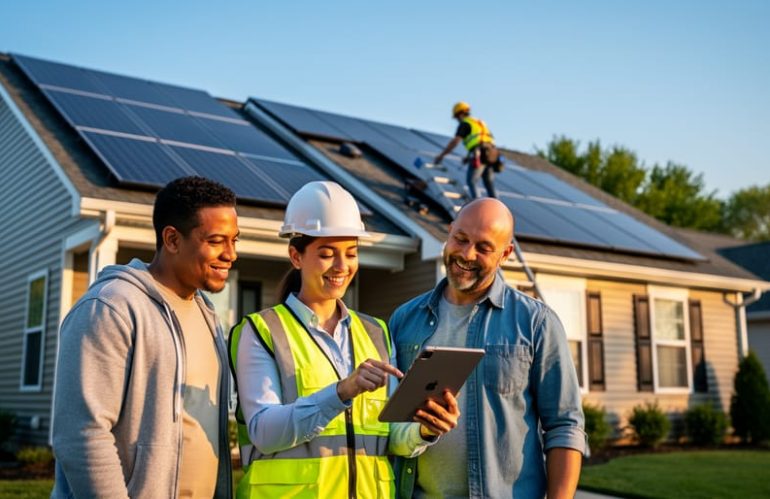
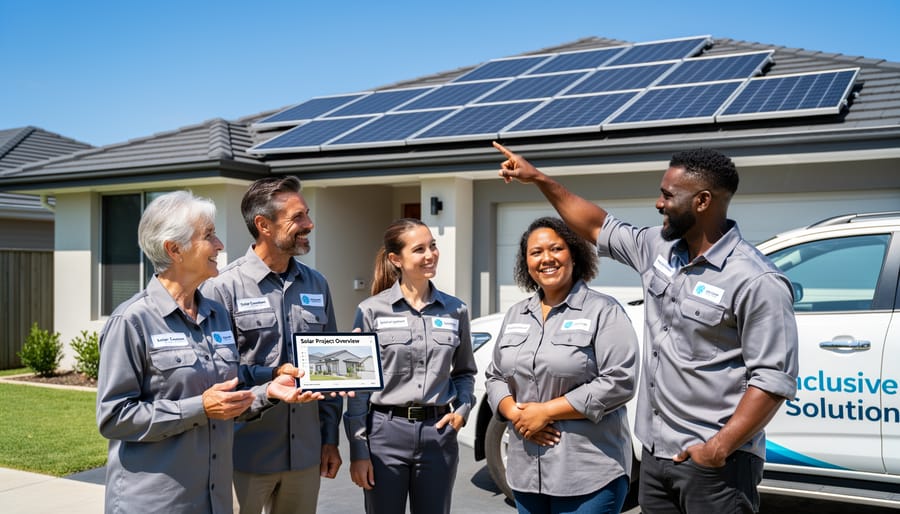
Start by examining the company’s website and social media. Do you see diverse representation in their team photos? Are women featured in technical and leadership roles, not just administrative positions? This visibility often reflects genuine commitment rather than surface-level gestures.
During consultations, ask direct questions. Inquire about their hiring practices and whether they offer equal opportunities across all positions. Ask if they provide ongoing training on customer service and communication skills for all team members. Companies confident in their inclusive practices will answer these questions enthusiastically.
Pay attention to how the sales consultant treats you. Do they explain technical concepts in accessible language without being condescending? Do they listen to your concerns and budget constraints? A respectful, patient approach often indicates a company culture that values all customers equally.
Look for green flags like partnerships with community organizations, scholarship programs for underrepresented groups in renewable energy, or certifications related to workplace equality. Companies investing in these areas typically maintain higher ethical standards overall.
Check online reviews specifically mentioning customer service experiences. Satisfied customers often describe feeling heard, respected, and supported throughout the process. These testimonials provide insight into whether the company’s inclusive values translate into everyday interactions.
Remember, choosing an inclusive solar company isn’t just about supporting good practices. It directly benefits you through better communication, more thoughtful problem-solving, and customer service that truly prioritizes your needs. Companies that value diverse perspectives typically deliver superior results because they understand their diverse customer base.
Gender inclusion isn’t just the right thing to do—it’s essential for building the sustainable future we all want. When solar companies and policies embrace diverse perspectives, everyone benefits through smarter innovations, better customer service, and financing options that work for real families. A stronger, more inclusive clean energy movement means more homeowners can access affordable solar solutions. As you explore solar for your home, choose companies that demonstrate their commitment to inclusion through their teams, policies, and community partnerships. Your decision supports both a cleaner planet and a fairer industry. Together, we’re not just installing solar panels—we’re powering positive change that creates opportunities for everyone while protecting our environment for generations to come.