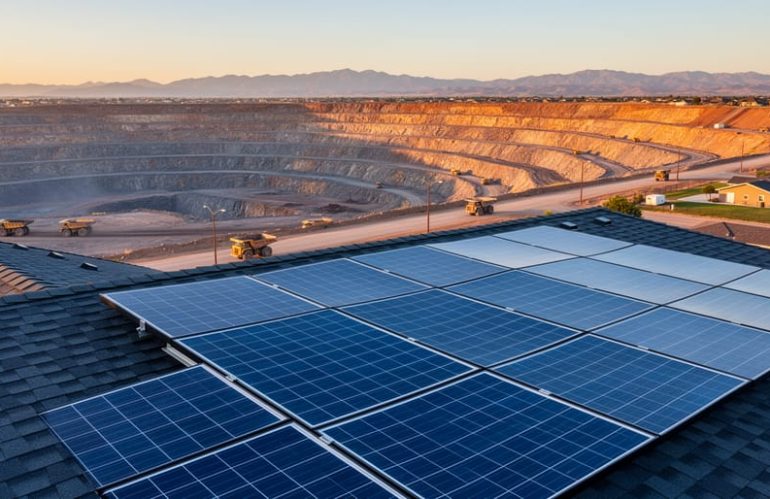
Your solar panels likely contain materials mined from lands that indigenous communities have called home for generations. When you choose solar energy, you’re not just making an environmental decision—you’re participating in a global supply chain that directly impacts the rights and livelihoods of indigenous peoples worldwide.
The connection is straightforward: many materials essential to solar technology, including lithium, copper, and rare earth minerals, come from territories where indigenous communities hold ancestral claims. These communities often face displacement, environmental degradation, and exclusion from decision-making processes when mining operations expand to meet growing renewable energy demands.
This isn’t about guilt—it’s about informed choice. As a homeowner investing in solar, you have more power than you might realize to support ethical practices. The solar industry is responding to consumer demand for transparency, and companies increasingly recognize that respecting indigenous land rights isn’t just morally right—it’s good business.
Understanding this intersection matters because your purchasing decisions create market pressure. When you ask solar providers about their supply chain ethics, request certifications proving responsible sourcing, and choose companies with transparent indigenous engagement policies, you’re helping shift industry standards. You can reduce your energy bills, increase your home value, and support renewable energy without compromising on your values or budget.
The path forward combines practical homeowner concerns with broader ethical considerations, proving that sustainable living means more than just clean energy—it means energy that respects the people and communities where it originates.
The Real Story Behind Your Solar Panels
What’s Inside Your Solar System
Your solar panels and battery storage contain several valuable materials, some of which are mined from lands traditionally inhabited by indigenous communities. Understanding this connection helps you make informed choices about your clean energy investment.
Solar panels primarily use silicon, silver, and aluminum. While silicon is widely available, silver mining often occurs in regions where indigenous groups have historical claims. The glass and aluminum frames come from materials found globally, though extraction sites may overlap with indigenous territories.
Battery storage systems, especially lithium-ion batteries, require lithium, cobalt, and nickel. Lithium extraction has expanded rapidly in South America, Australia, and parts of North America where indigenous peoples maintain deep cultural ties to the land. Cobalt primarily comes from the Democratic Republic of Congo, while nickel mining occurs across multiple continents, including areas with indigenous populations.
The good news? Growing awareness means more solar manufacturers now track their supply chains and prioritize ethical sourcing. When you choose companies committed to respecting indigenous land rights, you’re supporting responsible mining practices that include proper consultation, fair compensation, and environmental protection. This doesn’t mean compromising on quality or paying significantly more—it simply means being a thoughtful consumer who values both clean energy and human rights.
The Mining Connection Homeowners Need to Know
When you choose solar panels for your home, you’re making a decision that ripples far beyond your property line. Many materials used in solar technology, particularly silicon, silver, and rare earth elements, come from mining operations on lands traditionally inhabited by indigenous communities. These extraction activities can disrupt water supplies, damage sacred sites, and force relocations without proper consultation or compensation.
Here’s why this matters for your sustainable living goals: truly green energy means considering the entire supply chain, not just the end product on your roof. The good news is that ethical sourcing doesn’t mean compromising on quality or breaking your budget. Major solar manufacturers are increasingly adopting transparent practices and responsible mining standards because they recognize what conscious consumers like you value.
Understanding this connection helps you ask better questions when choosing your solar provider. Companies committed to indigenous rights often have stronger overall environmental practices, better quality control, and more transparent business models. This means you’re not just protecting vulnerable communities; you’re likely getting a superior product backed by a company that stands behind its values and your investment.
How Indigenous Rights Shape Better Solar Policy
What Fair Solar Policy Looks Like
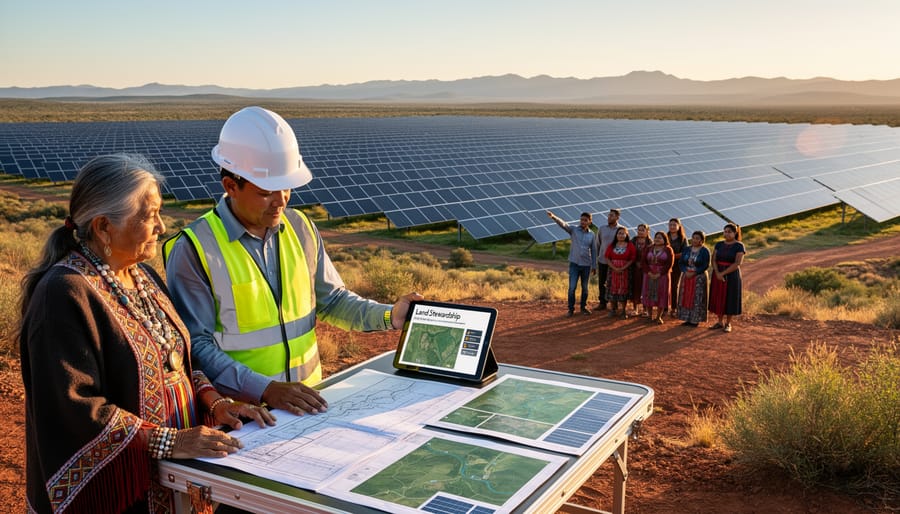
Fair solar policy puts indigenous voices at the decision-making table from day one. The best approach is Free, Prior, and Informed Consent (FPIC), which means renewable energy developers must consult with indigenous communities before breaking ground on tribal lands or sacred sites. This isn’t just about checking boxes—it’s about genuine partnership.
Several regions show how this works in practice. In Canada, some provinces require solar developers to demonstrate meaningful consultation with First Nations communities before receiving permits. Australia has implemented similar frameworks, where Aboriginal land councils review and approve projects affecting their territories. These policies ensure communities can negotiate fair compensation, protect culturally significant areas, and even become project partners.
The results benefit everyone. When indigenous communities participate as stakeholders rather than bystanders, projects move forward more smoothly with fewer delays and disputes. Communities gain economic opportunities through jobs, revenue sharing, and sometimes partial ownership of solar installations on their lands.
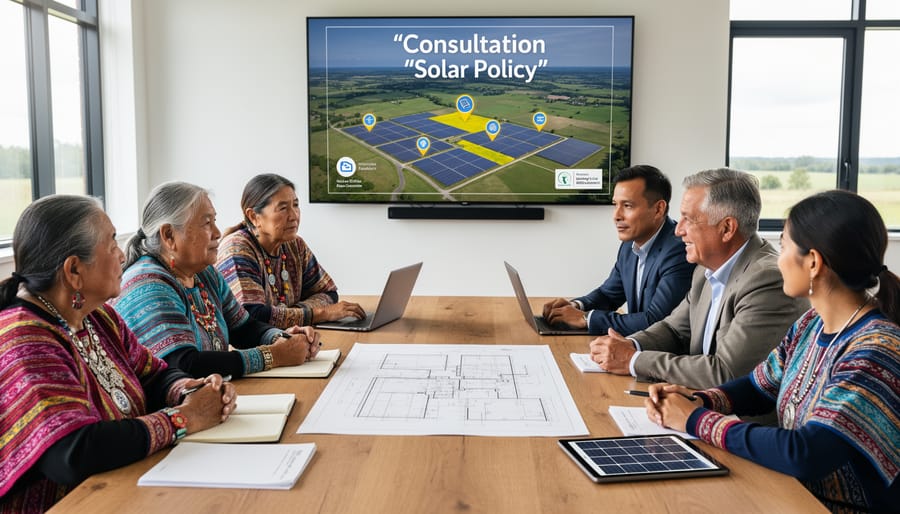
For homeowners, supporting companies that follow FPIC principles means your solar investment reflects genuine respect for indigenous rights. Look for manufacturers and installers who publicly commit to ethical sourcing standards and transparent supply chains. Many community-led solar policies incorporate these consultation requirements, creating a blueprint for how the entire industry can operate more ethically. By choosing companies with strong indigenous consultation practices, you’re voting with your dollars for a solar industry that honors both environmental and human rights.
The Benefits That Reach Your Home
When you choose solar companies that respect indigenous land rights, you’re not just making an ethical choice—you’re investing in better products for your home. Companies committed to responsible sourcing practices typically demonstrate higher quality standards across their entire operation. This means more reliable solar panels, better warranties, and customer service teams that genuinely care about your satisfaction.
These ethical manufacturers often lead the industry in sustainability innovations, from reduced carbon emissions during production to recyclable materials that minimize long-term environmental impact. For you, this translates to solar panels that perform better and last longer, maximizing your energy savings over time.
There’s a common myth that ethically-sourced products cost more, but the reality is different. Companies with strong ethical standards often operate more efficiently, building lasting relationships with suppliers and communities that reduce costs. These savings get passed to you through competitive pricing and fewer replacement or repair expenses down the road.
By supporting businesses that honor indigenous rights, you’re aligning your home improvement investment with your values—without compromising on quality or affordability. You get peace of mind knowing your clean energy system reflects the sustainable, respectful world you want to help create.
Making Sure Your Solar Investment Supports Indigenous Communities
Questions to Ask Your Solar Provider
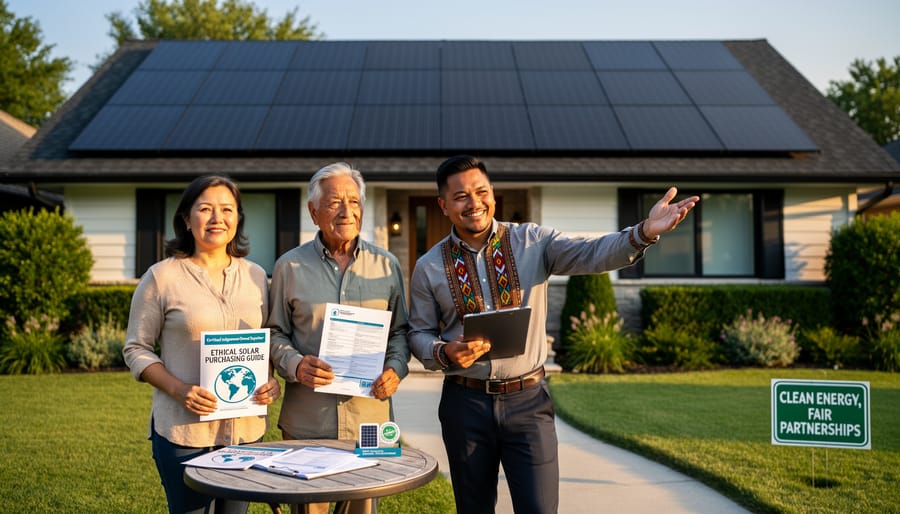
You don’t need to be an expert to ask meaningful questions about the ethical sourcing of your solar panels. Start by asking your provider where their materials come from. A simple “Which countries supply the minerals in your panels?” can open up an important conversation. Companies committed to ethical practices will be transparent about their supply chain.
Next, inquire about certifications. Ask “Do your suppliers follow international labor standards?” or “Are your materials certified conflict-free?” Reputable providers should be able to point to third-party verification or industry certifications that validate their claims.
It’s also worth asking how the company ensures indigenous land rights are respected in their supply chain. You might phrase it as “What steps does your company take to verify that mining operations respect local communities?” This shows you care about the bigger picture, and ethical companies will appreciate the question.
Don’t hesitate to ask about company policies. Questions like “Do you have a published code of conduct for suppliers?” or “How do you audit your supply chain?” are perfectly reasonable. If a provider seems evasive or dismissive, that’s valuable information too.
Remember, asking these questions doesn’t make the process more complicated or expensive. Many leading solar companies already prioritize ethical sourcing because it aligns with the values of their customers and leads to better quality control overall. Your questions simply help you identify providers who walk the talk.
Certifications and Standards That Actually Mean Something
When shopping for solar panels, you’ll encounter various certifications that can help you identify products made with respect for indigenous land rights and ethical sourcing practices. Here’s what actually matters.
The Forest Stewardship Council (FSC) certification applies when solar installations involve forested land. While primarily known for timber, FSC verification ensures any land clearing respects indigenous territorial rights and requires free, prior, and informed consent from affected communities.
Look for the Roundtable on Sustainable Biomaterials (RSB) certification if your system includes bioenergy components. RSB standards specifically require consultation with indigenous peoples and protection of their land tenure rights.
The International Finance Corporation Performance Standards are referenced by ethical manufacturers. Performance Standard 7 specifically addresses indigenous peoples’ rights, requiring companies to obtain consent before projects affecting traditional lands. Major solar companies adhering to these standards typically highlight this commitment prominently.
The Fair Trade certification, while less common in solar manufacturing, indicates supply chains that respect worker rights and community land ownership. Some component manufacturers now carry this designation.
Don’t be swayed by vague “green” or “eco-friendly” labels without third-party verification. Ask installers directly about their manufacturers’ land rights policies and indigenous consultation processes.
The good news? Many manufacturers meeting these standards also qualify products for state solar incentives, meaning ethical choices don’t cost extra. Quality manufacturers understand that respecting indigenous rights creates stable, sustainable supply chains that benefit everyone, including your wallet.
The Financial Case for Ethically-Sourced Solar
Why Quality and Ethics Go Hand-in-Hand
When you choose solar companies that respect indigenous land rights, you’re not just making an ethical choice—you’re likely getting a better product too. Here’s why: companies that prioritize ethical sourcing and fair labor practices tend to have stronger quality control standards across the board. They’re more transparent about their supply chains, more accountable to stakeholders, and more invested in long-term relationships rather than quick profits.
For homeowners, this means better warranties, more responsive customer service, and panels that actually deliver on their performance promises. Companies cutting corners on human rights often cut corners elsewhere too—using lower-grade materials or skipping crucial testing procedures. On the flip side, manufacturers committed to ethical practices typically invest more in research, development, and rigorous quality assurance.
The financial benefit is real: higher-quality panels last longer, maintain efficiency better, and come with customer support that actually helps when you need it. You’re protecting both your values and your wallet, proving that doing the right thing doesn’t mean sacrificing reliability or performance. In fact, ethical choices often lead to smarter long-term investments.
The True Cost Comparison
Here’s a pleasant surprise: ethically sourced solar panels don’t actually cost more than conventional options. Many homeowners assume that prioritizing indigenous land rights means paying premium prices, but the reality tells a different story. When you compare total costs over 25-30 years, responsibly manufactured panels often deliver better value.
Companies committed to ethical practices typically invest in higher quality materials and more rigorous manufacturing standards. This translates to panels that maintain efficiency longer and require fewer replacements. You’re not just making a principled choice—you’re making a smart financial one.
The upfront investment between ethical and conventional panels usually differs by less than 5%, and when you factor in solar tax credits and better durability, ethical options frequently come out ahead. Think of it like buying quality tools: spending slightly more initially saves money and hassle down the road. Your solar investment should serve you well for decades, and choosing manufacturers who respect land rights ensures you’re getting proven, reliable technology backed by companies with strong accountability standards.
Making the switch to solar energy is one of the most powerful decisions you can make as a homeowner—not just for your wallet, but for the planet and the communities who call it home. The good news? You don’t have to choose between your financial goals and your values. By selecting solar companies that prioritize indigenous land rights and ethical sourcing practices, you’re investing in a future that’s truly sustainable in every sense of the word.
Remember, sustainability isn’t just about reducing carbon emissions or cutting your energy bills, though those benefits are significant. It’s also about ensuring the technologies that power our homes don’t come at the expense of vulnerable communities. When you choose solar providers committed to transparent supply chains, fair labor practices, and respect for indigenous territories, you’re supporting a business model that values people as much as profit.
The best part? Ethical solar companies often deliver the same—or better—quality, warranties, and customer service as their less transparent competitors. Many participate in local solar programs that can help maximize your savings through rebates and incentives, proving that responsible choices don’t mean sacrificing affordability.
As you move forward with your solar journey, take the time to ask questions, research certifications, and support companies whose practices align with your principles. Your purchasing power matters, and every solar installation that respects indigenous rights sends a clear message to the industry: homeowners want clean energy that’s clean in every way. By making informed choices today, you’re not just powering your home—you’re helping build a more just and sustainable energy future for everyone.