
Your solar panel system is only as reliable as the company’s ability to fix it quickly when something goes wrong. Behind every fast repair visit and minimal downtime lies something most homeowners never consider: how well your solar installer manages their spare parts inventory.
Think about the last time you needed a repair at home. The frustration wasn’t just the broken item—it was waiting weeks for the right part to arrive. With solar systems, every day without power means money lost and reliance back on the grid. This is where smart inventory management becomes your invisible safety net.
The companies that excel at tracking, stocking, and distributing replacement components deliver dramatically different customer experiences. They respond to service calls within days instead of weeks, minimize your system downtime, and ultimately protect your investment’s financial returns. When inverters fail or connectors corrode, efficient parts management means the difference between a two-day fix and a two-month nightmare.
Understanding how your solar provider handles their spare parts reveals everything about their commitment to your long-term satisfaction. The best systems ensure the right component reaches your roof exactly when needed, translating complex logistics into something simple: uninterrupted savings and peace of mind.
Why Your Solar System Needs a Smart Parts Strategy
Think of your solar system like your car – it’s a reliable workhorse, but occasionally parts need replacing to keep everything running smoothly. That’s where a smart parts strategy comes in, though most homeowners never think about it until something goes wrong.
Your spare parts inventory is simply the collection of backup components your solar provider keeps on hand to quickly fix or replace anything that might fail. These aren’t obscure items – we’re talking about everyday components like inverters (the boxes that convert solar energy into usable electricity), connectors that link panels together, fuses, and monitoring equipment that tracks your system’s performance.
Here’s what many people don’t realize: when a solar component fails, you’re not generating electricity and saving money. Every hour of downtime means you’re back to paying full utility rates. If your installer doesn’t have the right part readily available, you could wait days or even weeks for repairs, especially for specialized components.
A well-managed parts inventory means faster fixes, less downtime, and more savings in your pocket. It’s the difference between a same-day repair and watching your electric meter spin while waiting for a backordered inverter to arrive from overseas.
The good news? You don’t need to manage this yourself. Reputable solar companies maintain strategic inventories of common replacement parts, ensuring they can respond quickly when issues arise. When choosing a solar provider, asking about their parts availability and service response times can save you significant frustration and money down the road.
The Real Cost of Getting It Wrong
When You Don’t Have What You Need
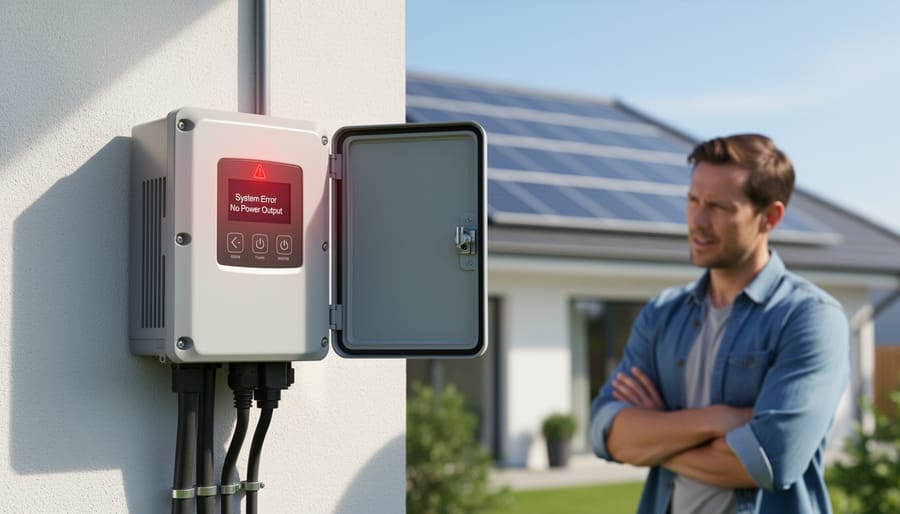
When your solar provider doesn’t have the right replacement part on hand, the impact hits your wallet immediately. Each day of system downtime means you’re buying electricity from the grid at full price instead of generating your own free power from the sun. A single broken inverter waiting for a replacement part could cost you $5 to $15 daily in lost energy production.
Beyond the meter running backward at your expense, missing parts often trigger emergency service fees. When companies need to expedite shipping or send technicians for multiple visits, those extra maintenance costs frequently get passed along to you. What should be a simple repair covered under warranty becomes an expensive ordeal.
The longer your system stays offline, the more your monthly savings disappear. If you invested in solar to reduce energy bills by $100 monthly, even a two-week delay for backordered parts erases half that month’s benefit. Good parts inventory management protects the financial returns you expected when going solar.
When You’re Stockpiling Too Much
Here’s the good news: having too many spare parts isn’t just expensive, it’s actually working against you. Think of it like buying groceries in bulk without checking expiration dates. Your money gets tied up in items sitting on shelves instead of staying in your pocket where it belongs.
When solar companies overstock spare parts, those costs eventually trickle down to you through higher service fees or equipment prices. Parts gathering dust in warehouses take up valuable space that costs money to maintain. Even worse, technology moves fast in the solar industry. Components that seemed essential last year might become outdated before they’re ever used, essentially turning into expensive paperweights.
This affects your bottom line directly. Overstocking means companies pass along storage costs, and you might end up paying for obsolete parts that never benefit your system. Smart inventory management means your service provider keeps exactly what’s needed, when it’s needed. This translates to more competitive pricing, faster access to current technology, and better service overall. You’re not subsidizing a warehouse full of parts that might never see the light of day.
How Smart Companies Keep Your System Running
Predicting What Actually Breaks
The best solar installers don’t just guess which parts might fail—they rely on solid data to make smart stocking decisions. By analyzing years of service records, they can spot clear patterns. For example, certain inverter models might develop capacitor issues after five years, or specific mounting hardware might corrode faster in coastal areas. This historical tracking means your installer already knows what’s likely to need replacement before it actually breaks.
Manufacturers also provide valuable reliability information that guides inventory decisions. They share data about common wear items and typical component lifespans, which helps installers stock appropriately. Instead of warehousing every possible part (expensive and wasteful), they focus on the components most likely to need replacement based on real-world performance.
This data-driven approach directly benefits you as a homeowner. When your installer has the right part ready because they predicted the need months ago, you avoid costly system downtime and lost energy production. You’re not paying for emergency shipping or waiting weeks for obscure components. The result is faster repairs, lower service costs, and maximum energy savings throughout your system’s lifetime.
The Goldilocks Approach to Inventory
Think of inventory management like your home’s emergency supplies. You wouldn’t want to store fifty batteries that might expire before you need them, but you also don’t want to be caught without batteries during a power outage. The same principle applies to solar system parts.
Quality solar installers strike this balance by stocking commonly needed components like inverter fuses or monitoring equipment, while maintaining reliable supplier relationships for less frequently needed items. This approach keeps your costs down since you’re not paying for a massive warehouse of rarely-used parts, yet ensures quick repairs when something does need attention.
The sweet spot means faster service for you. When your installer has critical parts readily available, most repairs happen within days rather than weeks. You get your system back to generating savings quickly, and you’re not paying inflated prices that come from excessive inventory costs being passed along. It’s about smart preparation that benefits both your wallet and your system’s reliability, ensuring your solar investment keeps delivering returns without unnecessary delays or expenses.

Building Relationships That Save You Time and Money
Here’s the good news: when your solar company has strong relationships with parts suppliers, you’re the one who benefits. Think of it like having a trusted mechanic who can get the exact car part you need delivered quickly, rather than keeping every possible part sitting on a shelf collecting dust.
Smart solar installers build partnerships with reliable suppliers who can ship components rapidly when repairs are needed. This means two important things for you: faster service when something needs fixing, and lower costs overall. Instead of your installer maintaining expensive warehouses full of every conceivable part (and passing those storage costs onto you through higher prices), they can access what’s needed exactly when it’s needed.
These relationships also ensure quality control. Established suppliers stock genuine, warrantied components rather than questionable alternatives. When your installer orders a replacement inverter or panel, you can trust it’s the right part that will keep your system running efficiently for years to come. The result? Your system stays online longer, your energy bills stay low, and you’re not footing the bill for unnecessary inventory expenses. It’s a win-win that proves good business relationships translate directly into better service and savings for homeowners.
What This Means for Your Wallet
A well-managed spare parts inventory translates directly into money saved in your pocket. When your solar provider maintains the right parts on hand, you avoid those frustrating emergency service premiums that can add 30-50% to repair costs. Instead of waiting weeks for a special-order component while your system sits idle and your electric bills creep back up, repairs happen within days, keeping your energy savings on track.
Consider this: every day your solar system operates at reduced capacity or sits offline completely means you’re buying more electricity from the grid. A household that typically saves $150 monthly on electricity could lose $5 daily during downtime. Over a two-week wait for backordered parts, that’s $70 in lost savings, plus the repair cost itself.
Good inventory management also protects your long-term investment through better warranty support. When companies stock appropriate parts and maintain detailed service records, warranty claims process smoothly without the documentation headaches that often lead to denied coverage. You won’t find yourself paying out-of-pocket for repairs that should have been covered.
The consistency factor matters too. Reliable parts availability means your system maintains optimal performance year-round, delivering the energy savings you calculated when making your solar investment. No surprise dips in production, no unexpected expenses, just steady performance that keeps your monthly utility costs low.
Bottom line: behind-the-scenes inventory excellence means fewer repair bills, shorter wait times, protected warranties, and uninterrupted energy savings. That operational efficiency becomes your financial stability.

Questions to Ask Your Solar Provider
Before signing with a solar provider, asking the right questions about their parts management can save you time, money, and frustration down the road. Start by asking about their typical response time when a component needs replacing. A company with good inventory systems should be able to give you a clear timeframe, usually within 24 to 48 hours for common parts.
Next, find out which parts they keep readily available. Inverters, monitoring systems, and connectors are the most frequently replaced items. If your provider stocks these locally or regionally, you’ll avoid weeks of downtime waiting for shipments. Ask specifically: “Do you maintain local inventory of critical components for my system?”
Understanding their service agreements is equally important. Request details about what’s covered under warranty versus what you’d pay out-of-pocket. Some companies include all parts and labor, while others charge service fees. Get this in writing to avoid surprises later.
Don’t forget to ask about their partnerships with manufacturers. Providers with strong supplier relationships often get priority access to parts, especially for newer or high-demand equipment. This can make the difference between a two-day fix and a two-month wait.
Finally, inquire about their track record. How often do customers experience extended outages due to parts delays? A reputable company will share their average system uptime statistics and explain how their inventory management contributes to keeping your panels producing energy consistently.
These questions aren’t meant to challenge your provider but to ensure you’re partnering with a company that values your system’s performance as much as you do. Good parts management translates directly to more savings in your pocket through uninterrupted energy production.
When you choose a quality solar company, you’re not just buying panels—you’re investing in a support system designed to keep your energy flowing smoothly for decades. Smart spare parts management is one of those behind-the-scenes advantages you might never see, but you’ll certainly feel its impact through lower repair costs, quicker service appointments, and minimal downtime when issues arise.
The best solar providers handle all this complexity so you don’t have to worry about whether the right component is available when you need it. They’ve already done the work of tracking parts, predicting what might fail, and maintaining relationships with suppliers. This translates directly into fewer headaches and more money saved over your system’s lifetime.
Think of it as the difference between a neighborhood repair shop that orders parts as needed versus a professional operation that anticipates your needs before problems occur. You get faster fixes, predictable costs, and the peace of mind that comes from knowing your clean energy investment is protected. That’s the invisible benefit of working with solar companies who take operations seriously—your system just works, day after day, without you thinking about it.