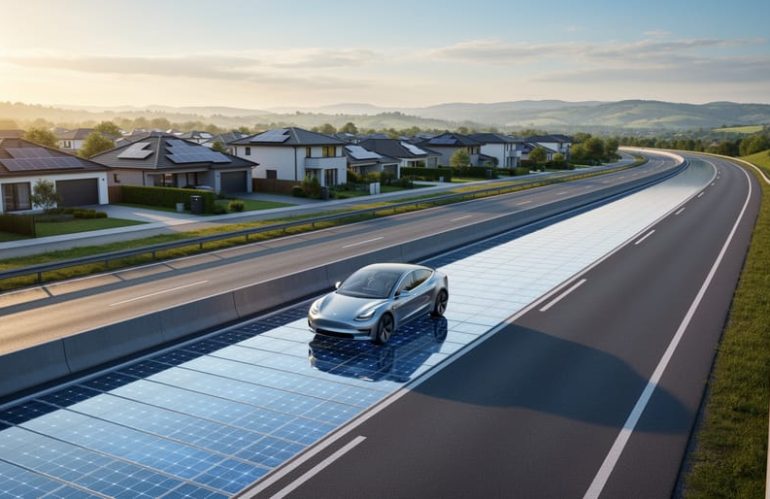
Imagine driving on highways that generate electricity while you commute, or parking lots that power the buildings they serve. Solar-powered roads embed photovoltaic panels directly into driving surfaces, transforming ordinary pavement into energy-producing infrastructure. While the concept sounds futuristic, pilot projects already exist worldwide, from France’s kilometer-long solar roadway to specialized bike paths in the Netherlands.
For homeowners exploring renewable energy options, solar roads raise an important question: should you wait for this technology to arrive in your neighborhood, or invest in proven rooftop solar now? The answer matters for your wallet and environmental impact. Solar roads face significant challenges including durability concerns, high installation costs, and reduced efficiency compared to traditional panels. Real-world projects have struggled with maintenance issues and underperformed on energy generation.
The good news? You don’t need to wait for your street to go solar. Today’s residential solar technology delivers immediate savings, proven reliability, and excellent returns on investment. While solar roads may eventually complement our energy infrastructure, rooftop solar remains the practical, accessible choice for homeowners ready to cut energy bills and reduce their carbon footprint right now. Understanding both technologies helps you make informed decisions about your home’s energy future.
What Are Solar-Powered Roads? (The Simple Explanation)
Imagine if the roads you drive on every day could do more than just get you from point A to point B—what if they could actually generate electricity? That’s the core idea behind solar-powered roads.
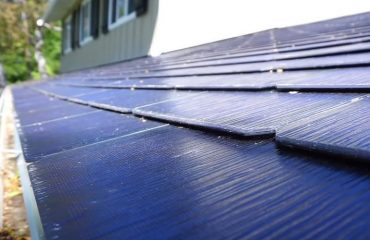
At their simplest, solar roads are regular roads with solar panels built directly into their surface. Instead of traditional asphalt or concrete, these roads feature a durable glass or transparent material on top that’s strong enough to handle vehicle traffic. Underneath this protective layer sit photovoltaic cells—the same technology that converts sunlight into electricity in rooftop solar panels.
The concept makes logical sense when you think about it. Roads cover massive amounts of space that sit in direct sunlight for hours each day. Why not put that unused surface area to work generating clean energy?
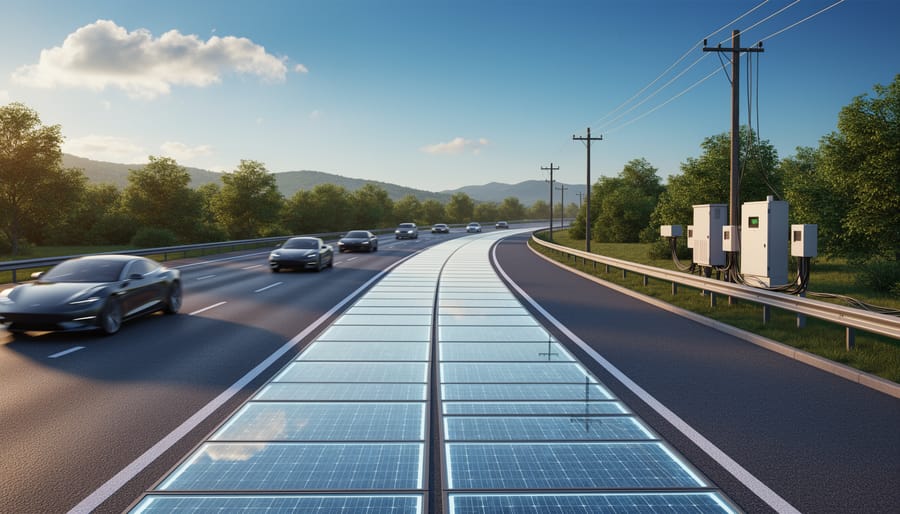
Here’s how they work in practice: As sunlight hits the road surface, the photovoltaic cells underneath capture that energy and convert it into electricity. This power can then feed into the electrical grid, power street lights, charge electric vehicles, or supply energy to nearby buildings.
Solar roads are still in the experimental phase, with small-scale test projects popping up in several countries. France installed a kilometer-long solar road in Normandy, while the Netherlands created a solar bike path. In the United States, a few pilot projects have tested the technology in parking lots and small road sections.
The reality is that solar roads face significant challenges with cost, durability, and efficiency compared to traditional rooftop solar panels. While the technology is interesting and continues to develop, it’s not something that will impact your home energy strategy anytime soon.
Why Solar Roads Matter to Your Home Energy Future
Lower Energy Costs Through Expanded Solar Infrastructure
Here’s the good news: when communities add more solar power generation—whether from rooftops, solar farms, or innovative road projects—it increases the overall supply of renewable energy. This expanded capacity can help stabilize and even reduce electricity prices for everyone on the grid. Think of it like basic supply and demand: more clean energy sources mean less reliance on expensive fossil fuels during peak hours.
For homeowners with solar panels, this trend becomes even more beneficial. Many states offer net metering programs that provide credits when your home system generates excess electricity that flows back to the grid. As solar infrastructure grows through various projects, including experimental solar roads, utilities become more equipped to handle distributed energy sources. This makes grid credit programs more sustainable long-term.
Solar-powered roads contribute to this bigger picture by adding generation capacity in unexpected places. While they won’t replace traditional solar installations, every kilowatt-hour generated from renewable sources helps reduce overall demand from conventional power plants. The result? Potential savings on your monthly electricity bill and a more resilient energy grid that benefits your entire community.
Community Solar Opportunities
Solar-powered roads could revolutionize community solar programs by creating new opportunities for homeowners who can’t access traditional solar installations. If you live in an apartment, have a shaded roof, or face homeowner association restrictions, solar roads offer an alternative path to clean energy benefits.
Here’s how it works: municipalities could install solar road panels in parking lots, bike paths, or neighborhood streets, then share the generated electricity with local residents through subscription programs. You’d receive credits on your utility bill based on your share of the energy produced, similar to existing community solar arrangements but with a neighborhood-focused twist.
The financial benefits remain attractive without the upfront installation costs or maintenance responsibilities. You’re essentially buying into a local solar project that happens to be built into infrastructure your community already needs. While this technology is still developing, it could eventually provide a practical solution for the estimated 50 percent of Americans who can’t install rooftop panels due to various limitations, making clean energy access more equitable across all housing situations.
The Real Benefits (Beyond the Hype)
Extra Electricity Generation Without Extra Land
One of the most appealing aspects of solar roads is that they make use of space we’ve already paved over. Just like rooftop solar panels transform unused roof space into power generators without requiring additional land, solar roads tap into the millions of miles of streets, highways, and parking areas that already exist.
This is particularly valuable in urban and suburban areas where available land is limited and expensive. Traditional solar farms require large plots of open land, which can compete with agriculture or natural habitats. Solar roads sidestep this issue entirely by putting existing infrastructure space to work generating clean energy.
Think of it this way: your neighborhood streets sit in the sun all day anyway. If that pavement could generate electricity while still functioning as a road, it becomes a dual-purpose asset rather than just a surface for driving. This concept mirrors the homeowner benefit of rooftop solar, where your roof protects your home and produces electricity simultaneously, maximizing the value of what you already have.
Smart Road Features That Could Improve Daily Life
Solar-powered roads aren’t just about generating electricity—they come packed with features that could make your daily commute safer and more convenient. Many designs incorporate LED lights directly into the road surface, creating lane markers and warning signs that adapt to conditions in real-time. Imagine driving on roads that light up to show you safe paths during fog or storms, rather than struggling to see faded paint lines.
Another practical benefit is built-in heating elements that melt ice and snow automatically. This means fewer accidents during winter weather and less need for salt treatments that damage vehicles and harm the environment. For communities in colder climates, this could translate to safer school routes and reduced municipal snow removal costs.
Perhaps most relevant to homeowners is the potential for integrated electric vehicle charging. Some solar road concepts include wireless charging capabilities, allowing EVs to charge while driving or parked. While this technology is still developing, it addresses one of the biggest concerns people have about going electric—charging infrastructure. These smart features show how solar roads could do more than generate power; they could fundamentally improve how our transportation systems work for everyone.
What Solar Roads Can’t Do (Yet)
Let’s be clear: solar roads are fascinating, but they’re not replacing your rooftop panels anytime soon. The reality is that installing solar panels on roads costs significantly more per watt than traditional rooftop systems—we’re talking several times the investment for the same energy output. Plus, horizontal road panels capture less sunlight than angled roof panels, making them inherently less efficient. They also face constant wear from traffic, weather, and dirt buildup that blocks sunlight. Think of solar roads as a complementary technology for specific applications like parking lots or sidewalks, not a substitute for proven home solar systems. The good news? While engineers work out these challenges, you can start saving money and reducing your carbon footprint today with residential solar. Solar roads represent exciting innovation, but your roof remains the smartest place to harvest the sun’s energy for your personal energy needs.
How Solar Roads Fit Into the Bigger Picture
Solar EV Charging Networks
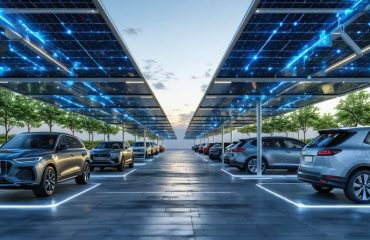
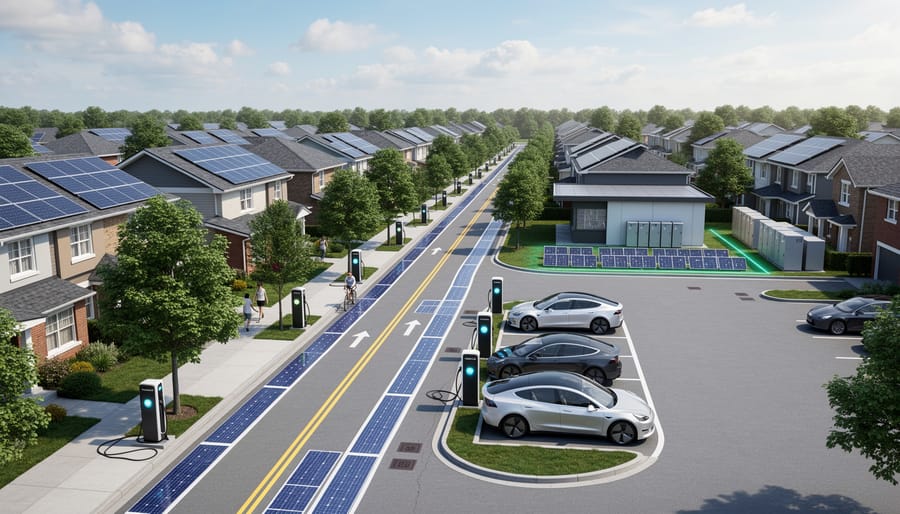
One of the most exciting possibilities for solar roads is their potential to power electric vehicle charging stations right where you need them. Imagine pulling into a parking lot where the pavement beneath your car generates the electricity to charge it—no additional grid strain, no fossil fuels involved.
For homeowners with electric vehicles, this technology could eventually mean more accessible and affordable charging options in public spaces. Solar road networks could reduce the infrastructure costs typically associated with installing new charging stations, since the road surface itself becomes the power source. This could translate to lower charging fees for you.
While widespread solar road charging networks are still in development, the concept addresses a real challenge: where will all the electricity come from as more people switch to electric vehicles? Solar roads offer a sustainable answer by generating clean energy exactly where it’s needed.
In the meantime, homeowners can take advantage of this same principle today by installing rooftop solar panels paired with a home EV charger. You’ll enjoy similar benefits—charging your vehicle with clean, self-generated electricity—without waiting for municipal solar road projects to arrive in your area. The financial advantages are immediate: lower electricity bills and reduced fuel costs combined into one smart home energy solution.
Working Alongside Your Home Solar System
If you already have solar panels on your roof or you’re considering them, you might wonder: do solar roads make home solar obsolete? The answer is a resounding no. These two technologies work together, not against each other, to build a cleaner energy future.
Think of it this way: your rooftop solar is like having a personal vegetable garden, while solar roads are like community farms. Your home system directly powers your house, reduces your electricity bills, and provides energy independence. Solar roads, on the other hand, contribute to the broader electrical grid and help power public infrastructure like streetlights and traffic signals.
Your rooftop solar panels are specifically designed for maximum efficiency on your property. They’re angled perfectly to catch sunlight, remain unobstructed by traffic, and feed power directly into your home. Solar roads face different challenges since they must withstand vehicles and can’t be optimally angled, making them better suited for supplementing grid power rather than replacing residential systems.
The beauty of this relationship is that both technologies reduce our dependence on fossil fuels. Your home solar system gives you immediate financial benefits and energy control today, while solar roads represent an innovative way to utilize existing infrastructure for broader community energy needs. Rather than choosing one over the other, embracing both approaches creates multiple pathways toward a sustainable energy future that benefits everyone.
Real-World Projects You Should Know About
Several countries have taken the plunge and built real solar roads, offering valuable lessons about what works and what doesn’t.
The Netherlands led the charge in 2014 with a 230-foot solar bike path called SolaRoad. The good news? It generated more electricity than expected and held up well to cyclist traffic. The reality check came with the price tag—about $3.7 million for that short stretch. While it proved the concept could work technically, it highlighted that costs need to drop significantly for widespread adoption.
France launched the more ambitious Wattway project in 2016, installing a half-mile solar road in Normandy. Unfortunately, this installation faced harsh lessons. The road surface deteriorated faster than anticipated, and actual energy production fell short of projections. Some panels failed due to heavy traffic and weather exposure. The project demonstrated that solar roads need far more durable materials to justify their expense.
In the United States, Idaho’s Solar Roadways received significant funding and attention for their ambitious hexagonal panel design. Their pilot installations in public spaces showed promise for low-traffic areas like plazas and sidewalks, but scaling to high-traffic roads remains challenging.
The honest takeaway from these projects? Solar roads can work in specific situations—bike paths, parking lots, and pedestrian areas—but they’re not replacing traditional roads anytime soon. Each project revealed that costs are still too high and durability issues need solving. However, these experiments weren’t failures. They’ve provided crucial data helping engineers develop better solutions while proving that for most homeowners, rooftop solar remains the smarter, more affordable path to clean energy today.
What This Means for Your Home Energy Strategy
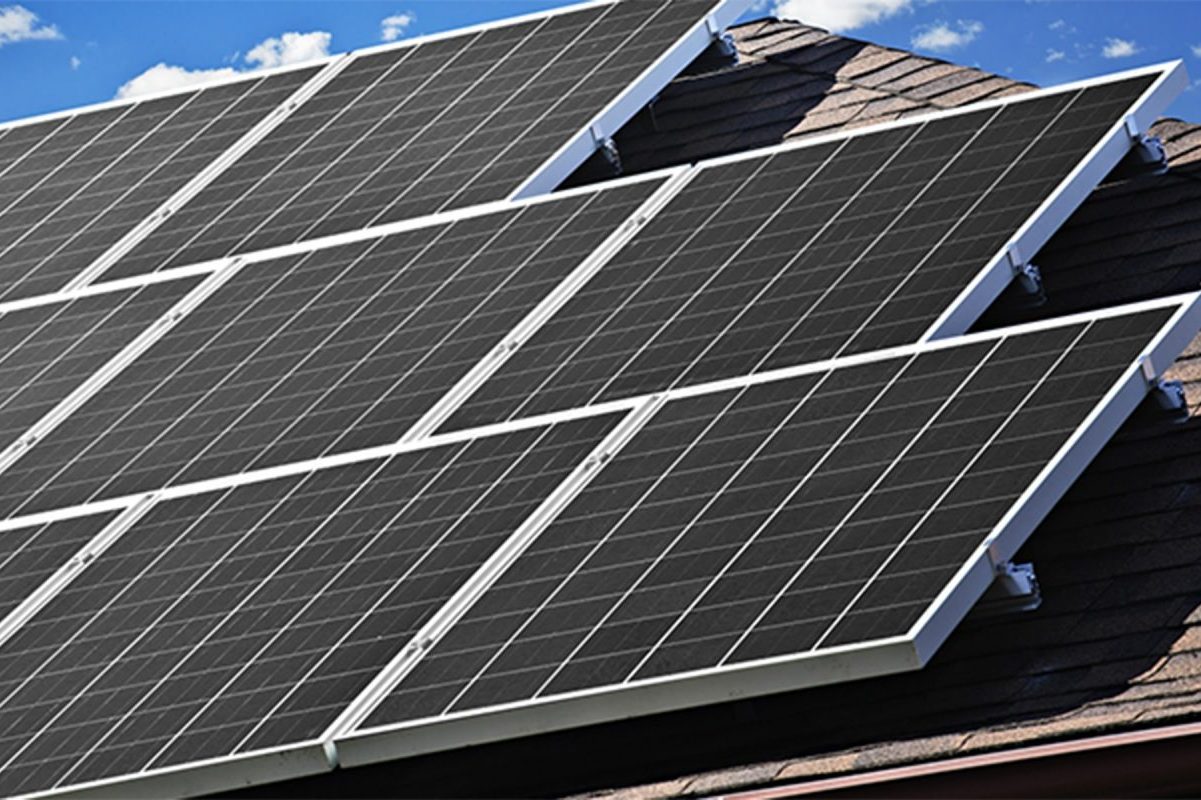
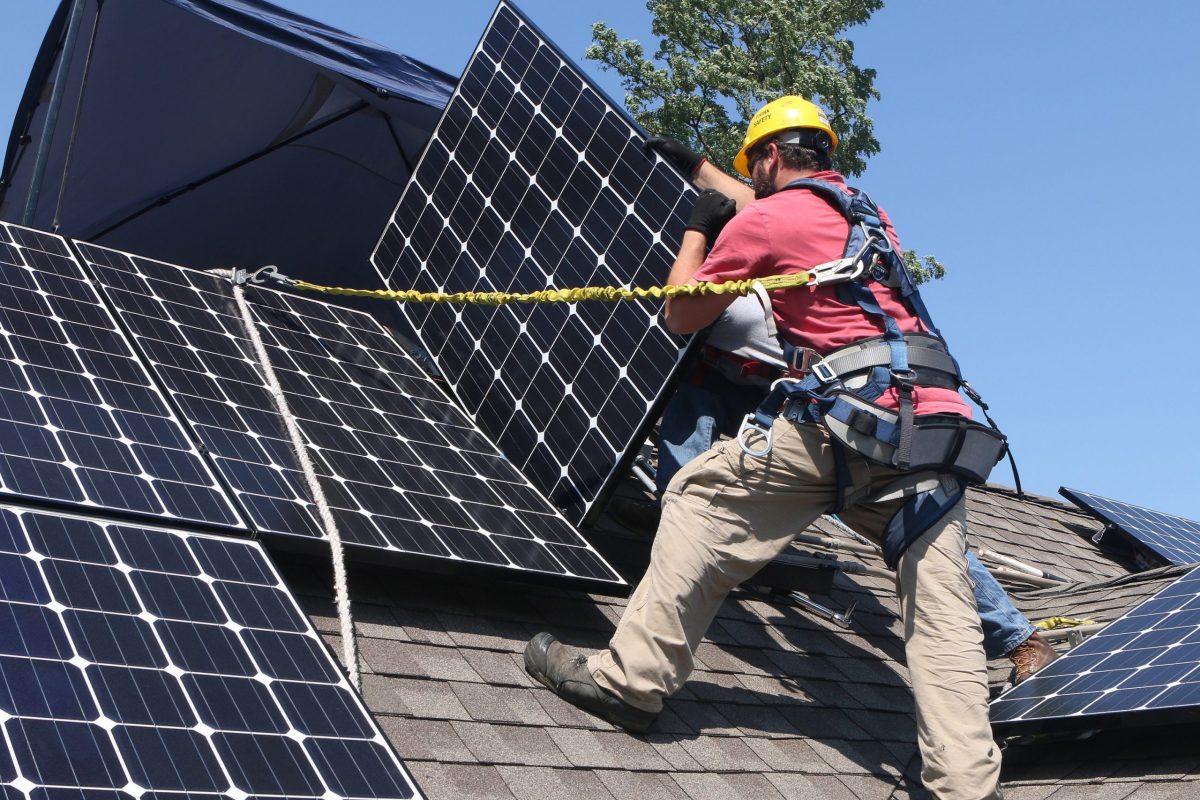
While solar-powered roads capture our imagination, the most effective step you can take today is investing in your own home solar system. Rooftop solar technology is proven, cost-effective, and delivers immediate returns on your energy bills. Unlike experimental road projects, residential solar panels have decades of refinement behind them, with installation costs dropping significantly and efficiency continuing to improve.
Here’s your practical strategy: Focus your energy investment dollars on your roof first. A typical home solar installation pays for itself within 7-10 years through energy savings and can increase your property value by thousands of dollars. You’ll gain energy independence, reduce your carbon footprint, and lock in protection against rising utility rates starting from day one.
That said, supporting solar infrastructure development, including innovative projects like solar roads, benefits everyone long-term. These larger initiatives help normalize renewable energy, drive down manufacturing costs through economies of scale, and create the infrastructure needed for widespread electric vehicle adoption. When your community invests in solar roads for EV charging stations or smart traffic systems, it enhances the value of your home solar investment and electric vehicle.
Think of it this way: your rooftop solar is your personal energy solution, while solar roads and other infrastructure projects represent our collective energy future. Start with what you can control and what delivers proven results today. Then, advocate for and support broader solar initiatives in your community. This dual approach maximizes your personal financial benefits while contributing to the larger renewable energy transformation we all need.
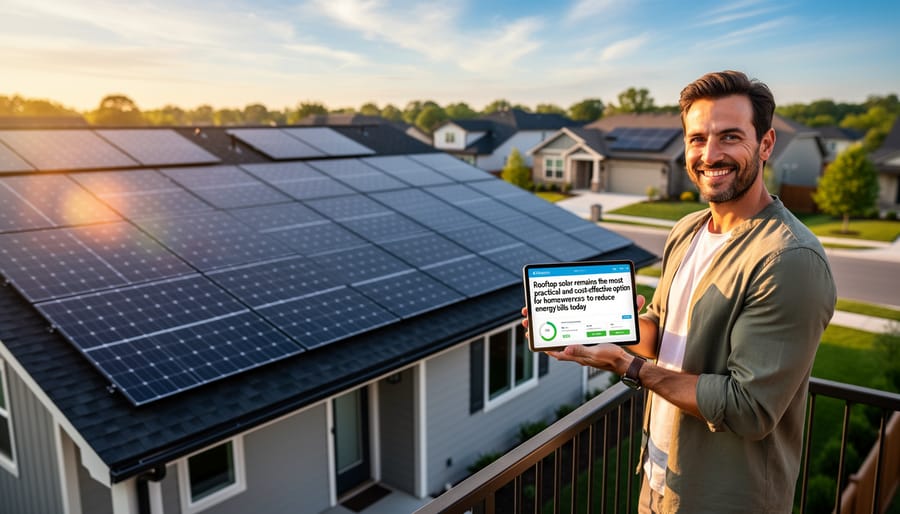
Solar-powered roads represent an exciting vision for the future, but they’re still finding their footing in the real world. While pilot projects continue to test durability and efficiency, this technology faces significant hurdles before becoming mainstream. The good news? You don’t need to wait for your neighborhood streets to generate electricity before taking advantage of solar power.
For homeowners ready to embrace clean energy and lower their electricity bills today, rooftop solar panels are the proven, cost-effective solution. This established technology offers immediate benefits: reduced energy costs, increased home value, and a smaller carbon footprint. Unlike experimental road surfaces, home solar systems have decades of real-world performance data and attractive financial incentives available right now.
Think of it this way: supporting innovation doesn’t mean putting your own energy goals on hold. You can install solar panels on your roof today while remaining optimistic about future breakthroughs in solar roads and other emerging technologies. The most practical approach is focusing on solutions that work reliably now, while cheering on the researchers and engineers developing tomorrow’s innovations. Your home is ready for solar power today, and that’s something worth acting on.