
Your heating and cooling system consumes nearly half your home’s energy, but what if the sun could power it for free? Solar-powered HVAC integration transforms your largest energy expense into an opportunity for dramatic savings while keeping your home comfortable year-round. This isn’t about minor efficiency tweaks—it’s about fundamentally changing how you power the systems that matter most.
The concept is straightforward: solar panels generate electricity during peak sunlight hours, which coincidentally align with your highest cooling demands. Your HVAC system draws from this solar power first, slashing your utility bills during the most expensive daytime rate periods. When your panels produce more energy than needed, excess power feeds back to the grid for credits you can use at night. With smart technology managing the entire system, your home automatically optimizes energy use without requiring any thought from you.
Homeowners integrating solar with HVAC typically see 40-70% reductions in their total energy costs, with many achieving complete energy independence during summer months. Federal tax credits cover 30% of installation costs, and financing options mean you can start saving immediately without large upfront payments. If you’re new to solar energy, our beginner’s guide to solar covers essential concepts before diving deeper into HVAC integration.
The technology has matured beyond early adoption challenges—modern systems are reliable, affordable, and increasingly simple to install and maintain.
What Makes a Solar Smart Home Different from Traditional Solar Installations
Having solar panels on your roof is a great start, but a solar smart home takes things to an entirely new level. The key difference lies in how your home uses the energy those panels generate. Traditional solar installations simply feed power into your home or back to the grid, with little consideration for when and how that energy gets used. It’s a one-way street with minimal coordination.
A solar smart home, on the other hand, creates a conversation between your solar panels and your home’s systems, particularly your heating and cooling equipment. This is where intelligent energy management becomes a game-changer. Your home learns when solar production is highest and automatically adjusts your HVAC system to take advantage of that free, clean energy.
Think of it this way: traditional solar is like having a garden but eating whatever happens to be ripe each day. A solar smart home is like planning your meals around what’s in season and preserving extras for later. Your smart thermostat can pre-cool your home during peak solar production hours, storing that comfortable temperature so your air conditioner runs less when the sun goes down and you’d otherwise be pulling expensive grid power.
This integration means your HVAC system becomes responsive rather than reactive. Instead of waiting until you’re uncomfortable to kick on, it works strategically during the hours when your solar panels are producing the most power. The result is lower energy bills because you’re using solar power more effectively, greater comfort because your home maintains ideal temperatures proactively, and reduced wear on your HVAC equipment since it runs during optimal conditions.
The bottom line? Traditional solar reduces your energy costs. Solar smart homes optimize them while keeping you more comfortable in the process.
The Real-World Benefits of Solar-Powered Smart HVAC
Slashing Your Biggest Energy Expense
Here’s the reality: your heating and cooling system likely accounts for 40-50% of your entire energy bill. That’s often more than your refrigerator, water heater, and all your electronics combined. For an average American household spending $2,000 yearly on electricity, that’s roughly $800-$1,000 going straight to HVAC costs.
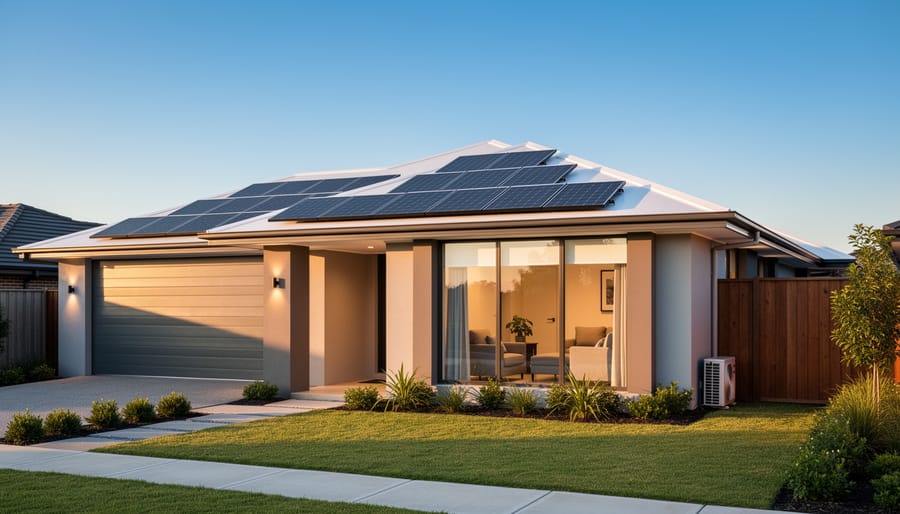
When you pair solar panels with a smart HVAC system, you’re directly attacking your biggest energy expense. A typical 6kW solar system can generate enough electricity to cover your entire HVAC load during peak summer months when your air conditioner works hardest. The beauty is that these are also the sunniest months, so your solar production aligns perfectly with your cooling needs.
Real-world example: A homeowner in Arizona running their AC constantly during summer months saw their monthly HVAC costs drop from $180 to essentially zero after installing solar panels. Over 25 years, that’s over $45,000 in savings from just one appliance category. Even in moderate climates, homeowners typically save $60-$100 monthly during peak heating and cooling seasons, translating to $15,000-$25,000 over the system’s lifetime.
Smart Temperature Control That Actually Saves Money
Smart thermostats paired with solar panels create a powerful combination that puts money back in your pocket. Here’s the simple genius behind it: these devices automatically shift your home’s heating and cooling to times when your solar panels are producing the most energy—typically midday when the sun is strongest.
Think of it as strategic climate control. On hot summer days, your smart thermostat can pre-cool your home in the late morning using free solar power, then coast through expensive peak electricity hours in the afternoon. In winter, it pre-heats your space when sunshine is abundant. You stay comfortable all day while avoiding costly grid electricity.
Modern solar energy management systems make this coordination seamless. Your thermostat learns your preferences and adjusts automatically based on weather forecasts and solar production predictions. Most homeowners see 10-30% reductions in their heating and cooling costs without sacrificing comfort.
The best part? You don’t need to constantly monitor or adjust anything. Set your preferences once, and the system optimizes itself daily, maximizing your solar investment while keeping your home exactly how you like it.
Comfort Without Compromise
There’s a common myth that going solar means living with a thermostat you’re afraid to touch or enduring uncomfortable temperatures to save energy. The reality is quite the opposite. When you integrate solar power with a smart HVAC system, you actually gain more comfort, not less.
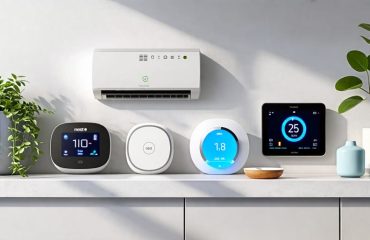
Smart thermostats learn your preferences and create personalized heating and cooling schedules that keep your home at the perfect temperature throughout the day. They monitor weather patterns and adjust settings before you even notice a change outside. Some systems use room sensors to eliminate hot and cold spots, ensuring every corner of your home feels just right.
The difference is that now your comfort comes without the guilt or the hefty utility bills. Your solar panels generate the power your HVAC needs during peak sunshine hours, which coincidentally align with peak cooling demands on hot days. Smart systems can even pre-cool your home using solar energy before the evening rate increase kicks in, maintaining comfort while maximizing your savings.
You’re not sacrificing anything. You’re simply using technology to manage your home’s climate more intelligently while powered by clean, free sunshine.
How Solar-Powered HVAC Integration Actually Works
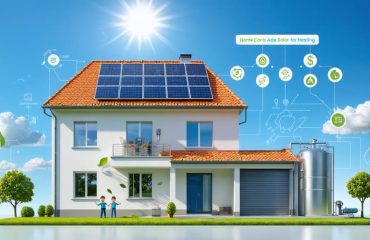
Understanding how solar-powered HVAC integration works is simpler than you might think. At its core, this system connects four key components that work together seamlessly to keep your home comfortable while slashing your energy bills.
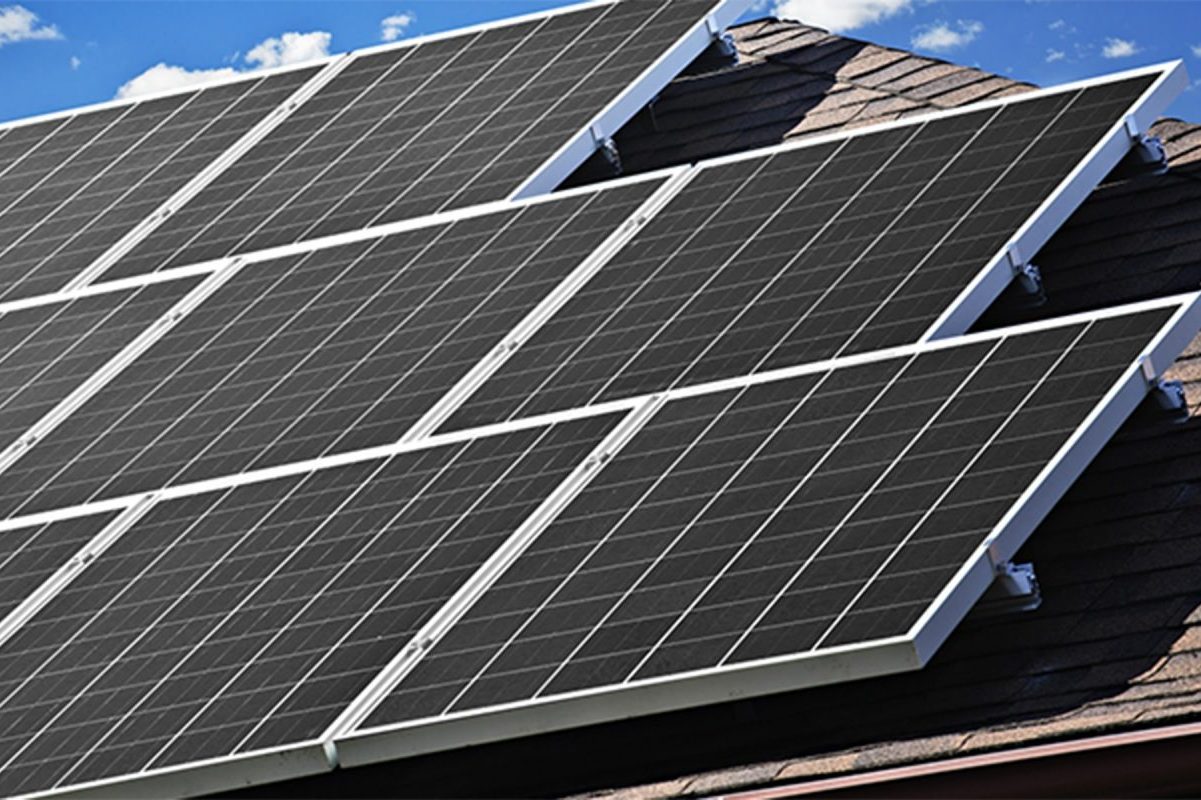
First, solar panels on your roof capture sunlight and convert it into direct current (DC) electricity. This is the foundation of your energy-independent HVAC system. The more panels you have, the more power you can generate, though most homes don’t need a massive array to see significant savings.
Next, an inverter transforms that DC electricity into alternating current (AC) power that your HVAC system can actually use. Think of the inverter as a translator that helps your solar panels speak the same language as your heating and cooling equipment. Modern inverters are incredibly efficient, losing very little energy during this conversion process.
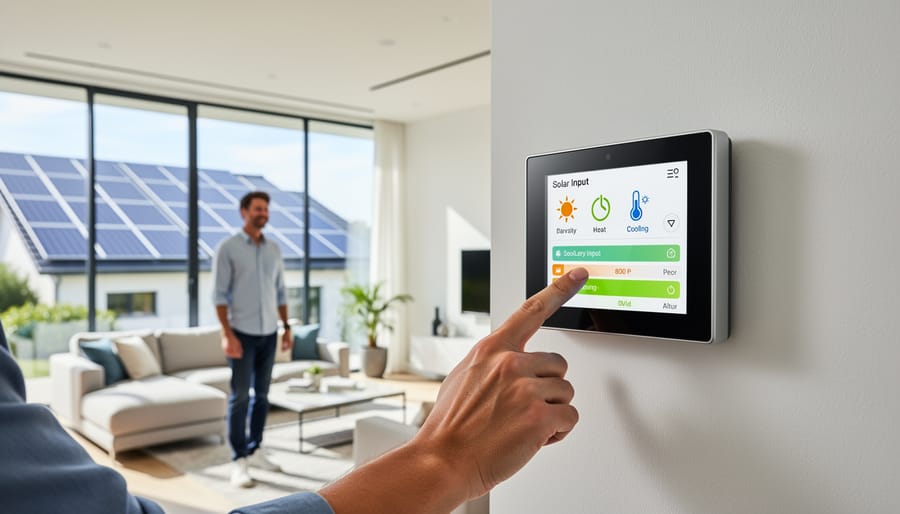
Here’s where it gets interesting. Smart thermostat integration brings intelligence to your system. These devices don’t just control temperature—they learn your schedule, preferences, and habits. More importantly, they communicate with your solar panels to understand when you’re generating the most power. On sunny days, your smart thermostat might pre-cool your home during peak solar production hours, storing that coolness for later when the sun goes down.
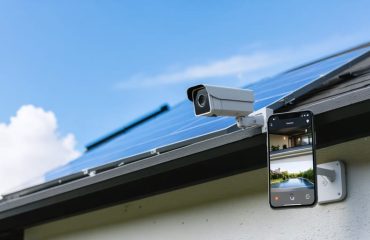
The fourth component is a monitoring system, typically accessible through a smartphone app. This gives you real-time visibility into how much energy your panels are producing, how much your HVAC is consuming, and how much money you’re saving. You can track everything from your couch or while you’re at work.
These components communicate through your home’s Wi-Fi network or dedicated wiring, creating a closed loop of information. When your solar panels produce excess energy during the day, that power can go directly to your HVAC system, to other appliances, or back to the grid for credits on your utility bill.
The beauty of this integration is that it’s largely automatic once installed. You’re not manually switching between power sources or adjusting settings constantly. The system optimizes itself based on available solar energy, outdoor temperature, and your comfort preferences. It’s smart technology working quietly in the background to maximize your comfort and minimize your costs.
Energy Storage: Your Secret Weapon for 24/7 Comfort
Imagine waking up to a perfectly cooled home on a sweltering summer morning, even though the sun hasn’t fully risen yet. Or staying comfortable during an evening thunderstorm that knocks out power to your neighborhood. That’s the beauty of pairing your solar HVAC system with energy storage.
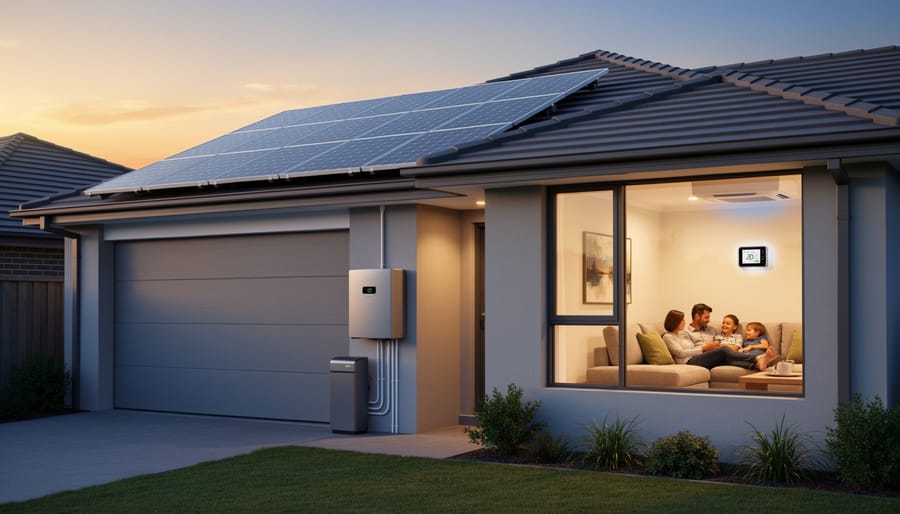
Here’s the reality: your solar panels generate electricity during daylight hours, but your home needs climate control around the clock. Without storage, you’d rely entirely on the grid once the sun sets. Battery storage systems bridge this gap by capturing excess solar energy during the day and releasing it when you need it most.
Think of your battery as a personal energy reservoir. During peak sunshine hours, your panels often produce more electricity than your home requires. Instead of sending that surplus back to the utility company for minimal credit, you’re storing it for later use. When evening arrives and your air conditioning kicks on, you’re drawing from your own stored energy rather than expensive grid power.
The peace of mind factor is significant. During power outages, homes without battery backup lose their climate control systems entirely. With storage, your HVAC keeps running, maintaining comfortable temperatures for your family and protecting sensitive electronics from heat or humidity damage. This independence becomes especially valuable during extreme weather events when grid reliability is compromised.
Beyond emergency preparedness, energy storage maximizes your financial returns. By using stored solar energy during evening peak hours when electricity rates are highest, you avoid the most expensive charges on your utility bill. You’re essentially locking in free cooling and heating when it matters most.
The best part? Modern battery systems integrate seamlessly with your smart home setup, automatically managing when to store, use, or share energy without requiring any input from you. It’s set-it-and-forget-it convenience that works quietly in the background.
Busting Common Myths About Solar HVAC Systems
“Solar Can’t Handle My AC in Summer”
This concern is completely outdated. Modern solar systems handle air conditioning loads without breaking a sweat, especially when properly sized for your home’s needs. In fact, solar and air conditioning are a perfect match. Here’s why: your panels produce the most electricity during sunny summer afternoons, which is exactly when your AC works hardest. This natural alignment means you’re generating maximum power right when you need it most.
A typical residential solar system ranging from 6 to 10 kilowatts easily powers central air conditioning along with your other household needs. Your solar installer will calculate your cooling requirements during the design phase, ensuring your system has adequate capacity. Many homeowners discover they can run their AC guilt-free on solar power, enjoying a comfortable home while their electric meter barely moves. Some even produce excess energy during peak summer days, sending power back to the grid for credits. The key is working with experienced installers who understand your local climate and cooling demands to size your system correctly from the start.
“It’s Too Complicated to Set Up”
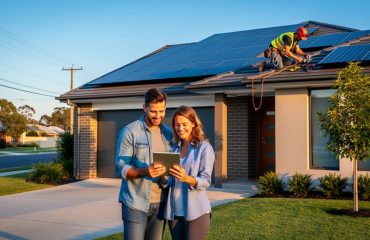
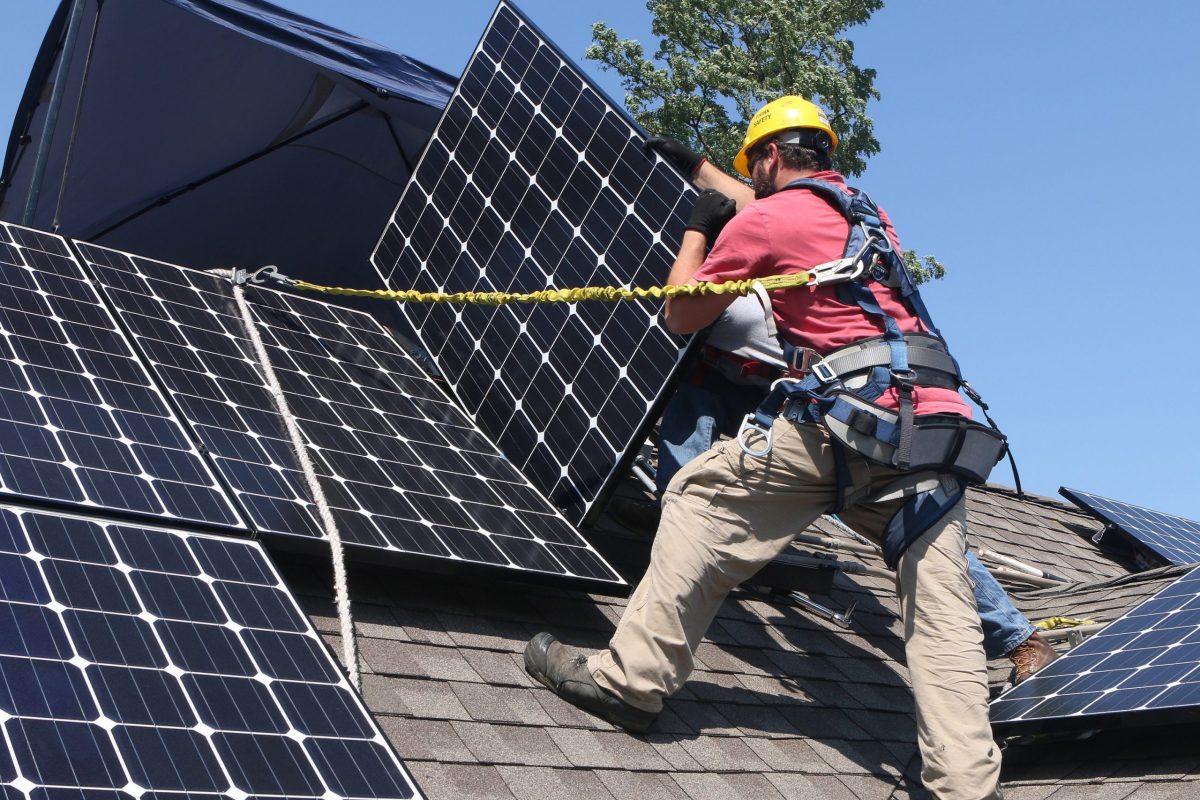
Here’s the reality: you won’t be wrestling with wires or programming complex systems. Professional installers handle all the technical setup, from connecting solar panels to your inverter to syncing everything with your HVAC system. Once complete, you’ll control your entire system through a simple smartphone app, similar to adjusting your thermostat or checking your bank account.
Most modern systems are designed with homeowners in mind, not engineers. You’ll get straightforward controls that show your energy production, consumption, and savings in real-time. Many installers also provide walkthrough sessions to ensure you’re comfortable with the basics, though most customers find the interface intuitive from day one. The complicated work happens behind the scenes, handled by certified professionals who ensure everything runs smoothly. Your job? Simply enjoy lower energy bills and a comfortable home.
“The Upfront Cost Isn’t Worth It”
Let’s talk numbers. Most solar HVAC systems pay for themselves within 7-10 years through energy savings, and they can last 25 years or more. That’s over 15 years of virtually free heating and cooling. Plus, federal tax credits currently cover up to 30% of installation costs, and many states offer additional rebates that can reduce your upfront investment by thousands. Don’t have cash on hand? Solar loans and power purchase agreements let you start saving from day one with little to no money down. These financing options mean your monthly loan payment is often less than what you’re currently spending on energy bills. When you factor in rising electricity rates and increasing home values—solar homes sell for about 4% more—the return on investment becomes even more attractive.
Is Solar-Powered Smart HVAC Right for Your Home?
Deciding whether solar-powered smart HVAC is right for your home comes down to a few practical factors that are worth considering before you make any commitments.
Start by looking at your current energy bills. If your heating and cooling costs account for a significant portion of your monthly expenses, typically 40% or more, you’re a strong candidate for this upgrade. Homes with consistently high energy bills will see the most dramatic savings and shortest payback periods.
Your climate zone plays a crucial role too. If you live in an area with extreme temperatures, whether scorching summers or freezing winters, your HVAC system works harder and runs longer. This means more solar energy gets put to direct use, maximizing your return on investment. Moderate climates still benefit, but the financial impact may be less dramatic.
Take a look at your roof. South-facing roofs with minimal shade are ideal for solar panels, though east and west orientations can work well too. If your roof is older than 10 years, you might want to consider replacing it before installing solar panels to avoid the hassle and cost of removing and reinstalling panels later.
The age of your existing HVAC system matters significantly. If your current system is approaching 10-15 years old or requires frequent repairs, combining a new energy-efficient smart HVAC system with solar panels makes financial sense. You’ll tackle both upgrades at once and avoid paying twice for installation labor.
Home size is another consideration. Larger homes naturally require more heating and cooling capacity, which means higher energy consumption but also greater potential savings from solar integration.
The good news is that solar-powered smart HVAC systems scale beautifully. Whether you have a cozy 1,200-square-foot bungalow or a spacious 3,500-square-foot home, there’s a solution that fits your needs and budget.
Transforming your home into a solar-powered smart home isn’t just about embracing innovative technology—it’s about taking meaningful control of your energy future. By integrating solar panels with your HVAC system and smart controls, you’re positioning yourself to enjoy lower monthly utility bills, reduce your environmental footprint, and experience enhanced comfort that adapts to your lifestyle. The boost to your home’s market value is simply the cherry on top.
The good news is that getting started is more accessible than ever. Solar technology has matured significantly, installation costs have dropped, and financing options make the transition easier on your budget. What once seemed like a distant possibility is now a practical reality for homeowners across the country.
Your next step is simple: consult with a qualified solar professional who can assess your specific situation. They’ll evaluate your roof’s solar potential, analyze your current energy usage, and design a customized system that maximizes your savings and comfort. Every home is different, and a personalized assessment ensures you get a solution tailored to your needs and budget.
The future of home energy is bright, efficient, and increasingly affordable. You have the power to reduce your dependence on the grid, lower your carbon footprint, and create a more comfortable living environment—all while saving money. Take that first step today and discover what solar-powered smart home living can do for you.