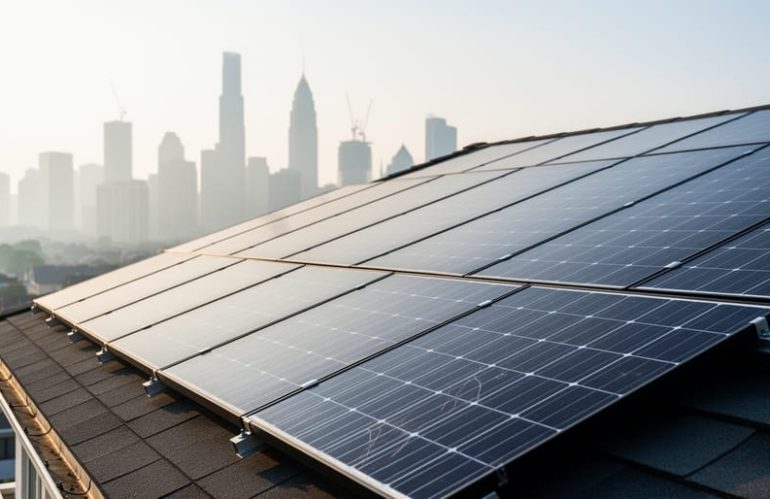
Worried that smog makes solar panels pointless? Think again. Even in heavily polluted areas, solar panels typically operate at 75-90% of their clean-air efficiency, and that’s more than enough to deliver substantial energy savings and environmental benefits. Modern solar technology has evolved specifically to handle challenging air quality conditions, with self-cleaning coatings, optimized panel angles, and advanced materials that maximize light capture even through hazy skies.
The real question isn’t whether solar works in smoggy climates—it’s whether you’re missing out on significant financial returns by waiting. Homeowners in pollution-prone cities from Los Angeles to Delhi are cutting their energy bills by 50-70% with solar, proving that air quality concerns shouldn’t stop you from going solar. Combined with decreasing installation costs and attractive incentives, the return on investment remains strong regardless of your zip code’s air quality index.
The truth is simple: some sunlight is always better than no solar savings, and today’s technology ensures you capture every available ray. Whether you’re battling urban smog or seasonal haze, practical solutions exist to optimize your system’s performance and protect your investment for decades to come.
Why Smog Doesn’t Stop Solar Panels (Like You Think It Does)
Here’s a truth that might surprise you: solar panels don’t need perfectly clear skies to work. If you’ve been holding off on going solar because your city has smog problems, you’re likely overestimating how much pollution actually affects your panels’ performance.
Solar panels generate electricity from two types of sunlight: direct rays and diffuse light. Direct sunlight is what you’d expect on a crystal-clear day, but diffuse light is scattered sunlight that comes through clouds, haze, and yes, even smog. This is why solar panels still produce power on overcast days. The science is straightforward: photovoltaic cells capture photons (light particles) from both sources, converting them into electricity regardless of whether that light traveled straight from the sun or bounced through polluted air first.
The actual efficiency loss from smog is much smaller than most homeowners fear. Studies show that even in heavily polluted areas, solar panels typically maintain 75-90% of their clear-sky performance. That’s not a dealbreaker when you consider that modern panels are so efficient that this reduced output still generates substantial electricity and savings. Think of it this way: earning 80% returns on your investment is still excellent, especially when that investment pays itself off over time and continues producing free power for decades.
Many urban solar solutions are specifically designed with these conditions in mind, incorporating features like self-cleaning coatings and optimized panel angles that maximize diffuse light capture.
The bottom line? Smog is an inconvenience for solar panels, not a showstopper. Your panels will produce slightly less energy than they would in pristine conditions, but they’ll still significantly reduce your electricity bills while helping clear the very air that’s affecting them. That’s a win-win worth pursuing.
The Real Impact of Air Pollution on Your Solar Energy
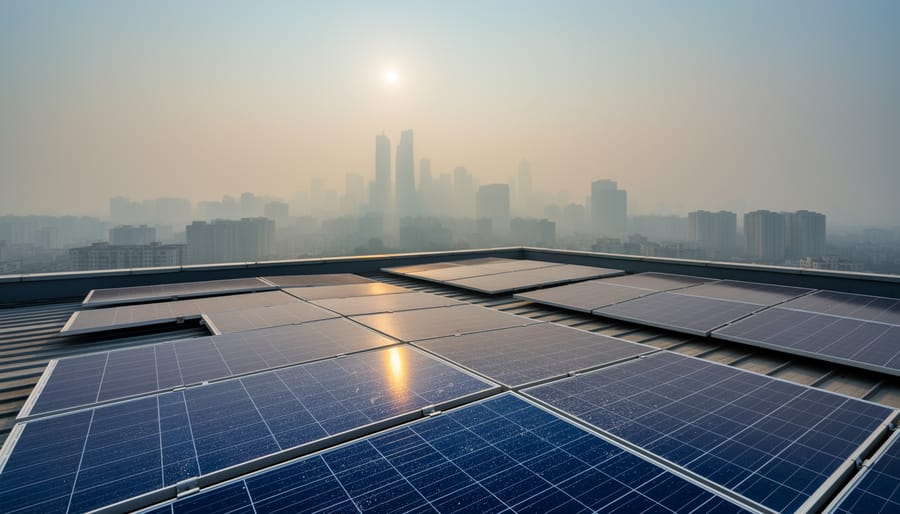
Let’s address the elephant in the room: yes, air pollution does affect solar panel performance. But here’s the good news—the impact is far less dramatic than most people fear, and your panels will still deliver impressive savings.
In areas with heavy smog and high aerosol concentrations, solar panels typically experience efficiency losses between 10-25%. This means your panels might produce 75-90% of what they would in pristine air conditions. While that sounds significant, let’s put it in perspective.
A typical residential solar system in a polluted urban area still generates enough electricity to cut your energy bills by 60-80%. If you’re saving $150 monthly in cleaner air, you’ll likely save $120-135 monthly in smoggier conditions. That’s still $1,440-1,620 annually going back into your pocket. Over a 25-year system lifespan, you’re looking at substantial five-figure savings, even with the pollution factor.
What causes these efficiency losses? Airborne particles settle on panel surfaces, creating a light-blocking layer, while atmospheric aerosols scatter sunlight before it reaches your roof. However, modern anti-soiling coatings and simple maintenance practices (we’ll cover these shortly) minimize these effects considerably.
The key takeaway: smog doesn’t make solar impractical—it just means your excellent return on investment becomes very good instead of exceptional. Just as solar technology has adapted to challenging climate conditions like extreme heat, today’s systems are designed to perform reliably in less-than-perfect air quality. You’re still making a smart financial decision while contributing to cleaner air for your community.
Solar Technologies Built for Polluted Skies
Bifacial Solar Panels
Bifacial solar panels offer a smart solution for smoggy conditions because they’re designed to capture sunlight from both sides. Unlike traditional panels that only absorb light from the top surface, bifacial models also collect light reflected off the ground, nearby surfaces, and even particles in the air below the panel. This dual-surface design means you’re harvesting energy from multiple angles simultaneously.
When smog reduces direct sunlight from above, these panels compensate by maximizing reflected and diffused light from below. Light-colored roofing, gravel, or concrete beneath your panels can bounce additional sunlight onto the rear surface, boosting overall energy production by 10-30% compared to standard panels.
Here’s the practical benefit for homeowners: bifacial panels help maintain stronger output during hazy days when single-sided panels would struggle. While they typically cost slightly more upfront, the enhanced performance in challenging conditions means faster payback on your investment. If you live in an area with frequent air quality issues, this technology turns a potential weakness into an advantage, ensuring your solar system delivers reliable savings year-round despite atmospheric challenges.
High-Efficiency Monocrystalline Panels
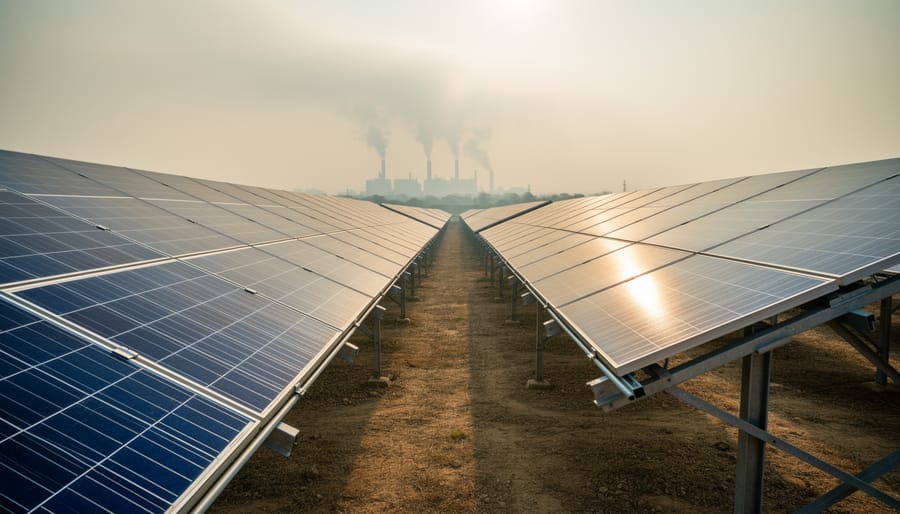
When air pollution creates hazy conditions, not all solar panels respond the same way. High-efficiency monocrystalline panels consistently outperform other options in smoggy environments, making them the smart choice if you live in an area with air quality challenges.
Here’s why they excel: These premium panels use pure silicon crystals arranged in a uniform structure that captures a broader spectrum of light, including the diffused sunlight that filters through pollution. While standard panels might struggle when direct sunlight is blocked by smog, monocrystalline technology continues generating power from indirect light. Think of it like having sharper vision on a foggy day—these panels simply see and convert more available energy.
The performance difference becomes particularly noticeable during periods of heavy air pollution. Monocrystalline panels typically maintain 15-20% higher efficiency rates compared to polycrystalline options in low-light conditions. This efficiency advantage translates directly to your wallet, helping offset your energy bills even when skies aren’t perfectly clear.
Just as solar technology has been adapted for extreme weather environments, monocrystalline panels prove that pollution doesn’t have to stop your solar investment from paying off. You’ll generate more electricity year-round, making these panels worth the slightly higher upfront cost.
Anti-Soiling Coatings and Self-Cleaning Technology
Modern anti-soiling coatings offer a practical way to keep your solar panels clean in smoggy conditions, saving you time and money on maintenance. These specialized coatings work like the non-stick surface on your cookware, creating a barrier that prevents pollutants, dust, and grime from bonding to the glass.
Self-cleaning technology takes this a step further. Hydrophobic coatings cause water to bead up and roll off the panel surface, carrying away dirt and particulates as it goes. This means regular rain showers become your free cleaning service. Some advanced coatings even use photocatalytic properties that break down organic pollutants when exposed to sunlight, essentially letting your panels clean themselves during operation.
These technologies are particularly valuable if you live in areas facing harsh environmental conditions, as they can reduce cleaning frequency from monthly to just a few times per year. While anti-soiling coatings add a modest upfront cost, most homeowners recoup this investment through reduced maintenance expenses and sustained energy production. The result is consistently higher output without the hassle and cost of frequent professional cleanings.
Simple Maintenance That Maximizes Your Panels in Smoggy Conditions
Good news: keeping your panels performing well in smoggy conditions doesn’t require complicated procedures or expensive equipment. A few simple maintenance habits will help you maximize energy production even when air quality isn’t ideal.
Start by inspecting your panels monthly if you live in a high-pollution area. Look for visible dirt buildup, a grayish film, or any discoloration that indicates particle accumulation. Many homeowners are surprised to discover that a thin layer of pollution residue can reduce efficiency by 5-7%, but it’s easily removable with regular attention.
For cleaning frequency, plan on rinsing your panels every 4-6 weeks during particularly smoggy seasons. Use a garden hose with a spray nozzle from ground level if possible, doing this early morning or evening when panels are cool. Plain water works wonderfully for most pollution buildup. If you notice stubborn residue, a soft brush or squeegee with soapy water (use a mild, non-abrasive dish soap) will do the trick without damaging the protective coating.
Here’s what matters most: never use harsh chemicals, abrasive materials, or high-pressure washers, as these can scratch or damage your panels permanently. Similarly, avoid cleaning during the hottest part of the day, since temperature shock from cold water on hot panels can cause microcracks.
Watch for these signs that professional cleaning is needed: streaking that won’t rinse away, bird droppings that have etched the surface, or panels mounted at steep angles you can’t safely reach. Professional cleaners have the right equipment and insurance to handle challenging situations safely.
Between cleanings, monitor your system’s output through your inverter or monitoring app. A sudden drop in production during clear weather might signal that cleaning is overdue. The beauty of this maintenance routine is its simplicity—dedicate just 30 minutes monthly, and your panels will reward you with consistent energy production regardless of what’s floating in the air.
Your Financial Payoff in High-Pollution Areas
Let’s talk real money. Even in cities with serious air pollution, solar panels deliver impressive financial returns that make the investment worth your while.
Here’s what you can realistically expect: In heavily polluted areas, solar panels might lose 15-25% efficiency compared to pristine conditions. That sounds concerning until you run the actual numbers. A typical home solar system in a high-pollution area still generates enough electricity to cut your monthly utility bills by 50-75%. For a family paying $150 monthly for electricity, that’s $900 to $1,350 in annual savings.
The return on investment timeline remains attractive even with smog factoring in. Most homeowners in polluted cities see their solar systems pay for themselves within 7-10 years. After that payback period, you’re looking at 15-20 additional years of virtually free electricity. Over the full 25-year lifespan of your panels, you could save $30,000 to $50,000, depending on your location and energy costs.
Compare this to continuing with traditional utility companies in polluted urban areas, where electricity rates typically run higher than rural regions. Cities with poor air quality often have elevated energy costs due to increased demand for air conditioning and air purification systems. By generating your own power, you’re protecting yourself from future rate hikes that average 3-5% annually.
The math gets even better when you factor in available incentives. Federal tax credits currently cover 30% of your installation costs, and many states with air quality concerns offer additional rebates to encourage clean energy adoption. These incentives can shorten your payback period to just 5-7 years.
Consider the maintenance costs too. Regular panel cleaning in polluted areas might run you $150-300 annually if you hire professionals, or zero if you do it yourself. This minor expense barely dents your overall savings.
The bottom line is straightforward: even with pollution reducing efficiency, you’re still spending far less on solar-generated electricity than buying power from the grid month after month. Your panels work for you, building equity in your home while utility bills keep climbing for your neighbors. That’s a financial win that makes sense in any air quality condition.
The Hidden Benefit: You’re Fighting the Smog Problem
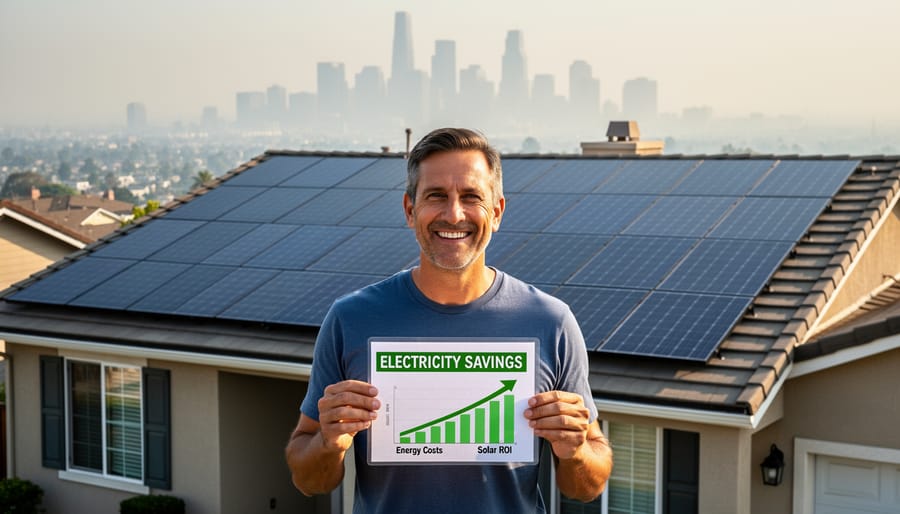
Here’s something most homeowners don’t realize: every time you generate electricity from your solar panels, you’re actively reducing the smog in your neighborhood. It’s not just about cutting your electric bill—you’re actually part of the solution to the very problem that concerned you in the first place.
When your panels produce power, that’s electricity your utility company doesn’t need to generate by burning coal or natural gas. These fossil fuel power plants are major contributors to the smog hovering over many urban environments. Less demand means less pollution pumped into the air your family breathes.
The impact compounds beautifully over time. A typical residential solar system offsets approximately 100 tons of carbon dioxide over its 25-year lifespan—equivalent to planting over 2,500 trees. That same system prevents the release of sulfur dioxide and nitrogen oxides, the primary culprits behind smog formation.
Think of it this way: you’re not just protecting yourself from rising energy costs. You’re contributing to cleaner air for your children’s playgrounds, your morning jogs, and your community’s overall health. As more neighbors join you in adopting solar, the collective impact grows exponentially.
The beautiful irony? The smog that initially made you question solar’s viability becomes the very reason your decision matters most. You’re not waiting for someone else to fix the problem—you’re generating the solution, one sunny day at a time.
Smog doesn’t have to stand between you and the energy savings you deserve. While air pollution does reduce solar panel efficiency by 15-25% in highly affected areas, today’s advanced technologies and proper maintenance ensure your system still delivers substantial financial returns and environmental benefits. Modern panels are specifically designed to perform in less-than-ideal conditions, and with smart system sizing and regular cleaning, your investment remains sound.
The real question isn’t whether solar works in smoggy areas—it’s whether you’re ready to take control of your energy costs while contributing to cleaner air for your community. Every solar installation helps reduce the fossil fuel emissions that create smog in the first place, making your decision part of the solution.
Ready to discover what solar can do for your specific location and pollution levels? Get a personalized assessment from a qualified solar installer in your area. They’ll evaluate your roof’s potential, factor in local air quality data, and provide honest projections tailored to your situation. Your path to energy independence starts with understanding your unique opportunities.