
Connecting a solar farm to the electrical grid transforms your property from an energy consumer into a power producer, creating a revenue stream that can last 25 years or more. The process involves three essential components working together: your solar panels generate DC electricity, an inverter converts it to AC power that matches grid specifications, and a bidirectional meter tracks both the energy you use and the excess electricity you send back to utility companies.
Understanding this connection process matters because it directly impacts your return on investment. When your solar farm produces more electricity than you need, that surplus flows into the grid, and utility companies credit your account through net metering programs. This means you’re essentially using the grid as a battery, drawing power when you need it and getting paid for what you contribute. Many agricultural property owners see their electric bills drop to zero while generating additional income from excess production.
The technical side is simpler than most people expect. Your local utility company handles the actual grid connection through an interconnection agreement, which sounds complicated but essentially establishes the terms for safely linking your system to their infrastructure. Licensed electricians and solar installers manage the physical connections, ensuring everything meets electrical codes and safety standards. The entire approval and installation process typically takes 2-4 months from application to flipping the switch, with most of that time spent on paperwork rather than actual construction work.
Why Agricultural Properties Are Perfect for Solar Farms
Agricultural properties offer some of the most promising opportunities for solar farm development, and it’s easy to see why once you understand the natural advantages these spaces provide.
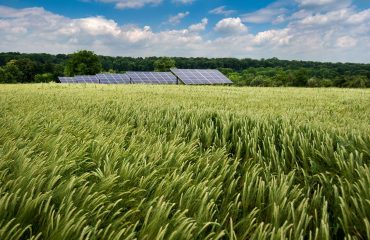
First, there’s the land itself. Farms typically have wide-open spaces with minimal shading from buildings or trees—exactly what solar panels need to perform at their best. Unlike residential rooftops where space is limited, agricultural land can accommodate large-scale installations that generate substantial electricity. Even better, much of this land may be underutilized or have lower productivity, making it ideal for a secondary revenue stream without sacrificing your primary farming operations.
The energy needs of modern farms are another perfect match. Agricultural operations often consume significant electricity for irrigation systems, grain dryers, livestock facilities, and processing equipment. By generating power on-site, farmers can dramatically reduce their operating costs while protecting themselves from unpredictable utility rate increases. This energy independence translates directly to more stable profit margins.
One of the most exciting developments is agrivoltaics—the practice of growing crops or grazing livestock underneath elevated solar panels. This dual-use approach means you don’t have to choose between farming and solar generation. Research shows that certain crops actually thrive in the partial shade provided by panels, while the panels benefit from the cooling effect of vegetation below. Sheep grazing has become particularly popular for maintaining vegetation around solar installations, creating an additional income opportunity.
The financial benefits extend beyond energy savings. Many solar solutions for farms include leasing arrangements where energy companies pay farmers for land use, providing steady income regardless of weather or crop prices. When you add federal tax incentives and accelerated depreciation benefits, the return on investment becomes even more compelling. For agricultural property owners facing economic pressures, solar installations offer both immediate cost reduction and long-term revenue diversification.

The Basics: What Happens Between Your Solar Panels and the Power Grid
From Sunlight to Usable Power
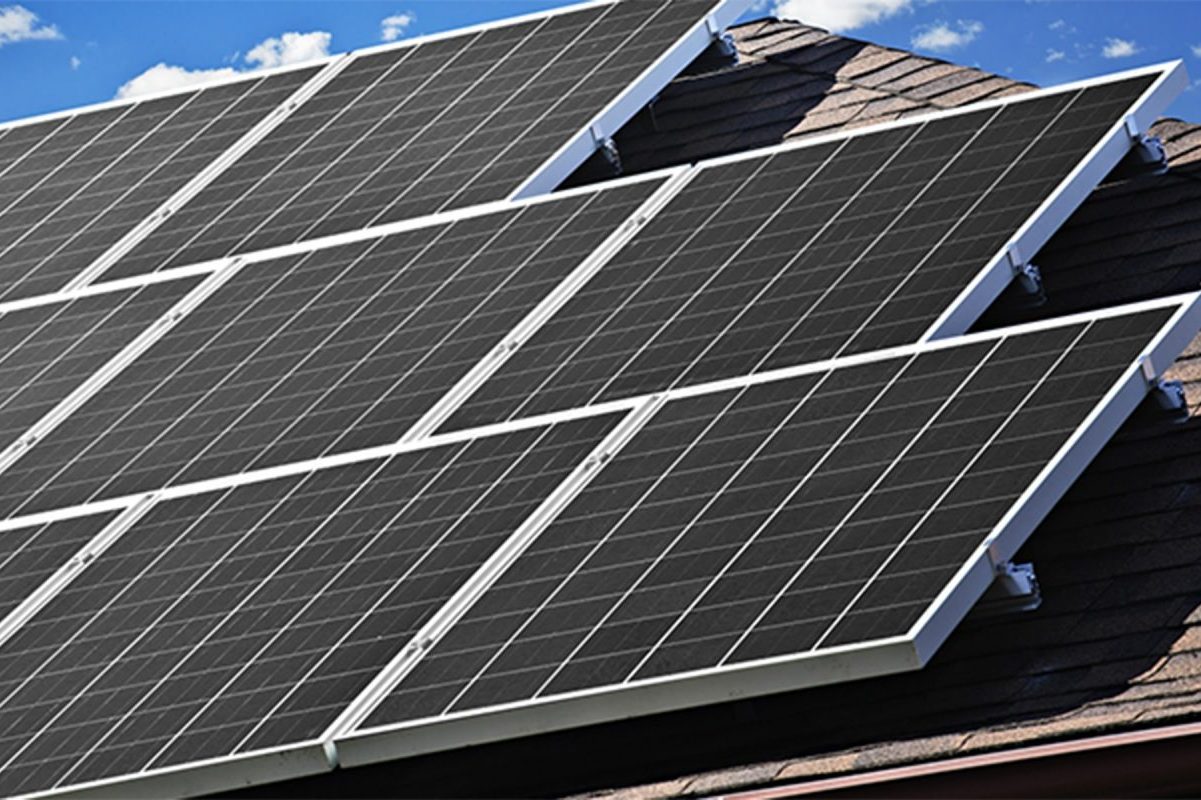
The process begins with solar panels, also called photovoltaic modules, which contain silicon cells that capture sunlight and convert it directly into electricity. This initial electricity flows as direct current, or DC power, similar to what you’d find in a battery. While DC power works great for small devices, your home appliances and the electrical grid operate on alternating current, or AC power.
This is where inverters become essential equipment. These devices transform the DC electricity from your solar panels into AC electricity that matches the exact specifications of the power grid. Think of inverters as translators that ensure your solar energy speaks the same language as the grid. They carefully adjust the voltage, frequency, and phase to meet utility requirements, typically delivering power at 60 Hz in North America.
Modern inverters do more than simple conversion. They constantly monitor power quality and automatically shut down if grid power fails, protecting utility workers during maintenance or emergencies. This seamless transformation process happens continuously throughout daylight hours, allowing your solar farm to feed clean, usable electricity directly into the grid system and start generating revenue from your solar investment.
The Two-Way Street: Net Metering Explained
Think of net metering as a give-and-take relationship with your utility company. When your solar farm produces more electricity than you’re using—which often happens during sunny midday hours—that excess power flows back into the grid through the same connection. Your electricity meter literally spins backward, tracking the energy you’re contributing.
Here’s the simple truth: you get credited for every kilowatt-hour you send to the grid. These credits accumulate on your utility bill, offsetting what you draw from the grid during cloudy days or nighttime hours when your panels aren’t producing. It’s essentially using the utility grid as your battery storage system, without needing expensive physical batteries.
For agricultural operations, this arrangement is particularly valuable. Your farm equipment and irrigation systems might run primarily during daytime hours when your solar production peaks, but any surplus energy still earns you credits. During slower seasons when energy consumption drops, those accumulated credits continue building up, ready to offset costs during busier periods.
The financial benefit is straightforward: lower electricity bills, sometimes reduced to zero or even generating small payments back to you. Net metering policies vary by state and utility company, with some offering one-to-one credit ratios and others providing wholesale rates. Before connecting your system, verify your local net metering rules to understand exactly how you’ll be compensated for your contribution to the grid.
The Essential Equipment That Makes Grid Connection Work
Inverters: Your System’s Translator
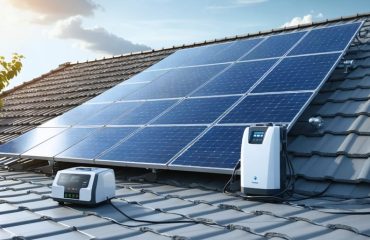
Think of inverters as your solar farm’s translator. Your solar panels produce direct current (DC) electricity, but the grid runs on alternating current (AC). Inverters bridge this gap by converting DC power into grid-compatible AC power, making them absolutely essential for any grid-connected system.
Here’s the good news: modern inverters do far more than simple conversion. They continuously monitor power quality, voltage, and frequency to ensure your system syncs perfectly with the grid. Many also include smart features that optimize energy production throughout the day and provide real-time performance data you can check from your phone.
When selecting an inverter for your agricultural operation, proper sizing matters tremendously. Your inverter capacity should match your array size, typically ranging from 95% to 110% of your total panel capacity. Undersized inverters waste potential production, while oversized ones cost more upfront without adding value.
String inverters work well for smaller farms with consistent sun exposure, while microinverters or power optimizers shine when dealing with shade or complex roof layouts. For larger operations, central inverters offer the best cost-per-watt ratio. Your installer will recommend the right solution based on your specific property conditions and energy goals.
Transformers and Switchgear
Before your solar farm’s electricity can travel long distances on the grid, it needs a voltage boost. Think of transformers as power amplifiers that increase voltage from your solar panels (typically around 600 volts) to transmission levels of 69,000 volts or higher. This step-up is essential because higher voltage means electricity can travel farther with less energy loss, making your solar investment more profitable.
Here’s the good news: transformers work automatically and require minimal maintenance once installed. They’re essentially large metal boxes filled with coils that use electromagnetic principles to boost voltage safely and efficiently.
Switchgear acts as your solar farm’s safety system and emergency shut-off. These protective devices immediately disconnect your system from the grid during storms, maintenance, or power surges. Think of switchgear as circuit breakers on steroids, designed to handle massive amounts of electricity while keeping both your equipment and grid workers safe.
Together, transformers and switchgear form the critical bridge between your solar panels and the utility grid. While they represent a significant upfront cost (typically 10-15% of total project expenses), they’re non-negotiable safety and efficiency components that protect your investment for decades.
Smart Meters and Monitoring Systems
Modern smart meters have revolutionized how solar farm owners track their energy production and earnings. These digital monitoring systems replace old-style meters and provide real-time data about how much electricity your solar panels generate, how much your farm uses, and most importantly, how much you’re feeding back into the grid for payment.
Think of a smart meter as your solar farm’s financial dashboard. Instead of waiting for monthly utility statements, you can check your smartphone or computer anytime to see exactly how much energy you’re producing and what it’s worth. This instant visibility helps you spot issues quickly—if production drops unexpectedly, you’ll know within hours rather than weeks, allowing for faster maintenance and fewer lost earnings.
These systems also simplify the billing process. Smart meters automatically record the electricity flowing in both directions, calculating what you owe for any grid power you use and what the utility owes you for excess solar generation. This eliminates estimation errors and disputes that sometimes occurred with older metering technology.
For property owners, this transparency builds confidence in your investment. You can track your return on investment accurately, compare seasonal performance patterns, and make informed decisions about expanding your solar capacity. Many modern systems even provide weather forecasts integrated with production predictions, helping you anticipate revenue fluctuations and plan accordingly. This level of insight transforms solar farming from a passive investment into an actively managed revenue stream.
The Grid Connection Process for Agricultural Solar Systems
Step 1: Working with Your Utility Company
Your journey to grid connection begins with a simple conversation with your local utility company. This initial step is less complicated than many people assume—think of it as introducing your solar farm to the electrical neighborhood.
Start by contacting your utility’s interconnection department to submit an application. They’ll want basic information about your planned solar farm, including its size, location, and expected power generation. This isn’t about obstacles; it’s about ensuring safe, efficient integration with existing infrastructure.
The utility will review your application and provide an interconnection agreement, which outlines technical requirements, safety standards, and the terms for selling excess electricity back to the grid. While designing your solar system, you’ll want to understand these requirements early to avoid costly modifications later.
Expect the process to take several weeks to a few months, depending on your system’s size and local regulations. Your utility may require an engineering study to assess grid capacity, especially for larger installations. The good news? Many utilities have streamlined processes specifically for renewable energy projects, and they’re increasingly experienced with solar connections. Stay patient and maintain open communication—this partnership sets the foundation for decades of clean energy production.
Step 2: Safety and Technical Requirements
Before your solar farm can start sending power to the grid, it must meet strict safety standards that protect utility workers, your neighbors, and your own equipment. Think of these requirements as quality checkpoints that ensure everyone stays safe while enjoying clean energy benefits.
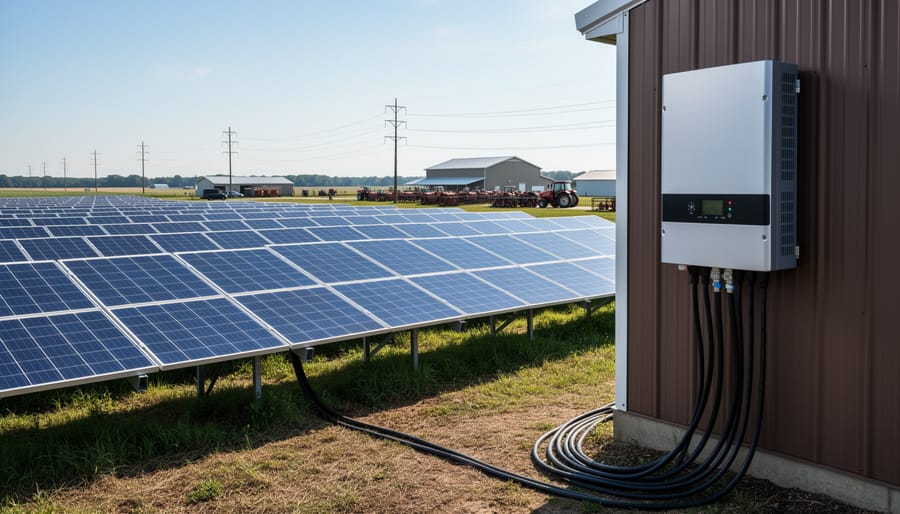
The most important safety feature is an automatic disconnect system, sometimes called anti-islanding protection. This clever technology immediately shuts down your solar farm if the main grid loses power. Why does this matter? When utility crews work on power lines during outages, they need absolute certainty that no electricity is flowing through those lines. Your disconnect system gives them that confidence, making repairs safer and faster for everyone in your community.
Your solar system will also need protective equipment like circuit breakers and grounding systems, similar to what’s already in your home but scaled up for larger power production. Grid operators will inspect these safety features during the interconnection process to verify everything meets local electrical codes.
Here’s the good news: while these requirements might sound complex, your solar installer handles the technical details and ensures full compliance. These safety standards actually protect your investment by preventing equipment damage and liability issues. Once approved, you can generate clean energy with complete peace of mind.
Step 3: Inspection and Permission to Operate
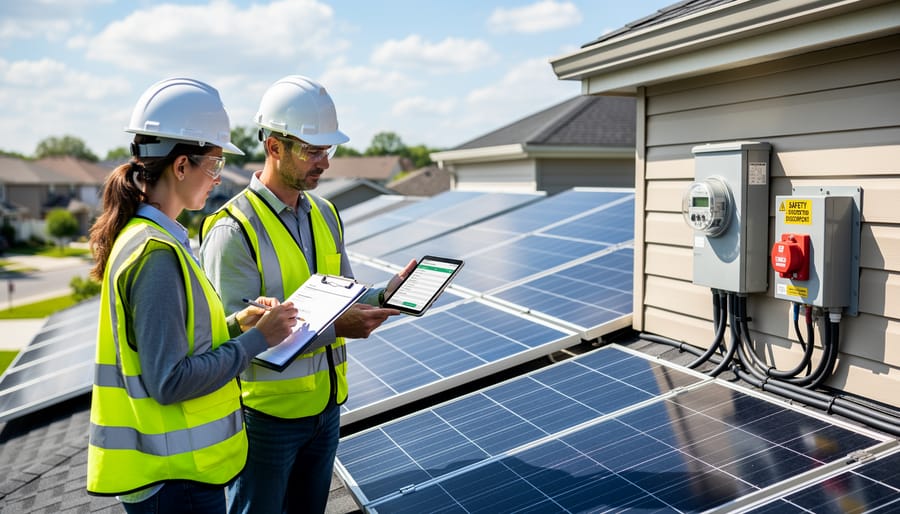
Before your solar farm can start feeding clean energy into the grid and earning you credits, it needs to pass inspection. Your utility company will send a representative to verify that everything meets safety standards and complies with local electrical codes. They’ll check that all equipment is properly installed, grounded, and connected according to approved plans.
During this visit, they’ll also install or activate your bidirectional meter, which tracks both the electricity you use and the excess power you send back to the grid. This meter is essential for net metering credits that reduce your energy bills.
Once inspection is complete and approved, you’ll receive your Permission to Operate (PTO). This official authorization allows you to flip the switch and start generating power. The entire inspection process typically takes a few hours, though scheduling can sometimes add a few weeks to your timeline.
Good news: your installer usually handles coordinating these inspections and addressing any concerns. Think of PTO as your solar farm’s official launch day, when your investment begins paying dividends through reduced electricity costs and potential income from excess power generation.
Realistic Timeline Expectations
Connecting a solar farm to the grid typically takes 12 to 36 months from initial planning to final energization. The timeline varies significantly based on your project’s size and location. Smaller community solar projects might move faster, while larger commercial installations often need more time for approvals and infrastructure upgrades.
Several factors influence your timeline. Grid capacity in your area plays a major role—if the existing infrastructure can easily accommodate your system, you’ll save months. The utility company’s workload and application backlog also matter. Rural areas sometimes experience longer waits due to fewer utility staff, though some regions have streamlined processes specifically for agricultural solar projects.
You can speed things up by submitting complete applications, responding quickly to utility requests, and working with experienced solar installers who understand local requirements. Pre-application consultations with your utility company help identify potential roadblocks early. While the wait feels lengthy, remember that once connected, your solar farm generates income for 25-plus years.
Financial Benefits: How Grid Connection Turns Your Farm into a Mini Power Plant
Selling Power Back: Revenue Generation
One of the most exciting benefits of connecting your solar farm to the grid is the opportunity to turn sunshine into actual income. When your system produces more electricity than you need, that excess power flows back into the grid, and your utility company compensates you for it.
Two main programs make this possible. Net metering works like a two-way meter that spins backward when you’re generating surplus energy. You essentially bank credits during sunny periods and use them when your system isn’t producing, like at night. Any remaining credits typically translate to payments or bill reductions, effectively turning your solar farm into a revenue generator.
Feed-in tariffs offer a different approach by paying you a set rate for every kilowatt-hour of solar electricity you produce, regardless of your own consumption. These rates vary by location and utility provider, but they’re designed to make solar investment financially attractive.
The financial benefits are substantial. Many solar farm owners see their systems pay for themselves within 7-10 years through energy savings and revenue generation combined. After that point, the income becomes pure profit for decades to come, since solar panels typically last 25-30 years or longer with minimal maintenance.
Reducing Operating Costs
For agricultural operations, electricity costs can eat significantly into your bottom line. Irrigation pumps, cooling systems for storage facilities, and crop processing equipment all demand substantial power—often accounting for 20-40% of total operating expenses on working farms.
When you connect a solar farm to the grid, you’re essentially creating your own power plant that offsets these high energy demands. During peak sunlight hours, your solar array generates electricity that directly powers your operations, meaning you’re not pulling expensive electricity from the utility company. Any excess power flows back to the grid, earning you credits through net metering programs.
The financial impact can be substantial. Many farm owners report reducing their annual electricity bills by 70-90% after installing grid-connected solar systems. These savings compound year after year, providing predictable energy costs that protect you from utility rate increases—which have historically risen 2-4% annually.
Beyond immediate savings, grid-connected solar also provides protection against power disruptions that could damage temperature-sensitive crops or livestock operations. You’re essentially converting a major variable expense into a stable, long-term investment that pays dividends for 25-30 years, making your agricultural business more profitable and resilient.
Agricultural Solar Incentives and Programs
Farmers and agricultural property owners have access to unique financial opportunities that make solar installations even more affordable. The USDA offers the Rural Energy for America Program (REAP), which provides grants covering up to 25% of project costs and low-interest loans for solar installations. This program specifically helps rural businesses and farms reduce energy expenses while boosting their bottom line.
Beyond USDA support, agricultural solar projects qualify for federal tax credits and incentives, including the Investment Tax Credit (ITC) that covers 30% of installation costs. Many states offer additional rebates and property tax exemptions for farm solar systems. Some utility companies even provide special rates for agricultural customers who generate their own power. These combined incentives can cover 50% or more of your total investment, dramatically shortening payback periods and maximizing long-term savings on your farm’s energy bills.
Common Myths About Solar Farm Grid Connections
If you’re considering solar farming, you’ve probably heard some worrying rumors about grid connections. Let’s clear up the most common misconceptions so you can make an informed decision.
One persistent myth is that connecting to the grid is impossibly complicated and requires specialized engineering knowledge. In reality, your solar installer handles the technical aspects, working directly with your utility company throughout the process. You don’t need to understand electrical engineering any more than you need to know how to build a car to drive one. Your installer takes care of the paperwork, equipment specifications, and coordination.
Another concern is that grid connections are prohibitively expensive. While there are interconnection costs, they’re typically a small fraction of your overall solar investment, usually ranging from a few hundred to several thousand dollars depending on your system size and location. Many utility companies have standardized fee structures that make costs predictable. The good news? These upfront expenses are quickly offset by the energy savings and potential income from selling excess power back to the grid.
Some people worry that solar systems are unreliable or will cause power disruptions to their home or neighbors. Modern solar installations include automatic safety disconnects that immediately shut down during grid outages, protecting utility workers and your equipment. Your system undergoes rigorous inspections before activation, ensuring it meets all safety standards. You won’t experience random blackouts, and your neighbors won’t even notice your system is there.
Perhaps the biggest myth is that the grid connection process takes years. While timelines vary by location and utility company, most residential and small agricultural solar systems receive approval within a few weeks to several months. By working with experienced installers who understand local utility requirements, you can avoid delays and move forward with confidence in your solar investment.

Connecting a solar farm to the grid opens up a world of possibilities for agricultural property owners. Beyond the obvious environmental advantages, grid-connected solar systems deliver tangible financial benefits that can transform your farm’s bottom line. You’ll gain energy independence while potentially generating substantial revenue through net metering and renewable energy credits. The surplus power your solar installation produces doesn’t go to waste—it flows back into the grid, offsetting your electric bills and possibly creating an additional income stream.
The technical process of grid connection, while involving multiple steps and inspections, is well-established and manageable. Local utilities and solar installers handle much of the complexity, guiding you through interconnection agreements and ensuring your system meets safety standards. Modern inverters and smart meters work seamlessly to manage the flow of electricity, making the entire operation automatic and worry-free.
For farmers and rural landowners, solar farms represent more than just clean energy—they’re a practical investment in your property’s future. The combination of reduced operating costs, potential revenue generation, and environmental stewardship makes grid-connected solar an increasingly attractive option. If you’ve been considering solar for your agricultural property, now is an excellent time to explore your options and discover how this proven technology can benefit your operation for decades to come.