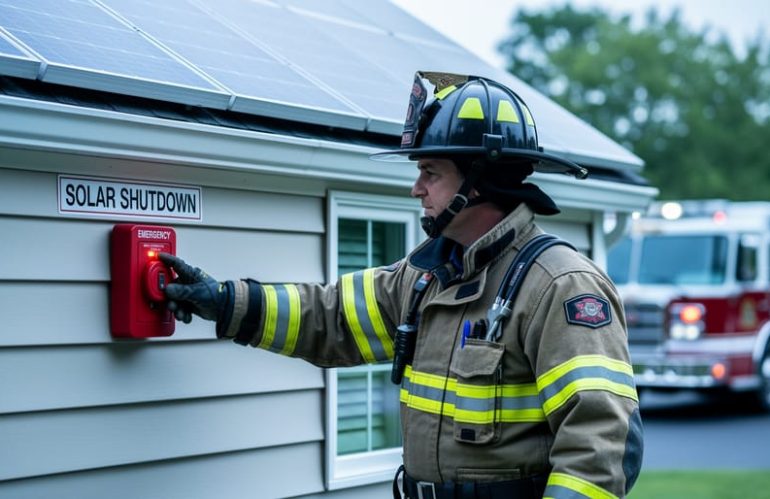
When firefighters arrive at a burning home, they face an invisible danger: solar panels on your roof continue generating potentially lethal electricity even during emergencies. Rapid shutdown devices solve this critical safety concern by automatically cutting power flow within seconds when your system disconnects from the grid or when emergency responders flip a clearly marked switch.
These compact safety components have become standard equipment in modern solar installations, functioning like a circuit breaker specifically designed for your solar array. The moment your system detects a problem or receives a shutdown signal, voltage drops to safe levels throughout your rooftop panels and wiring—protecting both emergency personnel and your family.
The good news? If you’re installing solar panels today, this protection comes built into your system at minimal additional cost. Rapid shutdown technology has evolved from bulky add-ons to streamlined components often integrated directly into inverters and panel-level optimizers you’re already purchasing. Understanding how these devices work helps you appreciate the multiple layers of protection engineered into your home solar system, turning a potential safety concern into a resolved issue that shouldn’t factor into your decision to go solar.
Why First Responders Need Special Protection Around Solar Panels
Solar panels are remarkably efficient at doing exactly what they’re designed to do: convert sunlight into electricity. Here’s something many homeowners don’t realize—solar panels don’t have an “off switch” in the traditional sense. As long as sunlight hits them, they’re generating electrical current. This is wonderful for producing clean energy, but it creates a unique challenge during emergencies.
Imagine a firefighter responding to a house fire. Normally, they can cut power to a home by disconnecting it from the utility grid. But with solar panels on the roof, the panels themselves keep producing hundreds of volts of electricity, even while the house is burning. This means live electrical wires can remain energized throughout the entire structure, creating serious shock and electrocution risks for emergency personnel trying to save lives and property.
Before rapid shutdown technology became standard, firefighters often faced an impossible choice: risk exposure to live electrical currents or allow fires to cause more extensive damage. Some fire departments developed specialized protocols, including creating “no-go zones” around solar equipment, which sometimes meant letting certain areas burn rather than putting crews in danger.
This wasn’t just a theoretical concern—it was a real barrier that made emergency responders understandably cautious about solar-equipped homes. The challenge inspired the development of comprehensive fire safety measures specifically designed for solar installations.
The good news? Rapid shutdown devices solve this problem elegantly and automatically. They ensure that when emergencies strike, the system can be quickly de-energized, allowing first responders protect homes without unnecessary risk. Today’s solar systems are designed with everyone’s safety in mind from day one.
What Rapid Shutdown Devices Actually Do
The Switch That Saves Lives
Think of a rapid shutdown device as an emergency off-switch for your solar panels. When activated, it immediately cuts the high-voltage electrical current flowing from your panels to nearly zero within seconds.
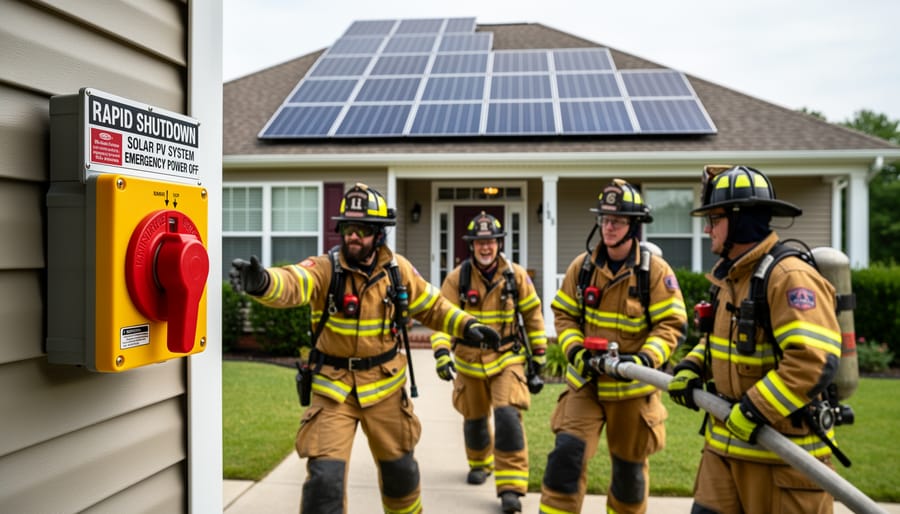
Here’s how it works in practice: First responders arriving at your home can activate the system using a clearly marked switch, typically located near your electrical meter or main service panel. Some systems also trigger automatically when they detect the power grid has gone down or if there’s a disruption in your solar system.
Once activated, the device stops the electrical current right at each individual panel on your roof, rather than letting electricity continue flowing through the wires. This is the key safety feature. Within 30 seconds, the voltage drops to safe levels throughout your entire system, similar to unplugging an appliance from the wall.
The result? Firefighters can safely work on your roof without worrying about live electrical wires, and emergency crews can confidently respond to any situation at your home. It’s a simple, reliable safety measure that works behind the scenes, giving you and your family peace of mind while enjoying all the benefits of clean, renewable energy.
How Fast Is ‘Rapid’?
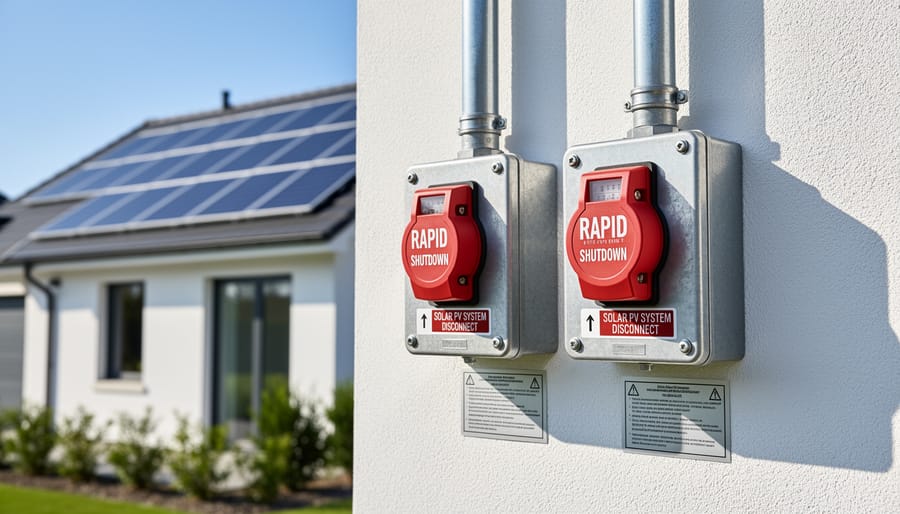
When installers say “rapid,” they really mean it. These systems typically shut down your solar panels within 10 to 30 seconds of being activated. That’s about as long as it takes to flip a light switch and walk across your living room.
In practical terms, this quick response gives firefighters and emergency personnel almost immediate access to your roof without worrying about live electrical currents. Think of it like turning off your stove before leaving the house – it’s a simple safety step that prevents potential hazards. For homeowners, this speed means your system protects both your family and first responders automatically, without you needing to do anything during an emergency. The technology works in the background, so you get peace of mind without any extra effort on your part.
National Electrical Code Requirements You Should Know
Since 2017, the National Electrical Code has required rapid shutdown systems for most residential solar installations, and this is actually great news for homeowners. Rather than viewing this as red tape, think of it as an important layer of protection that’s now built into every modern solar system at no extra cost to you.
The requirement came about after extensive collaboration between solar professionals, firefighters, and safety experts who wanted to ensure solar energy could grow safely. What they created was a straightforward standard: solar panels must be able to reduce their electrical output to safe levels within seconds when needed. This gives emergency responders peace of mind and protects your family during maintenance or unexpected situations.
Here’s the best part for you as a homeowner: because these requirements are now universal, rapid shutdown technology has become incredibly affordable and reliable. Manufacturers have refined their designs, and installers include them as standard equipment. You won’t face surprise costs or complicated upgrades down the road.
When you get quotes for solar installation today, rapid shutdown is already factored in, working quietly alongside other solar safety standards to protect your investment. Modern systems meet these requirements seamlessly, often using the same inverter technology that’s already converting your solar energy into usable electricity. It’s simply part of what makes today’s solar systems safe, smart, and ready for decades of reliable performance.
Types of Rapid Shutdown Solutions for Your Home
Module-Level Shutdown (The Modern Standard)
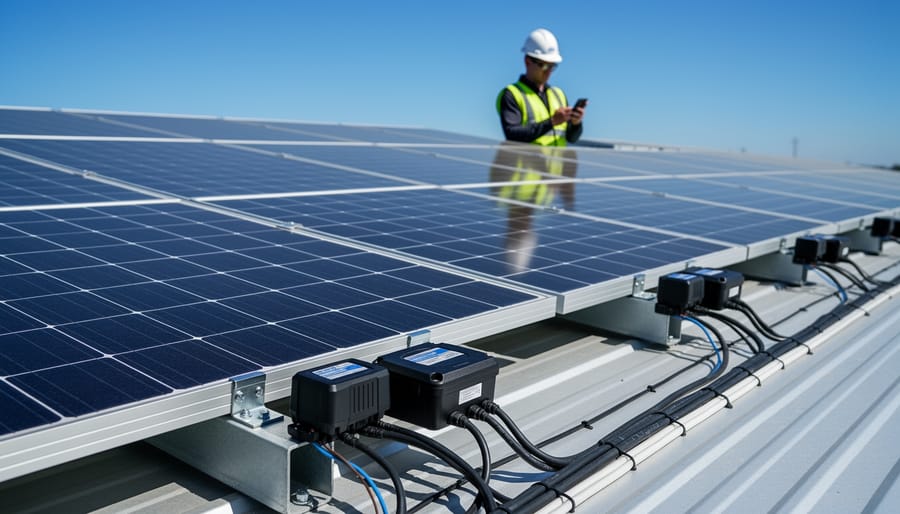
Today’s solar systems often come with built-in rapid shutdown technology through power optimizers or microinverters—devices attached to each individual panel. Think of these as smart safety switches that live right on your roof.
Power optimizers work alongside a central inverter, stepping down the voltage at each panel when needed. Microinverters, on the other hand, convert power right at the panel level, eliminating high-voltage DC altogether. Both approaches mean that when your system shuts down, each panel reduces to safe voltage levels within seconds.
This module-level approach offers the most comprehensive protection available. If firefighters need roof access during an emergency, they’re not dealing with energized wires carrying hundreds of volts. Your installer can easily service individual panels without powering down your entire array. And because these systems monitor each panel individually, you’ll also spot performance issues faster—meaning better energy production and savings over time.
The best part? Many modern solar installations include this technology as standard equipment. You’re getting superior safety features that also happen to optimize your system’s performance, all without paying extra for separate shutdown equipment.
System-Level Shutdown Devices
System-level shutdown devices work like a master control switch for your entire solar panel system. Instead of having shutdown equipment at each individual panel, this centralized approach places the main safety controls in one location, typically near your inverter or electrical panel.
These solutions are most common in residential installations where the solar panels are located close to the inverter and main electrical system. They’re particularly effective for straightforward rooftop installations where running control wires to a central location is simple and cost-effective.
When activated during an emergency, system-level devices quickly de-energize the conductors running from your panels to the inverter, making your roof safe for first responders within seconds. The beauty of this approach is its simplicity—fewer components mean less that can go wrong and often lower installation costs.
However, modern building codes in many areas now require module-level shutdown, which offers even more precise control. System-level solutions remain a reliable choice for smaller installations and can still meet safety requirements in certain jurisdictions. Your solar installer will recommend the best option based on your local regulations, roof layout, and budget considerations.
What This Means for You as a Homeowner
If you’re considering solar panels or already have them installed, rapid shutdown devices deliver real benefits that go beyond just checking a regulatory box. Here’s what matters most to you and your family.
First and foremost, you gain genuine peace of mind. Knowing that your solar system can be instantly de-energized in an emergency means you can sleep better at night. Whether it’s a fire, severe weather, or simply routine maintenance, rapid shutdown technology ensures your home’s electrical system won’t pose unnecessary risks to first responders or repair technicians working on your property.
Your insurance company may also take notice. Many homeowners report that having modern safety features, including rapid shutdown capability, can positively influence their insurance premiums or coverage terms. While policies vary, insurers increasingly recognize that homes with up-to-date solar safety systems present lower risk profiles.
There’s also the home value consideration. As solar installations become standard in many neighborhoods, buyers are getting savvier about what constitutes a quality system. A modern installation with proper safety features demonstrates that your solar investment was done right, making your home more attractive to future buyers.
Let’s address a common misconception: rapid shutdown devices don’t significantly increase your installation cost or system complexity. These devices are now standard components in virtually all new solar installations, seamlessly integrated during the initial setup. You won’t notice them in your day-to-day life, but they’re working quietly in the background, protecting your solar investment and everyone around it.
Beyond your individual home, these safety features contribute to broader community protection, making solar energy safer and more acceptable in neighborhoods everywhere.
Questions to Ask Your Solar Installer
Before signing any contract, you’ll want to ensure your solar installer is up-to-date with rapid shutdown requirements. Here are the key questions to ask that will give you peace of mind:
First, ask whether your system will be compliant with the latest NEC 2017 or 2020 rapid shutdown requirements. A reputable installer should answer confidently and explain which code applies to your location. This isn’t about making things complicated—it’s simply ensuring your system meets current safety standards.
Next, inquire about what type of rapid shutdown technology they’ll be using. Will it be module-level devices like microinverters or power optimizers, or a centralized system? Understanding this helps you know exactly how your system will work in an emergency.
Don’t forget to ask where the emergency shutoff switch will be located. You’ll want to know where it is, and more importantly, ensure it’s clearly marked and accessible to firefighters or other first responders. This is a practical detail that could matter in an emergency situation.
Finally, ask how first responders will be notified about your solar system. Will there be visible signage on your electrical panel or near your meter? Many jurisdictions require specific labeling, and knowing this information helps everyone stay safe.
Remember, a quality installer will welcome these questions and provide clear, straightforward answers. If they seem evasive or dismissive about safety features, that’s your signal to keep shopping around.
Rapid shutdown devices truly represent the best of both worlds in solar technology. They provide critical safety protection for firefighters and emergency personnel who might need to respond to your home, while giving you the confidence that your solar investment includes top-tier safety features. These devices aren’t expensive add-ons or complicated upgrades—they’re simply a standard part of any quality solar installation today.
The peace of mind alone is invaluable. You get to enjoy all the financial benefits and environmental advantages of solar energy without worrying about potential safety concerns. Your system automatically becomes safe to approach within seconds when needed, protecting both your property and those who serve your community.
When choosing a solar installer, don’t hesitate to ask about their safety practices and equipment standards. Reputable companies understand that proper safety features like rapid shutdown aren’t optional—they’re fundamental to responsible solar installation. Look for installers who proactively explain these protections and include them as standard practice. Your home deserves nothing less than a solar system that’s as safe as it is sustainable.