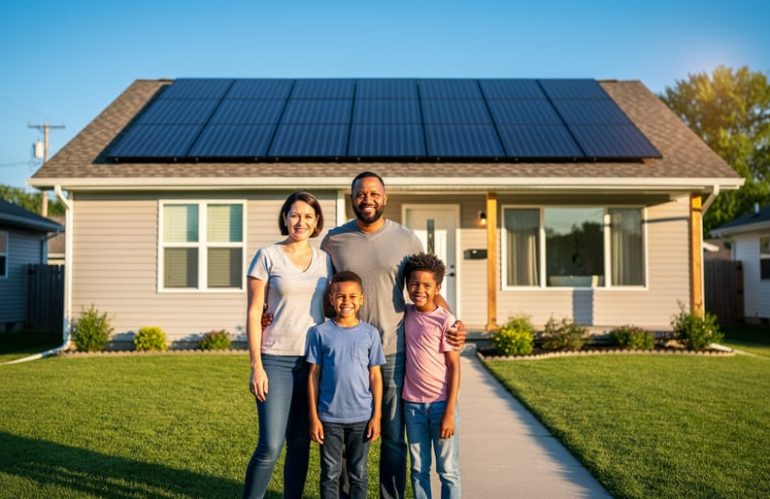
Solar energy isn’t reserved for wealthy homeowners anymore. If you’re living on a limited income and watching your electricity bills climb each month, specialized solar programs can cut your energy costs by 50% or more without requiring thousands in upfront investment. These initiatives, funded through federal incentives, state programs, and utility partnerships, make clean energy accessible regardless of your credit score or current financial situation.
Low income solar programs work differently than traditional solar installations. Instead of purchasing expensive equipment, you gain access to solar power through community solar gardens, lease agreements with no money down, or direct installation assistance that covers most or all costs. The result is immediate savings on your monthly utility bills while contributing to a cleaner environment.
You don’t need perfect credit, homeownership, or cash reserves to qualify. Most programs simply verify your household income falls within specific guidelines, typically 80% or less of your area’s median income. Some programs extend benefits to renters, Section 8 residents, and those receiving government assistance like SNAP or Medicaid. The barrier to entry is intentionally low because these programs aim to deliver financial relief to families who need it most while expanding renewable energy access across all communities.
What Are Low-Income Solar Programs?
Low-income solar programs are initiatives designed to make solar energy accessible and affordable for families who might otherwise struggle with the upfront costs. These programs exist because everyone deserves the opportunity to lower their electricity bills and contribute to a cleaner environment, regardless of income level.
Let’s clear something up right away: solar isn’t just for wealthy homeowners anymore. That’s an outdated myth. Today, various organizations work together to bring solar power within reach for low and moderate-income households. These include federal and state government agencies, local utility companies, nonprofit organizations, and community groups. Each offers different types of support to make solar possible for more families.
These programs typically provide assistance in several ways. Some offer free or heavily discounted solar panel installation, while others provide grants or low-interest loans that make monthly payments manageable. Many programs also include special financing options with no money down, eliminating that traditional barrier that keeps families from going solar.
The purpose goes beyond just installing panels on your roof. These initiatives aim to reduce your monthly energy costs permanently, putting more money back in your pocket for other essentials. They also help create energy independence for communities that have historically faced higher energy burdens, meaning they spend a larger percentage of their income on utility bills.
You might wonder if solar really worth it for your situation. For low-income households, the answer is often a resounding yes, especially when these programs eliminate or drastically reduce installation costs while delivering immediate savings on electricity bills.
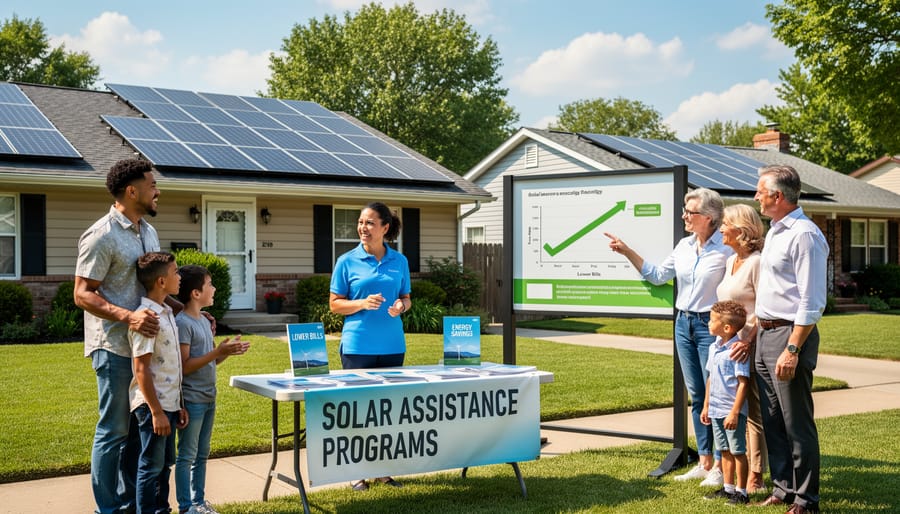
Do You Qualify? Income Requirements Explained Simply
The good news? Most low-income solar programs use straightforward criteria that are easier to meet than you might think. You don’t need perfect credit or a large down payment to potentially qualify for assistance with going solar.
The most common qualification is income-based. Most programs use what’s called Area Median Income, or AMI, as their benchmark. Typically, households earning at or below 80% of their area’s median income qualify, though some programs extend benefits to those earning up to 100% AMI. This means a family of four in many areas could earn $70,000-$90,000 annually and still qualify. The specific number varies by location and household size, so you might be eligible even if you don’t consider yourself “low income.”
Homeownership is another factor, though it’s not always required. Many programs specifically serve homeowners because solar panels are installed on the property. However, some initiatives also help renters through community solar programs, where you benefit from solar energy without panels on your roof. Before exploring all the essential facts about solar, it helps to understand these basic qualifications.
Additional requirements might include having a suitable roof with adequate sun exposure, being current on your utility bills, or living in a qualifying zip code. Some programs prioritize households with high energy burdens, meaning families spending a large percentage of income on utility bills.
Here’s the best part: checking your eligibility is simple and completely free. Most programs offer online screening tools or phone consultations that won’t impact your credit score. You’re simply gathering information, not applying for credit. Many organizations will even help you navigate the qualification process and identify which programs best fit your situation. Don’t let uncertainty hold you back from exploring options that could significantly reduce your energy costs.
The Different Types of Low-Income Solar Programs Available
State and Federal Solar Assistance Programs
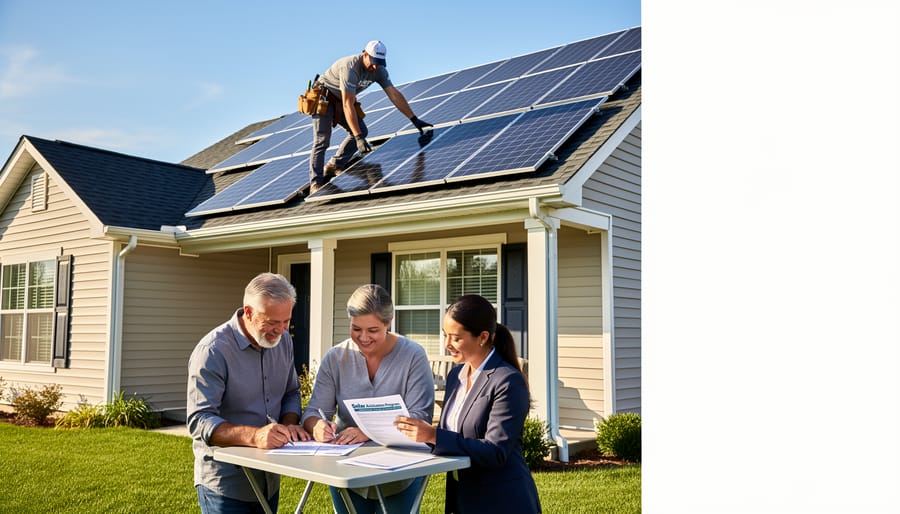
If you think solar is only for wealthy homeowners, think again. Several powerful programs exist specifically to make solar energy accessible to households with limited income—often at no cost whatsoever.
The Solar for All initiative, funded through the EPA’s Greenhouse Gas Reduction Fund, represents a groundbreaking opportunity. This program awards billions of dollars in grants to states, tribes, and communities specifically to deploy residential solar systems for low-income households. Many participating areas offer completely free solar installations or cover the full cost of equipment and installation through grants—meaning you could have solar panels on your roof without paying a penny upfront or monthly.
Beyond Solar for All, numerous state-specific programs provide deep discounts or no-cost solar installations. California’s Single-Family Affordable Solar Homes program, New York’s Affordable Solar Initiative, and similar programs in states like Massachusetts, Illinois, and New Jersey routinely cover 70-100% of solar installation costs for qualifying households. These aren’t loans you need to repay—they’re genuine grants or discounts designed to eliminate financial barriers.
The beauty of these government solar incentives is their straightforward mission: getting solar panels on your home regardless of your ability to pay. Programs typically target households earning 80% or less of area median income, seniors on fixed incomes, and those already enrolled in energy assistance programs. The application processes are surprisingly simple, and partnering installers handle most paperwork. The result? Immediate savings on electric bills without the traditional upfront investment that typically puts solar out of reach.
Utility Company Solar Programs
Many utility companies across the country now offer solar programs specifically designed for customers who can’t install panels on their property. These programs make solar energy accessible without any rooftop installation, upfront costs, or homeownership requirements.
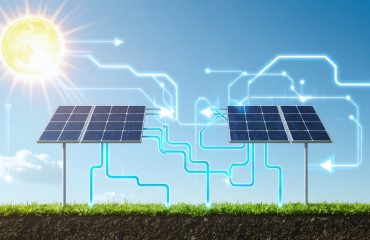
Community solar is the most popular option available through utilities. Think of it as a solar garden that multiple households share. Your utility company builds or partners with a solar facility in your area, and you subscribe to receive a portion of the energy it produces. The solar credits appear directly on your monthly electric bill, typically reducing your costs by 5% to 15%. You’re essentially buying clean energy at a discount without touching your roof.
The best part? There’s no installation, no maintenance responsibilities, and no long-term contracts in most cases. If you move, you can often transfer your subscription to your new address or simply cancel. Many utilities reserve a portion of their community solar capacity specifically for low-income households, offering even deeper discounts of 20% to 50% off electricity costs.
Some utilities also offer bill assistance programs that incorporate solar incentives. These might include additional credits on your bill when you participate in community solar, or rebates that further reduce your energy costs. Contact your utility provider directly and ask about their community solar options, income-qualified programs, and any current waitlists. Many programs fill up quickly, so getting on a waitlist now means you’ll be ready when spots open up.
Nonprofit and Community Solar Initiatives
Beyond government programs, nonprofit solar organizations and community solar initiatives offer innovative solutions tailored specifically for low-income households. These programs often provide benefits that go beyond traditional incentives.
Many nonprofits partner with local utilities and foundations to offer completely free solar installations for qualifying families, eliminating all upfront costs. Organizations like GRID Alternatives have installed systems for thousands of low-income homeowners across the country, providing immediate electricity bill savings without any financial burden.
Community solar programs present another accessible option, especially for renters or those with unsuitable roofs. These shared solar farms allow you to subscribe to a portion of a larger solar array and receive credits on your electricity bill, typically at 10-20% below your current rate. No rooftop installation is required, and there are often no signup fees for low-income participants.
Local community action agencies and religious organizations frequently run solar assistance programs with heavily subsidized pricing or payment plans based on your income. These grassroots initiatives understand the unique challenges facing your community and can provide personalized guidance through the entire process.
Solar Leases and Power Purchase Agreements for Low-Income Households
If you don’t have money for an upfront investment, solar leases and Power Purchase Agreements (PPAs) let you go solar with zero down payment. Here’s the simple difference: with a solar lease, you pay a fixed monthly amount to use the solar panels on your roof. With a PPA, you only pay for the actual electricity the panels produce, usually at a lower rate than your utility company charges.
Both options mean you start saving on your electric bill immediately, often from day one. The solar company owns and maintains the equipment, so if anything breaks or needs servicing, you simply call them and they handle it at no cost to you. You never pay for repairs or upkeep.
Think of it like renting instead of buying. You get all the benefits of clean energy and lower bills without the responsibility of ownership. Many low-income solar programs partner with solar companies to offer these arrangements with even better terms than standard market rates, making your monthly savings even greater. The application process is straightforward, and approval doesn’t always require perfect credit.
The Real Financial Benefits You’ll See
Let’s talk real numbers, because that’s what matters most when you’re making decisions about your home and budget. When you join a low income solar program, the financial benefits start showing up right away and keep growing year after year.
The most immediate change you’ll notice? Your monthly electricity bill drops dramatically. Many program participants see reductions of 50% to 90% on their bills, which translates to keeping an extra $50 to $150 in your pocket every single month. That’s money you can redirect toward groceries, medications, car repairs, or simply building up your emergency fund. Some programs guarantee savings from day one, meaning you’ll never pay more than you’re currently spending on electricity.
Here’s another powerful benefit: protection from rising energy costs. Traditional electricity rates have increased by about 15% over the past decade, and they’re expected to keep climbing. Once you lock in solar power, you’re essentially freezing your energy costs. While your neighbors face unpredictable rate hikes year after year, you’ll have stable, predictable energy expenses. Over 20 years, this protection alone can save you thousands of dollars compared to sticking with traditional power.
Your home value gets a boost too. Studies consistently show that homes with solar panels sell for more than comparable homes without them. Buyers recognize the value of lower utility bills and are willing to pay a premium for that benefit. Even if you’re not planning to sell anytime soon, it’s reassuring to know you’re building equity.
The long-term picture is even brighter. Over a typical 25-year solar panel lifespan, participants in low income programs can save between $10,000 and $30,000 in total energy costs. That’s genuinely life-changing money that stays in your family rather than going to the utility company. These aren’t just possibilities, they’re documented outcomes that thousands of families are already experiencing.
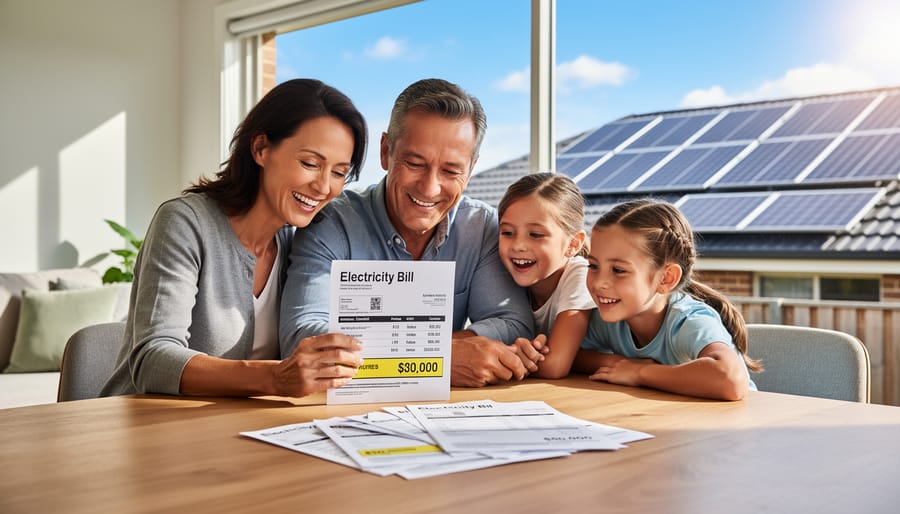
How to Find and Apply for Programs in Your Area
Finding and applying for low-income solar programs is simpler than you might think. Start by checking your state’s energy office website, where most programs are listed with clear eligibility requirements. Many states maintain dedicated pages for renewable energy assistance that are updated regularly with current offerings.
Your utility company is another valuable resource. Contact their customer service department and ask specifically about solar programs for income-qualified customers. Many utilities partner with nonprofits or have their own assistance programs they don’t heavily advertise. Don’t be shy about asking—these representatives are there to help you understand your options.
Local community action agencies and nonprofit organizations often administer solar programs directly. Search online for “community action agency” plus your city or county name. These organizations specialize in connecting low-income households with energy assistance and can walk you through available programs.
Before reaching out, gather some basic information to streamline the process: recent utility bills, proof of income (pay stubs or tax returns), and information about your home ownership status. Having these documents ready helps you quickly determine which programs fit your situation.
Residential Solar Panels can also help you navigate the solar installation process and identify programs you qualify for in your area. We understand that researching options can feel overwhelming, which is why we’re here to guide you every step of the way.
Remember, program administrators want to help you succeed. They’ve designed these programs specifically for households like yours, so approach the process with confidence. Most applications are straightforward, and support is available if you need assistance completing paperwork.
Common Myths About Low-Income Solar Programs (Busted)
Let’s clear up some common misunderstandings that stop people from exploring solar programs designed specifically for them.
Myth: The solar panels will be lower quality. Reality: Low-income solar programs use the same high-quality panels and equipment as traditional installations. Many programs partner with reputable solar companies and must meet strict state standards. You’re getting professional-grade solar technology, just with financial assistance to make it affordable.
Myth: There are hidden costs or catches. Reality: Legitimate programs are transparent about all costs upfront. Many offer zero-down financing or no-cost installations. Before signing anything, you’ll receive clear documentation explaining your obligations. Government-backed and nonprofit programs are specifically designed to eliminate financial barriers, not create new ones.
Myth: You need perfect credit to qualify. Reality: Most low-income solar programs don’t require credit checks at all. Qualification is typically based on your income level, participation in assistance programs like SNAP or Medicaid, or your household size. Some programs specifically cater to those with challenged credit histories.
Myth: The application process is too complicated. Reality: While you’ll need to provide some documentation, most programs have streamlined applications with support staff ready to help. Community organizations and solar nonprofits often offer free assistance with paperwork. The process is designed to be accessible, not overwhelming.
Don’t let misconceptions keep you from exploring options that could significantly reduce your energy bills while helping the environment.
Solar energy is no longer reserved for those with deep pockets. Low-income solar programs have transformed the renewable energy landscape, making clean power accessible to families who need it most. Whether you qualify for government rebates, community solar programs, or nonprofit assistance, there’s likely a pathway to solar savings that fits your situation.
The financial benefits are real and immediate. Lower monthly bills, protection from rising energy costs, and potential tax credits can significantly improve your household budget. At the same time, you’re contributing to a healthier environment for your community and future generations. It’s genuinely a win-win scenario.
Don’t let outdated assumptions hold you back. The programs outlined in this guide exist specifically to help families like yours access solar energy. Start by checking your eligibility with your state energy office or local utility provider. Research community solar options in your area. Reach out to nonprofit organizations dedicated to energy assistance. The first step is simply exploring what’s available. Your journey toward affordable, clean energy starts today, and the benefits—both financial and environmental—are well worth the effort.