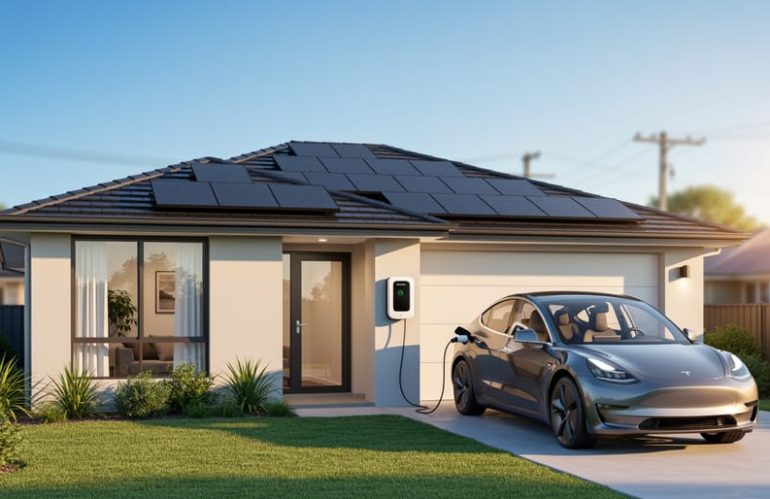
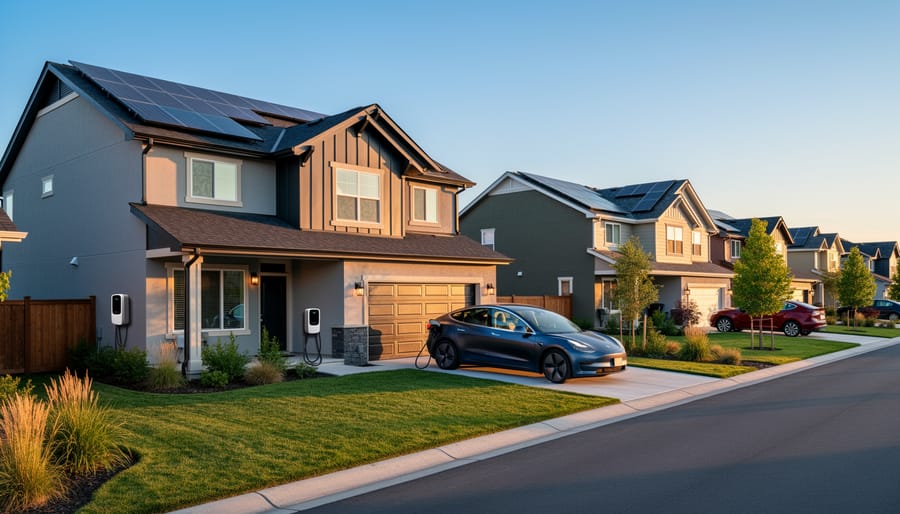
Imagine waking up to sunlight that powers your coffee maker, charges your electric vehicle, and keeps your home comfortable—all while your electric meter runs backward, earning you credits instead of bills. A zero energy home produces as much clean energy as it consumes over the course of a year, transforming you from an energy consumer into an energy producer. This isn’t science fiction or a luxury reserved for the wealthy. It’s an achievable reality that thousands of homeowners are embracing right now, combining smart design, solar technology, and intelligent energy management to eliminate their power bills permanently.
The path to becoming an energy independent home starts with understanding three simple components: reducing energy waste through efficient appliances and insulation, generating clean power through solar panels, and managing that energy intelligently with modern monitoring systems. While the concept sounds complex, modern technology has made the transition surprisingly straightforward. Today’s home energy management systems work automatically in the background, optimizing when your appliances run, storing excess solar power, and ensuring you never think twice about your energy use.
The financial case is equally compelling. With federal tax credits covering up to 30% of installation costs, rapidly declining solar prices, and elimination of monthly electric bills, most homeowners see complete returns within 7-10 years. After that, you’re living essentially for free while your neighbors continue paying rising utility rates year after year. The real question isn’t whether zero energy homes make sense—it’s whether you can afford to keep paying for electricity when you could be producing it yourself.
What Makes a Home ‘Zero Energy’ (It’s Not What You Think)
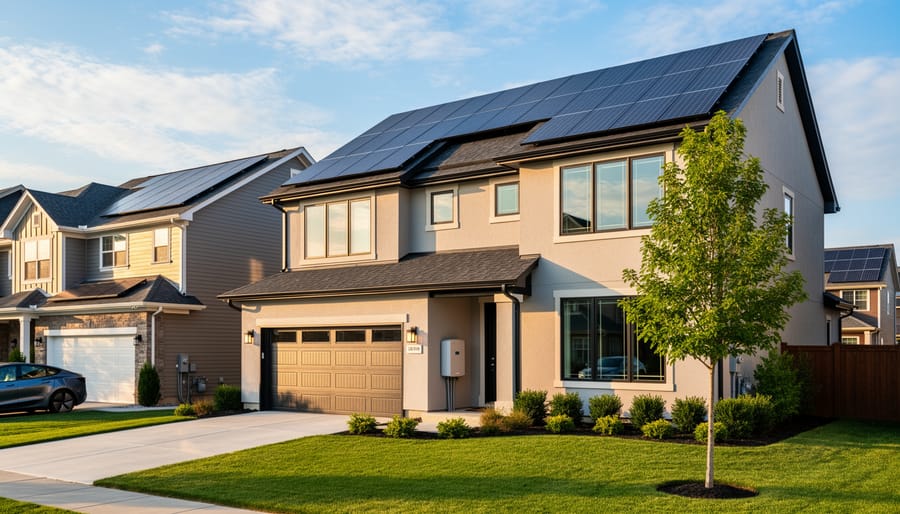
The Simple Math Behind Energy Independence
Achieving zero energy is simpler than most people think. The formula boils down to this: when your solar panels produce as much energy over a year as your home consumes, you’ve reached zero. Add battery storage to the mix, and you can actually eliminate those monthly utility bills entirely.
Here’s how it works in practice. Let’s say your home uses 30 kilowatt-hours of electricity daily. On a sunny summer day, your solar system might generate 40 kilowatt-hours. That extra 10 kilowatt-hours either feeds back to the grid (earning you credits) or charges your battery for nighttime use. During winter, when production drops to 20 kilowatt-hours daily, you draw from those banked credits or your stored energy to make up the difference.
A real-world example: a typical 2,000-square-foot home in California uses about 900 kilowatt-hours monthly. A properly sized solar array of 20-25 panels can generate that same amount over the course of a month. When you pair this with a home battery system, you store excess daytime production to cover evening peaks when the sun isn’t shining.
The beauty of modern energy management systems is they handle all this balancing automatically. You don’t need to calculate anything or flip switches. The system monitors your production, tracks your consumption, and optimizes your storage, ensuring you use every ray of sunshine efficiently while keeping your home powered around the clock.
Why Traditional Homes Keep You Dependent
Think about your current relationship with your utility company. Every month, electricity flows one way—into your home—and money flows the other way—out of your wallet. You have almost no control over this arrangement. When electricity rates go up, your bill goes up. When you use more energy during peak hours, you pay premium prices. It’s a dependency that’s been baked into homeownership for over a century.
Traditional homes weren’t designed with energy independence in mind. They’re purely consumers, not producers. Your house takes energy from the grid without any ability to generate its own or make intelligent decisions about when and how to use power. There’s no conversation happening between your home and your energy needs—just a meter spinning faster every time you turn on an appliance.
This one-way relationship leaves you vulnerable to factors completely outside your control. Utility rate increases, grid instability, and seasonal price fluctuations all impact your budget, and there’s nothing you can do about it except try to use less or pay more. Even well-insulated homes with energy-efficient appliances still depend entirely on the grid.
The frustration many homeowners feel isn’t just about high bills—it’s about the lack of control. You’re essentially renting your energy supply month after month, with no ownership, no production capability, and no intelligence managing your consumption. That’s the fundamental problem zero energy homes solve.
The Three Pillars of a Zero Energy Home
Solar Panels: Your Personal Power Plant
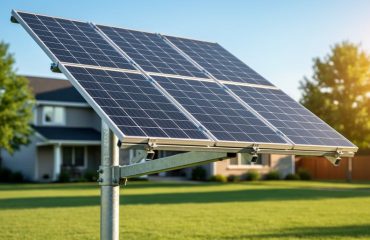
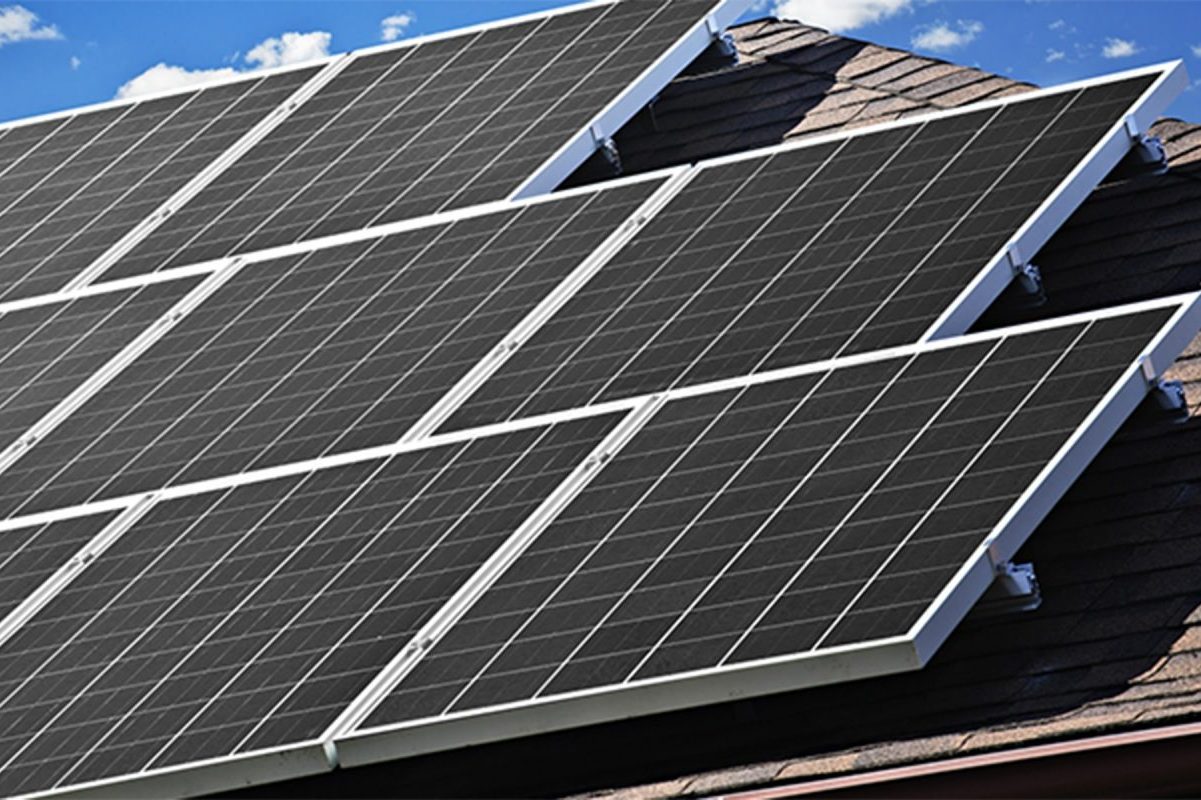
Think of solar panels as your own miniature power plant, quietly working on your roof every day. These panels convert sunlight directly into electricity through photovoltaic cells—essentially, tiny semiconductors that get excited when sunlight hits them, creating an electrical current. It’s simple, silent, and happens automatically whenever the sun shines.
For the average American home, a typical solar panel system ranges from 5 to 10 kilowatts in capacity. To put that in perspective, a 6-kilowatt system can generate roughly 7,200 to 9,600 kilowatt-hours annually, depending on your location. That’s enough to cover most or all of a typical household’s electricity needs.
Here’s the exciting part: today’s residential solar panels are dramatically more efficient than panels from even a decade ago. Modern panels convert 20-22% of sunlight into usable electricity, compared to just 15% for older models. This means you need fewer panels to generate the same power, saving roof space and installation costs.
What surprises many homeowners is how well panels perform even on cloudy days. While they produce peak power in direct sunlight, they still generate electricity from diffused light. Plus, panels actually work more efficiently in cooler temperatures, which debunks the myth that they’re only worthwhile in scorching climates.
The beauty of solar panels in a zero energy home is their predictability. Unlike fluctuating utility rates, the sun’s energy is free and abundant. Once installed, your personal power plant works for 25-30 years with minimal maintenance, consistently reducing or eliminating your electric bills while increasing your home’s value.
Energy Storage: Power When You Need It
Solar panels produce abundant energy during sunny days, but what happens when the sun sets or clouds roll in? This is where home battery storage transforms your house into a truly zero energy home.
Think of battery storage as a savings account for electricity. During peak sunlight hours, your solar panels typically generate more power than your home uses. Instead of sending that excess energy back to the grid for minimal credit, modern battery systems capture and store it for later use. When evening arrives and your family is cooking dinner, watching TV, and charging devices, you’re drawing from your own stored energy rather than purchasing electricity from the utility company.
Today’s battery systems have become remarkably efficient and affordable. A typical home battery can store enough energy to power essential appliances through the night or even keep your entire home running during a power outage. Many homeowners report using stored solar energy for 80-90% of their nighttime needs, dramatically reducing their reliance on the grid.
The freedom this provides goes beyond just cost savings. You’re no longer at the mercy of utility rate hikes or vulnerable to blackouts. During extreme weather events or peak demand periods when grid electricity is most expensive and least reliable, your home continues operating smoothly on stored sunshine.
Modern battery systems integrate seamlessly with your energy management system, automatically deciding when to store energy, when to use it, and when to draw from the grid if needed. You simply enjoy consistent power without thinking about it, all while knowing you’re powered by clean, renewable energy you generated yourself.
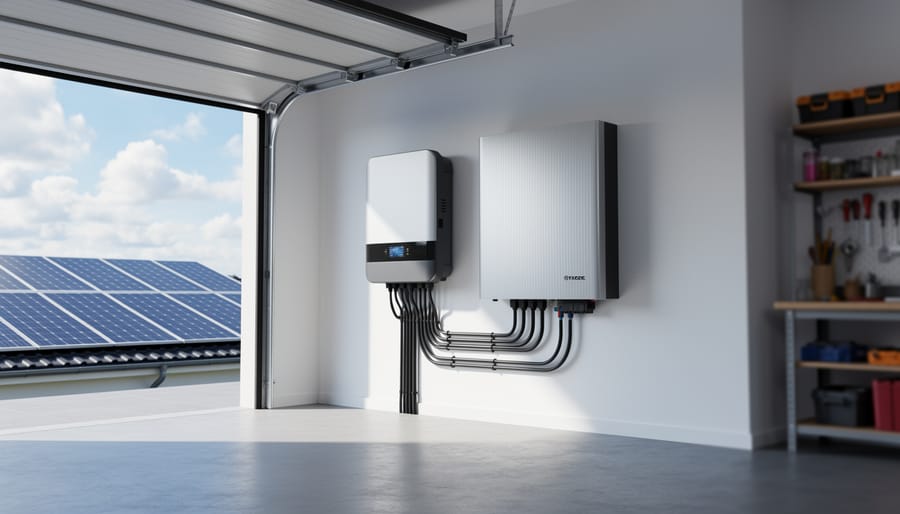
Home Energy Management Systems: The Brain of Your Energy Independence
Think of a zero energy home as a self-driving car for your energy needs. Just as you wouldn’t want to manually control every aspect of your vehicle while driving, you don’t want to constantly adjust your home’s energy use throughout the day. That’s where home energy management systems come in—they’re the intelligent brain that makes energy independence practical and effortless.
These smart systems work behind the scenes, continuously monitoring how much energy your solar panels generate, how much your home uses, and how much you’re storing in your battery. More importantly, they make real-time decisions to optimize everything automatically. When your panels are producing excess energy on a sunny afternoon, the system might direct that power to charge your electric vehicle, run your dishwasher, or store it in your battery for evening use.
The beauty of modern energy management systems is their simplicity. Through an easy-to-use app, you can see exactly where your energy is coming from and going to, but you rarely need to intervene. The system learns your household patterns and preferences, then handles the complex calculations and adjustments on its own.
For example, if a storm is forecasted, your system might prioritize battery charging. If electricity rates spike during peak hours, it automatically switches to stored battery power. These small, intelligent decisions add up to significant savings and genuine energy independence.
The myth that zero energy homes require constant tinkering or technical expertise is outdated. Today’s systems are designed for homeowners who want results without complexity. You set your preferences once—like prioritizing backup power or maximizing cost savings—and the system handles the rest. It’s like having an energy expert working for you 24/7, ensuring you get the most from your investment without lifting a finger.
How Energy Management Systems Make Zero Energy Automatic
Smart Energy Decisions You Never Have to Make
One of the most remarkable features of modern zero energy homes is what you don’t have to think about. Behind the scenes, your home energy management system works constantly to make smart decisions that maximize your solar investment and minimize your utility bills, all without requiring your attention.
When your solar panels produce more electricity than you’re currently using, the system automatically routes that excess power to your battery storage instead of sending it back to the grid. This means you’re building your own energy reserve for evening hours or cloudy days, rather than giving away your valuable solar production at minimal credit rates.
The system also learns your household patterns and can shift energy-intensive tasks to times when solar production peaks. Your water heater, for example, might heat during mid-day sunshine rather than drawing from the grid during expensive evening hours. Some advanced microgrid systems can even communicate with smart appliances, running your dishwasher or charging your electric vehicle when solar energy is abundant.
During power outages, there’s no scrambling to figure out what to do. Your system seamlessly switches to battery backup, keeping essential loads running without interruption. You won’t even notice the transition. The system continuously monitors battery levels and adjusts usage accordingly, ensuring you maintain power for critical needs.
All these complex calculations and decisions happen in the background through intuitive software you can monitor from your smartphone. You’ll see where your energy comes from and goes, but you won’t need to micromanage it. The technology handles the optimization while you simply enjoy lower bills and greater energy independence.
Watching Your Energy Independence Grow
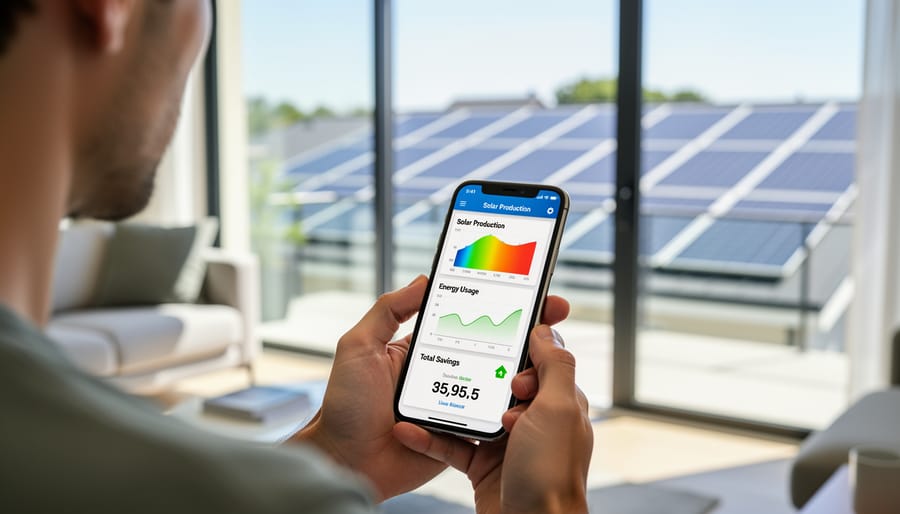
One of the most satisfying aspects of owning a zero energy home is actually seeing your energy independence in action. Modern home energy management systems come with intuitive apps and web-based dashboards that transform abstract concepts like kilowatt-hours into clear, meaningful information you can check from your smartphone or computer.
These monitoring tools display three key metrics in real-time: how much energy your solar panels are producing, how much your home is consuming, and how much you’re sending back to the grid. Many homeowners describe checking their energy dashboard as surprisingly addictive—watching your solar production spike on sunny days or seeing your battery storage kick in during peak hours provides tangible proof that your investment is working.
The best monitoring systems present this data through simple graphs and color-coded displays, not confusing spreadsheets. You’ll see daily, weekly, and monthly trends that help you understand your home’s energy patterns. Some apps even break down consumption by individual appliances if you have smart plugs or circuits installed, making it easy to identify energy hogs.
Perhaps most gratifying is the savings tracker feature common in these systems. It calculates your avoided utility costs in real dollars, showing exactly how much money you’re keeping in your pocket each month. Over time, watching these savings accumulate provides ongoing validation of your decision to go zero energy. This visibility transforms energy management from an abstract environmental goal into something concrete and personally rewarding.
The Financial Reality: What Zero Energy Costs and Saves
Breaking Down the Investment
Let’s talk numbers. Understanding the investment behind a zero energy home helps you see the real picture and make an informed decision that aligns with your financial goals.
For an average-sized home, you’re looking at three main components. Solar panels typically range from $15,000 to $25,000 before incentives, depending on your energy needs and roof size. This investment generates the electricity that powers your entire home. Battery storage systems, which store excess energy for nighttime and cloudy days, usually run between $10,000 and $15,000. Finally, an intelligent energy management system costs around $2,000 to $5,000 and acts as the brain that optimizes everything automatically.
Here’s where it gets interesting. Federal tax credits currently cover 30% of your total system cost, immediately reducing your upfront investment by thousands. Many states offer additional incentives, rebates, and performance payments that further lower the barrier to entry. When you factor these in, your actual out-of-pocket investment often drops to half the sticker price.
Think of this as buying decades of electricity upfront at today’s rates. The average American household spends over $2,000 annually on electricity, and those rates keep climbing. Your zero energy system locks in predictable, near-zero energy costs for 25-plus years while your neighbors face rising utility bills year after year.
Most homeowners see complete payback within 7 to 12 years, then enjoy free electricity for the remaining lifespan of their system. That’s not an expense—that’s putting your money to work, building equity in your home while protecting the environment and your wallet simultaneously.
Your New Monthly ‘Energy Bill’: $0
Imagine opening your electricity bill and seeing a balance of zero dollars. Not a reduced bill—actually zero. For homeowners with zero energy homes, this isn’t a fantasy. It’s their monthly reality.
Let’s break down what this means in actual dollars. The average American household spends about $2,060 per year on electricity and natural gas combined. That’s roughly $172 per month disappearing from your bank account. In a zero energy home, your solar panels and energy management system work together to produce exactly as much energy as you consume, eliminating this expense entirely.
Over 20 years, those eliminated utility bills add up to more than $41,000 in savings—and that’s using today’s rates. Energy costs historically rise about 3% annually, which means your actual savings will likely exceed $55,000 over two decades. Over 30 years, you’re looking at potential savings approaching $90,000.
Here’s where the math gets interesting. While zero energy homes typically cost 5-10% more to build than conventional homes (roughly $25,000-$50,000 for an average-sized house), your energy savings begin offsetting this premium immediately. Many homeowners reach their break-even point within 10-15 years, and everything after that is pure savings in your pocket.
The financial benefits extend beyond monthly bills, too. Zero energy homes often qualify for federal tax credits, state incentives, and reduced interest rates on certain mortgages. Your home’s resale value increases, as buyers increasingly seek energy-efficient properties. You’re essentially prepaying decades of utility bills upfront at today’s prices, then enjoying free energy while conventional homeowners watch their rates climb year after year.
Incentives That Shrink Your Payback Period
The good news? You don’t have to shoulder the entire cost of going zero energy alone. Multiple financial incentives can dramatically reduce your upfront investment and help you break even years sooner than you might expect.
Start with the federal Investment Tax Credit (ITC), which currently allows you to deduct 30% of your solar installation costs directly from your federal taxes. For a typical system costing $25,000, that’s an immediate $7,500 back in your pocket. This credit applies to solar panels, battery storage, and related equipment—making it a powerful tool for reducing your initial expense.
Many states sweeten the deal further with their own rebate programs. Depending on where you live, you might qualify for additional cash rebates, property tax exemptions, or sales tax waivers on solar equipment. Some utility companies even offer performance-based incentives that pay you for the clean energy your system produces.
Financing options have evolved considerably too. Green mortgages and specialized solar loans often feature competitive interest rates, with some programs offering zero-down payment plans. Property Assessed Clean Energy (PACE) financing lets you repay costs through your property taxes over time, and since zero energy upgrades typically increase home value, you’re building equity while reducing energy bills.
The combination of these incentives can cut your payback period in half—transforming what might seem like a distant 15-year return into a more manageable 7-8 years, after which you’re enjoying essentially free energy for decades.
Busting the Biggest Zero Energy Myths
Myth: You Need Perfect Weather Year-Round
Good news: zero energy homes work beautifully in all climates, not just sunny California or Arizona. The secret lies in two powerful backup systems that ensure your home stays powered year-round.
First, battery storage systems store excess energy your solar panels generate during sunny periods. Think of it as banking sunshine for rainy days. When clouds roll in or during winter months with shorter days, your batteries automatically supply the power you need without interruption.
Second, net metering keeps you connected to the utility grid as a safety net. During exceptionally productive months, you send extra electricity back to the grid and earn credits. When production dips in winter, you draw from those credits instead of paying full price. It’s essentially using the grid as unlimited free storage.
Together, these systems balance out seasonal variations so effectively that zero energy homes thrive in Seattle, Boston, and even Alaska. Your home management system orchestrates everything automatically, ensuring you always have power regardless of weather patterns. The result? Consistent energy independence and stable bills, no matter what Mother Nature brings.
Myth: It’s Too Complicated for Average Homeowners
Here’s a common concern: won’t managing a zero energy home require constant tinkering and technical expertise? The reality is refreshingly simple. Today’s energy management systems are designed with busy homeowners in mind, not engineers. Once professionally installed, these systems run on autopilot, intelligently monitoring your solar production, battery storage, and energy consumption without any input from you.
Think of it like your smartphone—sophisticated technology working behind the scenes while you enjoy a straightforward interface. Most systems include user-friendly apps that let you check your energy status at a glance, but they don’t require daily attention. The system automatically decides when to store excess solar energy, when to draw from your battery, and when to pull from the grid if needed.
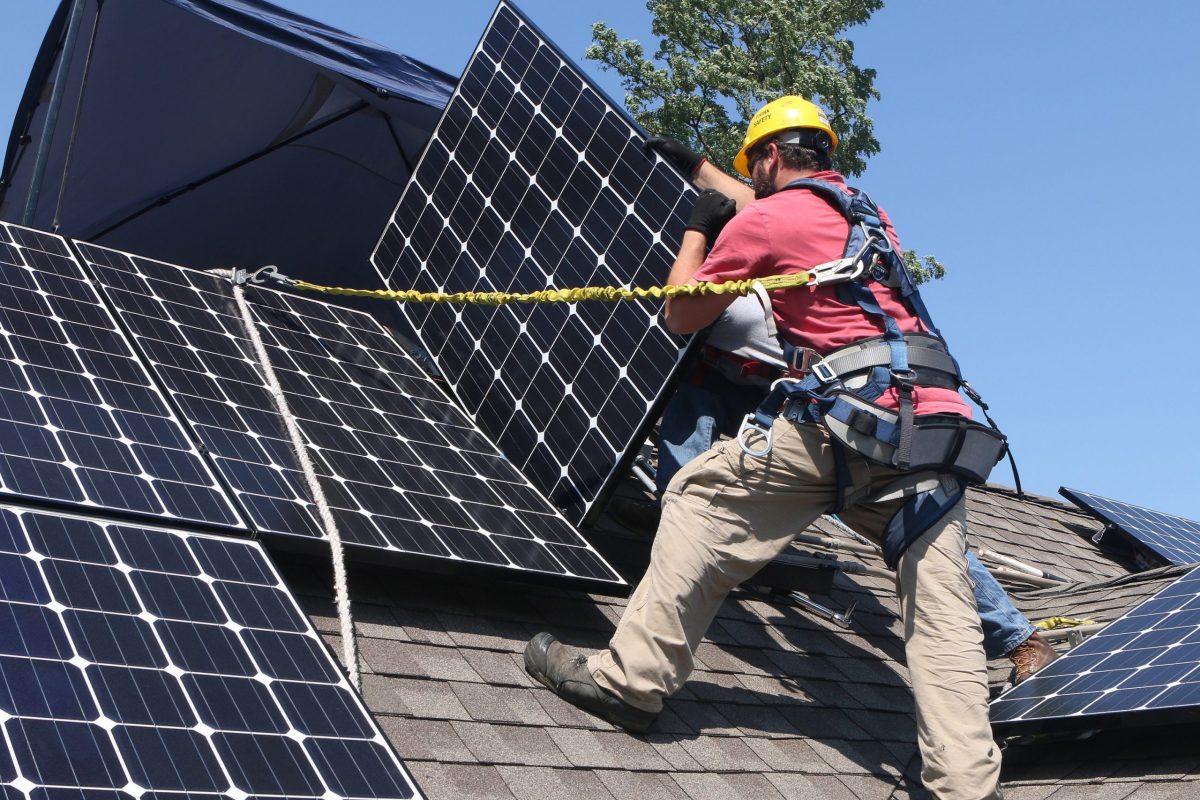
Professional installers handle all the complex setup, ensuring everything integrates seamlessly with your existing home. They’ll walk you through the basics during installation, but ongoing maintenance is minimal—typically just occasional software updates that happen automatically. You get to enjoy the benefits of energy independence and lower bills without becoming an energy expert yourself.
Achieving a zero energy home isn’t a distant dream reserved for tech enthusiasts or the ultra-wealthy. It’s a practical, achievable goal for everyday homeowners who want to take control of their energy future. The technology exists today, the financial incentives are compelling, and the benefits extend far beyond just your monthly utility bill.
Imagine the peace of mind that comes with energy independence. No more worrying about rising electricity rates or power outages disrupting your family’s comfort. Your home produces what it needs, when it needs it, with smart systems working quietly in the background to optimize every watt. This isn’t just about being environmentally responsible, though that’s certainly a meaningful benefit. It’s about creating tangible value for your family right now, through lower expenses, increased home value, and genuine energy security.
If you’re ready to explore zero energy for your home, start with a simple energy audit to understand your current consumption. Research qualified solar installers in your area and ask about integrated energy management systems. Look into available incentives and financing options that can make the transition more affordable than you might expect. Talk to neighbors or friends who’ve already made the switch to learn from their experiences.
The path to zero energy is clearer and more accessible than ever before. Every home that makes this transition contributes to a cleaner, more sustainable future while enjoying immediate financial rewards. Your journey toward energy independence can begin today, one smart decision at a time. The home of tomorrow, powered by sunshine and intelligence, is within your reach.