Community solar lets you tap into clean energy without installing a single panel on your roof. Instead of investing $20,000+ in your own solar system, you subscribe to a shared solar farm in your area and receive credits on your electricity bill for the power your portion generates. Think of it like joining a gym membership rather than building your own fitness center.
This model opens solar access to the 80% of Americans who can’t install rooftop panels because they rent, live in shaded areas, have unsuitable roofs, or lack upfront capital. You gain the financial benefits of solar energy, typically saving 5-15% on electricity costs, while supporting local renewable energy development that benefits your entire community.
The governance structure matters significantly. Community solar projects operate under different ownership models, from utility-run programs where the power company maintains control, to locally-owned cooperatives where subscribers have decision-making power, to third-party developers who manage everything commercially. Each model affects your costs, savings potential, contract flexibility, and voice in how the project operates.
Understanding these differences helps you choose a program aligned with your values, whether you prioritize maximum savings, environmental impact, local economic development, or community control. Community solar represents a practical middle ground: you support clean energy expansion, reduce your carbon footprint, and lower your energy bills without the commitment, maintenance, or upfront investment of rooftop installation.
What Makes Community Solar Different from Rooftop Panels
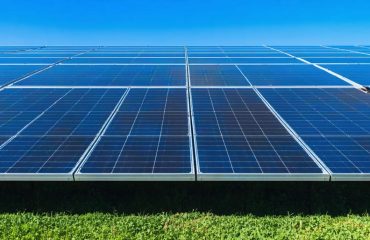
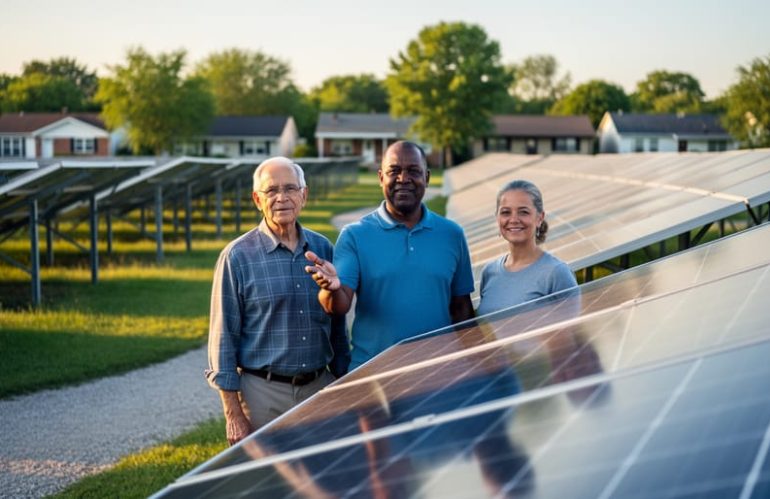
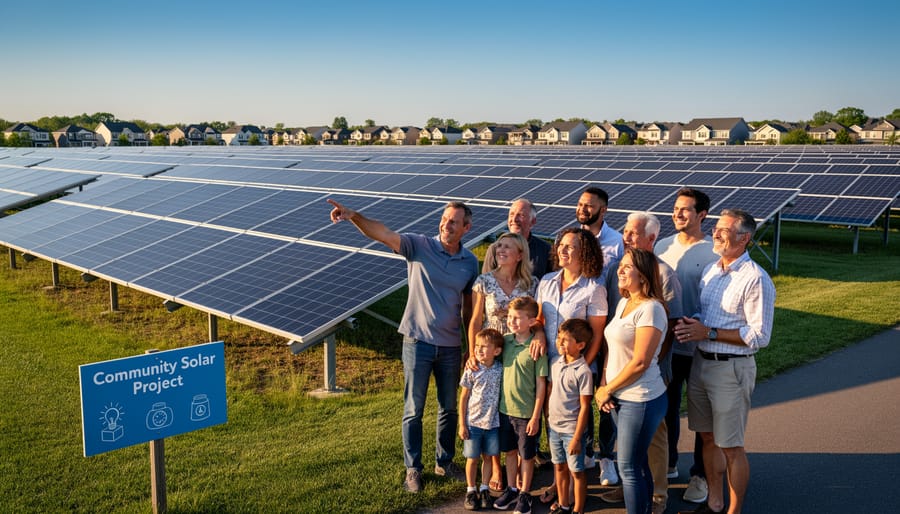
Community solar flips the traditional solar model on its head. Instead of installing panels on your roof, you’re subscribing to a portion of a larger solar farm located elsewhere in your community—maybe on farmland, an old industrial site, or even the roof of a large commercial building. Think of it like a community garden, but for electricity. Multiple households share the output from one solar installation, and everyone receives credits on their electric bill based on their subscription size.
The beauty of this arrangement is accessibility. Traditional rooftop solar requires several things that not everyone has: a suitable roof that’s not shaded, permission to modify your property if you’re renting, upfront capital or good credit for financing, and a long-term commitment to stay in that home. Community solar removes all these barriers.
With community solar, there’s no equipment on your property, no roof assessment needed, and no installation crews to schedule. You simply sign up for a subscription—similar to joining a gym or streaming service—and start receiving bill credits the following month. If you move, most programs let you transfer your subscription to your new address or cancel without the headaches of removing and reinstalling panels.
This model also means you avoid maintenance responsibilities entirely. The solar farm operator handles all upkeep, repairs, and performance monitoring. You just enjoy the savings without worrying about cleaning panels, inverter replacements, or warranty claims. For renters, condo owners, or anyone with an unsuitable roof, community solar opens the door to clean energy that was previously out of reach.
Who Actually Owns and Runs Community Solar Projects
Community-Owned Cooperatives: Power to the People
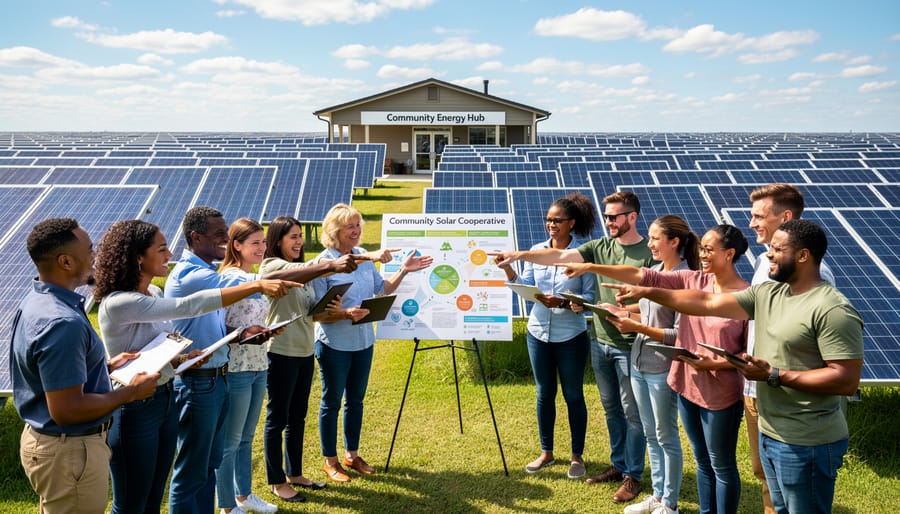
Community-owned cooperatives represent the most democratic approach to community solar, putting control directly in the hands of local members. In this model, residents pool their resources to purchase and collectively own a solar installation, with each member receiving voting rights proportional to their investment. Think of it like a credit union for solar energy—you’re not just a customer, you’re an owner with a real say in how things run.
Members participate in key decisions, from selecting equipment and maintenance providers to determining how surplus revenues get distributed. This governance structure ensures the project serves community priorities rather than external investor interests. You’ll attend annual meetings, vote on important matters, and help shape policies that affect your energy costs and environmental impact.
The financial benefits mirror traditional community solar—reduced electricity bills through solar credits—but cooperatives often reinvest profits into expanding local renewable energy capacity or supporting energy efficiency programs for low-income neighbors. While launching a community solar project as a cooperative requires more initial organization and commitment from members, many find the empowerment and community-building aspects deeply rewarding. You’re not just saving money—you’re actively participating in your neighborhood’s clean energy future.
Utility and Developer Programs: The More Common Route
Most community solar programs operate through two straightforward models: utility-run programs or third-party developers. In utility-run programs, your local electric company manages the solar farm and offers subscription slots to customers in the service area. You sign up, receive credits on your monthly bill based on your share of energy produced, and typically save 5-15% on electricity costs without any upfront investment.
Third-party developer programs work similarly, but a solar company builds and manages the farm. You subscribe directly with them, and they coordinate with your utility to apply credits to your bill. These programs often provide more flexibility in subscription sizes and may offer slightly higher savings, sometimes 10-20% off your regular electricity rate.
With both models, you maintain complete control over your participation. There’s no equipment to install, no maintenance responsibilities, and most programs let you cancel with 30-60 days notice if you move or your situation changes. You simply receive a separate line item on your utility bill showing your community solar credits, making it easy to track your savings each month. This hands-off approach makes community solar the most accessible path to clean energy for homeowners who can’t or don’t want to install rooftop panels.
The Real Benefits: Beyond Just Lower Bills
Your Bottom Line: What You Actually Save
Community solar typically saves subscribers 10-15% on their monthly electricity bills without any upfront investment. Unlike rooftop solar, which requires $15,000-$25,000 in initial costs, community solar operates on a simple subscription model with no installation fees or equipment purchases.
Here’s what makes the savings predictable: You receive credits on your utility bill for your share of the solar farm’s energy production, and you pay the community solar provider a slightly discounted rate for those credits. The difference between what you would have paid your utility and what you pay the provider is your savings. Most programs guarantee you’ll never pay more than you currently spend.
Compare this to rooftop solar’s 7-10 year payback period. Community solar delivers immediate savings from month one. You also avoid maintenance costs, insurance increases, and the hassle of dealing with roof replacements. Plus, many community solar programs combine well with solar energy grants and incentives that further reduce your costs.
The financial predictability is a major advantage. You can cancel most subscriptions with 30-90 days notice if you move, making it a flexible option that traditional solar ownership can’t match.
Community Impact: Jobs, Equity, and Local Power
Community solar creates real economic opportunities right in your neighborhood. These projects typically generate local jobs during construction and ongoing maintenance—positions that stay in your community rather than benefiting distant corporations. For residents, this means more than just clean energy; it’s about building local prosperity.
Perhaps most importantly, community solar opens doors for families who’ve been left out of the solar revolution. Renters, apartment dwellers, and those with shaded or unsuitable roofs can finally access solar savings. Many programs specifically reserve spots for energy access for low-income households, ensuring clean energy isn’t just for those who can afford rooftop installations.
Community solar also keeps energy dollars circulating locally. Instead of sending monthly payments to distant utility companies, your subscription often supports locally-owned or cooperative projects. This strengthens your community’s economic foundation while reducing dependence on centralized power grids. When neighborhoods generate their own clean energy, they gain both energy security and economic resilience—benefits that ripple through the entire community.
Environmental Win for Your Community
Community solar projects pack a powerful environmental punch that individual rooftop installations simply can’t match. A typical community solar farm produces enough clean energy to offset the carbon emissions of 300-500 cars annually—that’s like taking an entire neighborhood’s vehicles off the road. Because these projects operate at a larger scale, they often achieve better efficiency and can power hundreds of homes simultaneously, maximizing environmental impact per acre.
Even better, community solar makes renewable energy accessible to renters, condo owners, and homeowners with shaded roofs who would otherwise miss out on going solar. This means more people contributing to cleaner air and reduced greenhouse gas emissions in your local area. When you subscribe to community solar, you’re not just shrinking your own carbon footprint—you’re supporting a shared resource that benefits your entire community while helping accelerate the transition away from fossil fuels.
Is Community Solar Right for Your Situation?
When Community Solar Makes More Sense Than Rooftop
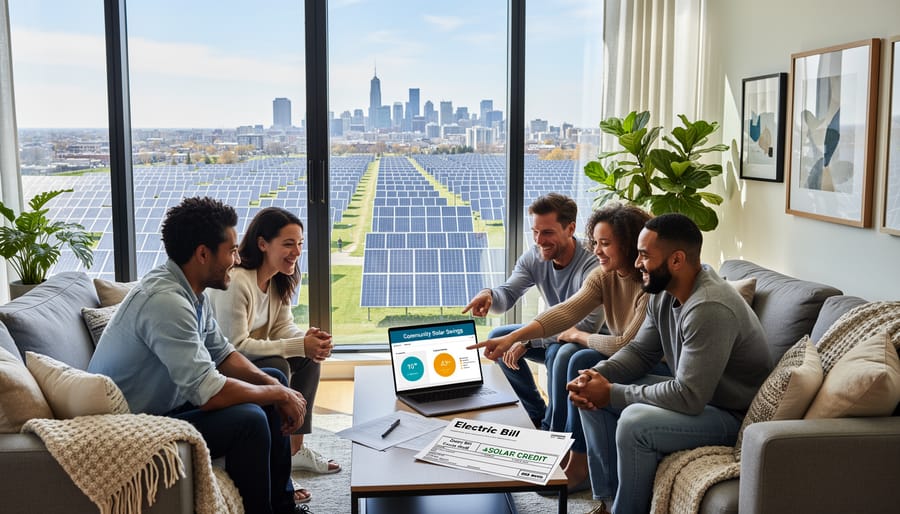
Community solar often proves to be the smarter choice for many households who want to enjoy solar benefits without the rooftop installation. If you’re renting your home, you can tap into solar savings without needing landlord permission or making a long-term property investment. Homeowners with heavily shaded roofs from mature trees or nearby buildings will find community solar far more efficient than struggling with underperforming panels.
If your roof needs replacement within the next 10-15 years, community solar eliminates the costly hassle of removing and reinstalling panels during repairs. Historic home owners who face strict preservation guidelines can access clean energy without altering their property’s character. Condo residents and those living under HOA restrictions that prohibit rooftop installations can still participate in the solar movement.
Community solar also appeals to busy homeowners who want environmental impact without maintenance responsibilities. There’s no worrying about panel cleaning, monitoring system performance, or coordinating repairs. You simply receive the credits on your bill while the solar farm operator handles all upkeep. This hands-off approach delivers financial savings and environmental benefits without adding another item to your home maintenance checklist.
When Rooftop Solar Is Still Your Best Bet
Community solar offers flexibility, but rooftop panels remain the smarter choice if you own your home and have suitable roof space. When you install your own system, you capture 100% of the electricity generated and all available tax credits and incentives, which typically pay for themselves in 7-10 years. You’ll also increase your home’s resale value while maintaining complete control over your equipment and energy production.
Rooftop solar makes the most financial sense if your roof receives ample sunlight, doesn’t need replacement soon, and you plan to stay in your home long-term. You’ll lock in your electricity costs for 25+ years and potentially eliminate your electric bill entirely. The upfront investment is higher than community solar, but the lifetime savings are substantially greater.
Consider personal installation if you value energy independence and want maximum return on investment. However, community solar shines for renters, those with shaded roofs, or homeowners who prefer avoiding installation and maintenance responsibilities. The best choice depends on your property, budget, and how long you’ll be there.
How to Find and Join a Community Solar Program
Ready to join a community solar program? The process is simpler than you might think. Start by researching programs in your state through your utility company’s website or online directories like EnergySage’s Community Solar Marketplace. Many states maintain lists of approved programs, making it easy to compare options in your area.
When evaluating programs, look for transparent pricing structures that clearly show your potential savings. The best subscriptions offer no upfront costs and immediate bill credits, typically ranging from 5-15% off your current electricity rate. Review the contract length carefully—most range from one to twenty years—and ensure you understand the cancellation policy. Flexible programs allow you to leave without hefty penalties if you move or your circumstances change.
Ask providers these essential questions: How are bill credits calculated? Are there any hidden fees? What happens if the solar farm underperforms? How quickly can I cancel if needed? Legitimate companies will answer these openly and provide clear documentation.
Watch for red flags like programs requiring large upfront payments, vague savings promises, or contracts with confusing language. Be cautious of aggressive sales tactics or providers unwilling to give you time to review the agreement. Quality community solar programs operate transparently because they genuinely benefit subscribers.
Most providers make enrollment straightforward—simply provide your utility account information and choose your subscription size. You’ll continue receiving one bill from your utility company, now with credits applied. Within one to two billing cycles, you should see your savings begin, bringing you closer to clean energy without any rooftop installation required.
Community solar opens the door to clean energy for everyone—renters, homeowners with shaded roofs, and anyone who wants to support sustainability without the upfront investment of a traditional installation. It proves that going solar isn’t just for those with picture-perfect homes. Whether you’re drawn to the shared ownership model, the flexibility of subscription programs, or simply the idea of supporting renewable energy in your area, community solar offers a practical path forward.
Of course, rooftop solar remains an excellent choice for many homeowners with suitable properties and the desire for direct ownership. The best option depends on your unique situation, property characteristics, and energy goals. We’re here to help you navigate both possibilities with personalized guidance that puts your needs first. Exploring your solar options—whether community-based or rooftop—is a positive step toward lower energy costs and a cleaner future for all.