Your solar panels might produce clean energy, but without the right cables connecting them, you’re risking everything from energy loss to potential safety hazards. The cables carrying DC power from your rooftop panels to your inverter operate under extreme conditions: scorching sun, freezing winters, and constant electrical load. That’s where PV DC cable specifications like PTPC 2020-12 come into play, setting standards that protect your investment.
Think of solar cables as the arteries of your energy system. Just as you wouldn’t want weak pipes carrying water through your home, you don’t want substandard cables handling thousands of watts of electricity. The PTPC 2020-12 specification ensures cables meet rigorous safety and performance standards, addressing concerns like UV resistance, temperature tolerance, and electrical insulation that matter in real-world conditions.
Most homeowners focus exclusively on panel efficiency and inverter quality, overlooking the critical role cables play in system performance. A premium solar installation with bargain cables is like buying a luxury car and filling it with contaminated fuel. Understanding cable specifications isn’t about becoming an electrical engineer; it’s about making informed decisions that protect your family and maximize your return on investment.
This guide translates complex technical standards into practical knowledge, helping you ask the right questions during installation, verify quality components, and ensure your solar system delivers reliable performance for decades. When you understand what makes quality solar cabling, you become an empowered consumer rather than just trusting whatever your installer recommends.
What Happens to Your Solar Power Between the Roof and Your Home
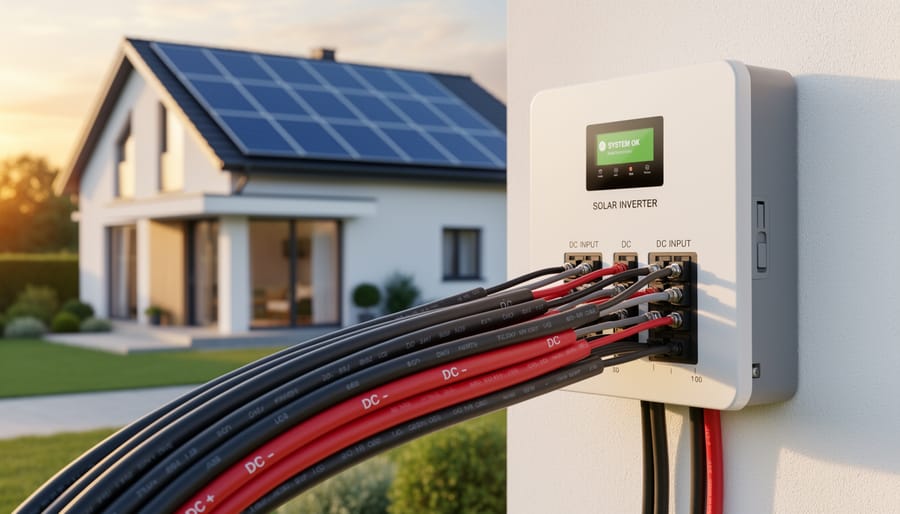
Think of your solar system like a water delivery system. The sun’s energy hits your panels on the roof, generating direct current (DC) electricity. That power needs to travel down to your inverter, typically located near your electrical panel, before it becomes usable electricity for your home.
Here’s where it gets interesting: just like water loses pressure as it moves through pipes, electricity loses power as it travels through cables. Every foot of cable between your roof and inverter creates what’s called “resistance.” This resistance literally converts some of your electricity into heat that dissipates into the air. Think of it as money evaporating before it ever reaches your pocket.
The journey looks like this: sunlight strikes your panels, creating DC electricity that flows through quality DC cables down to your inverter. The inverter then converts that DC power into alternating current (AC) electricity your appliances can use. But here’s the catch: if you’re losing 2-3% of your power in substandard cables, that’s 2-3% of your investment disappearing every single day for the next 25 years.
Most homeowners never see this happening because it’s invisible. You can’t watch electricity evaporate like you can see water dripping from a leaky faucet. But the financial impact is real. On a typical 6-kilowatt system, poor cable quality could cost you hundreds of dollars annually in lost production.
The good news? This loss is completely preventable. By understanding how inverter efficiency and cable quality work together, you can ensure maximum power reaches your home. The right cables act like well-insulated, properly-sized pipes, delivering nearly all the energy your panels produce exactly where you need it.
The Real Cost of Cheap Solar Cables
How Much Energy Gets Lost in Substandard Cables
Here’s the reality: substandard solar cables can quietly drain 3-7% of your system’s energy production through electrical resistance and heat loss. That might not sound like much, but let’s translate those numbers into dollars and cents.
For a typical 6-kilowatt residential solar system producing $1,500 worth of electricity annually, inferior cables could cost you between $45 and $105 every year. Over your system’s 25-year lifespan, that’s $1,125 to $2,625 literally disappearing as wasted heat in your cables.
Think of it this way: if you invested $15,000 in your solar installation, poor quality cables could extend your payback period by six months to a full year. Instead of breaking even in seven years, you might wait eight.
The energy loss happens invisibly. When electricity travels through cables with higher resistance, some converts to heat instead of powering your home. Longer cable runs amplify this problem, which is why proper sizing and quality materials matter tremendously.
The good news? Choosing cables that meet proper specifications, like those outlined in standards such as PV DC PTPC 2020-12, ensures minimal loss. Quality cables typically waste less than 1% of your energy, protecting both your investment and maximizing the environmental benefits you’re working toward. The slightly higher upfront cost pays for itself within the first few years through improved efficiency.
The 25-Year Math That Installers Don’t Always Share
Here’s what most homeowners never realize: over your solar system’s 25-year lifespan, cable quality dramatically impacts your total energy production. Let’s look at the real numbers.
A typical 6kW home solar system using budget cables with higher resistance might lose 2-3% of daily production compared to quality PV DC PTPC 2020-12 certified cables. That doesn’t sound like much until you do the math. Over 25 years, that small percentage compounds into thousands of lost kilowatt-hours.
With average electricity rates, the difference between premium and budget cables could mean $2,000 to $4,000 in lost savings over your system’s lifetime. Meanwhile, the upfront cost difference is typically just $200-$400. That’s a powerful return on investment.
Quality cables also maintain performance longer. Budget options degrade faster under constant UV exposure and temperature cycling, meaning those losses actually increase over time. The right cables help you boost your solar performance from day one through decade three, protecting your investment when it matters most.
Understanding the PV DC PTPC 2020-12 Standard (Without the Jargon)
What This Standard Actually Tests
When you invest in solar panels, the cables connecting them need to meet rigorous quality benchmarks to protect your investment. The PV DC PTPC 2020-12 standard evaluates four essential performance areas that directly impact how well your solar system performs over its 25-30 year lifespan.
First, temperature resistance determines whether cables can handle the heat buildup that occurs when electricity flows through them and when they’re exposed to hot rooftops in summer. Quality cables maintain their protective insulation even when temperatures spike, preventing dangerous deterioration that could lead to system failures or fire hazards.
Weather durability testing examines how cables stand up to sun exposure, rain, snow, and temperature swings year after year. Your cables sit outside in harsh conditions daily, so they must resist UV radiation that breaks down inferior materials, moisture that can cause corrosion, and freeze-thaw cycles that crack weak insulation. This testing ensures your cables won’t become brittle or damaged after just a few seasons.
Electrical efficiency measures how effectively cables transmit power from your panels to your home without losing energy as heat. Poor-quality cables act like a kinked garden hose, wasting the electricity you’ve generated and reducing the financial returns you expect from your system. This connects directly to your solar panel’s efficiency ratings, since even the best panels can’t deliver full value with substandard wiring.
Finally, safety features include proper insulation thickness, flame-retardant materials, and protection against electrical shorts. These specifications aren’t just technical checkboxes; they’re what keep your home safe and your warranty valid, ensuring your solar investment delivers clean energy and peace of mind for decades.
Why 2020 Standards Matter More Than Older Specifications
The solar industry has learned a lot over the past few decades, and the 2020 standards reflect that hard-won knowledge. Think of it like comparing a smartphone from 2010 to one from 2020—both make calls, but one does so much more, and better.
Modern cable specifications account for real-world conditions that older standards didn’t fully address. Today’s testing protocols simulate the actual stress your cables will face over 25-30 years: scorching summer heat on your roof, UV exposure that never lets up, and temperature swings that make materials expand and contract daily.
Here’s what makes 2020 standards superior: they require tougher insulation materials that won’t crack or degrade as quickly, better protection against moisture intrusion, and more rigorous fire safety testing. Manufacturers must prove their cables can handle higher temperatures without failing—crucial as solar panels have become more efficient and generate more heat.
For you, this means peace of mind. Cables meeting current standards are far less likely to need replacement during your system’s lifetime, protecting both your investment and your energy savings. It’s the difference between buying something built to last versus something built to minimum requirements from a different era.
Three Cable Specifications That Directly Impact Your Wallet
Cable Thickness and Why It Matters
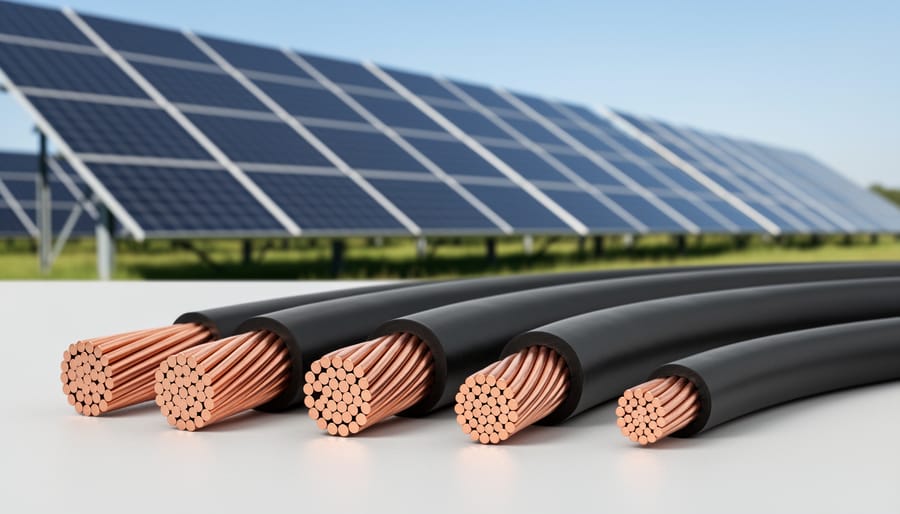
Think of wire gauge like a highway for electricity. Just as wider roads handle more traffic smoothly, thicker cables let electrical current flow with less friction. When your solar panels generate power, that electricity travels through cables to reach your home or battery storage. If those cables are too thin, it’s like forcing rush-hour traffic through a single lane.
Here’s what happens with undersized cables: the electricity meets resistance, which creates heat and wastes precious energy you’ve worked hard to capture from the sun. That wasted energy translates directly to money slipping away from your electric bill savings. The 12 AWG specification in quality solar cables strikes the sweet spot for residential installations, providing enough thickness to minimize resistance without becoming unwieldy or unnecessarily expensive.
Proper cable sizing means your system runs cooler and more efficiently. You’ll capture more of the power your panels produce, maximizing your return on investment. It’s a simple upgrade that pays dividends throughout your system’s 25-plus year lifespan, ensuring the clean energy you generate actually makes it where it needs to go.
Insulation Quality and Weather Resistance
Your solar panels may last 25-30 years, but they can only perform well if the cables connecting them survive just as long. Quality insulation protects your investment from three major threats: harsh sunlight, temperature swings, and moisture.
UV rays from constant sun exposure break down poor-quality cable materials, causing them to crack and deteriorate. Temperature extremes are equally challenging—cables on your roof might freeze at night and heat up to 150°F during summer days. This constant expansion and contraction stresses inferior insulation until it fails.
Moisture is perhaps the sneakiest enemy. Even small amounts of water infiltration corrode the copper inside and create dangerous electrical issues that reduce your system’s efficiency or create safety hazards.
The good news? High-quality solar cables designed to meet rigorous standards feature insulation specifically engineered to resist all these conditions. They use materials like cross-linked polyethylene that maintain flexibility in freezing weather, resist cracking under intense UV exposure, and create waterproof barriers around your system’s electrical connections.
Choosing cables with proper insulation ratings means your solar system keeps generating savings year after year, without costly repairs or dangerous failures interrupting your clean energy production.
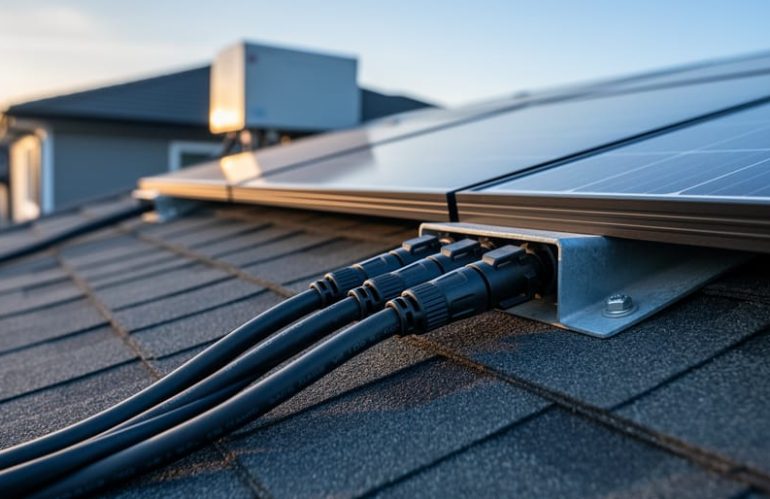
Connector Quality and Contact Resistance
Here’s the truth about solar installations: even the best cables won’t perform well if the connection points fail. Think of it like having a brand-new garden hose with a leaky fitting—you lose water pressure no matter how good the hose itself is.
Connection points in your solar system create what’s called contact resistance, which basically means electricity has a harder time flowing through these spots. Poor-quality connectors can heat up, waste energy, and even create fire hazards. That’s money literally going up in smoke.
Quality connectors that meet proper standards solve this problem by ensuring metal-to-metal contact stays tight and corrosion-free for decades. They’re designed with special materials and locking mechanisms that maintain consistent pressure, even as your roof expands and contracts with temperature changes.
The good news? When your installer uses certified connectors alongside quality cables, you’re protecting your investment from day one. These components work together to keep your system running at peak efficiency, maximizing your energy savings year after year. It’s a simple choice that pays dividends throughout your system’s 25-plus year lifespan.
Questions to Ask Your Solar Installer About DC Cabling
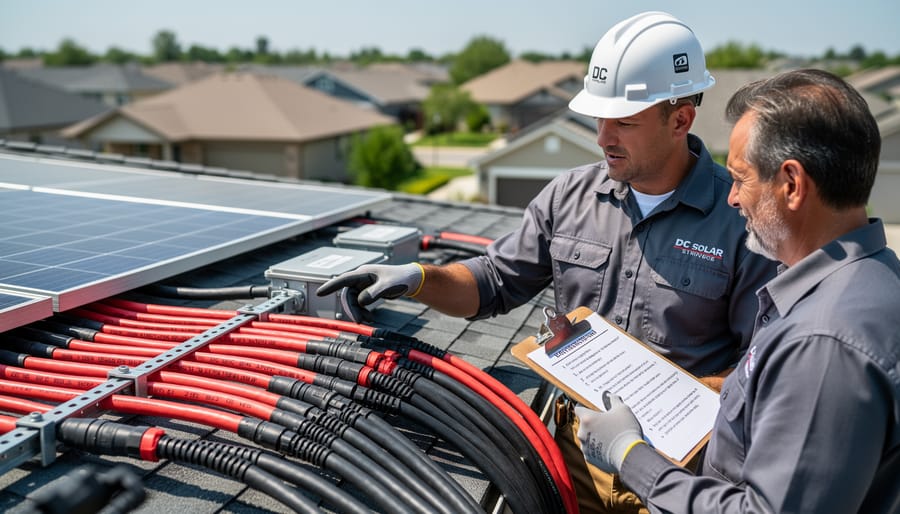
Having an informed conversation with your solar installer protects your investment and ensures you’re getting quality components. Here are specific questions to ask that demonstrate you’re an educated consumer while keeping the conversation friendly and productive.
Start with the basics: “What brand of DC cables will you be using for my installation?” A reputable installer will happily share this information and explain why they’ve chosen that particular manufacturer. Follow up by asking, “Are these cables specifically rated for solar installations?” This matters because standard electrical cables aren’t designed to handle the unique demands of rooftop environments.
Next, address standards compliance: “Do your cables meet the current industry standards for UV resistance and weather durability?” Quality cables should be rated for at least 25 years of outdoor exposure, matching the lifespan of your solar panels. You can also ask, “What temperature range are these cables rated for?” This is especially important if you live in an area with extreme heat or cold.
Don’t shy away from asking about solar system sizing and cable compatibility: “How did you determine the appropriate cable gauge for my system?” Proper sizing ensures efficient energy transfer and prevents overheating.
For added peace of mind, ask: “What warranty covers the DC cabling, and is it separate from the panel warranty?” Quality installers stand behind their component choices. Finally, request documentation: “Can I receive specification sheets for the cables you’re installing?” This creates a paper trail and shows you’re serious about quality.
Remember, good installers welcome these questions because they’re proud of their work. If anyone seems defensive or evasive, consider it a red flag. You’re making a significant investment in your home’s future, and understanding what goes into your system helps ensure decades of reliable, clean energy production.
Quality DC cabling isn’t something you’ll show off to your neighbors, but it’s absolutely essential to getting the most from your solar investment. While these cables work quietly behind the scenes, they directly impact both your system’s safety and its ability to deliver the long-term savings you’re counting on. When you’re comparing solar quotes, take a moment to ask about cable specifications. Confirm that your installer uses certified cables rated for outdoor solar use, like TUV 2PfG 1169 or EN 50618 compliant options. Quality cables meeting these standards protect your system from weather extremes and ensure efficient power transfer for decades. Remember, cutting corners on cables means risking voltage losses that chip away at your energy production and financial returns. We’re committed to using materials that deliver lasting value because your solar system should be working hard for you thirty years from now, not just on installation day. A few questions during the quote process can make all the difference in securing both your family’s safety and your renewable energy investment.