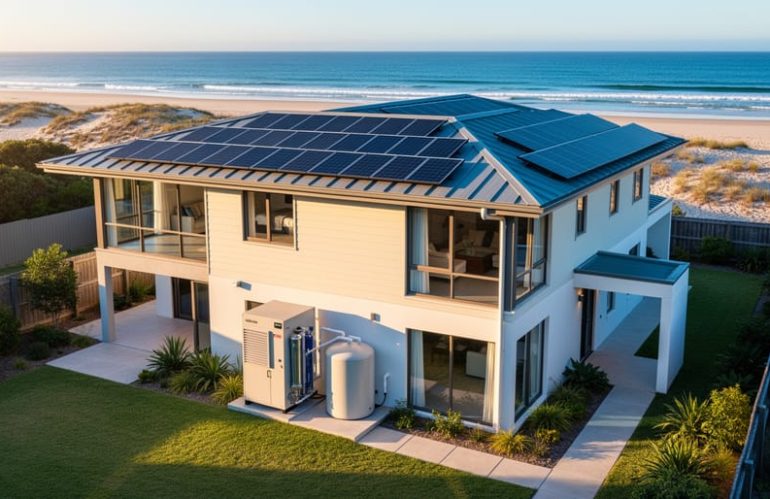
Fresh water from seawater using only sunshine—what sounds like science fiction is now becoming a practical reality for homeowners. Solar-powered desalination systems combine two abundant resources, solar energy and ocean or brackish water, to create a sustainable water supply right at your property. If you’re already considering solar panel integration for your home, adding desalination capability could transform how you think about water independence.
The technology works surprisingly simply: solar panels power a filtration system that removes salt and impurities from non-potable water, producing clean drinking water without relying on municipal supplies or electricity bills. For homeowners in coastal areas, drought-prone regions, or locations with brackish groundwater, this represents a genuine path toward self-sufficiency that pays dividends both financially and environmentally.
Recent advances have made residential systems smaller, more efficient, and dramatically more affordable than industrial counterparts. You no longer need a warehouse-sized facility or a six-figure budget to access this technology. Modern compact units can fit in a garage or yard, producing enough fresh water for typical household needs while operating silently and automatically.
This guide breaks down everything you need to know about residential solar-powered desalination: how the systems actually work, what they cost, whether your existing solar setup can support one, and how to determine if this technology makes sense for your specific situation.
What Is Solar-Powered Desalination and How Does It Work?
Solar-powered desalination is a water purification technology that uses energy from the sun to remove salt and other minerals from seawater or brackish water, making it safe to drink. Think of it as combining two proven technologies: solar panels that convert sunlight into electricity, and desalination systems that filter out impurities from water.
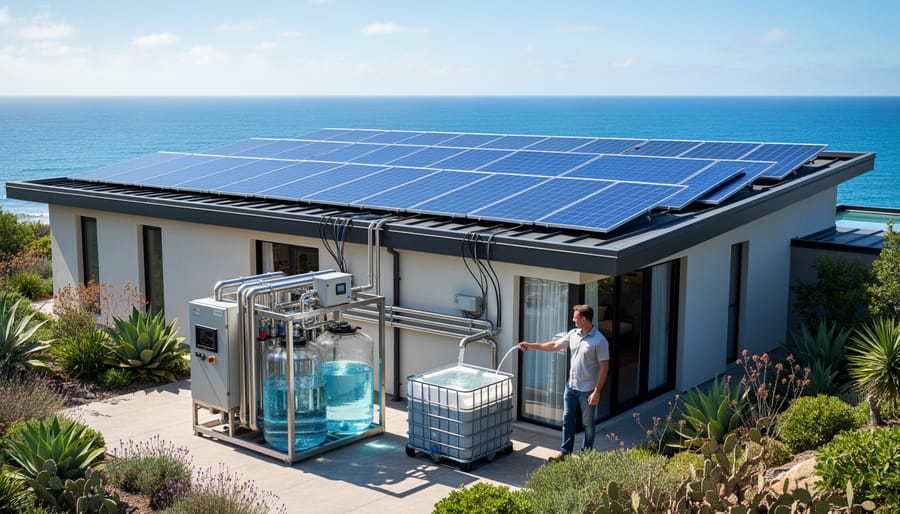
The process is straightforward. Solar panels installed on your property capture sunlight and convert it into electricity, just like they would for powering your home. This electricity then runs a desalination unit that forces water through specialized filters or uses heat to separate clean water from salt and minerals. What comes out is fresh, drinkable water that you’ve produced using nothing but sunshine.
For residential applications, there are two main approaches homeowners typically consider. The first is reverse osmosis, where solar electricity powers a pump that pushes water through an extremely fine membrane. This membrane acts like a microscopic strainer, allowing water molecules to pass through while blocking salt, minerals, and contaminants. The second method, solar thermal distillation, uses solar heat to evaporate water, leaving salt and impurities behind, then condenses the steam back into pure water.
Most homeowners find reverse osmosis more practical because it’s compact, efficient, and can integrate seamlessly with existing solar panel systems. These units can be scaled to match your household’s water needs, from small countertop models producing a few gallons daily to larger systems capable of supplying an entire home.
The beauty of solar-powered desalination is its self-sufficiency. Once installed, you’re essentially creating your own water supply using free energy from the sun. This makes it particularly valuable for coastal homes, properties with brackish well water, or anyone looking to reduce dependence on municipal water supplies while embracing sustainable living. The technology has matured significantly in recent years, making residential systems more affordable and accessible than ever before.

Why Homeowners Are Turning to Solar Desalination
Water Independence and Security
For homeowners in drought-prone regions or coastal areas with limited freshwater, solar-powered desalination offers something invaluable: control over your water supply. Rather than relying solely on municipal systems that may face restrictions during droughts, you can produce your own fresh water right at home.
This approach to energy independence extends beyond electricity to include water security. Coastal homeowners can tap into an essentially unlimited saltwater supply, while those in areas with brackish well water can transform previously unusable resources into clean drinking water.
The financial benefits compound over time. While bottled water costs continue rising and water utilities implement tiered pricing during shortages, your solar desalination system operates at minimal cost once installed. You’re protected from water rate increases and supply disruptions.
For off-grid properties or remote locations where connecting to municipal water is prohibitively expensive, solar desalination becomes particularly attractive. You eliminate the need for costly infrastructure while gaining complete control over water quality and availability. This self-sufficiency provides peace of mind that’s difficult to quantify but incredibly valuable, especially as climate change makes water resources increasingly unpredictable.
Long-Term Cost Savings
The financial benefits of solar-powered desalination become clear when you look beyond the initial investment. If you already have residential solar panels installed, you’re in an especially advantageous position. Many homeowners discover their existing systems generate enough excess energy during peak hours to run a small desalination unit without noticeably impacting their electricity costs.
Consider this: as municipal water rates continue climbing year after year, you’re essentially locking in your water production costs. Once your desalination system is operational, the sun provides free energy to create fresh water, insulating you from future price hikes. In coastal or brackish water regions, this can translate to substantial savings over a 10-20 year period.
For those without solar panels yet, combining installation of both systems often proves more cost-effective than installing them separately. You’re maximizing your energy independence while addressing two essential household needs simultaneously. Plus, some regions offer tax incentives or rebates for water conservation technologies, further improving your return on investment. The beauty of this approach is that you’re not just saving money—you’re gaining control over two critical resources: energy and water.
Environmental Benefits You Can Feel Good About
Choosing solar-powered desalination means taking a significant step toward genuine environmental responsibility. Traditional municipal water systems consume enormous amounts of energy to pump, treat, and deliver water to your home, often drawing power from fossil fuel sources. By producing your own clean water on-site using the sun’s energy, you’re directly reducing this carbon-intensive process.
The environmental advantages extend beyond energy savings. Solar desalination eliminates the need for plastic water bottles, which create millions of tons of waste annually. If you’re currently purchasing bottled water or relying on delivery services, you’ll cut out all that single-use plastic and the fuel consumed by delivery trucks making repeated trips to your neighborhood.
There’s also a positive ripple effect on your local water supply. When you generate your own drinking water, you reduce demand on overtaxed municipal systems and natural freshwater sources. This is particularly valuable in drought-prone regions where every gallon of conserved freshwater helps protect lakes, rivers, and aquifers for future generations.
The beauty of solar desalination is that it turns an abundant resource—sunlight—into clean water without harmful emissions, chemical runoff, or environmental disruption. You’ll enjoy peace of mind knowing your water independence contributes to a healthier planet.
Types of Solar Desalination Systems for Homes

Solar-Powered Reverse Osmosis
Solar-powered reverse osmosis represents the most practical and accessible way for homeowners to turn seawater or brackish water into fresh drinking water. Think of it as a high-tech filtration system powered by the sun. Your solar panels generate electricity that runs a pump, which forces saltwater through incredibly fine membranes—these filters are so precise they catch salt molecules while allowing fresh water to pass through.
The beauty of this system lies in its simplicity and proven track record. Unlike experimental technologies, reverse osmosis has been used commercially for decades and is now available in compact, home-friendly sizes. A typical residential unit can produce 50 to 500 gallons of fresh water daily, enough for drinking, cooking, and even household use depending on your setup.
Here’s the good news about efficiency: modern systems recover 40-60% of the water they process, and because they run on solar electricity, your operational costs drop dramatically. You’re essentially converting free sunlight into fresh water. The initial investment typically ranges from $5,000 to $15,000 for a complete home system, but many homeowners find this pays for itself through reduced water bills and increased property value, especially in coastal or drought-prone areas.
The system works seamlessly with your existing solar panel array—you simply need enough capacity to power the pump, which typically draws 200-800 watts depending on system size. If you already have solar panels with extra capacity, integration becomes even more cost-effective.
Solar Still Systems
Solar still systems represent the most straightforward approach to solar-powered desalination, operating without electricity or complex machinery. Think of them as greenhouses for water purification. These passive systems trap solar heat inside an enclosed space, causing water to evaporate, leaving salt and contaminants behind. The clean water vapor then condenses on a cooler surface and drips into a collection container.
The beauty of solar stills lies in their simplicity. A basic setup can be as uncomplicated as a black pan filled with saltwater inside a sloped glass or plastic enclosure. Sunlight heats the water, evaporation occurs, and gravity does the rest. You can build DIY versions for under $100, making them incredibly accessible for emergency preparedness or off-grid situations.
These systems work best for smaller water needs. A typical home-built solar still produces about one to two gallons of fresh water per day per square meter of collection area. While that won’t replace your household’s entire water supply, it provides valuable backup during emergencies or supplements water in remote locations like cabins or boats.
Commercial solar stills feature improved designs with better insulation and collection efficiency, producing up to five gallons daily. They require minimal maintenance, just periodic cleaning and monitoring. The tradeoff for simplicity is capacity. If you need larger volumes of desalinated water daily, you’ll want to explore more advanced solar desalination technologies that we’ll discuss next.
What You Need to Power Desalination with Your Solar Panels
Solar Panel Capacity Requirements
The good news is that home desalination doesn’t require a massive solar investment. A typical residential desalination unit draws between 300-600 watts during operation, which translates to roughly 2-4 additional solar panels for most homeowners. To put this in perspective, that’s similar to the energy needed to run a medium-sized refrigerator.
Let’s look at real-world examples. If you’re running a compact reverse osmosis desalination system that produces 10-15 gallons of fresh water per day, you’ll typically need about 2 standard 300-watt panels. For larger households requiring 30-40 gallons daily, plan for 4 panels to ensure consistent operation. These estimates assume you’re incorporating the desalination unit into your existing solar system components rather than creating an entirely separate setup.
The beauty of this approach is flexibility. Many homeowners choose to install extra capacity upfront, allowing their desalination system to run during peak sunlight hours without affecting their home’s regular power consumption. Others opt for battery storage to enable 24-hour operation. Either way, the additional investment typically ranges from $600-$1,200 for panels alone, making clean water production surprisingly affordable when you consider the long-term savings on bottled water or municipal fees.
Energy Storage Considerations
One of the biggest challenges with solar-powered desalination is that the sun doesn’t shine 24/7, but your need for clean water doesn’t stop when clouds roll in or night falls. This is where battery storage becomes a game-changer for residential systems.
Think of battery storage as a water production insurance policy. During peak sunshine hours, your solar panels generate more electricity than your desalination unit needs. Instead of letting that excess energy go to waste, batteries store it for later use, allowing your system to continue producing fresh water during evenings, cloudy days, or early mornings. This means consistent water availability regardless of weather conditions.
For homeowners, this continuity matters immensely. Without storage, you’d need to time your water production around sunny periods or rely on grid power as backup, which defeats the purpose of energy independence. With properly sized battery systems, you can produce water on your schedule, not the sun’s schedule.
The good news is that battery technology has become increasingly affordable and efficient. Modern lithium-ion batteries designed for home use can easily integrate with your existing solar setup, and many systems feature smart controllers that automatically optimize when to produce water based on available stored energy. This seamless operation means you’ll enjoy reliable water production without constantly monitoring your system or worrying about running dry during extended cloudy periods.
Debunking Common Myths About Solar Desalination
“It’s Too Expensive for Regular Homeowners”
Here’s the good news: solar-powered desalination isn’t the luxury expense it once was. While early systems could cost tens of thousands of dollars, today’s technology has become significantly more affordable. Small-scale residential units now start around $2,000-$5,000, depending on your water needs and whether you’re adding to an existing solar setup or starting from scratch.
The real question isn’t just upfront cost—it’s value over time. If you’re already paying for bottled water, hauling water to your property, or dealing with poor water quality, a solar desalination system can pay for itself within 3-7 years. For coastal homeowners or those with brackish well water, this technology transforms an unusable water source into clean drinking water without ongoing electricity costs.
Think of it as an investment in water independence. You’re not just buying equipment; you’re eliminating monthly water bills, protecting against future price increases, and adding value to your property. Many homeowners find that pairing desalination with their existing solar panels creates a complete self-sufficiency system that makes financial sense, especially in areas where traditional water sources are expensive or unreliable.
“The Water Won’t Taste Good or Be Safe”
Let’s clear up a common misconception: desalinated water is actually exceptionally pure. The reverse osmosis process used in most home desalination systems removes not just salt, but also contaminants, bacteria, and impurities that might exist in your source water. You’re getting some of the cleanest water possible.
Now, about taste—desalinated water can taste flat because it lacks the minerals we’re accustomed to in regular drinking water. But here’s the good news: this is easily remedied. Many systems include remineralization filters that add back healthy minerals like calcium and magnesium, giving you great-tasting water that’s also better for your health. You can even adjust mineral levels to match your preference.
Think of it this way: you’re starting with a blank slate of ultra-pure water, then customizing it to taste exactly how you want. That’s actually a significant advantage over municipal water, where you have no control over what’s in your glass. The result? Water that’s not only safe but potentially healthier and better-tasting than what comes from your tap today.
Is Solar Desalination Right for Your Home?
Best Scenarios for Home Desalination
Solar-powered desalination isn’t for everyone, but it shines in specific situations where it delivers exceptional value. If you live in a coastal home, you have access to an unlimited water source that can be transformed into clean drinking water without relying on municipal systems. Homes with brackish well water—that slightly salty, unpleasant-tasting water common in many regions—are perfect candidates, as desalination technology can convert this existing resource into pristine water.
Drought-prone regions present another ideal scenario. When water restrictions threaten your lifestyle and landscape, having your own solar-powered water production system provides peace of mind and independence. Off-grid properties benefit tremendously since solar desalination aligns perfectly with self-sufficient living, eliminating the need for water delivery services.
Finally, if you’re in an area where municipal water costs are climbing year after year, the investment in solar desalination can pay dividends. The combination of free solar energy and abundant source water creates long-term savings that offset the initial equipment costs, putting you in control of both your water quality and your budget.
When Other Solutions Might Make More Sense
Solar-powered desalination isn’t always the right first step for every home. If you’re currently connected to reliable municipal water and haven’t yet installed basic solar panels, starting with a traditional solar system for your electricity needs typically delivers faster returns on investment. You’ll see immediate savings on your energy bills while building the foundation for future water solutions.
Similarly, if you live in an area with abundant freshwater resources and reasonable water costs, desalination might be solving a problem you don’t actually have. Your money could go further with rainwater harvesting systems or improved water conservation methods.
For homes with minimal daily water needs or limited roof space for solar panels, the cost-benefit equation shifts. Small-scale desalination systems require significant energy, and you’ll want adequate solar capacity to power both your home and water treatment without compromising either.
The good news? Even if solar desalination isn’t right for you today, investing in expandable solar infrastructure now positions you perfectly for adding water solutions later when circumstances change or technology becomes more affordable.
Solar-powered desalination represents an exciting frontier in home energy independence, extending the promise of solar technology far beyond traditional electricity generation. Just as homeowners have embraced rooftop panels to power their lights and appliances, and solar water heating to reduce utility costs, desalination is emerging as the next logical step toward creating truly self-sufficient homes.
The vision of a home that generates its own power, heats its own water, and purifies its own water supply is no longer science fiction. It’s becoming increasingly attainable for homeowners willing to explore innovative solutions. While residential solar desalination may still be an emerging technology in many areas, the trajectory is clear: solar energy continues to expand into every aspect of home sustainability.
For homeowners in water-scarce regions or those seeking ultimate independence from municipal utilities, solar desalination offers a compelling path forward. The technology is improving, costs are gradually decreasing, and the environmental benefits align perfectly with the values of sustainable living.
The future of residential solar is bright and multifaceted. Whether you start with basic electricity generation, add water heating, or eventually explore desalination options, each step moves you closer to energy independence. We encourage you to assess your unique situation, consult with qualified professionals, and discover which solar technologies make sense for your home and budget. The journey toward sustainability begins with a single informed decision.