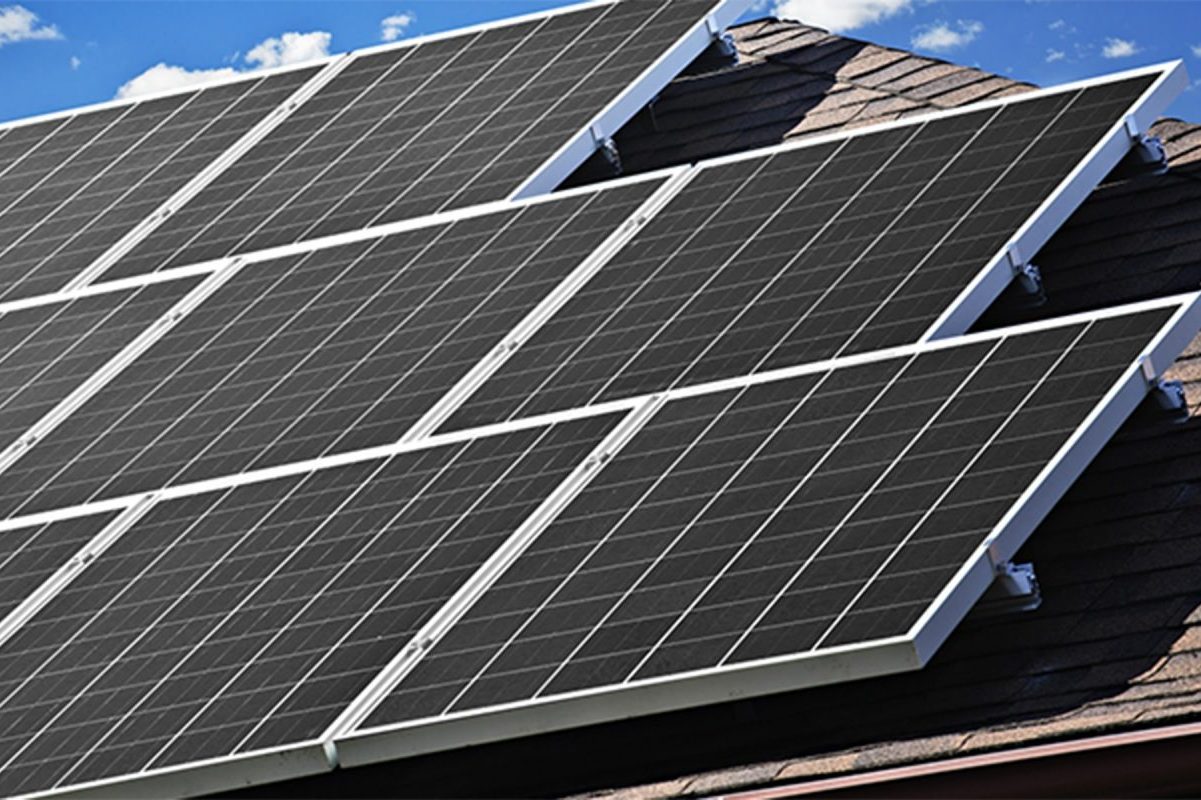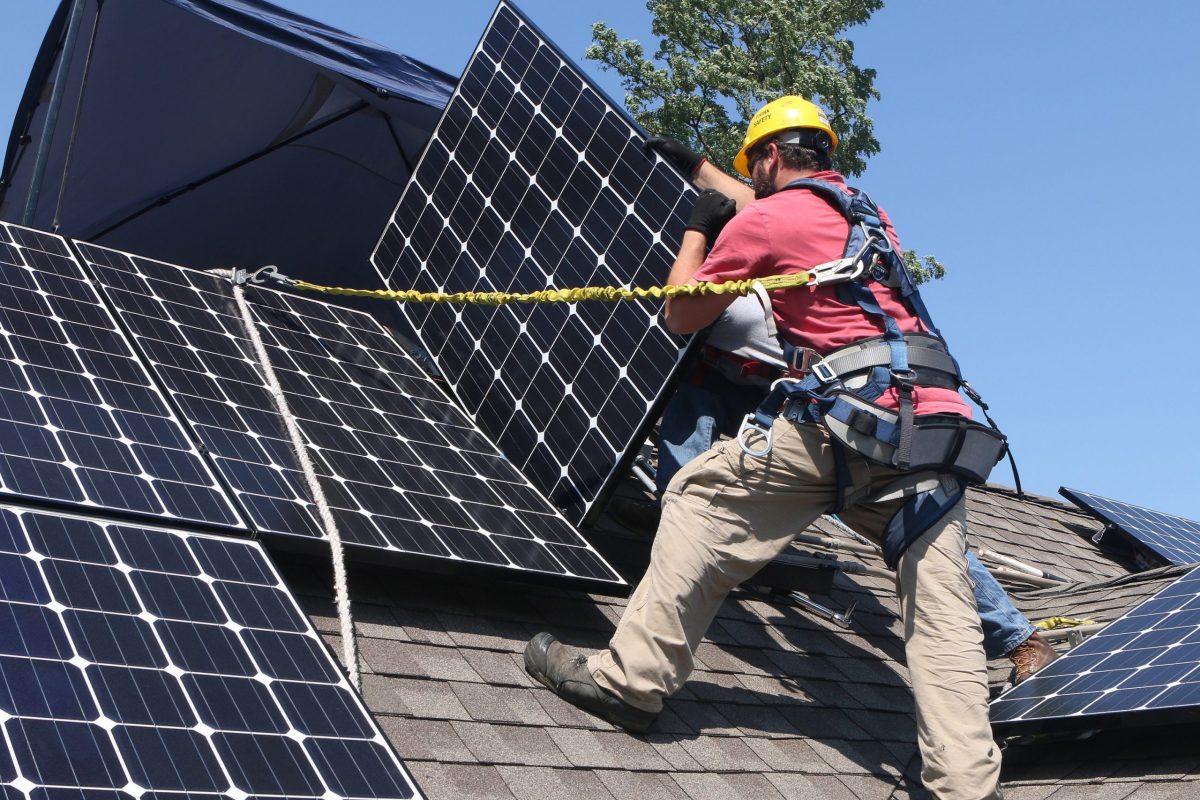
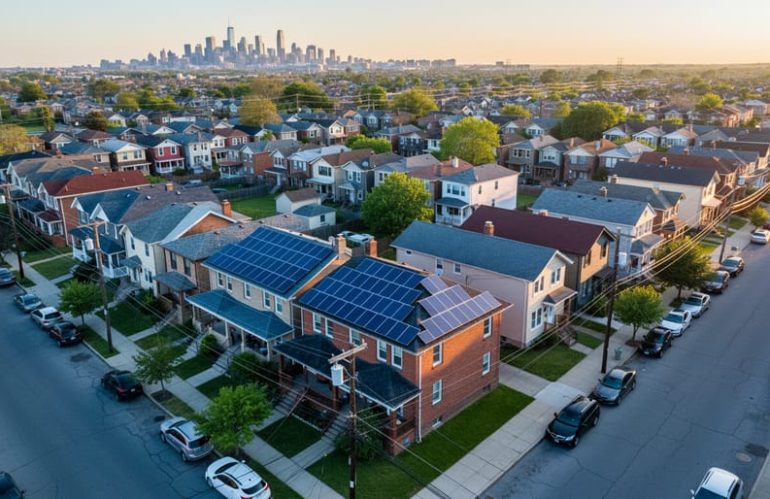
Solar panels gleam on rooftops across America, but they’re not shining equally for everyone. While solar energy promises a cleaner future and lower electricity bills, the reality is that low-income households, communities of color, and renters face significant barriers to accessing these benefits. The average solar installation costs $15,000 to $25,000 upfront—a price tag that immediately excludes millions of families, regardless of how much they’d save long-term.
This access gap isn’t just unfair; it’s widening the economic divide. Wealthier homeowners lock in decades of energy savings and increased property values, while those who could benefit most from reduced energy costs remain dependent on rising utility rates. The irony is stark: the families spending the highest percentage of their income on electricity bills are the least likely to afford the technology that would lower those costs.
Equity in solar justice means everyone should have pathways to clean energy benefits, not just those with excellent credit scores and disposable income. Through thoughtful policy making—including community solar programs, targeted financing options, and inclusive incentive structures—we can transform solar energy from a privilege into an accessible resource. The question isn’t whether solar should be available to all; it’s how quickly we can remove the barriers preventing that reality. When we design policies with equity at their core, we create a sustainable future that actually works for everyone, not just the few who can write a check today.
The Solar Access Gap: Who Gets Left Out?
The Upfront Cost Barrier
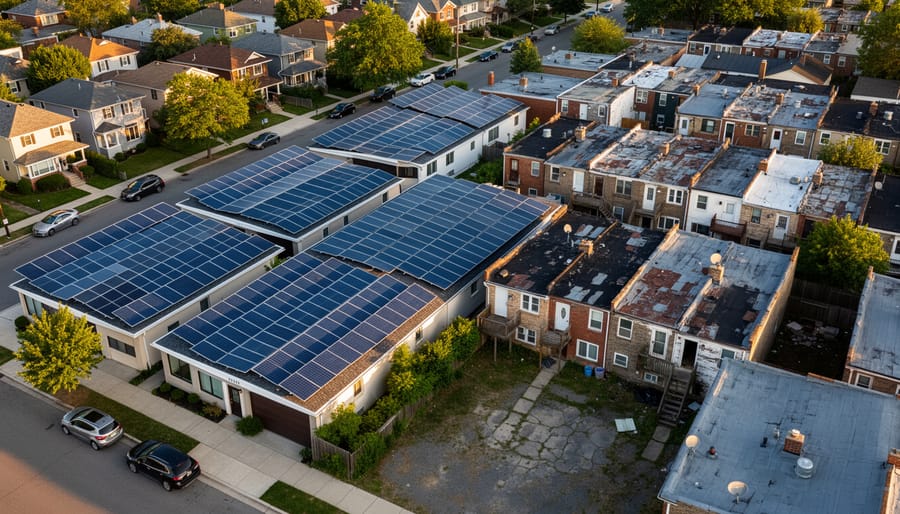
Here’s the reality: solar panels can save you thousands over their lifetime, yet many homeowners never get that chance. The reason? The upfront cost creates an immediate roadblock. While solar technology has become more affordable, installing a residential system still typically costs between $15,000 and $25,000 before incentives.
For families living paycheck to paycheck or those with limited savings, this initial investment is simply out of reach, even when they understand the long-term benefits. Unlike wealthier households who can either pay cash or easily qualify for solar loans, lower-income families often face additional hurdles like lower credit scores or lack of home equity to borrow against.
This creates an unfortunate irony: the households that would benefit most from reduced energy bills are often the ones least able to afford going solar. Meanwhile, higher-income homeowners can invest in solar and immediately start reducing their monthly expenses. This financial barrier has nothing to do with environmental commitment or interest in clean energy, and everything to do with economic access. Breaking down this cost barrier requires creative policy solutions that address the unique financial situations of diverse communities.
When Your Roof Isn’t an Option
Not everyone can install solar panels on their roof, and that’s where the equity gap widens dramatically. If you’re renting an apartment, living in a home with structural limitations, or dealing with excessive shade, traditional rooftop solar simply isn’t available to you. This affects millions of Americans who want to reduce their carbon footprint and energy bills but face physical barriers beyond their control.
The good news? Community solar programs are changing this reality. These shared solar arrays allow you to subscribe to a portion of a larger solar installation located elsewhere, receiving credits on your electricity bill without any equipment on your property. You get the financial benefits of solar energy without needing to own a home or have the perfect roof.
Progressive policies are expanding these programs, ensuring renters and apartment dwellers aren’t left behind in the clean energy transition. Some states now require utilities to offer community solar options, while others provide incentives that make subscriptions more affordable for lower-income households. This shift recognizes that solar access shouldn’t depend solely on homeownership or roof conditions, making clean energy truly accessible to everyone.
What Makes Solar Policy Fair (And What Doesn’t)
When we talk about fairness in solar policy, there’s an important distinction to understand. Equality means giving everyone the same thing, like offering identical tax credits to all homeowners who install solar panels. That sounds fair on the surface, but here’s the catch: not everyone starts from the same place.
Equity takes a different approach. It recognizes that people face different barriers and adjusts support to match those needs. Think of it this way: if you offer a $5,000 tax credit for solar installation, that’s great for someone who has $20,000 in savings and owns their home. But what about renters? Or families living paycheck to paycheck who can’t front the installation costs in the first place? The same benefit doesn’t create the same opportunity.
Fair solar policy considers three key factors. First, financial barriers matter. Upfront costs prevent many households from going solar, even when long-term savings are substantial. Good policies address this through low-interest loans, pay-as-you-save programs, or community solar options that don’t require rooftop installation.
Second, housing diversity is essential. Roughly one-third of Americans rent their homes, and many others live in apartments or condos where individual solar installation isn’t feasible. Equitable policies create pathways for these households to access solar benefits too.
Third, community impact counts. Some neighborhoods have been historically overlooked for clean energy investments, often the same communities facing higher energy costs and pollution. Fair policy directs resources to close these gaps, ensuring solar benefits reach everyone, not just those already positioned to take advantage.
The bottom line? True equity means removing barriers so solar energy becomes accessible based on your circumstances, not just your income bracket or housing type.
Policy Solutions That Actually Work
Income-Based Incentives and Rebates
Income-based incentive programs are breaking down financial barriers by offering scaled rebates and tax credits based on household earnings. These tiered programs recognize that the same $5,000 rebate means something very different to a family earning $40,000 versus one earning $150,000. By adjusting incentive amounts according to income levels, these programs ensure that families who need solar the most can actually afford it.
California’s Solar on Multifamily Affordable Housing program exemplifies this approach, providing up to $100 million annually to install solar systems on affordable housing properties. Similarly, Colorado’s low-income solar program offers rebates covering up to 90% of installation costs for qualifying households. These solar incentives for low-income families directly address the upfront cost barrier that prevents many homeowners from going solar.
The results speak for themselves. In states with robust income-based programs, solar adoption among lower-income households has increased by up to 300%. These families typically save more on their energy bills as a percentage of income, making solar not just an environmental choice but a crucial financial lifeline. When designed thoughtfully, these programs prove that clean energy can be both equitable and economically smart.
Community Solar Programs
Community solar programs are breaking down one of the biggest barriers to solar energy: the need for your own suitable roof. If you’re a renter, live in an apartment, or have a shaded or aging roof, traditional rooftop solar simply isn’t an option. That’s where community solar changes the game.
Here’s how it works: a solar array is built in a central location, often on unused land or large commercial buildings. Multiple households subscribe to a portion of the energy produced, receiving credits on their electricity bills for their share. You don’t need to install anything on your property or even own your home.
This model is particularly important for lower-income communities where homeownership rates are lower and rental housing dominates. Community solar gives everyone a chance to benefit from clean energy savings, regardless of their housing situation. Many programs prioritize subscriptions for low-to-moderate income households, offering discounted rates that translate to immediate bill savings.
Progressive states are supporting these initiatives through community-led solar policies that remove regulatory hurdles. Additionally, solar co-ops help neighbors pool resources and negotiate better rates. The result? Solar energy becomes accessible to millions who were previously left out of the clean energy transition.
Low-Interest Financing Options
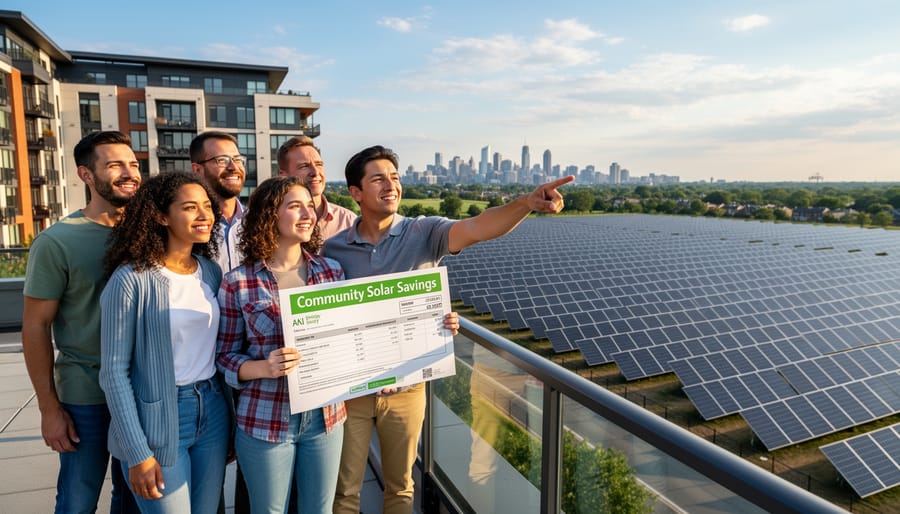
When upfront costs create barriers to solar adoption, policy-backed financing programs can level the playing field. These programs work by connecting homeowners with affordable loan options specifically designed for clean energy upgrades, making solar accessible regardless of your current savings.
Programs like the federal Property Assessed Clean Energy (PACE) financing allow you to repay solar installations through your property tax bill over 15-20 years. The beauty of this approach is that your monthly energy savings can actually exceed your loan payment, meaning you start benefiting financially from day one. Similarly, many states offer Green Banks that provide low-interest loans with flexible terms tailored to different income levels.
Credit unions and community banks increasingly participate in Department of Energy loan programs, offering interest rates as low as 2-4 percent for qualified homeowners. Unlike traditional home improvement loans, these specialized solar financing options often feature longer repayment periods and consider your future energy savings as part of your ability to repay.
What makes these programs truly equitable is their focus on reducing financial barriers rather than requiring wealth upfront. Some programs even waive credit score requirements or offer stepped payment structures that account for seasonal income variations. The goal is simple: if your home can benefit from solar energy, financing shouldn’t stand in your way. These policies recognize that environmental benefits and energy savings should be available to everyone, not just those with immediate cash reserves.
How Fair Solar Policies Benefit Everyone
When solar energy becomes accessible to everyone, the benefits ripple far beyond individual rooftops. Fair solar policies create a rising tide that lifts entire communities, strengthening our energy system while addressing long-standing environmental inequities.
One of the most immediate benefits is improved grid stability. When solar installations spread across diverse neighborhoods rather than concentrating in wealthy areas, the power grid becomes more resilient and distributed. This means fewer outages during peak demand and reduced strain on aging infrastructure that often fails first in underserved communities.
Local job creation represents another significant advantage. Solar installation, maintenance, and manufacturing jobs tend to stay in the community where projects are built. When policies encourage solar development in middle and lower-income neighborhoods, they create employment opportunities where they’re needed most. Studies show that for every megawatt of solar capacity installed, several jobs are created, from installation technicians to project managers.
Environmental justice becomes reality rather than rhetoric when solar access expands. Low-income communities and communities of color have historically been located near polluting power plants and industrial facilities, bearing a disproportionate health burden from fossil fuel emissions. Broader solar adoption means cleaner air for these neighborhoods, reducing asthma rates and other respiratory conditions that have plagued residents for generations.
The financial benefits extend community-wide as well. When more residents generate their own power, overall energy costs can decrease for everyone on the grid. Utilities spend less on expensive peak-time power purchases, savings that eventually translate to more stable rates for all customers.
Perhaps most importantly, equitable solar policies build community resilience. Neighborhoods with distributed solar power can better weather emergencies and natural disasters, maintaining power when centralized systems fail. This protection shouldn’t be a luxury reserved for those who can afford it upfront.
What You Can Do to Support Solar Equity
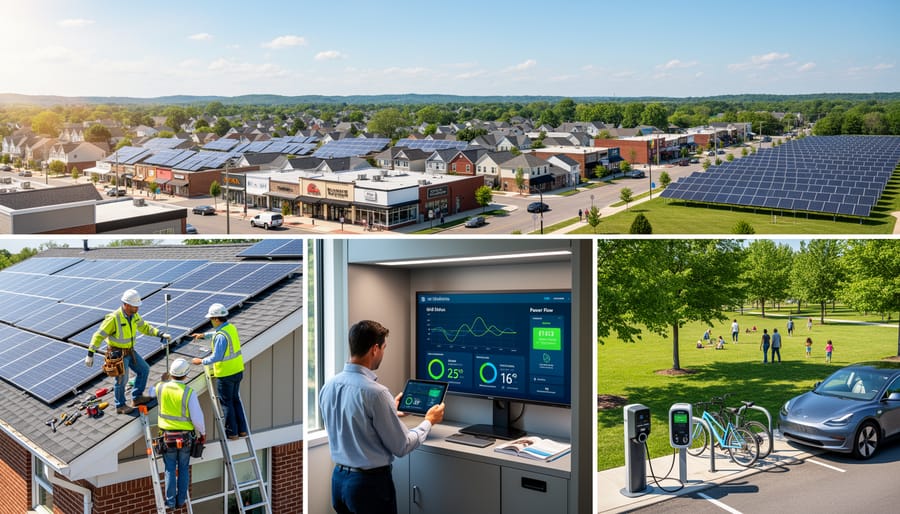
Supporting solar equity doesn’t require grand gestures—small, intentional actions from homeowners like you can create meaningful change in your community.
Start by learning about local solar programs in your area. Many cities and states offer initiatives specifically designed to expand solar access to underserved communities. Understanding these programs helps you advocate more effectively and spread accurate information to neighbors who might benefit.
When choosing a solar installer, ask about their community involvement. Some companies actively participate in workforce development programs, hire locally, or support community solar projects that serve low-income households. Your business choice can directly support equitable solar growth.
Advocate for fair policies by contacting your local representatives. Share your positive solar experience and encourage them to support programs like community solar, expanded tax credit transferability, and streamlined permitting processes that reduce costs for everyone. Your voice as a homeowner carries weight in policy discussions.
Spread awareness in your social circles. When friends or family express interest in solar, share resources and debunk common myths about affordability. If you’ve benefited from solar incentives, talk about it openly—your story might inspire someone who thought solar was out of reach.
Finally, support organizations working on solar equity issues. Even small donations or volunteer hours help expand access to clean energy for those who need it most. Making solar accessible to all strengthens entire communities while accelerating our collective transition to sustainable energy.
When you choose solar energy for your home, you’re doing more than reducing your electricity bills or shrinking your carbon footprint. You’re joining a movement that’s reshaping how we think about energy access and environmental justice. Solar equity isn’t just a policy buzzword or a social issue to check off a list. It’s the foundation of a sustainable energy future that actually works for everyone, not just those who can easily afford the upfront costs.
The good news? Real change is happening. As more communities recognize that clean energy shouldn’t be a luxury, we’re seeing policies evolve to remove barriers and create genuine opportunities. Whether it’s through community solar programs, innovative financing options, or policies that prioritize underserved neighborhoods, the path to solar is becoming more accessible every day.
Your decision to go solar contributes to this larger shift. It demonstrates demand, supports job creation in the renewable energy sector, and helps normalize clean energy adoption across diverse communities. By understanding the equity challenges and supporting fair policies, you’re not just an informed consumer. You’re part of the solution to ensuring that the benefits of solar energy reach every household, regardless of income or zip code.