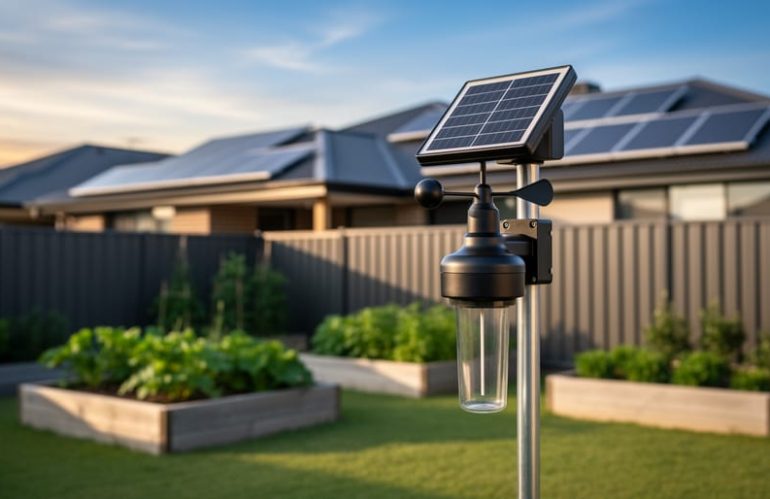
Your backyard holds untapped potential for understanding the weather patterns that affect your home’s energy efficiency, garden health, and daily comfort. A solar-powered personal weather station transforms this potential into real-time data you can actually use—without adding a penny to your electricity bill.
These compact monitoring systems track temperature, humidity, wind speed, rainfall, and barometric pressure right where you live, powered entirely by the sun. Unlike generic weather apps that report conditions miles away, your personal station delivers hyperlocal accuracy that matters when you’re deciding whether to water your plants, time your solar panel cleaning, or plan outdoor activities. The solar power component means zero operating costs and hassle-free installation anywhere sunlight reaches.
For homeowners already embracing sustainability, weather stations complement existing green initiatives beautifully. Understanding microclimates around your property helps optimize solar panel performance, reduce water waste through precision irrigation, and spot weather patterns that impact heating and cooling costs. Like other solar-powered personal devices, these stations demonstrate how renewable energy extends beyond rooftop panels into practical everyday tools.
Modern weather stations have shed their complicated reputation. Today’s models connect wirelessly to your smartphone, display easy-to-read metrics, and require minimal maintenance—just occasional cleaning. Whether you’re tracking storm systems, monitoring frost risks for your garden, or simply satisfying your curiosity about local weather, these stations put professional-grade meteorological data at your fingertips while staying true to your sustainable values.
What Is a Solar-Powered Personal Weather Station?
A solar-powered personal weather station is a compact device that monitors local weather conditions right in your backyard while running entirely on energy from the sun. Think of it as your own mini meteorological center that never needs batteries or electrical outlets.
These stations work by using small solar panels to power sensors that measure temperature, humidity, wind speed, rainfall, and barometric pressure. The collected data transmits wirelessly to a display unit inside your home, giving you real-time weather information specific to your exact location. Unlike generic forecasts that cover broad areas, you get hyperlocal conditions that matter for your daily decisions.
The solar power component sets these devices apart from traditional weather stations in several meaningful ways. First, there’s zero ongoing electricity cost. The integrated solar panels harvest sunlight during the day and store energy in rechargeable batteries for nighttime operation. This means they keep working around the clock without adding a penny to your utility bill.
Second, installation becomes incredibly flexible. Without the need for electrical wiring, you can place the outdoor sensors wherever they’ll get the most accurate readings, whether that’s on your roof, fence post, or garden pole. You’re not limited by outlet locations or tangled in extension cords.
Most people assume solar-powered devices are complicated or unreliable, but modern weather stations are surprisingly low-maintenance. The solar panels require minimal sunlight to stay charged, even on cloudy days. There’s no programming expertise needed either. Most units arrive ready to use out of the box, with simple setup instructions that take just minutes to complete.
Why Homeowners with Solar Panels Need One
Maximize Your Solar Panel Efficiency
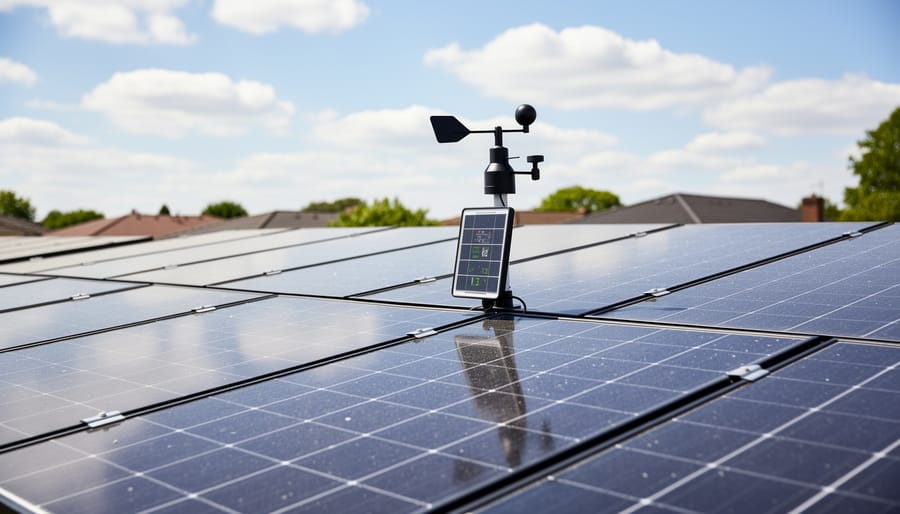
Here’s a truth many solar panel owners don’t realize: your system’s output can swing dramatically based on cloud cover, temperature, and seasonal changes. A solar-powered personal weather station gives you the real-time data to understand these variations and make smarter energy decisions.
Think of it as a financial dashboard for your solar investment. By tracking sunlight intensity, cloud patterns, and temperature right at your property, you’ll see exactly when your panels produce the most power. This information helps you time energy-intensive tasks like running the dishwasher or charging your electric vehicle during peak production hours, maximizing the electricity you generate and use yourself rather than sending it back to the grid at lower rates.
The station also helps you spot potential problems early. A sudden drop in production during clear weather might indicate your panels need cleaning or maintenance. Over time, you’ll recognize seasonal patterns and adjust your energy habits accordingly, squeezing every possible dollar from your solar setup. Best of all, since the weather station runs on solar power itself, monitoring your system’s efficiency costs you nothing in electricity.
Make Smarter Energy Storage Decisions
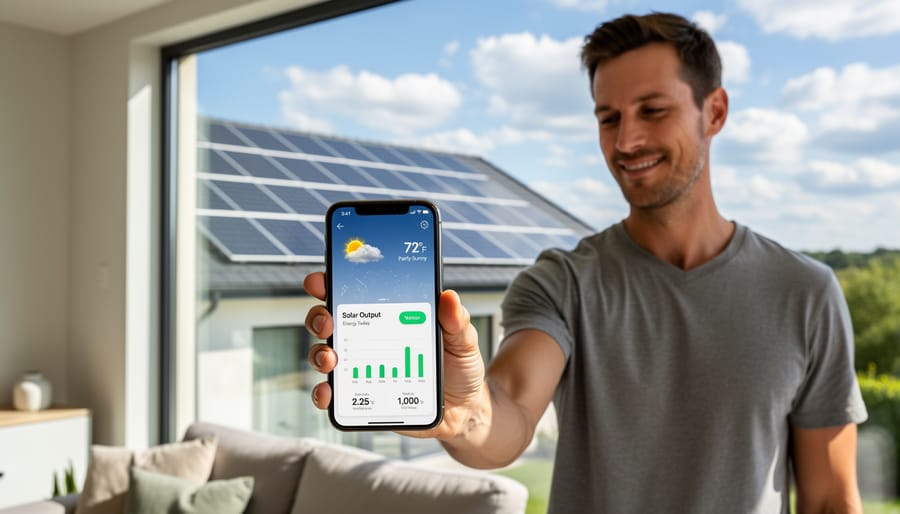
Your personal weather station doesn’t just predict rain—it can help you maximize your home battery storage system’s efficiency and save money. By tracking upcoming weather patterns, you’ll know exactly when to charge your batteries using grid power versus solar energy.
Here’s how it works in practice: When your weather station forecasts several sunny days ahead, you can safely draw down your battery reserves, confident that solar production will replenish them. Conversely, if cloudy weather is approaching, you’ll know to keep batteries fully charged as backup. This is especially valuable during storm season when power outages become more likely.
Many homeowners with solar-powered home solutions report reducing their grid dependency by 15-20% simply by making weather-informed energy decisions. You’ll avoid the common mistake of depleting batteries right before extended cloudy periods or paying for grid power when abundant sunshine is just hours away.
The financial benefit is straightforward: better battery management means fewer charge cycles from expensive peak-rate grid power and extended battery lifespan. Your weather station essentially becomes a free energy consultant, helping you time your heavy electricity use around natural solar abundance.
Key Features That Actually Matter
When shopping for a solar-powered weather station, you’ll want to focus on features that deliver real value to your daily life. Much like solar GPS watches that eliminate battery anxiety, these devices combine practical functionality with sustainable power.
The most important measuring capabilities include temperature and humidity tracking, both indoors and outdoors. This helps you optimize your home’s heating and cooling, potentially saving money on energy bills. Look for rainfall measurement too, which helps you adjust your sprinkler schedule and avoid wasting water on days when nature’s doing the work for you. Wind speed and direction sensors prove valuable if you’re planning outdoor activities or managing a garden.
Wireless connectivity transforms your weather station from a simple gadget into a powerful tool. Quality models sync data to your smartphone or computer, letting you check conditions from anywhere. This means you can monitor your home while traveling or adjust your smart thermostat remotely based on real-time weather data. The best systems integrate with popular smart home platforms, creating a seamless experience.
Data tracking and history features separate good stations from great ones. Long-term records help you spot patterns in your microclimate, like which areas of your yard get the most sun or when frost typically arrives. This information proves invaluable for gardening, home maintenance planning, and understanding your property’s unique characteristics.
Solar power eliminates the ongoing cost and hassle of battery replacements while ensuring your station keeps working during power outages. Quality units include backup batteries that store solar energy, providing reliable operation even during cloudy stretches. This combination of comprehensive monitoring, smart connectivity, and sustainable power makes these devices practical investments rather than expensive toys.
The Financial Benefits You Can Expect
Let’s talk money. While solar-powered weather stations do require an upfront investment, typically ranging from $100 to $400 depending on features, they’re designed to pay for themselves over time through consistent energy savings.
The most immediate benefit? Zero electricity costs for operation. Traditional weather stations that rely on household power might seem insignificant at first, but those pennies add up. Over a station’s 5-10 year lifespan, you’re looking at $50-100 in saved electricity costs. More importantly, there’s no ongoing battery replacement expense since the sun handles all the charging.
The real financial advantage comes from smarter energy management. When you understand your local weather patterns, you can optimize your home’s energy use accordingly. Homeowners report adjusting thermostat settings based on incoming temperature changes, timing outdoor activities to avoid peak heat or cold, and better managing irrigation systems. These informed decisions can trim 5-15% off seasonal energy bills.
For those with solar panels at home, a personal weather station becomes an invaluable tool for maximizing solar production. You’ll know exactly when to run energy-intensive appliances and can track how weather affects your panel efficiency.
Maintenance costs are virtually nonexistent. Quality solar weather stations are built to withstand years of outdoor exposure without intervention. No wiring means no electrician fees, and no battery compartments mean no corrosion issues.
Yes, the initial price tag might give you pause, but consider this: you’re investing in a device that works for free, forever. That’s not just sustainable living; that’s smart spending that aligns environmental responsibility with genuine financial benefit.
Setting Up Your Weather Station: Easier Than You Think
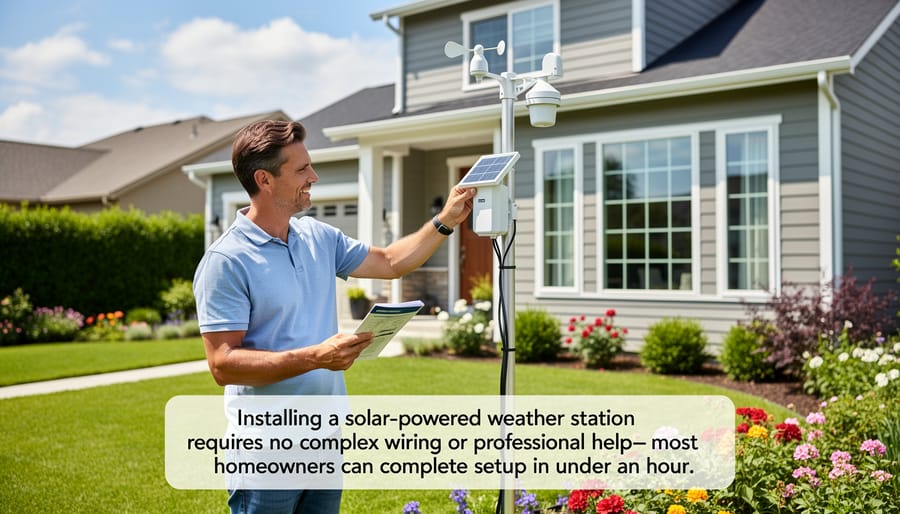
Let’s clear something up right away: setting up a solar-powered weather station is remarkably simple, often taking less than 30 minutes from box to broadcasting data. If you can mount a mailbox, you can install one of these devices.
Most modern weather stations come in two parts: outdoor sensors and an indoor display console. The outdoor unit typically mounts on a pole, fence, or rooftop with basic brackets included in the package. The key is finding a spot with clear sky exposure for accurate readings and optimal solar charging. South-facing locations work best, though most solar panels generate enough power even in partially shaded areas. Similar to outdoor solar installations, placement matters more for performance than installation complexity.
Here’s what makes these systems beginner-friendly: wireless connectivity means no complicated wiring between components, pre-calibrated sensors start working immediately, and most connect to your smartphone in minutes using straightforward apps.
Maintenance? Practically nonexistent. The solar panel keeps the battery charged year-round, eliminating battery replacements. Quarterly cleaning of the rain gauge and annual sensor checks represent the full maintenance schedule. Many homeowners report years of trouble-free operation.
The bottom line: if you’re worried about technical difficulty, don’t be. These weather stations are designed for everyday homeowners, not meteorologists. Most users spend more time enjoying their weather data than they ever spent installing the system.
Common Myths About Solar Weather Stations
Let’s clear up some common misconceptions that might be holding you back from enjoying the benefits of a solar-powered weather station.
First, many people assume these devices won’t work in cloudy or rainy climates. The reality is quite different. Modern solar weather stations come equipped with rechargeable batteries that store energy during sunny periods, allowing them to operate continuously for days or even weeks without direct sunlight. They’re designed to work in all weather conditions, including the Pacific Northwest and other frequently overcast regions.
Another myth is that solar weather stations are only for tech-savvy individuals. Today’s models are actually incredibly user-friendly, with smartphone apps and simple setup processes that take about 15 minutes. If you can use a weather app on your phone, you can operate a solar weather station without any special technical knowledge.
The price concern is perhaps the biggest misconception. While quality solar weather stations typically range from 100 to 300 dollars, they eliminate ongoing battery replacement costs that can add up to 50 dollars or more annually with traditional stations. Over a five-year period, you’re actually saving money while reducing waste. Plus, there are no electrical installation costs since they operate completely wire-free.
These stations deliver accurate, real-time data right to your home without the hassle, expense, or environmental impact you might expect. They’re a practical investment that pays dividends in both convenience and sustainability.
Investing in a solar-powered personal weather station represents more than just adding another gadget to your home. It’s a practical step toward understanding and optimizing your energy usage while embracing a sustainable lifestyle. These devices work hand-in-hand with your solar panel system, helping you make smarter decisions about when to run appliances, when to expect peak energy production, and how to maximize your return on investment. The environmental benefits are clear: you’re reducing reliance on grid power while gaining valuable insights that help minimize energy waste. Financially, the station pays for itself through better energy management and lower utility bills. By taking control of your home’s weather data, you’re not just monitoring conditions outside your window—you’re actively participating in a cleaner energy future while keeping more money in your pocket. For homeowners committed to sustainable living, a solar-powered weather station is a natural, worthwhile addition that delivers both peace of mind and measurable savings.