Your solar panels could be underperforming by 20-30% without you ever knowing it. Traditional roof inspections miss crucial problems like micro-cracks, hotspots, and faulty connections that silently drain your energy production and savings. Drone solar inspections have changed this entirely.
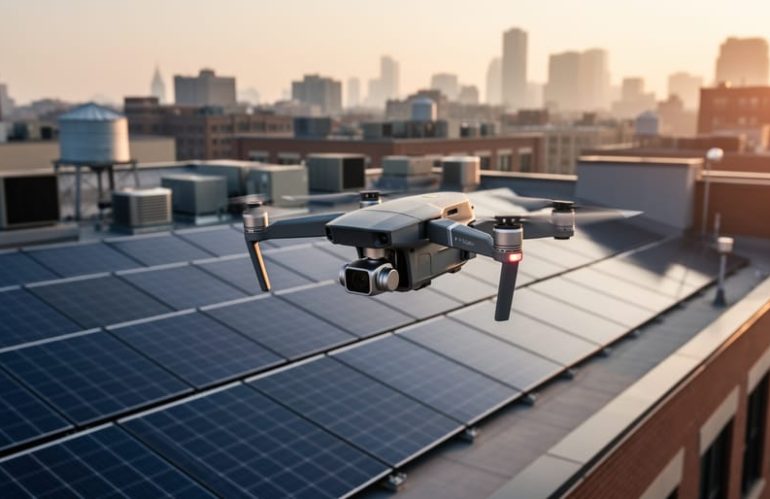
Using thermal imaging cameras and high-resolution photography, drones can scan your entire solar array in minutes, detecting issues invisible to the naked eye. What once required costly manual inspections with technicians climbing on your roof now happens safely from the air, delivering detailed reports that pinpoint exactly where problems exist.
For homeowners, this means catching small issues before they become expensive repairs. A single malfunctioning panel can affect your entire system’s output, costing you hundreds in lost energy production annually. Drone inspections typically cost 40-60% less than traditional methods while providing more comprehensive data about your system’s health.
The technology isn’t just for large solar farms anymore. Services are now accessible and affordable for residential systems, giving you the same professional-grade analysis that commercial operations have used for years. Whether you’re noticing unexplained drops in production or simply want to protect your solar investment, drone inspections offer a smart, efficient solution that keeps your panels performing at their peak.
The Urban Solar Inspection Challenge
Why Traditional Inspections Fall Short in Cities
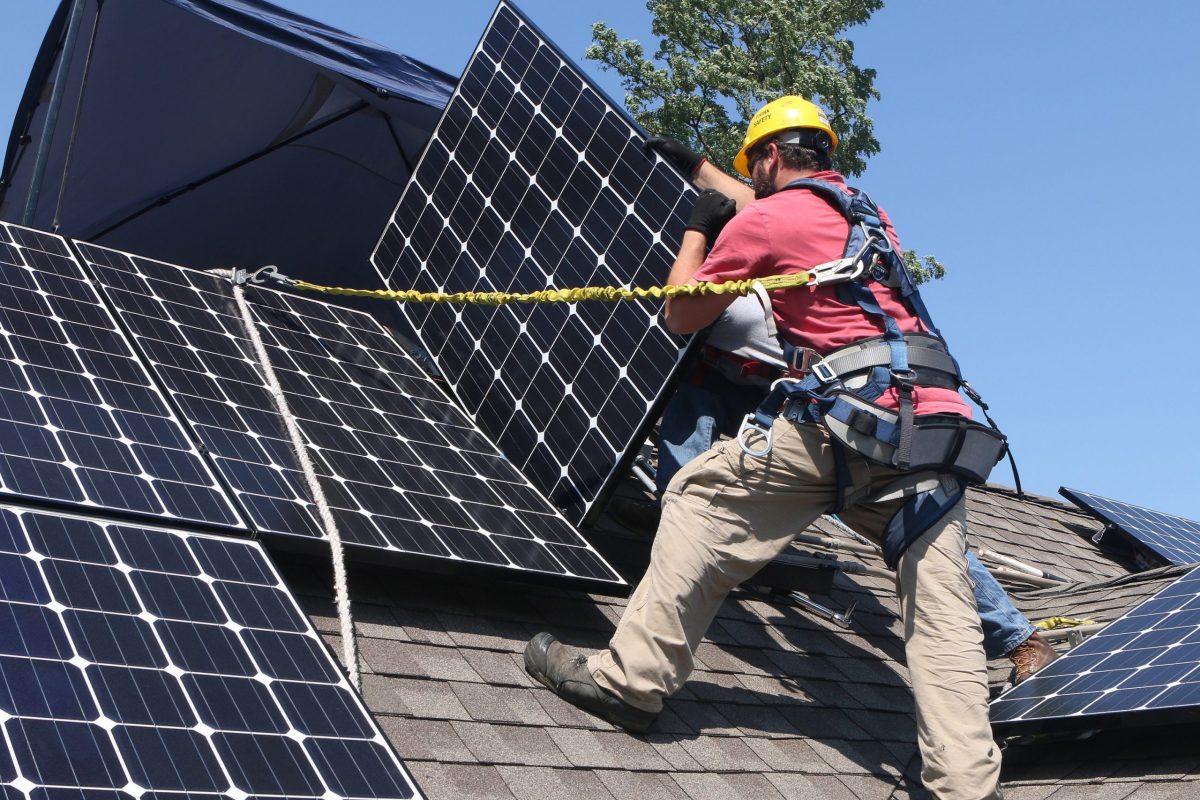
Traditional solar panel inspections present several real-world challenges for homeowners, especially those with urban solar installations. When a technician needs to physically climb onto your roof, safety becomes the first concern. Rooftop work carries inherent risks, from slips and falls to heat exposure during summer months, which can drive up inspection costs due to insurance and liability considerations.
Time is another significant factor. Manual inspections typically require scheduling around weather conditions and technician availability, often taking several hours to complete for a thorough assessment. This means more disruption to your daily routine and potentially longer waits between identifying and fixing issues that could be costing you money.
Consistency can vary dramatically between inspectors. One technician might spot a hairline crack or subtle shading issue while another walks right past it. This human variability means you’re not always getting the complete picture of your system’s health, potentially leaving efficiency problems undetected for months.
For city dwellers, access challenges add another layer of complexity, particularly with multi-story buildings or rooftops surrounded by neighboring structures that make safe navigation difficult.
What Homeowners Miss Without Regular Checks
Without regular solar panel maintenance and inspections, several hidden problems can quietly drain your system’s performance. Micro-cracks in panels often develop from weather stress or installation issues, reducing electricity output by 5-10% without any visible signs. Hot spots, caused by faulty cells or poor connections, can cut efficiency even further while potentially shortening your panels’ lifespan.
Everyday soiling from dust, pollen, and bird droppings blocks sunlight more than most homeowners realize, sometimes reducing energy production by 15-25% in just a few months. Shading problems from growing trees or new construction can also creep up gradually, costing you money without obvious warnings.
The real impact hits your wallet. A system producing 20% less energy than it should means you’re paying more to your utility company and taking longer to recoup your solar investment. These issues compound over time, turning what should be decades of savings into underperformance. The good news? Catching these problems early through drone inspections means you can fix them quickly and get back to maximizing your clean energy production and financial returns.
How Drone Solar Inspections Actually Work
The Technology Behind the Camera
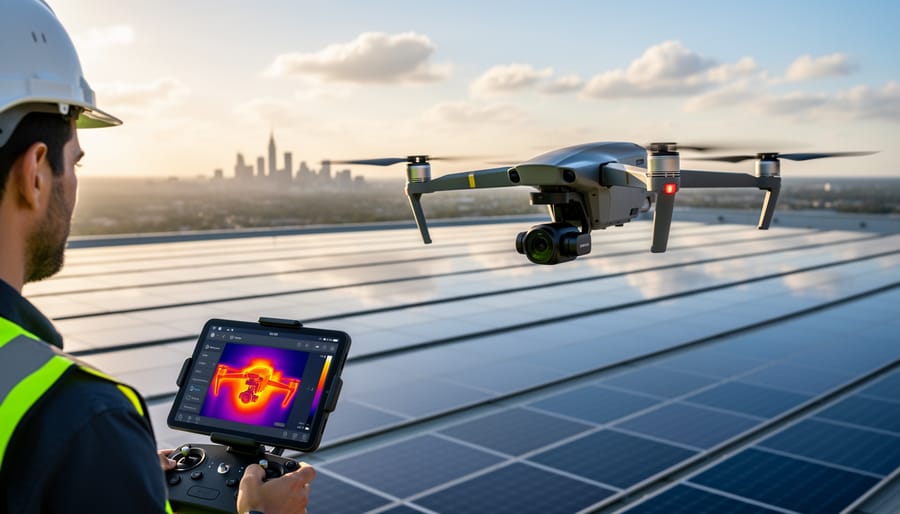
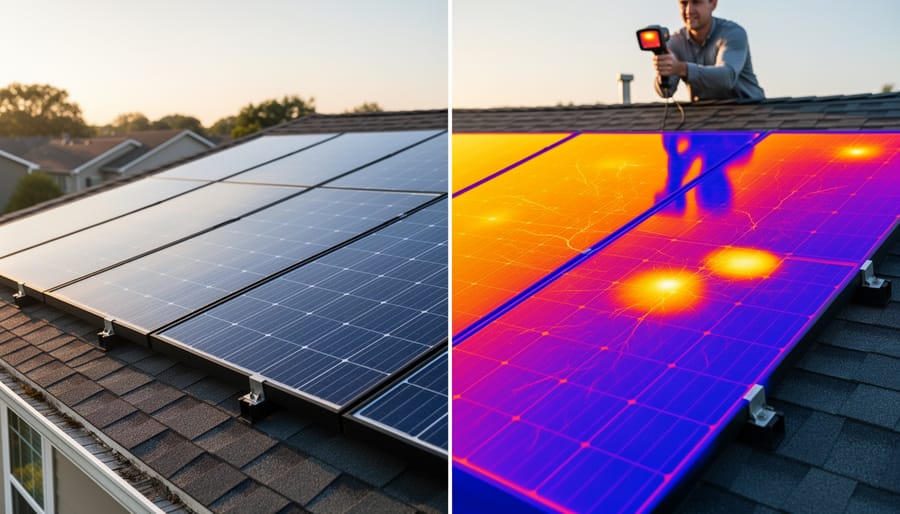
Drone solar inspections rely on two main camera technologies that work together to give you a complete picture of your system’s health. The first is thermal imaging, which works like a heat-sensing camera. It detects temperature differences across your panels—hot spots show up as bright colors (usually red or yellow) while cooler areas appear blue or purple. Since damaged or underperforming cells generate more heat than healthy ones, these temperature variations reveal problems invisible to the naked eye.
The second technology is high-resolution visual photography, which captures detailed images of your panels’ physical condition. Think of it as getting professional-quality photos that show cracks, dirt buildup, loose connections, or debris.
When you receive your inspection report, you’ll see easy-to-understand images with problem areas clearly marked. Hot spots might be circled in red on the thermal images, while visual photos zoom in on specific issues like micro-cracks or bird nesting. Most inspection companies provide a simple summary explaining what each image means and whether action is needed—no engineering degree required to understand your results.
From Flight to Findings: What to Expect
A typical drone inspection of your solar panels takes just 15-30 minutes from start to finish. The process is quick and non-disruptive—you won’t even need to be home if you prefer. A certified drone operator will capture high-resolution visual and thermal images of your entire solar array, scanning for issues invisible to the naked eye.
Within a few days, you’ll receive a comprehensive report that’s easy to understand. This package typically includes color-coded thermal images showing exactly where problems exist, close-up photos of any physical damage like cracks or corrosion, and a detailed summary of your system’s overall health. Think of it as a full health checkup for your solar panels.
Most importantly, your report comes with clear, prioritized recommendations. You’ll know which issues need immediate attention to prevent energy loss and which can wait. Many reports also include efficiency ratings and estimated energy loss from detected problems, helping you understand the real-world impact on your electricity savings. This transparency empowers you to make informed decisions about maintenance and ensures your solar investment continues delivering maximum returns for years to come.
The Real Benefits for City Homeowners
Protecting Your Solar Investment
Regular drone inspections are one of the smartest ways of protecting your solar investment. Think of it like regular oil changes for your car—catching small problems early saves you from costly repairs down the road.
When thermal imaging spots a single underperforming panel or a loose connection, addressing it immediately prevents damage from spreading to neighboring panels. A minor issue that costs a few hundred dollars to fix today could turn into thousands in replacement costs if left undetected. Plus, even one malfunctioning panel can reduce your system’s overall output by 20-30%, quietly eating into your energy savings month after month.
Drone inspections also help maintain your warranty coverage. Most solar manufacturers require regular maintenance documentation, and detailed drone reports provide the proof you need. If a defect appears, you’ll have a clear record showing you’ve properly maintained your system.
The bottom line? These inspections pay for themselves by keeping your panels operating at peak efficiency, protecting your warranty, and preventing expensive emergency repairs. Your solar system is a 25-year investment—a few drone checkups ensure it delivers maximum returns throughout its lifetime.
Safety Without Compromise
Traditional solar inspections often mean someone climbing onto your roof—a scenario that brings inherent risks and weather-related scheduling headaches. Drone inspections change this equation entirely. Instead of workers navigating potentially slippery or damaged roofing materials, drones safely capture detailed images from the air, eliminating fall risks and liability concerns for both inspectors and homeowners. This technology works effectively in various weather conditions that would typically delay manual inspections, meaning faster service when you need it. For you, this translates to peace of mind knowing no one needs to walk across your roof to assess your panels. It’s a win-win: inspectors stay safe on the ground while you get thorough, professional results without the traditional risks or weather-related delays that used to postpone routine maintenance.
Speed and Convenience That Fits Urban Life
Modern life moves fast, and solar inspections should too. Drone technology transforms what used to be a half-day ordeal into a quick 20-30 minute process. You don’t even need to be home when the inspection happens—just grant access to your property and the certified operator handles everything. There’s no climbing on your roof, no workers tracking through your house, and no disruption to your daily routine. The inspection photos are processed immediately, meaning you’ll typically receive your detailed report within 24-48 hours instead of waiting weeks. This speed matters when you notice your energy production dropping or after severe weather hits your area. The faster you identify problems like cracked panels or wiring issues, the sooner you can fix them and get back to generating maximum savings on your energy bills. It’s solar maintenance designed for busy homeowners who value both their time and their investment.

Debunking Drone Inspection Myths
Let’s clear up some common misunderstandings that might be holding you back from considering a drone inspection for your home solar system.
First, the cost concern. Many homeowners assume drone inspections are prohibitively expensive or only make sense for massive solar farms. In reality, a typical residential drone inspection usually costs between $150-$400, comparable to what you’d pay for a professional manual inspection. The difference? You get more comprehensive data in less time, often within an hour. When you consider that catching just one failing panel early could save you hundreds in lost energy production, the investment pays for itself.
Privacy is another frequent worry. Professional drone operators follow strict regulations and focus their cameras solely on your roof and panels. They’re not interested in your backyard barbecue or looking through windows. Most inspections happen quickly, with the drone spending just 15-30 minutes capturing the necessary thermal and visual data of your solar array.
Some people question whether drones can match the accuracy of someone physically inspecting each panel. Here’s the reality: thermal imaging cameras on drones often detect issues invisible to the naked eye, like hot spots indicating electrical problems or microfractures in cells. A technician walking on your roof might actually miss these subtle problems while potentially causing damage by stepping on panels.
Finally, drones aren’t just for commercial installations. Whether you have six panels or sixty, drone technology scales perfectly to residential properties. In fact, smaller systems benefit equally from the detailed thermal analysis that reveals efficiency problems before they impact your energy savings. Your home solar system deserves the same cutting-edge inspection technology as any large-scale installation.
When Your Solar System Needs a Drone Inspection
Most solar experts recommend scheduling a drone inspection at least once a year as part of your overall solar maintenance routine. This annual checkup helps catch small issues before they become expensive problems and ensures your system continues running at peak efficiency.
However, certain situations call for an immediate inspection. If you notice a sudden drop in energy production that cleaning doesn’t fix, it’s time to call in the drones. Similarly, after severe weather events like hailstorms, high winds, or heavy snowfall, a quick inspection can identify hidden damage that might not be visible from the ground. You should also consider an inspection if your system is approaching the end of its warranty period, as this documentation can be valuable for claims.
Seasonal timing matters too. Spring is ideal for most homeowners, as it allows you to address any winter damage before peak summer production season. Fall inspections are also popular, preparing your system for the challenging winter months ahead.
For older systems beyond the 10-year mark, consider increasing inspection frequency to twice yearly. The good news? Regular drone inspections actually save money by catching minor issues early, preventing the 20-30 percent efficiency losses that undetected problems can cause. Think of it as an insurance policy for your solar investment, one that pays dividends through consistent energy production and lower electricity bills.
Choosing a Drone Inspection Service
Finding the right drone inspection provider doesn’t need to be complicated. Start by verifying that the company employs FAA-certified drone pilots, which ensures they operate legally and safely. Look for providers who also have solar expertise, not just drone skills—understanding photovoltaic systems is just as important as flying the equipment.
Ask potential providers what their service package includes. A comprehensive inspection should deliver thermal imaging reports, detailed photos, and a clear summary of findings with recommended actions. The best companies explain results in plain language and help you understand what repairs are priorities versus what can wait.
Questions worth asking include: How many solar inspections have you completed? What equipment do you use? Will I receive a written report? How soon after the inspection will I get results? Reputable providers answer these questions confidently and provide references upon request.
Watch out for red flags like unusually low prices that seem too good to be true—quality equipment and expertise come at fair market rates. Avoid companies that can’t provide proof of insurance or seem reluctant to explain their process. Be wary of providers who push immediate expensive repairs without giving you time to review findings or get second opinions.
Most importantly, choose a provider who treats this as a partnership in maintaining your solar investment, not just a one-time transaction. The right company will help you understand your system’s health and make informed decisions about its care.
Drone solar inspections are rapidly becoming the go-to solution for urban homeowners who want to keep their solar systems performing at their best. With the ability to spot problems early, save money on maintenance, and avoid the safety risks of traditional inspections, it’s clear why this technology is now the standard rather than the exception. Your solar panels represent a significant investment in both your home’s value and your commitment to sustainable living. Regular drone inspections give you the peace of mind that comes from knowing your system is working efficiently and any issues will be caught before they impact your savings.
Whether you’re noticing a dip in energy production or simply want to stay ahead of potential problems, scheduling a drone inspection is a smart, proactive step. The combination of detailed thermal imaging, quick turnaround times, and cost-effective service means you can maximize your solar investment without hassle or unnecessary expense. Don’t wait until a small issue becomes a costly repair. Protect your solar investment today and enjoy the full financial and environmental benefits your system was designed to deliver.