Think solar panels stop working when temperatures drop? The opposite is true. Cold weather actually boosts solar panel efficiency because photovoltaic cells generate more electricity at lower temperatures. While your neighbors might assume solar is only for sunny California, northern homeowners are discovering that snowy climates offer unique advantages for solar energy production.
The real challenge isn’t the cold—it’s optimizing your installation to capture available sunlight during shorter winter days and managing snow accumulation. Modern solar technology has evolved far beyond basic rooftop arrays. Advanced installation techniques specifically designed for northern climates can transform your solar investment from questionable to exceptional, even when your landscape is blanketed in white.
You don’t need to become an engineer to harness these innovations. Strategic panel positioning, specialized mounting systems, and smart snow management solutions work together to keep your system producing energy year-round. These aren’t experimental concepts—they’re proven methods that cold-climate homeowners are using right now to slash their energy bills while reducing their carbon footprint.
The financial case is equally compelling. Federal tax credits combined with state incentives in northern regions often cover 40-50% of installation costs, while your panels generate savings during both endless summer days and crisp winter mornings. Understanding which techniques matter most for your specific situation means the difference between adequate performance and maximizing your return on investment throughout every season.
The Cold Weather Solar Advantage: What Most People Get Wrong
Here’s a surprise that catches most people off guard: cold weather is actually your solar panels’ best friend. If you’ve been putting off solar because you live in a northern climate, you’ve likely fallen for one of the biggest myths in the renewable energy world.
Solar panels don’t run on heat—they run on light. In fact, excessive heat makes them less efficient. When temperatures drop, solar panels operate at peak performance. The science is straightforward: photovoltaic cells generate electricity more efficiently when they’re cool. For every degree the temperature drops below their standard testing temperature, most panels gain a small but meaningful efficiency boost. That Minnesota winter? Your panels love it.
The confusion comes from associating sunshine with summer beach days. But think about it—have you ever gotten a sunburn while skiing? That’s ultraviolet light at work, the same energy your solar panels capture. On a crisp, clear winter day with snow on the ground, your panels can actually produce more power than on a hot July afternoon when they’re overheating.
Now, let’s be honest about the real challenges. Cold isn’t the problem—snow coverage and shorter daylight hours are. When snow blankets your panels, electricity production stops until it melts or slides off. And yes, December days are shorter than June days, which means fewer production hours. These are legitimate considerations, but they’re manageable with proper installation techniques.
The good news? Northern states often offer generous solar incentives precisely because they want to encourage adoption in climates where people wrongly assume solar won’t work. States like New York, Massachusetts, and Vermont have some of the country’s best solar programs. Your panels will produce clean energy year-round, your electric bills will drop substantially, and those sunny winter days will deliver impressive performance that might just exceed your summer production on a per-hour basis.
Smart Angle Adjustments That Capture Winter Sun
Steeper Angles Mean Less Snow Buildup
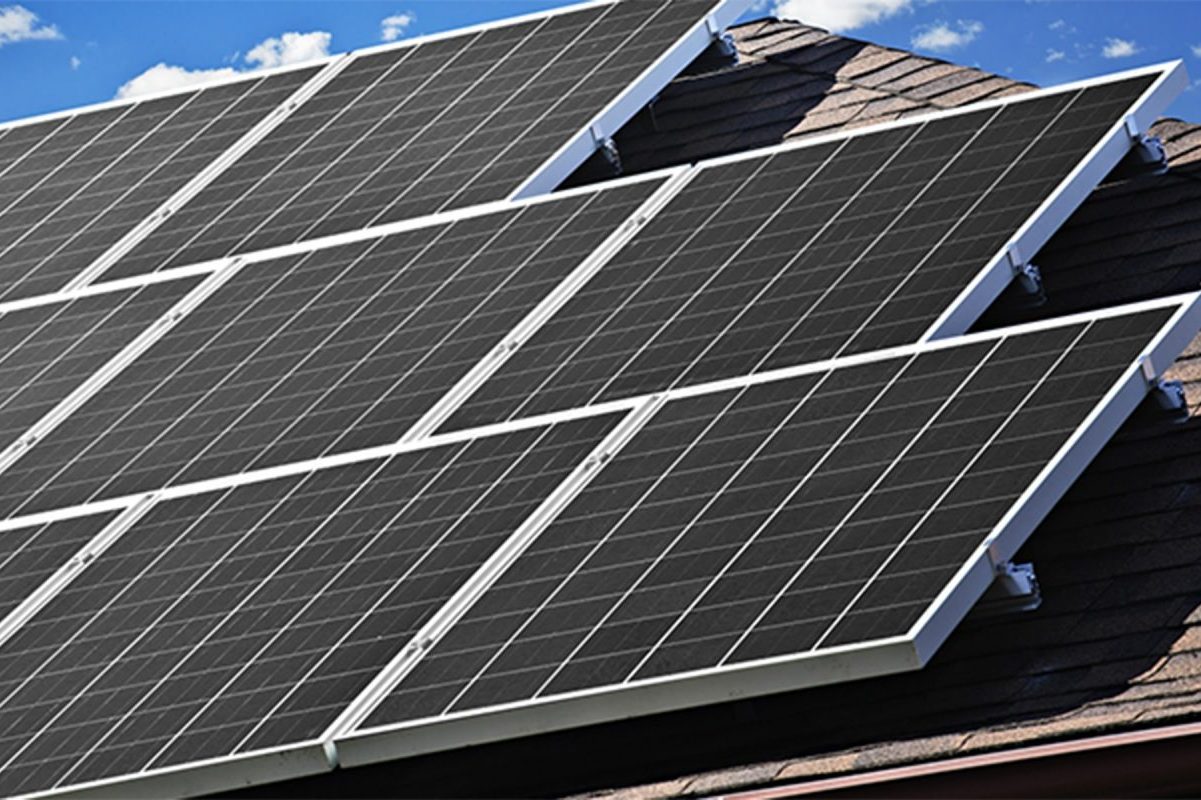
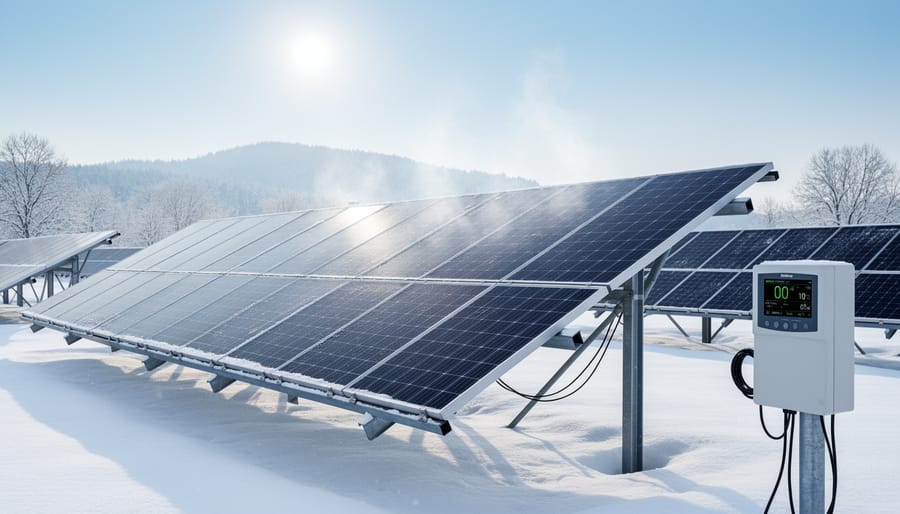
Here’s a common misconception: steeper panels mean sacrificing energy production. The reality? In snowy climates, a steeper tilt angle actually maximizes your system’s uptime by letting snow slide right off naturally. While the traditional rule of thumb suggests matching your panel angle to your latitude for optimal sun exposure, northern homeowners often benefit from slightly steeper angles—typically 5 to 15 degrees more than their latitude.
Think of it as finding the sweet spot between catching winter sunlight and managing snow. When panels are tilted at 40 degrees or more, most snow accumulation slides off within a day or two of a storm, especially once any sunlight hits the surface. This self-cleaning effect means fewer days of lost production and less time climbing on your roof with a snow rake.
For particularly snowy regions, some homeowners even opt for vertical solar panel installations, which prevent snow buildup entirely. The trade-off is slightly reduced summer production, but the consistent winter performance often makes it worthwhile. Your installer can calculate the optimal angle based on your specific location’s snowfall patterns and sun path, ensuring you get the best year-round return on your investment.
Seasonal Adjustability: Worth the Investment?
Adjustable mounting systems let you tilt your panels to different angles throughout the year, capturing more sunlight during winter’s low sun position and summer’s high arc. The question is: does the extra energy production justify the added cost?
For most homeowners, manual adjustable mounts (adjusted 2-4 times yearly) add about $500-$1,000 to installation costs. In northern climates, changing angles seasonally can boost annual energy production by 10-15%. That translates to roughly $100-$200 in additional savings per year on a typical residential system.
The math works best if you’re comfortable climbing onto your roof safely or have easy ground-level access to your panels. If you’d need to hire someone twice yearly for adjustments, those service fees quickly eat into your gains.
Automated tracking systems exist but typically cost $2,000-$4,000 more than fixed mounts, making them harder to justify for residential use. The sweet spot? Manual adjustable mounts on ground-mounted systems where seasonal tweaking takes just minutes. For rooftop installations, well-optimized fixed angles usually offer better long-term value without the maintenance hassle.
Cold-Climate Mounting Systems That Handle Freeze-Thaw Cycles
Why Standard Mounts Fail in Northern Winters
Standard mounting systems designed for moderate climates can struggle in northern winters, but the good news is that these challenges are completely preventable with the right approach. Most issues stem from three common oversights rather than fundamental problems with solar itself.
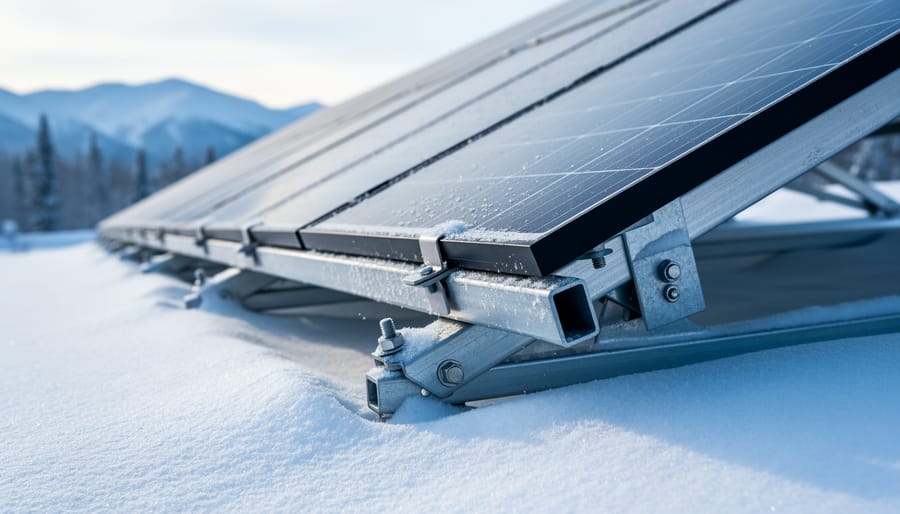
First, inadequate fastening can allow panels to shift under heavy snow loads or during freeze-thaw cycles. When moisture seeps into loosened connections and freezes, it creates expansion that weakens the entire system. Second, many standard aluminum rails become brittle in extreme cold, making them vulnerable to cracking under stress. Third, mounting systems without proper drainage pathways trap water that freezes and expands, potentially damaging both the mounts and your roof.
The key takeaway? These aren’t inevitable winter problems. They’re installation issues that disappear when contractors use cold-rated materials and follow proper northern climate protocols. Think of it like winter tires for your car—the right equipment makes all the difference, and once installed correctly, your system will handle harsh weather beautifully for decades.
Materials That Laugh at Temperature Swings
Cold-climate solar mounts aren’t your typical hardware store brackets. These specialized systems use materials specifically engineered to handle what northern winters throw at them.
The secret starts with marine-grade aluminum and stainless steel components. Unlike standard steel that can become brittle in freezing temperatures, these materials maintain their structural integrity whether it’s 90 degrees in summer or 20 below in January. Think of them as the difference between a plastic lawn chair and your car’s frame—one’s built for serious conditions, the other isn’t.
What really sets these mounts apart is their expansion-contraction design. As temperatures swing from day to night, materials naturally expand and contract. Standard mounts fight this movement, creating stress points that lead to cracks and failures. Cold-climate mounts embrace it with specially designed joints that flex without compromising strength.
You’ll also find weather-sealed hardware throughout these systems. Every bolt, every connection point gets protective treatment against moisture infiltration. This matters because water that seeps into cracks and freezes can wreak havoc on equipment.
The practical benefit? You’re not climbing on your roof every spring to check for winter damage. These systems are designed for decades of freeze-thaw cycles without the maintenance headaches. That’s genuine peace of mind—and money saved on repairs you’ll never need to make.
Strategic Panel Placement to Beat Snow Accumulation
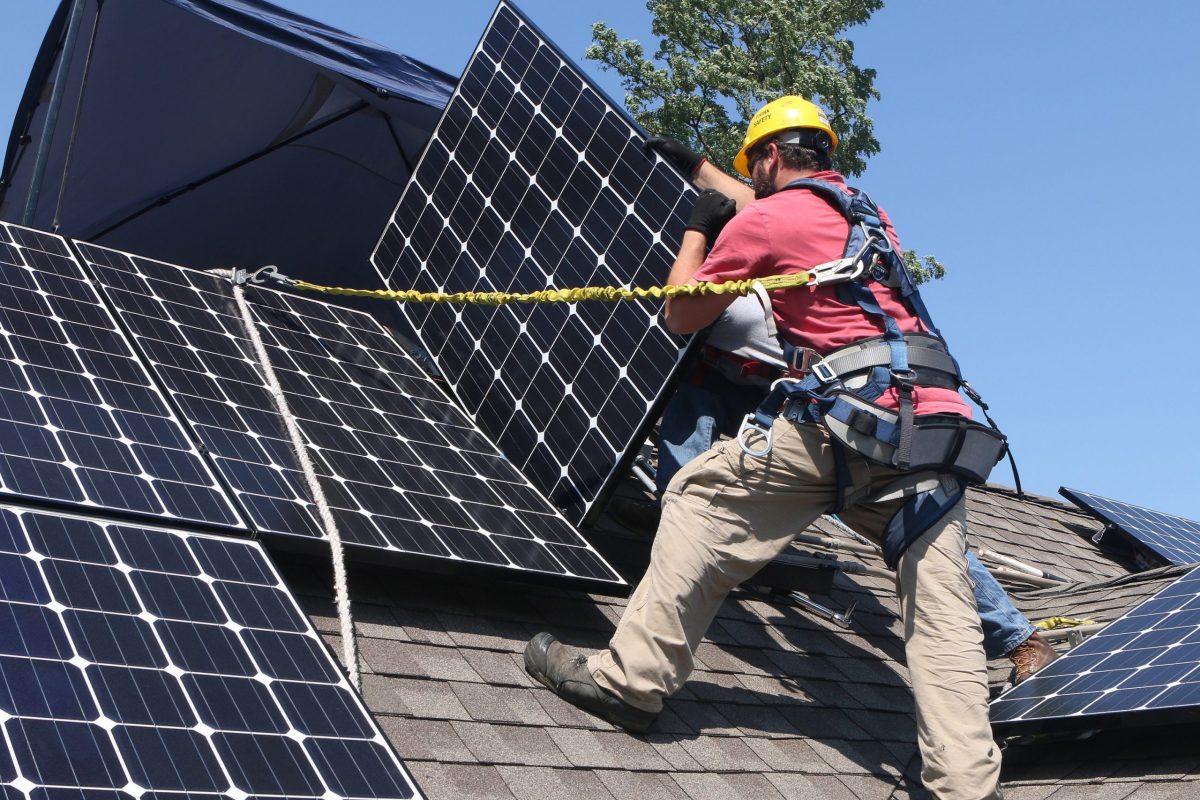
Before a single panel goes up, professional installers conduct a thorough site assessment to identify the ideal locations that naturally resist snow buildup. This strategic planning phase can make the difference between a system that requires constant winter maintenance and one that practically takes care of itself.
The assessment begins with a detailed analysis of your property’s sun exposure throughout the year. Installers use specialized tools to map how sunlight hits different roof sections and ground areas during winter’s low sun angles. South-facing locations typically receive the most direct winter sunlight, which naturally helps melt snow faster. But here’s where it gets interesting: installers also look for areas with consistent wind exposure. Wind is your friend in snowy climates because it sweeps light snow off panels before it can accumulate.
Professional installers examine your roof’s natural snow-shedding characteristics. They identify sections where snow tends to slide off on its own and position panels to take advantage of these paths. This might mean avoiding valleys where snow collects or choosing locations near roof edges where snow naturally releases. Ground-mounted systems offer even more flexibility, allowing installers to position arrays in open areas with maximum wind exposure and minimal shadowing from nearby structures or trees.
The financial payoff is substantial. Proper placement reduces or eliminates the need for expensive snow removal services, protects your investment from potential snow-load damage, and maximizes winter energy production when heating costs peak. Many homeowners find that systems designed with snow management in mind generate 15-25% more winter energy than poorly positioned installations.
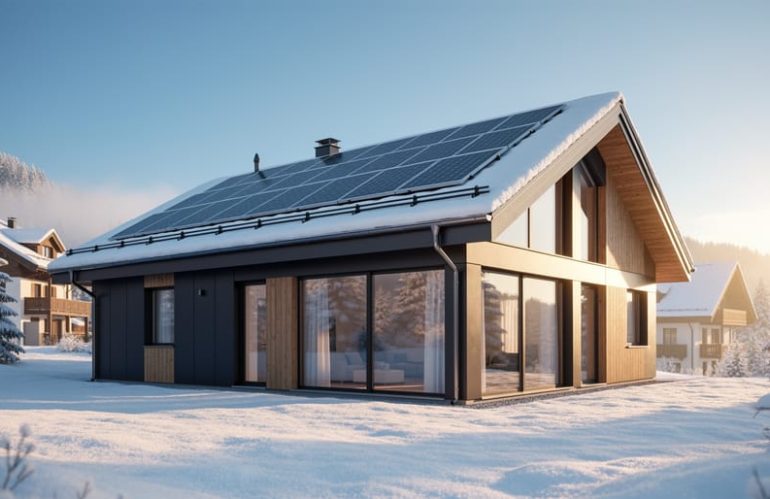
This careful planning integrates seamlessly with solar-integrated design approaches that consider both performance and aesthetics. The result is a system that works with your property’s natural characteristics rather than fighting against them, saving you money and hassle for decades to come.
Snow Management Features That Keep Panels Productive
Heated Panel Edges and Snow Guards
In regions with heavy snowfall, specialized heating elements and snow guard systems can protect your solar investment while maintaining safety. These low-energy solutions prevent two common winter problems: dangerous ice dams that can damage your panels and sudden snow slides that could injure people or property below.
Heated panel edges use minimal electricity to create narrow melt channels around your array’s perimeter. This prevents ice buildup at the edges where snow typically accumulates and freezes. The system draws far less power than traditional roof heating cables and only activates when sensors detect freezing conditions. Meanwhile, snow guards strategically positioned on your panels allow snow to release gradually rather than in hazardous sheets, protecting landscaping, walkways, and anyone below.
Do these systems make financial sense for everyone? Not necessarily. If you live in an area with light, powdery snow that slides off naturally, you probably don’t need them. They’re most valuable for homes with shallow roof pitches, locations with wet, heavy snow, or panels installed above high-traffic areas. Consider your specific situation: frequent ice dams, safety concerns, or a roof angle below 30 degrees all point toward these upgrades being worthwhile investments. Most installers can assess your property and recommend whether the added protection justifies the cost.
Dark Coating Technology That Melts Snow Faster
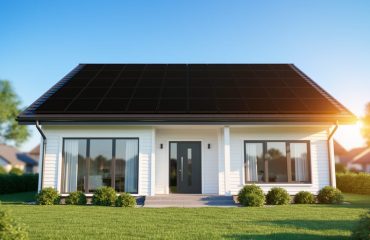
Here’s the good news for homeowners worried about winter: advanced dark coatings on modern solar panels work like a silent snow-melting system without any effort on your part. These specialized coatings are engineered to absorb more solar radiation and convert it into heat, which naturally melts light snowfall before it can accumulate and block your panels.
Think of it as a passive heating system built right into your panels. When sunlight hits the dark surface, even weak winter sun generates enough warmth to clear away a few inches of fresh snow within hours. This happens automatically, no switches to flip or systems to maintain.
The beauty of this technology is its simplicity. Unlike automated cleaning solutions that require moving parts, these coatings are simply part of the panel itself. They never wear out, break down, or need replacement. You get continuous snow-clearing benefits for the entire lifespan of your panels.
For homeowners in snowy regions, this means less time worrying about snow coverage and more time enjoying energy savings. While heavy snowstorms may still require occasional clearing, these coatings handle the frequent light dustings that would otherwise add up to significant energy losses throughout the winter season.
Electrical Components Rated for Extreme Cold
Cold weather doesn’t just affect solar panels—it also puts stress on the electrical components that make your system work. The good news? Quality solar installers know exactly how to select and protect equipment for winter conditions, ensuring your system runs smoothly year-round.
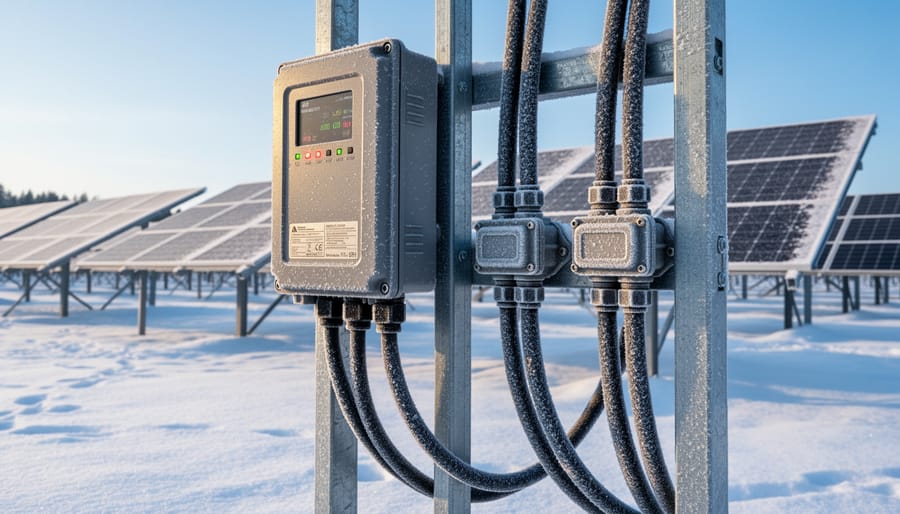
Inverters, which convert your panels’ DC power into usable AC electricity, contain sensitive electronics that can malfunction in extreme cold. Standard inverters may operate down to 14°F, but cold-climate inverters are rated to function at temperatures as low as -40°F. Similarly, battery storage systems need special consideration. Lithium-ion batteries, while efficient, can lose capacity and charging ability in freezing temperatures. Professional installers either select batteries with built-in heating elements or install them in temperature-controlled spaces like garages or insulated battery boxes.
Wiring presents its own challenges. Standard electrical cables can become brittle and crack when exposed to repeated freeze-thaw cycles. Cold-rated wiring uses special insulation materials that remain flexible in subzero conditions, preventing short circuits and system failures.
Quality installers take several protective measures beyond just selecting rated components. They position inverters in sheltered locations away from direct snow exposure, use weatherproof junction boxes, and ensure all connections are properly sealed against moisture infiltration. Some even install monitoring systems that alert you to temperature-related issues before they become problems.
These careful choices directly impact your bottom line. Systems built with properly rated components experience fewer breakdowns, reducing repair costs and maximizing your energy production. Even better, most manufacturers only honor warranties when components are correctly rated for your climate zone, protecting your investment for decades to come. When interviewing installers, always ask about their experience with cold-climate components and their approach to temperature protection.
Your Financial Advantage: Cold Climate Incentives and Savings
Going solar in a cold climate isn’t just smart for the environment—it can be remarkably good for your wallet. Northern states and cold-weather regions offer some of the most generous solar incentives in the country, precisely because they’re pushing hard for renewable energy adoption.
Many northern states provide exceptional financial benefits beyond the federal Investment Tax Credit, which currently covers 30% of your installation costs. States like New York, Massachusetts, and Minnesota offer additional rebates that can reduce your upfront costs by thousands more. New York’s NY-Sun Initiative, for example, provides significant per-watt incentives, while Massachusetts offers Solar Renewable Energy Certificates (SRECs) that generate ongoing income from your system’s production.
Here’s where cold weather becomes your financial ally: solar panels actually produce more electricity in cold temperatures because the cooler conditions improve their electrical conductivity. This enhanced efficiency means you’re generating more power per panel than someone in a warmer climate, directly improving your return on investment.
Real-world numbers tell the story. A typical 8-kilowatt system in Minnesota might cost around $24,000 before incentives. After the federal tax credit and state rebates, your out-of-pocket expense could drop to $12,000-$14,000. With enhanced cold-weather efficiency, many northern homeowners see payback periods of just 7-10 years, despite shorter winter days. Over your system’s 25-30 year lifespan, you could save $30,000-$40,000 on electricity bills.
Some utilities in cold climates also offer net metering programs that credit you at retail rates for excess power, maximizing your savings during those long summer days when your panels are producing at peak capacity. Combined with rising electricity costs, cold-climate solar isn’t just viable—it’s often more financially attractive than installations in warmer regions.
Here’s the truth that might surprise you: cold climates are actually ideal for solar energy when you use the right installation techniques. Your panels will operate more efficiently in cooler temperatures, and with proper mounting angles, snow management systems, and quality components designed for winter conditions, you’ll enjoy reliable clean energy year-round.
The key is working with an experienced installer who understands cold-climate challenges. Don’t settle for a contractor who uses standard approaches meant for warmer regions. Look for professionals who specialize in northern installations and can customize solutions for your specific location, including optimal tilt angles, appropriate racking systems, and protective measures against ice and snow buildup.
By investing in solar now, you’re taking control of your energy costs while protecting yourself from rising utility rates. You’ll reduce your carbon footprint, increase your home’s value, and enjoy the peace of mind that comes with energy independence. With available incentives and rebates, there’s never been a better time to make the switch.
Ready to explore how solar can work for your home? Schedule a consultation with a qualified cold-climate solar installer today. They’ll assess your property, answer your questions, and design a system that delivers maximum performance even in the depths of winter. Your path to clean, reliable energy starts now.