You’ve heard solar panels are only 15-20% efficient and wondered if that means they’re wasteful technology. Here’s what that number actually tells you: nothing about whether solar works for your home.
Panel efficiency measures how much sunlight converts to electricity in a given space, not how well the system performs overall. A 20% efficient panel on your roof still captures free energy from the sun for 25+ years, slashing your utility bills by 50-90% regardless of that percentage. The real question isn’t laboratory efficiency—it’s whether solar generates enough power to meet your needs and deliver financial returns.
Modern solar systems consistently prove their worth. The average residential installation pays for itself in 6-10 years, then provides two decades of nearly free electricity. Your panels will produce clean energy even on cloudy days, and any excess power often earns credits from your utility company through net metering.
Think of it this way: your gas-powered car converts only about 20% of fuel into motion, yet you don’t question whether driving works. Solar operates similarly, turning abundant sunlight into usable electricity with proven reliability. The technology has matured far beyond experimental stages, now powering millions of homes worldwide with measurable savings and energy independence. What matters is total energy production over time, not peak efficiency ratings.
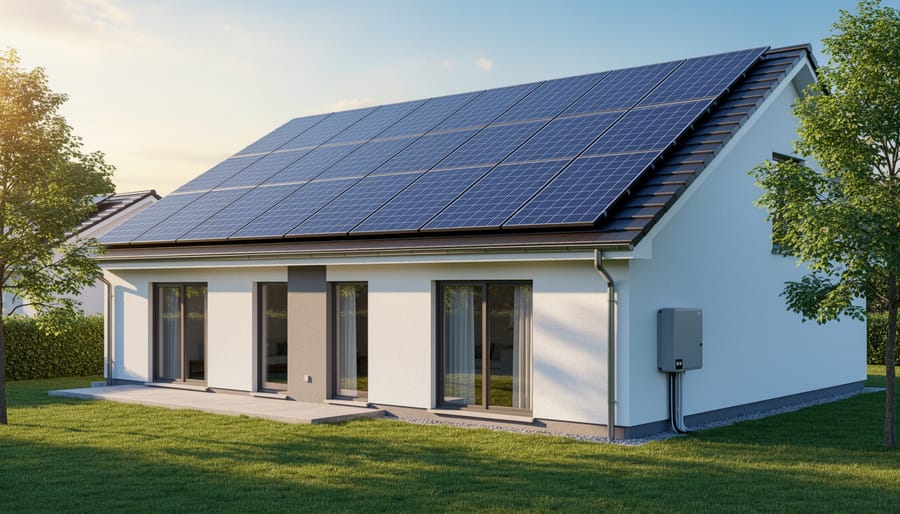
What Solar Panel Efficiency Really Means (And Why the Numbers Surprise You)
The 20% Myth: Why Lower Numbers Don’t Mean Poor Performance
When you first hear that solar panels operate at 15-22% efficiency, it might sound disappointing. But here’s the truth: those numbers are actually quite impressive when you understand what they really mean.
Solar panels work by converting sunlight into electricity through photovoltaic cells. That 20% efficiency rating means the panel converts one-fifth of the sun’s energy hitting its surface into usable power for your home. The key word here is “free.” Unlike coal or natural gas that must be extracted, processed, and burned, sunlight arrives at your rooftop completely free of charge, every single day.
Think of it this way: if someone offered you $20 for every $100 bill that landed on your roof, would you turn it down because you weren’t getting the full amount? Of course not. That’s essentially what solar panels do with sunlight, except the sun keeps delivering that energy continuously.
The efficiency percentages relate to solar cell efficiency limits based on physics, not poor technology. Converting 20% of an abundant, renewable resource is far more practical than needing 100% efficiency from a limited one.
What matters for your home isn’t the conversion percentage, but the total electricity generated. A standard residential solar system produces enough power to offset 70-100% of most households’ energy needs. That means real savings on your electric bill, regardless of the technical efficiency number.
How Solar Stacks Up Against Your Current Energy Source
When you compare solar panels to your current energy source, the efficiency conversation takes an interesting turn. Traditional coal and natural gas power plants operate at roughly 33-40% efficiency, converting fuel into electricity. Here’s the catch: by the time that power travels through transmission lines to your home, you lose another 5-8% to heat and resistance.
Solar panels, sitting right on your roof, deliver electricity exactly where you need it with zero transmission losses. That 20% efficiency rating suddenly looks different when you consider coal-fired plants waste 60% of their energy, then lose more getting it to you.
The real advantage isn’t just about conversion rates. Your current utility draws from finite resources that fluctuate in price and availability. Solar captures free energy from an unlimited source that hits your roof whether you harness it or not. Every kilowatt-hour your panels produce is one you didn’t pull from the grid, regardless of how the percentages stack up on paper.
For homeowners, this means solar delivers practical efficiency where it matters most: directly reducing your monthly bills without the environmental cost of fossil fuel extraction and combustion.
The Real Efficiency Question: How Much Money and Energy Will You Actually Save?
Your Roof Captures More Energy Than You Use
Here’s the truth that might surprise you: your roof captures far more solar energy than your household actually needs. Even with current panel efficiency levels hovering around 15-22%, the average residential roof generates an impressive amount of electricity.
Let’s put this into perspective. A typical home uses about 30 kilowatt-hours of electricity per day. Meanwhile, a modest solar installation covering just 300 square feet of roof space can generate 35-40 kilowatt-hours daily in most regions. That means even if your panels aren’t converting every ray of sunshine, they’re still producing more than enough power to meet your needs.
Consider a real-world example: a standard 6-kilowatt system requires approximately 330 square feet of roof space. This average-sized installation generates roughly 8,000-10,000 kilowatt-hours annually, while most households consume around 10,900 kilowatt-hours per year. You’re already covering 75-90% of your energy needs with a basic setup.
The beauty of solar isn’t about squeezing maximum efficiency from every photon of light. It’s about having abundant, free sunlight hitting your roof every single day. Your roof receives thousands of times more energy from the sun than you’ll ever use, so modest efficiency percentages still translate to substantial electricity production.
This abundance means you don’t need cutting-edge, ultra-efficient panels to enjoy meaningful savings and energy independence. Standard panels work remarkably well for the average homeowner.
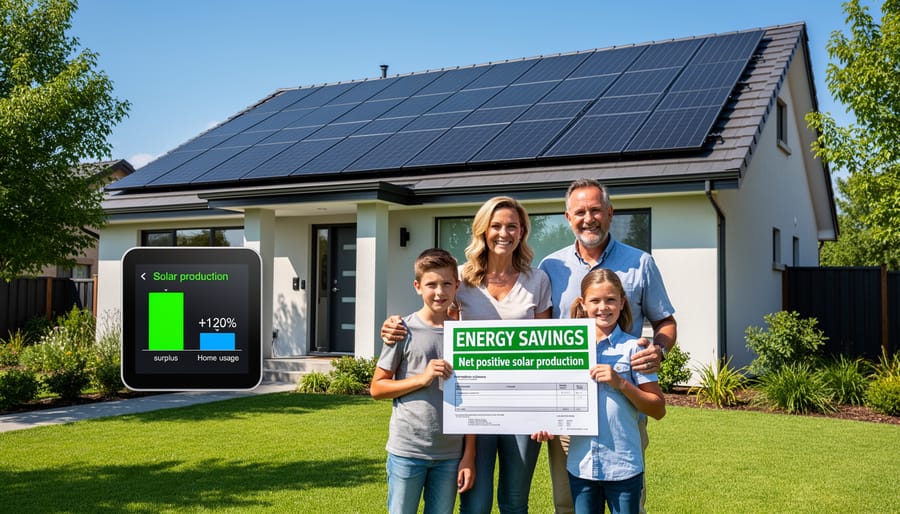
From Sunlight to Savings: Tracking Your Energy Journey
Think of your solar system as a well-organized relay team, passing energy from one runner to the next until it reaches your home. Here’s how that journey unfolds.
First, your solar panels capture sunlight and convert it into direct current (DC) electricity. While individual panels might operate at 15-22% efficiency, don’t let that number mislead you. That percentage represents how much of the sun’s raw energy becomes usable electricity, and even at these rates, your roof receives more than enough sunlight to power your entire home.
Next, your inverter steps in as the translator, converting that DC power into alternating current (AC) electricity that your appliances understand. Modern inverters work at 95-98% efficiency, meaning very little energy is lost in this crucial conversion step.
From there, the electricity flows directly to your home, powering everything from your refrigerator to your air conditioner. Any excess energy doesn’t go to waste. It either charges your battery storage system for evening use or flows back to the grid, earning you credits on your utility bill through net metering.
This seamless coordination means you’re not just generating power; you’re creating a personalized energy system that maximizes every ray of sunshine. The real measure of efficiency isn’t what happens at each step, but what shows up on your dramatically reduced electric bill each month. That’s where the true savings story unfolds.
Making Your Solar System Work Smarter, Not Harder
Positioning and Installation: Getting Every Ray You Can
Good news: you don’t need a PhD to position your solar panels effectively. Even small improvements in placement can boost your system’s performance significantly.
The golden rule is simple: face your panels toward the sun’s path. In the Northern Hemisphere, that typically means south-facing panels. The angle matters too, but most installers will automatically set this based on your latitude to capture maximum sunlight year-round.
Shading is your system’s biggest enemy. Even partial shade from a tree branch or chimney can reduce output more than you’d expect. Walk your property at different times of day to identify potential shade sources. Sometimes trimming a few branches makes a meaningful difference.
Don’t worry if your roof isn’t perfectly oriented. Modern solar technology is forgiving. East or west-facing panels still produce plenty of energy, though slightly less than ideal positioning. Many homeowners successfully use multiple roof sections to maximize their setup.
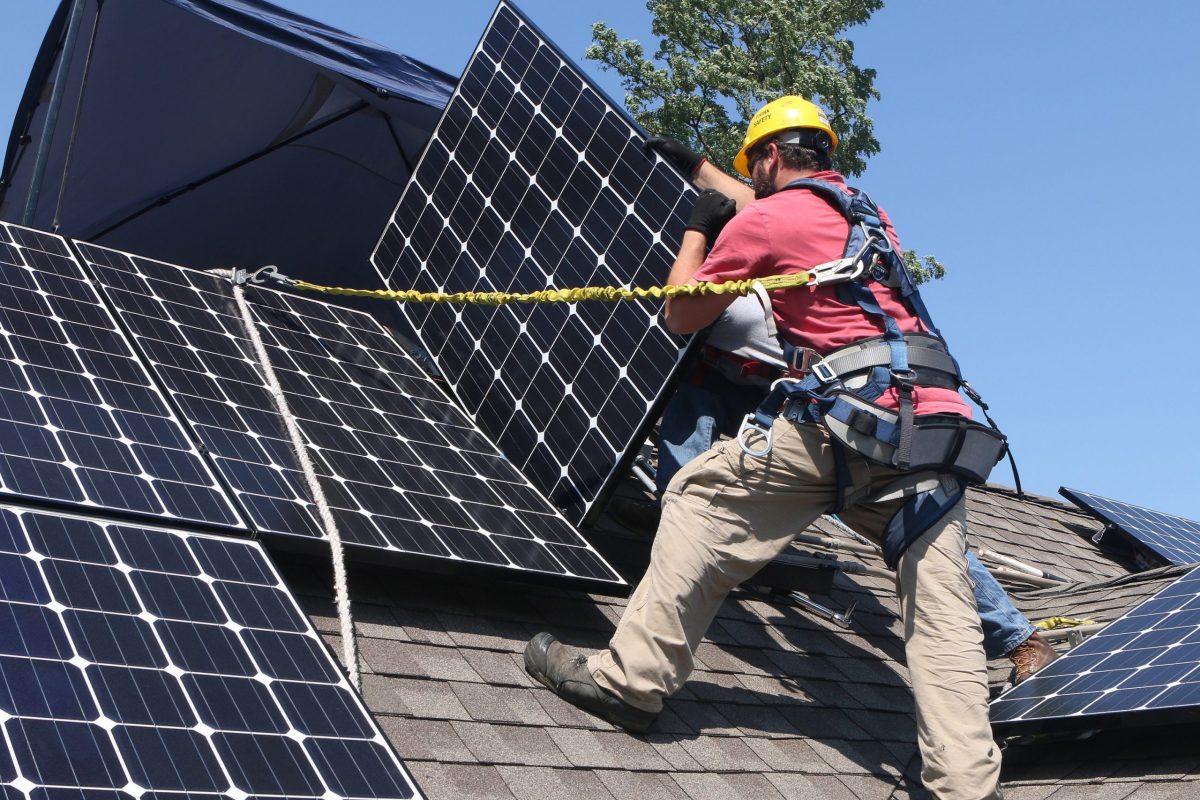
The takeaway? Work with what you have. Professional installers excel at finding creative solutions for tricky roofs. A less-than-perfect installation that actually happens beats the perfect system you never install. Focus on avoiding obvious shading issues, and let the professionals handle the technical details.
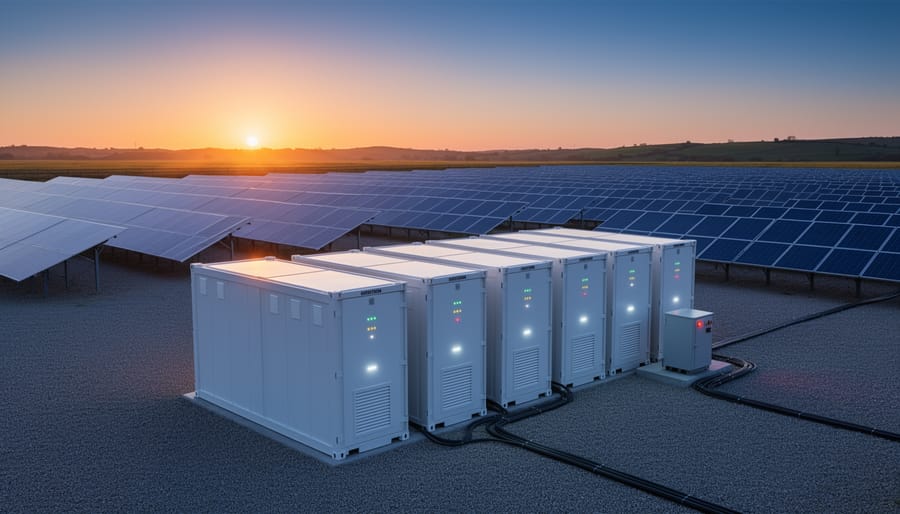
Pairing Solar with Energy Storage for 24/7 Efficiency
Solar panels produce the most energy during sunny midday hours, but your household needs electricity around the clock. This timing mismatch used to mean excess daytime production went to waste or got sold back to the grid at low rates. That’s where battery storage systems change everything.
Modern batteries capture surplus solar energy generated during peak sunshine hours and store it for later use. When the sun sets and your panels stop producing, your battery automatically kicks in to power your home through the evening and overnight. This means you’re using clean energy you generated yourself instead of pulling expensive electricity from the grid.
The result? You maximize every kilowatt your panels produce, dramatically increasing the practical efficiency of your solar investment. Instead of wasting that midday surplus, you’re stretching your solar production across 24 hours. Many homeowners with battery backup report using 80-90% of their own solar energy rather than sending it elsewhere, translating to significantly lower monthly bills and greater energy independence during outages.
Smart Home Habits That Multiply Your Solar Benefits
Your solar panels work hardest during midday sunshine, so shifting energy-intensive tasks to those peak hours maximizes your savings. Run dishwashers, washing machines, and pool pumps between 10 AM and 3 PM when your panels generate the most power. You’ll use the electricity you’re producing rather than pulling from the grid later. Pre-cool your home during sunny afternoon hours so your air conditioner draws less power during expensive evening rates. Installing a programmable thermostat makes this effortless. Even small changes multiply your benefits—charging devices and power tools during the day captures free solar energy instead of buying it at night. The beauty is that these habits don’t require sacrifice, just smarter timing that aligns with your panels’ natural rhythm.
The Efficiency Improvements Coming to Your Neighborhood
Here’s the good news: solar panels are getting better every year, and advancing solar technology continues to push efficiency rates higher. But here’s what matters most—today’s panels are already incredibly effective at doing their job.
While researchers work on next-generation technologies that could reach 40% efficiency or higher, the solar systems available right now are more than capable of meeting your home’s energy needs. Current panels will deliver decades of reliable performance and significant savings on your electricity bills. The 15-22% efficiency you’ll find in today’s residential systems is the result of decades of refinement and testing.
Think of it this way: buying solar panels today is like buying a reliable car that gets great mileage. Sure, next year’s model might get slightly better mileage, but that doesn’t mean you should keep paying for gas while you wait. The systems installed today will serve you well for 25-30 years, and many homeowners see their solar investment pay for itself within 6-10 years.
The efficiency improvements coming down the pipeline will make future solar even better, but they shouldn’t stop you from capturing the benefits available right now. Every month you wait is another month of electricity bills you could be avoiding. Today’s solar technology is already highly efficient at converting your roof space into energy savings and environmental benefits.
When it comes to solar power, efficiency ratings tell only part of the story. What truly matters is whether your system generates enough clean energy to meet your household needs and deliver meaningful savings. The answer is a resounding yes. Modern solar panels consistently convert sunlight into usable electricity that powers homes, slashes utility bills, and reduces carbon footprints, regardless of whether their efficiency rating is 18% or 22%.
Rather than getting caught up in technical specifications, focus on what solar can do for you. The average homeowner who installs solar panels sees dramatic reductions in monthly electricity costs, protection against rising energy prices, and a substantial increase in property value. These benefits far outweigh any concerns about efficiency percentages.
Your best approach is to work with a qualified solar installer who can assess your specific situation—your roof space, energy consumption, and financial goals. They’ll design a system tailored to your needs, ensuring you capture the maximum benefit from solar technology. The real question isn’t whether solar is efficient enough, but rather how quickly you can start enjoying the financial freedom and environmental benefits it provides. The technology works, the savings are real, and the time to act is now.