Your solar panels generate power during the day, but your home needs electricity at night. Without battery storage, you’re forced to sell excess solar energy back to the grid at low rates, then buy it back at premium prices after sunset. Residential solar storage batteries change this equation entirely, letting you capture and use your own clean energy around the clock while dramatically reducing your dependence on utility companies.
The financial case has shifted substantially in recent years. Battery prices have dropped by over 80% since 2010, while utility rates continue climbing nationwide. Time-of-use electricity pricing means you’re now paying two to three times more for power during evening peak hours, exactly when your solar panels sit idle. A properly sized battery system lets you avoid these expensive peak rates by drawing from stored solar energy instead, often paying for itself within seven to ten years through bill savings alone.
Beyond the dollars, battery storage delivers tangible lifestyle benefits homeowners consistently undervalue until they experience them firsthand. You gain reliable backup power during outages, protecting your family from increasingly frequent grid disruptions. You maximize the environmental impact of your solar investment by using more of the clean energy you generate. Most importantly, you achieve genuine energy independence, insulating yourself from utility rate hikes and grid instability.
The question isn’t whether residential solar batteries make sense. For most homeowners with solar panels, they do. The real question is which system fits your specific energy needs and budget, and whether to install one now or wait.
What Residential Solar Batteries Actually Do (In Plain English)
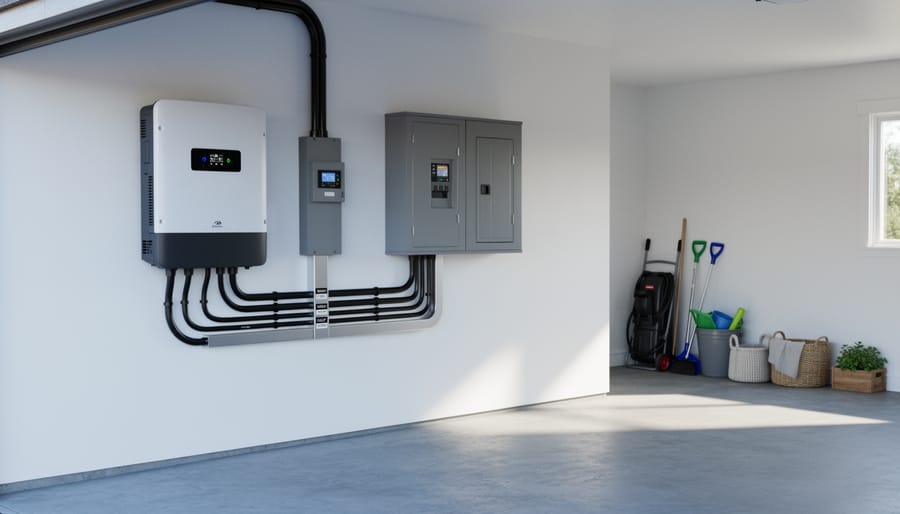
The Day-Night Energy Problem Solved
Here’s a frustrating reality: your solar panels work hardest when you need electricity least. They generate peak power during midday when you’re at work and the house is empty. Meanwhile, your actual energy use spikes in the morning as you make breakfast and get ready for the day, and again in the evening when you’re cooking dinner, running the dishwasher, and streaming TV.
Without battery storage, all that valuable midday solar energy flows back to the grid, often for minimal credit. Then when the sun sets and your home comes alive with activity, you’re pulling expensive electricity from your utility company. It’s like earning money during the day only to spend it all at night.
Solar batteries solve this timing problem elegantly. They store your excess daytime solar production and release it exactly when you need it most. That morning coffee? Powered by yesterday’s sunshine. Evening movie night? Running on solar energy captured hours earlier. You’re essentially shifting your free solar power to match your actual lifestyle, maximizing every ray of sunshine your panels capture and dramatically reducing what you buy from the grid.
Your Personal Power Bank
Think of your home battery storage system like the power bank you use for your phone. Just as your portable charger stores energy to use when you’re away from an outlet, your home battery does the same thing, just on a much larger scale.
Here’s how it works in three simple steps. First, during sunny days, your solar panels generate electricity. Second, any excess power your home doesn’t immediately need gets stored in your battery instead of going to waste or being sent back to the grid. Third, when the sun goes down or during cloudy weather, your battery automatically releases that stored energy to power your home.
The beauty of this system is its seamlessness. You won’t need to flip switches or monitor anything. Your battery quietly charges during the day and discharges when needed, just like plugging in your phone’s power bank before a trip and using it throughout the day. The difference? Your home battery can power essentials like your refrigerator, lights, and Wi-Fi router for hours or even days, depending on its size and your usage.
The Real Financial Benefits of Adding Battery Storage
Stop Paying Peak Rates to Your Utility
Many utility companies charge different rates depending on when you use electricity. These time-of-use rates mean you pay significantly more during peak hours, typically late afternoon and early evening when everyone gets home and cranks up their air conditioning or heating. In some areas, peak rates can be two to three times higher than off-peak prices.
Here’s where your battery becomes a money-saving powerhouse. During the day, your solar panels charge your battery with free sunshine. Then, when peak rates kick in and electricity prices spike, your battery automatically powers your home with that stored energy instead of pulling expensive power from the grid. You’re essentially paying yourself with your own stored sunshine rather than paying premium prices to your utility company.
This strategy, called peak shaving, can dramatically reduce your electric bills. Even if your solar panels aren’t producing power during those expensive evening hours, your battery has you covered. You’ve already captured that energy when the sun was shining, and now you’re using it at the most financially advantageous time. It’s like having your own personal power reserve that activates exactly when you need it most.
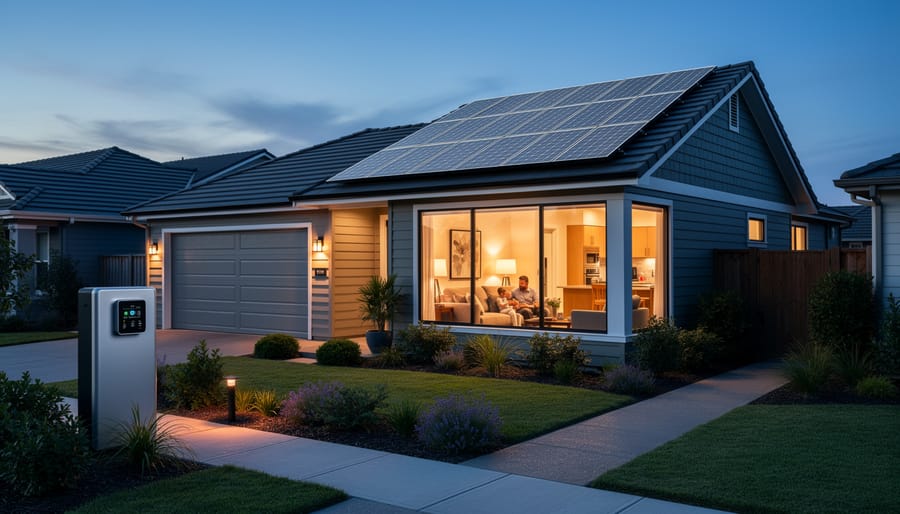
True Energy Independence Means Real Savings
The financial picture for solar batteries has improved dramatically. Most homeowners with solar panels and battery storage see monthly electricity bill reductions between $100 and $200, translating to $1,200 to $2,400 in annual savings. These numbers become even more attractive in areas with time-of-use rates, where you can avoid expensive peak-hour charges by drawing from your stored energy instead of the grid.
Payback periods typically range from 7 to 12 years, depending on your local electricity rates, available incentives, and how much energy you store and use. While this might seem lengthy, remember that quality battery systems last 10 to 15 years or longer, meaning you’ll enjoy several years of pure savings after breaking even.
Looking at the 20-year outlook, the numbers become compelling. With electricity rates rising an average of 2-3% annually, your savings grow year over year. A system saving you $1,800 annually today could save $2,400 or more in ten years. Over two decades, total savings often reach $40,000 to $60,000, far exceeding the initial investment. Factor in increased home value and protection from grid outages, and the return on investment becomes even clearer.
Your Home Value Gets a Boost
Installing solar panels with battery storage isn’t just good for your electric bill—it’s a smart investment in your home’s value. Recent studies show that homes with solar energy systems sell for significantly more than comparable homes without them, and adding battery storage makes your property even more attractive to buyers.
Today’s homebuyers, especially millennials and younger generations, actively seek energy-efficient homes with green technology. A solar-plus-battery system signals that your home is modern, forward-thinking, and equipped to handle rising energy costs and grid instability. It’s a tangible feature that sets your property apart in a competitive market.
Beyond the financial boost, battery storage offers peace of mind that resonates with buyers—they’re purchasing a home that can keep the lights on during outages and reduce monthly expenses from day one. That combination of immediate savings and long-term resilience makes your home a more compelling investment in any market.
Backup Power When You Need It Most
Outages Don’t Stop Your Life
When the grid goes down, your life doesn’t have to. With a solar battery system, power outages become minor inconveniences rather than major disruptions. Your refrigerator keeps humming along, preserving hundreds of dollars worth of food that would otherwise spoil. The lights stay on, so kids can finish homework and you can move safely through your home after dark.
Perhaps most importantly in today’s connected world, your internet router keeps working and your phones stay charged. You can continue working from home, stay in touch with family, and access important information during emergencies. No more scrambling for flashlights or wondering if your neighbor has space in their generator-powered freezer.
Many homeowners report that experiencing their first blackout with battery backup feels almost surreal. While neighbors lose power, their household continues normally. You choose which appliances to run based on your battery capacity, but for most homes, that means maintaining essential services for hours or even days. It’s peace of mind that’s hard to put a price on, especially in areas experiencing increasingly frequent weather-related outages.
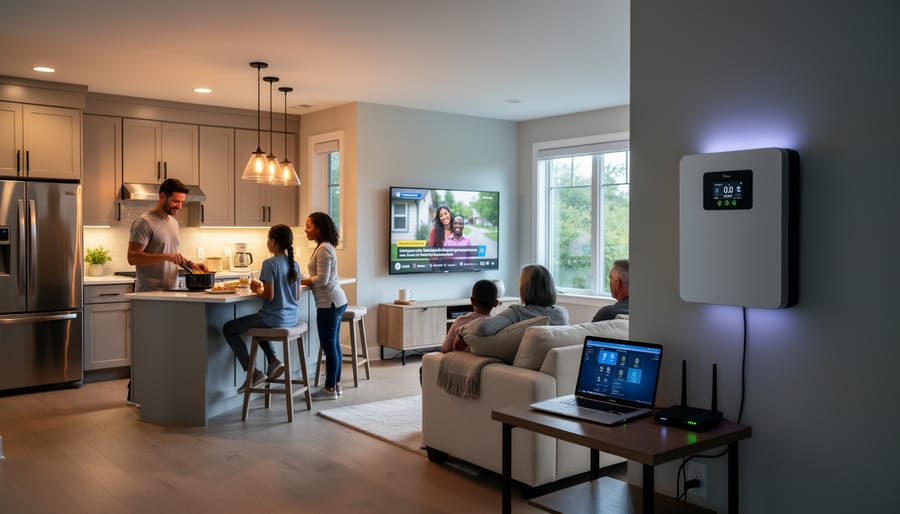
How Long Will Your Battery Last During an Outage?
The honest answer depends on several factors, but here’s what you can realistically expect: a typical 10 kWh battery can power essential household items for roughly 10-24 hours during an outage, while a larger 13-15 kWh system might keep your whole home running for 12-36 hours under normal conditions.
Your actual backup duration depends primarily on what you’re running. If you’re only powering essentials like your refrigerator, a few lights, phone chargers, and your internet router, you’ll stretch your battery much further than if you’re running your air conditioning, electric dryer, and every light in the house. A refrigerator uses about 1-2 kWh per day, while an air conditioner can consume 3-5 kWh in just a few hours.
Battery size matters too. Entry-level systems around 10 kWh work well for essential backup, while 20+ kWh installations can power most homes through extended outages. Many homeowners choose a middle-ground approach, keeping critical appliances running while being mindful of energy-hungry devices during emergencies.
Weather also plays a role. If the outage happens during sunny conditions, your solar panels continue charging your battery throughout the day, potentially providing indefinite backup power. Cloudy days or nighttime outages rely solely on stored energy.
The good news? Most outages last just a few hours, making even modest battery systems more than adequate for typical power interruptions while delivering daily energy bill savings year-round.
Choosing the Right Battery Size for Your Home
Match Your Battery to Your Lifestyle
The right battery size depends on what you actually want to power during an outage and your daily energy habits. Many homeowners assume they need whole-home backup, but a smaller system covering essential circuits—refrigerator, internet, some lights, and maybe a freezer—costs significantly less while still providing real peace of mind.
Start by reviewing your electricity bills to understand your daily usage patterns. The average American home uses about 30 kilowatt-hours daily, but you likely don’t need to back up everything. Consider whether you work from home (needing reliable internet), have medical equipment, or live in an area with frequent outages lasting multiple days.
A 10-13 kWh battery typically covers essential circuits for 1-2 days, while 20+ kWh systems can run most of your home. Think about your actual lifestyle needs rather than worst-case scenarios. If outages in your area rarely last beyond 24 hours, investing in massive storage capacity may not make financial sense.
The good news? You can always start smaller and add capacity later as battery prices continue dropping. Focus on what gives you the most value today based on your real usage patterns and budget.
Starting Small vs. Going All-In
Good news: you don’t need to make a massive upfront investment to enjoy the benefits of battery storage. Many homeowners start with a single battery unit and expand their system as their budget allows or energy needs grow. Most modern systems are designed with scalability in mind, allowing you to stack additional batteries over time without replacing your original equipment.
Starting small offers several advantages. You’ll spread costs over several years, learn how much storage you actually need through real-world experience, and technology improvements may make future additions more affordable. A single battery typically provides enough backup power for essential circuits during outages and stores excess solar energy for evening use.
Going all-in upfront, however, means maximizing your solar investment immediately and potentially qualifying for larger rebates on the total system cost. You’ll also avoid future installation labor charges and lock in current equipment prices.
The right choice depends on your priorities. If immediate energy independence matters most and budget allows, larger capacity makes sense. If you prefer testing the waters first, starting with one battery and expanding later remains perfectly viable.
Common Myths About Home Battery Storage (Debunked)
“Batteries Are Too Expensive”
Yes, battery prices have dropped significantly, but the upfront cost still raises eyebrows. Here’s the good news: you’re not paying full price. Federal tax credits currently cover 30% of your battery system cost, and many states offer additional rebates. When you factor in these incentives, the real cost becomes much more manageable.
Beyond rebates, financing options and zero-interest solar loans let you spread payments over time while immediately enjoying savings from avoiding peak electricity rates and potential blackout costs. Many homeowners find their monthly savings offset their loan payments.
Think of it this way: batteries cost roughly the same as a kitchen remodel, but unlike granite countertops, they pay you back through energy savings and increase your home’s resale value. Plus, they provide priceless peace of mind during power outages. When viewed as a long-term investment rather than an expense, the math makes sense.
“Batteries Don’t Last Long Enough”
This concern stems from outdated information about early battery technology. Today’s residential solar batteries are built to last much longer than many homeowners realize. Most reputable manufacturers back their products with warranties of 10 to 15 years, and many batteries continue performing well beyond that period.
Modern lithium-ion batteries, the standard for home energy storage, typically maintain around 70-80% of their original capacity even after their warranty expires. That means your battery will still be highly functional for years to come. In real-world terms, a quality battery system can easily serve your home for 15 to 20 years with proper maintenance, which usually involves nothing more than keeping the unit at moderate temperatures and following basic usage guidelines.
The warranty itself provides valuable peace of mind. Manufacturers guarantee a specific number of charge cycles or years of operation, whichever comes first. For most households, the battery will outlast the warranty period without issue. Think of it like your solar panels, which also come with lengthy warranties and typically perform reliably for decades. Your battery investment is protected and designed for the long haul.
“I Can’t Add a Battery to My Existing Solar”
Good news: you absolutely can add a battery to your existing solar panel system. This is one of the most common misconceptions homeowners have, and it couldn’t be further from the truth. Battery retrofits are happening every day across the country, and the process is more straightforward than you might imagine.
Most solar panel systems installed in the last decade are compatible with battery storage. Your solar installer simply connects the battery to your existing setup, often completing the installation in just one or two days. The main components—your panels and inverter—continue working exactly as they do now, with the battery seamlessly integrated to store excess energy.
The process typically involves assessing your current system, selecting an appropriately sized battery, obtaining permits, and scheduling the installation. Many homeowners who pursue battery solar upgrades are pleasantly surprised by how minimally disruptive the process is. Even if your inverter needs upgrading to accommodate the battery, it’s a manageable project that unlocks significant energy independence and savings.
What to Expect During Installation
The Installation Process, Simplified
Installing a residential solar storage battery is surprisingly straightforward and typically completed in just one day. The process mirrors the solar installation process you may already be familiar with.
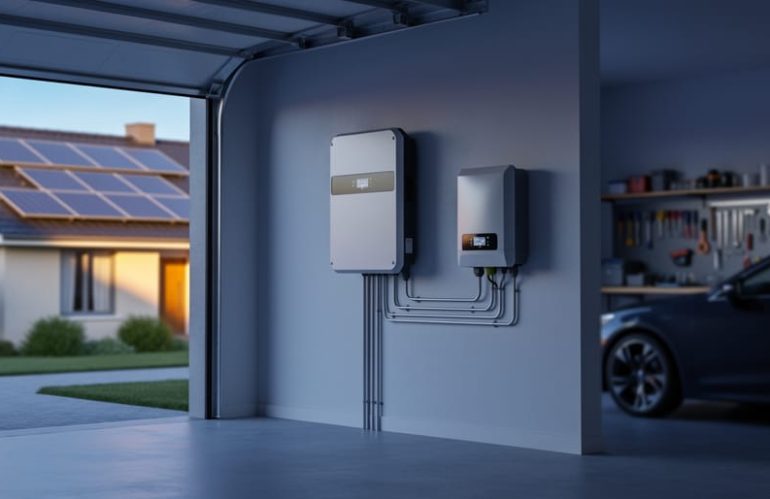
On installation day, certified technicians will arrive to mount your battery unit, usually in your garage or an exterior wall location. They’ll connect it to your existing solar panel system and electrical panel, then configure the settings to match your energy needs. The entire process generally takes between 4 to 8 hours, depending on your home’s setup.
Before installation day, you’ll want to clear the designated installation area and ensure easy access to your electrical panel. Most installers will conduct a pre-installation site visit to identify any potential challenges and finalize placement decisions.
After physical installation, the technician will test the system, walk you through the monitoring app, and explain how to track your energy storage and usage. You’ll receive documentation for warranty purposes and any applicable permits. Many homeowners are surprised by how minimally disruptive the process is, with most systems up and running by dinnertime.
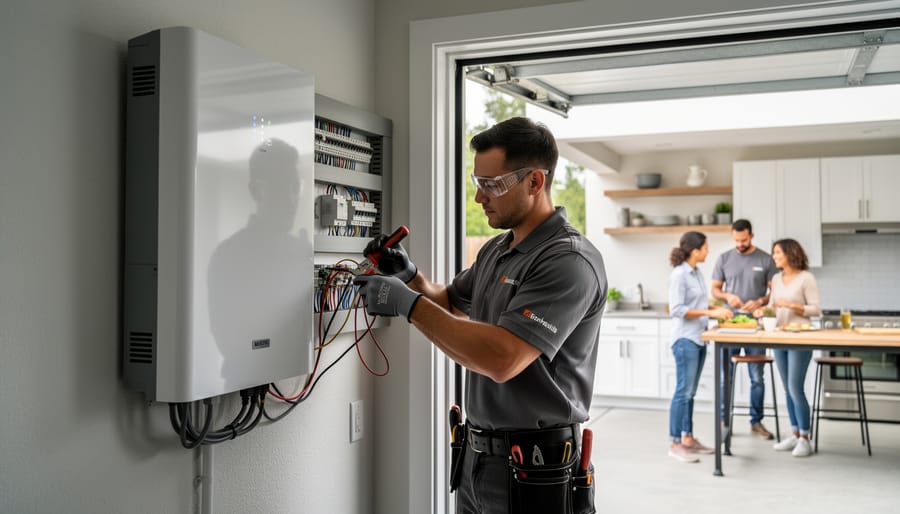
Where Your Battery Will Live
Your battery system needs surprisingly little space—typically about the size of a small water heater. Most homeowners install batteries in their garage, utility room, or basement, where they blend in with other household equipment. These spots offer easy access for maintenance while keeping the unit out of daily living areas.
For homes without interior options, wall-mounted exterior installations work perfectly well. Modern batteries are designed to withstand outdoor conditions, though they perform best with some shade and protection from extreme temperatures.
Plan for about 3 feet of clearance around the unit for ventilation and servicing. The good news? Today’s batteries are sleek and compact compared to older models, and many feature neutral designs that won’t clash with your home’s aesthetic. Your installer will assess your space during the site evaluation and recommend the best location based on your electrical panel proximity, available room, and local building codes. Most installations take just a few hours and require minimal modifications to your home.
Adding battery storage to your solar panel system represents more than just a technical upgrade—it’s an investment in your home’s future and your family’s peace of mind. The combination of financial benefits, from maximizing your solar savings to protecting against rising utility rates, makes battery storage an increasingly smart choice for homeowners who want to take control of their energy costs.
Beyond the dollars and cents, battery storage delivers something equally valuable: true energy independence. You’ll have the confidence that comes from knowing your lights will stay on during grid outages, and you’re making the most of every ray of sunshine your panels capture. Instead of sending excess power back to the grid for minimal credit, you’re storing that energy for when you actually need it—during evening hours or unexpected blackouts.
The technology has matured significantly, with today’s systems offering reliable performance, longer lifespans, and more affordable pricing than ever before. While battery storage isn’t the right fit for every household, it’s worth serious consideration if you value resilience, want to maximize your solar investment, or live in an area with time-of-use rates or frequent outages.
Take the next step by getting quotes from reputable installers in your area. Ask about your specific energy usage patterns, available incentives, and projected payback periods. You might discover that battery storage is the missing piece that transforms your solar system from good to great.