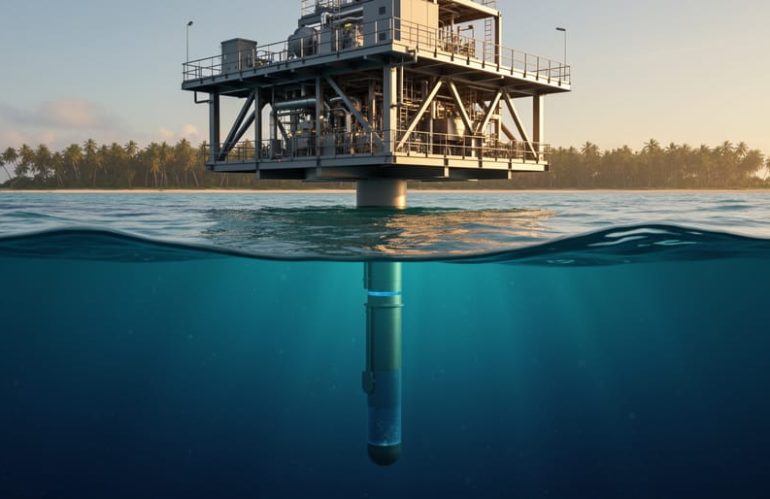
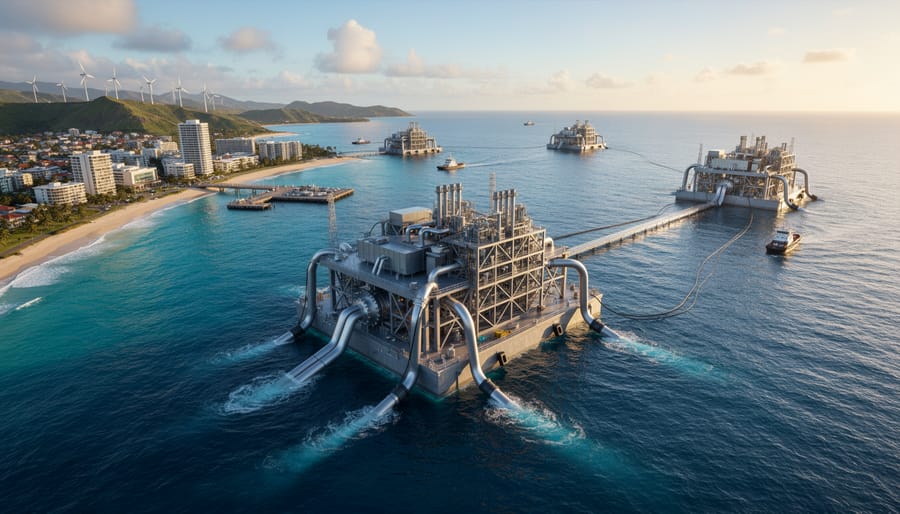
Imagine harnessing the ocean’s natural temperature difference to generate endless clean electricity. That’s exactly what Ocean Thermal Energy Conversion (OTEC) does, and while it sounds like science fiction, this technology has been producing power since the 1970s. OTEC systems work by exploiting the temperature gap between warm surface water and cold deep ocean water—typically at least 36°F difference—to drive turbines and create electricity without any fuel or emissions.
Here’s the fascinating part: this renewable energy source operates 24/7, unlike solar panels that depend on daylight. The ocean’s thermal layers remain remarkably stable, making OTEC one of the most reliable renewable technologies on the planet. Tropical and subtropical coastal regions with deep ocean access nearby hold the greatest potential, where warm surface temperatures meet cold depths within reasonable distance from shore.
For homeowners exploring renewable energy options, understanding OTEC helps you appreciate the broader clean energy landscape, even though residential solar remains your most practical choice today. OTEC requires massive infrastructure, deep ocean access, and utility-scale investment—making it a technology for power companies rather than individual properties. While OTEC stations generate baseload power for island communities and coastal regions, rooftop solar panels deliver immediate, affordable energy independence right at your home. Both technologies fight climate change and reduce fossil fuel dependence, but only solar puts that power directly in your hands today, slashing your electricity bills while OTEC developments continue advancing at the commercial level.
How Ocean Thermal Energy Converters Actually Work

The Simple Science Behind the Technology
Think of the ocean like a giant battery with two terminals. The surface water soaks up heat from the sun, staying warm at around 77°F, while water deep below remains cold at about 39°F. That temperature difference might not sound dramatic, but it’s enough to generate electricity.
Here’s how it works in simple terms: imagine holding a hot cup of coffee in a cold room. The temperature difference between the coffee and the air creates energy you can actually feel. Ocean thermal energy converters use that same principle, but on a massive scale. They pump warm surface water through a system that turns a special fluid into vapor, which spins a turbine to make electricity. Then, cold water from the deep ocean cools everything down again, and the process repeats.
It’s essentially nature’s air conditioning system, working 24/7 because ocean temperatures stay consistent day and night. Unlike wind or traditional solar panels that depend on weather conditions, this temperature gap never disappears in tropical waters, making it a reliable, continuous source of clean energy.
Why It’s Called ‘Solar-Ocean’ Energy
At its core, ocean thermal energy is solar energy with an extra step. The sun doesn’t just power rooftop panels—it also acts as nature’s largest ocean heater. Every day, sunlight warms the ocean’s surface to temperatures that can reach 77°F or higher in tropical regions, while deeper waters remain cold, sometimes below 40°F.
This temperature difference exists entirely because of solar radiation. The sun’s energy is absorbed by the top layer of the ocean, creating the warm “battery” that OTEC systems tap into. Without continuous sunlight heating the surface, there would be no temperature gradient to harvest.
Think of it this way: traditional solar panels capture sunlight directly and immediately convert it to electricity. OTEC systems capture that same solar energy after the ocean has stored it as heat. It’s an indirect solar technology, similar to how solar-tidal power combinations leverage multiple sun-driven forces.
This distinction matters because it helps you understand OTEC’s place in the renewable energy family. While residential solar gives you direct access to sunlight’s power at your home, OTEC harnesses the ocean’s role as a massive solar collector—a fascinating concept, though one that requires tropical ocean locations rather than your rooftop.
Ocean Thermal vs. Rooftop Solar: What Homeowners Need to Know
The Advantages Ocean Thermal Has Over Solar Panels
Ocean thermal energy has some impressive technical advantages over solar panels that are worth understanding, even though it’s not something you can install on your roof. The most significant benefit is continuous operation. While solar panels only generate electricity when the sun is shining, ocean thermal systems work around the clock, producing steady power 24 hours a day, 365 days a year. This means no interruption at night or during cloudy periods.
Weather dependency is another key difference. Your rooftop solar panels produce less energy on overcast days and nothing during the night, which is why many homeowners pair them with battery storage. Ocean thermal systems, on the other hand, don’t care about weather conditions above the surface. Since they rely on temperature differences in deep ocean waters that remain constant year-round, they deliver the same reliable output whether it’s sunny, rainy, or stormy.
This translates to remarkably consistent energy production. Solar panel output varies by season, time of day, and local weather patterns, which is completely normal and manageable with proper system design. Ocean thermal facilities maintain steady, predictable power generation without these fluctuations.
However, here’s the important perspective for homeowners: while ocean thermal energy excels at large-scale, utility-level power generation in tropical coastal areas, it’s not a residential technology. For your home energy needs, solar panels remain the practical, proven choice that puts energy independence within your reach right now.
Why Solar Panels Still Win for Your Home
Let’s be straightforward: ocean thermal energy converters aren’t something you can install on your property. These massive systems require tropical ocean conditions with significant temperature differences between surface and deep water, along with industrial-scale infrastructure that costs hundreds of millions of dollars. Unless you live on a research vessel, OTEC simply isn’t an option for powering your home.
Here’s the reality check. While OTEC represents fascinating innovation in renewable energy, homeowners today have proven, accessible technology already available. Rooftop solar panels deliver immediate benefits you can actually use: lower electricity bills starting month one, increased home value, and genuine energy independence. You don’t need to wait decades for ocean thermal technology to become residential-ready when solar works right now.
The beauty of solar is its simplicity and scalability. Whether you have a small urban rooftop or sprawling suburban property, solar adapts to your space and budget. Modern solar-battery systems provide reliable backup power and maximize your energy savings, giving you control over your electricity costs today, not someday.
Understanding cutting-edge technologies like OTEC helps you appreciate how renewable energy is evolving globally. But for practical home energy solutions, solar panels remain your best investment. They’re tested, affordable, and delivering results for millions of homeowners worldwide.
Where Ocean Thermal Energy Could Lower Your Electric Bill

Coastal Communities Getting Cleaner Grid Power
OTEC technology holds particular promise for island communities and coastal regions that currently rely heavily on imported diesel fuel for electricity generation. Places like Hawaii, Puerto Rico, Caribbean islands, and Pacific island nations pay some of the highest electricity rates in the world—often two to three times what mainland residents pay. These same locations happen to have the ideal conditions for OTEC: warm surface waters year-round and deep ocean trenches nearby.
For these communities, OTEC could provide a steady baseline of clean power, dramatically reducing fuel import costs and price volatility. Unlike solar panels that produce power during daylight hours, OTEC plants run continuously, making them an excellent complement to other renewable sources. Several pilot projects are already underway in Hawaii and Japan, demonstrating real-world viability.
While OTEC remains best suited for tropical coastal areas, the lessons learned benefit everyone. As these communities prove that alternative energy sources can replace fossil fuels reliably and affordably, they pave the way for broader renewable energy adoption. For most homeowners on the mainland, solar panels remain the most practical renewable energy choice available today, offering immediate savings and energy independence without waiting for emerging technologies to scale up.
The Financial Impact on Your Energy Costs
While ocean thermal energy converters offer exciting possibilities for large-scale ocean power generation, they won’t directly impact your home energy bills anytime soon. The real financial opportunity available to you today lies in combining two proven technologies: cleaner grid electricity and rooftop solar panels.
As utilities gradually incorporate more renewable energy sources into the grid, including future innovations like OTEC in coastal regions, your baseline electricity becomes cleaner over time. However, grid rates continue rising in most areas. This is where rooftop solar becomes your financial game-changer. By generating your own electricity, you lock in predictable energy costs for 25+ years while dramatically reducing your monthly utility bills.
The combination works beautifully: solar panels slash your daytime energy costs, while any remaining grid power you need becomes progressively greener as utilities adopt renewable sources. Many homeowners see 50-70% reductions in their electricity bills immediately after installation. With current federal tax credits and financing options, most systems pay for themselves within 7-10 years, then continue generating free electricity for decades. Unlike experimental ocean energy technologies still in development, rooftop solar delivers measurable savings starting from day one.
The Current Reality of Ocean Thermal Technology
Existing Ocean Thermal Plants Around the World
Ocean thermal energy isn’t just a futuristic concept—it’s already producing power in select locations around the globe. Hawaii leads the way with the Natural Energy Laboratory, which has operated various OTEC pilot projects since the 1970s. Japan has invested heavily in this technology, running successful test facilities that have proven the concept works reliably. The U.S. Navy even experimented with mini-OTEC systems back in 1979, generating enough electricity to power the equipment on board.
More recently, small island nations like the Marshall Islands and Caribbean countries have explored OTEC as a solution to their heavy reliance on imported diesel fuel. While these facilities remain relatively small-scale compared to massive solar farms or wind installations, they’ve demonstrated that extracting energy from ocean temperatures is absolutely possible. The challenge isn’t whether OTEC works—it does—but rather scaling it up cost-effectively for widespread use.
Timeline: When This Might Affect Your Energy Choices
Let’s be honest: ocean thermal energy conversion isn’t something you’ll be installing on your property anytime soon. Currently, OTEC technology exists primarily as large-scale pilot projects in tropical locations like Hawaii and Japan. For the average homeowner, this technology remains 10-20 years away from any practical application, if it becomes relevant at all for residential use.
The reality is that OTEC requires specific geographic conditions—deep ocean access and significant temperature differences—that simply don’t exist for most properties. Even in ideal coastal locations, the infrastructure costs make it unsuitable for individual homes. While researchers continue developing this promising renewable technology, it’s designed for community-scale or industrial power generation, not rooftop installation.
The good news? You don’t need to wait decades to reduce your carbon footprint and energy bills. Solar technology is available, affordable, and proven right now, making it the smart choice for homeowners ready to take control of their energy future today.
What This Means for Your Home Energy Strategy Today
Why Rooftop Solar Remains Your Best Move Now
While ocean thermal energy converters represent an exciting frontier in renewable energy innovation, they won’t be powering your home anytime soon. The good news? You don’t need to wait for emerging technologies when solar panels offer proven, immediate results right now.
Today’s rooftop solar systems are more affordable than ever, with installation costs dropping significantly over the past decade. You can start saving on your electricity bills within weeks of installation, not decades down the road. Federal tax credits and local incentives make the investment even more attractive, often covering a substantial portion of upfront costs.
Unlike experimental ocean energy systems that require massive infrastructure and ideal coastal locations, solar panels work virtually anywhere the sun shines. They’re installed in days, require minimal maintenance, and come with warranties lasting 25 years or more. Most homeowners see a full return on investment within 7-10 years, then enjoy free electricity for years afterward.
The technology is mature, reliable, and available today. While we should celebrate innovations like OTEC for grid-scale solutions, your personal energy independence starts with the proven choice already sitting on millions of rooftops worldwide.
Building a Future-Ready Energy System
Installing solar panels today does more than lower your current electricity bills—it positions your home to take advantage of tomorrow’s cleaner energy landscape. As utilities potentially integrate innovative technologies like ocean thermal energy converters into their grids, homes with solar already installed will be perfectly positioned to participate in hybrid renewable systems. Your solar investment creates immediate savings while building infrastructure that adapts as the grid evolves. When utilities transition to renewable sources like OTEC in coastal regions, your existing solar setup can work seamlessly alongside this cleaner grid power, maximizing your energy independence and environmental impact. By acting now, you’re not just solving today’s energy challenges—you’re future-proofing your home for a renewable-powered tomorrow.
Ocean thermal energy conversion represents an exciting frontier in renewable energy, particularly for tropical and subtropical coastal regions where temperature differences make it viable. While OTEC technology holds genuine promise for large-scale power generation in specific locations, it’s important to recognize that multiple renewable technologies serve different purposes in our clean energy future.
For homeowners today, solar panels offer something OTEC cannot: immediate action and direct control over your energy costs. You don’t need to wait for infrastructure development or live near the ocean to benefit. Installing solar panels puts the power of renewable energy literally in your hands, reducing your electricity bills from day one while shrinking your carbon footprint.
The beauty of renewable energy lies in its diversity. Ocean thermal systems may power communities, wind farms may energize regions, but solar panels empower individual homeowners right now. As these technologies mature together, they’ll create a comprehensive clean energy network. Your solar investment today contributes to this brighter, more sustainable future while delivering tangible benefits to your household immediately.