Your solar battery choice will impact your wallet for the next decade, and the price tag tells only half the story. Lithium batteries cost two to three times more upfront than lead-acid options, a difference that stops many homeowners in their tracks. But here’s what the sticker price doesn’t show: lithium batteries last 10-15 years compared to lead-acid’s 3-5 years, meaning you’ll replace lead-acid batteries three times while your neighbor’s lithium battery keeps running.
The math shifts dramatically when you factor in replacement costs, maintenance time, and usable energy. Lead-acid batteries deliver only 50% of their rated capacity before damage occurs, while lithium batteries provide 80-90% usable power. This means a 10kWh lead-acid system actually gives you 5kWh, forcing you to buy a larger, more expensive system upfront to meet your actual energy needs.
This comparison cuts through the marketing noise to show you the real cost difference, performance gaps, and financial breakeven point. You’ll discover which battery type actually saves money over time and whether the lithium premium makes sense for your specific situation.
The Real Difference Between Lead-Acid and Lithium Solar Batteries
What’s Actually Inside Your Solar Battery
Solar batteries, whether lithium or lead-acid, work like rechargeable versions of regular batteries, just on a much larger scale. Inside, you’ll find several key components working together to store the electricity your panels generate during sunny days.
Both battery types contain electrodes—a positive and negative side—separated by a material called an electrolyte. When your solar panels send electricity to the battery, a chemical reaction occurs that stores energy. When you need power at night or during cloudy weather, the reaction reverses, releasing that stored energy to your home.
The main difference lies in the materials used. Lead-acid batteries use lead plates submerged in sulfuric acid, similar to what’s under your car hood. Lithium batteries use various lithium battery chemistry types, typically lithium iron phosphate, which is lighter and more efficient.
Think of it this way: both store energy like a water tank stores water, but lithium batteries are like modern insulated tanks that hold more, waste less, and last longer, while lead-acid batteries are the older, less efficient version.
How Each Type Handles Your Daily Power Needs
During everyday use, the differences between these battery types become crystal clear. Lead-acid batteries deliver about 50% of their rated capacity in real-world conditions because discharging them fully damages their lifespan. If you have a 10 kWh lead-acid system, you can only safely use 5 kWh daily. This means you’ll need to purchase double the capacity you actually need, significantly increasing your upfront investment.
Lithium batteries change this equation entirely. You can safely use 80-90% of their capacity without worry, so a 10 kWh lithium system gives you 8-9 kWh of usable power. This translates to fewer batteries needed and more flexibility during cloudy days or higher-demand periods.
The performance difference also shows up in efficiency. Lead-acid batteries lose about 20% of stored energy during charging and discharging cycles, while lithium batteries waste only 5-10%. Over years of daily use, this efficiency gap means you’re getting more value from every ray of sunshine your panels capture. Your solar investment works harder for you, powering more appliances and reducing grid dependence without requiring oversized battery banks.
Lifespan: Where Lithium Batteries Pull Ahead
Here’s where the numbers tell a compelling story. A typical lead-acid battery lasts between 3 to 5 years in a solar setup, while lithium batteries routinely deliver 10 to 15 years of reliable service. That’s not a small difference—it’s three times the lifespan.
Let’s put this in perspective. If you install a solar system today with lead-acid batteries, you’ll likely replace them twice, possibly three times, before a lithium battery would need replacement. Each time you swap out those lead-acid batteries, you’re paying for the units themselves, plus installation labor, disposal fees, and the hassle of coordinating the work.
The cycle count difference is equally striking. Lead-acid batteries typically handle 500 to 1,000 charge-discharge cycles before their capacity drops significantly. Lithium batteries? They’re engineered for 3,000 to 5,000 cycles, with some premium models exceeding 6,000. For homeowners using their batteries daily, this translates directly to years of service.
Here’s the myth worth debunking: “Lead-acid is good enough if you’re on a budget.” While the initial price tag looks friendlier, you’re essentially buying the same battery multiple times over your solar system’s 20-25 year lifespan. It’s like choosing the cheapest tires for your car—sure, you save money today, but you’ll spend far more replacing them every year.
The real winner in the lifespan category isn’t just about longevity—it’s about fewer interruptions to your energy independence, less time coordinating replacements, and ultimately, keeping more money in your pocket over the long haul.
The True Cost Breakdown (Not Just the Price Tag)
Upfront Investment vs. Replacement Costs
Here’s the reality about battery costs: while lithium batteries typically cost 2-3 times more upfront than lead-acid options, they actually save you money over time. Let’s break down the numbers.
A lead-acid battery might cost $200-400, but you’ll need to replace it every 3-5 years. Over a 15-year period, that means purchasing 3-5 batteries, totaling $600-2,000 in replacement costs alone. Add in the labor and hassle of multiple replacements, and those expenses climb higher.
A lithium battery costs $600-1,200 initially but lasts 10-15 years with minimal maintenance. That’s often just one purchase for the entire lifespan of your solar system.
The math becomes even clearer when you factor in efficiency. Lead-acid batteries lose about 50% of their energy during charging and discharging, meaning you’re essentially wasting half the solar power you generate. Lithium batteries operate at 95% efficiency, so you’re actually using the energy you’ve paid to capture.
Over 15 years, most homeowners find lithium batteries cost 30-40% less than repeatedly replacing lead-acid batteries, while delivering better performance throughout their entire lifespan. The higher upfront cost is an investment that pays for itself.
Maintenance Expenses You Need to Factor In
Here’s where lead-acid batteries can quietly drain your wallet over time. These traditional batteries need regular attention to stay healthy. You’ll need to check water levels every few months, clean corroded terminals, and ensure proper ventilation. If you’re not comfortable doing this yourself, you’ll pay a technician for routine maintenance visits that typically cost $100-200 annually.
Lithium batteries take the opposite approach. Once installed, they require virtually zero maintenance. No water to top off, no terminals to clean, and no scheduled checkups needed. This hands-off design means you’ll save both time and money over the battery’s lifetime.
Let’s put real numbers to this difference. Over a 10-year period, lead-acid maintenance costs can add up to $1,000-2,000 in service calls and supplies. Lithium batteries? Essentially zero. When you factor in the value of your time spent on upkeep, the gap widens even further. For busy homeowners who’d rather spend weekends enjoying their homes than maintaining batteries, lithium’s set-it-and-forget-it approach delivers both convenience and long-term savings that help offset that higher initial price tag.
How Efficiency Impacts Your Electric Bill
Here’s the real financial picture: lithium batteries typically deliver 95% efficiency, meaning almost every bit of solar energy you store actually gets used to power your home. Lead-acid batteries, on the other hand, operate at around 80-85% efficiency, which means 15-20% of your stored solar energy simply disappears as heat.
Let’s put that in dollar terms. If your solar panels generate $100 worth of electricity monthly, a lead-acid system effectively throws away $15-20 of that value. Over a year, that’s $180-240 in lost solar energy you’ll need to pull from the grid instead. With lithium, you’re only losing about $5 monthly, saving you up to $235 annually on electricity costs.
This efficiency gap compounds over time. The more you rely on stored solar power rather than grid electricity, the more those percentage points matter. Your battery system configuration plays a role too, but lithium’s superior efficiency means you’re maximizing every ray of sunshine your panels capture, keeping more money in your pocket month after month.
Space, Weight, and Installation Realities
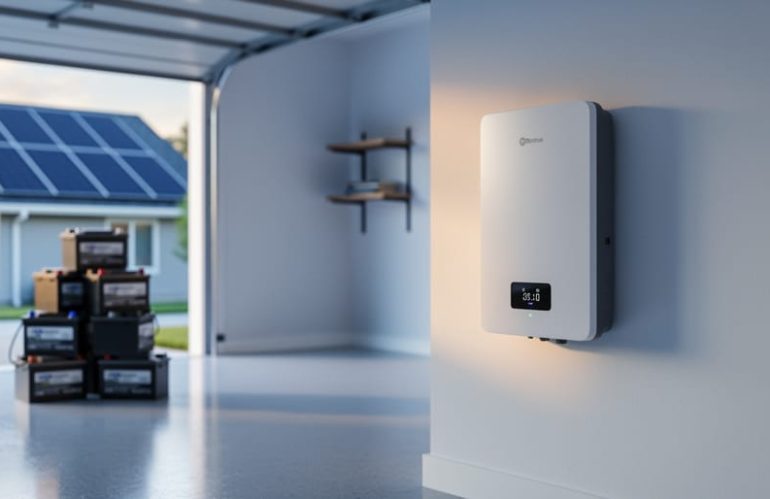
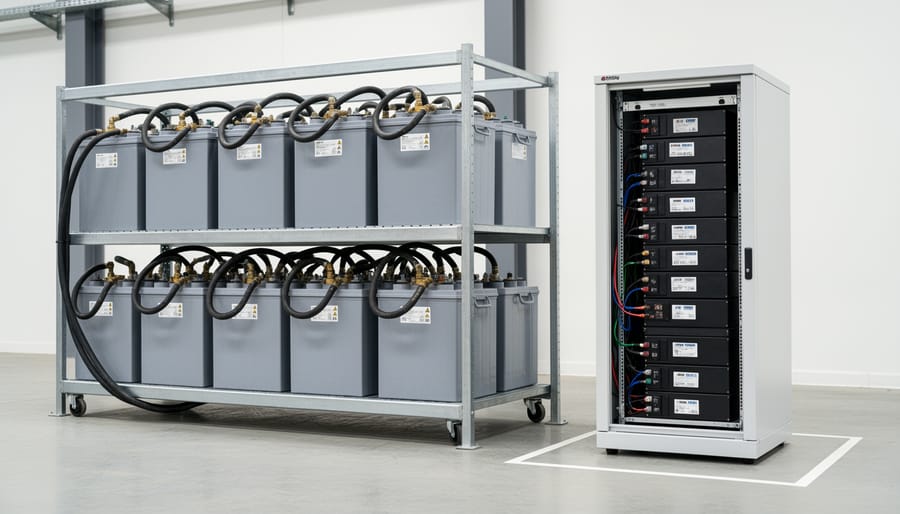
When you’re planning your solar battery system, the physical differences between lithium and lead-acid batteries matter more than you might think. Lead-acid batteries are bulky and heavy, typically weighing two to three times more than lithium alternatives with the same energy capacity. A lead-acid system that stores 10 kilowatt-hours of energy can easily weigh 600 pounds or more, while a lithium battery might weigh just 250 pounds.
This weight difference has real implications for your home. Lead-acid batteries often require reinforced flooring or a concrete pad, especially if you’re installing them on an upper level or in a garage. You’ll also need substantially more floor space since lead-acid batteries must be spread out to allow for proper ventilation and heat dissipation. Lithium batteries are more compact and can be wall-mounted in many cases, saving valuable square footage.
Ventilation is another consideration that affects where you can place your batteries. Lead-acid batteries release hydrogen gas during charging, requiring outdoor installation or a well-ventilated space with specific safety measures. Lithium batteries don’t have this requirement, giving you more flexibility to install them in garages, basements, or utility rooms.
These practical considerations can impact your overall solar installation costs. If your chosen location needs structural reinforcement or special ventilation systems for lead-acid batteries, you’ll face additional expenses that make the already-affordable lithium option even more attractive.
Performance in Real Home Situations
Power Outage Backup: What You Can Actually Run
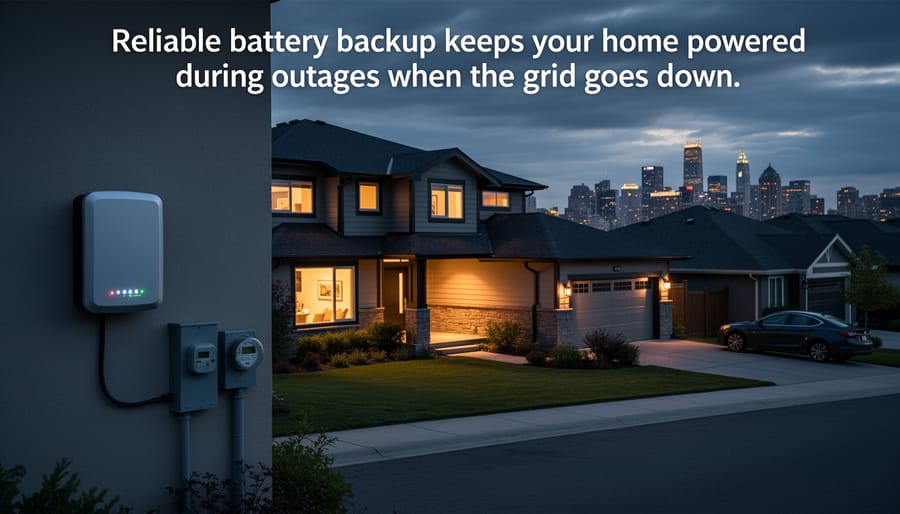
During a power outage, what you can actually run depends on both your battery’s capacity and its discharge rate. Here’s where the differences become crystal clear.
A typical lead-acid battery bank (around 400Ah at 12V) can power essential appliances like your refrigerator for 4-6 hours, a few LED lights, and maybe charge your phones. However, trying to run multiple high-draw appliances simultaneously often overloads these systems.
Lithium batteries shine here. That same capacity in lithium can power your refrigerator continuously for 8-12 hours, run your internet router and lights, charge devices, and even handle occasional use of a microwave or coffee maker without breaking a sweat. The higher discharge rate means you’re not constantly choosing between comfort and conservation.
When paired with modern solar system performance, lithium batteries recharge faster too, meaning you’ll restore full capacity in 3-4 hours of good sunlight versus 8-10 hours for lead-acid.
The bottom line: lithium gives you genuine backup power that supports normal daily activities, while lead-acid requires significant lifestyle adjustments during outages.
Weather and Temperature Impact
Temperature swings can make or break your battery investment. Lithium batteries shine in extreme weather conditions, maintaining 80-90% of their capacity even when winter temperatures drop below freezing. They can operate efficiently from -4°F to 140°F, meaning your solar system keeps working when you need it most. Lead-acid batteries struggle significantly in the cold, losing up to 50% of their capacity when temperatures dip below 32°F. This means on those chilly winter mornings when you’re relying on stored solar energy, a lead-acid battery might only deliver half its rated power.
Hot summers aren’t kind to lead-acid batteries either. Heat accelerates their degradation, shortening their already limited lifespan and requiring more frequent water top-ups. Lithium batteries handle heat far better, with built-in thermal management systems that protect your investment. For homeowners in regions with harsh winters or scorching summers, this temperature resilience translates directly into reliable backup power and better long-term value. You won’t face unexpected performance drops during extreme weather when your energy needs are highest.
Environmental Impact and Your Carbon Footprint
If you’re committed to sustainable living, the environmental comparison between lithium and lead-acid batteries reveals some surprising truths. While no battery is completely impact-free, lithium batteries come out ahead in several important ways.
The lifespan advantage makes a significant difference. Because lithium batteries last 10-15 years compared to lead-acid’s 3-5 years, you’ll replace them far less frequently. This means fewer manufacturing cycles, less transportation emissions, and reduced waste over time. Think of it this way: you might need three to four lead-acid batteries in the time span one lithium battery serves you.
Manufacturing does require mining for both battery types, but lithium batteries use materials more efficiently due to their superior energy density. You get more storage capacity from less physical material, which translates to a smaller manufacturing footprint per unit of energy stored.
The disposal conversation is equally important. Lead-acid batteries contain toxic lead and sulfuric acid, requiring careful recycling processes. While lead-acid batteries have established recycling infrastructure (about 99% are recycled), lithium batteries are rapidly developing similar programs. Many manufacturers now offer take-back programs, and recycling technology continues improving.
Here’s the financial angle that matters to your wallet and the planet: lithium batteries operate more efficiently, meaning less energy waste during charging and discharging. Over their lifetime, this efficiency reduces the total electricity needed from your solar system, lowering your carbon footprint while maximizing your energy bill savings. It’s a win-win for both environmental responsibility and long-term cost savings.
Which Battery Makes Sense for Your Home?
Choosing the right battery isn’t about finding the absolute best option—it’s about finding what works for your specific situation. Here’s how to think through your decision.
Lead-acid batteries make sense if you’re working with a tight upfront budget and need to get your solar system running now. They’re also practical if you have plenty of space for installation and don’t mind performing regular maintenance checks. Homeowners planning to upgrade their entire system within five years might prefer spending less now, knowing they’ll eventually transition to newer technology anyway.
Lithium batteries shine for homeowners taking a long-term view of their investment. If you want to minimize ongoing maintenance and maximize your usable energy storage, the higher initial cost pays off through longer lifespan and better performance. They’re particularly valuable if you’re installing batteries in a temperature-sensitive area like a garage or if space is limited in your home.
Consider your daily energy patterns too. Families with high evening energy use benefit from lithium’s ability to discharge deeply without damage, giving you more usable power when you need it most. Meanwhile, homes with modest energy needs and backup-only requirements might find lead-acid sufficient.
Budget-conscious homeowners should calculate the true cost over ten years rather than focusing solely on the sticker price. A lithium battery costing $8,000 that lasts twelve years often delivers better value than a $3,000 lead-acid battery replaced every four years.
The honest truth? Most homeowners investing in solar today choose lithium because the financial benefits outweigh the initial hesitation. However, lead-acid remains a legitimate choice for specific situations where immediate affordability matters most.
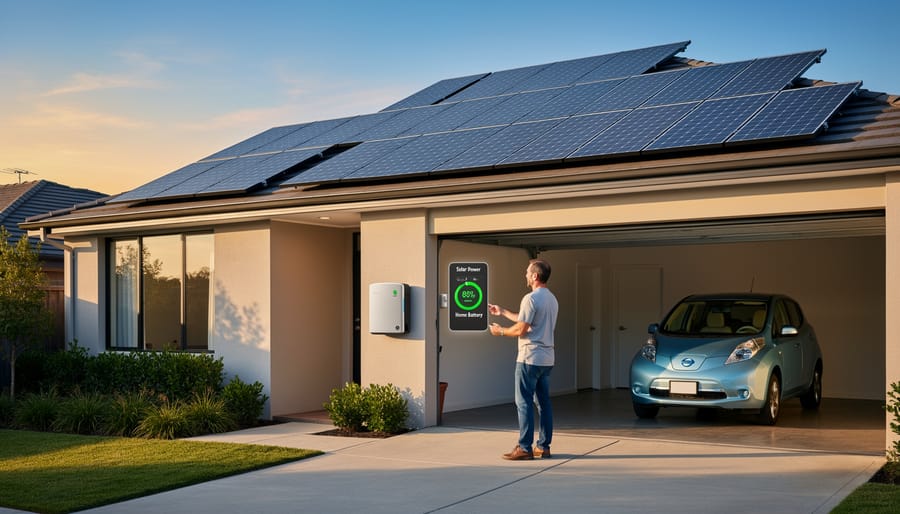
Choosing between lithium and lead-acid batteries ultimately comes down to your budget, how long you plan to stay in your home, and your energy independence goals. While lead-acid batteries have a lower price tag upfront, most homeowners find that lithium batteries deliver better value over time through longer lifespans, deeper discharge capabilities, and minimal maintenance requirements.
If you’re planning to stay in your home for five years or more, lithium batteries typically pay for themselves through reduced replacement costs and improved efficiency. They’re particularly worthwhile if you want reliable backup power during outages or aim to maximize your solar investment.
The good news? Both technologies work, and your choice doesn’t have to be perfect. What matters most is taking that important step toward energy independence. Whether you start with lead-acid and upgrade later or invest in lithium from day one, you’re moving toward greater control over your energy future and reducing your reliance on the grid. That’s a win worth celebrating.