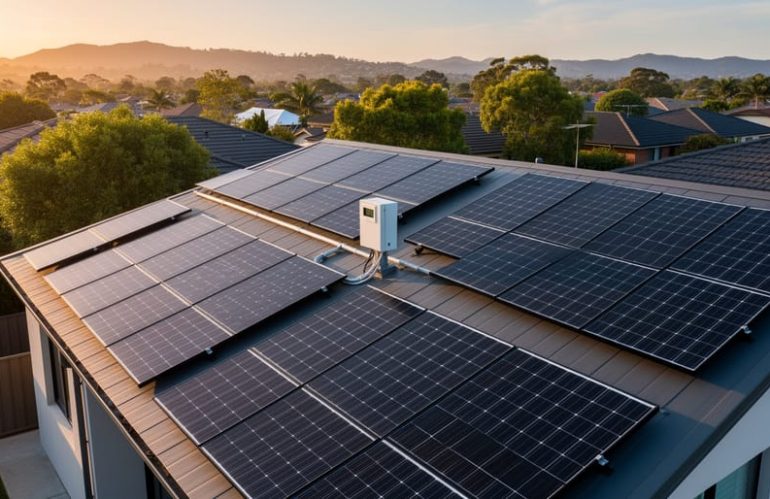
Your solar panels generate clean energy, but without the right data, you could be leaving hundreds of dollars on the table each year. Modern solar systems collect performance information every few minutes, revealing exactly how much energy you’re producing, where inefficiencies hide, and when problems need attention before they drain your savings.
Think of solar data as your system’s health monitor. Just as a fitness tracker shows your daily steps and heart rate, solar monitoring displays your energy production, consumption patterns, and system health in real time. This information isn’t reserved for engineers or tech experts—today’s platforms translate complex measurements into simple dashboards that show whether your panels are performing as promised.
The financial impact is immediate and measurable. Homeowners who actively monitor their solar data catch underperforming panels weeks or months earlier than those who don’t, preventing energy losses that compound over time. You’ll spot shading issues, detect failing components, and verify that your utility credits match actual production. Even better, this data helps you shift energy-heavy tasks to peak solar hours, maximizing the electricity you use directly from your panels rather than buying from the grid. Understanding your solar data transforms your investment from a passive installation into an optimized, money-saving asset that works harder for your household budget.
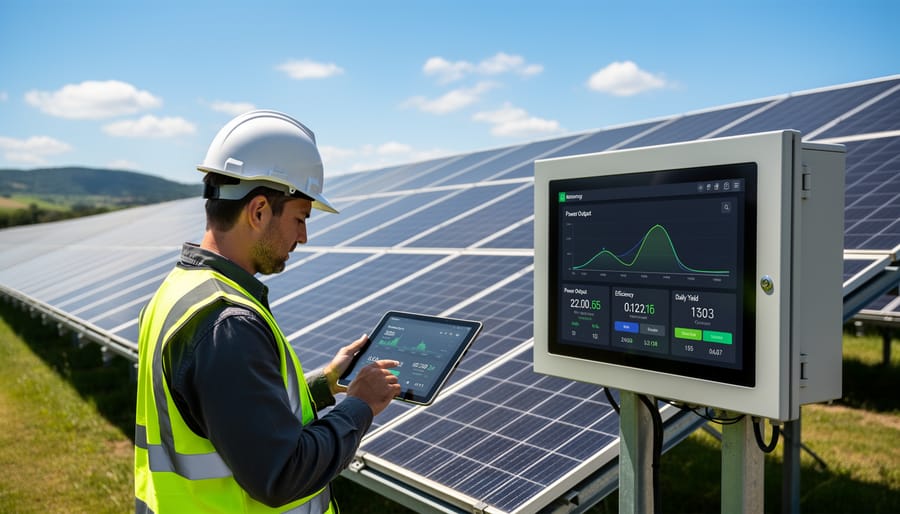
What Data Your Solar System Actually Tracks
Real-Time Energy Production Numbers
Your solar panels are working right now, converting sunlight into electricity, and modern monitoring systems let you see exactly how much power they’re generating at any given moment. Think of it like checking your phone to see how many steps you’ve walked today—except you’re tracking the clean energy flowing into your home.
These systems update continuously, typically every few minutes, showing you current energy production on your smartphone, tablet, or computer. This instant feedback helps you understand how factors like weather, time of day, and even passing clouds affect your system’s output. More importantly, remote monitoring allows you to spot problems immediately. If your panels suddenly produce less power than expected on a sunny afternoon, you’ll know something needs attention before you lose significant energy savings.
For homeowners, this real-time visibility transforms solar from a “set it and forget it” system into an active part of household management. You can adjust energy usage based on current production—running dishwashers or charging electric vehicles when your panels are producing peak power, maximizing the value of every ray of sunshine.
Environmental Conditions That Affect Your Panels
Your solar panels don’t operate in a vacuum—they’re constantly responding to their surroundings. Modern monitoring systems track three key environmental factors that directly impact how much energy you generate.
Temperature readings matter because panels actually become less efficient as they heat up. Your system tracks panel temperature throughout the day, helping you understand whether extreme heat is affecting your output. This data becomes especially valuable during heat waves when you might notice lower production than expected.
Sunlight intensity measurements show exactly how much solar radiation hits your panels. This helps distinguish between normal cloudy-day dips and potential problems like shading from a growing tree. You’ll see real-time data about available sunlight versus what your panels are actually converting into electricity.
Weather pattern tracking provides context for your performance numbers. When your system logs rain, snow, or heavy cloud cover, you’ll understand why production dropped without worrying something’s broken. This historical weather data also helps you spot genuine issues—if production falls on a perfectly sunny day, that’s your signal to investigate further. Together, these environmental readings give you the complete picture of how external conditions affect your investment’s performance.
How Smart Data Analysis Catches Problems Before They Cost You Money
Spotting Underperforming Panels Instantly
Your solar system’s data works like an early warning system, alerting you the moment something’s off with individual panels. When one panel produces significantly less energy than its neighbors, your monitoring system flags it immediately—often before you’d notice any difference in your energy bills.
This instant detection matters because small problems can quickly become expensive ones. A panel covered in debris, affected by shading from a growing tree, or experiencing a technical issue might reduce your system’s overall output by 5-10%. Left unchecked for months, that’s real money slipping away unnecessarily.
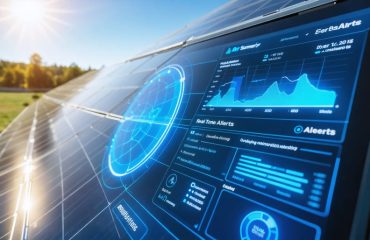
The good news? Most monitoring platforms make this incredibly simple. You’ll receive alerts on your phone or email when production drops below expected levels. Some systems even show you a visual layout of your roof with color-coded panels, so you can pinpoint exactly which one needs attention.
Catching underperformance early means quick fixes—whether that’s scheduling a cleaning, trimming back vegetation, or arranging a warranty repair. These small interventions protect your investment and ensure you’re getting every dollar of savings your system promised.
Getting Alerts Before Small Issues Become Expensive
Think of your solar monitoring system as a smoke detector for your panels—it catches problems while they’re still fixable and affordable. Modern monitoring platforms send real-time alerts directly to your smartphone when something isn’t quite right, whether it’s a sudden drop in production, a malfunctioning inverter, or debris blocking your panels.
These early warnings are worth their weight in gold. A small issue like a loose connection might cost $150 to fix today, but if left unnoticed for months, it could lead to equipment damage costing thousands. One homeowner caught a failing inverter through an alert and saved over $2,000 in potential repairs simply by addressing it quickly.
Most systems let you customize notifications based on what matters to you. You might want daily production summaries or only urgent alerts. Either way, you’re staying informed without constantly checking dashboards. The peace of mind alone is valuable, but the real benefit is protecting your investment and ensuring every dollar you spent on solar keeps working for you.
Maximizing Your Energy Savings Through Data Insights
Understanding Your Peak Production Hours
Your solar panels aren’t producing the same amount of energy throughout the day, and understanding this pattern is key to getting the most value from your system. Data from your monitoring system reveals your specific peak production hours—typically between 10 a.m. and 2 p.m. when the sun is strongest—but your exact timing depends on your roof’s orientation, local weather patterns, and seasonal changes.
Here’s the good news: once you know when your panels are generating the most electricity, you can strategically schedule energy-intensive activities during those hours. Run your dishwasher, washing machine, or charge your electric vehicle when production peaks, and you’ll use your own free solar power instead of pulling expensive electricity from the grid. Many homeowners are surprised to discover they can reduce their utility bills by an additional 15-20% simply by shifting their usage patterns to match their production peaks.
Your monitoring app makes this easy by showing real-time production data, helping you identify the best times to use major appliances and maximize your savings without any complicated calculations.
Identifying Energy Waste You Didn’t Know About
Your solar energy monitoring system does more than track how much electricity you’re generating—it also reveals surprising patterns about how you’re using power throughout your home. Many homeowners discover that certain appliances are secretly driving up their bills, running during expensive peak hours, or consuming far more energy than expected.
The data breaks down your consumption by time of day, helping you spot when you’re pulling the most power from the grid. You might find that your pool pump runs during afternoon peak rates, or that your water heater cycles on right when solar production drops off in the evening. These insights are valuable because they show you exactly where you’re losing money.
Armed with this information, you can make simple adjustments that immediately boost your savings. Shifting laundry or dishwashing to midday when your panels are producing the most power means you’re using free solar electricity instead of buying it from the utility. Some monitoring systems even identify which specific circuits or appliances are the biggest energy hogs, giving you a clear picture of where upgrades or behavioral changes will have the greatest financial impact.
The Tools That Make Solar Data Easy to Understand
The good news is you don’t need a degree in engineering to understand your solar system’s performance. Modern technology has transformed complex solar data into user-friendly information that anyone can grasp at a glance.
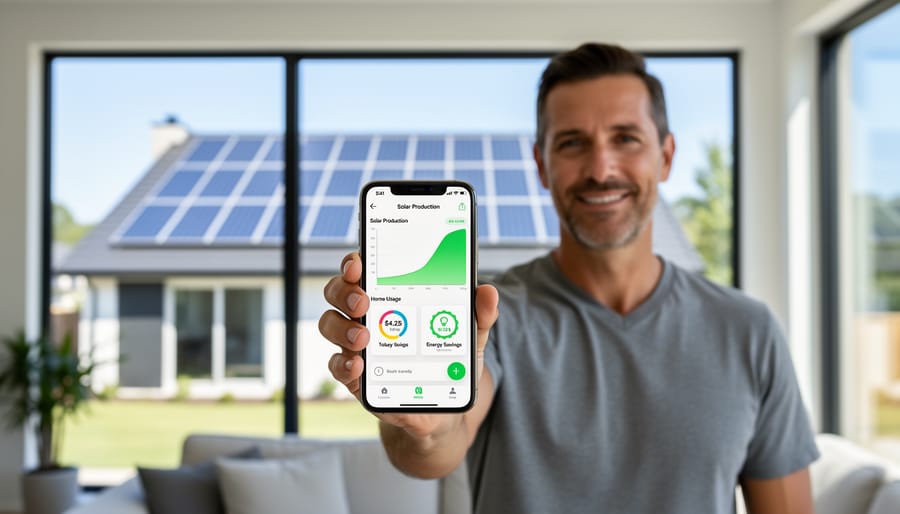
Today’s solar monitoring system options do the heavy lifting for you. Most solar installations come with smartphone apps or web dashboards that display your energy production in simple terms. Instead of raw numbers and technical readings, you’ll see easy-to-read graphs showing how much electricity you’re generating, how much money you’re saving, and whether everything is running smoothly.
Popular platforms like Enphase Enlighten and SolarEdge monitoring transform data into colorful charts that look more like weather apps than engineering tools. You can check your phone to see today’s energy production the same way you’d check the temperature. Many systems send alerts if something isn’t working correctly, catching potential issues before they cost you money.
These tools also let you compare your production to previous months, track your environmental impact in terms that matter like trees planted or carbon offset, and share your success with friends and family. Some even integrate with smart home systems, giving you a complete picture of both energy generation and consumption.
The bottom line? Understanding your solar data requires nothing more than the ability to read a simple chart on your phone.
Busting the Myth: You Don’t Need to Be Tech-Savvy
Many homeowners worry that tracking their solar system’s performance requires a computer science degree or constant technical tinkering. The good news? That couldn’t be further from the truth. Today’s solar monitoring platforms are designed with regular people in mind, not engineers. Most systems come with intuitive smartphone apps that display your energy production in simple graphs and easy-to-understand numbers. You’ll see straightforward dashboards showing how much electricity you’re generating, how much money you’re saving, and whether everything is running smoothly.
Even better, modern solar systems include automatic optimization features that work behind the scenes without any input from you. These smart systems detect issues, send alerts to your installer when maintenance is needed, and often resolve minor problems on their own. Think of it like your smartphone—it handles complex processes automatically while you simply enjoy the benefits. You don’t need to understand the technical details to catch problems early or maximize your savings. The technology does the heavy lifting, presenting you with clear, actionable information that helps you get the most from your investment with minimal effort.
What This Means for Your System’s Lifespan and Warranty
Keeping tabs on your solar system’s data isn’t just about tracking daily energy production—it’s actually one of the smartest ways to protect your investment for the long haul. Think of it like regular health check-ups: catching small issues early prevents them from becoming expensive problems later.
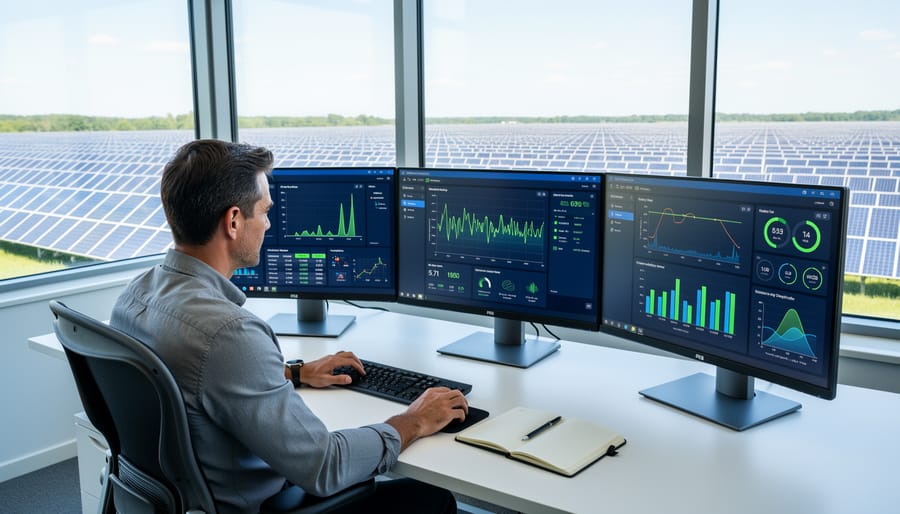
Most solar panels come with warranties lasting 20 to 25 years, but here’s the catch: many manufacturers require proof that you’ve maintained your system properly. Your monitoring data serves as that proof. When your system automatically logs performance metrics, you’re building a complete digital record that shows you’ve been a responsible owner. This documentation becomes invaluable if you ever need to file a warranty claim for underperforming panels or faulty equipment.
Beyond warranty compliance, consistent monitoring actually helps your system last longer. By spotting efficiency drops early—whether from dirt buildup, shading issues, or component wear—you can address problems before they cause permanent damage. A panel operating at reduced capacity due to a fixable issue will degrade faster than one running optimally.
The best part? Modern monitoring systems do the heavy lifting for you. They’ll alert you to problems automatically, so you don’t need to become a solar expert. This means less stress, fewer surprise repair bills, and the peace of mind knowing your clean energy investment will keep delivering savings for decades to come.
The bottom line is clear: tapping into your solar system’s data isn’t just about satisfying curiosity—it’s about protecting your investment and maximizing your savings year after year. By paying attention to what your system tells you, you’ll catch small issues before they become expensive problems, ensure you’re getting every kilowatt-hour you paid for, and potentially add thousands of dollars in long-term value to your home. The environmental benefits multiply too, since an optimized system generates cleaner energy more efficiently, reducing your carbon footprint even further.
The best part? You don’t need to be a data scientist or solar engineer to benefit from these insights. Today’s monitoring tools translate complex performance metrics into simple, actionable information that anyone can understand at a glance. Your solar panels are already working hard for you—now it’s time to let the data work just as hard. Take a few minutes this week to explore your monitoring app, set up those performance alerts, and discover what your system has been trying to tell you. Your wallet and the planet will thank you.