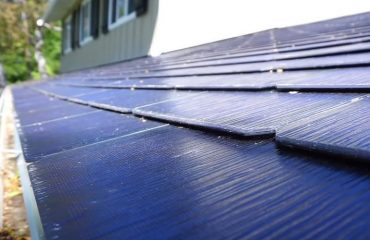
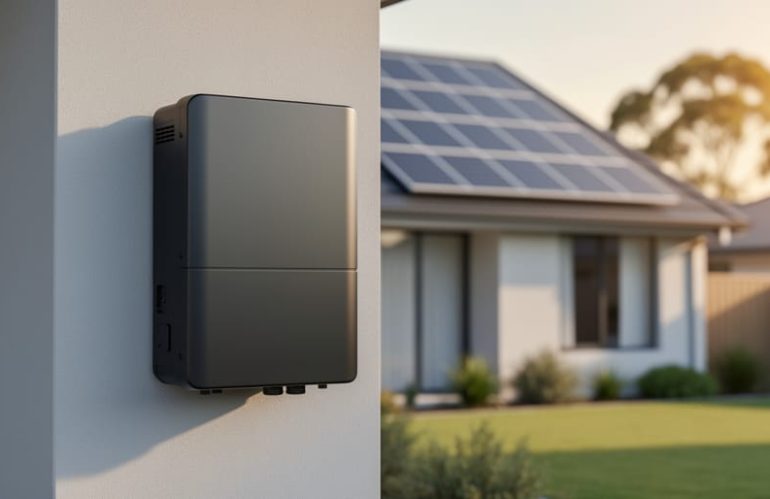
Your solar inverter will typically last 10-15 years, while your solar panels can produce energy for 25-30 years or more. This lifespan difference isn’t a design flaw or hidden cost—it’s simply how the technology works, and planning for it means you’ll never be caught off guard.
Think of your inverter as the hardest-working component in your solar system. It converts the DC electricity your panels generate into the AC electricity your home uses, operating every single day from sunrise to sunset. This constant activity naturally means more wear than your stationary panels experience, but understanding this timeline actually gives you a significant advantage as a solar owner.
The good news? Inverter replacement is a predictable, budgetable expense that shouldn’t derail the outstanding financial returns your solar system delivers. Most homeowners save thousands of dollars on electricity bills during their inverter’s first decade, easily offsetting replacement costs. Plus, technology improvements mean your replacement inverter will likely be more efficient and affordable than your original unit.
Knowing your inverter’s lifespan helps you make smarter decisions right from the start. Whether you’re evaluating different inverter types, considering extended warranties, or calculating your long-term solar savings, this single piece of information shapes your entire investment strategy. The homeowners who understand inverter longevity are the ones who maximize their solar benefits and avoid unnecessary surprises down the road.
The Truth About Solar Inverter Lifespan: What the Numbers Actually Say
String Inverters: The Industry Standard
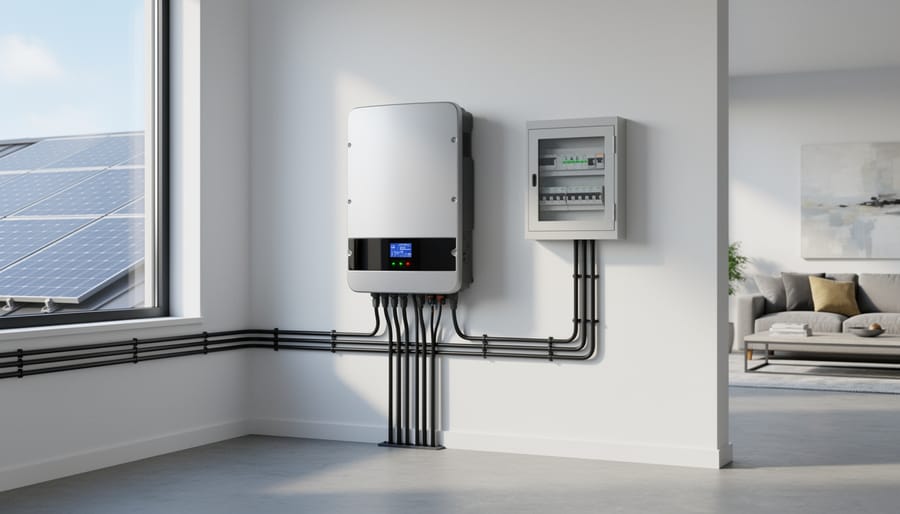
String inverters are the most common choice for residential solar installations, and they typically last between 10 to 15 years. While this might sound concerning compared to your solar panel lifespan of 25 to 30 years, it’s actually a completely normal and manageable aspect of solar ownership.
Here’s what this means for you: you’ll likely need to replace your string inverter once during your system’s lifetime. Think of it like replacing your water heater or HVAC system—it’s a planned maintenance event, not an unexpected failure. The good news is that inverter technology continues improving, so your replacement will probably be more efficient than your original unit.
This lifespan difference matters because it affects your long-term budgeting. When calculating your solar savings, factor in one inverter replacement around the 12-year mark. Most homeowners find that even with this cost, their overall savings remain substantial. Many installers also offer extended warranties that can reduce or eliminate this expense, making your solar investment even more predictable and worry-free.
Microinverters: The Longer-Lasting Alternative
If you’re looking for a longer-lasting option, microinverters are worth considering. These compact devices typically last 20-25 years, which is nearly double the lifespan of traditional string inverters. Even better, they often come with warranties that match this longevity, giving you 20-25 years of coverage compared to the 5-12 years you’d get with string inverters.
The secret to their durability lies in their design. Because each solar panel gets its own microinverter, the workload is distributed across multiple units rather than concentrated in one central inverter. This means each component handles less electrical stress, which translates to less wear and tear over time. Additionally, microinverters operate at lower temperatures since they’re mounted directly on panels where air circulation keeps them cooler.
While microinverters cost more upfront, their extended lifespan means you’ll likely avoid the mid-life replacement expense that comes with string inverters. For many homeowners, this makes microinverters a smart long-term investment that simplifies solar ownership and maximizes your system’s lifetime value.
Why Inverter Technology Determines Your System’s Real Longevity
The Conversion Bottleneck
Think of your solar inverter as the hardest-working component in your system. While your solar panels simply absorb sunlight throughout the day, your inverter is constantly performing complex electrical conversions. Every second, it’s transforming the DC electricity your panels produce into the AC power your home uses, managing voltage fluctuations, and adjusting to changes in sunlight intensity and your energy consumption.
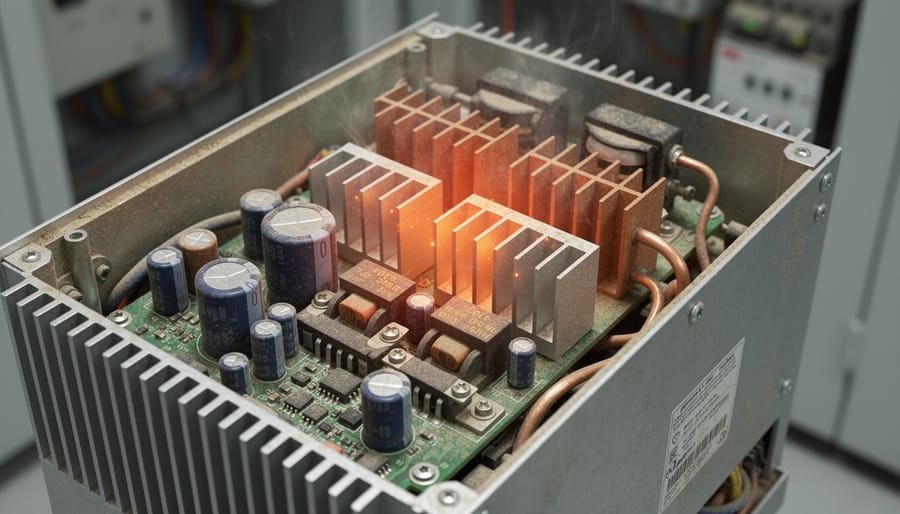
This continuous conversion process generates heat and puts stress on the inverter’s internal components, particularly the capacitors and cooling systems. It’s similar to how your laptop works harder and heats up when running demanding programs, while a simple keyboard sees minimal wear. Your panels, by contrast, have no moving parts and perform a passive function, which is why they can last 25-30 years with minimal degradation.
The good news? This shorter lifespan isn’t a design flaw. It’s simply the nature of doing the heavy lifting in your solar system. Understanding this helps you plan for a replacement as a normal maintenance expense rather than an unexpected problem, keeping your solar investment productive for decades.
When One Component Fails, Everything Stops
Your solar inverter acts as the heart of your entire system, converting the DC electricity your panels generate into the AC electricity your home uses. When it stops working, your panels might still be soaking up sunshine, but that energy has nowhere to go. It’s like having a car with a full tank of gas but a broken engine—everything grinds to a halt.
This complete production stoppage is exactly why understanding inverter lifespan matters so much for your financial planning. If your inverter fails unexpectedly and you haven’t budgeted for replacement, you could face weeks without solar power while scrambling to arrange repairs or replacements. During that time, you’re back to pulling 100% of your electricity from the grid, losing out on the savings you’ve grown accustomed to.
Here’s the good news: inverter failure isn’t a surprise attack on your investment. Most inverters provide clear warning signs before they quit entirely, like reduced efficiency or error messages on your monitoring system. Plus, since you know the typical 10-15 year lifespan upfront, you can plan ahead financially. Setting aside roughly $1,500-$3,000 during your inverter’s lifetime means you’ll be ready when replacement time comes.
When calculating your solar return on investment, factor in one inverter replacement during your system’s 25-30 year life. This realistic approach shows you’ll still save thousands of dollars over the long term while keeping your expectations grounded in reality rather than disappointment.
What Actually Wears Out Your Inverter (And How to Slow It Down)
Heat: Your Inverter’s Biggest Enemy
Here’s the good news: you can easily protect your inverter from its number one enemy—excessive heat. Like any electronic device, inverters work best when kept cool. High temperatures cause internal components to work harder and wear out faster, potentially shaving years off your inverter’s lifespan.
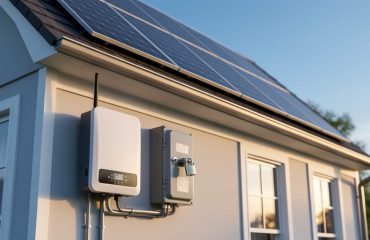
Think of it like parking your car in the shade on a hot day. Your inverter needs the same consideration. Where you install it matters tremendously. Garages, carports, or shaded exterior walls on the north side of your home (if you’re in the northern hemisphere) are ideal spots. Avoid direct sunlight and enclosed spaces without airflow.
Proper ventilation is equally important. Your inverter needs breathing room—literally. Leave several inches of clearance around all sides to allow heat to escape naturally. Some homeowners even install small shade structures specifically for their inverters, which is a smart investment for long-term performance.
The payoff? An inverter running 10-15 degrees cooler can last significantly longer than one baking in the sun. Combined with regular inverter maintenance, smart placement protects your solar investment without adding complexity to your life.
Quality Matters More Than You Think
Here’s the good news: investing in quality components upfront can significantly extend your inverter’s working life, potentially adding several years to its performance. The difference between a budget inverter and a well-built one often comes down to the materials used inside, the manufacturing standards followed, and the rigorous testing each unit undergoes before reaching your home.
Look for inverters with recognized certifications and safety standards, which indicate the product has met strict performance benchmarks. Quality manufacturers typically offer longer warranties because they’re confident in their engineering and components. A solid 10-year warranty (with options to extend) usually signals better build quality than a basic 5-year guarantee.
Component quality affects everything from how well the inverter handles heat to how efficiently it converts DC power to AC electricity over time. Better thermal management systems, higher-grade capacitors, and superior circuit boards all contribute to longevity. While premium inverters cost more initially, they often deliver better value when you calculate their cost per year of operation. Think of it as buying a reliable appliance that’ll serve your home for years rather than something you’ll replace sooner than expected.
Environmental Factors You Should Consider
Where you live plays a surprisingly big role in how long your inverter will last. The good news? Understanding these factors helps you plan appropriately and choose the right equipment from the start.
Coastal homeowners face the biggest challenge: salt air can corrode inverter components faster than inland environments. If you’re within a few miles of the ocean, look for inverters with higher corrosion-resistance ratings specifically designed for marine environments. Many manufacturers offer marine-grade options that can handle these conditions beautifully.
High humidity regions, like the Southeast, can also shorten inverter lifespan by promoting moisture buildup inside the unit. Proper installation with adequate ventilation makes a real difference here.
Desert climates present their own hurdle: dust and extreme temperature swings. Fine particles can clog cooling systems, while intense heat stresses electronic components. Regular cleaning and ensuring your inverter has proper shade can extend its life considerably.
The bottom line? Your inverter isn’t doomed by your location. Most quality inverters are built to handle various climates, and simple protective measures during installation—like choosing a shaded, well-ventilated spot and selecting climate-appropriate models—go a long way. Your installer should factor in these regional considerations to maximize your investment.
Planning for Inverter Replacement: The Smart Homeowner’s Strategy
Budget for Replacement, Not Repair
Here’s the good news: planning for inverter replacement doesn’t have to strain your budget. Most homeowners pay between $1,000 and $3,000 for a new string inverter, or $300 to $500 per microinverter unit. When you consider you’ll need this replacement in 10-15 years, that breaks down to just $100-$200 annually—far less than most people spend on coffee.
Setting aside funds is simple. Create a small “solar maintenance fund” and contribute $10-$15 monthly. By the time replacement is needed, you’ll have the full amount ready without any financial stress.
Why replacement beats repair is straightforward: repairs often cost 50-70% of a new unit’s price while only extending life by a year or two. A new inverter gives you another decade-plus of warranty-backed performance, includes the latest efficiency improvements, and eliminates the frustration of repeat service calls. Think of it like your water heater—when it’s time, replacement is simply the smarter investment. Plus, newer models often harvest more energy from your existing panels, which means the upgrade practically pays for itself over time.
The Silver Lining: Technology Keeps Improving
Here’s the good news: replacing your inverter isn’t just maintenance—it’s your ticket to better technology. Think of it like upgrading from an old flip phone to a smartphone. Today’s inverters are significantly more efficient than models from just five years ago, meaning you’ll squeeze more usable electricity from the same solar panels.
Modern inverters come with smart monitoring features that let you track your energy production from your phone, spot issues before they become problems, and even optimize performance based on weather patterns. Many newer models also have longer warranties (up to 25 years for some microinverters) and improved compatibility with battery storage systems.
When replacement time comes, you’re not just fixing something broken—you’re gaining access to innovations that didn’t exist when you first went solar. Enhanced efficiency translates directly to lower electricity bills and faster payback on your solar investment. Some homeowners see a 5-10% boost in energy harvest simply from upgrading to current-generation technology. Rather than viewing inverter replacement as a setback, consider it a built-in opportunity to keep your solar system performing at its absolute best.
Warranty Coverage: What’s Actually Included
Most inverter warranties include parts coverage for 5-12 years, protecting you against manufacturing defects and component failures at no cost. However, understanding warranty coverage details helps avoid surprises. Your warranty typically covers the inverter itself but not labor costs for removal, reinstallation, or shipping. Damage from power surges, improper installation, or natural disasters often falls outside standard coverage. Many manufacturers offer extended warranties up to 25 years for additional peace of mind, usually costing 10-20% of the inverter price. This investment can make financial sense if it aligns your inverter lifespan with your panel warranty. Always register your warranty promptly and keep documentation accessible, as proof of proper maintenance may be required for claims approval.
Choosing Inverter Technology That Matches Your Timeline
If You’re Planning to Stay 20+ Years
If you’re committed to staying in your home for two decades or more, you have two smart approaches to consider. First, microinverters might be your best bet since they typically last 20-25 years and could potentially outlive the time you own your home. While they cost more upfront, you’ll likely avoid any replacement hassles entirely.
Alternatively, with a traditional string inverter system, plan for one replacement around the 12-15 year mark. Here’s the good news: this is completely normal and predictable. When you calculate your total cost of ownership, factor in around $2,000-$3,000 for that future replacement. Spread over 20+ years of energy savings, this is still a fraction of what you’d spend on utility bills.
Think of it this way: your solar panels will still be producing power efficiently for 25-30 years. Replacing the inverter once during that time is simply routine maintenance, much like replacing your water heater or HVAC system. The difference? Your solar system is actively saving you money every single day, making that one-time inverter replacement a smart investment that pays for itself many times over through decades of reduced electricity costs.
If You Might Move Within 10-15 Years
If you’re planning to relocate within 10-15 years, your inverter choice can actually boost your home’s marketability. Homes with solar panels typically sell faster and for higher prices, and a newer inverter or one with substantial warranty coverage remaining makes your system even more attractive to buyers. Think of it as similar to having a newer HVAC system—it’s a selling point that shows the home is well-maintained and won’t require immediate expenses.
Most inverter warranties are transferable to new homeowners, which is excellent news for your resale value. String inverter warranties typically transfer automatically, while microinverter warranties may require simple registration with the manufacturer. Keep all your warranty documentation organized and accessible—it’s a valuable asset to pass along during the sale.
If your inverter is nearing the end of its lifespan when you sell, don’t panic. Being upfront about the situation and providing buyers with replacement cost estimates (usually $1,500-$3,000 for string inverters) demonstrates transparency and builds trust. Many sellers find that the overall energy savings and environmental appeal of solar far outweigh concerns about eventual inverter replacement, making it a net positive for the transaction.
Future-Proofing with Battery-Ready Systems
Thinking about adding battery storage down the road? Hybrid inverters give you that flexibility without buying everything upfront. These smart devices work as traditional solar inverters today but are already equipped to manage batteries whenever you’re ready to add them. It’s like buying a car with Bluetooth even if you don’t use it immediately—the capability is there when you need it. While hybrid inverters may cost 10-20% more initially, they save you from replacing your entire inverter later when battery prices drop or your energy needs change. This forward-thinking approach protects your investment and keeps your options open as energy storage technology becomes more affordable and accessible.
Warning Signs Your Inverter Is Failing (And What to Do)
Performance Red Flags to Watch
Catching problems early can save you money and extend your inverter’s lifespan. Keep an eye out for these straightforward warning signs that something might need attention.
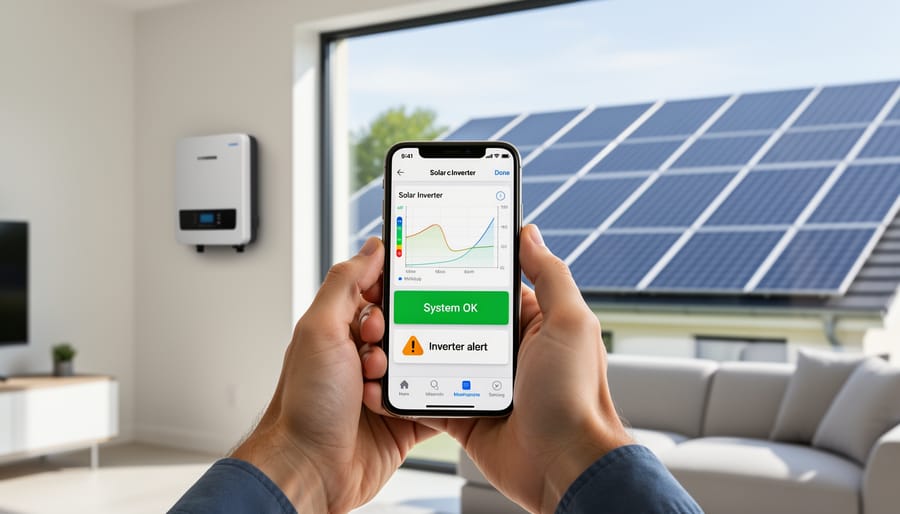
First, watch for declining energy production. If your system consistently generates less power than usual without obvious reasons like weather changes or new shade sources, your inverter might be struggling. Most modern systems include monitoring app alerts that notify you automatically when output drops below expected levels.
Error messages or warning lights on your inverter display shouldn’t be ignored. While occasional alerts might clear themselves, repeated or persistent errors signal it’s time to contact your installer.
Strange sounds are another red flag. Inverters normally run quietly with just gentle fan noise for cooling. Loud buzzing, clicking, or grinding sounds indicate internal components may be failing.
Finally, if your inverter’s display screen goes dark or shows garbled information, this could point to electrical issues requiring professional diagnosis. The good news? Most problems caught early are fixable, helping you avoid complete inverter replacement and keeping your solar savings on track.
When to Call a Professional
While basic maintenance like cleaning and visual checks are homeowner-friendly, inverter issues require professional expertise. If your system stops producing power after troubleshooting system issues like tripped breakers or checking your monitoring app, contact a certified solar technician. Never open inverter panels yourself—these components handle high-voltage electricity that poses serious safety risks. Call a professional immediately if you notice burning smells, unusual sounds, visible damage, or error codes you can’t resolve through your monitoring system. Most inverter problems require specialized diagnostic equipment and training to fix safely. Your installer typically offers warranty service and knows your specific system, making them your best first call. Remember, working with electrical components without proper credentials isn’t just dangerous—it can void your warranty and violate local codes. Professional service protects both your safety and your investment.
Understanding your solar inverter’s lifespan shouldn’t be a source of worry. It’s simply one part of planning your long-term solar investment, much like budgeting for routine car maintenance or replacing your water heater. Yes, you’ll likely need to replace your inverter once during your solar panels’ lifetime, but this doesn’t diminish the incredible value solar energy provides.
The key is approaching inverter longevity with realistic expectations and smart planning. When you factor replacement costs into your initial calculations, there are no surprises down the road. Many homeowners set aside a small monthly amount specifically for this purpose, making the eventual replacement feel manageable rather than burdensome. Some choose extended warranties or upgrade to microinverters for added peace of mind.
What matters most is that quality installation and proper maintenance help you maximize every year of your inverter’s life. Regular monitoring catches small issues before they become expensive problems, and working with reputable installers ensures you’re starting with reliable equipment.
The bottom line? Your solar panels will continue generating clean energy for 25 to 30 years or more. One inverter replacement along the way is a small step in that journey, not a roadblock. With proper planning, you’ll enjoy decades of reduced electricity bills, a smaller carbon footprint, and energy independence. The financial and environmental benefits far outweigh this predictable maintenance need, making solar power one of the smartest investments you can make for your home and our planet.