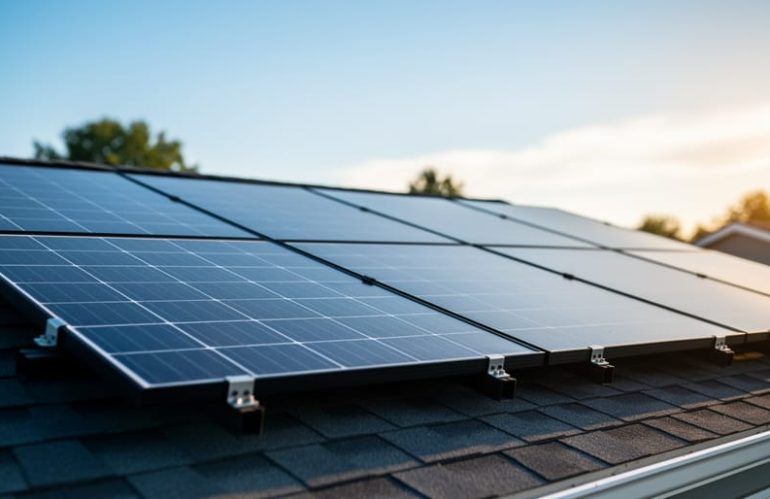
You’re staring at your electricity bill, wondering if those solar panels your neighbor installed are actually the smart investment they claim—or just an expensive gamble that’ll need replacing in a few years.
The short answer: modern solar panels last 25-30 years with minimal performance loss, making them one of the most reliable home upgrades you can make. But longevity alone doesn’t answer whether solar is worth it for your specific situation. What matters is whether those decades of durability translate into real financial returns that justify the upfront cost.
Here’s what most homeowners don’t realize: solar panel failure rates sit below 0.05% annually, meaning your panels are statistically more reliable than your refrigerator or HVAC system. They’re engineered to withstand hurricane-force winds, golf ball-sized hail, and extreme temperature swings. After 25 years, quality panels still produce 85-90% of their original output—far exceeding the performance degradation most homeowners fear.
The reliability question matters because it directly impacts your return on investment. A system that performs as promised for three decades eliminates 25-30 years of electric bills, shields you from utility rate increases averaging 3% annually, and requires virtually no maintenance beyond occasional cleaning. Compare that to the persistent worry about premature failure, and you’ll see why understanding solar durability is the key to evaluating worth.
This isn’t about blind optimism—it’s about examining real-world performance data, warranty protections, and what actually goes wrong (spoiler: usually not the panels themselves) to make an informed decision about your energy future.
How Long Do Solar Panels Actually Last?
One of the biggest misconceptions about solar panels is that they’ll wear out quickly, leaving you with a useless investment. The reality is far more reassuring. Modern solar panels are built to last decades, not years, making them one of the most durable home improvements you can make.
Most manufacturers warranty their panels for 25 years, but that doesn’t mean they stop working after that. In fact, the typical solar panel lifespan extends well beyond 30 years of productive electricity generation. The key is understanding what happens during those decades.
Solar panels don’t suddenly fail. Instead, they experience gradual degradation, slowly producing slightly less electricity each year. The degradation rates for quality panels average around 0.5% annually. That means after 25 years, your panels will still be churning out roughly 87-88% of their original capacity. Even at their so-called “end of life,” they’re still highly functional.
What does this look like in practice? Consider the solar panels installed at the University of California in the 1970s. Many of those original installations are still producing electricity today, more than 40 years later. Similarly, panels from the 1980s continue operating on homes and businesses worldwide, proving that solar technology stands the test of time.
This longevity fundamentally changes the financial equation. When you spread your initial investment over 30-plus years of energy production, the cost per year becomes remarkably low. Your panels will likely outlast your roof, your water heater, and even your HVAC system, all while requiring minimal maintenance.
The idea that solar panels are fragile or short-lived simply doesn’t match reality. They’re engineered to withstand harsh conditions including hail, high winds, extreme temperatures, and heavy snow loads. There are no moving parts to wear out, and the silicon cells themselves are incredibly stable.
When calculating whether solar is worth it, remember that you’re not buying something that expires in a few years. You’re investing in a power plant that will serve your home for decades, continuing to deliver savings long after it’s paid for itself.
Built to Weather Any Storm: What Makes Modern Solar Panels So Durable
Tested Against Mother Nature’s Worst
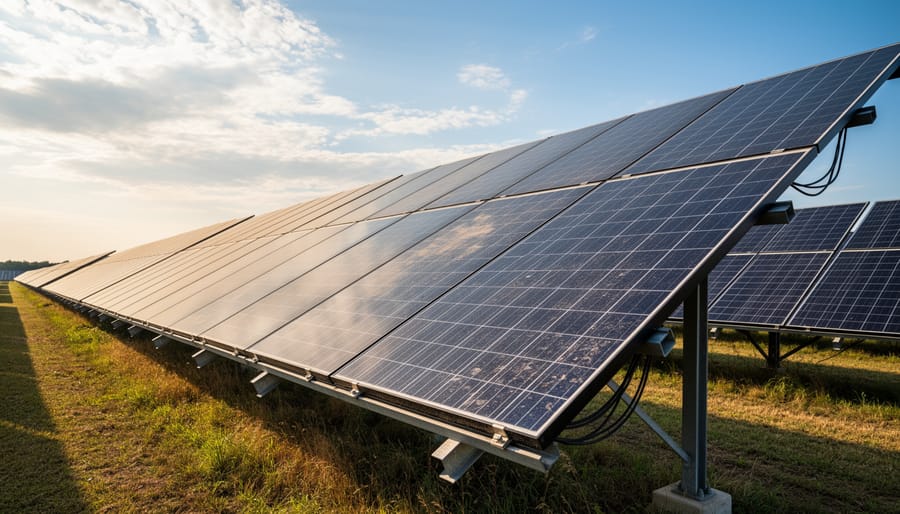
Solar panels undergo rigorous testing that would make any homeowner feel confident about their purchase. Before panels ever reach your roof, manufacturers put them through conditions far harsher than what Mother Nature typically throws at us.
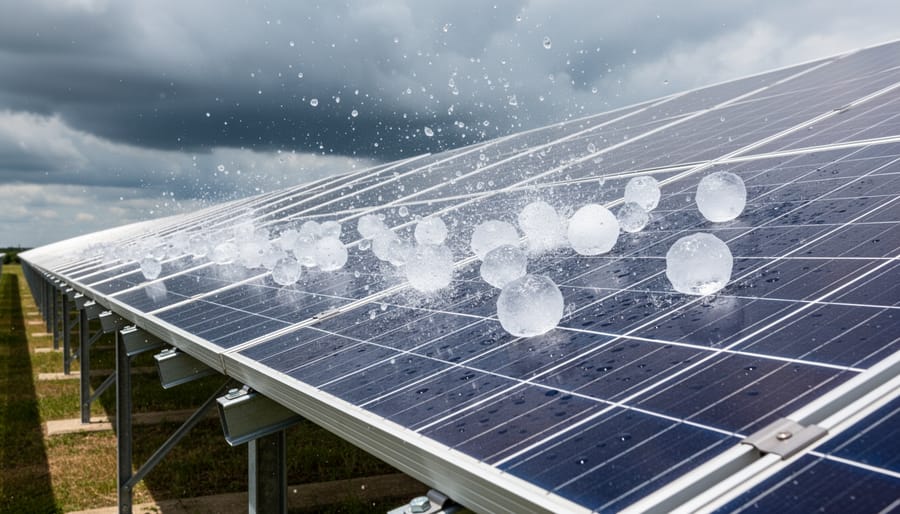
The hail resistance testing process shoots ice balls at panels at high speeds to simulate severe hailstorms. Most quality panels can handle hailstones up to 1 inch in diameter traveling at 50 miles per hour—that’s more intense than the vast majority of storms you’ll ever experience.
Wind resistance ratings ensure your panels stay put during extreme weather. Standard certifications require panels to withstand winds up to 140 mph, which covers even most hurricane-force conditions. This means your solar investment is actually more secure than many other exterior home features.
Snow load capacity testing verifies that panels can support significant weight without cracking or warping. Depending on your location, panels are certified to handle anywhere from 50 to 90 pounds per square foot—more than enough for even heavy, wet snow accumulation.
UV exposure standards might be the most important long-term test. Since panels sit in direct sunlight for decades, they’re tested for thousands of hours under intense UV light to ensure the materials won’t degrade, yellow, or lose efficiency. This testing guarantees your panels will keep producing clean energy year after year, making them a genuinely worthwhile investment that pays dividends for 25-30 years or more.
The Materials That Make the Difference
When you invest in solar panels, you’re essentially buying something that’ll sit on your roof for 25-30 years, facing everything Mother Nature throws at it. That’s why the materials matter just as much as the technology inside.
Modern solar panels aren’t delicate. The surface is made from tempered glass, the same type used in car windshields. This isn’t your kitchen window glass that might crack from a stray baseball. Tempered glass is heat-treated to be incredibly strong and designed to withstand hail, heavy snow, and debris during storms. In fact, most quality panels are tested to handle golf ball-sized hail traveling at highway speeds.
Surrounding that glass, you’ll find aluminum frames that hold everything together. Aluminum doesn’t rust or corrode, which is crucial for equipment living outdoors year-round. These frames are engineered to handle significant weight from snow accumulation while remaining lightweight enough not to stress your roof structure.
The real unsung hero is the weatherproof sealing that keeps moisture out. Water is the enemy of electronics, but proper sealing ensures the delicate solar cells inside stay dry and functional for decades. This protective barrier prevents degradation that could otherwise reduce your panel’s efficiency over time.
Here’s the bottom line: better materials directly translate to longer life, and longer life means better value for your money. A cheaply made panel might save you a few hundred dollars upfront, but if it fails at year 15 instead of lasting 25-plus years, you’ve actually lost money. Quality materials are the insurance policy that protects your solar investment and ensures those energy savings keep rolling in for decades.
The Real Costs of Reliability: Why Quality Panels Pay for Themselves
Here’s the truth about solar panel pricing: the cheapest option today often costs you significantly more tomorrow. When you’re weighing whether solar is worth it, understanding the real financial difference between budget and quality panels changes everything.
Let’s break down what reliability actually means for your wallet. A quality solar panel system typically lasts 25-30 years with minimal performance degradation. Budget panels might promise the same, but many show accelerated wear, requiring replacement around the 15-year mark. That difference isn’t just about inconvenience—it fundamentally changes your return on investment.
Consider this scenario: You invest $15,000 in a premium system that performs reliably for 25 years, saving you roughly $1,500 annually on electricity. That’s $37,500 in total savings. Now compare that to a $10,000 budget system that needs replacement after 15 years. Your first-term savings total $22,500, but then you’re spending another $10,000 for a new system to cover the remaining decade. Your actual savings? Just $12,500 versus $22,500 with the quality system—nearly half the benefit despite starting with a lower price tag.
The financial hit goes beyond just replacement costs. Budget panels often experience more frequent performance issues, meaning lower electricity production throughout their shortened lifespan. If your cheap panels operate at 15% less efficiency than promised, you’re losing hundreds of dollars every year in expected savings. Those losses compound over time, quietly eroding the value you thought you were getting.
There’s also the stress factor, which has real monetary implications. Dealing with warranty claims, finding installers to fix failing components, and managing unexpected downtime all consume your time and often your money. Quality manufacturers stand behind their products with comprehensive warranties and responsive customer service. Budget brands frequently disappear or make warranty claims frustratingly difficult, leaving you holding the bag.
The peace of mind that comes with reliable panels shouldn’t be underestimated either. When you choose quality, you install your system and essentially forget about it for decades, except when enjoying your lower electricity bills. That’s the solar experience worth paying for—one where your investment quietly delivers value year after year, without demanding your attention or draining your budget for repairs. Quality panels don’t just pay for themselves; they actually maximize what solar can deliver to your household finances.
What Can Actually Go Wrong (And How Often It Really Happens)
The Most Common Issues Homeowners Face
The good news? Solar panels themselves are incredibly low-maintenance. But it’s worth knowing what issues occasionally pop up so you’re prepared.
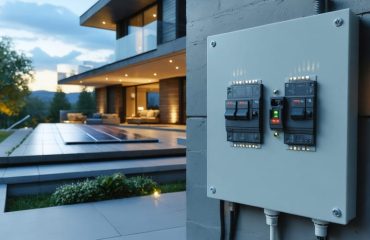
The most common maintenance item you’ll encounter is inverter replacement. Your inverter converts the electricity your panels produce into power your home can use, and it typically needs replacing once during your panels’ lifetime—usually around the 10 to 15-year mark. Budget around $1,000 to $3,000 for this replacement, which is minimal compared to your overall savings.
Micro-cracks are tiny fractures that can develop in solar cells over time, usually from weather stress or installation issues. Here’s the reassuring part: they rarely cause immediate problems. Modern panels are tested rigorously to withstand these hairline cracks, and they typically only reduce efficiency by a small percentage. Quality installation and choosing reputable manufacturers significantly reduce this risk.
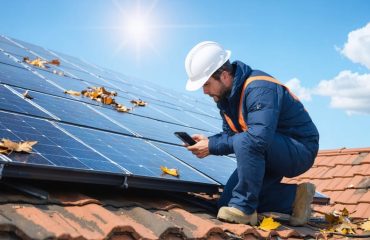
Connection issues—like loose wiring or corroded connectors—occasionally happen but are easily spotted during routine inspections. Most monitoring systems will alert you to performance drops, allowing you to address problems quickly. A simple visual check once or twice a year helps catch these minor issues before they become costly.
The key takeaway? These aren’t deal-breakers. Most solar owners experience decades of problem-free operation, and when issues do arise, they’re usually straightforward fixes. With proper installation and occasional check-ups, your system will deliver reliable performance throughout its lifespan.
How Warranties Protect Your Investment
Solar panels come with some of the most comprehensive warranties in the home improvement industry, making them a remarkably low-risk investment. Most systems include two types of protection: a performance warranty guaranteeing your panels will produce at least 80-85% of their original output after 25 years, and equipment warranties covering manufacturing defects for 10-15 years.
The performance guarantee is particularly reassuring. It means even after a quarter-century, your panels will still generate most of their original electricity—protecting your long-term savings. If they underperform, the manufacturer replaces or compensates you. Equipment warranties cover inverters, racking systems, and the panels themselves against failures, ensuring you won’t face unexpected repair costs during the crucial payback period.
Your installer typically provides an additional workmanship warranty (often 5-10 years) covering installation quality, roof penetrations, and labor. This means if anything goes wrong with how your system was mounted or wired, repairs won’t come out of your pocket.
What makes these warranties especially valuable is their length. Compare a 25-year solar performance guarantee to the typical 1-3 year warranties on most home appliances. This extended warranty coverage reflects manufacturers’ confidence in their products and shields you from financial risk.
The bottom line: these robust warranties mean your solar investment is protected throughout its entire lifespan, removing the uncertainty that often holds homeowners back from going solar.
Maintenance Reality: Less Work Than Your Lawn
Here’s a fact that might surprise you: solar panels typically need less attention than your lawn. If you’re imagining yourself climbing onto your roof every weekend with a squeegee and bucket, it’s time to retire that mental image.
Modern solar panels are designed with a remarkably simple principle: install them, let them work, and step back. Most systems have minimal maintenance requirements that amount to little more than what mother nature already provides. Rain naturally washes away most dust and debris, keeping your panels clean without any effort on your part.
What maintenance actually looks like comes down to two simple tasks. First, an occasional visual inspection from the ground to check for obvious debris like leaves or bird nests. Second, a professional inspection every year or two, similar to your HVAC system checkup. That’s essentially it.
Compare this to other home systems you already own. Your furnace needs filter changes every few months. Your air conditioner requires yearly servicing. Your water heater demands regular flushing. Your lawn needs mowing, fertilizing, and constant attention. Solar panels? They just sit there generating electricity, year after year.
The technology itself deserves credit for this hands-off approach. With no moving parts to wear out, no fluids to change, and weather-resistant construction designed to handle decades of exposure, quality solar installations genuinely embody the set-it-and-forget-it promise. The panels are engineered to withstand hail, high winds, and temperature extremes without breaking a sweat.
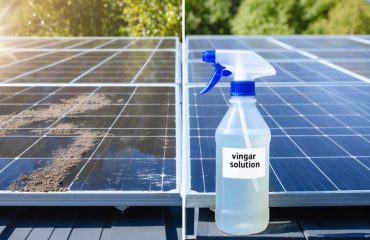
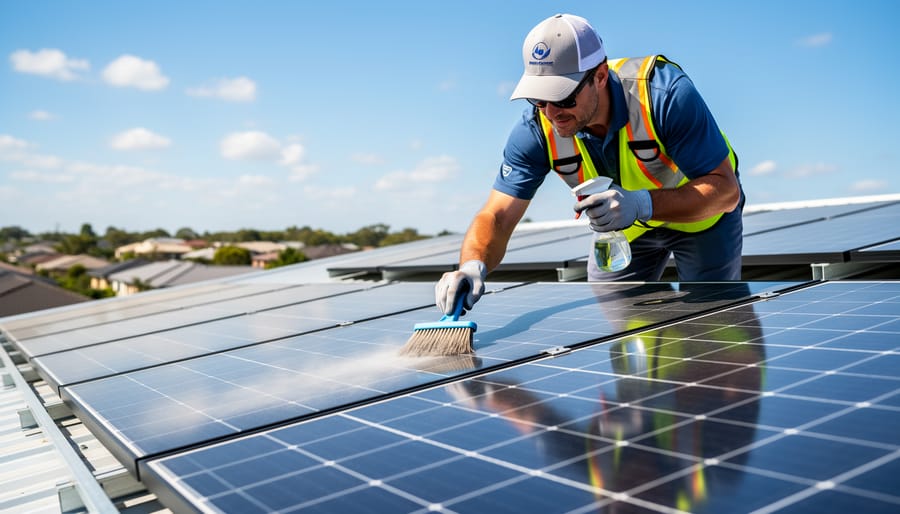
Even cleaning, when it’s needed, is usually optional rather than essential. Studies show that dust accumulation rarely impacts performance by more than a few percentage points, and the next rainstorm typically resolves the issue naturally. For those in particularly dusty climates, a simple spray from a garden hose once or twice a year does the trick.
This low-maintenance reality isn’t just convenient; it’s another financial benefit that makes solar worth the investment.
So, is home solar power worth it? When you consider that solar panels deliver 25-30 years of reliable, low-maintenance energy production, the answer becomes remarkably clear. Few home improvements offer such an impressive combination of longevity, proven durability, and ongoing financial returns.
The math speaks for itself. While the upfront investment might seem significant, you’re essentially prepaying for decades of electricity at a locked-in rate while utility prices continue climbing. With minimal maintenance requirements—just occasional cleaning and routine inspections—your system works quietly in the background, generating clean energy and savings year after year.
What makes solar particularly worthwhile is its track record of reliability. Modern panels are built to withstand extreme weather, backed by comprehensive warranties, and proven to maintain efficiency well beyond their rated lifespan. This isn’t experimental technology; it’s a mature, dependable solution that millions of homeowners trust.
Beyond the financial benefits, you’re gaining energy independence and contributing to a cleaner future. Every sunny day becomes an opportunity to power your home with renewable energy, reducing your carbon footprint while padding your wallet.
Ready to explore if solar is right for your home? The first step is simple: get a personalized assessment from reputable installers in your area. They’ll evaluate your roof, energy usage, and local incentives to show you exactly what solar can deliver. Your journey toward energy independence and decades of savings could start today.