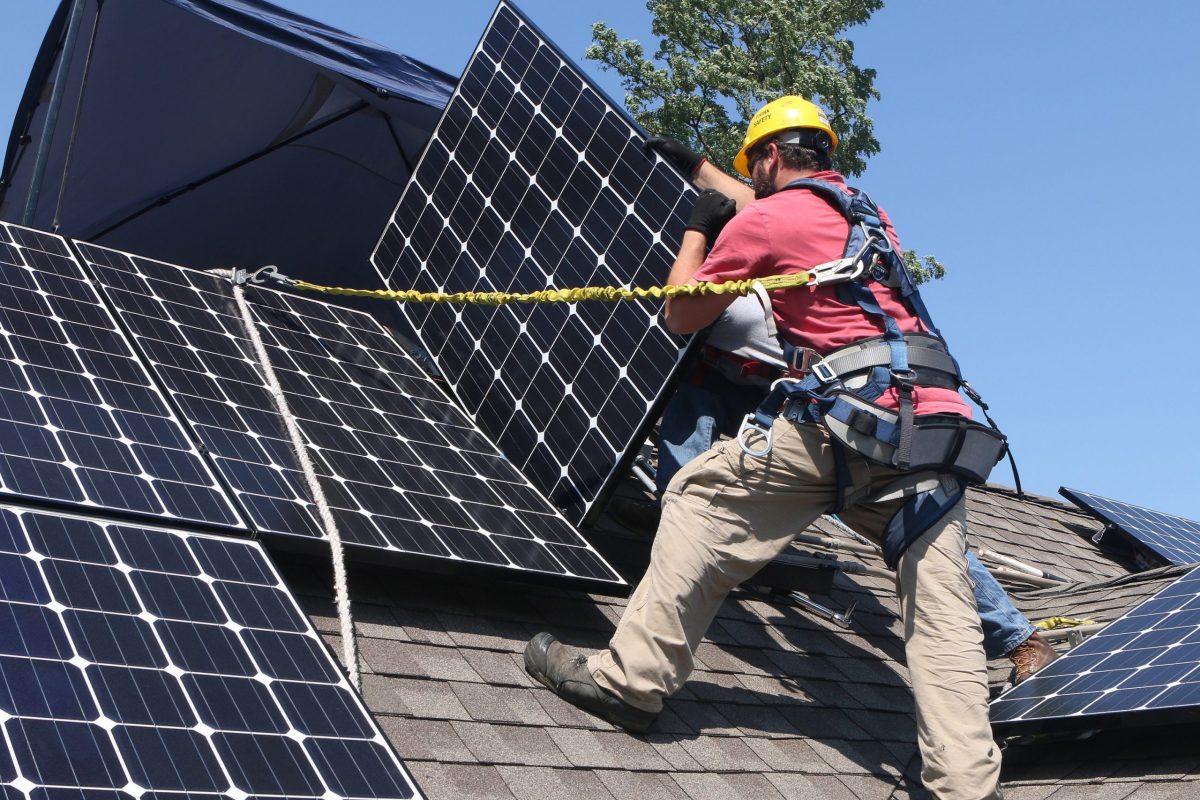

Your solar panels are generating clean energy and slashing your electricity bills—but what happens when your system goes offline for weeks due to storm damage, equipment failure, or grid issues? Many homeowners don’t realize that during system downtime, they’re not only losing the energy their panels would produce, but they’re also paying full price to the utility company for every kilowatt they consume.
Business interruption insurance for solar energy systems protects you from these unexpected financial losses. Unlike standard homeowners insurance that covers physical damage to your panels, this specialized coverage reimburses you for the income you would have earned or saved while your system is being repaired. Think of it as a safety net that ensures your smart investment continues working for your wallet, even when the panels temporarily can’t.
The coverage typically kicks in after equipment breakdown, weather events, or utility disconnections that halt your system’s production. It compensates you for lost energy credits, increased utility bills, and the financial gap between what you’re suddenly paying for electricity versus what you’d normally be saving. For homeowners who depend on net metering credits or have financed their system based on projected savings, this protection transforms an expensive disruption into a manageable inconvenience.
Understanding whether you need this coverage, what it actually protects, and how to secure the right policy ensures your solar investment remains profitable through any circumstance.
What Business Interruption Insurance Actually Covers (In Plain English)
When Your Solar System Becomes a Business Asset
Most homeowners think of their solar panels as just another home improvement—like a new roof or updated kitchen. But once you connect your system to net metering programs or start selling excess energy back to the grid, something interesting happens: your solar panels transform into income-generating property. This shift changes how you should think about protecting your investment.
When your panels produce more electricity than your home uses, that surplus doesn’t just disappear. Through net metering, your utility company credits you for that extra power, reducing your future bills or even cutting you a check. Some homeowners earn hundreds of dollars annually through these programs, turning their rooftops into mini power plants. This is where business interruption insurance becomes relevant—because if your system goes offline for weeks due to storm damage or equipment failure, you’re not just losing the convenience of solar power. You’re losing actual money.
Standard homeowners insurance coverage typically protects the physical panels themselves, but it won’t reimburse you for the income you miss out on during repairs. Business interruption coverage fills this gap, compensating you for lost energy credits and payments while your system is down. It’s essentially income protection for your solar investment, ensuring that temporary setbacks don’t create lasting financial impact on the returns you’ve come to depend on.
The Real Costs That Get Covered
Understanding what your business interruption insurance actually covers can help you see why it’s such a valuable safeguard for your solar investment. Think of it as filling the financial gap between what your system should be earning and what you’re actually getting during repairs.
The most straightforward coverage is your lost energy production value. If your solar panels would normally generate $200 worth of electricity per month, but they’re offline for repairs, the policy reimburses you for that lost savings. This keeps your household budget on track, even when your panels aren’t producing.
Many homeowners don’t realize that their solar loan or lease payments don’t stop just because the system isn’t working. Business interruption coverage typically includes these ongoing financial obligations, so you’re not stuck paying for a system that’s temporarily out of commission while also covering higher electricity costs.
Speaking of electricity costs, when your solar system goes dark, you’re back to relying entirely on grid power. This means your utility bills can spike dramatically. Quality policies cover these increased electricity expenses, protecting you from that unwelcome surprise on your next bill.
If you need temporary replacement power while waiting for repairs, those costs can add up quickly. Some comprehensive policies even cover rental equipment or alternative power solutions to minimize your downtime.
The key takeaway is that business interruption insurance creates a financial safety net that catches multiple expense categories at once. You’re not just protecting against one type of loss, you’re ensuring your entire solar investment continues delivering value, even during the unexpected bumps in the road. This comprehensive approach means you can truly relax knowing your sustainable energy choice is protected from all angles.
Common Scenarios Where Your Solar System Could Go Dark
Weather-Related Damage
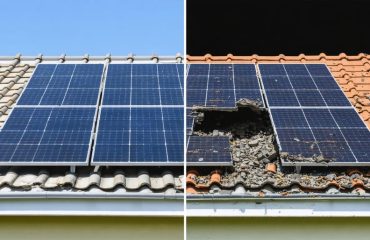
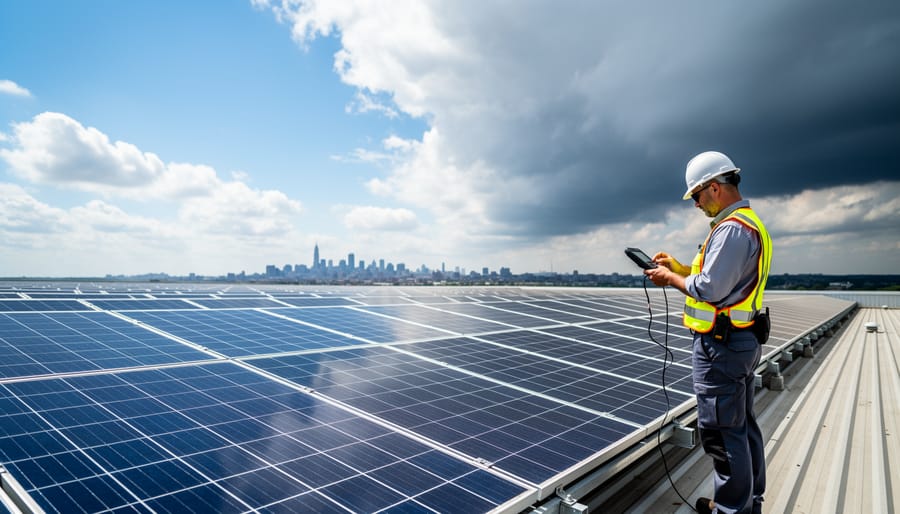
Mother Nature doesn’t always play nice with solar panels, and weather-related events are among the most common reasons solar systems need repairs. Hailstorms can crack panels, while strong winds might loosen mounting systems or send debris flying into your array. Lightning strikes, though less frequent, can damage inverters and electrical components instantly. Fallen trees or branches during storms can cause significant physical damage that requires complete panel replacement.
What many homeowners don’t realize is how long these repairs can take. Even minor hail damage might shut down your system for two to three weeks while you wait for replacement panels to arrive and certified installers to complete the work. During this downtime, you’re back to buying electricity from the grid at full price, losing the savings you’ve come to rely on.
This is where business interruption coverage becomes valuable. It compensates you for the energy savings you’re missing during repairs, essentially maintaining your household budget as if your panels were still working. Think of it as income replacement for your solar investment, ensuring that unexpected weather events don’t derail the financial benefits you’ve worked hard to secure.
Fire and Vandalism
Fire damage and intentional harm can happen even with the most careful maintenance. Your solar panels sit exposed on your roof, and while they’re built tough, they’re not immune to accidents or deliberate damage. Business interruption insurance steps in when fire damages your panels or electrical components, covering the income you lose during repairs. Similarly, if someone steals inverters or deliberately damages your system, your vandalism coverage kicks in to replace lost energy production revenue. This protection means you won’t absorb the financial hit of someone else’s actions or unexpected fires. Think of it as safeguarding the money your panels would have saved you during downtime, ensuring your clean energy investment keeps delivering returns even when temporarily offline.
Equipment Failure and Inverter Issues
Even the best solar panels and inverters can experience unexpected problems. Manufacturing defects, component failures, or premature wear can cause your system to stop producing electricity without warning. The good news is that business interruption coverage typically kicks in during these frustrating waiting periods while your equipment is being repaired or replaced.
Here’s what that means for you: If your inverter fails and needs replacement, you won’t have to worry about the lost energy credits or increased electricity bills during the two to four weeks it takes to get a new one installed. The policy covers your financial losses during this downtime, essentially bridging the gap between when your system stops working and when it’s producing energy again.
This protection is particularly valuable because equipment failures often aren’t covered under standard homeowner’s insurance. While your solar equipment warranty might cover the cost of replacement parts, it won’t reimburse you for the income you’re losing each day your system sits idle. Business interruption insurance fills this critical gap, ensuring your return on investment stays on track even when technology hiccups occur.
Is Business Interruption Insurance Worth It for Your Home Solar System?
Calculate Your Potential Loss
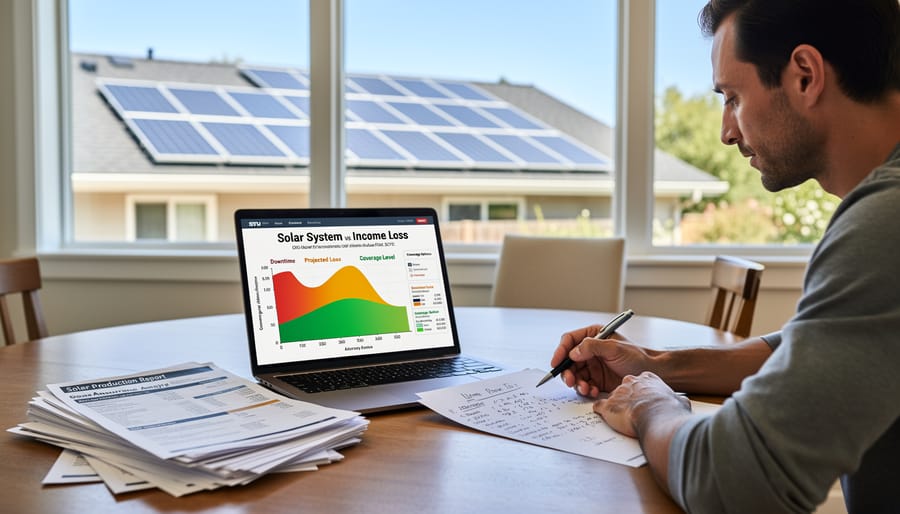
Understanding what you stand to lose during solar system downtime helps you make an informed decision about protection. Here’s a straightforward way to calculate your potential financial impact.
Start with your average monthly electric bill before going solar. If your system typically covers that entire amount, divide it by 30 to find your daily energy production value. For example, if you previously paid $150 monthly for electricity, your solar system saves you about $5 per day.
Next, consider net metering credits if your utility offers them. Check your last few solar statements to see how much excess energy you’re sending back to the grid each month. This represents real money you’re earning or banking for future use.
Now multiply your daily value by realistic downtime scenarios. A minor repair might take 3-5 days, while waiting for specialized parts or dealing with storm damage could mean 30-60 days without production. That $5 daily value becomes $150-$300 in lost savings for an extended outage.
Don’t forget seasonal variations. If your system produces significantly more during summer months, downtime during peak production season costs you more than winter outages.
For systems with battery storage, factor in your backup power value too. During grid outages, that stored energy keeps your home running while neighbors go dark. The peace of mind and avoided costs of spoiled food, lost work time, or hotel stays add real value beyond just the kilowatt-hours themselves.
Who Benefits Most from This Coverage
Business interruption coverage makes the most sense for homeowners who’ve made significant financial commitments to their solar systems. If you’re paying off a solar loan, this protection ensures you can continue making payments even when your panels aren’t producing. The coverage becomes particularly valuable for those with high-production systems generating substantial monthly savings or credits—the larger your typical offset, the bigger the financial gap when your system goes down.
Homeowners with net metering agreements should pay special attention, since you’re essentially banking energy credits throughout the year. Extended downtime means missed opportunities to build those credits during peak production months. This protection is also crucial if you live in storm-prone areas where weather-related damage is more likely to cause system interruptions.
Finally, consider this coverage if your household budget relies on predictable energy costs. When your solar system represents a key part of your monthly financial planning, protecting against unexpected utility bills during repairs simply makes good sense.
What to Look for in a Solar Business Interruption Policy
Understanding Waiting Periods
Here’s an important detail that catches many solar homeowners by surprise: business interruption coverage doesn’t activate immediately when your system goes down. Most policies include a waiting period of 48 to 72 hours before your coverage begins. Think of it as a deductible measured in time rather than dollars.
This waiting period exists because insurance companies recognize that minor, quickly-resolved issues happen regularly. The waiting period filters out short-term disruptions that you can reasonably absorb without financial strain. For example, if your solar system experiences a brief outage due to a tripped breaker that’s fixed within a day, you wouldn’t file a claim.
However, this waiting period becomes significant when dealing with solar repairs. If a storm damages your panels or inverter, repairs often require ordering specialized parts and scheduling certified technicians, which can take several days or even weeks. The good news is that once you’ve crossed that initial 48-72 hour threshold, your coverage kicks in and continues protecting your lost energy credits and savings throughout the entire repair period. Understanding this timeline helps you plan realistically and appreciate why this protection matters for longer disruptions beyond quick fixes.
Coverage Limits and How They’re Calculated
Determining the right coverage amount is simpler than you might think. Start by calculating your system’s typical monthly production value—this is either the money you save on utility bills or the income you receive from selling excess energy back to the grid. For example, if your solar panels save you $150 monthly on electricity, that’s your baseline.
Most insurance providers recommend coverage that replaces at least three to six months of your solar savings or income. This timeframe accounts for realistic repair scenarios, from minor fixes to complete equipment replacement. A good rule of thumb is to multiply your average monthly benefit by six, then add a buffer for unexpected delays.
Your system size matters too. Larger residential systems generating significant income may warrant twelve months of coverage, while smaller setups saving modest amounts might need less. Consider factors like your system’s age, local weather patterns that could cause damage, and how dependent you’ve become on those energy savings in your household budget. The goal is protecting your financial investment without overpaying for unnecessary coverage. Most policies offer flexible limits, so you can adjust as your circumstances change.
Key Policy Exclusions to Watch Out For
Understanding what’s not covered is just as important as knowing what is. Most business interruption policies for solar systems come with standard exclusions that could affect your claim, so let’s clear up any confusion upfront.
Regular maintenance and routine wear and tear typically aren’t covered. If your solar panels gradually lose efficiency over time due to normal aging, that won’t trigger a payout. The good news? Keeping up with scheduled maintenance often prevents these issues anyway, protecting both your coverage and your system’s performance.
Weather-related exclusions vary significantly between policies. While many policies cover sudden storm damage, some specifically exclude certain events like flooding or earthquakes unless you purchase additional riders. This is particularly important if you live in areas prone to specific weather patterns.
Pre-existing conditions are another common exclusion. If your system already had issues before your policy started, claims related to those problems won’t be covered. That’s why getting coverage early in your solar journey makes financial sense.
Manufacturing defects are often excluded too, since these should be covered under your equipment warranty instead. The key is understanding how your various protections work together to create comprehensive coverage for your clean energy investment.

How to Add Business Interruption Coverage to Your Solar System
Working with Your Current Insurance Provider
Getting coverage for your solar investment is usually simpler than you might think. Start by calling your current homeowners insurance agent and asking about endorsements or riders that cover income loss from your solar system. Most insurers are familiar with solar energy and can add this protection to your existing policy without requiring you to switch providers.
When you call, explain that your solar panels generate energy credits or payments that could be interrupted if your system goes down. Ask specifically about options that cover lost production income during repairs. Your agent may already have preset coverage amounts, or they might customize a rider based on your system’s typical monthly output value.
Be prepared to share basic details about your solar setup: your system size, average monthly production, and how much you typically save or earn. Having a recent electric bill and your solar provider’s contact information handy can speed things along.
If your current insurer doesn’t offer this coverage or quotes seem high, don’t hesitate to shop around. Some companies specialize in renewable energy coverage and may offer better rates. Getting quotes from multiple insurers helps you find the best protection at the right price, ensuring your solar savings stay protected year-round.
Specialized Solar Insurance Options
While standard homeowners insurance might cover your solar panels, several insurance providers now specialize in renewable energy protection and offer tailored business interruption coverage for solar owners. These specialized insurers understand the unique financial dynamics of solar systems and can provide more comprehensive protection than traditional policies.
Companies like GCube Insurance, Renewable Energy Insurance Services, and Allied Energy focus specifically on solar installations. They recognize that your panels aren’t just roof fixtures—they’re income-generating assets. These specialists typically offer policies that include business interruption coverage as part of comprehensive solar insurance options, streamlining your protection under one plan.
What makes these providers stand out? They often provide faster claims processing because they already understand solar technology, more accurate valuations of your lost production, and coverage options specifically designed around solar system performance. Many also offer risk assessments to help you identify potential vulnerabilities before problems occur.
When comparing providers, ask specifically about their experience with residential solar claims and how they calculate business interruption losses—you’ll want someone who truly understands your system’s value.
Your decision to invest in solar energy was a smart financial move that benefits both your wallet and the planet. Protecting that investment with the right insurance coverage, including business interruption protection for your solar system, simply makes good sense. Think of it as the final piece of your solar puzzle—ensuring that the money-saving benefits you’re counting on remain steady, even when unexpected problems arise.
The peace of mind that comes with proper coverage can’t be overstated. You’ve already taken the important step of reducing your energy bills and your carbon footprint. Now you can rest easy knowing that a storm, equipment failure, or other unforeseen event won’t derail your financial plans. Whether your system offsets $100 or $300 monthly in electricity costs, that income matters to your household budget.
Take a few minutes to evaluate your current insurance situation. Review your homeowner’s policy, consider your system’s value, and think about how a prolonged outage would affect your finances. If gaps exist, addressing them now is far easier than dealing with unexpected costs later.
Your solar investment represents a commitment to a brighter, more sustainable future. With the right protection in place, you can confidently enjoy both the environmental benefits and the financial returns for decades to come. That’s a win worth safeguarding.