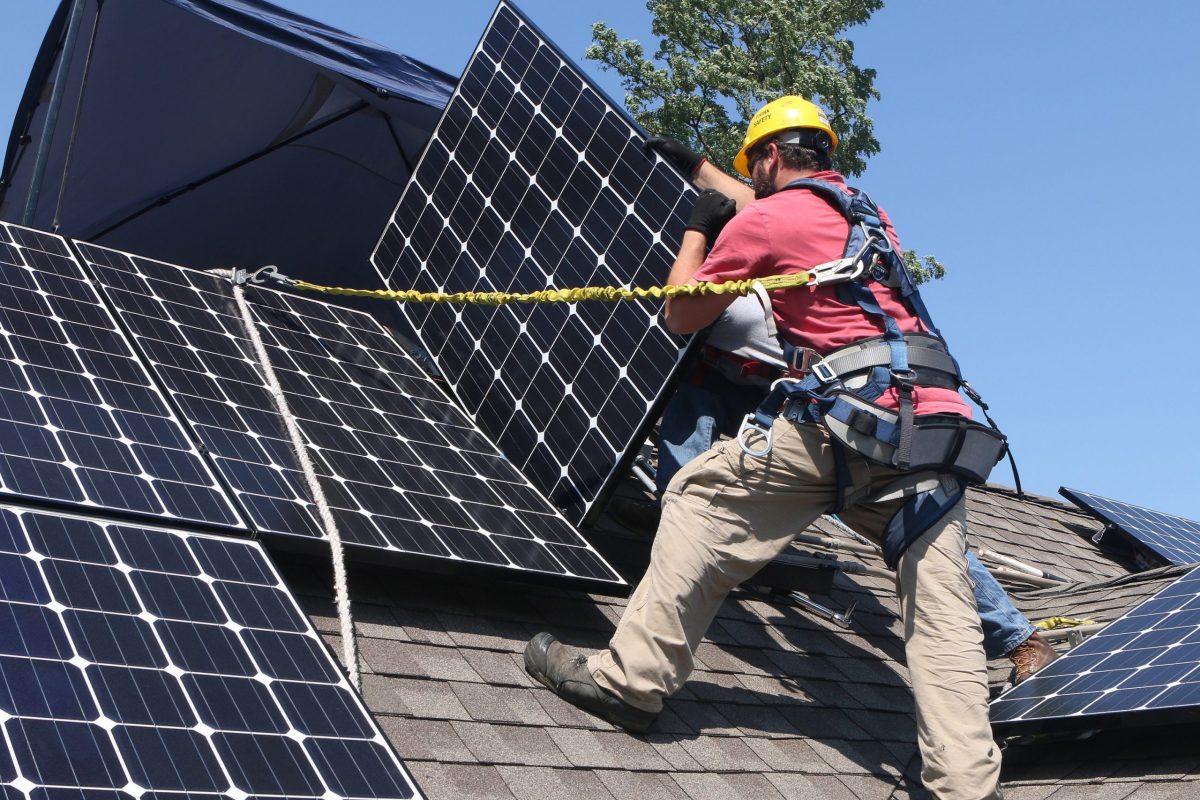

Your solar panels face their riskiest moment before they ever reach your roof. While you’re focused on energy savings and environmental benefits, those panels travel thousands of miles from manufacturing facilities, passing through multiple carriers, warehouses, and loading zones where damage from mishandling, accidents, or weather can occur. Here’s what makes this critical: if your panels arrive cracked, water-damaged, or with compromised connections, you could face installation delays, reduced energy production, or immediate replacement costs running into thousands of dollars.
Transit insurance coverage protects your investment during this vulnerable shipping period, but many homeowners don’t realize it’s not automatically included in every solar contract. Some installers carry robust transit coverage as part of their comprehensive solar panel insurance, while others leave gaps that could put you on the hook for damaged equipment. The good news? Understanding transit coverage takes just a few minutes and asking the right questions upfront ensures you’re protected from the moment your panels leave the factory until they’re safely installed and producing clean energy for your home.
What Transit Insurance Actually Covers (In Plain English)
The Journey Your Solar Panels Take
Your solar panels embark on quite an adventure before they brighten your home. Most panels begin their journey at manufacturing facilities, often overseas, where they’re carefully packaged for international shipping. From there, they travel by cargo ship across oceans, then transfer to trucks or trains for domestic transport to regional warehouses or distribution centers.
Finally, they make that last crucial leg to your installer’s facility and ultimately to your rooftop. Each handoff presents a potential vulnerability. Panels might encounter rough seas during ocean transit, experience jolts during loading and unloading, or face extreme temperature changes in storage facilities. Even the final delivery to your home involves navigating narrow streets and careful handling during unloading.
This multi-step supply chain, while efficient, means your investment changes hands multiple times and faces various environmental conditions. Understanding these vulnerability points helps you appreciate why transit insurance matters. The good news? Reputable installers recognize these risks and take steps to protect your panels throughout their entire journey, ensuring they arrive at your home in pristine condition and ready to generate clean, cost-saving energy for decades.
Real Risks That Transit Insurance Prevents
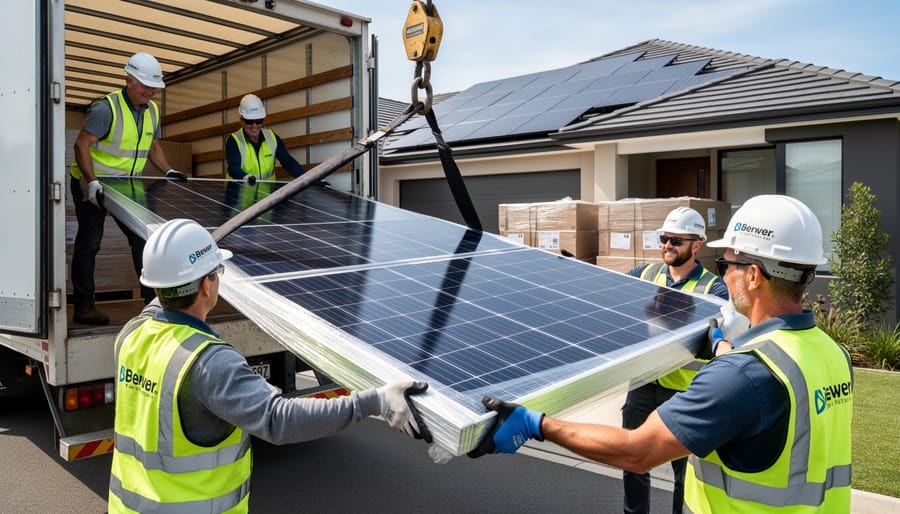
Solar panels face several common risks during their journey to your home. Weather damage tops the list—heavy rain, hail, or temperature extremes during transport can crack panels or damage electrical components. Handling accidents also occur frequently, with panels potentially getting dropped during loading, unloading, or warehouse storage, causing invisible micro-cracks that reduce efficiency or create safety hazards later.
Theft represents another real concern. Solar equipment is valuable and easily resold, making it a target during storage at warehouses or even while sitting at your property before installation. While theft protection measures help after installation, transit insurance covers losses before mounting begins.
Vehicle accidents during delivery can damage or destroy entire shipments. Without proper coverage, you might face delays replacing damaged equipment or, worse, end up paying twice for panels you never received intact.
Transit insurance protects your financial investment from these scenarios. Instead of negotiating blame between manufacturers, shipping companies, and installers, you’re covered from the moment panels leave the factory until they’re safely installed on your roof.
Who Pays If Your Solar Panels Get Damaged in Transit?
Understanding Your Solar Contract’s Fine Print
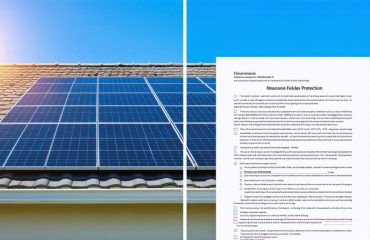
Before signing your solar installation contract, take a few minutes to review the sections about equipment protection and delivery. Look for clear language stating who’s responsible if your panels arrive damaged—this should be the installer’s responsibility, not yours.
The best contracts explicitly mention transit insurance or shipping protection, giving you peace of mind that your investment is covered from the warehouse to your rooftop. If you don’t see this mentioned, simply ask your installer directly: “What happens if the panels are damaged during shipping?” A reputable company will have a straightforward answer and proper coverage in place.
Red flags include vague language like “equipment subject to availability” without damage protection details, or clauses that shift responsibility to you before installation is complete. Remember, you’re the customer—you shouldn’t bear the financial risk for transportation issues.
Think of transit coverage as a sign of a quality installer who stands behind their work from start to finish. Companies with proper insurance demonstrate professionalism and protect your financial investment, letting you focus on the exciting benefits of going solar rather than worrying about potential shipping mishaps.
Questions to Ask Your Solar Installer
Before signing any contract, protect your investment by asking these straightforward questions. First, inquire whether transit insurance is included in your installation quote or if it’s an additional cost. Ask your installer to confirm who holds the insurance policy and what specific damages it covers during shipping. Request documentation showing proof of coverage and clarification on the claims process if panels arrive damaged.
It’s also smart to ask what happens if panels are delayed or damaged in transit. Will your installer provide replacements immediately, or will you face installation delays? Find out if there’s a deductible you’d be responsible for and whether the coverage extends to all components, not just the panels themselves.
Don’t hesitate to ask for references from previous customers about their delivery experience. A quality installer will answer these questions transparently and provide written confirmation of coverage. Remember, asking these questions upfront demonstrates you’re an informed homeowner and helps ensure your solar investment is protected from day one.
The Financial Impact: What Damaged Panels Could Cost You
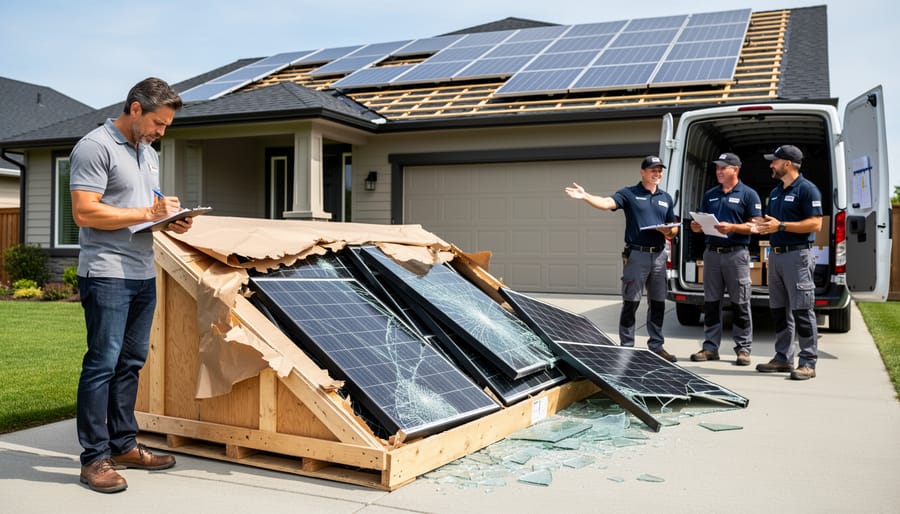
The financial stakes of damaged solar panels during shipping are more significant than many homeowners realize. A single premium solar panel costs between $200 and $350, meaning damage to just a few panels can quickly add up to over $1,000 in replacement costs. For a typical residential system requiring 20-25 panels, extensive damage could mean thousands of dollars in unexpected expenses.
Beyond the equipment itself, damaged panels create a domino effect on your project timeline. Ordering replacement panels typically adds 2-4 weeks to your installation schedule, and in some cases even longer if specific models are backordered. This delay means you’re continuing to pay your regular electricity bills instead of generating your own clean energy and enjoying those savings you planned for.
Without proper transit insurance coverage, you might find yourself caught in a frustrating situation where the manufacturer, shipping company, and installer each claim the damage isn’t their responsibility. This leaves you potentially footing the bill for both replacement equipment and the labor costs of a second installation visit.
The good news? When your installer carries comprehensive transit coverage, you’re protected from these financial headaches. The insurance handles replacement costs and keeps your project moving forward on schedule. This protection is especially valuable given that solar panels are your long-term investment in energy independence and lower utility bills. Ensuring they arrive safely means you start reaping those financial benefits sooner rather than later.
How Reputable Solar Companies Handle Transit Protection
What’s Included in Professional Solar Installation Services
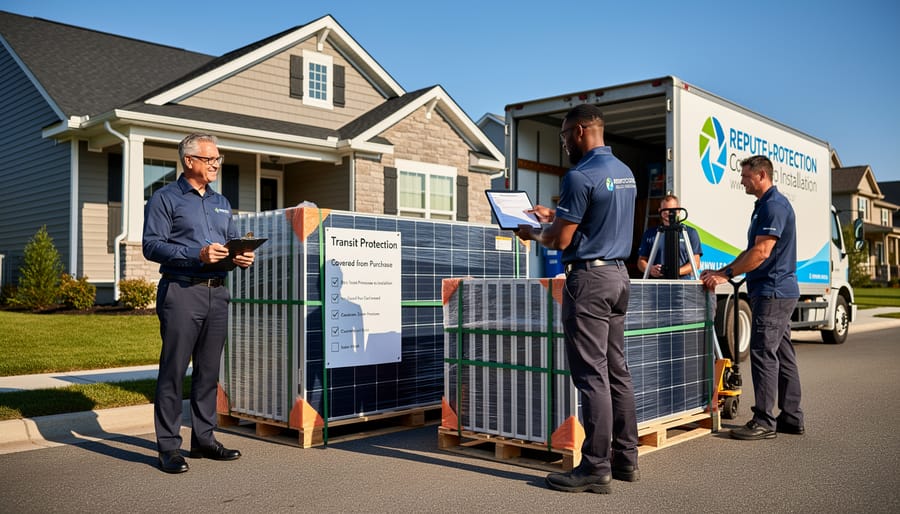
When you’re investing thousands of dollars in solar panels, knowing they’re protected during shipping gives you invaluable peace of mind. A reputable solar installer should automatically include comprehensive transit insurance as part of their service package—you shouldn’t have to ask for it separately.
Quality professional installation services include full coverage from the moment your panels leave the manufacturer until they’re safely installed on your roof. This means protection against damage from accidents, weather events, theft, or mishandling during transport. Your installer should provide clear documentation showing that insurance is active and covers the full replacement value of your equipment.
Beyond basic transit coverage, look for installers who maintain general liability insurance and workers’ compensation. These protections ensure you’re not financially responsible if something goes wrong during installation. A professional company will gladly show you their insurance certificates and explain exactly what’s covered.
The best installers also offer installation warranties and performance guarantees, demonstrating their commitment to your long-term satisfaction. Think of comprehensive insurance coverage as a green flag—it signals you’re working with a company that takes responsibility seriously and protects your investment at every step. This protection is standard practice among quality installers, so don’t settle for less.
Debunking Common Myths About Solar Equipment Protection
Let’s clear up some common misunderstandings about protecting your solar equipment during shipping. Many homeowners assume their manufacturer’s warranty automatically covers transit damage, but this typically isn’t the case. Manufacturer warranties generally protect against defects in materials or workmanship, not damage that occurs during transportation. That’s an important distinction that can save you thousands of dollars in unexpected costs.
Another widespread belief is that homeowner’s insurance coverage will handle any shipping issues with your solar panels. While your policy might cover installed equipment, it rarely extends to items in transit before they reach your property. There’s often a coverage gap between the supplier’s warehouse and your rooftop.
Some people think shipping damage is extremely rare and not worth worrying about. In reality, solar panels and inverters are delicate electronic equipment that can suffer invisible damage from vibration, temperature changes, or improper handling. Microcracks in solar cells might not be immediately visible but can significantly reduce your system’s efficiency over time.
The good news? Understanding these myths helps you ask the right questions when choosing an installer. Reputable solar companies either carry transit insurance themselves or work with suppliers who do, ensuring you’re protected from day one without any coverage gaps in your investment.
Peace of Mind From Purchase to Power Generation
Choosing a professional solar installer who carries comprehensive transit insurance demonstrates their commitment to protecting your investment from day one. This coverage is just one piece of a larger picture that includes quality equipment, expert installation, and long-term support for your solar system. When your panels arrive safely and intact, you can move forward confidently with installation, knowing that every step of the process has been professionally managed.
Transit insurance reflects a company’s dedication to making your transition to solar energy as smooth as possible. It eliminates the uncertainty and potential financial burden of damaged equipment, allowing you to focus on the exciting benefits ahead: lower energy bills, reduced carbon footprint, and energy independence. This protection complements why solar panels need insurance throughout their lifespan, creating a complete security framework for your sustainable investment.
By asking the right questions about transit coverage during your installer selection process, you’re not just protecting panels during shipping—you’re ensuring peace of mind throughout your entire solar journey. This attention to detail supports both your financial security and environmental goals, making solar energy the smart, worry-free choice for powering your home.